
society
1914 Amalgamation: The Unseen Hand That Scripted Nigeria’s Identity Crisis

1914 Amalgamation: The Unseen Hand That Scripted Nigeria’s Identity Crisis
By George Omagbemi Sylvester
In the beginning, there was no “Nigeria.” There was no shared anthem, no common tongue, no unified sense of nationhood. Instead, there were sovereign ethnic nations; the Yoruba in the West, the Igbo in the East, the Hausa-Fulani in the North and over 250 other distinct ethnicities scattered across the landmass now known as Nigeria. Each group had its own system of governance, religion, language and worldview. What tied them together was not history or consent; but a single act of colonial convenience on January 1, 1914: the amalgamation of the Northern and Southern Protectorates by the British colonial administration.

This unification, executed under the imperial direction of Lord Frederick Lugard and endorsed by the British Crown, was not an act of benevolence or foresight. It was an economic and administrative maneuver to cut costs and consolidate power. And in doing so, it laid the groundwork for over a century of conflict, suspicion and structural imbalance. The consequences of this act continue to haunt Nigeria like a recurring nightmare.
Over 110 years later, the fundamental question remains: Who signed the amalgamation on behalf of the Nigerian people?
The answer, quite disturbingly, is no one.
Let us look at the historical timeline.
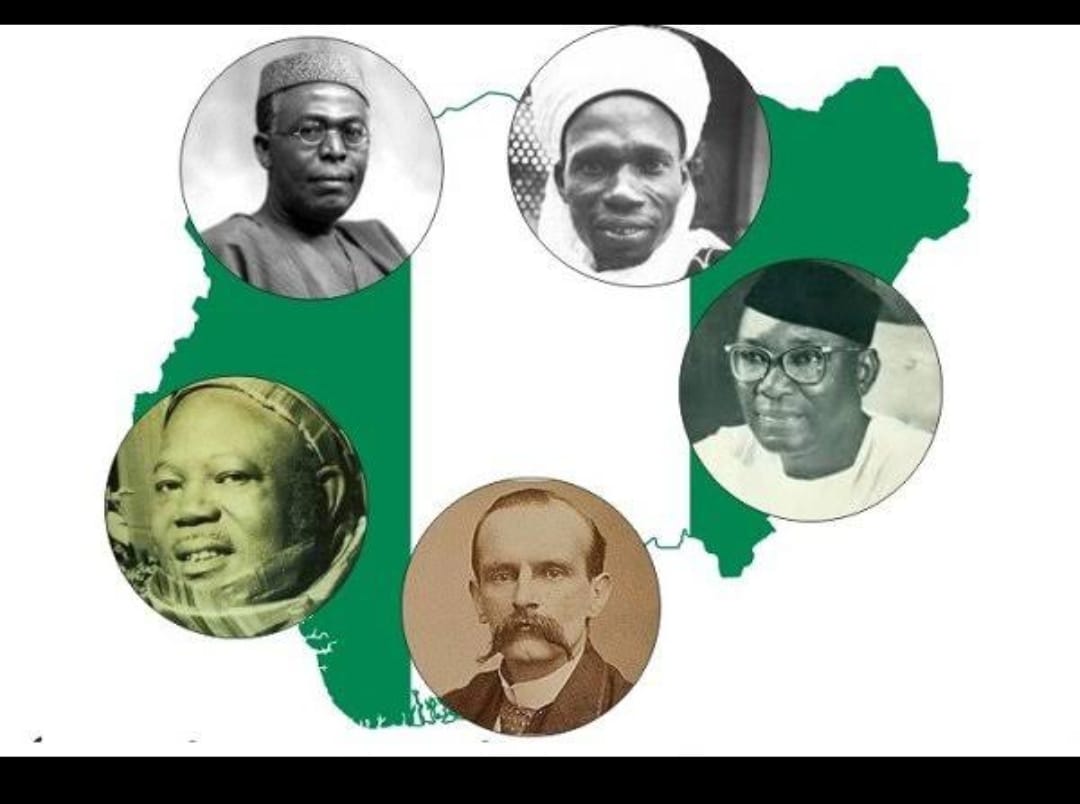
Dr. Nnamdi Azikiwe, later the first President of Nigeria, was born in 1904. He was only 10 years old in 1914.
Chief Obafemi Awolowo, premier of the Western Region, was born in 1909; just 5 years old.
Sir Ahmadu Bello, the Sardauna of Sokoto and Premier of the Northern Region, was born in 1910; only 4 years old.
Sir Abubakar Tafawa Balewa, Nigeria’s first Prime Minister, was born in 1912; a mere toddler of 2 years.
Michael Okpara, premier of the Eastern Region, hadn’t even been born yet; he came into the world in 1920.
These men, hailed as Nigeria’s founding fathers, had no hand in the creation of Nigeria. The 1914 amalgamation was not a pact between equal peoples or a dialogue of nations. It was a colonial decree; signed in London, drawn on British maps, and executed on African soil without consent, consultation or compassion.

Herbert Macaulay, born in 1864 and often revered as the father of Nigerian nationalism, was alive at the time but held no official power or authority to challenge the imperial decree. His protests, although prescient, were brushed aside. The amalgamation, thus, was no democratic creation. It was not a union forged by love, common purpose or mutual benefit; but by British imperial fiat.
As Nobel Laureate Prof. Wole Soyinka aptly put it, “There was no basis for Nigeria’s amalgamation other than administrative convenience. The failure to revisit the terms of that amalgamation is what has fueled most of the crises we face today.”
You cannot mix red oil and engine oil and expect a stable solution. Similarly, you cannot merge ethnic nations with separate histories, economies, cultures and religions and expect unity without negotiation. This is the tragedy of Nigeria: a forced marriage in which no vows were exchanged and no love was pledged.
From that fateful moment in 1914, Nigeria became an experiment in nation-building without the essential ingredients of trust and consensus. The British justified the amalgamation on grounds of administrative efficiency; the North was financially unviable, while the South was economically productive. By merging the regions, the British were able to use the surplus from the South to fund the North; a model of exploitation that persists to this day through lopsided federal allocations and centralized revenue control.
As historian Dr. Usman Bugaje observed, “There was never any document signed by Nigerian representatives to validate the amalgamation. It remains one of the most arbitrary acts in our history; and it set us up for division, not unity.”
Despite more than a century of cohabitation, Nigeria remains a house divided. The fault lines of 1914 have deepened into canyons; tribalism, nepotism, ethnic militancy and religious extremism dominate the political landscape. Unity, where it exists, is often cosmetic and brittle, breaking under the slightest pressure. Mutual distrust has become national currency.
Why?
Because Nigeria was not born in the delivery room of dialogue, but in the operating theatre of imperial surgery. There was no referendum, no negotiation, no cultural reconciliation. There was only the sound of British pens on paper and silence from the people whose lives would be altered forever.
Even our revered leaders admitted the shallowness of this unity.
Chief Awolowo once declared that “Nigeria is not a nation. It is a mere geographical expression.”
Dr. Azikiwe called Nigeria “a political experiment.”
Tafawa Balewa, in a rare moment of candor, confessed: “Since the amalgamation of 1914, Nigeria has existed as one country only on paper.”
Political economist Prof. Pat Utomi underscores this truth: “You cannot build a nation on injustice and expect peace. The failure to renegotiate the Nigerian federation is why we are constantly at war with ourselves.”
Today, Nigeria struggles with poverty in the midst of wealth, hunger amid arable land and darkness despite abundant natural gas. We import toothpicks, fuel and even the pencils used in our classrooms. Our hospitals are death traps, our schools are underfunded, our security forces are underpaid and our brightest minds are fleeing the country. The Nigerian space agency cannot locate missing schoolgirls in Sambisa Forest, yet it claims to monitor satellites orbiting thousands of kilometers above Earth.
What has this forced union achieved?
Rather than build a federal system that respects diversity and autonomy, we cling to a centralized structure that mimics colonial rule. Our so-called federalism is a fraud; a unitary government masquerading as federalism. States go cap in hand to Abuja every month, begging for a share of oil revenues they do not control. Resource control remains a taboo topic, even though it is the bedrock of true federalism.
Legal scholar Prof. Itse Sagay lays it bare: “Nigeria’s constitutional order is a farce. True federalism was abandoned. What we now have is a unitary system dressed up in federal garb and it is unsustainable.”
We must ask uncomfortable questions:
Where is the amalgamation document?
Who signed it?
Why should a forced union be treated as divine revelation?
In a true democracy, unity is not forced, it is negotiated. Identity is not imposed, it is chosen. Nigeria must now revisit its foundations. If the original union was imposed without consent, then today’s citizens must have the right to renegotiate that union.
Let it be clear: this is not a call for secession. It is a call for truth, for justice and for constitutional clarity. If the foundation is cracked, then the building must be reinforced or rebuilt. We must return to the table; not as tribes seeking supremacy, but as peoples seeking coexistence.
As Prof. Jibrin Ibrahim explains, “The Nigerian state was constructed as an extractive colonial machine. Post-independence leaders merely inherited the apparatus and they never deconstructed it.”
The solution lies in genuine restructuring; a return to regional autonomy, fiscal federalism and constitutional renegotiation. Let each region manage its resources, govern its people and contribute to the national purse fairly. Let unity be rooted in equity, not in exploitation.
The British may have scripted Nigeria’s beginning, but we must now take charge of its future. The time has come to reclaim the pen, rewrite the narrative and correct the errors of 1914. As the saying goes, “When the foundation is destroyed, what can the righteous do?” The righteous must rebuild.
Let us remember: empires fall, nations rise, but only truth endures. Nigeria must confront its past to shape its destiny. Until then, we remain a country in search of itself, a union in search of meaning, an identity still unsigned.

Sylvester is a political analyst, he writes from South Africa




society
From Broadcast to Spiritual Renaissance: The Journey of Alọba A. Orisabimbola Ifatomi, Creator of ÒRÌṢÀTV
From Broadcast to Spiritual Renaissance:
The Journey of Alọba A. Orisabimbola Ifatomi, Creator of ÒRÌṢÀTV
In a time when African stories are often misrepresented or diluted, a seasoned voice in Nigeria’s media and creative industry is stepping forward with a bold vision to reclaim, preserve and project the depth of African spirituality through a new wave of cinematic storytelling powered by technology.
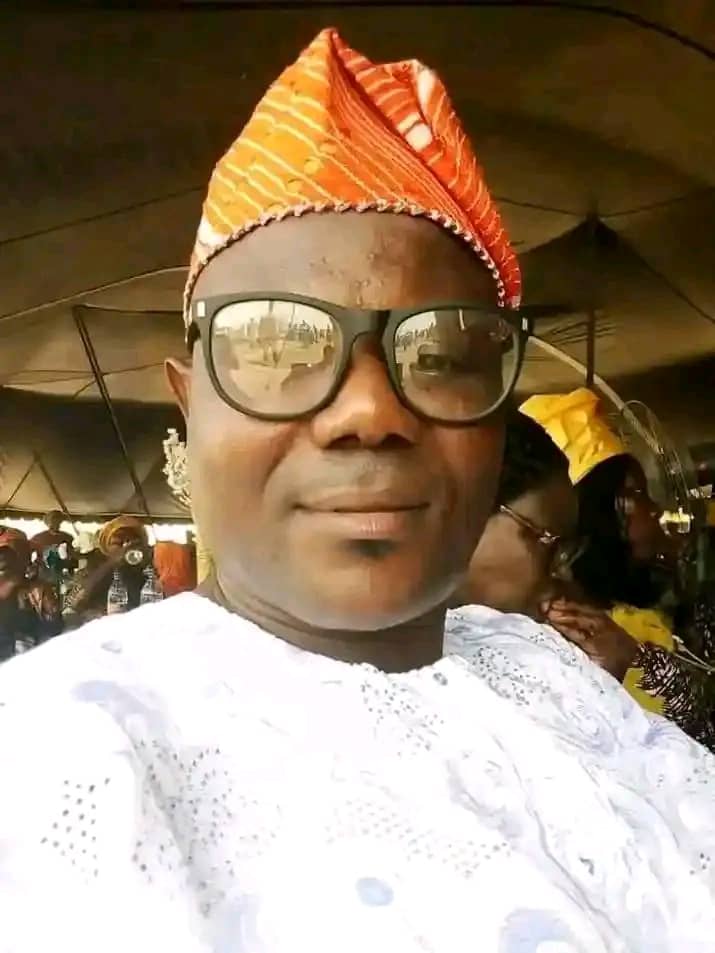
Alọba Adewunmi, a respected broadcaster, journalist and creative professional, is the mind behind ÒRÌṢÀTV a groundbreaking platform using Artificial Intelligence (AI) cinematic production to tell authentic Yoruba stories rooted in cosmology, spirituality and cultural heritage.
ÒRÌṢÀTV is not just a channel it is a destination to experience “The Beginning”, a Yoruba cosmology-based AI cinematic series that explores the origin of life and existence through an African lens.
A Career Built on Media Excellence
With years of experience across broadcast and print media, Alọba Adewunmi has established himself as a dynamic storyteller and cultural voice.
He has worked with several notable platforms including OSBC, Orisun FM, Yotomi Cable, Okin FM, Midland FM, Delta Cable, Akede Oodua Publications and Akede Africa.
His professional journey includes:
– Reporter at Alariya Oodua
– Editor at Gbajumo Online Magazine
– General Editor at Akede Africa ( a bilingual news magazine)
Through these roles, he has contributed significantly to journalism, cultural reporting, politics, crime and entertainment.
A Multifaceted Creative Force
Beyond journalism, Alọba Adewunmi’s creative footprint extends deeply into film and storytelling.
He is not just a performer, but a creative architect behind the scenes, serving as:
– A Continuity Director
– Continuity Director of the home video “Tobi (Forgiveness)”, produced by Kola Adeyemo
– A Story Writer and Dialogue Director
– A Scriptwriter
He has also contributed to several home video productions from the late 1990s through the early 2000s, reflecting a long-standing presence in Yoruba film storytelling.
A Spiritual Path and Cultural Mission
Beyond media and film, his journey is rooted in a deeper spiritual calling.
Alọba Adewunmi is a traditional priest, teacher and herbal medicine practitioner, dedicated to the preservation and practice of Yoruba spirituality.
His temple, Obàtálá Alábãlàse Temple of Purity, stands as a sacred center for purity, healing and spiritual guidance.
The Vision Behind ÒRÌṢÀTV
ÒRÌṢÀTV is more than a content platform, it is a cultural revival movement powered by AI-driven cinematic storytelling.
Through this innovative approach, the platform explores:
– The origin of existence
– The roles of divinities
– The structure of human destiny
– The spiritual laws governing life
The debut episode, “The Birth of Ilẹ̀ Àwọn Alààyè”,( Command of Creation ) marks the beginning of the series “The Beginning”.
Blending mythology, spirituality and AI-powered visuals, ÒRÌṢÀTV offers a unique experience that is both educational and deeply immersive.
A Mission Beyond Entertainment
For Alọba Adewunmi, this project goes far beyond entertainment.
It is a mission to preserve indigenous knowledge, educate future generations, correct misconceptions about African spirituality and restore pride in African identity.
The Man Behind the Vision
Despite his wide experience and creative influence, Alọba Adewunmi remains a naturally private and introverted individual.
He is known more for his work than for public appearances moving quietly between his professional responsibilities and personal space.
Rather than seeking the spotlight, he has consistently chosen to let his talent, creativity and impact speak for him.
Those who encounter his work or collaborate with him understand the depth he brings a reminder that true substance is not always loud and presence is not always public.
Looking Ahead
With Episode 1 now released, anticipation continues to build as “THE BEGINNING” prepares to explore deeper aspects of creation, human destiny and spiritual alignment.
This is not just a project it is a legacy unfolding through culture, spirituality, and innovation.
Watch Now
THE BEGINNING


Episode 1
The Birth of Ilẹ̀ Àwọn” Command of Creation)
Available on YouTube.
Media & Contact
For interviews, features and collaborations:
08125883088
© 2026 ÒRÌṢÀTV
All Rights Reserved
TY BURATAI HUMANITY CARE FOUNDATION COMMENDS GOVERNOR ZULUM FOR HELPING MILITARY FAMILIES
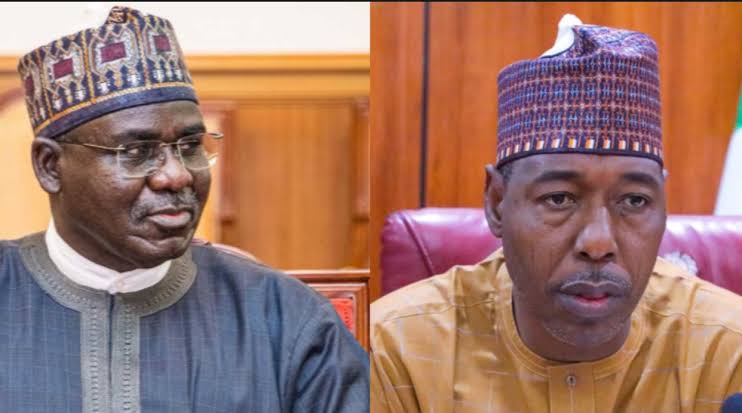
The TY Buratai Humanity Care Foundation has commended Borno State Governor Babagana Umara Zulum for his generous donation of ₦150 million to the families of three military officers who were tragically killed in recent attacks. Each family received ₦50 million as part of the state’s continued commitment to supporting fallen heroes and wounded personnel involved in counter-insurgency operations.
The commendation was contained in a statement signed by the foundation’s chairman, Ibrahim Dahiru Danfulani Sadaukin Garkuwan Keffi/Betara Biu, and made available to the press.
The foundation expressed gratitude for the governor’s compassionate gesture, which included personal visits to the families of the late Lieutenant Colonels Umar Farouq, Salihu Iliyasu, and Aliyu Saidu Paiko in Abuja, Niger, and Kano States. During the visits, Governor Zulum offered his condolences and praised the service, sacrifice, and patriotism of the fallen officers.
The foundation’s Grand Patron, His Excellency, Lieutenant General Tukur Yusufu Buratai, CFR (Rtd), personally commended the governor’s dedication to improving the lives of Borno State residents. He also extended his condolences to the families of the officers and soldiers who made the ultimate sacrifice in service to the nation.
During his visits, Governor Zulum reaffirmed his administration’s commitment to supporting bereaved families, which includes offering scholarships to the orphaned children of fallen personnel. He pledged to extend similar visits to other affected families, underscoring a compassionate approach to addressing the needs of those who have suffered in the line of duty.
society
Queen Amb Dr. Nwamaka Cordelia Anyatonwu Appointed Minister of Humanitarian, Culture, and Kingdom Affairs, United Kingdom of Atlantis
*Queen Amb Dr. Nwamaka Cordelia Anyatonwu Appointed Minister of Humanitarian, Culture, and Kingdom Affairs, United Kingdom of Atlantis
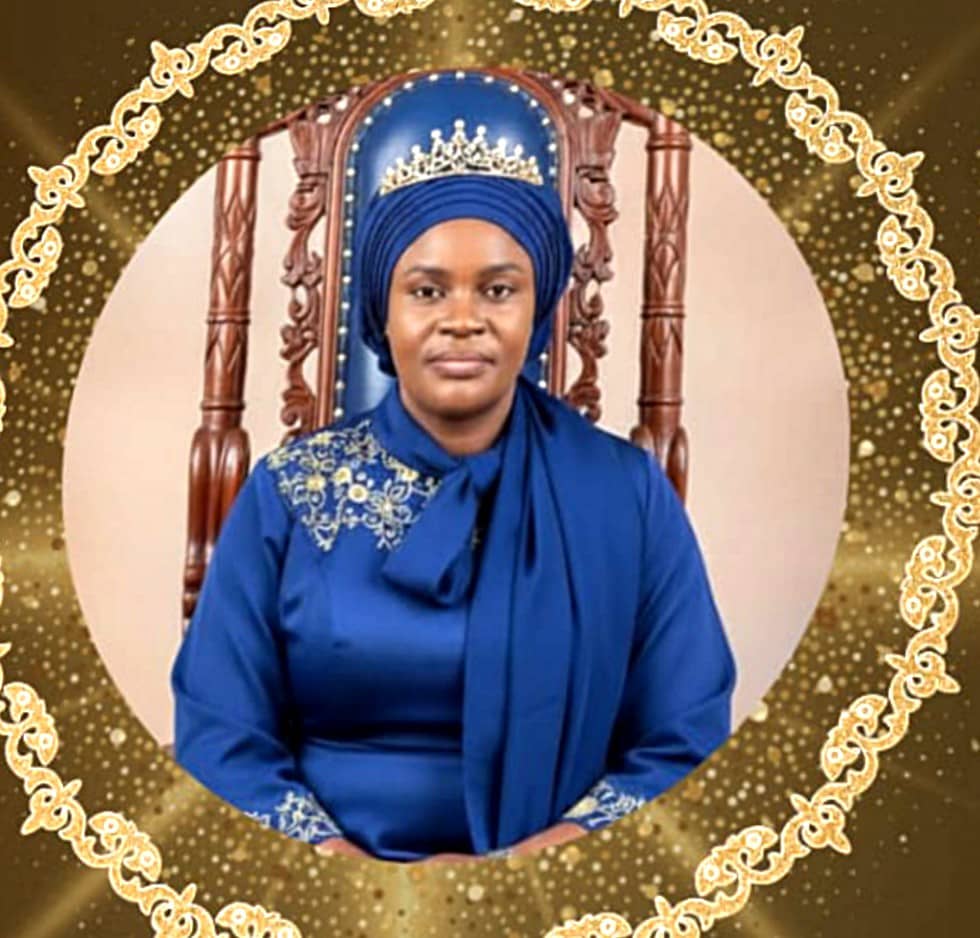
Her Majesty Queen Amb Dr. Nwamaka Cordelia Anyatonwu, Queen of the Aches Empire under the jurisdiction of the United Kingdom of Atlantis (UKA), has been appointed as the Minister of Humanitarian, Culture, and Kingdom Affairs, effective immediately.
This appointment comes as the UKA takes decisive steps to strengthen its humanitarian efforts and protect its citizens from unauthorized activities. In light of recent developments, the UKA has issued an official public disclaimer cautioning citizens, followers, and the general public about the activities of individuals promoting and operating a coin or platform not officially recognized by the Atlantian Gold Coin (ATC). This follows the hijacking of the 5 billion humanitarian project, a move that has been met with concern and condemnation from the international community.
As the newly appointed Minister, Queen Amb Dr. Anyatonwu has announced that all matters pertaining to the 5 billion humanitarian project in UKA should be directed to her office. This includes the newly captured NGOs, which are now required to report to the Office of Humanitarian Affairs, ensuring transparency and accountability in the management of humanitarian resources.
“We are committed to transparency and accountability in our humanitarian efforts,” said Queen Amb Dr. Anyatonwu. “We urge all stakeholders to work with us to ensure the success of our initiatives and protect our citizens from unauthorized activities. We will not tolerate any form of exploitation or mismanagement of humanitarian funds, and we will take all necessary measures to ensure that those responsible are held accountable.”
The UKA has assured its citizens and the international community that it is taking all necessary measures to recover the hijacked funds and bring the perpetrators to justice. The appointment of Queen Amb Dr. Anyatonwu is seen as a significant step towards achieving this goal and ensuring that humanitarian efforts are aligned with the UKA’s values and principles.
For more information. Please contact the Office of the Minister of Humanitarian, Culture and Kingdom Affairs.
*About the United Kingdom of Atlantis*
The United Kingdom of Atlantis is a sovereign nation committed to promoting peace, prosperity, and humanitarian values. The UKA is dedicated to working with international partners to address global challenges and improve the lives of its citizens and people around the world.


-

 society6 months ago
Religion: Africa’s Oldest Weapon of Enslavement and the Forgotten Truth
-

 news4 months ago
WHO REALLY OWNS MONIEPOINT? The $290 Million Deal That Sold Nigeria’s Top Fintech to Foreign Interests
-

 society6 months ago
“You Are Never Without Help” – Pastor Gebhardt Berndt Inspires Hope Through Empower Church (Video)
-

 celebrity radar - gossips2 months ago
Dr. Chris Okafor Returns with Power and Fire of the Spirit -Mounts Grace Nation Altar with Fresh Anointing and Restoration Grace on February 1, 2026