
celebrity radar - gossips
2017 budget : Nigerians express confidence on Buhari’s economic policies

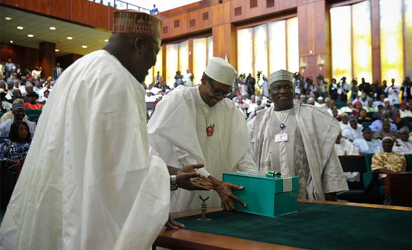

Some stakeholders and economic experts in Borno on Wednesday, expressed mixed feelings over the 2017 budget presented by President Muhammadu Buhari.
Some said they were confident about the president’s political will, others predicted a rubust economic outlook in 2017, with drastic economic reforms imminent.
MalamAbdullahiGana, a civil servant, said the 2016 budget had not yielded much positive results. “What particular project has been carried out with the 2016 budgetary figures.
The citizens haven’t felt the benefits of this year’s budgetary dispensations and are very hungry.
“They cannot find the time to listen or read about 2017 figures when that of 2016 hasn’t helped their lives. “The government must find a way to circulate money in the ecoñomý so that it gets to the impoverished and hungry citizens,”Gana said.
“President Buhari said the 2017 budget would contain proposals and packages that would lead Nigeria out of the present economic recession.
“We are glad that most of the government policies are targeted at reducing unemployment and poverty, and wealth creation.
“The social intervention programme of N500 billion in the 2017 Budget would go along way to cushion the hardship of Nigerians,” he said. Bulama Baba, another civil servant, said the effort of the government to diversify the economy was very commendable.
“By declaring that the economy must be diversified, the president has said it all; that is his economic policy and the direction of his government.
“It is left for those in the business environment to change the way business is done, to turn around agriculture, mining, local production of the basic needs of the Nigerian people.
“Come to think of it afterall what is budgeting and how does it affect the welfare of the people.
“Budgets are just guidelines in spending if you have and want to spend or proposals. “In 2016, the government made a projection (budget)on income and expenditure based on a certain amount of crude sales.
“Unfortunately, that is not realisable because of obvious reasons,fall in crude price which accounts for 80% of governments revenue.
“That has already created a gap and it means readjustment to give more attention to priority areas.”
Malam Muhammad Ciroma said if all proposals that the president presented in the assembly would be executed with integrity, Nigeria would have no cause to be broke. “It is no doubt that the PMB government has made significant gains in terms of governance and transparency in the oil sector.
“The government must therefore monitor effectiveness of operations at the refineries and show a readiness to tackle difficult issues, especially the Niger Delta militants.”
Mr Muhammad Askira, a lecturer at Ramat Poltytechnic, said:
“By what ensued in the 2016 budget, it has brought out the fact that budgets were never wholistically prepared in this country for anything at all.
“It was cut and paste actually, nobody cares so long as money will be made available to be shared, with no accounting procedures followed and budget monitoring non existent.
“Supposing there was no change in government from PDP to APC, you and I would never have known the inadequacies in running the government of Nigeria or any government before, for that matter.
“It was just a bandwagon; people were carried along to ‘eat’ what was offered them and no quetions asked.
“The onus (is) on this administration to put things rightly in place and do things the right way is enough exercise to last it through its first four years,”Askira said.
However, Mr Friday Nwadinobi, a resident of Gwange quarters, said polarisation of the country along so many fault lines was affecting governance.
“The loyalty any leader gets from the civil servants or subordinates depends on ethno religious beliefs or alignment. “Saboteurs are everywhere.
And for a governmemt that has clearly declared war on corruption, when even the head of an arm of government is under trial, leaves so much to be desired.
“Critisising the government that is bringing change may not be the solution. “The presidency must come out and educate Nigerians the more on what it is doing, because they are doing so much to get us out of the problems we are in; but only those who have ears to listen or eyes to see can assimilate that.
“When economists are critisising the economic team because they feel they know it all and should have been part of it, then you know that something is wrong with us. “Is the implementation of the TSA not a great departure from previous economic policies ? Is that not enough to praise the political will and decision of the government ? “For the government to survive to this point, with all the problems it inherited like Niger Delta crises, corruption, insecurity, poor infrastructure and many others, the government of President Muhammadu Buhari deserves commendation,” Nwadinobi said.
Vanguard




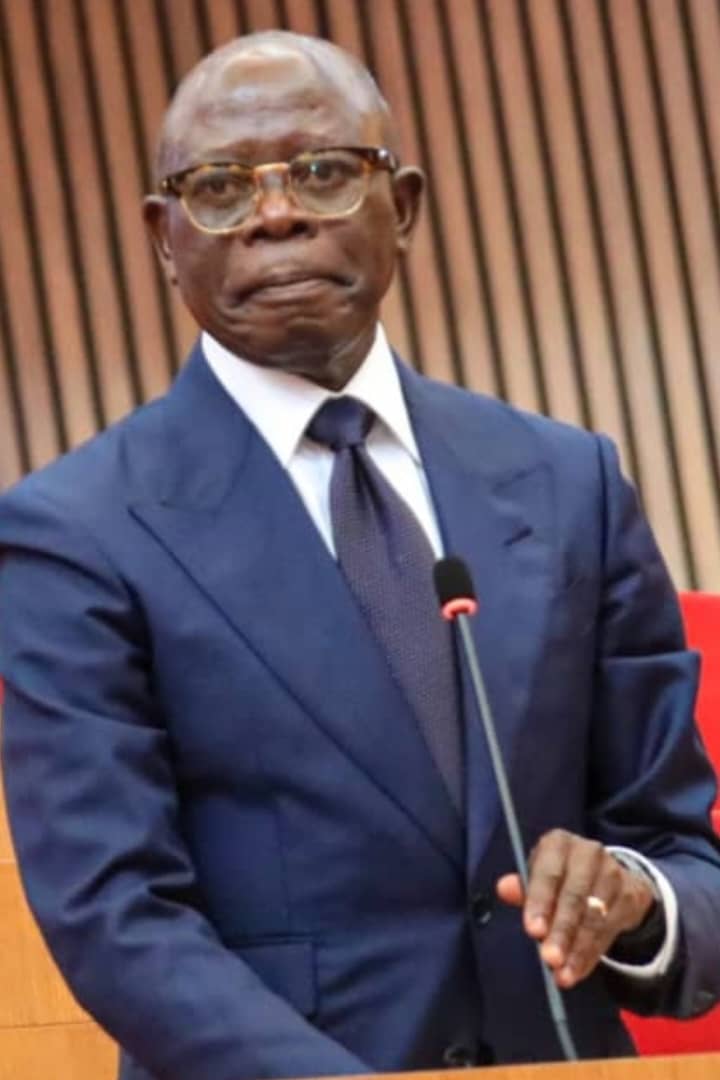
Daniel Eromosele Eulogize Adams Oshiomole as he turns 74 years
Today, I celebrate an exceptional leader, a fearless voice for the people, and a man whose life has remained a symbol of courage, sacrifice, and unwavering commitment to justice—Distinguished Comrade Senator Adams Aliu Oshiomhole.

Your journey has been nothing short of inspiring. From your days as a vibrant labour leader to your impactful tenure as the Executive Governor of Edo State, and now as a respected Senator of the Federal Republic, you have consistently demonstrated what it means to serve with integrity, strength, and purpose. Your contributions to the growth of our nation and the development of Edo State remain indelible and deeply appreciated.
You have not only built structures and institutions but have also built people. I am personally a beneficiary of your leadership, your guidance, and your belief in empowering others. Your influence in my life has been profound, and I remain grateful for the opportunities and inspiration you have given me.
On this special day, I celebrate not just your achievements, but the man you are—resilient, principled, and ever committed to the progress of Nigeria and her people.

May this new year bring you renewed strength, greater wisdom, good health, and more remarkable accomplishments. May your legacy continue to shine brighter with each passing year.
Happy Birthday, sir. Wishing you many more fruitful and impactful years ahead.
celebrity radar - gossips
Accolades to Empress Genevieve Wining as she Celebrate birthday in Grand style

Accolades to Empress Genevieve Wining as she Celebrate birthday in Grand style
Emmanuel Clement
Vilnius, Lithuania – The Grand Hotel Vilnius will host a grand birthday celebration in honor of Her Majesty The Empress Genevieve Wining of the United Kingdom of Atlantis (UKA) on April 4th, 2026.
The four-day event promises to be an extravagant affair, marking the special birthday of Empress Genevieve Wining. The celebration will take place at the prestigious Grand Hotel Vilnius, Lithuania, renowned for its luxurious ambiance and exceptional service.

According to the event flyer, the birthday celebration will be a spectacular occasion, fitting for an empress. Guests can expect an elegant setting adorned with golden accents, sparkling champagne, and festive decorations, creating a regal atmosphere befitting the occasion.
The Empress Genevieve Wining of UKA is expected to grace the event, which will include various festivities and celebrations in her honor. The occasion aims to bring together dignitaries, followers, and guests to commemorate the empress’s birthday with grandeur and joy.
For media inquiries, accreditation, or further information about the birthday celebration of The Empress Genevieve Wining of UKA, please contact the event organizers.
Courtesy of His Excellency Emperor Prof. Solomon Wining. UKA

Today, Dr. Chris Okafor turns a year older
~By Sunday Adeyemi
It is widely acknowledged that the exceptional Dr. Chris Okafor, a man of great character, always celebrates his birthday on April 4th, and in recognition of this occasion, I am inspired to write this special tribute to honor him.
Today marks a momentous occasion as we commemorate the birthday anniversary of Dr. Chris Okafor, a rare gem, a perfect gentleman, and the revered founder of Grace Nation Church, aka Liberation City.
Without reservation, this versatile and dependable Oracle foundry has consistently proven itself worthy of the accolades bestowed upon it on this notable anniversary.
Let it be reiterated that Dr. Chris Okafor is a leader known for his generosity and commitment to humanity’s welfare and advancement. The special gifts donated recently to widows and widowers within and outside the church are a testament to his exceptional leadership.
Your reputation as an outstanding and authentic man of God is evident in your exceptional goodwill and philanthropic endeavors.
Your dedication and perseverance have yielded impressive results, and numerous people, including myself, are justifiably proud of the remarkable work you are doing.
You have consistently exemplified outstanding leadership in the Christian community, demonstrating the profound impact of your role as a gift from God to humanity. I firmly believe this to be true.
Here’s to a year of productivity, success, and happiness. Congratulations and warm wishes on your birthday, sir.
Sunday Adeyemi
Your Son


-

 society7 months ago
Religion: Africa’s Oldest Weapon of Enslavement and the Forgotten Truth
-

 news4 months ago
WHO REALLY OWNS MONIEPOINT? The $290 Million Deal That Sold Nigeria’s Top Fintech to Foreign Interests
-

 society6 months ago
“You Are Never Without Help” – Pastor Gebhardt Berndt Inspires Hope Through Empower Church (Video)
-

 celebrity radar - gossips2 months ago
Dr. Chris Okafor Returns with Power and Fire of the Spirit -Mounts Grace Nation Altar with Fresh Anointing and Restoration Grace on February 1, 2026
You must be logged in to post a comment Login
You must log in to post a comment.