
celebrity radar - gossips
2023: Datti, the Future and Fulani Advantage.

*2023: Datti, the Future and Fulani Advantage.
By Bolaji O. Akinyemi.
The invincibility of Fulani in our political space is far more than what can be seen and measured. From the conquest of Sokoto and northern Nigeria till date, their expansionism and entrenchment hasn’t abated. That is who Fulanis are, and Datti is one of them! The younger brother of Hakeem Baba-Ahmed on whom I wrote: *”Northern Elders and Their Mouth from Mauritania”.*

Reminding me of Datti’s Fulani identity is needless. Our experience with the tribe might have been generally not pleasant, but no tribe is entirely bad and none is outrightly good!
Datti, I hope will be the good report of Fulani in leadership. Realist me, however, good or bad is prepared, the future will happen! If history is the panacea to the future, it won’t be out of place to take caution based on history.
The frenzy of the Obi-dients shouldn’t be beclouded by the reality of what lies ahead. Datti is first a Fulani man, a 2nd generation one at that. Even the Bible supports Datti’s possibility of favoritism of his family of faith!
Gal 6:10 (NET): “So then, whenever we have an opportunity, let us do good to all people, and especially to those who belong to the family of faith.”
Islam no doubt is a generous faith. It has given undue advantage to immigrants while indigenous Muslim citizens are being compelled by Northern Elders to step down. Their Christian counterparts begged for Vice presidency yet weren’t given.
The scale of balance in the north is pivoted on one pillar, Islam and the dynamic swings in the direction of 2 Muslim tribes, Fulani and the Kanuri, every other tribe and religion will pick the floor for whatever the scale pan couldn’t hold.
That is the reality we are compelled to rationalize against by civilization but 99.9% of Fulani are primitive and uncivilized, living in the forest and watching the back of their elites corps who in turn ensure they are protected by policies and actions whenever and wherever needed!
Should Obi be suspicious of his Fulani running mate: “seeing what Atiku did to Obasanjo? Atiku nearly topedoed Obasanjo, despite that OBJ was a very strong personality and former military head of state”!
A brother and friend, a pen warrior who rose to become an editor of one of the leading Newspapers in the country wrote in reaction to my article; *2023 Election: Fulani Versus the rest of Nigeria* thus:
_”Can Obi survive where Obasanjo nearly perished? The same Obasanjo was reduced to a figurehead military head of state by his deputy, Shehu Musa Yar’Adua, a Fulani! Beware of the Fulani!_
_Eliminating the Fulani from the 2023 election equation is a task that must be done!_
_Hence, the PDP and LP tickets must be avoided like a plague. Only Tinubu’s Yoruba/Kanuri and Kwankwaso’s Hausa/South South tickets should be considered. A word, they say, is enough for the wise!”_
His counsel seems armless when viewed from the prism of politics, but reality must tend politics, informed by history and prevailed upon to chat a new path to the future. While we can’t deny the tendencies of each component tribe that make up the house of Nigeria based on historical antecedents, denying the rights of individual to elect and be elected is nothing but a campaign of calumny and manifest democratic ignorance. Bare faced tribal hatred that must be avoided!
Ours is a democracy and its tenets must inform our thoughts, guide of decisions and initiate our actions!
A lesson in politics taught me by Bishop Theophilus Ajose, PFN DPG Director for Lagos state is the need for us as Christians to be in every political party where primary decisions are made for secondary voters’ decision. This is the Fulani advantage. We must be strategic going forward, like Fulani a tribe of less than 5 million people overwhelming a nation of over 200 million, we must be everywhere!
In 2015, I was on the side of Nation Builders. I knew Goodluck was better than Buhari, partisan politicians thought otherwise and fell prey to the Oligarchy plan!
In 2019, the choices were between Fulanis’ devil and the deep blue sea.
Nation Builders knew Atiku was a Better Fulani man than Buhari who was half Fulani and half Kanuri. With all due respect to Ijebu and Ijesa people, do permit me to use this uncharitable reference of an adage; ijebu o dara, ijesa o sun won, enikan lohun ijebujesa! That is the summary. Fulani/Kanuri leadership provided by Buhari. But partisan politicians in hope of “Emi lokan” thought otherwise, hence we are here!
Burdened with 77 trillion and in search of an amount over that in alleged stamp duty fraud!
2023, we are not stranded facing the blue sea while the devil is in chase of us. Today we have a third force birthed not by us, but the high-handedness of PDP. Within the context of our exigencies, all Nation Builders should agree with me that Obi is the best among the LEADING four! Partisan politicians are saying otherwise in defense of their parties and candidates!
In priority of our needs; if fighting insecurity is the premium, check Obi’s record of Anambra before his administration and during his administration.
If checking political elites and legislative corruption is of any importance to us as a nation, check on Obi’s administration efforts as Governor of Anambra state. He was impeached for this purpose, all thanks to the hope of the common man, the judiciary!
If education is the foundation upon which all great nations are built, check Obi’s achievement in Education!
On the economy – we must never be tempted to measure by the hidden channels of greasing hands and lining pockets under infrastructural developments – which the wellbeing of the state as it provides opportunity for the well-being of individuals within the state. What then was the economy of Lagos and Anambra under Tinubu and Obi as Chief Executives of their states?
Obi has promised consumption to production. Tinubu has promised to reduce purchasing power and to widen tax net. Each of them has personally proven their capacity in these areas. Obi is a stingy man consuming little and producing so much! His expenses doesn’t look like what can threaten his wealth, it never did Anambra in 8years, he rather left billions without any loan burden whatsoever. Is it bad to take loan? No! But can we afford to add to our overburdening? Growth is possible without loan, Malaysia has taught the world!
Tinubu widened the net of tax collection in Lagos and for as long as Lagos exists, his unborn children can never lack. This is the choice before us!
Obi is not a saint and we can’t find any, anyway. Within the context of our urgent need to keep Nigeria together as one and purse the 4 agenda mentioned; insecurity, corruption, education and the economy, Obi is my choice and honestly should be for anyone who truly love Nigeria!
In conclusion; we can’t deny Datti or any other man of any tribe their legitimate rights as citizens but we all as tribesmen can protect our interests by sending true representatives of our communities to the national assembly! Under the APC administration of one Fulani President and one Yoruba Vice President between 2015 and 2023, how come things have fallen so bad, are all our Senators and House of Representatives Members also Fulani?
This situation Image-Nation is seeking to confront and provide solution to, God willing with the cooperation of Nigerians at the Blue Chamber, on the 18th of February 2023 decisions will be taken in favour of a united Nigeria and in protection of our ethnic nationalities!
Blue is the colour of love, our Green and Red Chambers must draw their mandate from our Blue Chamber, blue being the colour of LOVE must lead us to this election.
Green speaks of a new beginning, of growth and the productivity it must birth!
Red speaks of Sacrifice, courage and justice!
Let’s make it a new beginning of productivity and justice at the BLUE CHAMBER, a people’s driven “National Assembly”. Where worthy representatives of the people to the Green and Red Chambers of our National Assembly in line with the values of sacrifice, courage, justice for new beginning of growth and productivity will be decided and endorsed for the new Nigeria!
Will PDP Senators and House of Reps Members be comfortable in an Obi led Presidency? May be, and may be not! APC Senators and House of Rep members are just the other side of the same coin, a legislative gang up can’t be ruled out given Obi’s determination to lower cost of governance and push for cuts in legislators’ allowances! We must decide NASS composition away from political party tradition. Those who have proven themselves worth in the 9th Assembly, we will work and walk in their constituencies to return. New Legislators on tickets apart from APC and PDP should be given opportunity.
A new Nigeria can only be birthed in the chambers of the National Assembly.
Our Senators and House or Reps Members are far more important than who becomes the President in the dynamics needed to reset Nigeria!
*Legislative Revolution Network, LRN* is the only way to make it possible!
Be Honourable! Join us at the Blue Chamber for Image-Nation!
Dr Bolaji O. Akinyemi is an Apostle and Nation Builder, President Voice of His Word Ministries and Convener, Apostolic Round Table.
08033041236
[email protected]




celebrity radar - gossips
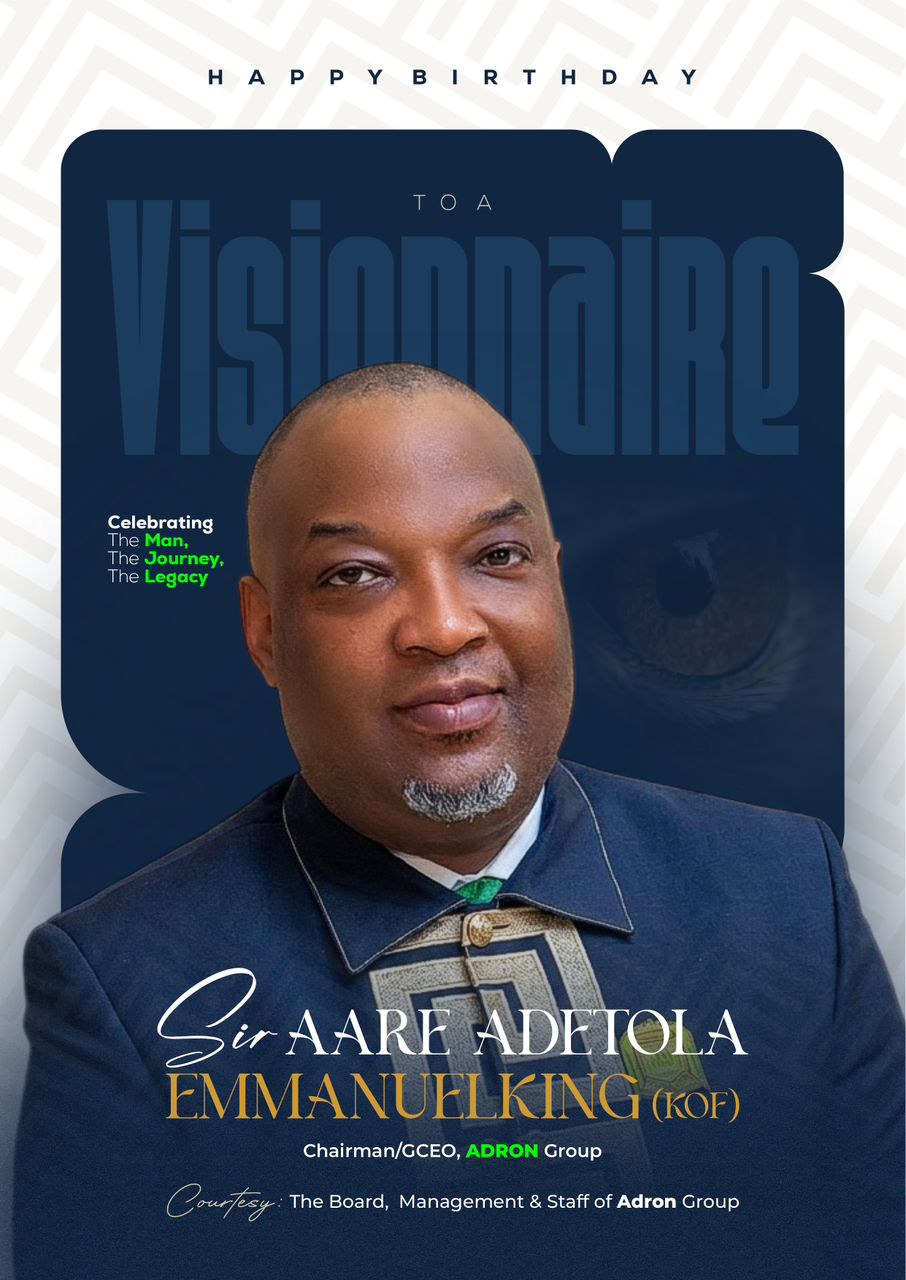
Adron Homes Celebrates Visionary Chairman, Aare Adetola Emmanuel King, at 51
Adron Homes Celebrates Visionary Chairman, Aare Adetola Emmanuel King, at 51
The management and staff of Adron Homes and Properties Limited have joined family, friends, associates, and well-wishers across the globe to celebrate their Chairman and Chief Executive Officer, Aare Adetola EmmanuelKing, as he marks his 51st birthday.

In a statement released by the company, the milestone was described as a celebration of an exceptional leader whose vision, resilience, and entrepreneurial brilliance have not only transformed Adron Homes into a household name in Nigeria’s real estate sector but have also redefined affordable housing across the country.
Under his dynamic leadership, Adron Homes has continued to expand its footprint, delivering value-driven residential solutions while empowering thousands of Nigerians with opportunities for home ownership. His commitment to excellence, innovation, and customer satisfaction has remained the driving force behind the company’s sustained growth and industry leadership.
The statement further highlighted Aare EmmanuelKing’s passion for nation-building and community development, noting his significant contributions to job creation, youth empowerment, and the promotion of socio-economic development through real estate investments.
“As a leader, mentor, and visionary, Aare Adetola EmmanuelKing has consistently inspired a culture of excellence, integrity, and dedication within the organization. His ability to turn bold ideas into reality continues to position Adron Homes as a trailblazer in the industry,” the statement read.
The company expressed profound gratitude for his steadfast leadership and prayed for continued wisdom, strength, and sound health as he embarks on another year of impactful achievements.
As he celebrates his 51st birthday, the entire Adron Homes family proudly honours a man whose legacy continues to shape the future of real estate in Nigeria.
Happy 51st Birthday, Aare Adetola EmmanuelKing!
Oba Ara Releases Emotional Tribute to Late Taiwo Adegbodu
Taofik Afolabi
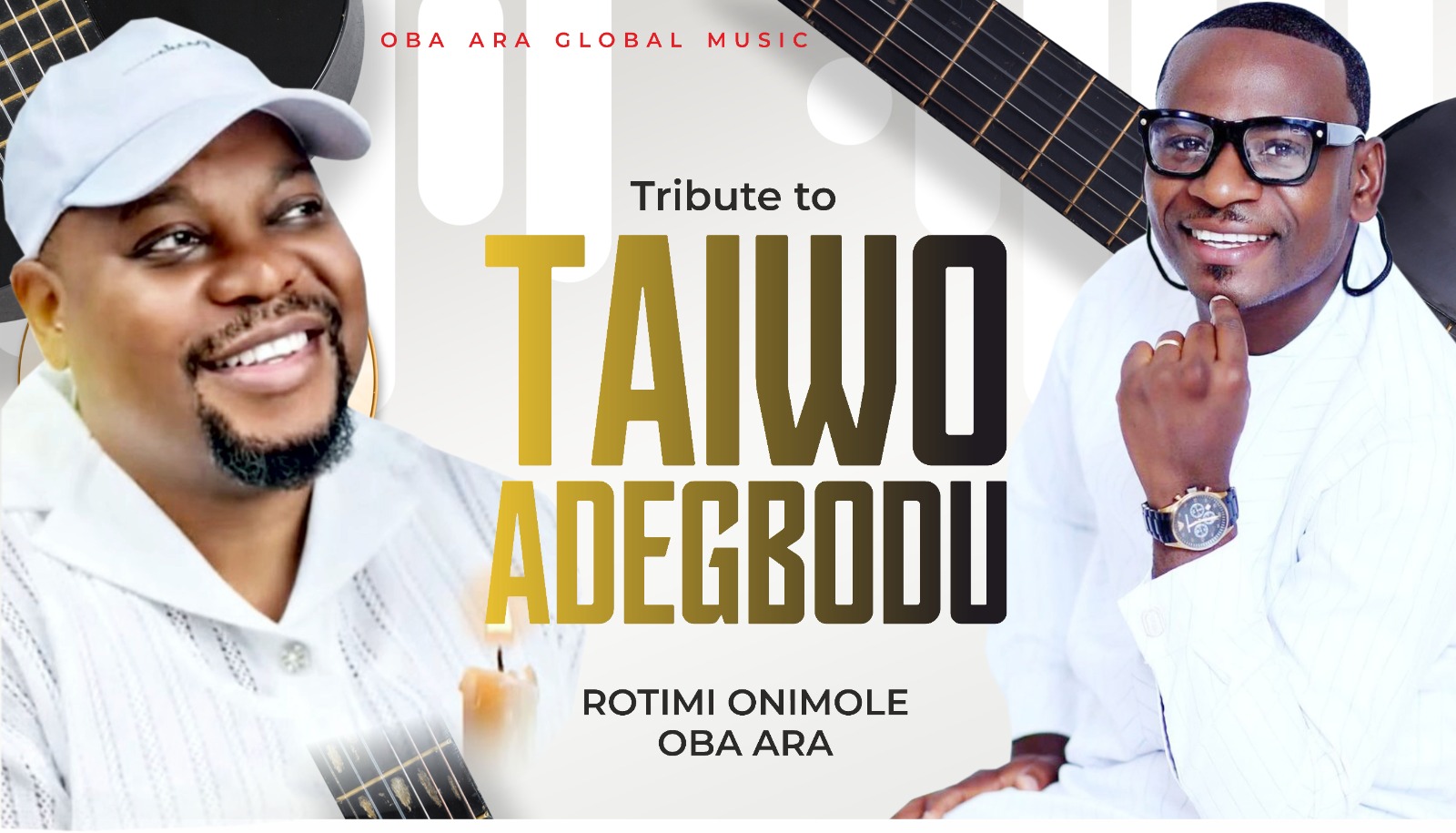
The gospel music community continues to grieve the painful loss of Taiwo Adegbodu, a beloved figure whose sudden departure left a deep void among fans, colleagues, and loved ones. In response to this loss, renowned gospel minister Rotimi Onimole, popularly known as Oba Ara, has released a moving tribute song that captures both the sorrow of the moment and the enduring legacy of the late singer.
Oba Ara, a proud son of Isale Eko, channels raw emotion throughout the song, using heartfelt lyrics and soul-stirring melodies to reflect on his personal connection with Taiwo Adegbodu. In the tribute, he openly expresses how deeply the news of Adegbodu’s passing shook him, describing it as a painful and unexpected loss that is difficult to come to terms with.
The song goes beyond mourning, it celebrates the life, ministry, and impact of Taiwo Adegbodu. Oba Ara highlights the late artist’s dedication to spreading the gospel through music, his inspiring voice, and the spiritual influence he had on many within and beyond Nigeria. Through powerful verses, he paints a picture of a man who lived for God and touched countless lives through his ministry.
Listeners have described the tribute as both comforting and deeply emotional, as it resonates with the collective grief of the gospel music community. It serves as a reminder that although Taiwo Adegbodu is no longer physically present, his music, message, and legacy will continue to live on.
In honoring his late colleague, Oba Ara not only pays his respects but also offers a source of healing for fans and fellow ministers, using music as a tool to process grief and celebrate a life well lived.
celebrity radar - gossips
Buratai, Fagbemi , Shagaya, Olofa, Others Eulogise Olowu Kuta’s Olori On 60th Birthday, Foundation Launch
Buratai, Fagbemi , Shagaya, Olofa, Others Eulogise Olowu Kuta’s Olori On 60th Birthday, Foundation Launch
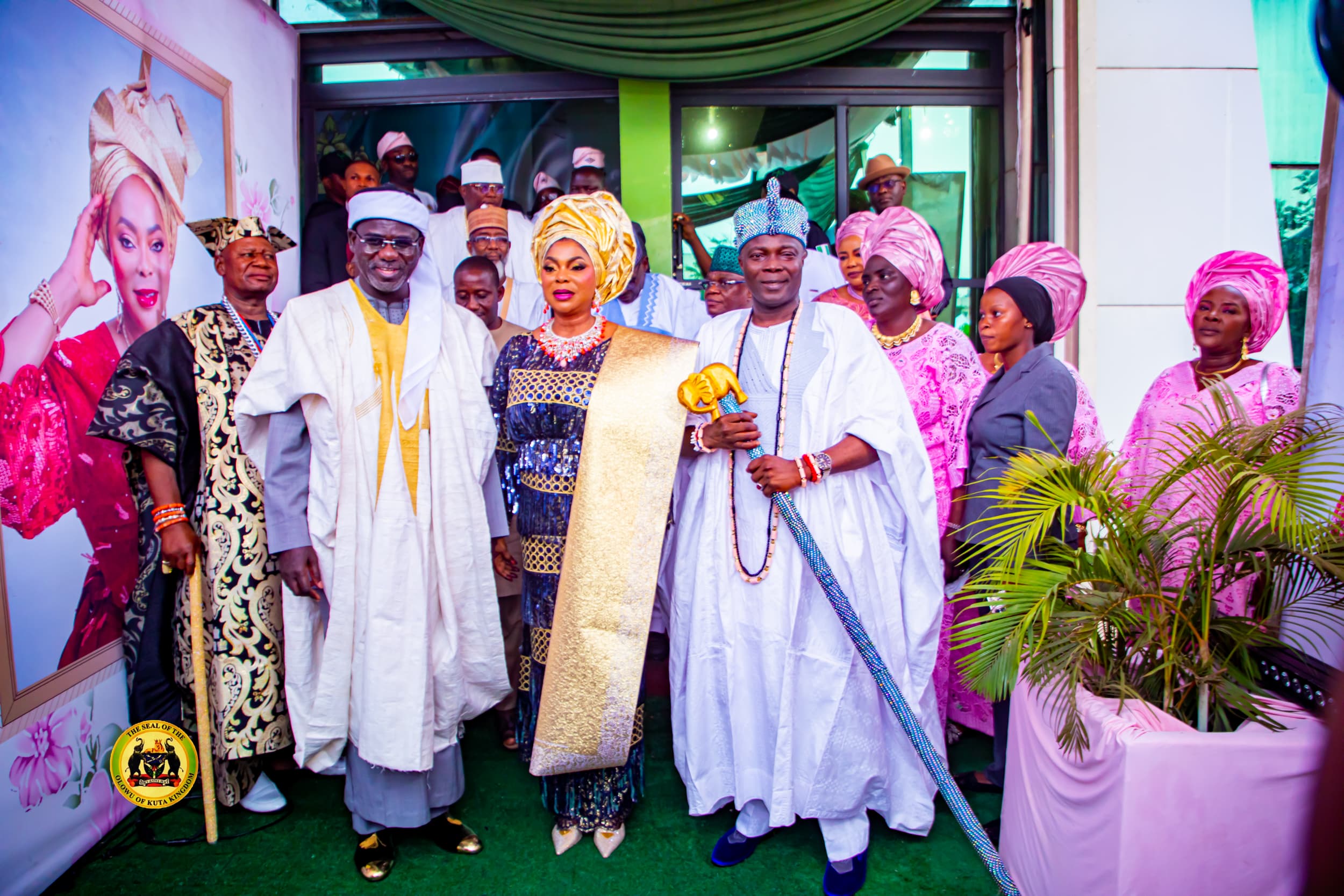
Eminent personalities across the Nigeria stormed the TFK Event Centre, Bala Mohammed Way, Guzape, Abuja, to celebrate the 60th birthday of Olowu Kuta’s Olori, Queen Jumai Amoke and her Foundation Launch on Saturday 28, March 2026.

From former Chief of Army Staff, Lt Gen TY Buratai rtd, to the Minister of Justice and Attorney-General of the Federation, Prince Lateef Fagbemi; Olofa of Offa, HRM Oba Mufutau Gbadamosi. Even top businesswoman and socialite, Chief (Mrs) Bola Shagaya, was in attendance.


Other dignitaries were newly promoted Deputy Inspector-General of Police and former AIG Zone 2 , Lagos , Adegoke Fayoade, Major General Abdumalik, Major General Samuel Adebayo rtd (Fmr CDI);
Major General Anthony Omozoje rtd (Fmr Copp);
Alhaji Tajudeen Owoyemi (Asiwaju of Offa and CEO Radisson Hotel Nigeria;
Dr Waheed Olagunju, former managing director of Bank of Industry, Oniba of Iba, Lagos State, HRM Oba Dr Suleiman Raji ;
Justice Falola, Olu of Ile-Ogbo , Oba Adetoyese amongst many traditional rulers and captains of industry too numerous to mention.
Speaking at the occasion, the Chief Host, Olowu of Kuta, HRM Oba Dr Adekunle Oyelude Makama, CON , Tegbosun iii, who is also the husband of the celebrant commended Queen Jumai for ‘ her slender arms full of kindness’ to establish such humanitarian Foundation, ‘Amoke Children and mother in Need Foundation’ at a time Nigerians are going through economic crisis occassioned by the global meltdown.
Olowu also commended her steadfastness and love for the less privileged and downtrodden.
The monarch refrenced the task before his wife’s humanitarian gesture said her best is yet to come.
” Olori Amoke Jumai, I celebrate you. You will celebrate 70, 80, 90 and continue to shine as you continue to put a smile on people’s faces. I love you, “Olowu Kuta added.
To Lt Gen Buratai, a former army chief and former Nigerian Ambassador to Benin Republic, the reward of hard work is more work.
Buratai, who also doubles as Balogun Agba of Owu Kuta, a chieftaincy title reserved for a generalismo congratulated Queen Jumai for attaining the age of 60 in good health.
The retired army General said he’s not surprised by the turn out of eminent personalities across the country to celebrate the Olowu Kuta’s Olori because she merited it through her hospitality to all, adding that Allah the most merciful, most beneficial would accept all her act of ibadah.
The minister of Justice, Prince Fagbemi, was full of praises for Queen Jumai for deeming it fit to have a place in her heart to accommodate the needy and less privileged in ‘our society.’
Prince Fagbemi urged the guests to contribute generously to support the Foundation in order to continue to alleviate poverty and put a smile on the faces of the people.
” I congratulate you on your 60th birthday and Foundation Launch. I wish you many happy returns of the day and many more fruitful services to the country and motherland”, Prince Fagbemi added.
The celebrant, Queen Jumai who was grining from ear to ear thankfully said she was excited by the turn out and the response of the people to her foundation.
Queen Jumai, however, promised to continue to use her resources and donations received for the good of the needy and less privileged in the society.
” I want to appreciate my own Kabiesi Olofa of Offa , for his presence and im I’m using him as a point of contact to all other Kabiesis present here, the minister of justice and Attorney-General, you’re welcome, sir; Mrs Bola Shagaya, I salute your enterprise, Lt Gen Buratai, I’m grateful, sir; DIG Fayoade, Justice Falola and other dignitaries too numerous to mention, I thank you, all. To my darling husband, Kabiesi Olowu , I thank you immensely for your support. And to my family and friends, I thank you , all. E se pupo!”, she said.


-

 society6 months ago
Religion: Africa’s Oldest Weapon of Enslavement and the Forgotten Truth
-

 news4 months ago
WHO REALLY OWNS MONIEPOINT? The $290 Million Deal That Sold Nigeria’s Top Fintech to Foreign Interests
-

 society6 months ago
“You Are Never Without Help” – Pastor Gebhardt Berndt Inspires Hope Through Empower Church (Video)
-

 celebrity radar - gossips2 months ago
Dr. Chris Okafor Returns with Power and Fire of the Spirit -Mounts Grace Nation Altar with Fresh Anointing and Restoration Grace on February 1, 2026