
Politics
2023: Dumebi Kachikwu Lists The 4 Major Parties Who Rigged The Presidential Election

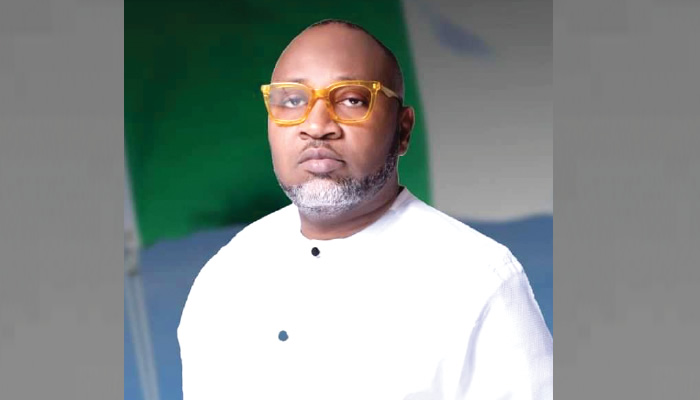
2023: Dumebi Kachikwu Lists The 4 Major Parties Who Rigged The Presidential Election
The presidential candidate of the African Democratic Congress, Dumebi Kachikwu, in an interview with FRIDAY OLOKOR, analyses the February 25, 2023, presidential election and believes that all the four major political parties rigged the poll in their strongholds
There have been controversies over the failure in the use of technology, particularly, BVAS ( Bimodal Voter Accreditation System ) during the presidential election held on February 25. What are your reactions and suggestions?
We went into this contest knowing that we were operating within a flawed system. I, for once never expected anything from INEC (Independent National Electoral Commission). I made it known to Nigerians that an INEC that refused to obey court orders and an INEC that had conducted sham elections could not overnight give us proper elections across the country. So what I said is that I predicted what happened in the presidential elections.
INEC operates in mediocrity because they assume that we’re a country of mediocre people and that ultimately we will accept mediocre or sham elections. The four major parties, that is the PDP (Peoples Democratic Party), APC (All Progressives Congress; Labour Party and the New Nigeria Peoples Party rigged in the domains of their strengths but their rigging did not materially affect the outcome of the elections. What do I mean by this? 14 hours before the elections, I told Nigerians that I as a candidate representing the ADC had no pathway to victory. I said this because it was the proper thing to do. It is what people do in an advanced democracy. You let your supporters know your position so that they can make an informed decision as to if to continue with you on what seems to be a suicide mission or to take their votes somewhere else that might be similar to your convictions, or might align more with your views and policies.

Tinubu victory
This is what I did. I am aware that other parties, the PDP, the LP and other parties knew that APC was stronger and would win the elections. A strong opposition could not overcome the APC in the election four years ago, now how could a divided opposition, a PDP broken into an NNPP, LP, G-5 and PDP take on the same united APC, a sitting political party in government?
We all knew it wasn’t impossible but those who were the candidates of those parties were being egotistical because they failed to see that what was more important were the wishes and aspirations of the Nigerian people. They failed to see that taking Nigeria on the forward path to progress was more important. They only cared about getting power for the sake of power. I warned them. I said the ruling party would win. No party has a pathway to victory.
The Labour Party was only in this because it hoped to get a run-off so that at that point, Peter Obi could tell his supporters that the only choice he had was to negotiate.
For the PDP members, their only belief was Atiku would get the nod of northern Nigeria who would say vote for Atiku Abubakar, and that might help tilt victory his way, but northern Nigerians who were the true heroes of this election said no, ‘It is the turn of the South. We will not support Atiku who is our northern brother’’ which is why Northern Nigeria decided to vote for a southern candidate but when voting, they said they would not vote for a candidate whose all campaign reeks of ethnicity and religion, which is why northern Nigeria supported Asiwaju Tinubu.
Tinubu read the campaign. He is a political maestro. He understood what was going to happen and he stayed true to form. He took on a government that wanted to demystify him and put obstacles in his way and stayed to message and he won the election. So, I congratulated him because in spite of all the odds and all the obstacles, in spite of his obvious health challenges, he was able to take advantage of our flawed political system. A flawed candidate manipulated a flawed political system and won an election in a country of flawed people. This is our situation today.

What do we do moving forward?
There are two options before us. We can go the Labour Party or the PDP route, which is to burn down Nigeria. What this also means is that denying that someone has won, start a protest and hope that the protest consumes the country so that we can have an interim government or something. Or we can then come together as an opposition, chart a way forward, define a clear-cut agenda for Nigerians and also urge the winning party to chart an agenda that we will hold them accountable to.
We must understand that Nigeria and Nigerians are bigger than political parties and the egos and ambitions of individuals. Our country at this point is challenged. Our economy’s in tatters. Security failed, our youths are unemployed, the poverty index is at an all-time high, and infrastructure deficits all-time high. We are challenged because we have failed in all sectors critical to human development. We must now come together as a people to make sure that Nigeria work.
One of the issues that really tainted the just-concluded election was the failure of BVAS and IREV and then a lot of people felt that it was possible because some forces in INEC might have been compromised. What’s your view on this?
I will say this simply as someone who is technologically inclined, who runs a technology company that BVAS as a system is not designed to give us credible elections. If we see credible elections, there are better systems that we can use.
For example, BVAS is not a voting system. It is simply an accreditation system and a system to upload results. If we speak of electronic voting, it means that we must vote electronically. But these people have hoodwinked Nigeria because Nigerians believe that they’re doing electronic voting. Voting done on the ballot paper is not electronic voting. So if we seek to do electronic voting, it means that your thumbprint must be captured electronically and uploaded immediately after you have voted onto a server and counted for everybody to see wherever they are.
That is a true electronic system. But what they’ve done is give us an accreditation system and a system that has electronic transmission capabilities. But remember that this system has not really been tested. It failed in Osun and Ekiti, how, then do we expect the system to work when we’re having nationwide elections? So what’s happened? The four political parties who understood the failures in this system took advantage of the failures to help themselves but what they did, as I said, did not materially affect the outcome because anybody who is an amateur politician understands that only the APC could have won unless there was a formidable opposition.
So in the South-East of Nigeria, we have seen one party getting 95 per cent of the votes. How is that even possible even if we’re voting for Jesus Christ? People were able to rig in their domains of strengths.
We saw what happened in Lagos, what were they trying to do? They were trying to reduce the embarrassing numbers. They knew they could post a victory there but what they did was reduce the embarrassing numbers. So it was a difference of 10,000 votes almost.
The APC were able to bring down the numbers there to a number that would not embarrass him (Tinubu). That’s what they did there. We saw areas of strength of the PDP, and how they were able to shore up the numbers to help them there. We saw what happened with the NNPP in Kano, where they were able to raise numbers and we saw children voting. In the local government where I come from, children were voting for the LP. Yes, we have the videos. So all these parties rigged in their domains of strength. But as I said, their rigging could not affect materially the outcome of this election. Ultimately, the majority of Nigerians had their way and say with the outcome of the election.
Both the LP and the PDP are challenging the election outcome in court. Do you see this as a wild goose chase?
What I expected the LP and PDP candidates to do is if they say they won, let us also hear the number of states they won and the figures. Let them show us their pathway to victory. You will never see them saying that or showing them to you. All they are doing is essential to build energy for their party going into the elections this weekend. That’s all they’re doing.
They want their people angry and charged up to go and fight and do anything possible to go and win states this weekend. Were they to concede victory to the APC, their supporters would immediately collapse and support the APC for the governorship poll.
In Rivers State, from the election results, it seems Governor Nyesom Wike supported the APC. Would you have acted differently if you were him (Wike)?
Let me break down Wike’s position for people to understand. Wike saw that certain elements within the PDP believe that the only way the PDP will win elections is by putting forward a northern candidate. Understand that Wike and co are of the old school where tribe, religion, and all these things matter. So he believes strongly that it’s not possible for a Muslim Fulani candidate to replace another Muslim Fulani. For Wike, it is absolutely impossible. It can never happen. So sensing that this was going on within his party, he started fighting to ensure that all the people who would go in that direction are neutralised. He fought to ensure that the PDP would produce a Southern candidate. This didn’t happen. He lost at the primaries. The party eventually produced a candidate from the North. Then Wike said give us a chairman from the south. The chairman who promised to resign refused to resign.
Now let me say this, history repeated itself as history always repeats itself. We saw what happened when Jonathan lost certain governors in the PDP and he lost the election. This time around, we saw what happened when some governors pulled out. Atiku messed up and missed a golden opportunity.




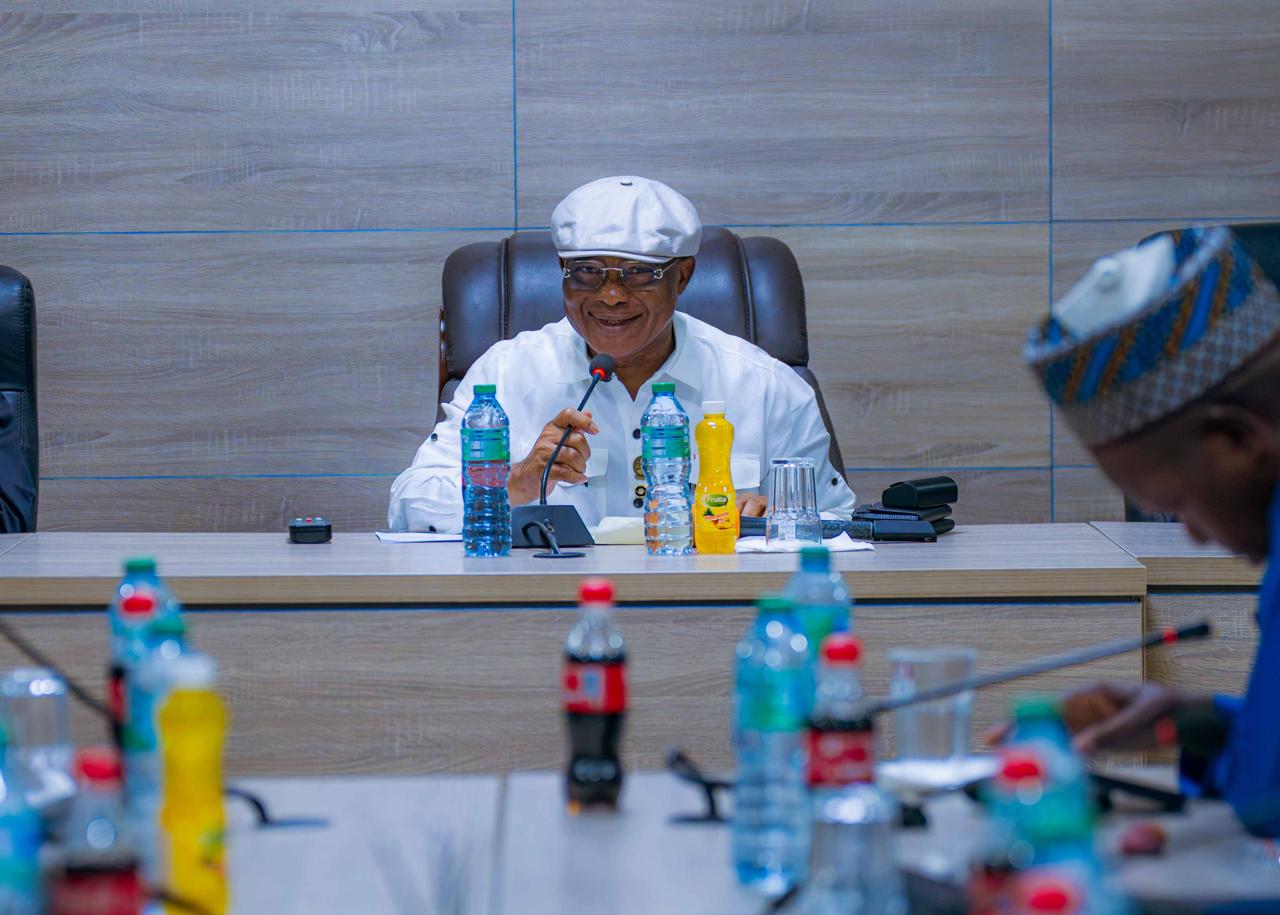
*Renewed Hope Ambassadors Step Into the Next Phase
Fresh from the successful APC 2026 National Convention, the Renewed Hope Ambassadors National, Zonal, and State leadership gathered in Abuja over the weekend, for its fourth strategic meeting, setting the tone for nationwide grassroots activation ahead of 2027.
Chaired by Governor Hope Uzodinma (Imo State) the Director General and National Coordinator of the Renewed Hope Ambassadors, alongside Deputy Director-General, Governor Uba Sani of Kaduna State, and Governor Inuwa Yahaya of Gombe State as Secretary, the session reinforced one clear direction: One Party. One Message. One Mobilization whilst also laying out a strategic roadmap for the activation of the network across all communities in Nigeria.
Backed by the strength of 31 APC-led states, the Renewed Hope Agenda is taking Bola Ahmed Tinubu’s message of progress and reform to every corner of Nigeria.
From bold economic restructuring to initiatives like NELFUND, the increase in the national minimum wage from ₦30,000 to ₦70,000, and strategic investments in critical sectors, including PNiCGI, the mission remains clear: helping Nigerians understand both the purpose and the progress of the Renewed Hope vision.
This is coordination at scale. This is grassroots engagement with purpose. This is the next phase of Renewed Hope with One Party, One Message, and One Mobilisation framework
#RenewedHopeAmbassadors #APC #WeAreAPC


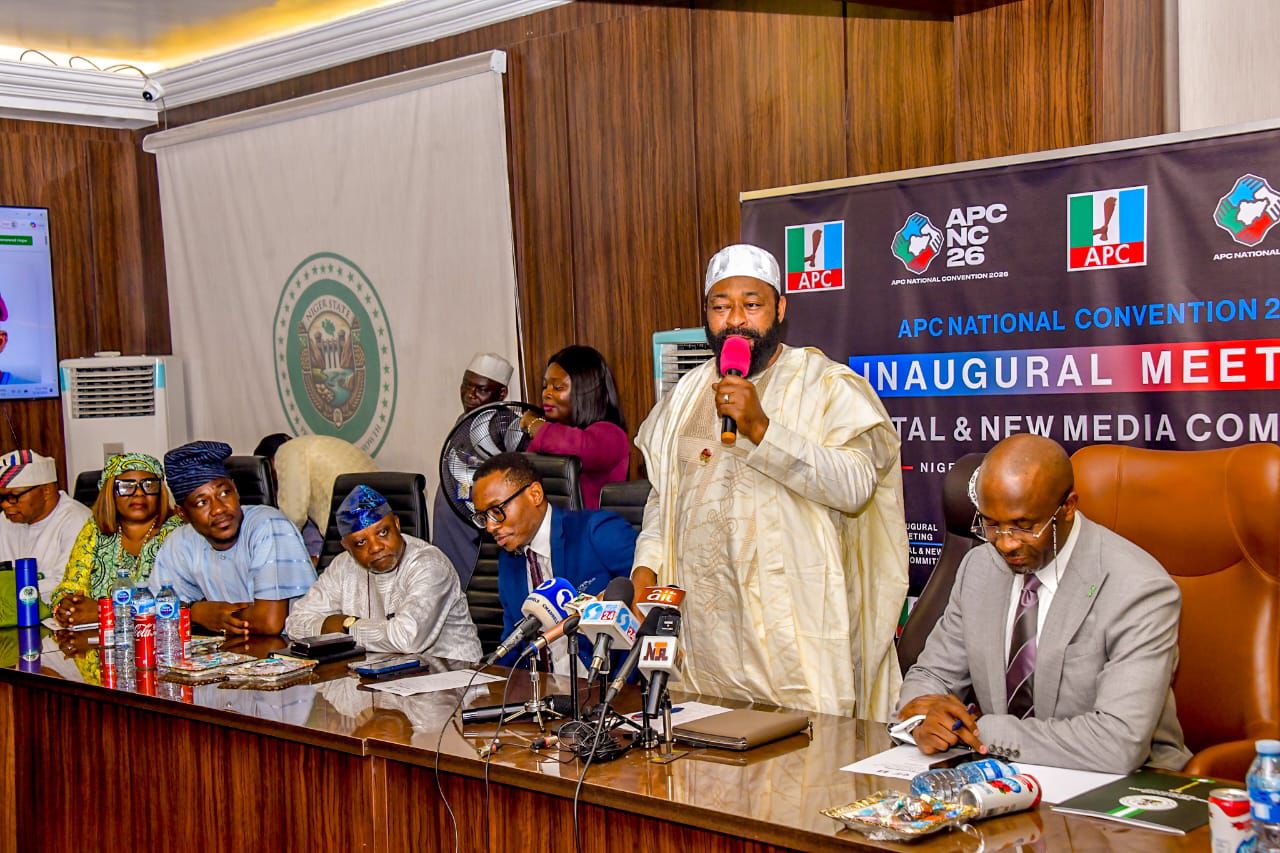
Governor Bago Inaugurates APC Digital Media Sub-Committee Ahead of National Convention.
Governor Umaru Bago has inaugurated the Digital Media Sub-Committee for the forthcoming National Convention of the All Progressives Congress (APC), scheduled to hold on March 27 and 28, 2026 in Abuja.
Chairing the sub-committee, Governor Bago tasked members with the responsibility of effectively communicating the party’s manifesto to the public.
He emphasized the need to leverage social media platforms to highlight the achievements and ongoing efforts of President Bola Ahmed Tinubu, noting that communication gaps have posed challenges that must now be decisively addressed.
The Co-Chair of the sub-committee, Hon. Benjamin Kalu, Deputy Speaker of the House of Representatives, echoed the Governor’s position, urging members to project the activities of both the party and the government to a broader audience.
He called for a deliberate and coordinated effort to showcase the party’s achievements and policy direction, stressing the importance of shaping a compelling and consistent narrative across all digital platforms.
Delivering a presentation to the committee, Otega Ogra, SSA to the President on New Media, who serves as Secretary of the sub-committee, outlined strategic focus areas to guide the team’s operations.
His presentation highlighted communication priorities and actionable steps to achieve the committee’s mandate and strengthen the party’s digital engagement.


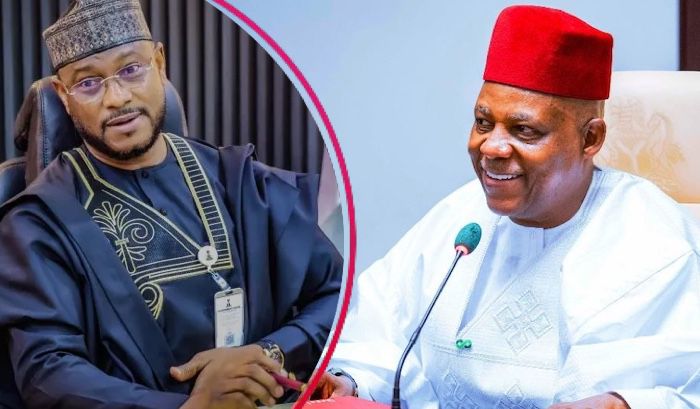
VP Shettima Set to Lead Delegation to Zamfara as Governor Dauda Lawal Formally Joins APC
The Zamfara State chapter of the All Progressives Congress (APC) has finalized plans to receive Vice President Kashim Shettima for the formal defection and reception of Governor Dauda Lawal into the ruling party, scheduled to take place on Tuesday.
State APC Chairman, Tukur Danfulani Maikatako, disclosed this during a high-level stakeholders’ meeting held in Gusau, the state capital. He noted that the Vice President would be joined by the party’s national leadership to mark what he described as a landmark political realignment in the state.
Maikatako expressed the party’s excitement over Governor Lawal’s return, recalling that Zamfara had historically been an APC stronghold and that the Governor was previously a bona fide member of the party before his earlier exit.
“We all know that Zamfara has long been one of the APC’s stronghold states, where the defected Governor was once a bona fide member. Now that he has decided to return home, having been satisfied that the APC remains his second choice after the one he left for obvious reasons,” Maikatako stated.
The Chairman called on all party faithful across the 147 wards in the state’s 14 local government areas to turn out en masse to honour the Vice President’s visit. He emphasized that the event was strategically positioned to bolster the party’s popularity and strengthen its structures ahead of the 2027 general elections.
In a strong appeal for unity, Maikatako urged members to set aside all factional tendencies, stressing that the APC remained one political family with shared goals, particularly the ambition to make Zamfara and Nigeria great again.
Echoing similar sentiments, a former state APC Chairman, Lawal M. Liman, appealed to members to cascade the message to their wards and local government areas. He reinforced the need for cohesion, noting that the party’s collective strength would be critical to achieving success in future elections.

All eyes are now on Gusau as the ruling party prepares for a high-profile political gathering expected to further consolidate its influence in Zamfara State.


-

 society6 months ago
Religion: Africa’s Oldest Weapon of Enslavement and the Forgotten Truth
-

 news4 months ago
WHO REALLY OWNS MONIEPOINT? The $290 Million Deal That Sold Nigeria’s Top Fintech to Foreign Interests
-

 society6 months ago
“You Are Never Without Help” – Pastor Gebhardt Berndt Inspires Hope Through Empower Church (Video)
-

 celebrity radar - gossips2 months ago
Dr. Chris Okafor Returns with Power and Fire of the Spirit -Mounts Grace Nation Altar with Fresh Anointing and Restoration Grace on February 1, 2026