
Politics
2027: Atiku Will Not Withdraw for Obi. A Definitive Stand in Nigeria’s Emerging Political Chessboard.

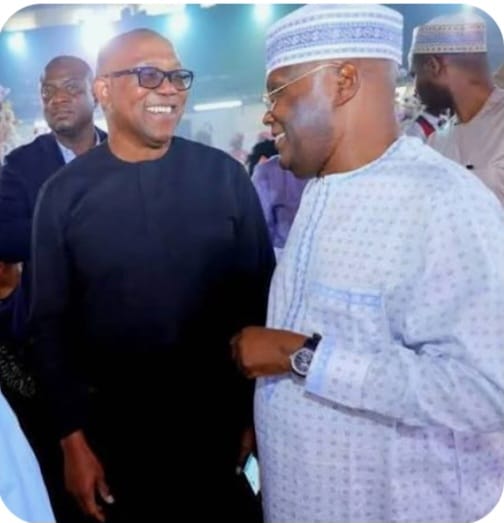
2027: Atiku Will Not Withdraw for Obi. A Definitive Stand in Nigeria’s Emerging Political Chessboard.
By George Omagbemi Sylvester
“Why Atiku Abubakar Stands Firm, What It Means for Peter Obi, the Opposition Coalition and the 2027 Presidential Contest.”
As the 2027 Nigerian presidential election draws nearer, a storm of speculation has erupted within political circles: will former Vice President Alhaji Atiku Abubakar withdraw from the race in favour of Peter Obi, the former Labour Party presidential standard-bearer now aligned with the African Democratic Congress (ADC)? Recent emphatic statements by veteran journalist and political actor Dele Momodu have now put that rumour to rest and Atiku will not step aside for Obi. That pronouncement reverberates across Nigeria’s volatile political landscape, shaking assumptions about coalition strategy, generational leadership, and opposition unity.
At a time when the opposition’s coherence is more strategic than ever, the narrative that Atiku should yield his ambition for Obi (a narrative energised mainly by sections of the Obidient Movement) has been labelled politically flawed, undemocratic and based on emotion rather than logic. This stance is now being vigorously defended by Momodu, one of Atiku’s closest allies in the ADC.

The Rumour and the Reality.
Speculation that Atiku might withdraw in Obi’s favour began circulating soon after Obi’s defection from the Labour Party to the ADC in late 2025. Some political analysts interpreted Obi’s move as part of a broader opposition realignment aimed at defeating the incumbent President Bola Tinubu of the All Progressives Congress (APC). Critics suggested that a grand coalition might require Atiku to step aside and allow Obi to lead, perhaps with a power-sharing agreement spanning two terms.
However, Momodu has categorically dismissed these suggestions as unfounded. In an interview with SaharaWeeklyNG.com in Abuja, he stated bluntly that “Atiku has no reason to abandon the race” and that whisper campaigns about his withdrawal were rooted in biased assumptions rather than political reality.
Momodu asked pointedly: why should Atiku be asked to step aside when there is no evidence that his energy, health, or capacity are wanting? He challenged critics to justify their claims beyond age-biased prejudice, noting that President Tinubu, despite similar age criticisms, is widely expected to run.
Atiku’s Record: Experience vs Emotional Politics.

Momodu did not stop at denying the withdrawal rumours; he defended Atiku’s credentials vigorously. He challenged the idea that Peter Obi is somehow the unequivocal “best of us” (a slogan popular among some Obidient supporters) labeling it not only inaccurate but an insult to other qualified figures within the ADC coalition.
He argued that Atiku’s long service in public life (rising from Nigerian vice presidency 1999–2007 to multiple presidential bids) gives him a depth of experience that cannot be easily dismissed. In his words, “He’s certainly not a saint, but he towers above most of his peers by not being a parasite feeding on the state since he left power in 2007.” That statement deftly deflects the simplistic zero-sum framing of Nigerian political qualifications.
Political scientists generally agree: a candidate’s political longevity and networks matter enormously in Nigeria’s consensus-driven electoral politics. Professor Akinyemi Adebayo, a noted scholar of African governance, once observed: “Experience anchored in wide political interaction supplies an incumbent opposition candidate with indispensable capital that cannot be substituted by short-term popularity or media fandom.” While this comment is not about any one individual, its relevance to the Atiku vs Obi debate (at least in terms of strategic leadership versus emotional allegiance) is compelling.

Obidients and the Limits of Sentiment-Driven Politics.
Supporters of Peter Obi (the Obidients) have consistently insisted that Obi is the best candidate for the opposition, capable of galvanising the youth, moderates, and disenchanted voters across Nigeria’s geopolitical zones. Some of these activists, including economist Prof Pat Utomi and human rights advocate Aisha Yesufu, have even threatened to withdraw support if Obi is not given the presidential nomination or at least an assurance that he will not be relegated to a vice-presidential slot.
In a broader context, such sentiments reveal a deeper issue in Nigerian politics: the tension between emotional activism and structured political realpolitik. Grassroots enthusiasm is indispensable, but experts caution against letting passion override process. As Dr. Eniola Adegoke, a veteran political analyst, notes: “Movements can energise a campaign, but they cannot run a party. Successful electoral strategy requires negotiation, give-and-take, and often compromise roles for which pure emotion is ill-suited.”
Momodu echoed this critique when he dismissed calls that frame Obi as the unrivalled leader. He argued that such language deepens divisions and weakens coalition logic which is exactly the opposite of what an opposition alliance needs as it gears up against a formidable ruling party.
What This Means for 2027.
At this point in the 2027 race:
Atiku Abubakar remains a key presidential aspirant with formal membership in the ADC after departing the Peoples Democratic Party (PDP). His ambitions are intact, and his resolve reinforced by trusted allies.
Peter Obi’s defection to the ADC is a strategic recalibration, intended to build opposition strength but not necessarily to displace Atiku.
Threats to withdraw support from Obi’s camp indicate a growing schism that, if unresolved, could undercut the very coalition unity both leaders ostensibly seek.
Political negotiations inside the ADC remain ongoing, with other prominent figures (including Rotimi Amaechi and others) also positioning for influence should the party’s nomination contest materialise.
This dynamic suggests that 2027 will not simply be a replay of 2023’s “Obi vs Tinubu vs Atiku” contest, but a much more complicated political negotiation involving zoning, generational representation, party coalitions, and strategic compromise.
Summative Insight: Experience, Strategy & Unity Over Emotion.
The assertion by Dele Momodu that Atiku will not withdraw for Peter Obi sets a clear benchmark for political expectations in Nigeria’s 2027 race. What we are witnessing is not merely a clash of personalities but a deeper confrontation between pragmatic strategy and sentiment-driven activism.
Atiku’s defenders argue that his political infrastructure, experience, and network (from governance to grassroots mobilisation) provide a robust foundation for Nigerian leadership that cannot simply be sidelined. Critics caution that a failure to channel Obi’s popularity into a coherent electoral strategy could fracture opposition forces at the worst possible moment.
In the final analysis, the 2027 presidential contest may turn not on individual slogans or emotional appeals, but on the ability of Nigeria’s opposition to forge credible, united, and strategic leadership that resonates across the country’s diverse and often fractured political terrain.
Nigeria’s democracy (imperfect as it is) deserves nothing less.





Politics
APC Group Endorses Fubara for 2027, Calls on Tinubu and APC to Prioritise Performance Over Politics in Backing Governor’s Second Term Ambition
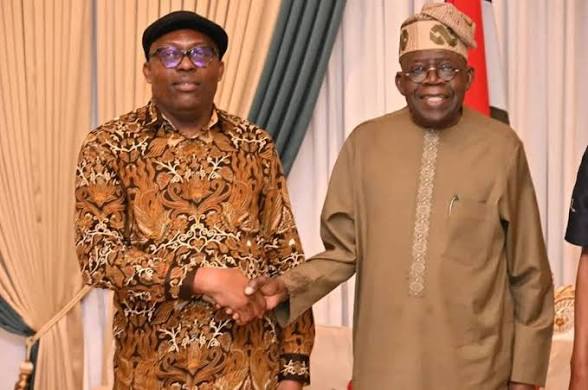
*APC Group Endorses Fubara for 2027, Calls on Tinubu and APC to Prioritise Performance Over Politics in Backing Governor’s Second Term Ambition*
The APC National Vanguard has appealed to President Bola Ahmed Tinubu and the leadership of the All Progressives Congress (APC) to support a second term in office for Siminalayi Fubara, citing what it described as “impressive and verifiable developmental strides” across Rivers State.
In a statement issued on Thursday by its National President, Dr Gbenga Salam (JP), the group said its position followed an extensive assessment tour of key infrastructure and public service projects executed under the Fubara administration.
The APC National Vanguard said the appeal was based strictly on performance, arguing that governance outcomes should outweigh partisan considerations, particularly in a state as economically significant as Rivers.
“We respectfully urge President Bola Ahmed Tinubu and the leadership of the All Progressives Congress to support the continuity of Governor Siminalayi Fubara beyond his current tenure, in recognition of his commitment to development, prudent resource management, and people-focused governance,” the statement read.
According to the group, its delegation visited multiple project sites across the state, observing ongoing and completed works spanning road construction, urban renewal, and public infrastructure upgrades.
It noted that the scale and distribution of these projects reflect a deliberate effort by the state government to extend development beyond traditional urban centres and into underserved communities.
“Our findings from the tour reveal a government that is not only active but intentional in its development agenda. The execution of capital projects across various parts of Rivers State demonstrates a clear understanding of the needs of the people and a commitment to addressing them,” Dr Salam said.
The group particularly commended what it described as prudent financial management by the administration, noting that the projects reviewed showed evidence of careful planning and efficient allocation of resources.
“At a time when economic pressures are evident across the country, it is commendable that the Rivers State government has managed its resources in a way that delivers visible and impactful development without signs of fiscal recklessness,” the statement added.
The APC National Vanguard further observed that despite political tensions in the state, the Fubara administration has maintained focus on governance, ensuring continuity in project execution and service delivery.
The group argued that such stability is critical for sustained development and should be encouraged rather than disrupted.
“Leadership must ultimately be judged by results. In Rivers State, there is clear evidence of progress—projects that are not only announced but executed, and policies that translate into real benefits for citizens,” Dr Salam noted.
The group warned that discontinuity in leadership could stall ongoing projects and reverse gains already recorded, stressing the importance of allowing a performing administration to consolidate its achievements.
“Rivers State is at a pivotal stage where continuity will allow for the completion of ongoing initiatives and the deepening of development gains. Supporting Governor Fubara for a second term is, therefore, a decision in the best interest of the people,” the statement said.
In addition to its call on the APC leadership, the group reaffirmed its support for President Tinubu, expressing confidence in his administration’s broader economic and governance reforms.
The APC group urged Nigerians to remain supportive of efforts aimed at stabilising the economy and strengthening public institutions.
“We reiterate our endorsement of President Bola Ahmed Tinubu for a second term in office, in recognition of his leadership and commitment to national development. With sustained support, the administration can consolidate its reform agenda for the benefit of all Nigerians,” Dr Salam added.
The APC National Vanguard concluded by calling on political actors to prioritise development and public interest over partisan divides, insisting that governance should always be guided by performance and accountability.
“Where leadership demonstrates prudence, delivers development, and remains focused on the welfare of the people, it deserves continuity. This is the position we have reached after a careful and independent assessment of Rivers State,” the statement added.
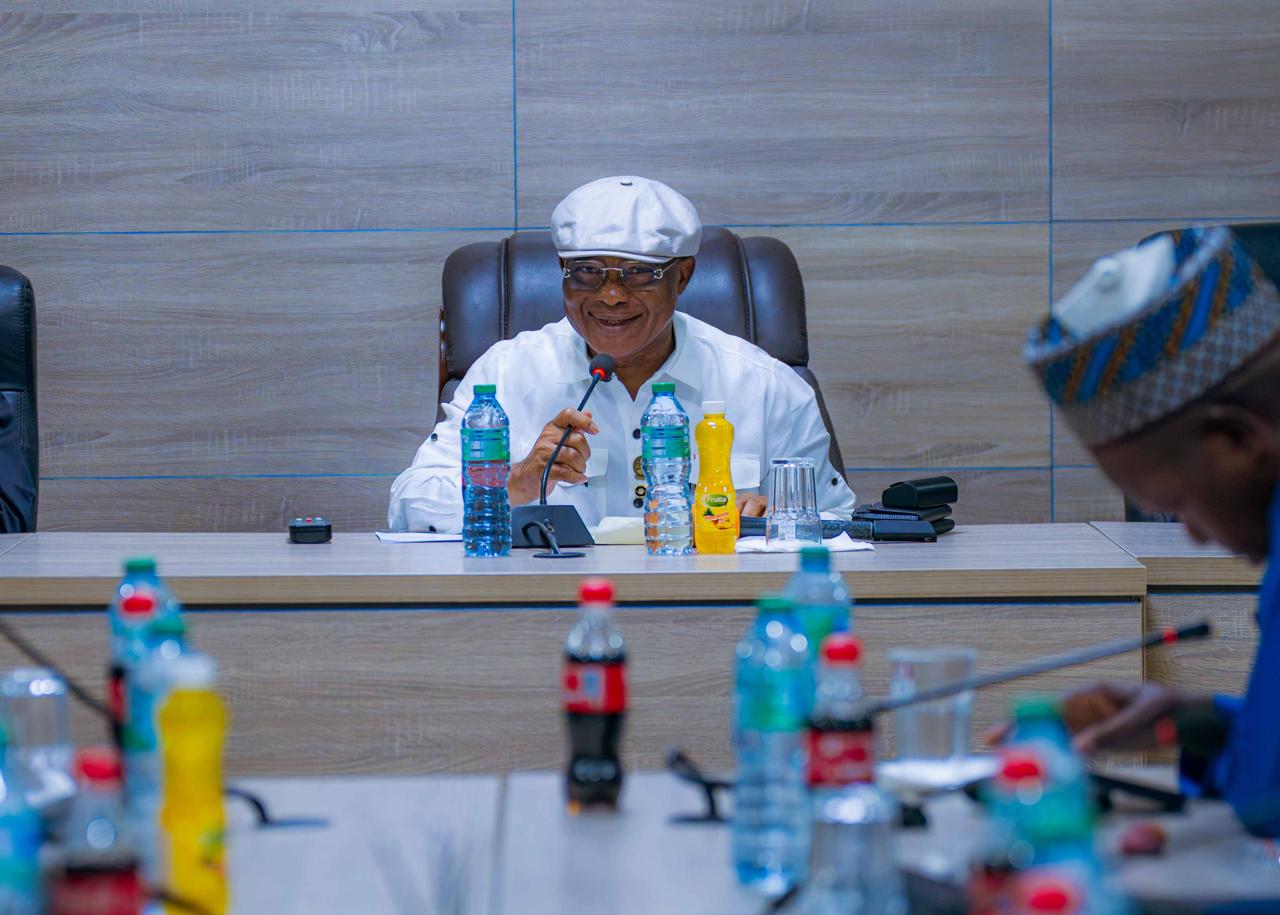
*Renewed Hope Ambassadors Step Into the Next Phase
Fresh from the successful APC 2026 National Convention, the Renewed Hope Ambassadors National, Zonal, and State leadership gathered in Abuja over the weekend, for its fourth strategic meeting, setting the tone for nationwide grassroots activation ahead of 2027.
Chaired by Governor Hope Uzodinma (Imo State) the Director General and National Coordinator of the Renewed Hope Ambassadors, alongside Deputy Director-General, Governor Uba Sani of Kaduna State, and Governor Inuwa Yahaya of Gombe State as Secretary, the session reinforced one clear direction: One Party. One Message. One Mobilization whilst also laying out a strategic roadmap for the activation of the network across all communities in Nigeria.
Backed by the strength of 31 APC-led states, the Renewed Hope Agenda is taking Bola Ahmed Tinubu’s message of progress and reform to every corner of Nigeria.
From bold economic restructuring to initiatives like NELFUND, the increase in the national minimum wage from ₦30,000 to ₦70,000, and strategic investments in critical sectors, including PNiCGI, the mission remains clear: helping Nigerians understand both the purpose and the progress of the Renewed Hope vision.
This is coordination at scale. This is grassroots engagement with purpose. This is the next phase of Renewed Hope with One Party, One Message, and One Mobilisation framework
#RenewedHopeAmbassadors #APC #WeAreAPC


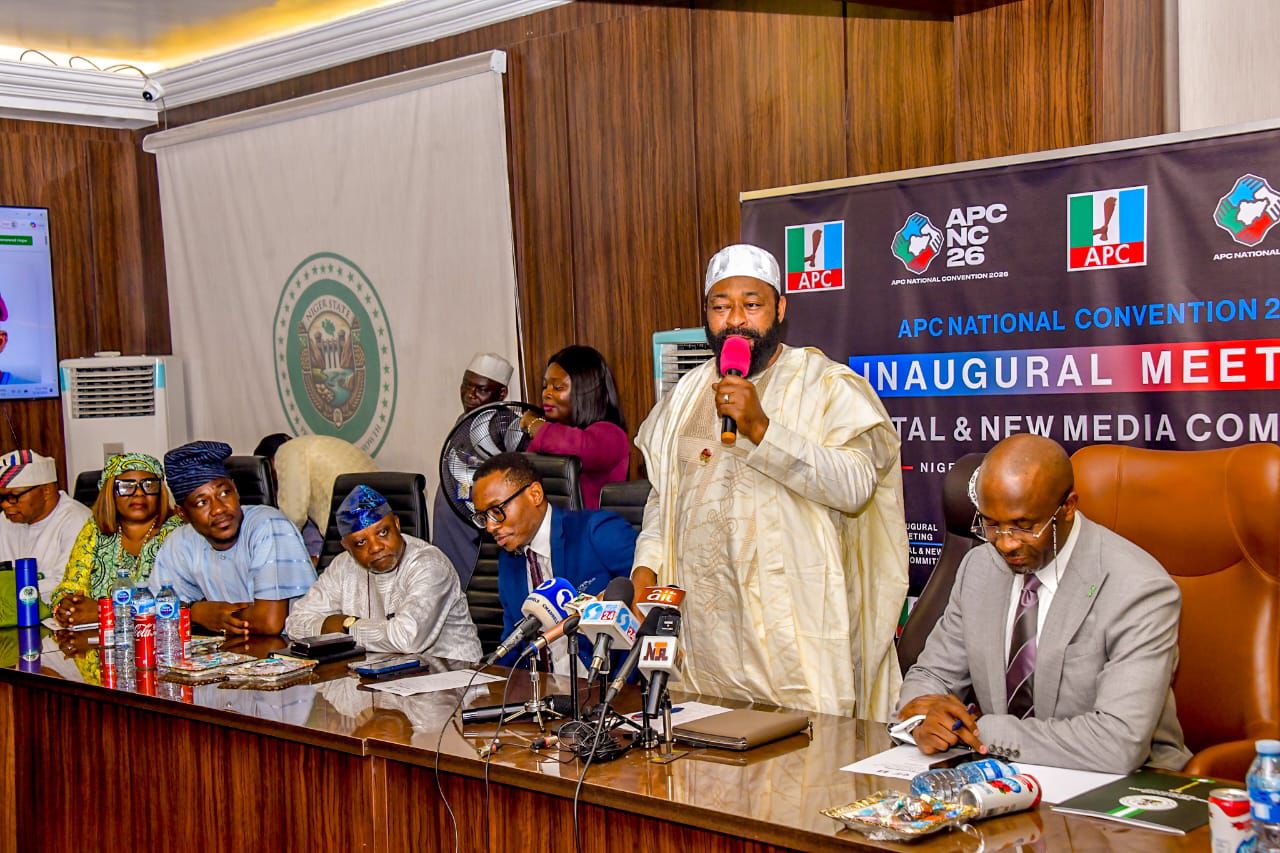
Governor Bago Inaugurates APC Digital Media Sub-Committee Ahead of National Convention.
Governor Umaru Bago has inaugurated the Digital Media Sub-Committee for the forthcoming National Convention of the All Progressives Congress (APC), scheduled to hold on March 27 and 28, 2026 in Abuja.
Chairing the sub-committee, Governor Bago tasked members with the responsibility of effectively communicating the party’s manifesto to the public.
He emphasized the need to leverage social media platforms to highlight the achievements and ongoing efforts of President Bola Ahmed Tinubu, noting that communication gaps have posed challenges that must now be decisively addressed.
The Co-Chair of the sub-committee, Hon. Benjamin Kalu, Deputy Speaker of the House of Representatives, echoed the Governor’s position, urging members to project the activities of both the party and the government to a broader audience.
He called for a deliberate and coordinated effort to showcase the party’s achievements and policy direction, stressing the importance of shaping a compelling and consistent narrative across all digital platforms.
Delivering a presentation to the committee, Otega Ogra, SSA to the President on New Media, who serves as Secretary of the sub-committee, outlined strategic focus areas to guide the team’s operations.
His presentation highlighted communication priorities and actionable steps to achieve the committee’s mandate and strengthen the party’s digital engagement.


-

 society7 months ago
Religion: Africa’s Oldest Weapon of Enslavement and the Forgotten Truth
-

 news4 months ago
WHO REALLY OWNS MONIEPOINT? The $290 Million Deal That Sold Nigeria’s Top Fintech to Foreign Interests
-

 society6 months ago
“You Are Never Without Help” – Pastor Gebhardt Berndt Inspires Hope Through Empower Church (Video)
-

 celebrity radar - gossips2 months ago
Dr. Chris Okafor Returns with Power and Fire of the Spirit -Mounts Grace Nation Altar with Fresh Anointing and Restoration Grace on February 1, 2026