
celebrity radar - gossips
2027 or Never: Why Atiku and Obi Must Unite or Watch Tinubu Bury Their Political Futures

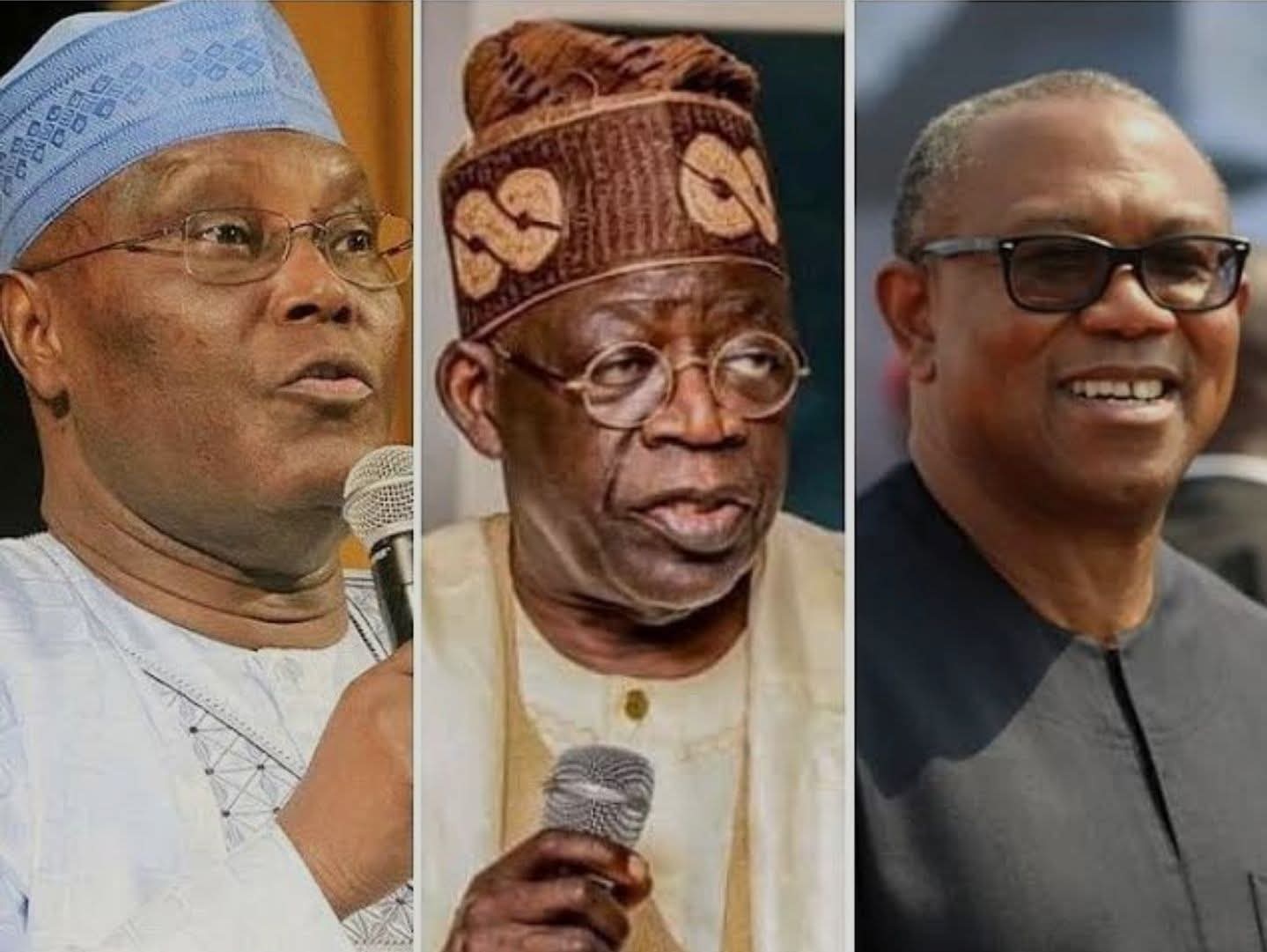
2027 or Never: Why Atiku and Obi Must Unite or Watch Tinubu Bury Their Political Futures. ( Opinion)
By George Omagbemi Sylvester | Published by SaharaWeeklyNG.com
In the theatre of Nigerian politics, 2027 is shaping up to be a decisive year. The All Progressives Congress (APC), despite its unrelenting failures in governance, stands poised to retain power, not because it has earned the trust of Nigerians, but because its two greatest threats: Alhaji Atiku Abubakar and Mr. Peter Obi, may once again allow personal ambition and egos to override national interest. If the former Vice President and the ex-Anambra Governor contest separately under the African Democratic Congress (ADC) and Labour Party (LP) respectively, they will not only hand President Bola Ahmed Tinubu an effortless re-election; they will jointly dig their political graves.

Let us be frank here: this is a game of numbers, strategy and timing. Tinubu’s APC has done little to improve the socio-economic conditions of Nigerians. From rising inflation to staggering unemployment, from Naira’s collapse to institutionalized corruption, Tinubu’s presidency has delivered more pain than progress. Yet, the opposition remains fragmented, delusional and distracted. This disunity is Tinubu’s biggest asset.
The APC’s Achilles Heel: Poor Governance, since assuming office in May 2023, Tinubu’s administration has steered Nigeria deeper into economic despair. With inflation hovering above 34%, food prices have tripled and the minimum wage, even at the newly proposed ₦70,000, is laughably insufficient. The President’s ill-thought removal of fuel subsidies, without adequate palliatives, plunged millions into instant poverty. Education has suffered widespread strikes, insecurity is at an all-time high and foreign investors are fleeing. According to a March 2025 World Bank report, over 87 million Nigerians now live in extreme poverty, making Nigeria the poverty capital of the world once again.
Yet, Tinubu might still win in 2027; not because he is loved, but because the opposition is stupid.

The Numbers Don’t Lie: 2023 as a Lesson.
The 2023 election results should be a wake-up call. Tinubu won with 8.79 million votes, Atiku followed with 6.98 million and Obi secured 6.1 million. Together, Atiku and Obi racked up over 13 million votes, which is more than 4 million ahead of Tinubu. If that is not enough reason for unity, then what is?
The math is simple: TOGETHER, THEY WIN; APART, THEY LOSE.
Nigeria Cannot Survive Another Tinubu Term.
What exactly will be left of Nigeria by 2031 if Tinubu wins again? The country’s debt is already past ₦120 trillion and the Naira now trades beyond ₦2,000 to the dollar in the parallel market. Over 600,000 Nigerian youths migrated legally and illegally in 2024 alone, fleeing a system that offers no hope.
Tinubu’s second term would consolidate a one-party state, institutionalize suppression of dissent and weaponize state institutions like EFCC and DSS against perceived enemies. The judicial system is already under siege, with the 2023 election tribunal outcome still fresh in national memory. A repeat term will only embolden the worst tendencies of Tinubu’s reign.
As the fiery Nobel Laureate, Prof. Wole Soyinka, warned in 2024: “When evil goes unchallenged for too long, it wears the CROWN of LEGITIMACY.”
The Problem With Atiku and Obi is EGO over NATION. There is no polite way to say it; both Atiku and Obi, for all their accomplishments, have failed to put Nigeria ahead of their personal ambitions. In public, they speak of rescuing Nigeria, but in private, they SCHEME SOLO PATHS to POWER.
Atiku, having contested for presidency since 1993, must realize that 2027 is his last realistic shot. He will be over 80 in 2031. Obi, though younger and with more electoral appeal among the youth, cannot single-handedly unseat a ruling party entrenched in power with all the state machinery.
Both men must come to the table, not as rivals, but as partners. As Prof. Pat Utomi said in 2023, “The future of Nigeria cannot be sacrificed on the altar of personal ambition. We need a UNITY of PURPOSE, not a MULTIPLICITY of EGOS.”
A Coalition Is Not a Weakness, It is a Weapon. Those who say a coalition is a sign of weakness forget the 2015 precedent. Tinubu himself engineered the coalition that merged CPC, ACN and factions of PDP to bring Buhari to power. That political marriage, though shaky, was enough to unseat Jonathan. Why can’t Atiku and Obi REPLICATE the same TEMPLATE?
In 2024, the ADC began rebranding itself as a third-force platform. Many Nigerians welcomed this, especially after the LP’s structure showed signs of internal weakness. However, neither ADC nor LP, in isolation, can overcome the APC juggernaut.
The only path to victory is a merger or a strategic alliance that sees either Atiku or Obi step aside for the other, while the second becomes the Vice-Presidential candidate. This formula is not new; it is TESTED and PROVEN.
Time Is Running Out
Coalitions are not built in a day. The groundwork must begin now. VOTER EDUCATION, POLLING AGENTS, GRASSROOTS MOBILIZATION and INEC COMPLIANCE require at least two years of planning. The earlier this coalition is birthed, the stronger its momentum will be.
Nigerians are watching. The youths who marched under the #EndSARS banner in 2020 and those who voted massively for Obi in 2023, are disillusioned. Many feel used, abandoned and betrayed. If Obi and Atiku fail to come together now, the electorate may lose faith entirely and the 2027 election could witness record-low turnout.
This would favor only one man: Tinubu.
If They Fail, They’re Finished. If Tinubu wins again, it is OVER not just for Nigeria, but for the POLITICAL LEGACIES of both Atiku and Obi. A new generation of politicians will rise from the ashes of their failure. The political shelf life of both men will expire. Posterity will remember them not for their vision, but for their inability to act with courage at a defining moment.
The late Chinua Achebe once said, “The trouble with Nigeria is simply and squarely a failure of leadership.” That failure now stares us in the face; unless UNITY intervenes.
The Bottom Line: One Last Chance to Rewrite History. This is the last train for Atiku Abubakar and Peter Obi. If they miss it, the next station is irrelevance. Nigeria cannot afford another four years of suffering, of incompetence masked as governance, of propaganda replacing policy.
They must drop their pride, pick up the phone and forge a historic alliance. Let it be known that at a time when Nigeria was on the brink, two men buried their ambitions and rose for the people.
If they don’t, Tinubu will win and it will be their names etched into history; not as heroes, but as the ones who could have saved Nigeria, but did not.


By George Omagbemi Sylvester
Published by SaharaWeeklyNG.com




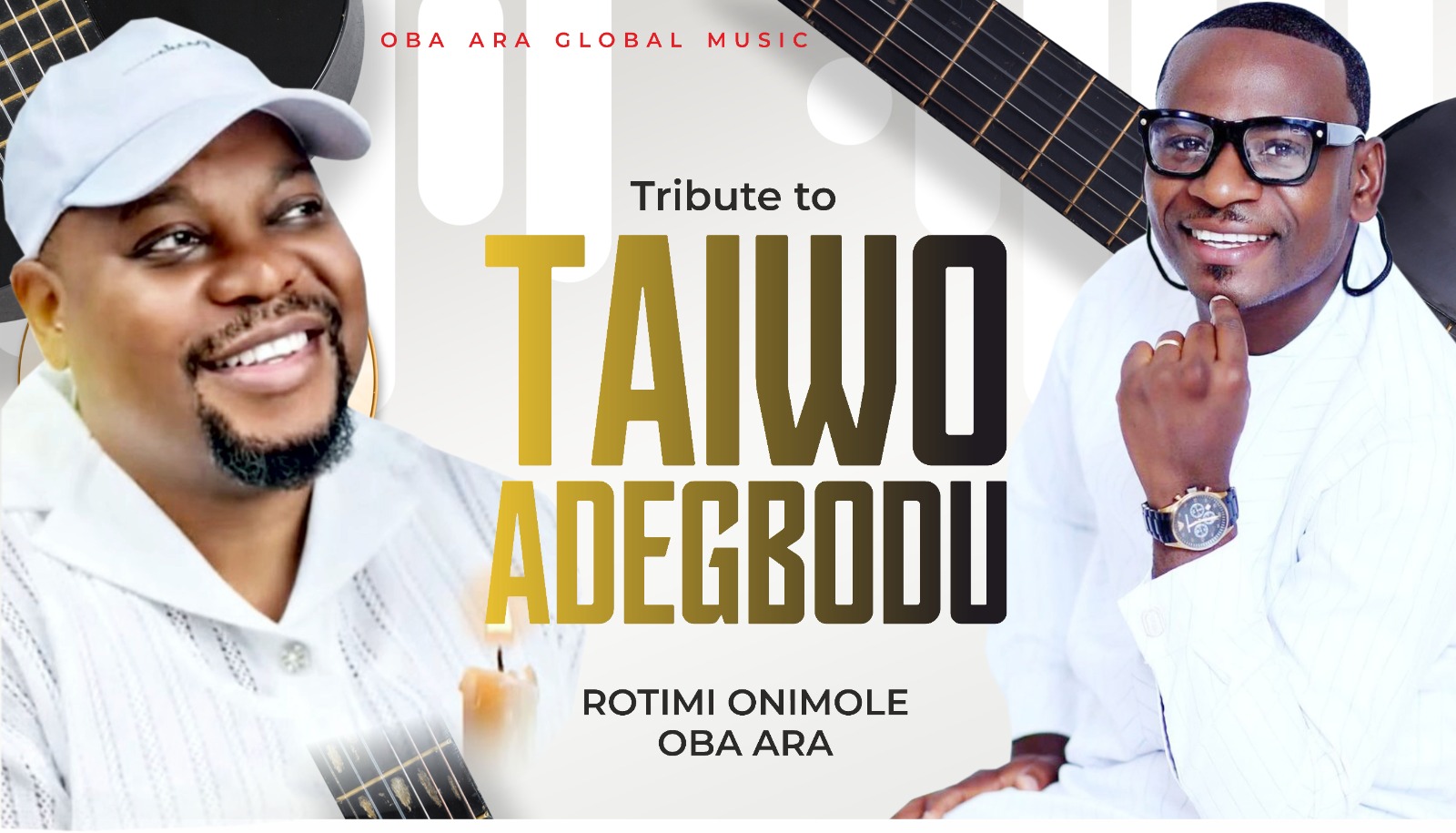
Oba Ara Releases Emotional Tribute to Late Taiwo Adegbodu
Taofik Afolabi
The gospel music community continues to grieve the painful loss of Taiwo Adegbodu, a beloved figure whose sudden departure left a deep void among fans, colleagues, and loved ones. In response to this loss, renowned gospel minister Rotimi Onimole, popularly known as Oba Ara, has released a moving tribute song that captures both the sorrow of the moment and the enduring legacy of the late singer.
Oba Ara, a proud son of Isale Eko, channels raw emotion throughout the song, using heartfelt lyrics and soul-stirring melodies to reflect on his personal connection with Taiwo Adegbodu. In the tribute, he openly expresses how deeply the news of Adegbodu’s passing shook him, describing it as a painful and unexpected loss that is difficult to come to terms with.
The song goes beyond mourning, it celebrates the life, ministry, and impact of Taiwo Adegbodu. Oba Ara highlights the late artist’s dedication to spreading the gospel through music, his inspiring voice, and the spiritual influence he had on many within and beyond Nigeria. Through powerful verses, he paints a picture of a man who lived for God and touched countless lives through his ministry.
Listeners have described the tribute as both comforting and deeply emotional, as it resonates with the collective grief of the gospel music community. It serves as a reminder that although Taiwo Adegbodu is no longer physically present, his music, message, and legacy will continue to live on.
In honoring his late colleague, Oba Ara not only pays his respects but also offers a source of healing for fans and fellow ministers, using music as a tool to process grief and celebrate a life well lived.
celebrity radar - gossips
Buratai, Fagbemi , Shagaya, Olofa, Others Eulogise Olowu Kuta’s Olori On 60th Birthday, Foundation Launch
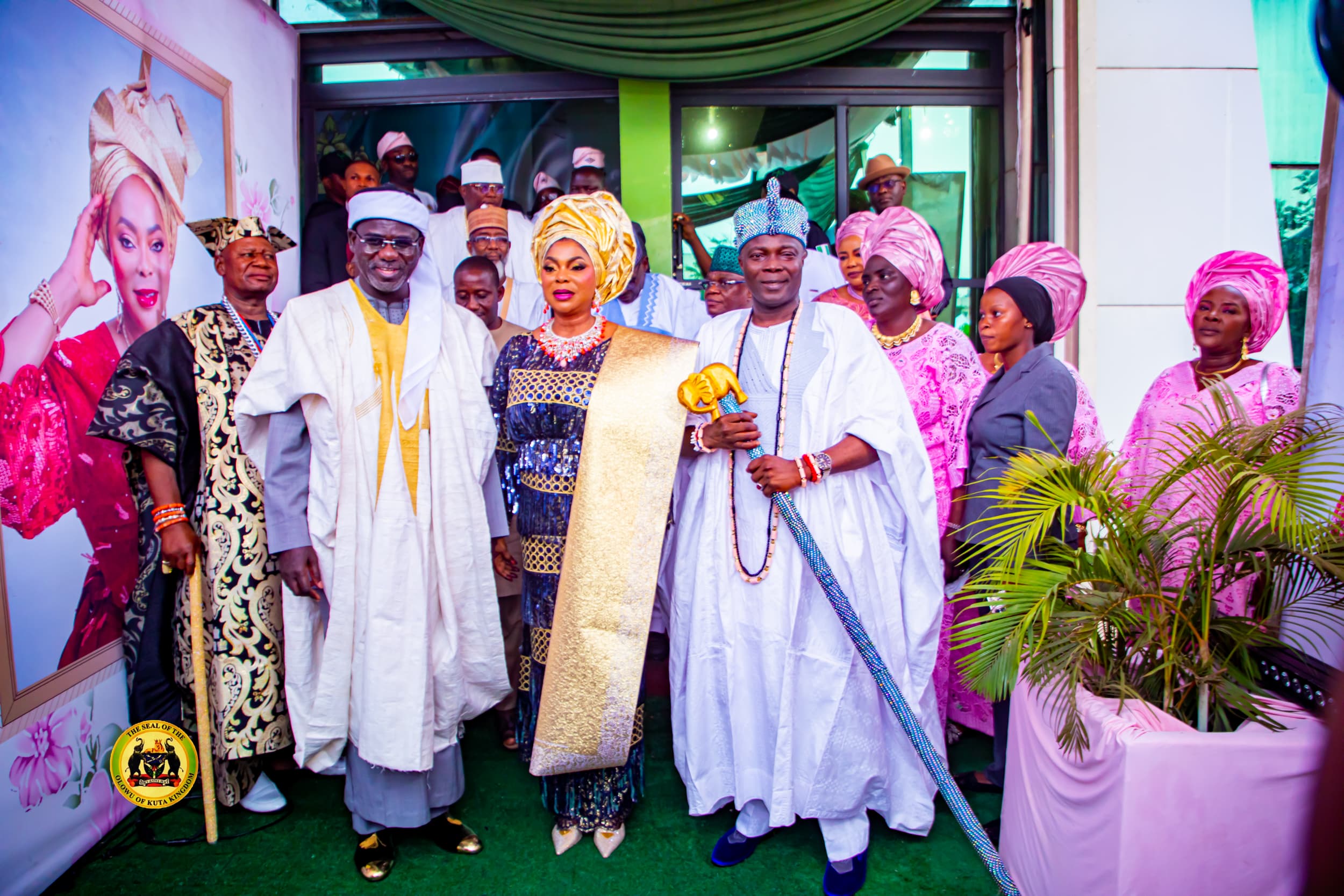
Buratai, Fagbemi , Shagaya, Olofa, Others Eulogise Olowu Kuta’s Olori On 60th Birthday, Foundation Launch
Eminent personalities across the Nigeria stormed the TFK Event Centre, Bala Mohammed Way, Guzape, Abuja, to celebrate the 60th birthday of Olowu Kuta’s Olori, Queen Jumai Amoke and her Foundation Launch on Saturday 28, March 2026.

From former Chief of Army Staff, Lt Gen TY Buratai rtd, to the Minister of Justice and Attorney-General of the Federation, Prince Lateef Fagbemi; Olofa of Offa, HRM Oba Mufutau Gbadamosi. Even top businesswoman and socialite, Chief (Mrs) Bola Shagaya, was in attendance.


Other dignitaries were newly promoted Deputy Inspector-General of Police and former AIG Zone 2 , Lagos , Adegoke Fayoade, Major General Abdumalik, Major General Samuel Adebayo rtd (Fmr CDI);
Major General Anthony Omozoje rtd (Fmr Copp);
Alhaji Tajudeen Owoyemi (Asiwaju of Offa and CEO Radisson Hotel Nigeria;
Dr Waheed Olagunju, former managing director of Bank of Industry, Oniba of Iba, Lagos State, HRM Oba Dr Suleiman Raji ;
Justice Falola, Olu of Ile-Ogbo , Oba Adetoyese amongst many traditional rulers and captains of industry too numerous to mention.
Speaking at the occasion, the Chief Host, Olowu of Kuta, HRM Oba Dr Adekunle Oyelude Makama, CON , Tegbosun iii, who is also the husband of the celebrant commended Queen Jumai for ‘ her slender arms full of kindness’ to establish such humanitarian Foundation, ‘Amoke Children and mother in Need Foundation’ at a time Nigerians are going through economic crisis occassioned by the global meltdown.
Olowu also commended her steadfastness and love for the less privileged and downtrodden.
The monarch refrenced the task before his wife’s humanitarian gesture said her best is yet to come.
” Olori Amoke Jumai, I celebrate you. You will celebrate 70, 80, 90 and continue to shine as you continue to put a smile on people’s faces. I love you, “Olowu Kuta added.
To Lt Gen Buratai, a former army chief and former Nigerian Ambassador to Benin Republic, the reward of hard work is more work.
Buratai, who also doubles as Balogun Agba of Owu Kuta, a chieftaincy title reserved for a generalismo congratulated Queen Jumai for attaining the age of 60 in good health.
The retired army General said he’s not surprised by the turn out of eminent personalities across the country to celebrate the Olowu Kuta’s Olori because she merited it through her hospitality to all, adding that Allah the most merciful, most beneficial would accept all her act of ibadah.
The minister of Justice, Prince Fagbemi, was full of praises for Queen Jumai for deeming it fit to have a place in her heart to accommodate the needy and less privileged in ‘our society.’
Prince Fagbemi urged the guests to contribute generously to support the Foundation in order to continue to alleviate poverty and put a smile on the faces of the people.
” I congratulate you on your 60th birthday and Foundation Launch. I wish you many happy returns of the day and many more fruitful services to the country and motherland”, Prince Fagbemi added.
The celebrant, Queen Jumai who was grining from ear to ear thankfully said she was excited by the turn out and the response of the people to her foundation.
Queen Jumai, however, promised to continue to use her resources and donations received for the good of the needy and less privileged in the society.
” I want to appreciate my own Kabiesi Olofa of Offa , for his presence and im I’m using him as a point of contact to all other Kabiesis present here, the minister of justice and Attorney-General, you’re welcome, sir; Mrs Bola Shagaya, I salute your enterprise, Lt Gen Buratai, I’m grateful, sir; DIG Fayoade, Justice Falola and other dignitaries too numerous to mention, I thank you, all. To my darling husband, Kabiesi Olowu , I thank you immensely for your support. And to my family and friends, I thank you , all. E se pupo!”, she said.
celebrity radar - gossips
Adron Homes Elevates Cultural Pride as Dignitaries Grace 39th Lisabi Festival in Abeokuta
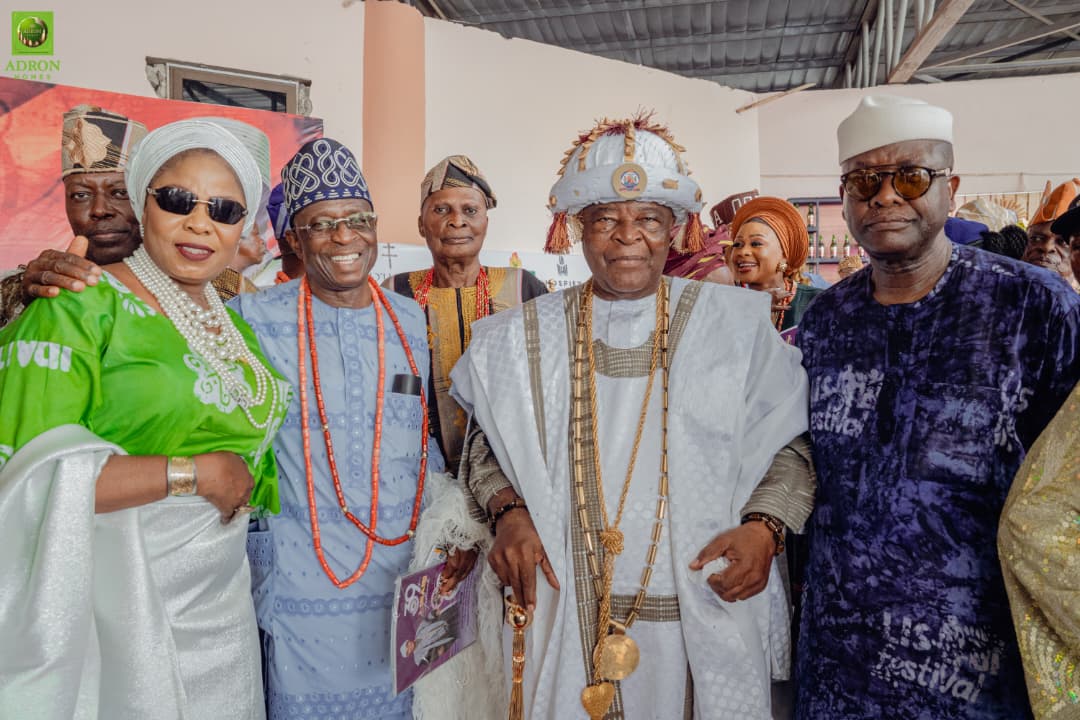
Adron Homes Elevates Cultural Pride as Dignitaries Grace 39th Lisabi Festival in Abeokuta
The ancient city of Abeokuta came alive in a grand display of culture, history, and unity as dignitaries from across Nigeria converged at the iconic Ake Palace Ground for the 39th edition of the Lisabi Festival, an annual celebration deeply rooted in the Egba people’s heritage.
The event, proudly supported by Adron Homes and Properties Limited, witnessed an impressive parade of distinguished personalities, traditional rulers, government officials, business leaders, and cultural enthusiasts, all captured in vibrant pictures that tell the story of a people united by history and pride.
From richly adorned monarchs in regal attire to elegantly dressed guests reflecting the depth of Yoruba tradition, the images from the festival encapsulate moments of honour, reverence, and celebration. Each photograph portrays not just faces, but influence, leaders, and stakeholders who continue to shape cultural preservation and community development.
At the heart of the celebration was the revered Oba Adedotun Aremu Gbadebo, whose presence underscored the festival’s significance as a symbol of Egba resilience and identity. Surrounding him were eminent dignitaries whose attendance further amplified the prestige of the event.
Adron Homes and Properties Limited stood out prominently, not only as a sponsor but as a key driver of cultural sustainability. Through its strategic support, the company reinforced its commitment to preserving indigenous heritage while fostering community engagement. The brand’s visibility across the venue and within the pictorial highlights reflects a deliberate alignment with culture, tradition, and people-centered development.
Beyond real estate, Adron Homes has continued to position itself as a cultural partner, investing in platforms that celebrate history and strengthen communal bonds. Its involvement in the Lisabi Festival is a testament to its broader vision of building not just homes, but legacies rooted in identity and pride.
The 39th Lisabi Festival, as captured through the lens of dignitaries in attendance, is more than an event, it is a narrative of continuity. And through its unwavering support, Adron Homes has once again set the pace, demonstrating that corporate institutions can play a vital role in sustaining the cultural heartbeat of a people.
As the echoes of drums fade and the colours of the festival linger in memory, one thing remains clear: the story told through these images is one of unity, heritage, and the enduring partnership between tradition and progress.


-

 society6 months ago
Religion: Africa’s Oldest Weapon of Enslavement and the Forgotten Truth
-

 news4 months ago
WHO REALLY OWNS MONIEPOINT? The $290 Million Deal That Sold Nigeria’s Top Fintech to Foreign Interests
-

 society6 months ago
“You Are Never Without Help” – Pastor Gebhardt Berndt Inspires Hope Through Empower Church (Video)
-

 celebrity radar - gossips2 months ago
Dr. Chris Okafor Returns with Power and Fire of the Spirit -Mounts Grace Nation Altar with Fresh Anointing and Restoration Grace on February 1, 2026