
celebrity radar - gossips
THE BUTCHERY IN GAZA By FEMI FANI-KAYODE

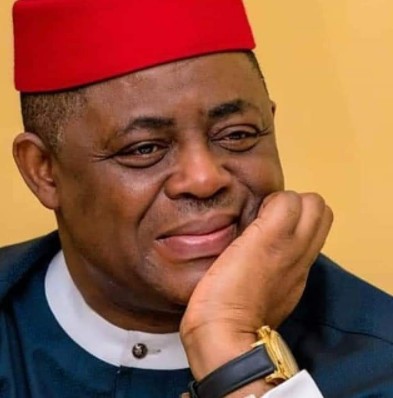
THE BUTCHERY IN GAZA By FEMI FANI-KAYODE
How can any sane person enjoy or derive satisfaction from the slaughter that is now taking place in Gaza? It is indefensible. It is unacceptable.
It is nothing but state-sponsored terror in its most savage and primitive form.
It is ethnic cleansing. It is genocide. It is mass murder. It is wickedness. It is barbaric. It is evil.
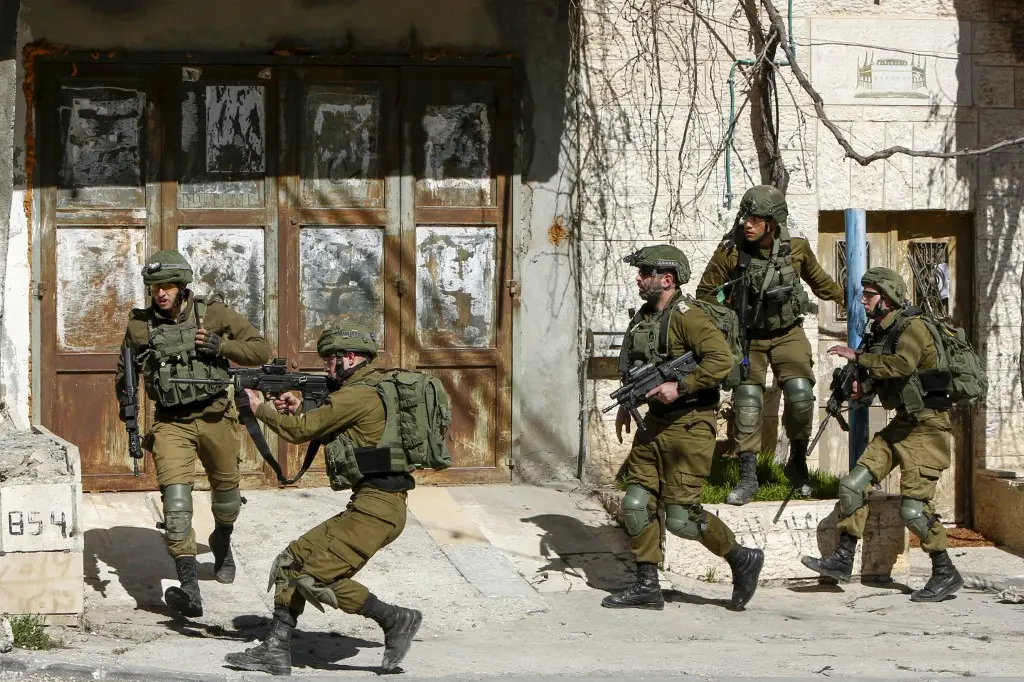
It is the most notorious and graphic example of man’s inhumanity to man.
It is unconciable and it is unjustifiable.
All my life I have loved the State of Israel and defended her right to exist.
This is especially so given the fact that I am a Pentecostal Christian who wholeheartedly believes the biblical scripture that says “He who blesses Israel is blessed and he who curses Israel is cursed”.
I acknowledge the fact that the Jews have suffered and been persecuted more than any other race in the history of the world and I was one of the first in my country Nigeria to wholeheartedly condemn the frightful massacre carried out by Hamas on October 7th.
Despite that I cannot possibly rationalise what is going on in Gaza in the name of retaliation or the desire to destroy and wipe out Hamas.
When you kill innocent and defenceless Palestinian women and children you are not wiping out Hamas but strengthening their cause and giving millions of people all over the world a reason to support their cause and join their ranks.
Israel is committing war crimes and crimes against humanity.
It is an irrational, unreasonable, emotional and disproportionate response to what was undoubtedly a terrible and unconciable wrong which may win the battle for the Jewish state but will also inevitably cost them support in much of the civilised world.
There is no doubt that Israel has the right to defend herself especially from those who claim she does not have the right to exist but no sane person can applaud the butchering of women and children, the targetting and bombing of hospitals, churches, schools, mosques, universities, homes and ambulances and the wholesale slaughter of 10,000 civilians (and still counting) all in the space of 3 weeks.
Israel is being guided and led by rage and the spirit of vengeance. She has lost all reason and those with a level head are no where near the levers of power. She is now like a wild, wounded lion devouring everything and everyone in its path.
What was once a reasonable, rational, equitable, just, fair-minded, strong, confident and flourishing nation which was the shining light of the Middle East and our collective pride and joy as Christians has now become a rogue killer state which is as bloodthirsty and bloodlusting as the Nazis of Hitler’s Germany, ISIS, Hamas, Boko Haram, Daesh and Al Qaeda all rolled into one.
We must have the decency and prescence of mind to condemn the slaughter of ALL human beings whether they be Christians, Muslims, Jews or anything else.
Israel has a right to defend herself but not the right to commit war crimes and crimes against humanity or to wipe out an entire race and displace and relocate an entire people.
Any Christian that believes otherwise in the name of “blessing or loving Israel” is not a real Christian and is not a true friend of the Jewish state.
Why? Because real friends tell one another the bitter truth and real Christians do not support injustice and the massacre of defenceless women and children.
Only demons do that!
If you really want to bless and love Israel then tell Israeli leaders the bitter truth and pray that the lord will deliver them from the madness and unrestrained rage that has seized their minds.
Blessing and loving Israel does not involve encouraging them to wipe out a whole race.
Blessing and loving Israel does not involve supporting them to kill every Palestinian in the Gaza strip in the name of eliminating Hamas.
Blessing and loving Israel does not mean we should support them to target and kill every Muslim and Christian man, woman and child in Gaza.
Blessing and loving Israel does not mean we should sit by silently and watch them turn into worse monsters than the German Nazis that murdered 6 million of their people in gas chambers during World War II.
Blessing and loving Israel does not mean supporting their every action even when it is wrong.
Blessing and loving Israel does not mean saying no to a humanitarian pause in the ground offensive and bombing or a ceasefire in order to get the wounded out and send in much needed food and medical supplies.
Blessing and loving Israel does not mean that we should lose our humanity, our compassion, our decency and our sense of reasoning.
Blessing and loving Israel does not mean supporting those in the Israeli Knesset that have said the the 2.5 million Palestinians that live in Gaza should be either killed or relocated to 100 different countries at the rate of 25,000 Palestinians per country.
Blessing and loving Israel does not mean that we should espouse the hateful philosophy and satanic spirit of apartheid which we as Africans spent so many decades opposing and resisting in South Africa.
Blessing and loving Israel means admonishing them to be accomodating, flexible, kind, calm, compassionate, restrained, rational, reasonable, level- headed and loving even where and when they have been badly hurt and gravely wounded as they were on October 7th.
Blessing and loving Israel means encouraging them to fight their enemies and defend themselves in a dignified and civilised way by abiding by the laws of war and armed conflict, by honoring the rules of engagement and by working within the strictures and framework of international law whilst in the field of battle.
Blessing and loving Isreal means encouraging the Jews and giving them hope and support in their time of need, reminding them to have faith in God and admonishing them to be righteous in all their ways.
That is what we are expected to do as believers and not to celebrate and rejoice when they slaughter innocent women and children and when they indulge in what can best be described as the second holocaust.
(FFK)







celebrity radar - gossips
DETERRENCE OR CATASTROPHE? ON THE BRINK OF A REDEFINING MIDDLE EAST WAR: A CALL FOR THE DIPLOMATIC PATH FORWARD
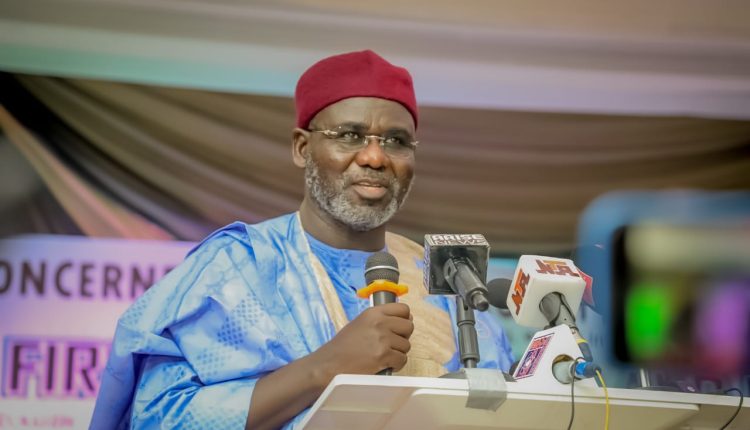
DETERRENCE OR CATASTROPHE? ON THE BRINK OF A REDEFINING MIDDLE EAST WAR: A CALL FOR THE DIPLOMATIC PATH FORWARD
By Lt Gen Tukur Yusufu Buratai Rtd CFR
We stand at a precipice where a single decision could redefine the future of the Middle East and send shockwaves through a fragile global order. The choice appears deceptively simple: to strike militarily in pursuit of deterrence or to withstand perceived aggression. Yet, this framing is a dangerous illusion. A direct, full-scale conflict between the United States, its allies, and Iran would not be a controlled exercise in power projection. It would be the ignition of a regional inferno with no clear exit, where the initial objective of “deterrence” would be consumed within hours by the unforgiving law of unintended consequences. The path of war promises not a decisive victory, but a cascade of devastation—human, economic, and strategic—that would leave all parties and the world profoundly poorer and more unstable. In this stark reality, diplomacy is not a sign of weakness; it is the singular, rational imperative for survival.
The Illusion of a Clear Victory
The allure of a military solution rests on a straightforward calculus: degrade critical nuclear and military infrastructure, cripple the command structures of the Islamic Revolutionary Guard Corps (IRGC), and deliver a blow so decisive that Iran’s regional influence collapses. Proponents envision a rapid, surgical campaign that reestablishes undisputed deterrence. However, this vision fundamentally misjudges the nature of the adversary and the dynamics of the region. As former U.S. Deputy Assistant Secretary of State Andrew P. Miller cautions, even a successful strike “would likely prove a Pyrrhic victory” for broader strategic goals, failing to achieve durable political outcomes. Iran would not absorb a strike passively and capitulate. Retaliation would be swift, multidimensional, and devastating.
Indeed, as noted by Seyed Hossein Mousavian, a former Iranian nuclear negotiator and scholar at Princeton University, Tehran perceives such a confrontation as an “existential war,” a stance that would “eliminate any incentive for restraint, unleashing a conflict that would be impossible to control.” We would witness not a single battle but the violent opening of multiple, simultaneous fronts. Hezbollah’s vast arsenal of precision-guided rockets would rain down on Israeli cities. Iranian proxies in Iraq and Syria would target the U.S. personnel and bases with relentless aggression. The Houthis could unleash further chaos on global shipping. Most critically, Iran itself would likely launch direct missile and drone attacks against Gulf state oil infrastructure and, potentially, attempt to blockade the Strait of Hormuz—a chokepoint for nearly 25% of global seaborne oil trade. The initial “surgical strike” would, within days, metastasize into a sprawling regional war with no defined battlefield and no clear rules of engagement.
The Unbearable Costs: A World Remade by War
The consequences would swiftly spiral beyond the military domain, etching a deep scar across global stability. The human cost would be immediate and horrifying, with casualties mounting not just among combatants but in urban centres targeted by long-range artillery and missiles. As analyzed by the BBC, a primary risk is the collapse of the Iranian regime into chaos or civil war,” which would spark “a severe humanitarian and refugee crisis” of immense proportions, a scenario where “nobody wants to see the largest Middle East nation by population… descend into chaos.”
The economic shock would be felt in every corner of the world. A successful disruption of the Strait of Hormuz, even temporarily, would trigger an instantaneous spike in oil prices, catapulting the global economy into a profound inflationary recession. Supply chains would seize, markets would panic, and the cost of basic necessities would skyrocket worldwide. This is not a speculative risk; it is a guaranteed outcome of Iran’s stated asymmetric doctrine.
Strategically, the war would unmoor the region for a generation. The delicate, if tense, balance among regional powers would shatter. Even if the Iranian regime were severely weakened, the result would not be a peaceful vacuum but a vortex of chaos. As Afshon Ostovar, an associate professor at the Naval Postgraduate School, warns of potential internal collapse, “the ruling apparatus, in other words, would collapse gradually, and then suddenly.” A fractured state could descend into civil conflict, its hardline elements unleashing terror networks, and rival powers scrambling to carve spheres of influence. The painstakingly built, if flawed, security architecture of the past half-century would lie in ruins. The ultimate outcomes of a strike are profoundly unpredictable, but none point toward a more stable or secure order for the United States, Israel, or their allies. Victory, in any meaningful sense, would be unrecognizable.
The Diplomatic Path: Not an Ideal, But a Necessity
Faced with this landscape of ruin, the diplomatic path emerges not as a naive ideal but as the only pragmatic tool for managing an existential threat. It is the circuit breaker for the escalatory spiral that guarantees mutual destruction. This is not an argument for appeasement or for trusting the untrustworthy. It is a cold-eyed recognition that only through calibrated statecraft can we navigate away from the brink. This view is echoed by regional voices, such as an editorial in The National, which asserts that “various regional actors are urging non-military ways to change relationships with Tehran” and that “now is a time for focused and determined diplomacy to chart a path away from war.”
The goal of diplomacy in this context is not to achieve a grand reconciliation overnight but to relentlessly pursue de-escalation and create mechanisms for crisis management. It involves empowering regional dialogue, establishing clear and direct communication channels to prevent miscalculation, and seeking hard-nosed, verifiable agreements that incrementally roll back the most dangerous threats, such as further advances in Iran’s nuclear program and its regional ballistic missile deployments. The international community, including powers with leverage in Tehran, must be rallied not to take sides but to unequivocally advocate for restraint. The collective message must be that while aggression and proliferation are unacceptable, the alternative of total war is a common enemy that will destroy all in its path.
The choice before the international community is now laid bare. One road leads into the fog of war—a fog filled with the echoes of missile fire, the screams of the displaced, and the collapse of economies. It is a path where the very concept of “victory” loses all meaning. The other road, the diplomatic path, is undeniably difficult, fraught with setbacks, and requires immense political courage. It demands negotiating through distrust and managing imperfect outcomes. But it is the only road that leads away from the abyss and toward a future where stability, however fragile, can be rebuilt. The hour is late, but the path forward remains. We must choose diplomacy, not because we believe in the goodness of our adversaries, but because we have stared into the alternative and seen an unbearable catastrophe for all.
By:
Lt Gen Tukur Yusufu Buratai Rtd CFR
Former Chief of Army Staff, Nigerian Army, and former Nigerian Ambassador to the Republic of Benin.
celebrity radar - gossips
Senator Adeola Yayi Bags Royal Blessings at Foundation Laying of Yewa Traditional Council Secretariat in Ilaro
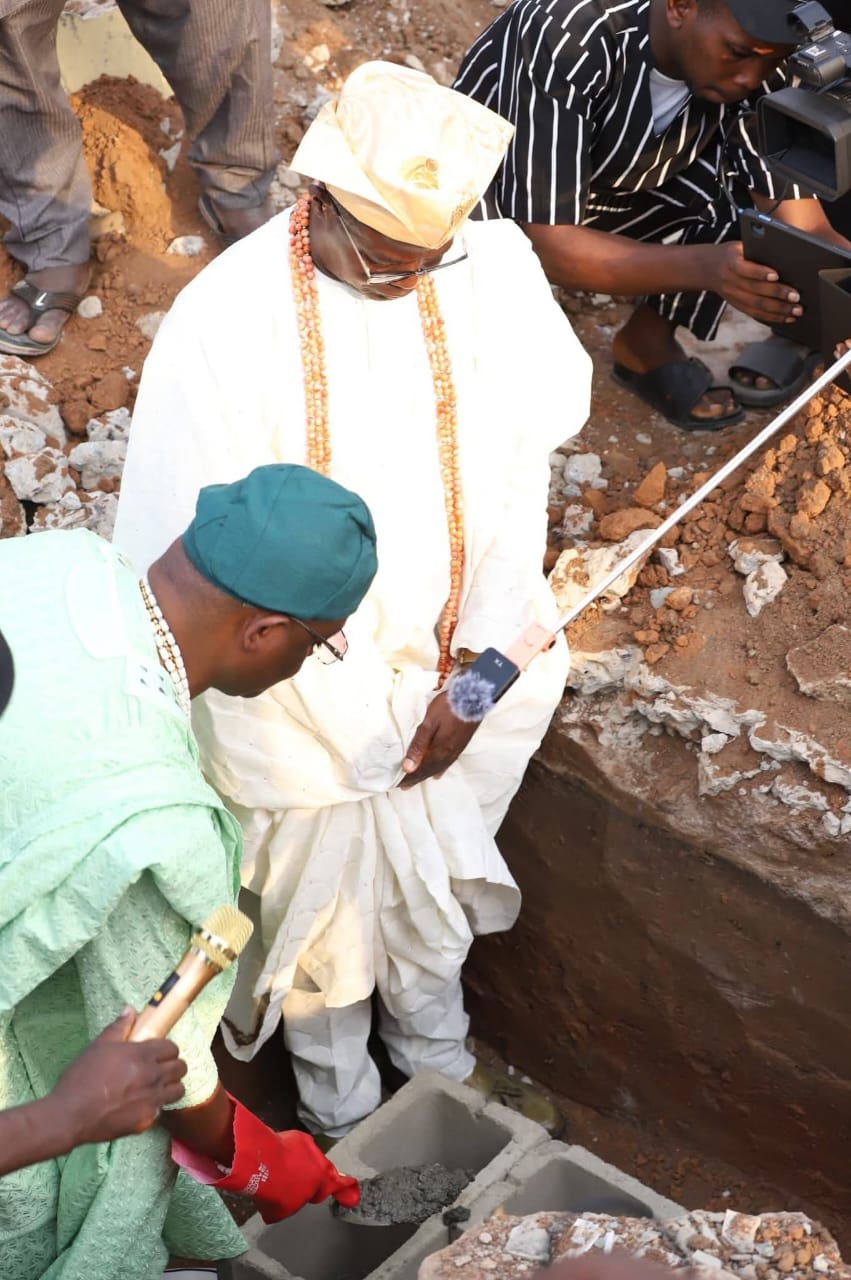
Senator Adeola Yayi Bags Royal Blessings at Foundation Laying of Yewa Traditional Council Secretariat in Ilaro
…Clerics, Monarchs and Political Leaders Offer Prayers for His Future Aspirations
ILARO-YEWA, OGUN STATE — The ancient town of Ilaro, headquarters of Ogun West Senatorial District, came alive on Tuesday, January 27, 2026, as royal fathers, political leaders, clerics and community stakeholders gathered for the historic foundation-laying ceremony of the proposed ultra-modern Yewa Traditional Council (Obas’) Secretariat Complex.
The culturally symbolic project, facilitated by the Senator representing Ogun West at the National Assembly, Distinguished Senator Solomon Olamilekan Adeola (Yayi), attracted widespread commendation, fervent prayers and royal blessings from traditional rulers across Yewaland, alongside leaders and stalwarts of the All Progressives Congress (APC).
The ceremony officially marked the commencement of construction of what is envisioned as a state-of-the-art secretariat that will serve as the institutional headquarters of the Yewa Traditional Council.
Stakeholders described the initiative as a landmark achievement in institutional development and a clear demonstration of Senator Adeola’s sustained commitment to grassroots development, cultural preservation and inclusive governance in Yewaland.
Royal fathers present unanimously agreed that the project represents a significant step toward strengthening traditional governance and preserving Yewa cultural heritage. According to them, the proposed secretariat will function as a unifying administrative hub, enhance collaboration among monarchs and safeguard the cultural identity of the Yewa people for generations to come.
Speaking at the event, the Olu of Ilaro and Paramount Ruler of Yewaland, His Royal Majesty Oba (Dr.) Kehinde Gbadewole Olugbenle, Asade Agunloye IV, poured encomiums on Senator Adeola for his extensive infrastructural interventions and developmental footprints across Yewaland and Ogun State.
The monarch noted that the senator’s contributions have repositioned Yewaland on the path of meaningful progress, urging political leaders and stakeholders to embrace unity, cooperation and harmony.
He emphasized that such collective resolve remains crucial to the long-standing aspiration of producing a Yewa indigene as Governor of Ogun State in 2027.
Oba Olugbenle also used the occasion to encourage residents to actively participate in the democratic process by obtaining their Permanent Voter’s Cards (PVCs), stressing that civic engagement is the surest route to credible leadership.
“Yayi Is a Unique Son of Yewaland” — Deputy Speaker
The Deputy Speaker of the Ogun State House of Assembly, Rt. Hon. (Chief) Mrs. Lateefat Bolanle Ajayi, described Senator Adeola as a “unique and incomparable son of Yewaland,” whose influence transcends Ogun West to Ogun Central and East.
“We have had good sons in Yewaland, but Yayi stands out. His impact is felt in Abeokuta, Ijebu-Ode and beyond. Charity truly begins at home. Even the blind can see and the deaf can hear. We must support him. Come 2027, we have a candidate,” she declared.
Clerics Offer Prayers for Success
Offering prayers at the ceremony, Imam Mohammed Tijani Jamiu, Chief Imam of Surulere Central Mosque, Ilaro-Yewa, prayed for Senator Adeola, the royal fathers of Yewaland and the successful completion of the project.
Similarly, Imam Jamiu Adeniyi Kewulere, Chief Imam of Bibire Central Mosque, Oke-Ola, Ilaro-Yewa, also offered special prayers for peace, progress and divine guidance for all stakeholders.
“A Rare Project of Global Significance” — Yewa South LG Chairman
The Chairman of Yewa South Local Government, Hon. Tunde Ogunshola, described the occasion as one of the happiest moments of his life, noting that the project is unprecedented in scope and cultural significance
.
“This traditional council building is rare, even globally. It is being realized through the support of Governor Prince Dapo Abiodun and facilitated by Senator Adeola. When completed, it will stand as a lasting symbol of our heritage,” he said.
The Ogun State Chairman of Cultural Development, Hon. Olayiwola Taiwo, also hailed the project as a major turnaround for Ogun West, a zone he said had endured years of infrastructural neglect.
“This is a remarkable development. Senator Adeola is truly God-sent to Yewaland,” he stated.
Royal fathers including the Olofin Adimula of Ado-Odo, Oba Idris Olusola Lamidi Osolo, the Abepa of Joga-Orile, Oba Adeyemi Adekeye, and the Onimeko of Imeko, Oba Benjamin Olanite, all expressed confidence that greater projects linked to Senator Adeola would continue to materialize.
A retired Director-General in the Ogun State Civil Service, Mr. Michael Babatunde Ajayi, likened the proposed complex to the Obas’ Secretariat in Abeokuta, noting that it would reduce the need for monarchs in Yewaland to travel to the state capital for meetings.
“This will be the first of its kind in Yewaland. Kudos to Senator Adeola, whose impact is felt across Ogun State,” he said.
APC Leaders Call for Political Mobilisation
The Ogun West APC Chairman, Alhaji Azeez Adisa (Ekwume), alongside party leaders and community stakeholders, described Senator Adeola’s interventions as purposeful and impactful.
They urged party members to consolidate these gains by strengthening party structures and participating actively in voter registration and mop-up exercises, noting that broad-based participation is essential for electoral success.
Anglican Bishop Describes Project as Timely
Speaking with journalists, the Diocesan Bishop of the Anglican Communion, Rt. Revd. M.A. Oluwarohunbi, PhD, described the project as timely and symbolic, adding that it would enhance the role of traditional rulers in governance.
“This is a very important day in the history of Ilaro and Yewaland. The proposed complex will be an ultra-modern edifice befitting our royal fathers,” he said.
He also prayed for Senator Adeola’s continued strength and the realization of his future aspirations.
At the climax of the event, Oba Olugbenle, alongside other eminent kabiyesis, offered royal prayers and blessings for President Bola Ahmed Tinubu, Governor Prince Dapo Abiodun, Senator Solomon Adeola Yayi, and other political office holders across Ogun West and Nigeria, seeking divine wisdom, protection and success in governance.
The well-attended ceremony drew a diverse audience, including revered monarchs from across Yewaland, political leaders, community stakeholders and religious representatives from Christianity, Islam and traditional institutions.
Members of the League of Yewa-Awori Media Practitioners (LOYAMP) were also prominently represented, led by their National Coordinator, Otunba AbuSatar Idowu Hamed.
The colourful event concluded with the formal laying of the foundation stone by royal fathers and distinguished guests, symbolically ushering in a new chapter in the institutional development and cultural renaissance of Yewaland—an occasion many described as another defining milestone in Senator Adeola Yayi’s growing legacy of service and development.
Courtesy: League of Yewa-Awori Media Practitioners (LOYAMP)
celebrity radar - gossips
Shadows of Greed: Alison‑Madueke’s UK Corruption Trial and the Cost of Power
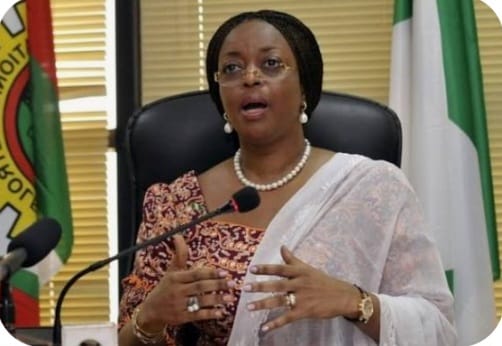
Shadows of Greed: Alison‑Madueke’s UK Corruption Trial and the Cost of Power
By George Omagbemi Sylvester | Published by SaharaWeeklyNG.com
When today’s headlines speak of corruption, they often do so as a distant abstraction as a vague moral failure with little bearing on everyday life. But the unfolding corruption trial of Diezani Alison‑Madueke in a London court throws into glaring relief the real, human and systemic consequences of unchecked power merged with self‑interest. This is not merely the story of an individual on trial; it is a lens through which the world must scrutinise the fragile intersection of governance, resource wealth and public trust.
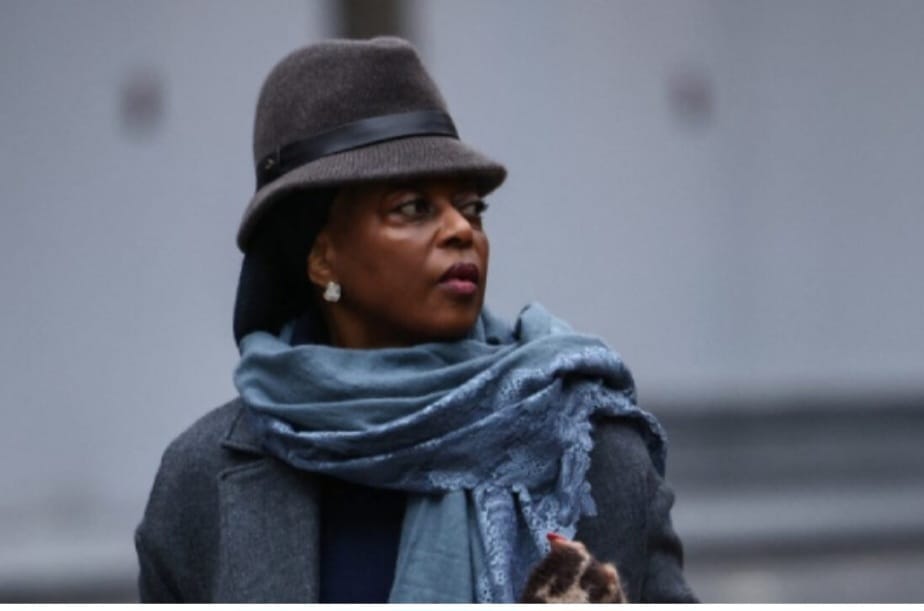
Diezani Alison‑Madueke, once Nigeria’s Minister of Petroleum Resources and later the first woman president of the Organisation of the Petroleum Exporting Countries (OPEC), now stands accused before Britain’s Southwark Crown Court of multiple counts of bribery and conspiracy. The accusations against her (which she vehemently denies) paint a portrait of opulence allegedly funded through pay‑to‑play politics that ignored the public good and rewarded those who could feed her lavish lifestyle.
A Life in Oil, a Life Under Scrutiny.
Alison‑Madueke’s tenure as petroleum minister, from twenty ten until twenty fifteen, coincided with a period of immense oil revenue for Nigeria, a country sitting atop the largest oil reserves in Africa. Yet that wealth did not translate into broad‑based prosperity for the citizens she was meant to serve. Instead, British prosecutors allege that her privileged access to that sector was exploited for personal gain.
According to court indictments, she is accused of accepting bribes not in vague promises, but in concrete, high‑value luxury benefits and including cash, chauffeur‑driven vehicles, private jet travel, the use of multiple high‑end properties in London, funded renovations, personal household staff and even costly designer goods purchased at establishments like Harrods and Louis Vuitton. Prosecutors told the court these were not mere gifts, but “financial or other advantages” given by industry players “who clearly believed she would use her influence to favour them.”
The former minister, now sixty‑five, has pleaded not guilty to all charges. Alongside her in the dock are two co‑defendants: oil executive Olatimbo Ayinde and her brother, Doye Agama, both of whom deny the charges connected to the same alleged bribery scheme.
The Anatomy of Allegations.
What makes this trial especially significant is the detail and scale of the alleged benefits. Prosecutors have asserted that Alison‑Madueke was offered:
Access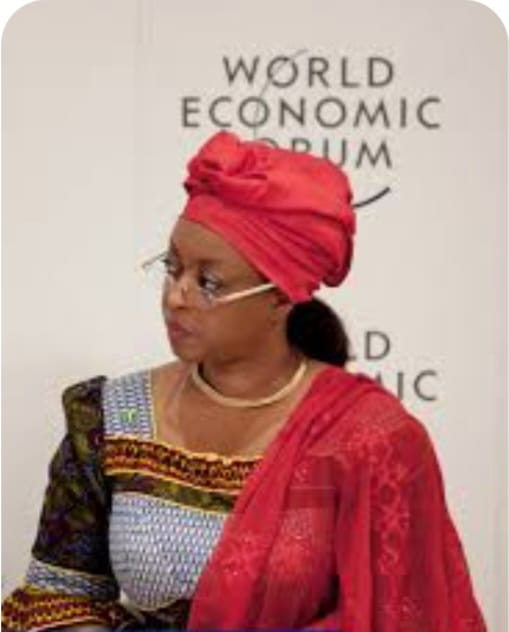 to luxury homes and private residences in London, bought and maintained by associates seeking lucrative Nigerian contracts.
At least a six‑figure sum in direct cash payments.
Private jet flights and schooling fees for her children.
Vast quantities of luxury goods and services from upscale retailers.
While the prosecution concedes it has not yet produced direct evidence that she awarded specific contracts to individuals who should not have had them, it maintains that the acceptance of such benefits by a public official who oversaw multi‑billion‑dollar contracts is inherently improper and contrary to fundamental principles of public service.
Voices of Accountability.
The allegations have drawn sharp commentary from observers worldwide who see the trial as emblematic of broader governance challenges across resource‑rich nations.
Nigerian social justice advocate Aisha Bello has observed, “Corruption is not a peripheral defect in governance but a corrosive disease that accelerates inequality. When leaders treat public office as a gateway to private treasure, citizens pay with lost opportunities and diminished hope.”

Similarly, Professor John Githongo, a renowned anti‑corruption scholar, argues that “Transparency and accountability are not optional extras in public administration; they are indispensable pillars of a just society. When the public good is subverted for private gain, the very fabric of trust unravels.”
These sentiments resonate deeply in contexts where natural wealth exists alongside persistent challenges in education, healthcare and infrastructure also illustrating that corruption is not an isolated moral failing, but a fundamental impediment to development.
Corruption Beyond Borders.
What makes this case notable on the global stage is not just its connection to a former minister, but its international footprint. The United Kingdom’s National Crime Agency (NCA) has taken up the case because many of the alleged transactions (the properties, cash flows, and luxury perks) touched British jurisdiction. This underlines a critical truth: corruption today is not contained by national boundaries. Illicit financial flows, luxury goods, and asset holding often travel across continents, making international cooperation essential in pursuit of justice.
Andy Kelly, head of the NCA’s International Corruption Unit, stated during earlier proceedings that investigations revealed “financial rewards” accepted by Alison‑Madueke that were “suspected to relate to the awarding of multi‑million‑pound contracts.” He emphasised that such impropriety has “devastating consequences for developing nations.”
This collaborative legal action reflects a growing global consensus: no public official, regardless of stature, should be beyond accountability. When a former head of state institutions is brought before a foreign court, it is not just a legal milestone but it is a moral affirmation of shared values in the rule of law.
The Nigerian Context.
In Nigeria, the oil sector has long been both a blessing and a burden. Despite generating huge revenues, mismanagement and corruption have often undermined potential gains for the wider population. A 2023 report by Nigeria’s statistics agency ranked corruption as one of the most significant challenges facing the country. It is a sobering backdrop that shapes how this trial is interpreted at home and abroad.
Former officials and critics alike have noted that transparency in governance is not merely a matter of legality but one of national dignity. As legal scholar Dr. Funke Adekola puts it, “When leaders betray public trust, they erode the very essence of citizenship. Restoring that trust requires not just trials, but systemic reform in values and institutions.”
What Lies Ahead.
The trial, expected to stretch over several months of testimony and evidence examination, is itself a test of judicial endurance and political will. It presents complex questions about proof, credibility, and moral accountability. Yet beyond the sterile halls of courtrooms, its wider implications reverberate in global public discourse about how nations manage wealth and how societies hold leaders accountable.
For ordinary citizens around the world, this case is riveting not because of luxury houses or private jets, but because it forces a collective reckoning: What price should a society pay when those entrusted with public resources place personal enrichment above national welfare?
Summative Insight.
As Diezani Alison‑Madueke’s trial unfolds before the world’s eyes, it stands as a stark reminder that the fight against corruption must be relentless and unflinching. It exposes the corrosive effects of unethical conduct at the highest levels of power and underscores the necessity of accountability, irrespective of nationality or office.
In the final analysis, justice is not only about punishment, but about restoring faith in the systems meant to protect the common good. As the British court hears testimony and as evidence is meticulously weighed, the world watches a profound test of justice, one that could shape how future generations understand leadership, integrity and the true cost of power.


-

 celebrity radar - gossips6 months ago
Why Babangida’s Hilltop Home Became Nigeria’s Political “Mecca”
-

 society6 months ago
Power is a Loan, Not a Possession: The Sacred Duty of Planting People
-

 Business6 months ago
Batsumi Travel CEO Lisa Sebogodi Wins Prestigious Africa Travel 100 Women Award
-

 news6 months ago
THE APPOINTMENT OF WASIU AYINDE BY THE FEDERAL GOVERNMENT AS AN AMBASSADOR SOUNDS EMBARRASSING