
society
INTERVIEW WITH TOHEEB DELE-BALOGUN; A CREATIVE ADVERTISING EXPERT AS HE TELLS HIS STORY ABOUT HIS RECENT BOOK PROJECT ~BY CHINEDU NSOFOR

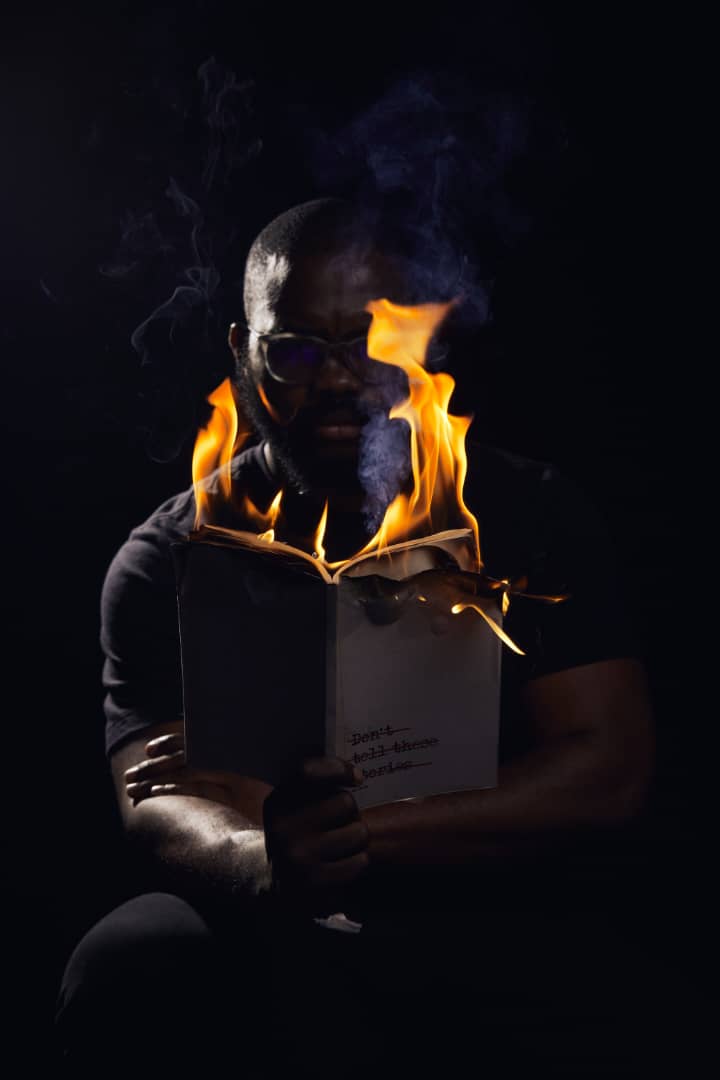
INTERVIEW WITH TOHEEB DELE-BALOGUN; A CREATIVE ADVERTISING EXPERT AS HE TELLS HIS STORY ABOUT HIS RECENT BOOK PROJECT
~BY CHINEDU NSOFOR
Please can you start by sharing a bit about yourself and your background? What led you to pursue your current field?*
My name is Toheeb Dele-Balogun, and I’m a Nigerian based in Lagos and in the UK. I work in the creative side of advertising, where I tell stories for brands. Currently, I am Partner at The hook Creative Agency. My role involves creating impactful brand ideas and communication strategies for private and public institutions. I have always believed in the power of storytelling to shape individuals and society at large.
So how have you been telling these stories over the years?*
I was copywriter for along time. I did campaigns for most of the top brands in Nigeria and won lots of industry awards. I still tell brand stories now but my role has evolved. I consult for brands as a Partner at The hook. And I am currently exploring other forms of storytelling, particularly, fiction. I have a book coming out later in October 2024. It’s called Don’t Tell these stories. In fact we just did a pre-launch show at Creative Bloc Carnival.Interesting. What were the highlights at the Pre-launch show?*
Creative Bloc Carnival is an annual event. I used the carnival to preview my book. The reaction to the book project was massive. “Don’t Tell These Stories” is a thought-provoking collection featuring about 70 short stories. These include stories on child marriage, moral decline, patriotism, politics among others. Each story addresses a different human issue, and the book is an artwork in its execution. It is unique and rare in its format.
See, I wanted to rekindle the passion for reading by presenting the book in ways that attract the modern reader. You will pick it up if you see it, it’s irresistible. The cover will immediately attract you. Once you start a story, you will finish it because it’s short. We’ll produce copies in different forms; for instance, one version will be entirely black with white text, limited to only 10 copies. Then, there will be burnt copy. These ones will have visible burnt scars on them and impactful visuals inside, it will be available at the exhibition later this month and will be sold in Art galleries across country. Lastly, we will have the basic copy, it’s text only. It will be available in bookstores across Nigeria and, globally, on Amazon.com and their kindle platform.
What inspired you to write this story?*
About ten years ago, I stumbled on this six-word story written by Ernest Heminway, For sale: baby’s shoes. Never used. Tt’s about a pregnant woman who bought shoes for her future child, but tragically, the child never got to wear them. The story is really brief and profound. So I gave myself a challenge to write something similar. This project started as that, six-word story. With time I discovered that some stories couldn’t retain their profoundness within the limit of six-words. I became more flexible with the number of words I used but I as still committed to using the least number of words possible for as long as the story is profound. In Don’t Tell These Stories you will find stories that are just six words and other that are more, in fact most of the stories can be described as very short stories, not six-word stories. I didn’t want to box myself with number of words. I followed my muse.
*Q: Why very short stories?*
Times have changed. We live in the most distracted era ever so literature as we know it needs to evolve as well to keep performing its function in shaping the consciousness of society as large. I am writing for the distracted generation. Thomas Hardy wrote Tess of the d’Urbervilles for people without Television, radio or digital entertainment. He wrote for people that will queue to read the news bulletin. His writings were accessed by most people that could read then. Literature and fiction, as a genre, were the mainstream entertainment. So people that could read had their consciousness and morality shaped by the works of these great authors. Overtime, literature has been struggling to have that kind of influence because of the influx of other active entertainment platforms. Most people that could read now don’t see literature as the go-to entertainment. The percentage of literary audience among the large literate population is decreasing every year. We need to do something about it.
I’m writing for a people with fleeting attention span. I want to do fiction that will actually be read by most people that can read and I hope to have profound effect on their consciousness using the least number of words possible. All the feedback I have had on this project have been exciting. “I will totally read this”, I have heard that from countless number of people during preview sessions.
How do stories shape the society?*
We are shaped by things we experience. If people are exposed to low-thought materials on social media it will influence the how they think and perceive the world around them. There’s no vacuum in nature. Literature and its long form structure have struggled to keep up with the evolving reading audience. That needs to be fixed. Literary works are not just stories, they are philosophical gems delivered in stories. I aim to improve the quality of thought and conversation with my work. The stories in my book might be short but a lot thought went into writing every single line.
Can you give a general view of what the book is book?*
The themes I explored are today’s: the external pressures on relationships, the daily conflict with conscience, japa, race, morality, traditional values that we need to regain and those we need to lose among others. There’s a story that I really like, it’s titled Viral Hugs:
John’s depression tweet got 30,000 likes, 10,000 shares. And zero phone call.
The story is really short but it’s gained traction among younger audience that are living in the dual reality of digital vs physical worlds.
Looking ahead, what upcoming events are you most excited about?*
I am most excited about my upcoming exhibition on the 27th of October, which will take place in Lagos, Nigeria. It’s an exclusive event to launch my project. The exhibition is set to fully explore the multi-modal nature of the book, Don’t Tell These Stories. We’re creating a space for people to not just read, but experience these stories and make memories off it.
What is your long-term vision for these project? How do you hope they will evolve in the future?*
My long-term vision is to take my exhibitions beyond Lagos. I plan to host book shows and exhibitions events in various cities across world. After I’m done with Lagos, London is next.
There’s a universal aspect to my stories and I think the world should experience it.
What challenges did you encounter while writing this book, and how did you overcome them?*
Honestly, I didn’t face many external challenges, but I did struggle personally. There were moments I had doubts on proceeding on a story because of its sensitive nature but I remind myself that that’s the whole essence of the book, Stories that shouldn’t be told.
The stories are thought-provoking and addresses themes that some might find uncomfortable. I have pushed through that internal struggle and defied self-doubts to finish the project. I was able to pushcthrough because of the support of family, my partners at The hook and my creative sparring partner, Ayo Ishola. They have all made these project a reality.
What impact do you want your project to have on the world?*
To make the world a better place: from the level of the individual to the world at large
Thank you for making out time to have this conversation*
Thank you for having me.




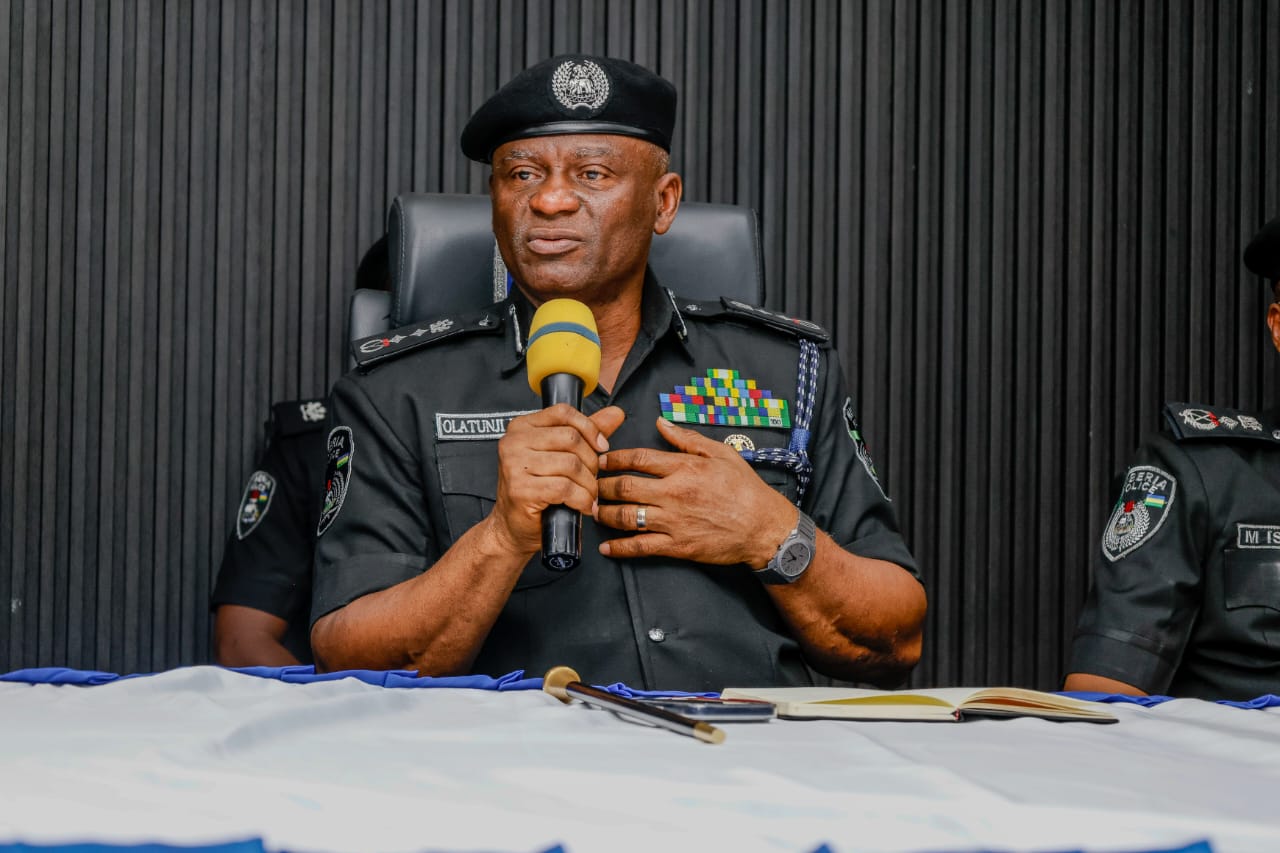
What An Officer Told Me About IGP Olatunji Disu
Written by Adeniran Bamisaye
Years ago, while driving in Lagos, a police officer stopped me. There was nothing unusual about it. He asked for my vehicle particulars, and I handed them over, perhaps not in the most cheerful manner at first. But somewhere between the routine and the silence, a conversation began.
I asked him about his work, just casually, and then I mentioned a name, Olatunji Disu. At the time, he was not the Inspector General yet; I believe he was still a Commissioner of Police. But the moment I mentioned the name, something changed in the officer’s expression.
“Ah! That man…” he said, almost cutting himself short.
Curious, I asked what he meant.
What followed stayed with me. He told me that when he served under Mr. Disu in Owo, Ondo State, there was one thing he could never forget: you could not work with him and be hungry. Not because of charity or handouts, but because he genuinely cared about the welfare of the officers under his command. Then he added something that struck me deeply, that he could confidently say this was a leader who cared.
That immediately reminded me of something a mentor once told me, that you can measure a leader by how much they care about the welfare of their people. That day, on the roadside, in a conversation I did not plan to have, I heard a testimony, not from a podium or a press release, but from someone who had experienced that leadership up close.
When he was eventually appointed Inspector General of Police, one theme stood out clearly: welfare. And I believed it, not because it sounded good, but because I had already heard the evidence. Beyond words, actions began to follow, and what stood out was not just the actions themselves, but the speed with which they came. In a system where delay is often the norm, responsiveness becomes a language of its own.
One of the earliest signals was symbolic yet powerful: the decision to organise a proper pulling out parade for his predecessor, something that had not happened in about sixteen years. Institutions are not only built on systems; they are sustained by memory, respect, and continuity, and that moment quietly restored all three.
Beyond symbolism, there were more structural signals. There has been a renewed push for accountability, with a visible willingness to ensure that erring officers are not shielded but disciplined. There has also been a reawakening of channels like the Complaint Response Unit, CRU, reinforcing the idea that citizens should not feel voiceless in their encounters with the police. Alongside this is a clear direction toward modernisation, strengthening investigative capacity, embracing technology, and repositioning policing to be more intelligence led than force driven.


Aside from these developments, there has also been public conversation around the legality of tenure, particularly in light of existing age and compulsory retirement provisions within the service. However, the Police Act 2020 introduced a defining shift. Section 7 subsection 6 provides that the Inspector General of Police shall hold office for a term of four years, establishing a fixed tenure framework that differs from the traditional retirement structure.
In many ways, this reflects an attempt to balance institutional continuity with leadership stability. And while such interpretations may continue to generate debate, what often matters most is not just the legal framework itself, but how the time it creates is used. In this instance, the focus has remained less on tenure and more on direction, how leadership translates time in office into action, presence, and measurable signals of change.
Beyond these structural efforts, there has also been a pattern of presence. In moments of crisis, leadership has not remained distant. From visits to places like Jos and Kwara following incidents of violence, there has been a visible effort to show up, not just as a figurehead, but as a steadying presence in difficult times. In a country where communities often feel abandoned in the aftermath of tragedy, such gestures carry weight. They signal attention, urgency, and a willingness to engage realities on the ground rather than from afar. Sometimes, presence itself becomes a form of reassurance, both to officers on duty and to citizens watching closely.
Then came a moment that, for me, brought everything into perspective. I watched him oversee the disbursement of funds to families of fallen officers, and as I did, something unexpected happened: I found myself emotional. Yes, the funds were not his personally, but leadership is not just about ownership; it is about priority. He could have delayed it or treated it as routine, but he did not, and that mattered.
I watched widows and families step forward, each carrying a weight that words cannot fully capture. One woman, in particular, struggled to receive her cheque, not because it was heavy, but because she was overwhelmed with emotion. That moment said more than any speech ever could. It was a reminder that beyond the uniform, beyond the structure, beyond the system, there are people, and in that moment, they were seen.
Perhaps this is where the conversation about reform truly begins. This year’s National Police Day, held on April 7, 2026, at Eagle Square, Abuja, carried a theme that feels less like a slogan and more like a direction: “Community Partnership: Building Trust.” When placed alongside these actions, welfare, accountability, institutional respect, responsiveness, and presence, it begins to feel less like ambition and more like alignment.
Trust is not declared; it is built slowly and consistently. When an officer feels cared for, he carries himself differently. When he feels seen, he is more likely to see others. When accountability becomes real internally, credibility begins to form externally. What we may be witnessing is not just administrative change, but the early signs of a cultural shift, the kind that cannot be forced, only lived.
In the end, the relationship between the police and the people will not be repaired by announcements. It will be rebuilt through moments, moments like a roadside conversation, moments when residents feel safe in their communities, and moments when they spot police officers. Moments where leadership moves from position to presence. And perhaps that is where real reform begins, not when it is declared, but when it is felt.
Adeniran Bamisaye writes from Lagos, Nigeria.
Twitter and Instagram: @NiranBamisaye
Police Deploy Extra Security To JAMB Centres, Dismiss Rumours Of Threats
The Nigeria Police Force has deployed additional security personnel to examination centres nationwide ahead of the Joint Admissions and Matriculation Board (JAMB) examinations scheduled to begin on April 16, 2026, while dismissing recent rumours of safety threats at certain centres in a North Central state as “unfounded” and “without basis.”
In a statement issued on Tuesday, the Force acknowledged public concerns regarding the safety of candidates but emphasised that it does not act on unverified information. Nevertheless, the police said the concerns had been noted, particularly as they relate to the education and future of young Nigerians.
“Extra security has been deployed at examination centres nationwide, both overtly and covertly, to prevent any untoward incidents,” the Force Public Relations Officer, DCP Anthony Okon Placid, said in the statement. Measures include routine patrols, perimeter checks, and rapid response teams stationed at strategic locations.
The police said they are collaborating closely with other security agencies to monitor and address potential threats effectively, warning that any individual or group attempting to disrupt the examination process will be swiftly identified and prosecuted.
Candidates have been encouraged to arrive early at their centres, adhere to examination regulations, and report any suspicious activities or persons to on-site security personnel. The public was advised to disregard unverified information circulating on social media and to rely solely on official updates from JAMB and the Nigeria Police Force.
“The Force remains committed to maintaining peace, security, and public confidence in all national activities, including the JAMB examinations,” the statement added.
society
Manipulation of Military Operations to Suit Political Permutations; Nigerian Military Operations in Jilli, as a case study
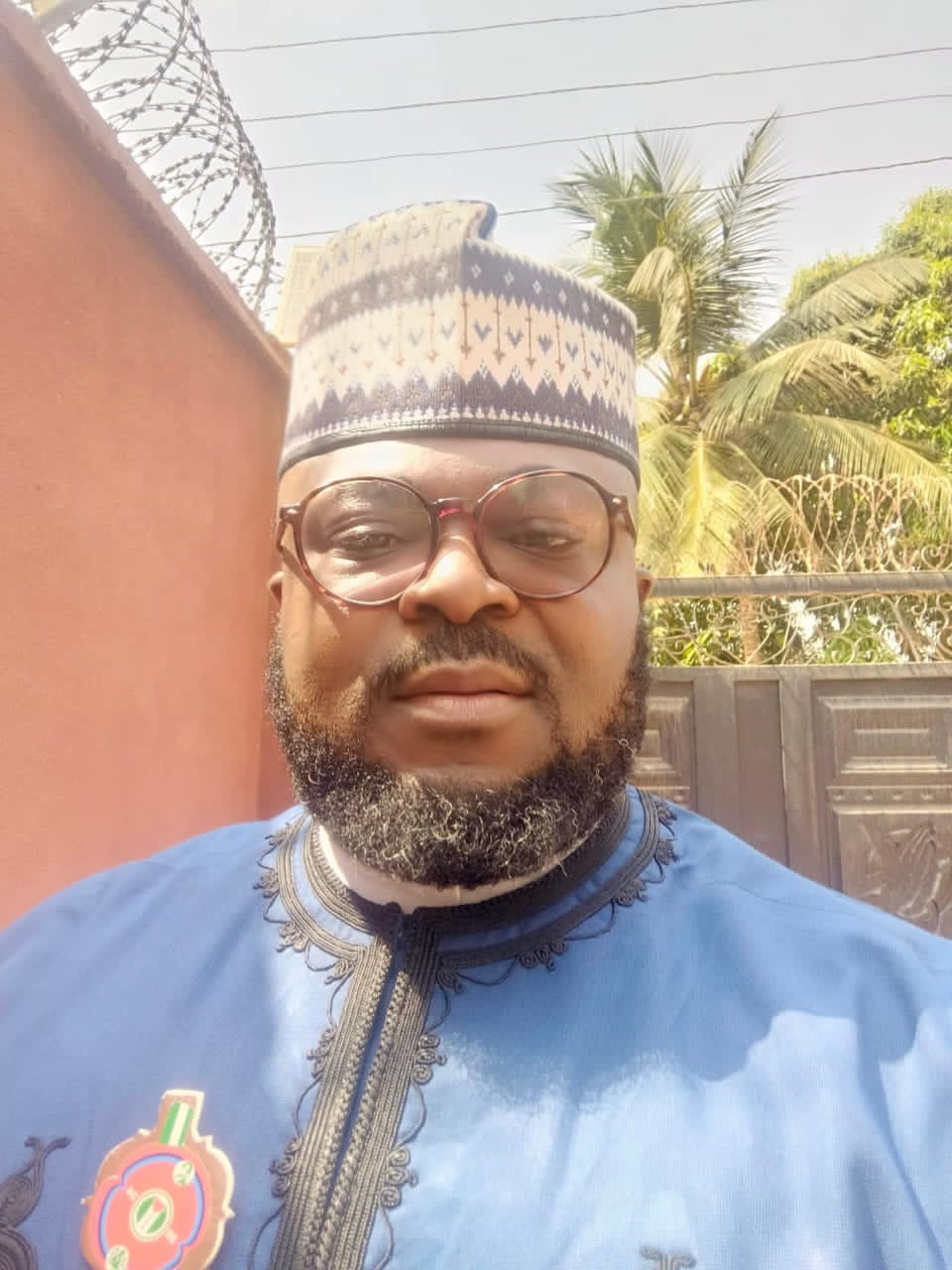
Manipulation of Military Operations to Suit Political Permutations; Nigerian Military Operations in Jilli, as a case study.
By Comrade Oladimeji Odeyemi.
It must be stated clearly and without any apology: the continuous attempt by some political actors to manipulate or reinterpret military operations for political advantage is reckless, dangerous, and unacceptable. The Armed Forces of Nigeria are not an extension of political ambition, nor are they instruments to be twisted to fit changing political permutations.
Our military personnel, especially the personnel of the Nigerian Army are on the frontlines, risking—and in many cases losing—their lives to defend the nation. To politicise their sacrifices is not only disrespectful, it is an insult to the very idea of national service. Those who choose to score political points from matters of security should understand that they are undermining the morale, focus, and effectiveness of the very institutions safeguarding this country.
Recent developments further expose how dangerous and misleading these narratives can be. In a circulating video, a captured Boko Haram member, one Tijani openly affirmed that insurgents frequently congregate at the Jilli Axis—an area that was recently targeted and bombed by the Nigerian military. He went to further affirmed that they mobilised from Jilli to carry out the attack on Benisheikh, which led to the tragic loss of our gallant Officers and Men. This revelation directly contradicts the politicised claims suggesting indiscriminate action or targeted victimisation. It instead reinforces the reality that military operations are intelligence-driven and aimed at dismantling terrorist strongholds.
Equally intolerable is the growing habit of dragging ethnic or tribal sentiments into matters of national security. This must stop. Security threats do not discriminate, and neither should our national response. Any attempt to twist counter-terrorism efforts into ethnic or sectional narratives is not only dishonest but dangerously divisive.
Furthermore, the reckless labeling of security operations as “witch-hunts” without credible evidence is a deliberate attempt to discredit institutions and confuse the public. Such narratives are not harmless—they weaken trust, embolden criminal elements, and place additional strain on already overstretched security personnel.
Those pushing such claims must be prepared to take responsibility for the consequences.
Let it be a warning: the continued politicisation of security issues will not only deepen national insecurity but will also be remembered as a betrayal of public trust. Politicians must draw a clear line between legitimate oversight and destructive interference. The former strengthens democracy; the latter endangers lives.
Our security agencies must be allowed to operate without intimidation, manipulation, or political distortion. Anything less is a direct compromise of national safety.
It is the government responsibility to provide security, especially in a Country like Nigeria, where citizens are not allowed to own the kind of weapons that terrorists and often criminals carry, government must protect the citizens.
In conclusion, the lives of citizens are not bargaining chips for political games. They are sacred. Any individual or group that chooses to exploit insecurity for political gain must understand that they are playing a dangerous game—one that history will judge harshly.
Comrade Oladimeji Odeyemi an entrepreneur, a security analyst and an opinion moulder sent this article from Ibadan, Oyo State.


- President receives Bishop of Port Victoria, reinforces State–Church collaboration on social priorities April 15, 2026
- World Bank Group’s International Finance Corporation (IFC) and Citi Sign Borrowing Facility to Expand Local Currency Financing in South Africa April 15, 2026
- Uganda: Manufacturers, traders ask gov’t to stay tax increases April 15, 2026
- Eritrea: Sports and educational week in Assab sub-zone April 15, 2026
- Cabo Verde Shapes Africa’s Health Future at High-Level World Health Organization (WHO) Regional Consultation April 15, 2026
- Critical Minerals Africa Group to Speak at Invest in African Energy Forum in Paris April 14, 2026
- Talentz MEDIA Announces Strategic Partnership with Ghanaian Artist Kwaku Cenima to Launch “Emotional Scene” April 14, 2026
- South African Local Government Association (SALGA) and The Global Trust Project announce municipal pilot under new three-year Memorandum of Understanding (MoU) April 14, 2026
- TotalEnergies Strikes New Oil Discovery Offshore Congo Amid National Drive Toward 500,000 barrels per day (BPD) April 14, 2026
- Africa Finance Corporation (AFC) Delivers Côte d’Ivoire’s First Project Finance Green Bond for Landmark Solar Plant April 14, 2026
- President receives Bishop of Port Victoria, reinforces State–Church collaboration on social priorities April 15, 2026
- World Bank Group’s International Finance Corporation (IFC) and Citi Sign Borrowing Facility to Expand Local Currency Financing in South Africa April 15, 2026
- Uganda: Manufacturers, traders ask gov’t to stay tax increases April 15, 2026
- Eritrea: Sports and educational week in Assab sub-zone April 15, 2026
- Cabo Verde Shapes Africa’s Health Future at High-Level World Health Organization (WHO) Regional Consultation April 15, 2026
- Critical Minerals Africa Group to Speak at Invest in African Energy Forum in Paris April 14, 2026
- Talentz MEDIA Announces Strategic Partnership with Ghanaian Artist Kwaku Cenima to Launch “Emotional Scene” April 14, 2026
-

 news4 months ago
WHO REALLY OWNS MONIEPOINT? The $290 Million Deal That Sold Nigeria’s Top Fintech to Foreign Interests
-

 celebrity radar - gossips3 months ago
Dr. Chris Okafor Returns with Power and Fire of the Spirit -Mounts Grace Nation Altar with Fresh Anointing and Restoration Grace on February 1, 2026
-

 celebrity radar - gossips4 months ago
Prophet Kingsley Aitafo Releases 2026 Prophecy: ‘Nigeria Will Rise, but the World Must Prepare for Turbulence’
-

 celebrity radar - gossips6 months ago
End of an Era: Nigeria Mourns Evangelist Dr. Uma Ukpai, 80