
Politics
The Imperative for Youth Involvement in Government Positions in Nigeria

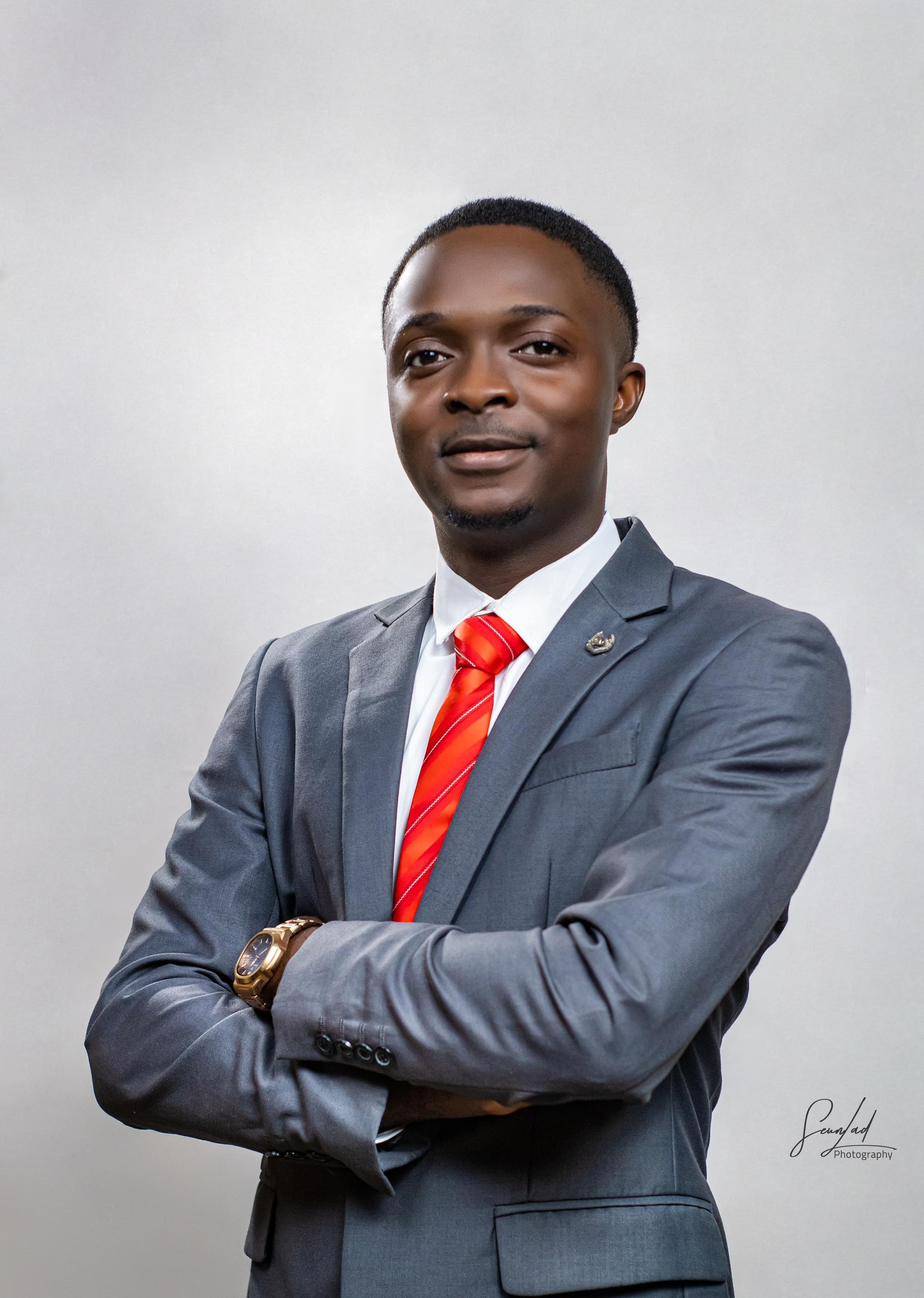
The Imperative for Youth Involvement in Government Positions in Nigeria.
In recent years, the call for increased youth participation in government positions has gained momentum in Nigeria. With a population where over 60% are under the age of 25, the potential for young leaders to influence policy and governance is immense. This article explores the importance of youth involvement in government, highlighting exemplary case studies of young Nigerians who are making significant contributions to the nation’s leadership.
•The Case for Youth Involvement;
Youth involvement in government is crucial for several reasons:
1. Fresh Perspectives: Young leaders bring innovative ideas and perspectives that can drive change and address contemporary issues, such as technology, education, and unemployment.
2. Representation: With a significant portion of the population being youth, their representation in government ensures that their voices, concerns, and aspirations are adequately addressed.
3. Sustainable Development: Engaging youth in governance fosters a sense of responsibility and ownership, which is essential for sustainable development. Young leaders are often more attuned to the needs of their peers and can create policies that resonate with younger demographics.
4. Bridging the Gap: Youth involvement helps bridge the generational gap in politics, fostering collaboration between seasoned politicians and the younger generation, which can lead to more comprehensive and inclusive policies.
• Exemplary Youth Leaders in Nigeria;
Several young Nigerians have already stepped into leadership roles, demonstrating the potential of youth in governance. Here are some notable examples:
1. Hon. Ayodele Olawande – Minister for Youth Development
As the Minister for Youth Development, Hon. Ayodele Olawande has been instrumental in implementing programs aimed at empowering young Nigerians. His initiatives focus on skill acquisition, entrepreneurship, and youth engagement in governance, ensuring that the youth have a platform to voice their opinions and contribute to national development.
2. Hon. Bunmi Tunji-Ojo – Minister of Interior
Hon. Bunmi Tunji-Ojo has made significant strides in the Ministry of Interior, focusing on security and immigration reforms. His youth-centric approach has led to the establishment of various programs aimed at engaging young people in community policing and security awareness campaigns, fostering a sense of responsibility among the youth.
3. Hon. Khadijah Kareem Omotayo – Personal Assistant to the President on Constituency Affairs
As the Personal Assistant to the President on Constituency Affairs, Hon. Khadijah Kareem Omotayo plays a vital role in ensuring that the concerns of constituents, particularly the youth, are addressed. Her advocacy for youth engagement in local governance has empowered many young people to participate actively in their communities.
4. Mr. Kareem Muri-Okunola – Principal Secretary to the President
Mr. Kareem Muri-Okunola’s role as Principal Secretary to the President showcases the importance of youth in high-level decision-making. His background in public administration and policy has allowed him to contribute effectively to the administration’s goals, particularly in areas affecting youth employment and education.
5. Mr. Kamorudeen Yusuf – Personal Assistant to the President on Special Duties
Mr. Kamorudeen Yusuf has been pivotal in coordinating youth initiatives within the presidency. His focus on special duties related to youth empowerment programs has led to increased opportunities for young Nigerians in various sectors.
6. Mr. Seyi Tinubu – CEO of Loatsad Promomedia
Mr. Seyi Tinubu, as the CEO of Loatsad Promomedia, has demonstrated exceptional leadership and innovation in the advertising industry. His experience in managing a successful business equips him with the skills necessary for public office, where he could further influence policies that support entrepreneurship and youth development.
7. Mr. Kolawole Aspire – Chairman of Real Estate Developers of Nigeria (REDAN)
Mr. Kolawole Tony Aspire’s leadership in REDAN highlights the potential of young professionals to influence economic policies. His advocacy for affordable housing and sustainable urban development has positioned him as a key player in shaping policies that benefit young Nigerians.
8. Mr. Oluwatobi Ajayi FICA – CEO/Chairman of Nord Automobiles Limited
Mr. Oluwatobi Ajayi’s success in the automotive industry exemplifies the entrepreneurial spirit of Nigerian youth. His leadership experience and commitment to innovation make him a strong candidate for public office, where he could advocate for policies that support local manufacturing and job creation.
In conclusion, the involvement of youth in government positions in Nigeria is not just beneficial; it is essential for the country’s progress. The examples of young leaders like Hon. Ayodele Olawande, Hon. Bunmi Tunji-Ojo, and others illustrate the positive impact that youth can have on governance. By trusting and empowering young people to take on leadership roles, Nigeria can harness the energy, creativity, and determination of its youth to drive sustainable development and create a brighter future for all. It is time for the nation to involve youth in governance. Youths like Mr. Seyi Tinubu, Mr. Kolawole Tony Aspire, Mr. Oluwatobi Ajayi FICA amongst others will contribute immensely to the development and growth of this country if given a chance to hold leadership positions in the public sector.
Compiled By;
Comrade Awoyinfa Opeoluwa,
National Coordinator,
Renewed Hope Youth Alliance (RHYA).







Why Ifako-Ijaiye’s Voice Is Louder At The Lagos Assembly: The Jah Factor
By Ibukun Simon
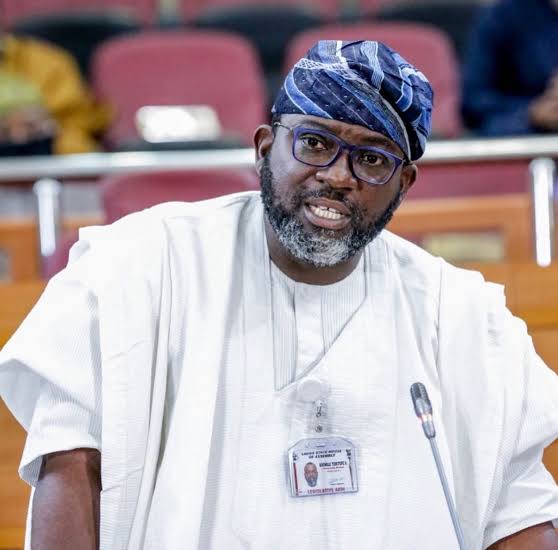
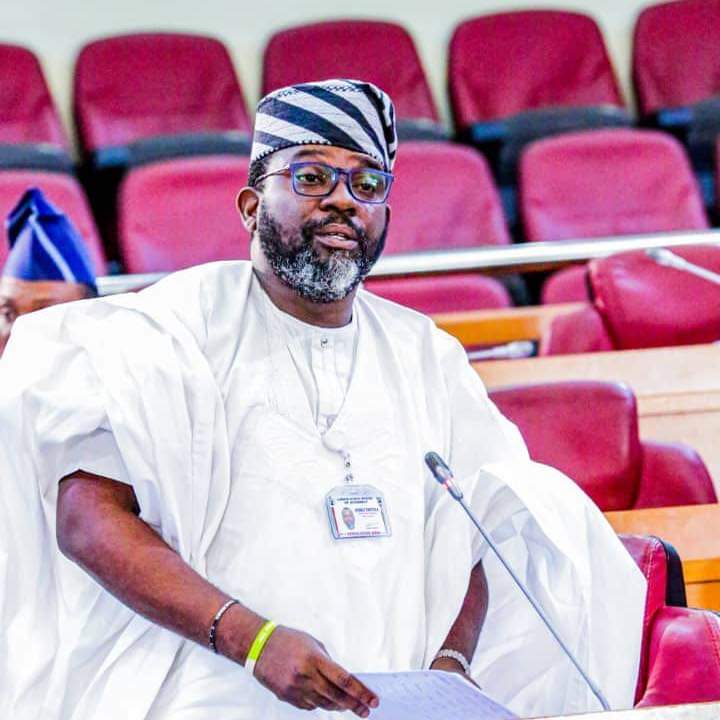
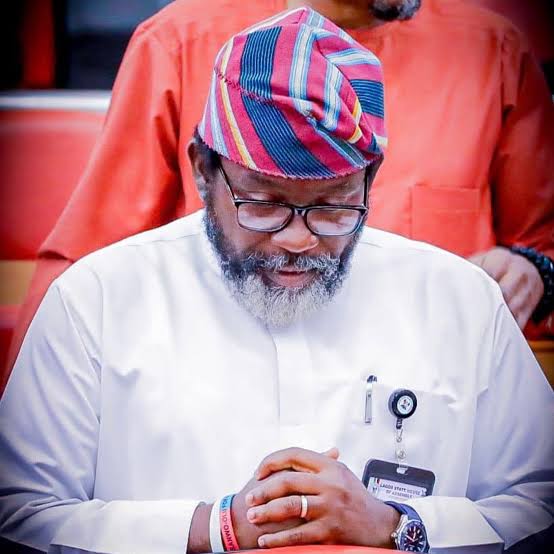
In legislative politics, not all representatives are created equal. Some merely occupy seats; others shape conversations, influence outcomes, and leave visible footprints in the lives of their people. Since 2019, Ifako-Ijaiye Constituency I has belonged firmly to the latter category, thanks to the emergence of Hon. Adewale Temitope Adedeji, fondly known as JAH, as its representative in the Lagos State House of Assembly.
As a journalist who has covered proceedings of the Lagos Assembly consistently since 2015, I have witnessed first-hand how representation can either fade into the normal routine or rise into relevance. The entry of Hon. Adedeji into the Assembly marked a clear turning point—not only for Ifako-Ijaiye, but for the quality of debate, advocacy, and people-focused legislation within the House.
On the floor of the Assembly, Hon. Adedeji stands out as one of the lawmakers journalists naturally gravitate towards. His interventions during plenary sessions are deliberate, articulate, and deeply rooted in public interest and knowledge. In the 40-member House, he is widely regarded as one of the top five lawmakers whose contributions command attention, not because of theatrics, but due to his clarity of thought, persuasive delivery, and uncommon mastery of issues. When JAH speaks, the chamber listens—and the press takes notes.
This strength of presence is crucial in a legislative environment where influence matters. In parliamentary practice, experience translates to authority. The Lagos State House of Assembly, like many legislatures, places significant weight on ranking members—lawmakers whose sustained service enhances their ability to push motions, influence committee outcomes, and attract development to their constituencies. Returning Hon. Adedeji to the House in 2027 would therefore mean strengthening Ifako-Ijaiye’s bargaining power and ensuring its concerns are not just heard, but prioritized.
Beyond the chambers, the impact of Hon. Adedeji’s representation is visible across the constituency. In terms of infrastructural development, several road construction and rehabilitation projects have been attracted to Ifako-Ijaiye under his watch, improving accessibility, boosting local businesses, and easing daily movement for residents. These are practical dividends of democracy that speak louder than campaign slogans.
Equally significant is his focus on human development and social inclusion. Since assuming office in 2019, Hon. Adedeji has facilitated job opportunities, empowered the less privileged, and consistently supported students through the distribution of JAMB and GCE forms, helping to remove financial barriers to education. These interventions reflect the impact of a representative who understands that development must touch both infrastructure and people.
What further distinguishes Hon. Adedeji is his constant engagement with constituents. Through consultations, town-hall interactions, and accessibility, he has maintained a relationship that goes beyond election cycles. This closeness has fostered trust and ensured that governance remains responsive to grassroots realities.
As Lagos continues to grow and legislative responsibilities become more demanding, constituencies like Ifako-Ijaiye cannot afford experimental representation. They require lawmakers who understand the system, command respect within it, and can translate legislative influence into real benefits for the people.
From the Assembly floor to the streets of Ifako-Ijaiye, the record since 2019 is clear: effective representation works—and Hon. Adewale Temitope Adedeji has delivered it.
Ibukun writes from Ifako-Ijaiye.
Politics
Lack of Understanding or Legitimate Concern? Otti’s Defence of Tinubu’s Tax Reform Sparks National Debate
Lack of Understanding or Legitimate Concern? Otti’s Defence of Tinubu’s Tax Reform Sparks National Debate
By George Omagbemi Sylvester | SaharaWeeklyNG
“Abia Governor Alex Otti argues critics misunderstand the overhaul of Nigeria’s tax laws, but the controversy reveals deeper anxieties about governance, transparency and economic strain.”
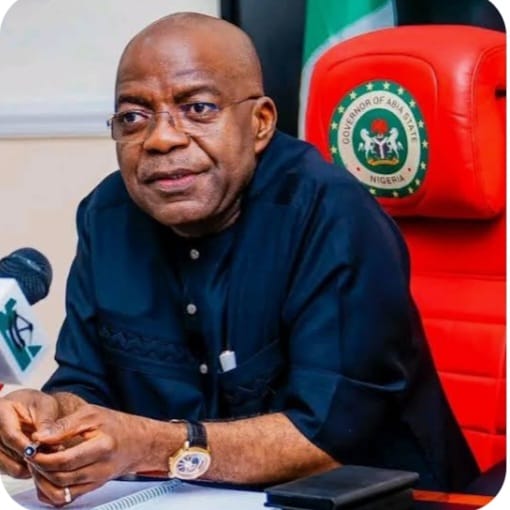
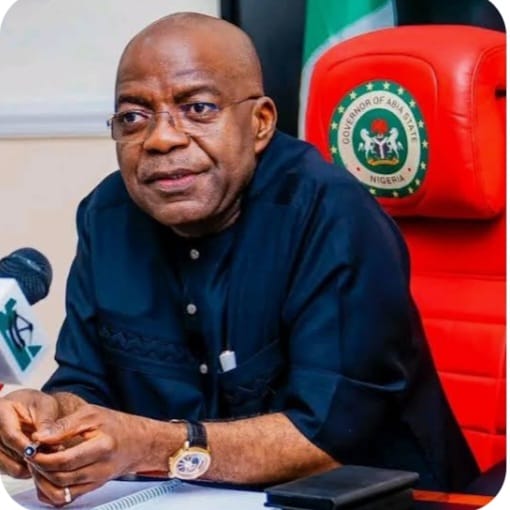
When Abia State Governor Alex Otti publicly defended President Bola Ahmed Tinubu’s newly enacted tax reform laws on February 13, 2026, he did more than just push back at critics, he threw the spotlight back on a fulcrum issue dividing Nigeria’s political and economic classes. Otti’s assertion that Nigerians attacking the tax policy “lack understanding” crystallises a broader fracture in public discourse over fiscal policy, governance and the future of the Nigerian economy.
The comments from Governor Otti came amid an intensifying national conversation over sweeping tax reforms signed into law in June 2025, designed to modernise Nigeria’s tax architecture and expand revenue mobilisation. These reforms (long in the making and championed by a Presidential Fiscal Policy and Tax Reforms Committee chaired by Prof. Taiwo Oyedele) mark the most far‑reaching overhaul of federal tax laws in decades. They include restructuring the Federal Inland Revenue Service into the National Revenue Service (NRS), establishing a Tax Appeal Tribunal and Ombudsman Office, and unifying revenue collection frameworks to improve transparency and efficiency.
Governor Otti’s praise for the new legislation resonated with elements of his own fiscal thinking. Drawing on economic positions he articulated nearly a decade ago, he argued that key principles now entrenched in the law reflect sound fiscal reasoning and long‑standing proposals to strengthen Nigeria’s economic foundations. “Almost 10 years ago, I wrote about the fiscal side of things,” Otti said. “When I read the new tax reform law, I saw many of those arguments reflected in it. I thank Prof. Oyedele. When people attack him, they don’t understand.”
Yet, while Otti’s intervention was meant to de‑escalate public criticism, it instead exposed how complex and emotionally charged the issue of taxation has become in Nigeria. Critics, both inside and outside government, argue that the reforms have not been adequately explained to citizens and that many fear the measures will aggravate hardship amid already high costs of living. One prominent voice of dissent, fiscal policy analyst Aborisade, warned that without transparency and clear communication on how tax revenues will be collected and returned to the people, “these reforms risk becoming deeply unpopular.” Critics also highlight that any tax increase implemented without demonstrable improvements in public services could fuel resentment and mistrust in governance.
That mistrust is not abstract. For years, Nigeria has struggled with weak tax compliance, low revenue‑to‑GDP ratios compared with other emerging economies, and public scepticism over how government revenues are utilised. Many Nigerians remember episodes where policy changes were not accompanied by visible improvements in infrastructure, healthcare or power delivery, reinforcing the belief among skeptics that new taxes equate to greater burden with little reward.
For supporters like Otti and others in government policy circles, the reforms represent a long‑overdue attempt to widen the tax net and reduce Nigeria’s chronic dependence on volatile oil revenues. Advocates argue that a modernised tax system can enhance domestic revenue mobilisation, reduce fiscal deficits, and create a more resilient economy. They point out that reforms provide exemptions and reliefs for low‑income earners and small businesses and are aimed at building a fairer, more transparent system for all stakeholders.
Still, bridging the gap between these competing narratives is challenging. Opposition voices contend that even well‑designed tax policy may fail if the state lacks the capacity to implement it equitably or if the public’s confidence in leadership remains weak. “Without accountability and clear benefits for their contributions, any tax reform risks becoming deeply unpopular,” Aborisade emphasised, warning that heavy taxation without trust can fracture the social contract.
The debate over Tinubu’s tax reform illustrates a deeper truth about contemporary Nigeria: that economic policy no longer exists in a vacuum but is deeply intertwined with public sentiment, political legitimacy, and social cohesion. As one respected economist put it, “Taxation is not just a fiscal tool, it is a trust‑building exercise between the state and its citizens.” When that trust is fragile, even technically sound reforms can be seen as punitive rather than constructive.
Analysts suggest that meaningful public engagement (including sustained information campaigns, transparent revenue utilisation reporting and constructive dialogue with civil society) is essential to soothe anxieties and build confidence in the new system. Without this, what began as an effort to stabilise public finances could widen political and social divides.
In defending the tax reforms, Governor Otti has framed the challenge as one of comprehension rather than critique. But the controversy unfolding across Nigeria is not simply about misunderstanding; it underscores a profound gap between policy design and public perception. For a reform of this magnitude to succeed, Nigerians must be assured not only of its economic merits, but also of its fairness, transparency and tangible impact on everyday lives.
As the implementation phase continues through 2026 and beyond, the Tinubu administration, state governments and economic stakeholders face the critical task of translating legislative change into broader public trust – a task as difficult as any technical reform the tax laws themselves seek to achieve.
Politics
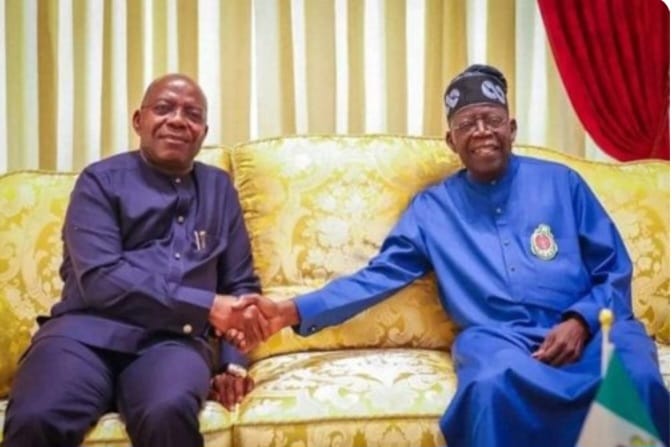
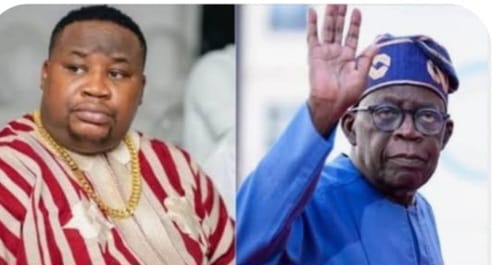
Cubana Chief Priest Backs Tinubu Ahead of 2027, Signalling Shift in Celebrity Political Alignments
Cubana Chief Priest Backs Tinubu Ahead of 2027, Signalling Shift in Celebrity Political Alignments
By George Omagbemi Sylvester | SaharaWeeklyNG
“Socialite’s public declaration underscores growing intersection of business, entertainment and electoral politics as Nigeria inches toward another high-stakes presidential race.”

A prominent Nigerian socialite and nightlife entrepreneur, Pascal Okechukwu (popularly known as Cubana Chief Priest) has publicly declared his support for President Bola Ahmed Tinubu ahead of the 2027 presidential election, in a move that has stirred debate across Nigeria’s political and social media landscapes.
The declaration emerged in early February 2026 through a series of Instagram posts and public exchanges with critics and followers. In those posts, the celebrity businessman stated unequivocally that he would align himself with Tinubu’s political camp and work against the anticipated presidential bid of former Anambra State governor and Labour Party figure, Peter Obi.
Cubana Chief Priest, who commands a large following across Nigeria’s entertainment and hospitality sectors, framed his decision as both a political and economic calculation. In one exchange, he argued that as an employer and businessman, he preferred collaboration with the incumbent administration rather than opposition politics.
He also publicly declared that he and his family had chosen to “stay with the moving train” of Tinubu’s “Renewed Hope” agenda, signalling clear political alignment with the ruling All Progressives Congress (APC).
The shift is politically significant because the socialite had previously been associated with Peter Obi during the 2023 presidential election cycle. In his own words, he acknowledged that he worked for Obi during that campaign, even while holding an advisory role to an APC-aligned state government.
His new stance therefore represents a notable reversal, particularly within the South-East business community, where Obi enjoyed strong support during the last election.
The controversy surrounding the declaration intensified after an online clash between Cubana Chief Priest and social commentator Isaac Fayose, the brother of former Ekiti State governor Ayodele Fayose. The dispute centred on the socialite’s decision to align with Tinubu’s political movement, with Fayose accusing him of opportunism. In response, Cubana Chief Priest defended his position, arguing that political alignment was a practical choice for a businessman responsible for large-scale employment.
He also linked his support for the APC government to broader political objectives, including the potential release of detained pro-Biafra leader Nnamdi Kanu, stating that such outcomes were more achievable from within the ruling political structure than from opposition ranks.
Beyond social media statements, reports indicate that Cubana Chief Priest has expressed interest in running for a seat in the House of Representatives in 2027 under the APC platform, suggesting that his endorsement of Tinubu is part of a deeper political ambition rather than a mere celebrity opinion.
News reports also describe his announcement of political plans and explicit backing of Tinubu as part of the emerging alignment of business figures with the president’s second-term project.
The development coincides with political moves by his associate, the businessman Obinna Iyiegbu, popularly known as Obi Cubana, who has also been linked to pro-Tinubu political structures ahead of 2027.
This clustering of influential entrepreneurs around the ruling party has prompted renewed discussion about the growing role of celebrity endorsements and business interests in Nigeria’s electoral politics.
Political analysts say such endorsements, while often symbolic, can influence public perception, especially among young voters who are heavily engaged with celebrity culture. As political scientist Larry Diamond once observed, “In transitional democracies, informal power networks (business elites, media figures, and celebrities) can shape political outcomes as much as formal party structures.”
Similarly, Nigerian scholar Professor Jibrin Ibrahim has argued that “the fusion of business capital and political capital is one of the defining features of contemporary Nigerian politics.”
However, critics warn that celebrity political alignments rarely translate into structured policy debates or ideological clarity. Economist Pat Utomi has repeatedly cautioned that “Nigeria’s democracy suffers when politics becomes an extension of celebrity influence rather than a contest of ideas and development strategies.”
For now, Cubana Chief Priest’s declaration remains a personal political endorsement rather than an official party appointment at the national level. Yet its timing (more than a year before the formal campaign cycle for 2027) illustrates how early positioning has already begun among Nigeria’s political and business elites.
Key figures involved:
Pascal Okechukwu (Cubana Chief Priest): Socialite and businessman who declared support for Tinubu.
President Bola Ahmed Tinubu: Incumbent Nigerian president expected to seek re-election in 2027.
Peter Obi: Former Anambra governor and likely opposition contender.
Isaac Fayose: Social commentator who criticised the endorsement.
Obinna Iyiegbu (Obi Cubana): Business associate linked to pro-Tinubu political structures.
As Nigeria moves gradually toward the 2027 electoral cycle, the intersection of celebrity influence, business interests and party politics is likely to intensify, raising fresh questions about the nature of democratic mobilisation in Africa’s most populous nation.


-

 celebrity radar - gossips6 months ago
Why Babangida’s Hilltop Home Became Nigeria’s Political “Mecca”
-

 society6 months ago
Power is a Loan, Not a Possession: The Sacred Duty of Planting People
-

 news6 months ago
THE APPOINTMENT OF WASIU AYINDE BY THE FEDERAL GOVERNMENT AS AN AMBASSADOR SOUNDS EMBARRASSING
-

 Business6 months ago
Batsumi Travel CEO Lisa Sebogodi Wins Prestigious Africa Travel 100 Women Award