
society
Fraudulent Digital Assets Linked to Chinese, Filipino Nationals: EFCC Secures Interim Forfeiture of $222,729.86


•Arraigns 57 foreign nationals for attempts to destabilise Nigeria’s constitutional structure
The Economic and Financial Crimes Commission (EFCC) has secured an interim forfeiture order for digital assets valued at $222,729.86, tied to fraudulent activities, allegedly, involving some foreign nationals including Chinese and Filipino.
Justice Alexander Owoeye of the Federal High Court granted the order in Lagos on February 2, 2025.
The forfeiture order followed a motion filed by Zeenat Atiku, a prosecutor with EFCC, under Section 44 (2)(B) of the 1999 Constitution (as amended) and Section 17 of the Advanced Free Fraud and Other Fraud-Related Offences Act No. 14, 2016.
The EFCC was also directed to publish the order in a national newspaper, allowing anyone with an interest in the assets to challenge the forfeiture within 14 days.
According to a deposition by EFCC investigator, Owolabi Taiwo, the commission received intelligence about a large-scale fraud operation involving foreign nationals based in Lagos.
A subsequent operation led to the arrest of 792 suspected cybercriminals and the seizure of approximately 1,000 routers, SIM cards, computers, and mobile phones, the commission said.
It said further investigation revealed that the suspects were part of a syndicate engaged in cryptocurrency fraud and dating scams, with operations financed through Genting International Co. Limited (GICL), a Nigerian-registered company.
The syndicate laundered illicit funds, including over $2.39 million in USDT, through peer-to-peer cryptocurrency trading.
The funds were traced to wallet addresses connected to fraudulent schemes.
Meanwhile, EFCC also arraigned 58 foreign nationals, including Chinese and Filipino nationals, on charges related to impersonation, fraud, and attempts to destabilise Nigeria’s constitutional structure.
The accused, who were arrested in December 2024, faced charges related to cybercrimes, cyber-terrorism, identity theft, and the employment of Nigerian youths for fraudulent activities.
The defendants were separately arraigned before Justice Ayokunle Faji, Justice Chukwujekwu Aneke, Justice Denide Dipeolu, and Justice Alexander Owoeye, respectively, and they all pleaded not guilty to the charges.
Some of the defendants arraigned before four separate courts, were Cherry De Leon (A.K.A Yesh De Leon), Khurram Shanzad, Fernad Fu Fang (A.K.A Kim), Tan Soon Kar, Rex Jose Dilag (A.K.A Madison), Jamal Polea, Jamilyn Jaynee Gonzalez (A.K.A Jam Galanza) and Hannah Jaramillo (A.K.A Max De Leon).
Others included Lin Haobo, An Hongxu (a.k.a Ruike), Shitou Shizilong, Pan Jiong, Zhow Kunji, Huang Xiao Liang (a.k.a Liu Xiao Liang), Peng Sen Lin (a.k.a Peng Song Lin, Pen Sen Ling, Dong Fang Hong, Huang Ren Jan, Shi Yang Xiong, Lu Yi Liang, Guo Giang (a.k.a Lisa), Wen Zong Xu, Pan Cai Yu, and Guo Zhi Yong.
After the charges were read to each defendant individually, they all pleaded not guilty.
Following their plea of not guilty, the court ordered that the defendants be remanded in the correctional centres.
The female defendants were remanded at Kirikiri Correctional Centre, while their male counterparts were remanded at the Ikoyi Correctional Centre.
Earlier, EFCC told the court that on or about December 18, 2024 in Lagos, the defendants, wilfully caused to be accessed computer systems organised to seriously destabilise the constitutional structure of Nigeria (which prohibited and prevented cyber and related crimes) when they procured/employed Nigerian youths for identity theft and to hold themselves (Nigerians) out as persons of foreign nationality, with the intent to gain financial advantage for themselves.
The commission also told the court that sometime in December 2024 at Lagos, the defendants wilfully gave false information to officers of EFCC in the course of investigation when they were being questioned for being part of a criminal syndicate group specialised in romance scam, crypto currency fraud, and cyber terrorism, among others.
According to EFCC, the offence committed is contrary to Section 18 and 27 of the Cybercrimes (Prohibition, Prevention, Etc) Act, 2015 (As Amended,2024), 39(2) of the Economic and Financial Crimes Commission (Establishment) Act, 2004, and punishable under Section 39(2) (b) of the same Act.




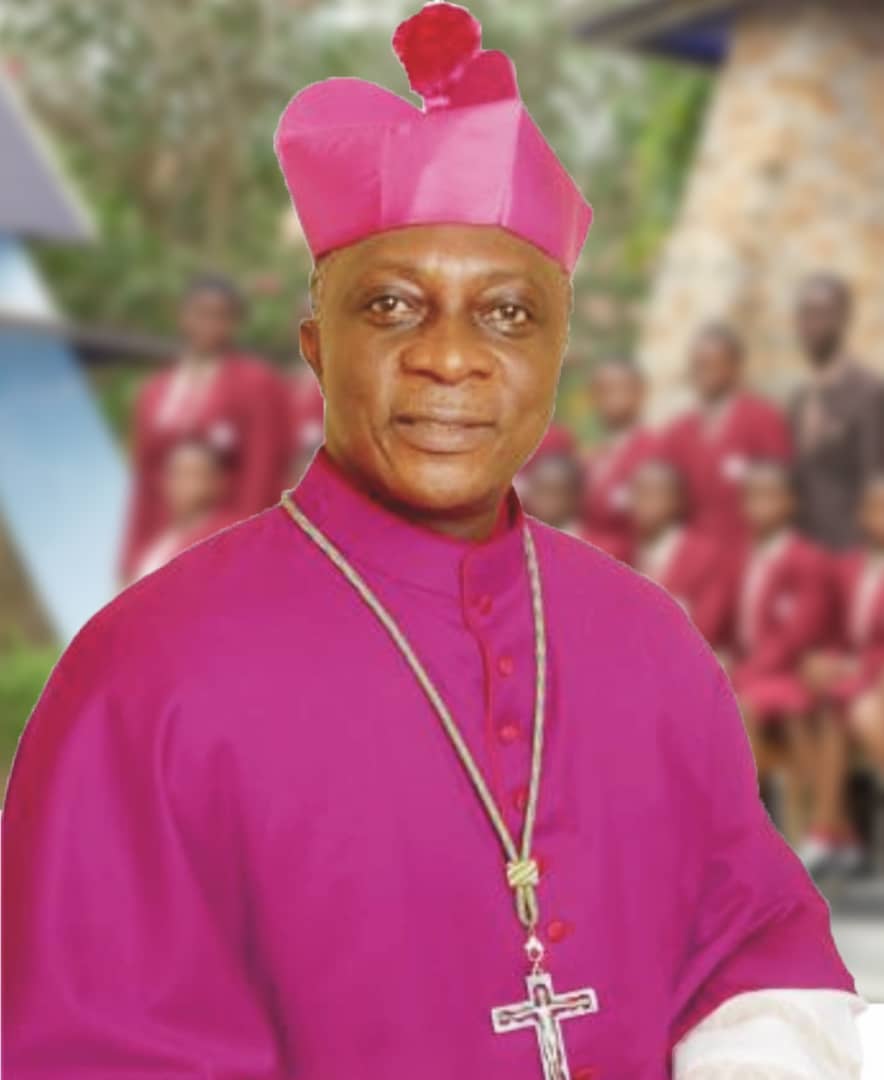
GOVERNMENT MUST TACKLE NATION’S PRESSING CHALLENGES — BISHOP MARTINS URGES AT CHRISM MASS
By Ifeoma Ikem
The Holy Cross Cathedral, Lagos, was filled with joy, reverence, and renewed commitment on Holy Thursday as Catholic faithful across the metropolis gathered for the annual Chrism Mass — a solemn celebration marking the institution of the priesthood, the Holy Eucharist, and the blessing of sacred oils used throughout the liturgical year.

During the ceremony, the Catholic Archbishop of Lagos, Most Rev. Adewale Martins, described the Chrism Mass as a profound moment in the life of the Church.
He noted that it offers priests an opportunity to renew their vows and reflect on the centrality of the Eucharist, which he emphasized remains the heartbeat of the Catholic faith.
Addressing national issues, Bishop Martins acknowledged the government’s ongoing efforts to tackle Nigeria’s current challenges.
However, he stressed the need for more decisive and accelerated interventions, particularly in securing lives and easing the economic burdens confronting citizens.
He congratulated priests on their feast day and reflected on the rising influence of digital evangelization. While recognizing that many people now “inhabit online spaces,” he warned clergymen to handle social media with caution, discipline, and fidelity to Church teachings. According to him, digital influence must never overshadow spiritual integrity.
“The oils blessed today are not simply symbols; they speak of being set apart by a mark not earned, not crafted, but given,” he said. “As we renew our promises, we do not recreate ordination; we awaken memory. We were not ordained to build profiles but to bear Christ.”
He further noted that the digital world has become a place where people “gather, argue, celebrate, confess, misunderstand, and sometimes encounter truth.” For this reason, he said the Church recognizes the need to take the Gospel into that space without compromising its authenticity.
In his homily, Rev. Fr. Paul Akin-Otiko, Chaplain of St. Thomas More Catholic Chaplaincy, University of Lagos, emphasized the enduring significance of the Chrism Mass as an ancient tradition where sacred oils are consecrated.
He urged priests to pray fervently for the sick using the blessed oils, reminding them that true healing comes from God.
Fr. Akin-Otiko encouraged clergy to remain selfless, warning them never to turn the Church into a source of personal gain.
He stressed that their primary duty is the salvation of souls and the welfare of the people entrusted to them.
Monsignor John Aniagwu took a moment to appreciate Anthony Cardinal Olubunmi Okogie for his fatherly guidance and exemplary leadership. He prayed for God’s continued blessings, asking that all present be granted good health to witness many more Chrism Masses.
The highlight of the ceremony was the renewal of vows by hundreds of priests, who reaffirmed their commitment to lives of dedication, chastity, and obedience to the Church and their bishop — an act that drew heartfelt applause from the congregation.
The celebration concluded with songs of thanksgiving, joy, and renewed devotion.
society
Liberian Leaders, Citizens Bear Witness as Apostle Suleman Hosts Two-Day Power-Packed Crusade
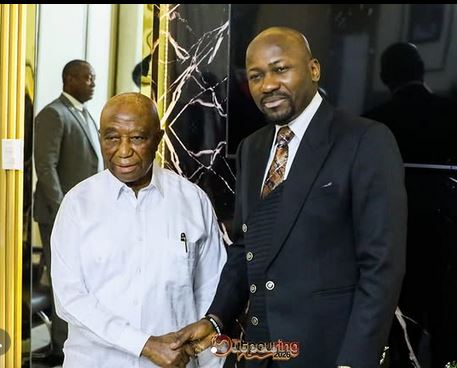
Liberian Leaders, Citizens Bear Witness as Apostle Suleman Hosts Two-Day Power-Packed Crusade
It was testimonies galore on Tuesday, March 31, the first day of the famous servant of God and founder of the Omega Fire Ministries (OFM) worldwide, Apostle Johnson Suleman’s power-packed two-day crusade. The event documented impactful moments with the Gospel and miracles, emphasizing the power of faith and the tangible confirmation of God’s Word through signs and wonders. It was equally an atmosphere of miraculous healing, restoration of lives, and the strengthening of faith.
At the crusade, which was held at the SKD Sports Stadium in Paynesville City, and themed, “Liberia Outpouring Crusade” witnessed testimonies of impact and miracles with participants experiencing instant healing of various kinds of challenges.
Apostle Suleman’s first port of call was Paynesville, the office of Liberian government’s president, Mr. Joseph Nyuma Boakai, who received him in an audience with his junior ministers. Apostle Suleman, who also met with the vice-president, Mr. Jeremiah Kpan Koung, was welcomed by the Liberian leader’s office as part of the president’s ongoing engagements with religious leaders aimed at fostering spiritual support for national development.
The president expressed profound appreciation to Apostle Suleman for the visit and continued prayers and intercessions by men and women of God on behalf of Liberia, emphasizing his firm belief that sustained spiritual guidance and prayer remain vital to the transformation and progress of the nation.
During the visit, Apostle Suleman offered prayers for President Boakai, his cabinet and the Liberian nation, invoking divine alignment, wisdom, and insight in Liberia’s path toward growth and stability. He prayed that the Almighty God would position Liberia for relevance and fulfillment of its national destiny.
Apostle Johnson Suleman, an evangelist who knows no bounds of where preaching the gospel comes to a stop, visited Liberia prepared with the message, compelling power of the Gospel and the work of the Holy Spirit, and bringing people to a point of decision where they surrendered their lives to Christ.
Aside from being prophetic and timely, OFM sources disclosed that the servant of God’s visit underscores the importance of faith-based partnerships in supporting governance and national renewal efforts.
society
Middle Belt Forum Hails Tinubu’s Jos Visit, Calls for United Civil-Military Effort to Restore Lasting Peace
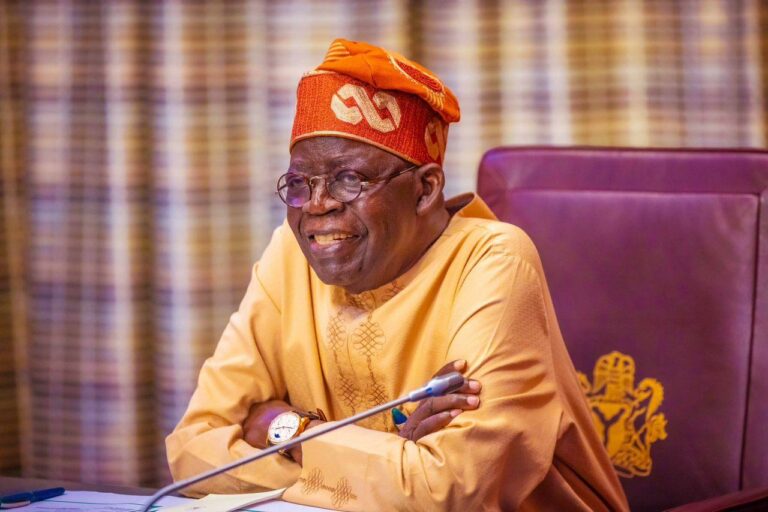
*Middle Belt Forum Hails Tinubu’s Jos Visit, Calls for United Civil-Military Effort to Restore Lasting Peace
The Middle Belt Peace Forum (MBPF) has commended President Bola Ahmed Tinubu for his profound demonstration of empathy and responsive leadership following his decision to postpone an official engagement in Iperu in order to visit victims of the recent attacks in Jos.
In a statement signed by its National Coordinator, Pastor Bulus Garba, in Jos on Friday, the Forum said the President’s decision to personally identify with grieving communities sends a powerful message of solidarity and reinforces public confidence in the commitment of the Federal Government to the protection of lives and property.
“The Middle Belt Peace Forum warmly commends President Bola Ahmed Tinubu for prioritising compassion over ceremony. At a time of deep sorrow for the people of Plateau State, his decision to visit Jos stands as a mark of true leadership—one that listens, responds, and stands with the people in their moment of pain,” the statement read.
The Forum described the perpetrators of the recent attacks as “cowards who prey on innocent and defenceless citizens,” stressing that such acts of violence are not only inhumane but also a direct assault on the unity and peace of the nation.
“We condemn in the strongest terms the actions of these cowardly attackers whose only aim is to instil fear and destabilise peaceful communities. Their actions must be met with firm and decisive resistance from all arms of the state,” Pastor Garba said.
The MBPF further used the opportunity to salute the courage, gallantry, and sacrifices of the Armed Forces of Nigeria under the leadership of the Chief of Defence Staff, General Olufemi Oluyede, noting that their continued efforts remain central to restoring stability across troubled parts of the country.
According to the Forum, the Armed Forces have demonstrated resilience and professionalism in the face of complex security challenges, often operating under difficult conditions to safeguard communities and defend Nigeria’s territorial integrity.
“We salute the Armed Forces of Nigeria for their unwavering commitment and sacrifices. Their gallantry in confronting criminal elements and reclaiming territories is a testament to their dedication to national service. We recognise that the path to peace is demanding, and we honour those who stand daily in defence of our nation,” the statement added.
The Forum pledged its full support to ongoing military operations and called for strengthened collaboration between security agencies and local communities as a critical factor in achieving lasting peace.
It also urged citizens across the Middle Belt to cooperate with security forces by providing timely information and fostering unity within their communities.
The MBPF, however, expressed concern over the need for greater synergy among security agencies, particularly the role of the Nigeria Police in consolidating gains made by the military.
“We call on the Nigeria Police Force to rise fully to its constitutional responsibility by effectively supporting the Armed Forces in stabilising and securing areas that have been cleared of criminal elements. Holding and policing such territories is essential to preventing a resurgence of violence,” Pastor Garba stated.
The Forum emphasised that sustainable peace requires a coordinated approach in which the military clears and secures areas, while the police maintain law and order to enable displaced communities to return and rebuild their lives.
The MBPF concluded by reiterating its commitment to peacebuilding efforts across the Middle Belt and expressed optimism that with sustained leadership, coordinated security efforts, and active citizen participation, lasting peace can be achieved.
“Together, through unity, vigilance, and collective resolve, we can overcome these challenges and build a safer and more peaceful Middle Belt,” the statement added.


-

 society7 months ago
Religion: Africa’s Oldest Weapon of Enslavement and the Forgotten Truth
-

 news4 months ago
WHO REALLY OWNS MONIEPOINT? The $290 Million Deal That Sold Nigeria’s Top Fintech to Foreign Interests
-

 society6 months ago
“You Are Never Without Help” – Pastor Gebhardt Berndt Inspires Hope Through Empower Church (Video)
-

 celebrity radar - gossips2 months ago
Dr. Chris Okafor Returns with Power and Fire of the Spirit -Mounts Grace Nation Altar with Fresh Anointing and Restoration Grace on February 1, 2026