
society
₦10 Billion Solar Panels at Aso Rock: Tinubu’s Silent Vote of No Confidence in Nigeria’s Electricity Sector

₦10 Billion Solar Panels at Aso Rock: Tinubu’s Silent Vote of No Confidence in Nigeria’s Electricity Sector
By George Omagbemi Sylvester
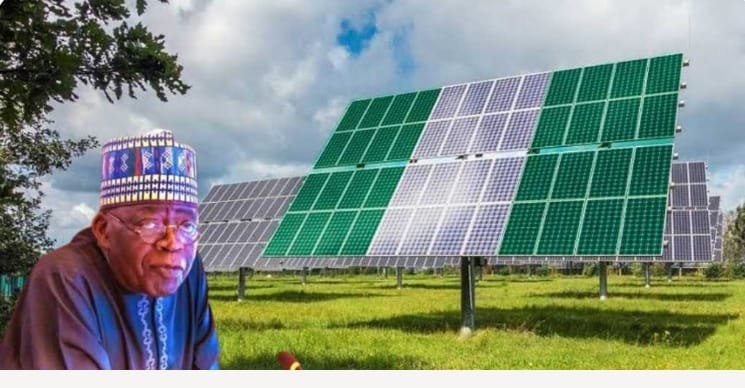
In a country where over 90 million citizens live without reliable access to electricity, where epileptic power supply continues to stifle businesses, education, and healthcare, President Bola Ahmed Tinubu has sanctioned the installation of ₦10 billion worth of solar panels at the Aso Rock Presidential Villa. This ostentatious project comes in the same breath as recent assurances by his Minister of Power, Adebayo Adelabu, who boldly claimed that Nigeria’s national grid had “greatly improved” and that electricity supply was now “more stable than ever.”
But the irony here is impossible to ignore, painfully loud and bitterly revealing. The same administration that forced Nigerians into Band A tariffs under the pretense of improving service delivery has chosen to insulate itself from the very grid it coerces the populace to depend on. Tinubu’s decision to power the seat of government independently through solar energy is more than just symbolic, it is a deafening, silent vote of no confidence in Nigeria’s electricity sector. It is, quite frankly, a betrayal of public trust and a scandalous contradiction that undermines every reform narrative being pushed by this administration.
A Public Relations and Moral Disaster
This isn’t just a case of bad optics; it is a strategic blunder and a public relations nightmare. It is a spit in the face of millions of ordinary Nigerians who wake up at 2 a.m. to iron their clothes or charge their phones during the brief window when “NEPA” brings back light. It is a harsh insult to small business owners who spend half their earnings fueling generators. It is a cruel reminder to students forced to study under candlelight and hospital patients whose lives hang in the balance due to erratic electricity supply.
What message does it send when the Commander-in-Chief cannot trust the very system his government is supposedly reforming? Nigeria has reportedly spent over $25 billion on the power sector since the advent of democracy in 1999. Yet, we still generate an embarrassing 3,500 to 4,000 megawatts for a country of over 200 million people, a mere fraction of our real demand, which exceeds 30,000 megawatts.
According to a 2024 report by the World Bank, Nigeria loses an estimated $28 billion annually to power sector inefficiencies. In the same year, the national grid collapsed twice in one week, affecting all 36 states. These systemic failures make Tinubu’s solar insulation not just hypocritical but a confirmation that Nigeria’s energy sector is in shambles—and that even those in charge no longer believe in its redemption.
Who Is the Minister Fooling?
In March 2024, Power Minister Adebayo Adelabu stated:
“Electricity has improved greatly across the country, and the grid is more stable than ever.”
This statement aged like spoiled milk. Less than a month later, Nigeria’s fragile grid failed twice in one week, plunging the country into darkness and mocking every word of the minister’s fantasy.
If the grid is truly stable, why can’t the nation’s seat of power rely on it?
Renowned economist and former Presidential Economic Adviser, Dr. Doyin Salami, once stated:
“Any leader who cannot trust the system he oversees has already admitted failure without saying a word.”
By quietly opting for solar energy while publicly touting grid stability, President Tinubu has, in essence, conceded defeat on one of the most critical components of national infrastructure. Instead of leading by example and investing in holistic grid rehabilitation, he has chosen personal convenience over public confidence.
Band A: A Policy of Deceit
In April 2024, the Federal Government introduced Band A tariffs, a controversial policy that saw the cost of electricity skyrocket from ₦68 per kWh to ₦225 per kWh for select urban areas; mostly populated by the middle class. The government justified this hike by claiming it would ensure a minimum of 20–24 hours of daily supply to Band A users.
However, less than a month in, Band A areas reported frequent outages, sometimes worse than before. Nigerians quickly realized that the promise of improved power was a farce, another deceptive policy dressed in economic jargon. This tariff structure, instead of driving efficiency, has widened the inequality gap, where only the affluent can afford consistent electricity while the poor remain in darkness; taxed, yet unrewarded.
Aso Rock’s move to solar is the final nail in the coffin. It shows that even with Band A revenues pouring in, the government still has no faith in the reforms it is selling.
The Broader Economic Implications
Electricity is not a luxury; it is the foundation of any modern economy. Without it, industrialization is a myth, digital transformation is a joke, and economic growth remains a pipe dream. Nigeria’s perennial power problems have discouraged foreign investors, stifled domestic innovation, and eroded citizens’ trust in government capacity.
The hypocrisy of spending ₦10 billion on solar panels for the presidency while universities, hospitals, and factories continue to grope in darkness is not just a leadership flaw, it is an economic crime. That money could have funded mini-grids in underserved rural areas, equipped teaching hospitals with stable power, or supported local businesses through solar cooperatives.
As Dr. Charles Soludo, former CBN Governor, once said:
“Economic reforms must begin from the top, and credibility is the capital of leadership. If people at the top show double standards, the bottom will implode.”
Silence Is No Longer Golden
What is perhaps most appalling is the deafening silence from the Presidency regarding this project. There has been no official justification, no detailed explanation, and no roadmap for scaling solar beyond the Villa. This opacity feeds public anger and fuels conspiracy theories. Is the contract for the solar project another front for looting? Were due processes followed? Who are the contractors? Is there a cost-benefit analysis?
Transparency is not optional when public funds are involved. Citizens deserve answers.
A Call to Action
It is time for Nigerians to demand better. We must ask hard questions, challenge double standards, and hold leaders accountable, not just for their words but for their actions. The Tinubu administration cannot continue to speak reform while acting in contradiction.
If the President believes in solar, then let him lead a solar revolution across Nigeria, not just within the comfort of his official residence. Let every ministry, school, clinic, and rural community benefit from decentralized, renewable energy. Let this ₦10 billion solar project be a pilot, not a personal luxury.
Let this be the moment when Nigerians stop accepting excuses and start demanding delivery.
Final Word
In the end, leadership is not about comfort, it is about credibility. The installation of solar panels at Aso Rock is not just a quiet act of energy diversification; it is a silent vote of no confidence in Nigeria’s power sector. And if the President himself has abandoned the national grid, why should the people keep paying for it?
Until Nigeria has leaders who live within the system they administer, who experience the daily power failures, the darkness, the frustration, there will be no change. You cannot reform what you refuse to endure. And you cannot fix what you quietly flee from.
President Tinubu’s solar-powered fortress is not just an energy policy. It is a metaphor for the widening gap between government and the governed.
And that is the real national emergency.







society
Diplomacy Under Fire: South Africa’s Anti-Apartheid Vanguard Challenges U.S. Ambassador Nomination
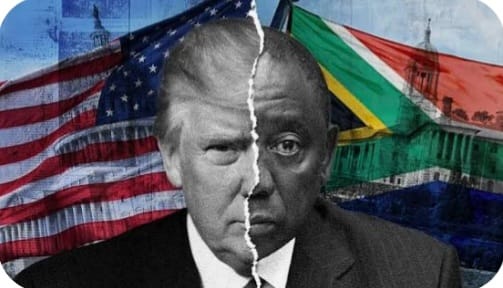
Diplomacy Under Fire: South Africa’s Anti-Apartheid Vanguard Challenges U.S. Ambassador Nomination
By George Omagbemi Sylvester
Published by saharaweeklyng.com
“How history, sovereignty and global justice are colliding in Pretoria’s political theatre.”
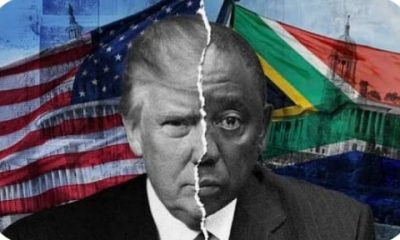
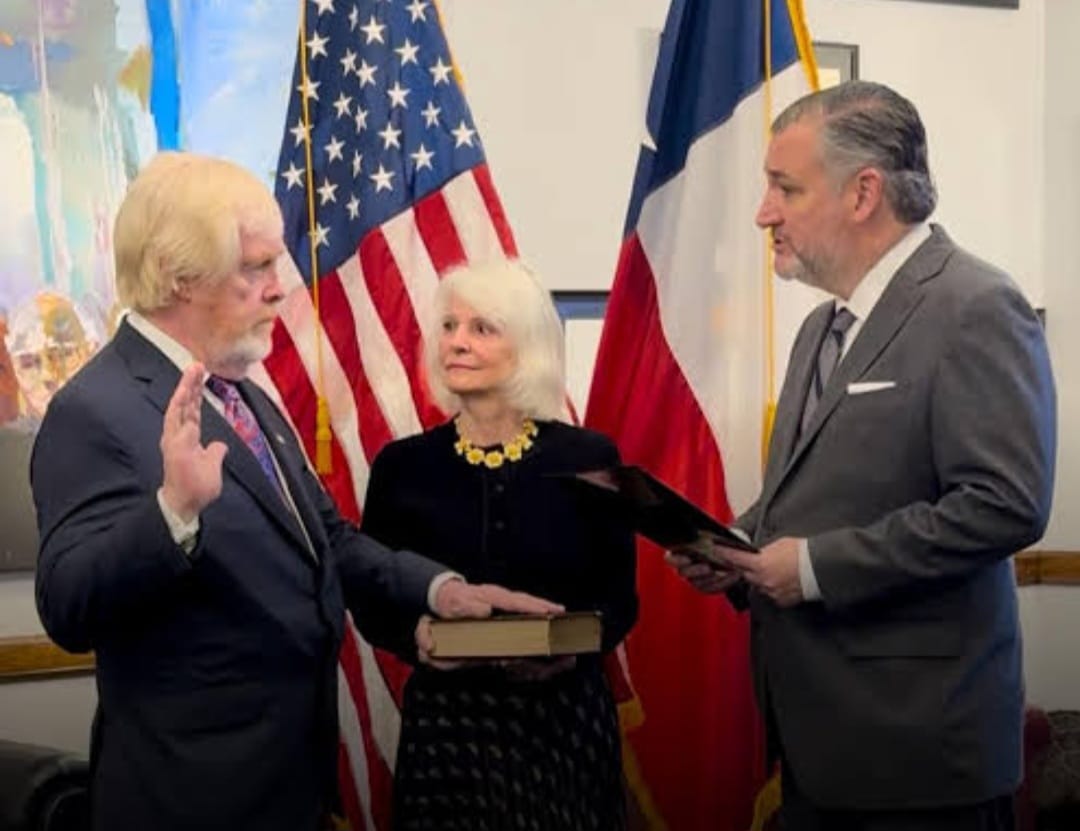
South Africa stands at the intersection of memory, morality and contemporary geopolitics. In a dramatic and deeply symbolic challenge to international diplomatic norms, the South African chapter of the Anti-Apartheid Movement (AAM) has publicly urged President Cyril Ramaphosa to exercise his constitutional right to reject the credentials of Leo Brent Bozell III, the United States’ ambassador-designate to South Africa. This demand is not merely about one diplomat’s qualifications but it represents a broader contest over historical interpretation, national sovereignty, human rights and the ethical responsibilities of global partnerships.
The statement issued by the AAM, drawing on its legacy rooted in the nation’s hard-won liberation from racial oppression, argues that Bozell’s track record and ideological orientation raise “serious questions” about his fitness to serve in South Africa. The movement insists that his appointment threatens to undermine the country’s independent foreign policy, particularly in the context of Pretoria’s pursuit of justice at the International Court of Justice (ICJ) in The Hague, where South Africa has taken the rare step of challenging alleged atrocities in Gaza.
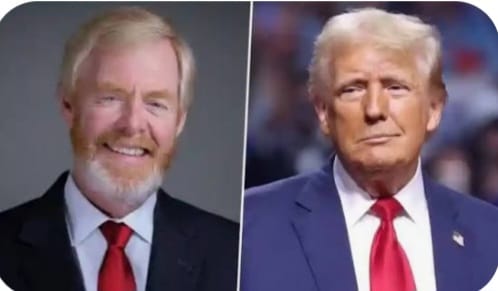
The Roots of the Dispute.
At the heart of the controversy is the claim by activists that Bozell’s public remarks over time have been disparaging toward the African National Congress (ANC) and the broader anti-apartheid struggle that shaped modern South Africa’s democratic identity. These statements, which critics describe as reflective of a worldview at odds with the principles of liberation and equity, have animated calls for his credentials to be rejected.
South Africa’s constitution empowers the head of state to accept or refuse the credentials of foreign envoys, a power rarely exercised in recent diplomatic practice but one that acquires urgency in moments of intense bilateral tension. As the AAM’s leadership frames it, this is not about personal animus but about safeguarding the nation’s right to determine its own moral and geopolitical compass.
Historical Memory Meets Contemporary Politics.
South Africa’s anti-apartheid legacy holds deep cultural, political and moral resonance across the globe. The nation’s liberation struggle (led by giants such as Nelson Mandela, Desmond Tutu and Oliver Tambo) was rooted in the universal principles of human dignity, equality and resistance to systemic oppression. It transformed South Africa from a pariah state into a moral beacon in global affairs.
As the AAM statement put it, “We know too well that our freedom is incomplete without the freedom of others.” This invocation of history is not ceremonial. It frames South Africa’s foreign policy not just as a function of national interest but as a commitment to a universal ethos born of struggle.
Renowned scholars of post-colonial studies, including the late Mahmood Mamdani, have argued that anti-colonial movements inherently shape post-independence foreign policy through moral imperatives rooted in historical experience. In this view, South African diplomacy often reflects an ethical dimension absent in purely strategic calculations.
The Broader Diplomatic Context.
The dispute over ambassadorial credentials cannot be separated from broader tensions in South African foreign policy. Pretoria’s decision to take Israel before the ICJ on allegations of violating the Genocide Convention has triggered significant diplomatic friction with the United States. Official U.S. channels have expressed concern over South Africa’s stance, particularly amid the conflict in the Middle East. This has coincided with sharp rhetoric from certain U.S. political figures questioning South Africa’s approach.
For instance, critics in the United States have at times framed South Africa’s foreign policy as both confrontational and inconsistent with traditional Western alliances, especially on issues relating to the Middle East. These tensions have underscored how global power dynamics interact (and sometimes collide) with post-apartheid South Africa’s conception of justice.
Within South Africa, political parties have responded in kind. The Economic Freedom Fighters (EFF) have condemned Bozell’s nomination as reflective of an agenda hostile to South Africa’s principles, even labelling his ideological lineage as fundamentally at odds with emancipation and equality. Whether or not one agrees with such characterisations, the intensity of these critiques reveals the deep anxiety amongst some sectors of South African civil society about external interference in the nation’s policymaking.
Sovereignty, International Law and National Identity.
Scholars of international law emphasise that the acceptance of diplomatic credentials is not merely ceremonial; it signals a nation’s readiness to engage with a foreign representative as a legitimate interlocutor. Legal theorist Martti Koskenniemi has written that diplomatic practice functions at the intersection of law, power and morality, shaping how states perceive each other and interact on the world stage.
In this light, the AAM’s appeal to Ramaphosa reflects a profound anxiety: that South Africa’s sovereignty (and its moral authority on the world stage) is being tested. To refuse credentials would be to affirm the nation’s agency; to accept them without scrutiny could be interpreted, in some quarters, as a concession to external pressure.
President Ramaphosa himself has, in recent speeches, stressed the importance of upholding constitutional integrity and South Africa’s role as a constructive actor in global affairs. His leadership, shaped by decades as a negotiator and statesman, walks a fine line between defending national interests and maintaining diplomatic engagement.
Moral Certainties and Strategic Ambiguities.
What makes this situation especially complex is the blending of moral conviction with strategic diplomacy. South Africa, like any sovereign state, depends on a web of international relationships (economic, security, political) that require engagement with powers whose policies and values do not always align with its own.
Yet for many South Africans, drawing a line on diplomatic appointments is not just about personalities but about reaffirming the values fought for during decades of struggle. As anti-apartheid veteran and academic Professor Pumla Gobodo-Madikezela once observed, “Our history is not a relic; it is the compass by which we navigate present injustices.” This idea captures why historical memory acquires such force in debates over current foreign policy.
Towards a Resolution.
Whether President Ramaphosa will act on the AAM’s call remains uncertain. Diplomatic norms usually favour acceptance of appointed envoys to maintain continuity in bilateral relations. However, exceptional moments call for exceptional scrutiny. This situation compels a national debate on what it means to balance sovereignty with engagement, history with pragmatism, values with realpolitik.
Experts on international relations stress the need for South Africa to carefully assess not just the semantics of credential acceptance but the broader implications for its foreign policy goals and relationships. Former diplomat Dr. Naledi Pandor has argued that “diplomacy is not merely about representation, but about conveying what a nation stands for and will not compromise.” Whether this moment will redefine South Africa’s diplomatic posture or be absorbed into the standard rhythms of international practice remains to be seen.
Summation: History and the Future.
The AAM’s call to reject a U.S. ambassadorial nominee is more than an isolated political manoeuvre, it is a reflection of South Africa’s evolving self-understanding as a nation shaped by legacy, committed to justice and unwilling to dilute its moral voice in global affairs. The controversy casts a spotlight on the tensions facing post-colonial states that strive to be both sovereign and globally engaged.
At its core, this debate is about who writes the rules of international engagement when history has taught a nation never to forget what it fought to achieve. It is a reminder that in a world of shifting alliances and competing narratives, moral clarity, historical awareness and strategic foresight are indispensable.
South Africa’s decision in this matter will not only shape its diplomatic engagement with the United States but will reverberate across continents where questions of justice, human rights and national dignity remain at the forefront of global discourse.
society
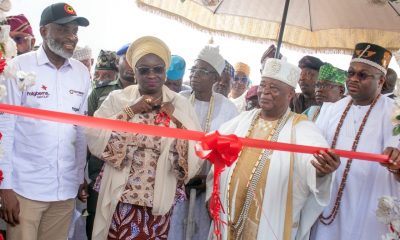
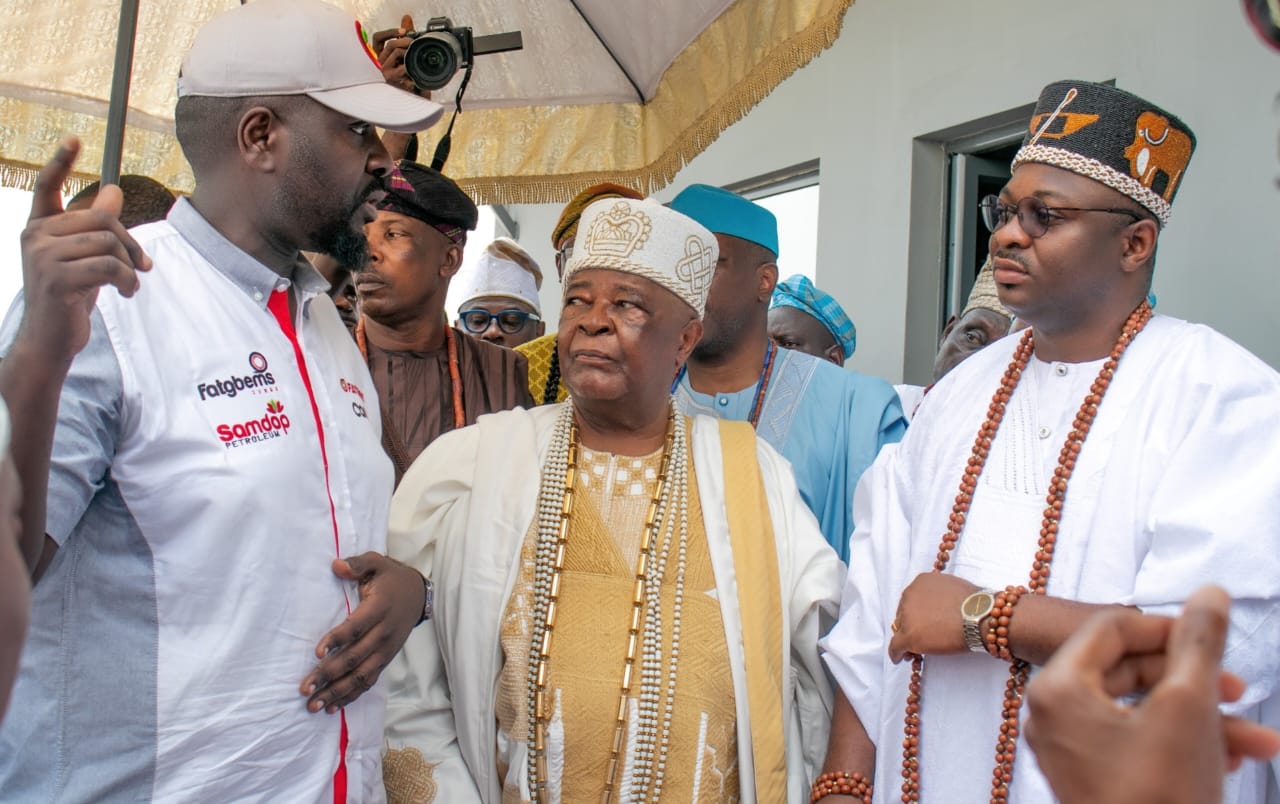
Fatgbems Group Commissions Ultra-Modern Mega Station in Opic, Expands Footprint in Nigeria’s Energy Retail Sector
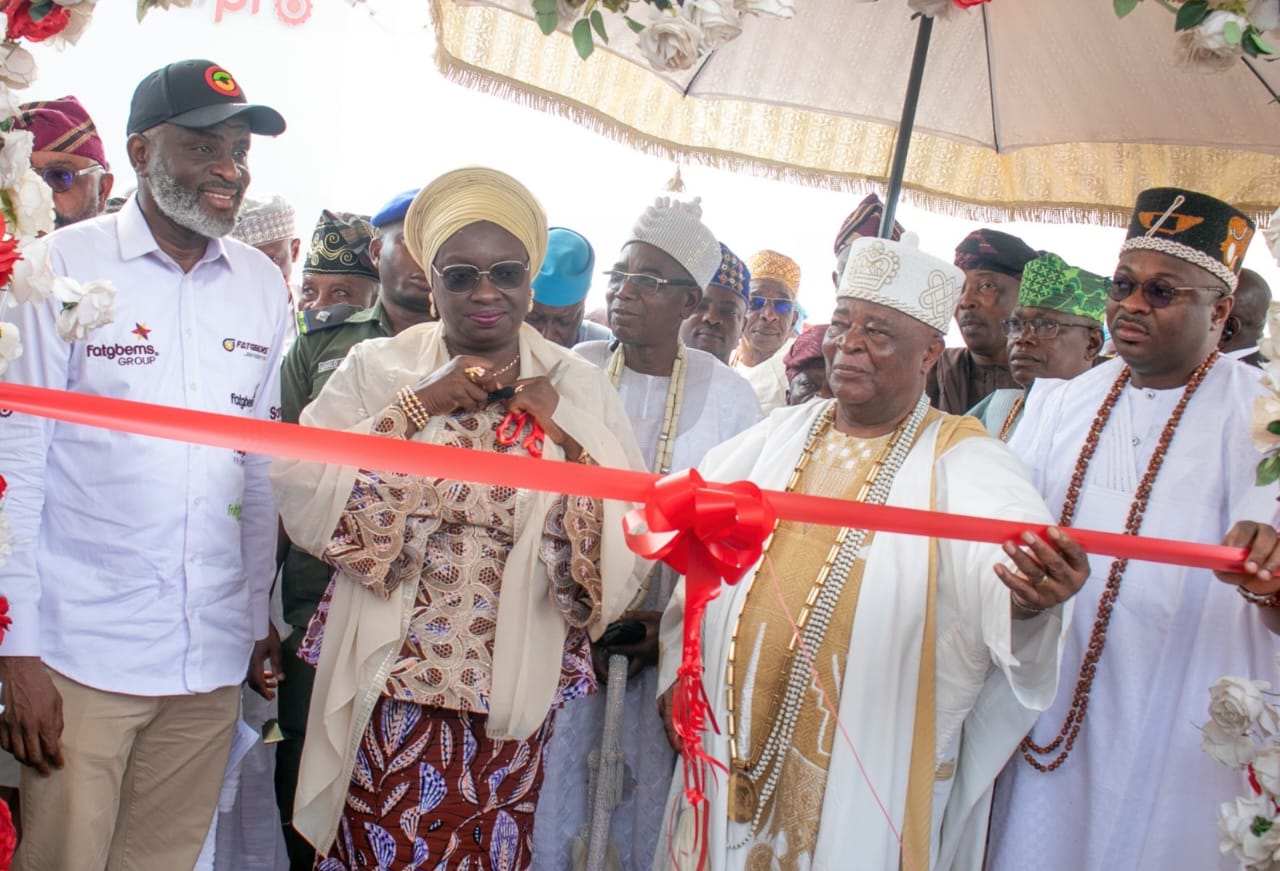
Fatgbems Group Commissions Ultra-Modern Mega Station in Opic, Expands Footprint in Nigeria’s Energy Retail Sector

PUBLIC NOTICE: STRONG WARNING & DISCLAIMER
The general public is hereby strongly warned to exercise extreme caution regarding any dealings with Joseph Enyinnaya Eze, popularly known as Dracomiles who claims to operate as a Forex trader in Nigeria and the United Kingdom. Multiple reports and complaints have raised serious concerns about his business activities, dubious act. warranting immediate public attention.
Anyone who has already engaged with or been affected by these activities should urgently report the matter to the EFCC (Nigeria), Action Fraud (UK), or their nearest law enforcement authority.
This notice is issued in the interest of public safety and financial protection and should be treated with the utmost seriousness.
Signed,
HIS ROYAL HIGHNESS
PRINCE EMMANUEL BENNY DANSON.


-

 celebrity radar - gossips6 months ago
Why Babangida’s Hilltop Home Became Nigeria’s Political “Mecca”
-

 society5 months ago
Power is a Loan, Not a Possession: The Sacred Duty of Planting People
-

 Business6 months ago
Batsumi Travel CEO Lisa Sebogodi Wins Prestigious Africa Travel 100 Women Award
-

 news6 months ago
THE APPOINTMENT OF WASIU AYINDE BY THE FEDERAL GOVERNMENT AS AN AMBASSADOR SOUNDS EMBARRASSING