
society
Nigeria’s Curse of Inverted Leadership: How Greedy Fools Hijacked Power While True Activists Are Left Behind

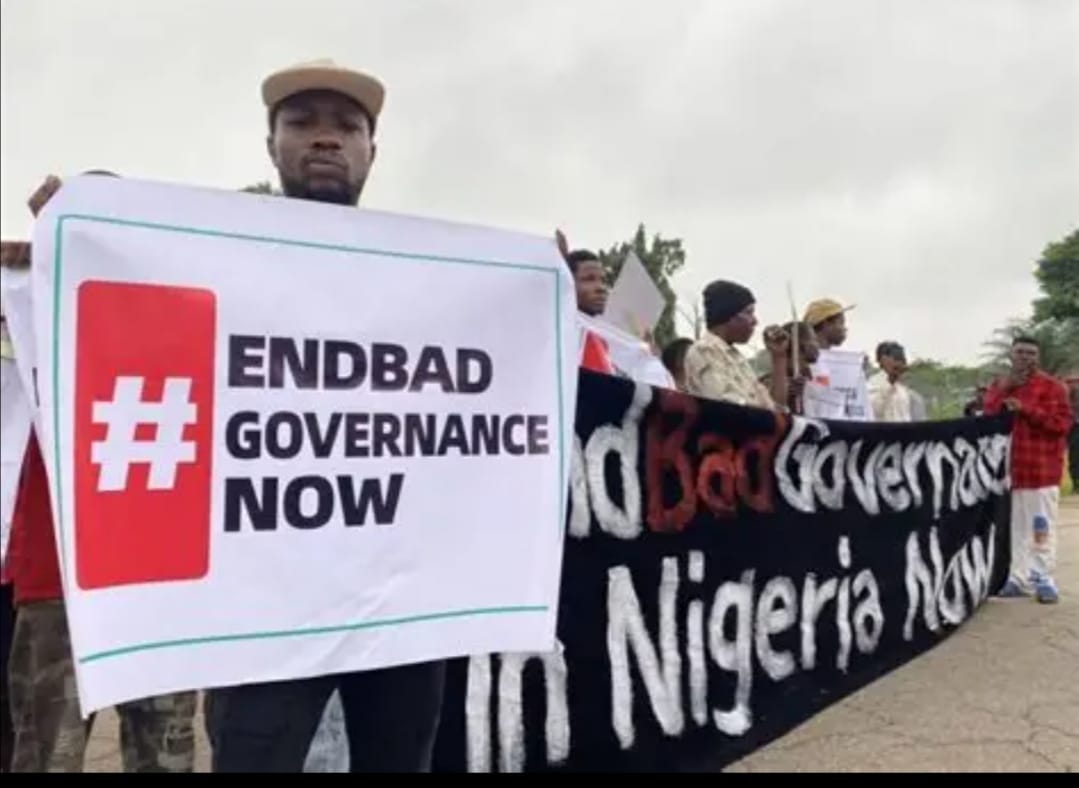
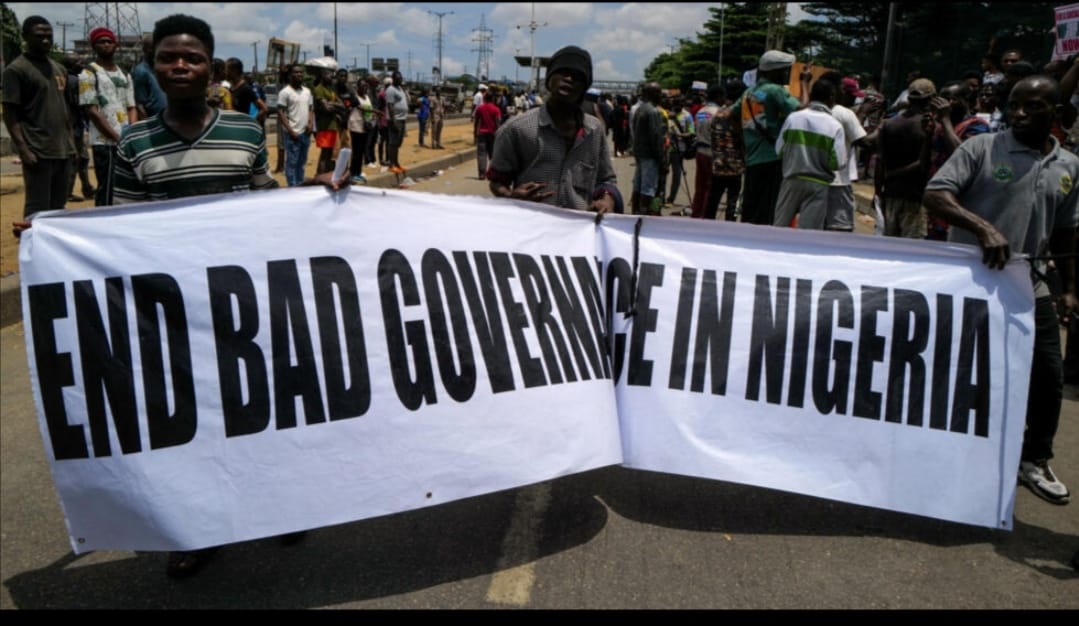
Nigeria’s Curse of Inverted Leadership: How Greedy Fools Hijacked Power While True Activists Are Left Behind.
By George Omagbemi Sylvester | Published by SaharaWeeklyNG.com
Nigeria is a nation bleeding not from natural disasters or foreign invasions, but from the deliberate elevation of fools, greedy misfits, empty-headed manipulators and wicked siphoners of public funds into high political and economic positions. While the true patriots (our real natural activists) languish in low places, silenced, marginalized and often criminalized. This is not just an accident of fate; it is a carefully orchestrated inversion of values designed to keep Nigeria perpetually underdeveloped and in bondage.
There is no justification for a country as richly blessed in human and natural resources to be crawling in shame, poverty and insecurity. And yet, here we are, because we have placed square pegs in round holes. We elect thieves and expect transparency. We reward incompetence and pray for miracles. The tragedy is not just the ignorance of the masses, but the cunning of the elite who keep reshuffling the same deck of political jesters, many of whom are neither intellectually nor morally qualified to lead.
” _When the wicked rule, the people groan_.” Proverbs 29:2
This biblical wisdom could not be more apt. Nigeria groans under the weight of clueless leadership, men and women whose only credentials are the ability to loot and lie without shame. These individuals lack vision, empathy or any form of developmental mindset. They rise to power through manipulation, rigging and blood-stained wealth. And once in office, they treat national resources as private inheritance.
*LET’S CALL NAMES*: how do we explain a political system that promotes people facing corruption allegations into ministerial appointments? How do we justify the appointment of individuals who cannot recite the national anthem or articulate a policy vision as governors, senators or commissioners? Nigeria is probably the only country where being caught stealing public funds makes you more politically relevant than being an honest advocate of reform.
“ _No nation can rise above the quality of its leadership_.” ~ Chinua Achebe
This truth continues to slap Nigeria in the face. Our greatest minds are not in Aso Rock, in the National Assembly or the state government houses. They are in exile, in underground movements, in social media spaces and civil society groups shouting truth into the void while rogues with padded agbadas and bulletproof SUVs rule with arrogance.
One may ask, “ _Why aren’t the true activists rising to power?_” The answer lies in the deliberate and violent structure of Nigerian politics. The electoral process is rigged from start to finish. From party primaries to the declaration of results, the system is designed to eliminate sincerity. The political thugs are funded by godfathers. The real change agents are harassed, arrested or frustrated into silence. They lack the financial muscle to compete in a terrain where Naira notes are more powerful than manifestos.
“ _Our lives begin to end the day we become silent about things that matter._” ~ Martin Luther King Jr.
And yet, the real activists must not give up (because the biggest danger Nigeria faces today is not even the looters in office) it is the silence and compromise of those who should speak up. It is the passivity of intellectuals, clerics, academics and some few traditional leaders who now dine with devils for crumbs.
The system elevates noise-makers with no track record of integrity, just a network of praise singers. In 2023, Nigerians witnessed the recycling of old political faces known for nothing other than their ability to switch parties and buy loyalty. While this happens, young, vibrant leaders with fresh ideas are dismissed as “INEXPERIENCED,” “TOO IDEALISTIC,” or WORSE, “THREATS TO NATIONAL UNITY.”
In the words of Fela Anikulapo Kuti, “ _Na craze world be dis._” Indeed, it is madness that thieves are called “YOUR EXCELLENCY” and warriors of truth are labelled “TROUBLEMAKERS.”
Nigeria’s political tragedy is also worsened by the complicity of the people. Many citizens celebrate criminals in agbadas because of tribalism, religion or temporary handouts. We defend mediocrity when it is our ethnic brother wearing the crown. We forget that poverty does not recognize ethnicity; when hospitals collapse, both Hausa and Igbo patients die; when roads fail, both Ijaw and Itsekiri crash.
“ _Until the lion learns to write, every story will glorify the hunter_.” ~ African Proverb
It is time the lions (the true patriots, the honest men and women who have dedicated their lives to fighting injustice) began to tell their stories, to rise beyond mere activism and seize platforms of power; because ACTIVISM without STRATEGY is noise and noise without POLITICAL POWER changes NOTHING.
Let us also not forget that leadership is not just about occupying public office. Many of Nigeria’s saviours may never become governors or presidents, but they can influence minds, awaken consciences and organize alternatives. What we need is a grassroots revolution; not necessarily with guns, but with ideas, education and civic courage.
Take for instance the likes of Comrade Shehu Sani, Omoyele Sowore, and Aisha Yesufu. These are individuals who speak with clarity and consistency, yet the system treats them as irritants. Compare them to many of the current state governors or lawmakers whose legislative records are empty, whose media engagements are filled with incoherence and whose communities remain undeveloped. The contrast is glaring and sickening.
The 2024 minimum wage debate is another sad illustration. While over 20 states have failed to implement the ₦70,000 wage, governors continue to live in luxury, maintain bloated convoys and embark on foreign trips in the name of attracting investors. What investor will come to a land where workers are unpaid, infrastructure is crumbling and insecurity reigns?
“ _Power concedes nothing without a demand. It never did and it never will._” ~ Frederick Douglass
It’s time Nigerians began to make that demand; not just on social media, but in the streets, in the ballot box, in schools and in marketplaces. We must reject this inverted pyramid where mediocrity sits on top and brilliance is crushed underneath. We must stop electing jesters and criminals and expect miracles.
RECOMMENDATIONS:
Restructure Electoral Integrity; Until elections are fair and transparent, fools will keep ruling.
Public Funding of Activists: Let us create crowd-funding systems to support credible, passionate and intellectually sound candidates.
Civic Education: We must re-educate Nigerians to understand that character is more important than tribe or religion.
Punish Corruption Ruthlessly: There should be zero tolerance for public fund looters, with lifetime bans from public office.
Reward Merit: Promote competence not connections.
FINAL THOUGHT
Until we correct this moral and intellectual misplacement, Nigeria will continue to recycle failure. We must flip the pyramid. Let fools go to the bottom where they belong and raise true activists (men and women of integrity, competence and compassion) to the top. It is not just a moral obligation; it is a matter of national survival.
“ _The hottest places in hell are reserved for those who, in times of great moral crisis, maintain their neutrality._” ~ Dante Alighieri
Neutrality is no longer an option. Silence is complicity. The time has come for Nigeria to rise and it must begin with telling the truth, electing the worthy and rejecting the wicked.

Written by George Omagbemi Sylvester
Published by SaharaWeeklyNG.com






society
Diplomacy Under Fire: South Africa’s Anti-Apartheid Vanguard Challenges U.S. Ambassador Nomination
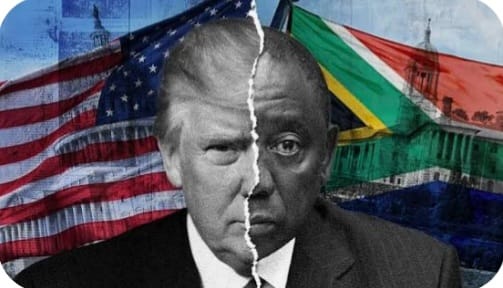
Diplomacy Under Fire: South Africa’s Anti-Apartheid Vanguard Challenges U.S. Ambassador Nomination
By George Omagbemi Sylvester
Published by saharaweeklyng.com
“How history, sovereignty and global justice are colliding in Pretoria’s political theatre.”
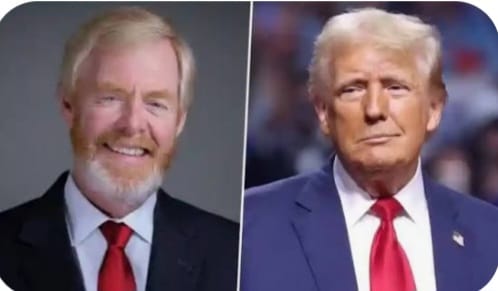
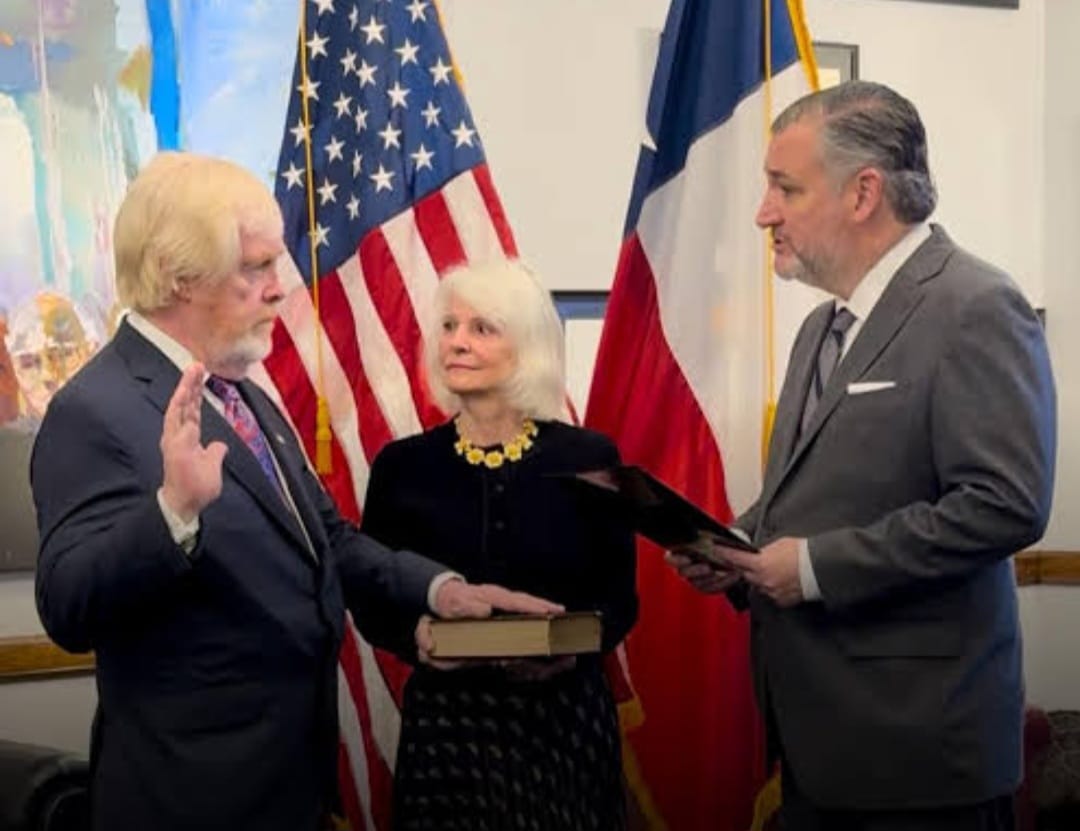
South Africa stands at the intersection of memory, morality and contemporary geopolitics. In a dramatic and deeply symbolic challenge to international diplomatic norms, the South African chapter of the Anti-Apartheid Movement (AAM) has publicly urged President Cyril Ramaphosa to exercise his constitutional right to reject the credentials of Leo Brent Bozell III, the United States’ ambassador-designate to South Africa. This demand is not merely about one diplomat’s qualifications but it represents a broader contest over historical interpretation, national sovereignty, human rights and the ethical responsibilities of global partnerships.
The statement issued by the AAM, drawing on its legacy rooted in the nation’s hard-won liberation from racial oppression, argues that Bozell’s track record and ideological orientation raise “serious questions” about his fitness to serve in South Africa. The movement insists that his appointment threatens to undermine the country’s independent foreign policy, particularly in the context of Pretoria’s pursuit of justice at the International Court of Justice (ICJ) in The Hague, where South Africa has taken the rare step of challenging alleged atrocities in Gaza.
The Roots of the Dispute.
At the heart of the controversy is the claim by activists that Bozell’s public remarks over time have been disparaging toward the African National Congress (ANC) and the broader anti-apartheid struggle that shaped modern South Africa’s democratic identity. These statements, which critics describe as reflective of a worldview at odds with the principles of liberation and equity, have animated calls for his credentials to be rejected.
South Africa’s constitution empowers the head of state to accept or refuse the credentials of foreign envoys, a power rarely exercised in recent diplomatic practice but one that acquires urgency in moments of intense bilateral tension. As the AAM’s leadership frames it, this is not about personal animus but about safeguarding the nation’s right to determine its own moral and geopolitical compass.
Historical Memory Meets Contemporary Politics.
South Africa’s anti-apartheid legacy holds deep cultural, political and moral resonance across the globe. The nation’s liberation struggle (led by giants such as Nelson Mandela, Desmond Tutu and Oliver Tambo) was rooted in the universal principles of human dignity, equality and resistance to systemic oppression. It transformed South Africa from a pariah state into a moral beacon in global affairs.
As the AAM statement put it, “We know too well that our freedom is incomplete without the freedom of others.” This invocation of history is not ceremonial. It frames South Africa’s foreign policy not just as a function of national interest but as a commitment to a universal ethos born of struggle.
Renowned scholars of post-colonial studies, including the late Mahmood Mamdani, have argued that anti-colonial movements inherently shape post-independence foreign policy through moral imperatives rooted in historical experience. In this view, South African diplomacy often reflects an ethical dimension absent in purely strategic calculations.
The Broader Diplomatic Context.
The dispute over ambassadorial credentials cannot be separated from broader tensions in South African foreign policy. Pretoria’s decision to take Israel before the ICJ on allegations of violating the Genocide Convention has triggered significant diplomatic friction with the United States. Official U.S. channels have expressed concern over South Africa’s stance, particularly amid the conflict in the Middle East. This has coincided with sharp rhetoric from certain U.S. political figures questioning South Africa’s approach.
For instance, critics in the United States have at times framed South Africa’s foreign policy as both confrontational and inconsistent with traditional Western alliances, especially on issues relating to the Middle East. These tensions have underscored how global power dynamics interact (and sometimes collide) with post-apartheid South Africa’s conception of justice.
Within South Africa, political parties have responded in kind. The Economic Freedom Fighters (EFF) have condemned Bozell’s nomination as reflective of an agenda hostile to South Africa’s principles, even labelling his ideological lineage as fundamentally at odds with emancipation and equality. Whether or not one agrees with such characterisations, the intensity of these critiques reveals the deep anxiety amongst some sectors of South African civil society about external interference in the nation’s policymaking.
Sovereignty, International Law and National Identity.
Scholars of international law emphasise that the acceptance of diplomatic credentials is not merely ceremonial; it signals a nation’s readiness to engage with a foreign representative as a legitimate interlocutor. Legal theorist Martti Koskenniemi has written that diplomatic practice functions at the intersection of law, power and morality, shaping how states perceive each other and interact on the world stage.
In this light, the AAM’s appeal to Ramaphosa reflects a profound anxiety: that South Africa’s sovereignty (and its moral authority on the world stage) is being tested. To refuse credentials would be to affirm the nation’s agency; to accept them without scrutiny could be interpreted, in some quarters, as a concession to external pressure.
President Ramaphosa himself has, in recent speeches, stressed the importance of upholding constitutional integrity and South Africa’s role as a constructive actor in global affairs. His leadership, shaped by decades as a negotiator and statesman, walks a fine line between defending national interests and maintaining diplomatic engagement.
Moral Certainties and Strategic Ambiguities.
What makes this situation especially complex is the blending of moral conviction with strategic diplomacy. South Africa, like any sovereign state, depends on a web of international relationships (economic, security, political) that require engagement with powers whose policies and values do not always align with its own.
Yet for many South Africans, drawing a line on diplomatic appointments is not just about personalities but about reaffirming the values fought for during decades of struggle. As anti-apartheid veteran and academic Professor Pumla Gobodo-Madikezela once observed, “Our history is not a relic; it is the compass by which we navigate present injustices.” This idea captures why historical memory acquires such force in debates over current foreign policy.
Towards a Resolution.
Whether President Ramaphosa will act on the AAM’s call remains uncertain. Diplomatic norms usually favour acceptance of appointed envoys to maintain continuity in bilateral relations. However, exceptional moments call for exceptional scrutiny. This situation compels a national debate on what it means to balance sovereignty with engagement, history with pragmatism, values with realpolitik.
Experts on international relations stress the need for South Africa to carefully assess not just the semantics of credential acceptance but the broader implications for its foreign policy goals and relationships. Former diplomat Dr. Naledi Pandor has argued that “diplomacy is not merely about representation, but about conveying what a nation stands for and will not compromise.” Whether this moment will redefine South Africa’s diplomatic posture or be absorbed into the standard rhythms of international practice remains to be seen.
Summation: History and the Future.
The AAM’s call to reject a U.S. ambassadorial nominee is more than an isolated political manoeuvre, it is a reflection of South Africa’s evolving self-understanding as a nation shaped by legacy, committed to justice and unwilling to dilute its moral voice in global affairs. The controversy casts a spotlight on the tensions facing post-colonial states that strive to be both sovereign and globally engaged.
At its core, this debate is about who writes the rules of international engagement when history has taught a nation never to forget what it fought to achieve. It is a reminder that in a world of shifting alliances and competing narratives, moral clarity, historical awareness and strategic foresight are indispensable.
South Africa’s decision in this matter will not only shape its diplomatic engagement with the United States but will reverberate across continents where questions of justice, human rights and national dignity remain at the forefront of global discourse.
society
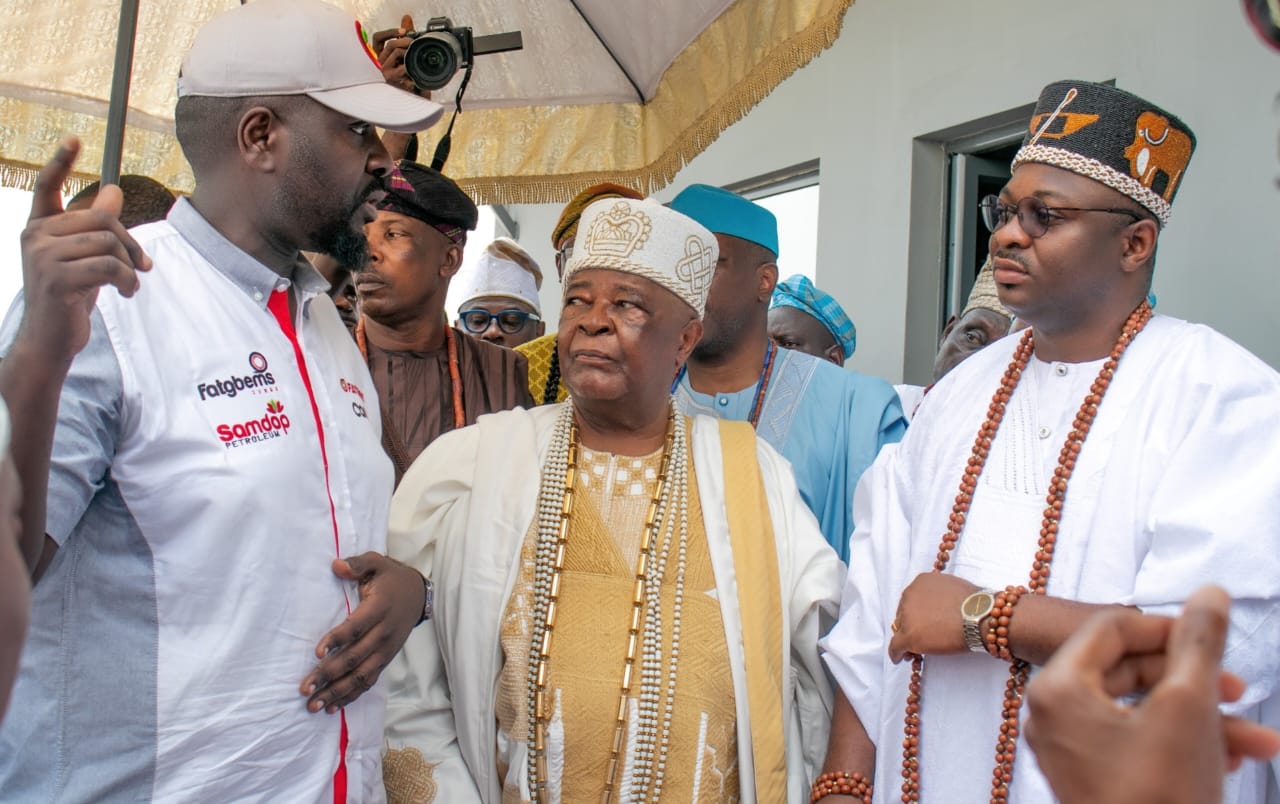
Fatgbems Group Commissions Ultra-Modern Mega Station in Opic, Expands Footprint in Nigeria’s Energy Retail Sector
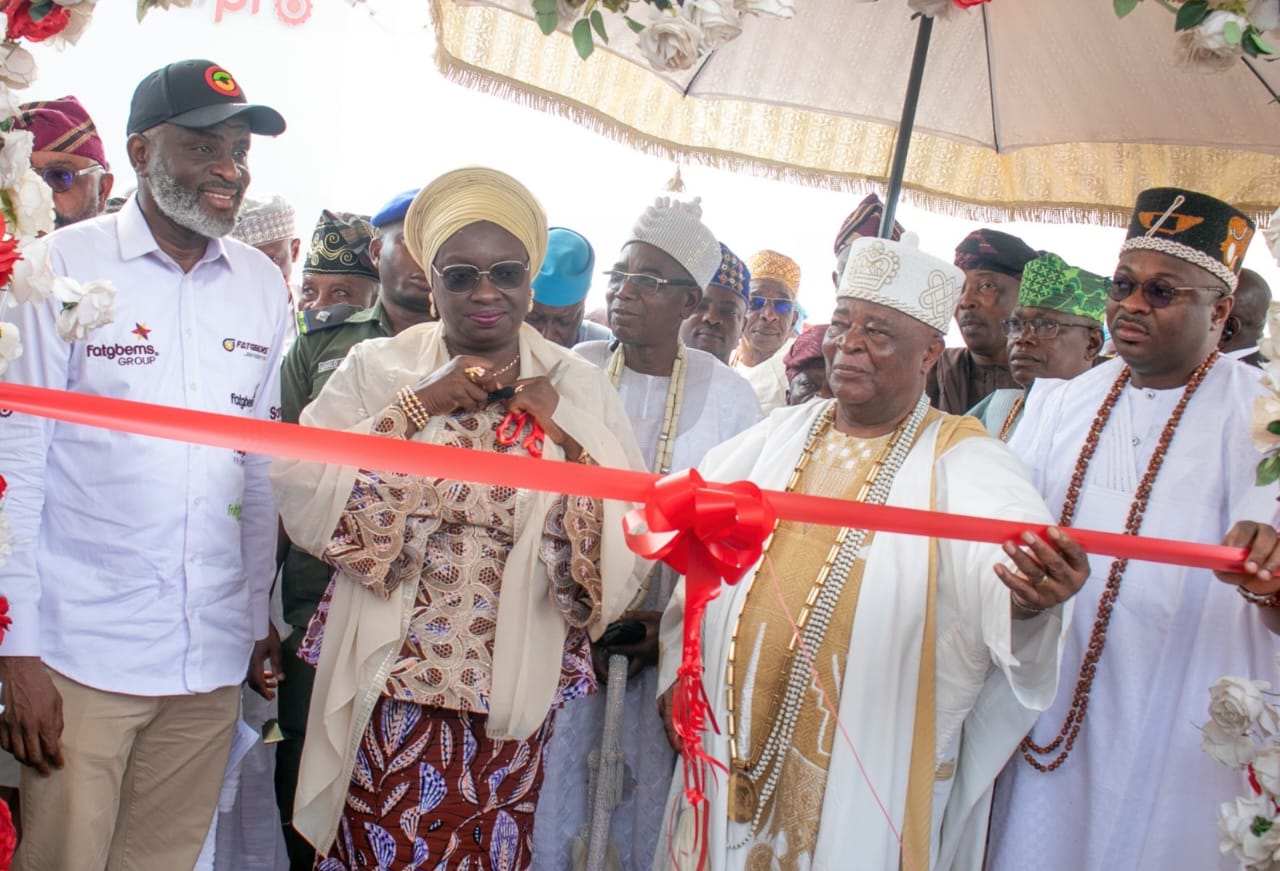
Fatgbems Group Commissions Ultra-Modern Mega Station in Opic, Expands Footprint in Nigeria’s Energy Retail Sector
PUBLIC NOTICE: STRONG WARNING & DISCLAIMER
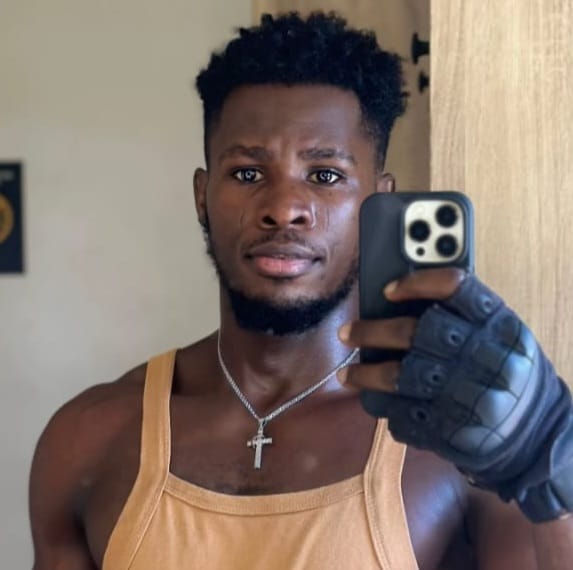
The general public is hereby strongly warned to exercise extreme caution regarding any dealings with Joseph Enyinnaya Eze, popularly known as Dracomiles who claims to operate as a Forex trader in Nigeria and the United Kingdom. Multiple reports and complaints have raised serious concerns about his business activities, dubious act. warranting immediate public attention.
Anyone who has already engaged with or been affected by these activities should urgently report the matter to the EFCC (Nigeria), Action Fraud (UK), or their nearest law enforcement authority.
This notice is issued in the interest of public safety and financial protection and should be treated with the utmost seriousness.
Signed,
HIS ROYAL HIGHNESS
PRINCE EMMANUEL BENNY DANSON.


-

 celebrity radar - gossips6 months ago
Why Babangida’s Hilltop Home Became Nigeria’s Political “Mecca”
-

 society5 months ago
Power is a Loan, Not a Possession: The Sacred Duty of Planting People
-

 Business6 months ago
Batsumi Travel CEO Lisa Sebogodi Wins Prestigious Africa Travel 100 Women Award
-

 news6 months ago
THE APPOINTMENT OF WASIU AYINDE BY THE FEDERAL GOVERNMENT AS AN AMBASSADOR SOUNDS EMBARRASSING