
society
Rivers State: Ibas’ Record Breaking Governance Amidst Peace Restoration* By Randy Owen

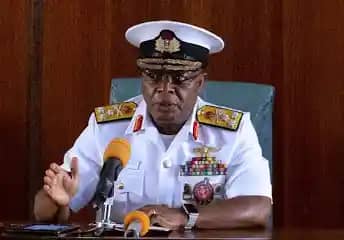
Rivers State: Ibas’ Record Breaking Governance Amidst Peace Restoration
By Randy Owen
In the face of political distrust, upheaval, and societal uncertainty, there exist leaders who frise above the turbulence of their times to deliver stability, order, and progress in sand of history. For Rivers State, that leader is the person of Vice Admiral Ibok-Ete Ibas (rtd), whose appointment as Sole Administrator marked not just a transition in governance, but the opening of a new chapter in transitioning of a disciplined democratic statecraft.
I write to the world not as a distance observer of the happenings on Rivers State but as an individual with firsthand witness. I experienced the remarkable unfolding of events in Rivers, where a leader with a military background has applied the finesse of discipline, humanistic touch of empathy, and the clarity of purpose in governance.

The words of Professor Julius Ihonvbere, Chairman of the House of Representatives Special Adhoc Committee, struck a chord that reverberated across Rivers State when he led a delegation on an unscheduled oversight visit. He said:
“I do not envy you because I know the difficult circumstances and the environment in which you are going to work. But your track record convinced me that you would be able to weather the storm and deliver as required. In any case, military officers at your level never fail on assignments. Having worked with a retired general Obasanjo, I know that whether they are in uniform or out of it, at any time, you call on them. They are always ready to serve the country. So I congratulate you first on the appointment, but also I commend you for what you’ve done so far. Contrary to what people have been marketing, we see evidence of peace and order. We see evidence of people going about their respective businesses. It’s evidence that the reverse is moving in the right direction.”
These words are an encapsulation of both the gravity of the situation on the ground and the magnitude of satisfied expectations delivered by Vice Admiral Ibas.
Emergency rule isn’t a matter to be seen or taken lightly. It is one that signals the breakdown of normalcy, it reveals the collapse of trust in democratic structures, and represents a clarion call on the urgent necessity for salvaging the moral fabric of governance. The suspension of a duly elected governor and legislature weapons all witnessed wasn’t just a constitutional emergency; it was a moral indictment on the governance machinery in Rivers State. Ibok-Ete Ibas stepped into this void, carrying the authority of the federal government and the aspirations of millions that were yearning for stability, peace, and development.
While others might have been intimidated by the enormity of the task, looking at it as an impossibility which may blow up into an international threat, Ibas approached it with the calmness of a seasoned sailor used to navigating tempestuous waters. Understood his mission to be clear and straightforward: to restore law and order, ensure stability, and create an enabling environment for economic growth.
One observable striking hallmarks of Ibas’ administration has been his uncompromising focus on accountability and transparency. The governance under his leadership was shrouded in opaque dealings. Instead, every decision was articulated, every policy grounded in rationality, and every expenditure accounted for.
He made it evident that governance is not a private enterprise but a sacred trust held on behalf of the people. Ibas’ commitment to openness has so far rekindled a sense of public ownership of the government and restoring confidence in the institutions of state once again. He totally changed the rhetoric that governance often falters when not matched with tangible delivery. In Rivers State, Ibas administration has distinguished itself by transforming promises into projects and blueprints into realities. His Midas touch is expressively in governance through several key undertakings like:
The reconstruction of the Rivers assembly complex, which was isn’t just a structural intervention but a symbolic one, but evidence of the determination to prepare Rivers for a smooth democratic rebound. Ibas breathes life back into the very edifice that embodies legislative authority.
Moreover, the completion of the Mother and Child Hospital in Port Harcourt is a landmark achievement that says as a testimony of a state that this led by an individual who is greatly committed to healthcare delivery, particularly maternal and child welfare, which often remain underfunded in times of political crisis. Fortunately for the great people of Rivers, this long-neglected project was not only completed but poised for integration into the Rivers State Teaching Hospital.
Furthermore, the dualization of the Port Harcourt Ring road is perhaps the telling of his intervention. This ambitious project that was awarded July 2023 was aimed to construct a 50.15-kilometer dual carriageway that will seamlessly connect six local government areas: Port Harcourt, Obio-Akpor, Ikwerre, Etche, Eleme, and Ogu-Bolo. This project had been stuck in bureaucratic bottlenecks despite spending a staggering ₦150 billion of the already expended for the ₦195 billionaire budgeted fund. With help of organized meeting with between professionals and Julius Berger contractors that are handling the project, Ibas exposed the rot, took decisive measures, and ensured that work commenced soonest.
These projects are not isolated acts but emblematic of a broader philosophy: that governance must touch the lives of the people directly and meaningfully. Also the improved communication between community and security agencies has helped to curb cultism, kidnapping, and infrastructure vandalism.
There is no doubt that Emergency rule is often greeted with skepticism on how it affects the familiar rhythms of electoral governance. Yet, in all these, Ibas has proven that the suspension of democracy can ever be equated to the suspension of hope in good governance. On the contrary, his deep commitment to restoring democratic order by preparing for the 30 August 2025 local government council elections, also laying the foundation for a credible election by ensuring that the Rivers State Independent Electoral Commission (RVSIEC) is adequately funded, empowered, and shielded from undue interference, reveals a man who is ready for a smooth transition, and has high respect for the choice of the people. The people of Rivers would acknowledge that this Intentional commitment to a timely transition is perhaps one of his most enduring legacies that will keep rest in their heart.
What I believed that Admiral Ibas efficiency in governance it not merely what has endeared us to him, but his humanistic approach to leadership. This is a man who governs not as a commander that he’s known for, but has as an opportune Citizen who listens, consults, and empathizes. His policies resonate because they are people-centered, and his actions inspire because they are purpose-driven.
Rivers people have, for the first time in a long while, felt the warmth of a government that does not merely govern them but governs with them. It would be naïve to forget the situation from which Rivers State was salvaged. Political violence, legislative paralysis, and widespread insecurity had brought the state to the brink of chaos. It is within this context that the stabilising role of Admiral Ibas becomes even more remarkable.
By deploying both his military acumen and his administrative tact, he restored a semblance of order in record time. The streets of Port Harcourt which was once brimming with tension in the media space, have regained their calm. Markets trades are thriving, schools remain open, businesses breathe easier, and there is confident in the predictability of a stable environment and a peaceful transitioning in governance.
It is not a common news for interim administrators to leave a legacy that outlives their tenure. But Admiral Ibas is on the path to becoming an exception. His combination of transparency with decisiveness, firmness with fairness, and accountability with compassion, he has etched his name into the annals of Rivers State’s history as a leader who came in a moment of crisis and left behind a template for sustainable governance.
Vice Admiral Ibok-Ete Ibas has touched Rivers State with the hands of discipline, integrity, and vision—and the result is not just the glitter of cosmetic reforms but the solid gold of institutional renewal and people-centred development. The smooth transition to democracy that he is midwifing will not erase his contributions but enshrine them in the consciousness of Rivers people as the cornerstone upon which a new democratic order was built.
Professor Ihonvbere’s confidence was not misplaced. For indeed, Admiral Ibas has proven that leaders of his calibre do not fail. He has not failed Rivers State. He has not failed Nigeria. And he has not failed history.
As a proud witness to these remarkable transformations, I dare say that Rivers State will remember this season as the dawn of a new paradigm of governance, a paradigm shaped by the steady hands, clear eyes, and golden touch of Vice Admiral Ibok-Ete Ibas, and not merely as the time of emergency rule.
Owen is a public policy analyst writing from Port Harcourt.





Police Deploy Extra Security To JAMB Centres, Dismiss Rumours Of Threats
The Nigeria Police Force has deployed additional security personnel to examination centres nationwide ahead of the Joint Admissions and Matriculation Board (JAMB) examinations scheduled to begin on April 16, 2026, while dismissing recent rumours of safety threats at certain centres in a North Central state as “unfounded” and “without basis.”
In a statement issued on Tuesday, the Force acknowledged public concerns regarding the safety of candidates but emphasised that it does not act on unverified information. Nevertheless, the police said the concerns had been noted, particularly as they relate to the education and future of young Nigerians.
“Extra security has been deployed at examination centres nationwide, both overtly and covertly, to prevent any untoward incidents,” the Force Public Relations Officer, DCP Anthony Okon Placid, said in the statement. Measures include routine patrols, perimeter checks, and rapid response teams stationed at strategic locations.
The police said they are collaborating closely with other security agencies to monitor and address potential threats effectively, warning that any individual or group attempting to disrupt the examination process will be swiftly identified and prosecuted.
Candidates have been encouraged to arrive early at their centres, adhere to examination regulations, and report any suspicious activities or persons to on-site security personnel. The public was advised to disregard unverified information circulating on social media and to rely solely on official updates from JAMB and the Nigeria Police Force.
“The Force remains committed to maintaining peace, security, and public confidence in all national activities, including the JAMB examinations,” the statement added.
society
Manipulation of Military Operations to Suit Political Permutations; Nigerian Military Operations in Jilli, as a case study

Manipulation of Military Operations to Suit Political Permutations; Nigerian Military Operations in Jilli, as a case study.
By Comrade Oladimeji Odeyemi.
It must be stated clearly and without any apology: the continuous attempt by some political actors to manipulate or reinterpret military operations for political advantage is reckless, dangerous, and unacceptable. The Armed Forces of Nigeria are not an extension of political ambition, nor are they instruments to be twisted to fit changing political permutations.
Our military personnel, especially the personnel of the Nigerian Army are on the frontlines, risking—and in many cases losing—their lives to defend the nation. To politicise their sacrifices is not only disrespectful, it is an insult to the very idea of national service. Those who choose to score political points from matters of security should understand that they are undermining the morale, focus, and effectiveness of the very institutions safeguarding this country.
Recent developments further expose how dangerous and misleading these narratives can be. In a circulating video, a captured Boko Haram member, one Tijani openly affirmed that insurgents frequently congregate at the Jilli Axis—an area that was recently targeted and bombed by the Nigerian military. He went to further affirmed that they mobilised from Jilli to carry out the attack on Benisheikh, which led to the tragic loss of our gallant Officers and Men. This revelation directly contradicts the politicised claims suggesting indiscriminate action or targeted victimisation. It instead reinforces the reality that military operations are intelligence-driven and aimed at dismantling terrorist strongholds.
Equally intolerable is the growing habit of dragging ethnic or tribal sentiments into matters of national security. This must stop. Security threats do not discriminate, and neither should our national response. Any attempt to twist counter-terrorism efforts into ethnic or sectional narratives is not only dishonest but dangerously divisive.
Furthermore, the reckless labeling of security operations as “witch-hunts” without credible evidence is a deliberate attempt to discredit institutions and confuse the public. Such narratives are not harmless—they weaken trust, embolden criminal elements, and place additional strain on already overstretched security personnel.
Those pushing such claims must be prepared to take responsibility for the consequences.
Let it be a warning: the continued politicisation of security issues will not only deepen national insecurity but will also be remembered as a betrayal of public trust. Politicians must draw a clear line between legitimate oversight and destructive interference. The former strengthens democracy; the latter endangers lives.
Our security agencies must be allowed to operate without intimidation, manipulation, or political distortion. Anything less is a direct compromise of national safety.
It is the government responsibility to provide security, especially in a Country like Nigeria, where citizens are not allowed to own the kind of weapons that terrorists and often criminals carry, government must protect the citizens.
In conclusion, the lives of citizens are not bargaining chips for political games. They are sacred. Any individual or group that chooses to exploit insecurity for political gain must understand that they are playing a dangerous game—one that history will judge harshly.
Comrade Oladimeji Odeyemi an entrepreneur, a security analyst and an opinion moulder sent this article from Ibadan, Oyo State.

*Monday Okpebholo Rebuilds POWA Market, Disburses ₦200 Million to Fire Victims*
A major recovery effort has been completed for traders affected by the recent fire outbreak at POWA Market, as Edo State Governor Monday Okpebholo announced the rebuilding of the market and the disbursement of financial support to victims.
Speaking during the official presentation, Okpebholo revealed that a total of ₦200 million had been distributed to affected traders, with each shop owner receiving ₦8 million to help restart their businesses. The intervention comes just days after the governor pledged swift action following the devastating fire incident that disrupted livelihoods in the community.
“A few days ago, I made a promise to the traders affected by the POWA Market fire in Ekpoma. Today, I have fulfilled that promise,” Okpebholo said. “We have rebuilt the market, and I personally presented the cheques to each of the affected traders as we disbursed ₦200 million in support, with every shop owner receiving ₦8 million to help them restart their businesses.”
He acknowledged the hardship caused by the disaster, emphasizing that the initiative was not only about economic recovery but also restoring dignity and hope among victims.
“I understand the pain and disruption this incident caused, and this intervention is about restoring not just livelihoods, but hope and dignity,” he added.
The governor framed the effort as part of his administration’s broader commitment to responsive governance and people-centered policies. “This is what governance means to me, standing with our people and taking real action when it matters most,” he said, assuring residents that further support initiatives would follow.
Okpebholo concluded on a note of optimism about the state’s future, declaring, “We will continue to do more to support our people and put smiles on the faces of Edo families. A New Edo has risen.”


- Critical Minerals Africa Group to Speak at Invest in African Energy Forum in Paris April 14, 2026
- Talentz MEDIA Announces Strategic Partnership with Ghanaian Artist Kwaku Cenima to Launch “Emotional Scene” April 14, 2026
- South African Local Government Association (SALGA) and The Global Trust Project announce municipal pilot under new three-year Memorandum of Understanding (MoU) April 14, 2026
- TotalEnergies Strikes New Oil Discovery Offshore Congo Amid National Drive Toward 500,000 barrels per day (BPD) April 14, 2026
- Africa Finance Corporation (AFC) Delivers Côte d’Ivoire’s First Project Finance Green Bond for Landmark Solar Plant April 14, 2026
- Renaissance Services acquires Socat as part of new growth strategy April 14, 2026
- Afreximbank and Government of St Kitts and Nevis Sign Hosting Agreement for AfriCaribbean Trade and Investment Forum (ACTIF2026) April 14, 2026
- African Energy Chamber: Africa Must ‘Refine, Baby Refine’ as Global Supply Disruptions Expose Need for Downstream Expansion April 14, 2026
- African Mining Week (AMW) to Link Investors to Africa’s Aluminium Prospects Amid Middle East Supply Disruptions April 14, 2026
- President Mahama to launch landmark Free Primary Health Care Programme April 14, 2026
- Critical Minerals Africa Group to Speak at Invest in African Energy Forum in Paris April 14, 2026
- Talentz MEDIA Announces Strategic Partnership with Ghanaian Artist Kwaku Cenima to Launch “Emotional Scene” April 14, 2026
- South African Local Government Association (SALGA) and The Global Trust Project announce municipal pilot under new three-year Memorandum of Understanding (MoU) April 14, 2026
- TotalEnergies Strikes New Oil Discovery Offshore Congo Amid National Drive Toward 500,000 barrels per day (BPD) April 14, 2026
- Africa Finance Corporation (AFC) Delivers Côte d’Ivoire’s First Project Finance Green Bond for Landmark Solar Plant April 14, 2026
- Renaissance Services acquires Socat as part of new growth strategy April 14, 2026
- Afreximbank and Government of St Kitts and Nevis Sign Hosting Agreement for AfriCaribbean Trade and Investment Forum (ACTIF2026) April 14, 2026
-

 news4 months ago
WHO REALLY OWNS MONIEPOINT? The $290 Million Deal That Sold Nigeria’s Top Fintech to Foreign Interests
-

 celebrity radar - gossips3 months ago
Dr. Chris Okafor Returns with Power and Fire of the Spirit -Mounts Grace Nation Altar with Fresh Anointing and Restoration Grace on February 1, 2026
-

 celebrity radar - gossips4 months ago
Prophet Kingsley Aitafo Releases 2026 Prophecy: ‘Nigeria Will Rise, but the World Must Prepare for Turbulence’
-

 celebrity radar - gossips6 months ago
End of an Era: Nigeria Mourns Evangelist Dr. Uma Ukpai, 80