
society
ASSAULT TODAY, AMBASSADOR TOMORROW; WHAT NATION DOES THIS? (Rewarding misconduct: What are we teaching future generations?


ASSAULT TODAY, AMBASSADOR TOMORROW; WHAT NATION DOES THIS? (Rewarding misconduct: What are we teaching future generations?)
By George Omagbemi Sylvester | SaharaWeeklyNG
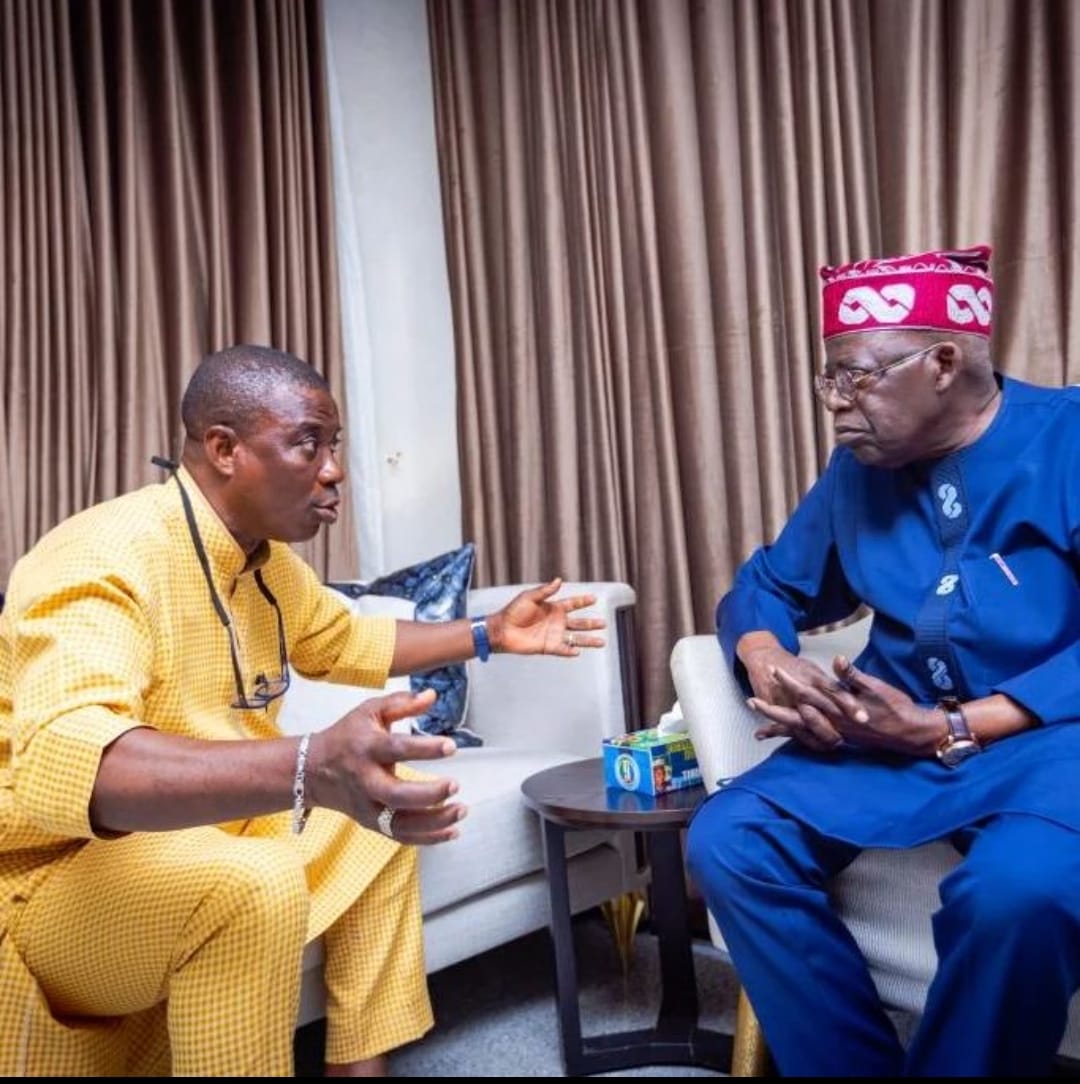
On August 5, 2025, a ValueJet aircraft preparing to taxi at Abuja’s Nnamdi Azikiwe International Airport was brought to a needless standstill. Viral clips showed Fuji icon Wasiu Ayinde Marshal (KWAM 1) on the tarmac amid a confrontation that aviation authorities later described as an egregious breach of airport protocol. Within days, the Federal Government (through the Aviation Minister, Festus Keyamo) announced that KWAM 1’s penalty would be reduced and that he would be engaged as an “AVIATION SECURITY/PROTOCOL AMBASSADOR.”
In the same news cycle, Comfort Emmanson, a passenger on an Ibom Air flight who allegedly assaulted airline staff after refusing to switch off her phone, was banned by airline operators and faced swift legal consequences, only for public statements to float the idea that she, too, could be tapped in some “GOOD CONDUCT” ambassadorial role. The mere suggestion made a mockery of deterrence and sent a gale-force signal of mixed values.
This is not a trivial spat. It is about whether Nigeria still believes in consequences that fit the offense; especially in aviation, where one person’s unruly behavior can ripple into safety risks for all. International and Nigerian rules are unambiguous: DISRUPTIVE CONDUCT THAT THREATENS SAFETY OR ORDER (on the ground or in the cabin) is an offense with legal and administrative penalties. ICAO’s regime (Tokyo Convention 1963, strengthened by the Montreal Protocol 2014) and Nigeria’s Civil Aviation Regulations outline clear enforcement powers for pilots, security agencies and regulators.
The facts we cannot spin
Abuja/ValueJet incident (Aug 5, 2025): The Minister confirmed the episode and initially announced sanctions before reducing KWAM 1’s ban to one month and positioning him for an awareness role. The NCAA complaint to the police was also withdrawn. Critics (including industry voices and public commentators) condemned the optics.
Ibom Air confrontation(Aug 10, 2025): Emmanson allegedly struck crew and resisted removal; she was banned by airlines and faced arraignment. International outlets highlighted the severity of the assault claims and the safety implications of defying crew instructions.
The law is clear: Nigeria’s Civil Aviation Regulations list “UNRULY PASSENGER BEHAVIOR” as an offense, with penalties ranging from fines to imprisonment; ICAO’s framework empowers the pilot-in-command to restrain and disembark disruptive passengers and encourages states to prosecute. These are not suggestions; they are safety architecture.
Nigerian Civil Aviation Authority.

Why the “AMBASSADOR” gambit is dangerous?
1) IT DILUTES DETERRENCE. Aviation safety depends on predictability: follow crew instructions, respect sterile areas and never interfere with aircraft operations. When high-profile violators are swiftly recast as “AMBASSADORS,” we create a perverse incentive structure. The public perceives misbehavior as a shortcut to attention or soft landings. As IATA warns, unruly and disruptive behavior threatens safety, diverts flights and endangers crew and passengers; awareness campaigns are useful, but they must sit on a firm base of credible enforcement.
2) IT UNDERMINES RULE-OF-LAW SYMMETRY. The uneven treatment between an influential celebrity and an ordinary passenger corrodes trust. When the powerful appear to skate past consequences, citizens infer that the law is not a shield for all but a ladder for the few. Former Aviation Minister Osita Chidoka captured the zeitgeist: episodes of celebrities blocking aircraft or passengers assaulting crew are symptoms of a deeper state dysfunction when public order is not impartially upheld.
3) IT CONTRADICTS THE GLOBAL SAFETY TREND. The Montreal Protocol 2014 exists precisely because states needed stronger jurisdiction to prosecute unruly passengers landing in their territory. Many jurisdictions are tightening penalties, not lightening them; because one incident can cascade into injuries, diversions and millions in losses. Nigeria should align with this arc of seriousness.
The better path: CREDIBLE SANCTIONS FIRST, EDUCATION SECOND.
There is nothing wrong with using high-visibility figures for public education; after accountability is done. Indeed, the Minister later clarified that such roles are voluntary awareness efforts, not paid sinecures. But timing is everything. Turning transgressors into teachers within days flirts with impunity’s theater. Education should reinforce deterrence not replace it.
A principled sequence would look like this:
Complete investigations and apply proportionate sanctions under NCAA regulations (fines, bans or prosecution as appropriate) without fear or favor.
Publicly disclose outcomes with timelines, reinforcing that the same rules bind the titled and the unknown.
Then consider restorative roles (e.g., recording PSAs on “what I did wrong”) that underline, not erase, the lesson.
What message are we sending?
In civil aviation, a single slap, shove or “celebrity moment” can disturb cockpit focus, inflame crowds and morph into a safety incident. Cabin crew orders are not suggestions; they are a safety chain. A society that trivializes breaches in this chain is playing dice with lives.
Political philosopher Montesquieu warned that “there is no greater tyranny than that which is perpetrated under the shield of law and in the name of justice.” When symbols of “AMBASSADORSHIP” are bestowed before justice is seen to be done, we twist the shield. Martin Luther King Jr. taught that “Injustice anywhere is a threat to justice everywhere.” When the runway becomes a stage for preferential treatment, we rehearse injustice in the most unforgiving theater: a system where physics (not politics) has the last word.
The exasperation from stakeholders is not hysteria. Industry groups have repeatedly flagged the rising tide of disruptive behavior, urging stricter enforcement and public education working in tandem. Nigerian commentators and aviation lawyers have, in recent days, laid out chapter and verse of our laws, ICAO guidance and pilot authority. The theme is unmistakable: consequences must be certain.
Concrete steps Nigeria should take now are:
1) Lock in the legal backbone. Ensure domestic law fully leverages the Montreal Protocol 2014’s expanded jurisdiction so that incidents landing on Nigerian soil meet timely prosecution. Publish (ahead of time) the charge sheets and sentencing guidelines for common unruly offenses to remove guesswork.
2) Standardize penalties and publish them prominently. The NCAA should maintain an always-current, public schedule of penalties for unruly behavior (e.g., obstruction of operations, assault on crew, non-compliance with safety instructions), and stick to it. This clarity deters, guides prosecutors and shields against ad-hoc leniency.
3) Mandate “cooling-off” periods before any advocacy roles. If, for restorative justice, a wrongdoer is later used for public education, a fixed moratorium (say, 12–18 months after sanctions are satisfied) should be required. This preserves the moral sequence: accountability, then advocacy.
4) Crew-first policy. Assault on cabin crew must trigger automatic arrest referrals and minimum penalties. Pilots must be confident that handing over a disruptive passenger will not dissolve into celebrity exceptionalism at the terminal door.
5) A real public awareness blitz (rooted in accountability. Use airports, airlines, radio and social media to run relentless campaigns on “What counts as unruly,” “Crew authority,” and “Penalties you will face.” IATA’s guidance and international best practice support such campaigns) and they work best when anchored in credible enforcement.
To the youth watching.
Every society teaches by what it rewards. If the impressionable see that a tarmac tantrum or a slap in a cabin ends in a photo-op and a title, they will learn the wrong lesson about power, fame and the rule of law. We do not build a safe aviation culture (or a serious country) by turning transgression into a trampoline.
Edmund Burke cautioned that “example is the school of mankind and they will learn at no other.” Let our example be that no one (artist or artisan, VIP or everyman) stands above the safety rules that keep aluminum tubes full of our mothers and children from turning into headlines.
Ambassadors for safety should be those whose conduct embodies it, not those still stepping out of the dock. If Nigeria wants to cultivate a culture of respect for aviation protocols, our sequence must be simple and non-negotiable: law, consequence, then lesson in that order.
Editor’s note: All dates are in August 2025.








PUBLIC NOTICE: STRONG WARNING & DISCLAIMER
The general public is hereby strongly warned to exercise extreme caution regarding any dealings with Joseph Enyinnaya Eze, popularly known as Dracomiles who claims to operate as a Forex trader in Nigeria and the United Kingdom. Multiple reports and complaints have raised serious concerns about his business activities, dubious act. warranting immediate public attention.
Anyone who has already engaged with or been affected by these activities should urgently report the matter to the EFCC (Nigeria), Action Fraud (UK), or their nearest law enforcement authority.
This notice is issued in the interest of public safety and financial protection and should be treated with the utmost seriousness.
Signed,
HIS ROYAL HIGHNESS
PRINCE EMMANUEL BENNY DANSON.
Obi’s Civility Mandate: Reclaiming Opposition Politics from the Politics of Toxicity
By George Omagbemi Sylvester | SaharaWeeklyNG.com
“Why condemning insults against coalition partners is not just strategy, but a moral imperative for Nigeria’s democratic renewal.”
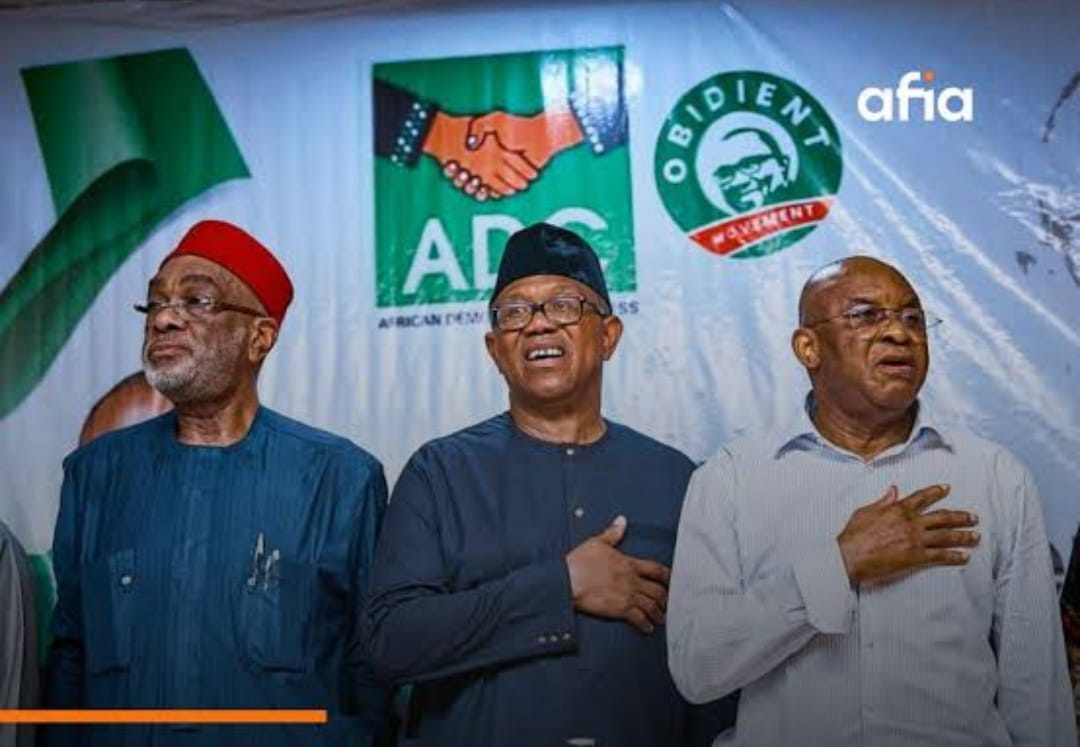
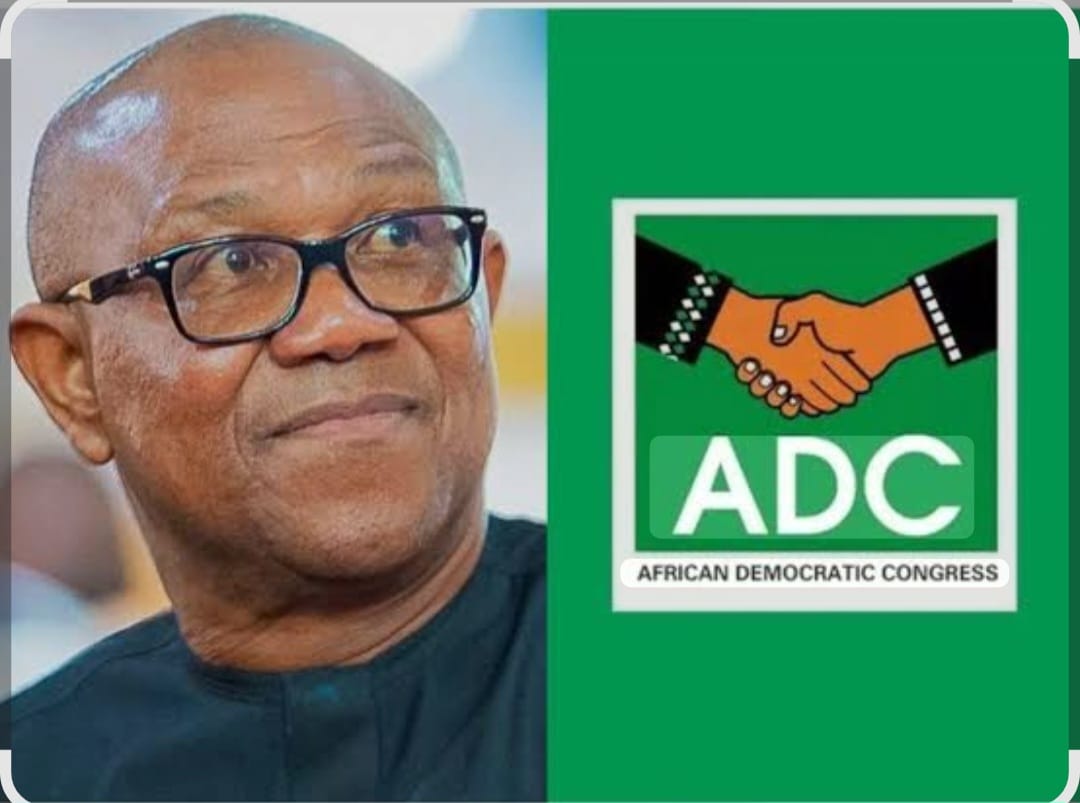
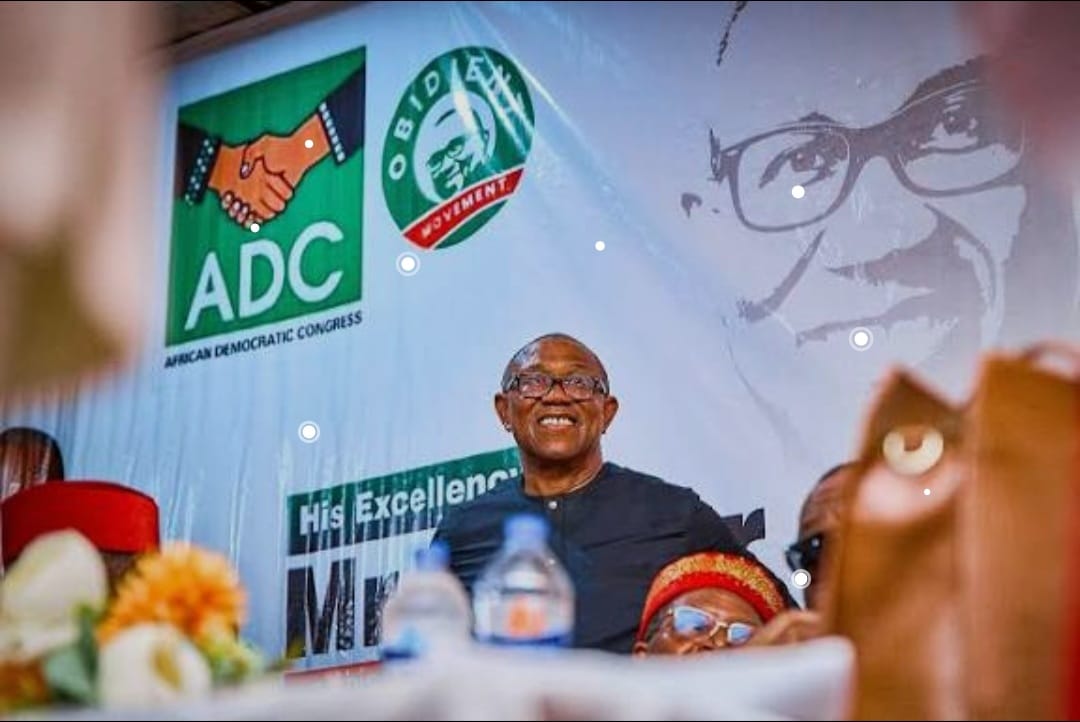
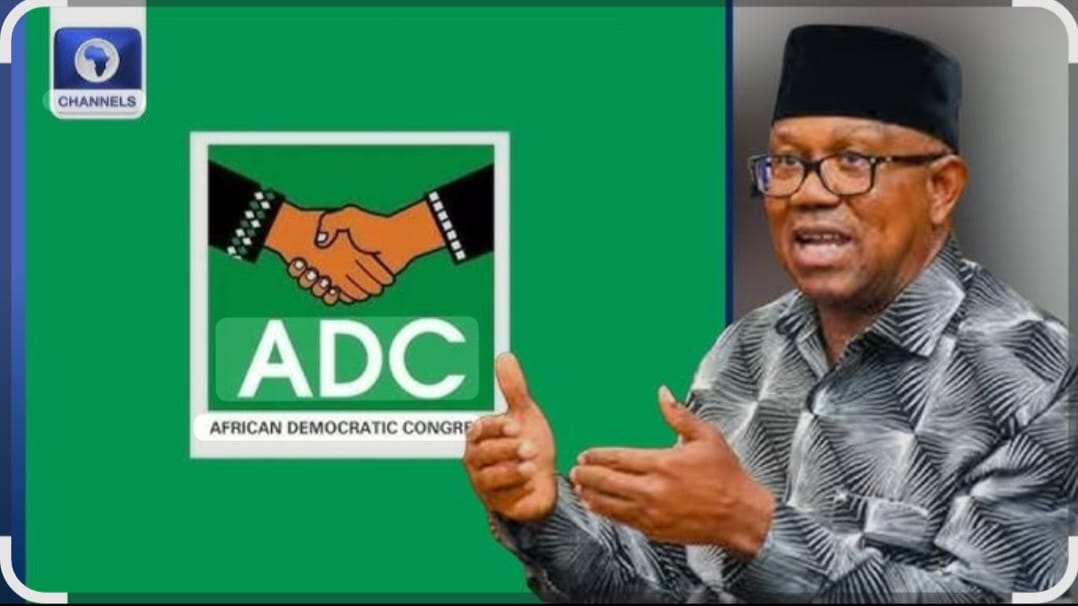
In an era when political discourse increasingly resembles a battlefield littered with verbal grenades, Peter Obi’s unmistakable declaration that “anyone insulting ADC leaders is a criminal, not an Obidient” marks not merely a rhetorical pivot, but a fundamental moral stance in Nigeria’s fractious political landscape.
Obi, the former Labour Party presidential candidate and one of the most consequential voices in Nigerian politics today, delivered the statement at an engagement of his Obidient Movement. In unmistakable terms he dissociated himself and his movement from the tidal wave of infighting poisoning the opposition coalition, insisting that resorting to name-calling, mudslinging and personal attacks does not belong in the politics he envisions for the nation.
This stance is not a trivial reprimand. It is a clarion call for a higher standard of political engagement at a time when Nigeria grapples with deepening insecurity, unemployment, institutional dysfunction and widening distrust between leaders and citizens. The significance of Obi’s statement is profound and its implications extend well beyond intra-party disagreements.
A Foundational Rejection of Toxic Politics.
Mr. Obi’s emphasis that verbal attacks against coalition partners or whether within the African Democratic Congress (ADC) coalition or among the broader opposition (are signs of criminal behavior, not genuine political advocacy) reframes how political movements should conduct themselves.
He refused to allow political identity to be weaponized against personal dignity. In his own words, those hurling insults are not authentic Obidients but “criminals that are not Obidient people.”
This matters for two reasons:
It anchors political contestation back to ideas and governance priorities rather than personality attacks.
It preserves the moral credibility of a movement that has attracted millions of Nigerians tired of corrosive politics.
In saying so, Obi effectively rejects a politics of vitriol that has, for decades, stood as an impediment to democratic deepening in Nigeria. Where political debate once focused on issues and policy, it all too often collapses into ad hominem attacks, death of ideas by drowning in anger.
Context: Opposition Realignment and Internal Strain.
Nigeria’s opposition has been in flux since the 2023 general elections. Parties and movements coalesced into what became the ADC coalition, seeking to offer a viable alternative to the ruling All Progressives Congress (APC). Embedded within that coalition are figures such as former Vice President Atiku Abubakar, Rotimi Amaechi, Nasir el-Rufai and other veterans of Nigeria’s political field.
As Obi engaged with the coalition, tensions emerged. Supporters of different aspirants, driven by fervent hope for leadership change, began to clash (sometimes online, sometimes in street protests) over ideas of zoning, prioritization and political leadership direction. Some of these disputes degraded into personal attacks.
In response, Obi’s emphatic repudiation of those attacks was not mere politeness. It was a strategic and ethical refusal to allow the opposition’s project to be undermined by the very habits of contempt that Nigerians have grown weary of under years of governance failures.
Why Civility Is Strategic Politics.
At first glance, insisting on respectful dialogue might appear soft politics in a hard political world. Yet respected political theorists have long argued that healthy democracies require norms of mutual respect, even amidst passionate disagreement.
The late political scientist Robert Dahl observed that “democracy is not merely a system of institutions; it is a culture of respect, dialogue and mutual tolerance.” When that culture is abandoned for polarization, democratic systems weaken and may eventually collapse into extremism or authoritarian habits.
By repudiating insults (even from within his own rank and file) Obi demonstrates an adherence to democratic norms that scholars say are essential for political legitimacy. Political psychologist Dr. Jonathan Haidt echoes this in his work on social cohesion, arguing that political movements that police toxic language are better positioned to build inclusive coalitions and durable governance frameworks. Such restraint signals maturity and a long-term view of national interest over short-term factional advantage.
A Principle-First Approach, Not Personality Politics.
Obi’s rebuke of abusive rhetoric is not a call for blind loyalty or silence in disagreement. Rather, it is a principled commitment that disagreements within democratic politics should advance through debate, persuasion and principle, never through degrading those with whom one disagrees.
This distinction is crucial. Civility is not the absence of dissent; it is dissent conducted with dignity.
This stance distinguishes Obi’s Obidient Movement from other movements in Nigerian politics. It counters narratives that portray his supporters as reactive or hostile and positions them instead as advocates of disciplined political engagement focused on solving Nigeria’s systemic problems.
Reframing Political Discourse: Issues Over Insults.
In his statement, Obi urged supporters to concentrate on the pressing challenges Nigeria faces: out-of-school children, hunger, unemployment, insecurity and widespread kidnappings.
This grounding in substantive issues reflects a broader philosophy in policy-oriented politics: discourse should elevate concerns that affect citizens’ lives rather than consume itself with internal squabbles.
Former U.S. President Abraham Lincoln captured the essence of political purpose when he said, “A house divided against itself cannot stand.” In a Nigerian context, if opposition politics devotes itself to name-calling, it betrays the very voters demanding accountability, competence and sustainable governance.
The Political Risks of Toxicity.
Why does this matter now, because toxicity in political movements is not just unprofessional, it is harmful.
Political science research shows that:
Electoral alliances built on bitter internal conflict rarely endure. Sections of coalition partners may defect, voter confidence may erode and narratives of incompetence can gain traction.
Toxic discourse can amplify divisions along ethnic, regional and religious lines, which Nigeria, with its historical regional and identity sensitivities, cannot afford ahead of national elections.
When insults become normalized, adversaries of democratic reform benefit. They use chaos to justify centralization, suppression or rule by decree. What starts as internal bickering can metastasize into a crisis of legitimacy and national instability.
Obi’s Leadership Test.
By disowning verbal attacks, Obi invites his supporters (and Nigerian politics) to a far higher standard of engagement. He calls for restraint without surrendering ambition; for firmness without bitterness; for advocacy without abuse.
In doing so, Obi’s message resonates with scholars like Norman Ornstein, who asserts that “democracy dies in darkness and thrives in the light of thoughtful, civil, informed dialogue.” This is not a call for passivity. It is a call to elevate the discourse while staying laser-focused on outcomes that impact Nigeria’s future.
Parting Thought: A Turn Toward Democratic Maturity.
Peter Obi’s statement is not a garden-variety political rebuke. It is a critical inflection point in Nigerian politics that emphasizes:
The importance of respect in political coalitions
The necessity of focusing on policy and governance not personalities
The moral foundation for opposition unity built on discourse not division
As Nigeria prepares for future elections and the challenges of nation-building ahead, Obi’s stance reminds us that leadership begins with how we speak to and about one another. Civility in politics is not weakness, it is strength, courage and a profound demonstration of a movement that seeks to govern with integrity, not insult.
In a country yearning for change, repositioning political language toward respect and substance may be the most transformative act of leadership of all.
society
Forging a New Strategic Nexus: Nigeria and Türkiye Redefine Partnership for Shared Prosperity
Forging a New Strategic Nexus: Nigeria and Türkiye Redefine Partnership for Shared Prosperity.
By George Omagbemi Sylvester | Published by saharaweeklyng.com
“A Landmark Suite of Strategic Agreements Signals Economic Growth, Security Collaboration, Educational Exchange and Institutional Cooperation Between Two Emerging Powerhouses.”
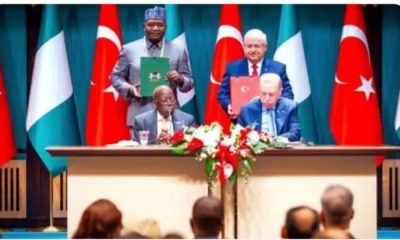
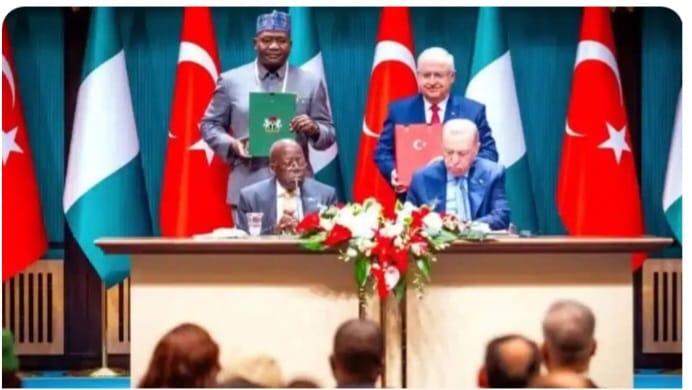
In a moment of far‑sighted diplomacy and strategic alignment, Nigeria and Türkiye have taken a decisive leap forward in bilateral cooperation, signing a comprehensive suite of nine agreements that collectively articulate a bold vision for their partnership in the twenty‑first century. The signing ceremony, held in Ankara with Nigerian Head of State Bola Ahmed Tinubu and Turkish President Recep Tayyip Erdoğan presiding, was more than a ceremonial exchange of documents and though it was a moment that signals shared ambition, mutual respect and a sincere commitment to cooperative development across multiple sectors.
These agreements are neither symbolic nor superficial. They represent tangible frameworks that will govern cooperation in areas vital to national growth: diaspora engagement, media development, higher education, quality standards and halal certification, economic and trade cooperation, military collaboration, diplomatic training, social development and women’s empowerment. Together, they define not only the broad contours of a reinvigorated relationship between Nigeria and Türkiye, but also a blueprint for cooperation that other nations may soon emulate.
For Nigeria (Africa’s most populous nation and one of its largest economies) this moment is especially consequential. For Türkiye, a pivotal Eurasian player with an expansive foreign policy footprint, deepening collaboration with Nigeria reinforces its influence across Africa and strengthens its ties with an important economic partner. Importantly, these agreements reflect a nuanced relationship grounded in mutual interests, not mere diplomacy for diplomacy’s sake.
From Diaspora to Diplomacy: Agreements That Matter.
The nine signed agreements provide a roadmap for collaboration that is practical, multidimensional and forward‑leaning. Their strategic value lies in both the sum of the parts and the breadth of sectors they encompass.
Diaspora Policy Cooperation:
A memorandum of understanding on diaspora policy was signed between the Turkish Presidency for Turks Abroad and Related Communities and Nigeria’s Commission for Nigerians in the Diaspora. This pact recognizes the centrality of diaspora communities as bridges for cultural exchange, investment flows, and transnational innovation. Scholars like Dr. Amina El‑Bushra, an expert in transnational studies, have long argued that diaspora engagement is “a strategic asset for national development when harnessed through institutional cooperation rather than ad hoc efforts.” This agreement, therefore, positions both nations to tap into human capital networks that stretch across continents.
Media and Communication Collaboration:
In an era where narrative shapes reality, cooperation on media and communication provides a mechanism for shared learning, exchange of expertise and professional development in journalism and broadcasting. The memorandum envisages joint seminars, training programs, exchange visits and information sharing. Media scholar Prof. Umer Farooq has observed, “In an interconnected world, media policies that encourage cross‑cultural engagement are vital to strengthening democratic discourse and countering misinformation.” The agreement lays a foundation for media ecosystems in both countries to evolve through shared standards and cross‑border perspectives.
Higher Education and Academic Exchange:
The memorandum on higher education cooperation speaks to the future of intellectual exchange and capacity building. Nigerian and Turkish universities will now have an institutional platform to expand collaborative research, student exchange and staff development programs. Education expert Dr. Kelechi A. Okonkwo emphasizes that “expanded academic cooperation enables the transfer of knowledge and skills necessary for national development, fostering innovation that transcends borders.” This pact is likely to enhance academic pathways, research collaborations and cultural understanding.
Halal Quality Infrastructure:
A memorandum between Türkiye’s Halal Accreditation Agency and Nigeria’s National Accreditation System will strengthen halal certification infrastructure. Halal markets are expansive and growing globally, reflecting significant economic and cultural values. Experts in global trade such as Dr. Sanjay Jain describe halal certification not merely as a market niche, but as “a strategic sector that links production, trade and cultural identity.” This agreement is poised to unlock export potential and facilitate Nigeria’s deeper integration into global halal value chains.
Joint Economic and Trade Committee (JETCO):
Perhaps the most consequential pact is the joint declaration establishing the Joint Economic and Trade Committee. This institutional mechanism creates a sustained platform for economic dialogue, private sector engagement, and policy coordination, intended to stimulate bilateral trade and investment. According to official statements, Nigeria has become Türkiye’s largest trading partner in Sub‑Saharan Africa which is a milestone that underscores the economic significance of this relationship. The bilateral trade volume in the first eleven months of the previous year was near historic highs, even before the full implementation of these agreements.
Military Cooperation and Security Architecture:
The protocol on military cooperation underscores a deepening security partnership between the two nations. Nigerian defense forces have previously engaged with Turkish defense technology, including the acquisition of military helicopters that enhance operational capacity. This cooperation reflects shared interests in ensuring stability, combating insecurity and building indigenous capabilities in defense sectors. Security analyst Dr. Amara Eze notes that “strategic defense cooperation grounded in shared values strengthens both national and regional security architectures.”
Education, Diplomatic Training, and Social Development:
Additional agreements on general education cooperation, diplomatic academy exchange and women’s empowerment initiatives capture the holistic nature of this bilateral framework. They extend cooperation to institutional strengthening, professional training in foreign service and social policies that promote inclusion and gender equity. Such agreements resonate with global development norms and respond to calls from civil society leaders who champion capacity building and inclusive governance.
A New Chapter in Bilateral Relations.
The sweeping scope of these nine agreements signals far more than transactional diplomacy. They reveal a shared commitment to institutional cooperation, economic integration, cultural exchange and security collaboration. What emerges is a holistic relationship built on mutual respect, shared interests and a long‑term vision.
President Tinubu’s words during the joint press conference in Ankara encapsulated this sentiment when he pledged deepened cooperation on security, trade and inclusive development, affirming that Nigeria stands with partners who share commitments to democracy, freedom and prosperity. Likewise, President Erdoğan emphasized Türkiye’s readiness to support Nigeria’s security and economic aspirations.
International affairs scholar Dr. Harriet Mensah succinctly contextualizes this moment: “Partnerships grounded in strategic alignment and mutual benefit are the bedrock of twenty‑first century diplomacy. When nations invest in holistic cooperation (from academia to defense to trade) they build relationships that endure beyond political cycles.”
Summative Insight: A Blueprint for Shared Success.
The nine agreements signed between Nigeria and Türkiye define a new chapter in their bilateral relationship with one that transcends rhetoric to establish pragmatic cooperation across multiple domains of national significance. They anchor economic aspirations, strengthen institutional ties, nurture educational and cultural exchange and fortify security collaboration.
As the global order becomes increasingly interconnected and competitive, the Nigeria‑Türkiye partnership stands out as a bold example of how nations with shared ambitions can craft a comprehensive framework for mutual growth. This suite of agreements is not merely a diplomatic milestone; it is a strategic foundation upon which both nations can build sustainable futures characterized by economic resilience, security cooperation and meaningful engagement on the world stage.
In the words of a renowned development expert, “Partnership is not merely signing agreements, but embedding collaboration into the very structures that shape national progress.” With these nine agreements, Nigeria and Türkiye have done just that.


-

 celebrity radar - gossips5 months ago
Why Babangida’s Hilltop Home Became Nigeria’s Political “Mecca”
-

 society5 months ago
Power is a Loan, Not a Possession: The Sacred Duty of Planting People
-

 Business6 months ago
Batsumi Travel CEO Lisa Sebogodi Wins Prestigious Africa Travel 100 Women Award
-

 news6 months ago
THE APPOINTMENT OF WASIU AYINDE BY THE FEDERAL GOVERNMENT AS AN AMBASSADOR SOUNDS EMBARRASSING