
society
No More Excuses: Nigeria Must Rise Through Unity and Vision


No More Excuses: Nigeria Must Rise Through Unity and Vision.
By George Omagbemi Sylvester | Published by saharaweeklyng.com
Integrity is not optional; it is survival. United we rebuild – NO MORE EXCUSES, ONLY RESULTS.
Nigeria stands at a crossroads. Blessed with human capital that numbers in the hundreds of millions and with resources that should have secured prosperity for every citizen, the nation instead wrestles with UNDERDEVELOPMENT, FRAGMENTATION and the CORROSIVE EFFECTS of POOR GOVERNANCE. The cure is neither sentimental nor simple; it is structural. When vision meets unity (when a clear, courageous national plan is backed by an unwavering commitment to integrity and justice) nations rise. Nigeria can and must be that nation. This is not rhetoric. It is a prescription grounded in evidence, proven theory and the lived experiences of countries that have turned crises into breakthroughs.

First, the facts: Nigeria now has a population exceeding 230 million people (Africa’s Largest) a demographic engine that, IF WELL-GOVERNED, could deliver a continental renaissance. Yet chronic weaknesses persist. Recent official recalculations show Nigeria’s GDP grew after rebasing, revealing a larger economy than previously recorded, but that statistical upgrade masks stubborn problems: unemployment, especially among youth, widespread informality in the labour market and persistent poverty for millions. These are not abstract numbers; they are human destinies deferred.
Why has such potential failed to translate into sustained progress? Because institutions (the rules, norms and organizations that structure public life) remain too often extractive rather than inclusive. Scholars such as Daron Acemoglu have shown that nations fail when political and economic institutions reward a narrow elite who capture state power and divert wealth away from development. In short: growth without inclusive institutions becomes theft dressed as policy. Nigeria’s challenge is not merely TECHNICAL; it is POLITICAL.
Corruption and weak accountability are not peripheral problems; they are central. Transparency International’s sustained analysis of governance around the world underscores how corrupt practices erode public trust, distort markets and lock countries into cycles of underperformance. For Nigeria, this means that every naira misallocated is an opportunity lost; a CLINIC not BUILT, a CLASSROOM SHUTTERED, a MICRO-ENTERPRISE that never SCALED. The structural fix requires the unglamorous work of building systems that make theft harder and public service more attractive.

Structural reform cannot succeed without social cohesion. Unity is not uniformity; it is a pact between diverse citizens to prioritize the common good. Nigeria’s pluralism (ETHNIC, RELIGIOUS, REGIONAL) is a strength when governed through institutions that guarantee rights, distribute opportunities fairly and punish wrongdoing impartially. Unity under a robust legal framework transforms diversity into an engine of creativity and resilience rather than a battlefield for resources.
Concrete steps to rebuild Nigeria must combine vision with relentless execution:
Reform institutions, not personalities. Reform is local and institutional. It demands independent judiciaries, merit-based civil services and transparent procurement. As economist Ngozi Okonjo-Iweala has argued in her public interventions and writings, NATION-BUILDING requires “Decisions – tough, unpopular, but necessary ones.” Strong institutions reduce the scope for patronage politics and create predictable rules for investors and citizens alike.
Make anti-corruption systems bite. Transparency alone is insufficient; enforcement that produces consequences is essential. Strengthen anti-corruption courts, protect whistleblowers, modernize asset declarations and bring procurement into the open with digital platforms. The combination of technology and legal will turns OPACITY into ACCOUNTABILITY.
Invest in human capital at scale. Nigeria’s greatest asset is its people. Focus on universal basic health coverage, quality primary education and vocational pathways that link young people to real jobs. Tackling the twin demons of youth UNEMPLOYMENT and UNDEREMPLOYMENT requires PUBLIC-PRIVATE apprenticeship schemes, accelerated investment in agriculture & manufacturing and targeted microfinance that incentivizes formalization.
Economic diversification with small-business engines. The rebasing of Nigeria’s GDP exposed a larger services and digital economy. Policymakers must now catalyze this momentum: reduce the cost of doing business, stabilize exchange-rate policy to attract long-term capital and provide targeted support to SMEs that create most jobs. Dambisa Moyo’s critique of aid (that external money can entrench bad governance) is a cautionary reminder: true development must be led by domestic reforms that create incentives for productivity and accountability.
National civic compact and truth-telling. A durable rebuild requires a national conversation; not the shallow, media-driven variety but a serious civic compact that identifies past failures, names responsible parties where appropriate and charts a shared path forward. Truth commissions, constitutional reform conversations and civic education campaigns can transform grievance into collective responsibility.
A security architecture that respects rights. Without safety, investment and innovation stall. Security responses must be intelligence-led, rights-respecting and accompanied by socio-economic measures that address the root causes of banditry, insurgency and criminality. Militarized responses alone will never deliver lasting peace.
These steps are neither utopian nor untested. Countries that have broken cycles of extraction did so by aligning elite incentives with national interest, by making corruption risky & costly and by investing in the long-term capacities of their people. Acemoglu’s research into institutions confirms that inclusive political settlements unlock sustainable prosperity; Okonjo-Iweala’s career demonstrates that competent, courageous policy-makers can nudge nations toward better outcomes. Evidence matters: it delivers results when combined with political courage.
Let us be blunt: Nigerians have been failed by POOR LEADERSHIP, COMPLACENT BUREAUCRACY and VESTED INTERESTS that prefer the status quo. YET BLAMING ALONE ACHIEVES NOTHING. The pathway forward is accountability paired with an affirmative agenda that attracts broad social ownership. Civil society, business, faith groups and political leaders must each accept a share of responsibility and a share of sacrifice. That is the compact of national rebuilding.
We must also seize the moment. The world is not waiting for Nigeria to get its act together; capital, talent and geopolitics are mobile. Neither are opportunities wholly outside our control. With the right reforms, Nigeria will reclaim its position as an engine of African growth and a leader in continental governance. The recalibrated GDP and recent signs of growth are promising signals; but they must be translated into lived improvements for ordinary Nigerians: cleaner water, powered clinics, functioning schools and dignified work.
In closing, a fierce, disciplined optimism is required: optimism that acknowledges failure, names it, but refuses to hide behind it. Unity without vision is directionless. Vision without unity is fragile. When vision meets unity; when a shared plan rooted in integrity, justice and evidence is embraced by citizens and enforced by institutions and then NATIONS RISE. Nigeria’s renaissance is possible. It will not be granted; it will be built, brick by painstaking brick, by a citizenry and leadership willing to choose the country’s future over short-term gain.
“Change,” as Ngozi Okonjo-Iweala has insisted, “is about decisions; tough, unpopular, but necessary ones.” Let our leaders and our people make those decisions now. The cost of delay is not merely economic: it is moral. Rebuilding Nigeria is an obligation to future generations. Let us meet it together.

George O. Sylvester
Published by saharaweeklyng.com






Umaru Bago: Dissecting Apostle Suleman’s Lecture on Transience of Power
Should religious leaders directly address contemporary political issues? In every aspect, yes. And one of the vocal Christian leaders, Apostle Johnson Suleman, is strengthening the truth of this belief with credible and relevant proof.
Apostle Suleman spoke to the order issued by the Niger State governor, Umaru Bago, to pastors to secure official permits before preaching in the state. Suleman’s lecture two weeks ago indicates that such an order only reflects the politician’s fear of being told the truth. Politicians are not interested in the truth, it suggests. They want to be told things that make them feel good and things that support their prejudices.
“I heard about one governor; Niger State governor. The man said that anybody that wants to preach in his state must come and get a license. I do not support any preacher preaching against anybody. Preach peace. But don’t show any governor your notes. For a governor to see your notes, he must also show us how he spends the state money. Once he publishes how he spends the state money, we will also publish our message notes,” the leader of the Omega Fire Ministries (OFM) worldwide, declares, implying that religion offers a moral framework that is directly relevant to policy issues and thus religious leaders are qualified to speak to politics.
Warning that religion and politics should be kept separate and therefore pastors should preach the word rather than be partisan, Apostle Suleman cautioned that “issues of religion leave it, issues of tribe leave it. Religious and tribal wars can consume a state. I’ve always said that when it comes to security issues I will speak and when it comes to Christianity I will speak. I won’t keep quiet when you try to mutilate our faith and what we stand for. Be careful. The profit of governance is welfare; people can feed, people are happy.”
Suggesting that power changes hands, political power is transient; it comes and goes, Suleman implores political office holders to use power wisely. A legacy becomes beautiful, enduring, powerful when power is used to serve the interests of the people. “People desire things not knowing that life is transient. Anything God gives to you, value it. Don’t use that office and position to oppress people. It’s a matter of time. Whatever God gives you to you today, don’t abuse power. You were elected and you’ll be out of office one day. Don’t become a terrorist; everybody is shaken. It shouldn’t be so. Whatever you have today, you’ll leave it one day. Glorify God with it,” he lectures.
On account of the above, Apostle Suleman elucidates that once powerful men will one day move through the corridors of power only as statesmen, no longer as the ultimate decision makers.
Politics
“Let new chairmen breathe”… Obasa warns ex-LG chairmen against wielding undue influence on successors.

“Let new chairmen breathe”… Obasa warns ex-LG chairmen against wielding undue influence on successors.
…As the Assembly celebrates Mrs Remi Tinubu at 65
Speaker of the Lagos State House of Assembly, Rt. Hon. Mudashiru Obasa has warned the immediate past chairmen of local governments and local council development areas in the state to release their stranglehold on their successors and allow them to work unencumbered.
The Speaker issued this warning at a meeting with newly elected chairmen (the second in one month) held inside the Lateef Jakande auditorium of the Assembly Complex on Tuesday, September 23. Speaker Obasa did not hold back in his outright condemnation of the immediate past chairmen who are reportedly still exerting undue influence on their successors. In the worst cases, according to him, many of them are still signing cheques in collusion with council treasurers and managers.

Obasa asked the new chairmen pointedly, “How can you be answerable to your predecessors? What you owe them is honour, not to allow them to control you. They have done their bit, and everybody is grateful; you are the ones in the saddle now. So, take charge.”
Sounding a note of warning to the overbearing past chairmen in absentia, Obasa said, “Let the new chairmen breathe. Let the public see that there are new sheriffs in town and that they are doing a good job. Let their work show. Don’t take their shine. Remove your grip on their necks.” The Speaker frowned at the ex-chairmen for mounting pressure on their incumbents to start paying for loans while in office, without giving them any room for due diligence or to settle down.
He warned, “Before you start paying loans, ask questions. Where you are unsure of what the loan was used for, ask questions and look through the books. If you can renegotiate or restructure the terms of the loans, do so for the betterment of your constituents.”
Further, the Speaker said, “Four years is not a long time in politics. So, if the public does not see what you are doing in four months (of being in office), you have created a wrong impression. As politicians, we manage so many interests, but it should not be at the detriment of the council and the people.” Then, he harped on the spate of deaths in councils across the state, saying that this was the first time such a thing was happening in the state and that it did not bode well for the party. He reminded his guests of the importance of taking their health seriously by doing periodic checks and admonished them to ensure they prioritise the well-being of their people.

Earlier in the day at plenary, members of the House of Assembly took turns to celebrate the First Lady of Nigeria, Senator Oluremi Tinubu, who marked her 65th birthday on Sunday, September 21. Hon. Oladipo Ajomale (Oshodi/Isolo Constituency II) started the plethora of plaudits and paeans. He described Senator Oluremi as a mother who has done so well for the nation, commended her for making life better for Nigerians, especially the underprivileged, and wished her great health and a long life.
Hon. Stephen Ogundipe (Oshodi Constituency 1) recalled that he was privileged to work with her during the second term of then-Governor Bola Ahmed Tinubu and highlighted her loyalty and steadfast support for the President. He commended her selfless service to humanity, stating, “She is not just a pillar behind the President, but a woman whose actions reflect her genuine desire to uplift lives.”
Princess Lara Oyekan-Olumegbon (Lagos Island Constituency 1) said that Mrs Tinubu is worthy of celebration for her empowerment initiatives. She prayed, “On behalf of all the White Cap Chiefs of Lagos and my constituents, we pray that God will continue to guide her to be a worthy partner to our father. Other members also recognised the First Lady’s lifelong contributions to national development, humanitarian causes, and exemplary public service. They extolled her distinguished service as a Senator and her continued advocacy for the marginalised, the less privileged, and vulnerable in society, describing her as “the most impactful senator in Nigeria’s recent history.”

The Deputy Speaker, Hon. Mojisola Meranda, also noted that Senator Oluremi Tinubu is the “mother of the nation”. She prayed for her to finish well just as she had started well. Speaker Obasa, who presided over the session, thanked his colleagues for their eulogies, concurring that indeed, the ‘Birthday Girl’ was exceptional as a first lady. He noted that, unlike other First Ladies who would have discarded their successor’s pet project in favour of theirs, Mrs Tinubu, as First Lady of Lagos State, sustained the Committee of Wives of Lagos State Officials (COWLSO) initiative, which has continued to impact lives meaningfully across the state and beyond.
“She is a woman with so many qualities. As a Senator, she served her senatorial district with passion, dedication, high commitment, and loyalty, which no one has been able to do. We congratulate her and pray that the Almighty will continue to be with her.” The Speaker asked the clerk to send the First Lady a congratulatory letter.
society
2027: Angry Lawmakers Plan Major Showdown With President Tinubu Over Constituency Projects Funding
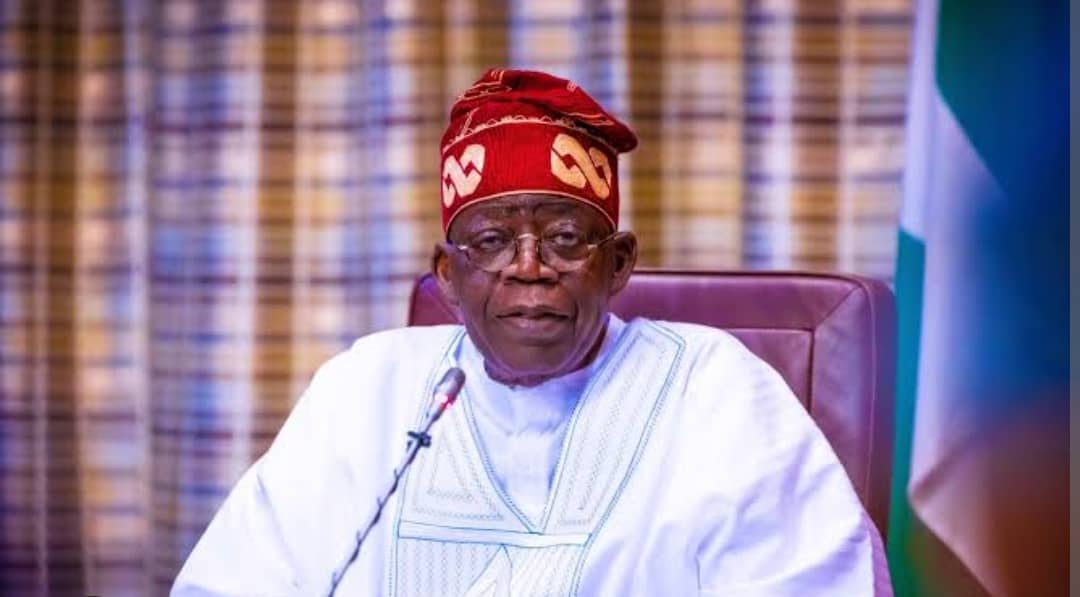
2027: Angry Lawmakers Plan Major Showdown With President Tinubu Over Constituency Projects Funding
Some angry Nigerian Senators and Members of the House of Representatives are planning a major showdown against President Bola Ahmed Tinubu and his executive, upon resumption from the recess, over non-servicing of their constituency projects.
Rising from separate meetings in Abuja Tuesday night, the Lawmakers appear to have concluded arrangements to mobilize their colleagues who are equally piqued by the activities of the executive, to put the President on his toes.
The meeting for the Senators was said to have been held in a private residence of a ranking northern APC Senator, while the Reps were hosted by a Member of the opposition from the South. Lawmakers from both opposition parties and the ruling All Progressives Congress (APC) were said to be in attendance.
Top on the agenda of the meetings, according to different sources, was the non funding of constituency projects nominated by the Lawmakers in the 2024 and 2025 budgets; the only two appropriation exercise they were opportune to participate.
In line with the culture of maintaining a January – December budget circle inherited from the past administration, President Tinubu is expected to present the 2026 Appropriation Bill to the joint session of the National Assembly, anytime soon.
But that should not be expected, as the federal government is still struggling with the performance of the 2024 budget and has not started implementing the 2025 appropriation yet, even as the fiscal year enters the last quarter.
The Lawmakers, most of whom are warming up for 2027 elections, were said to be sufficiently angry by the way some of their constituents received them during this period of long vacation. Some who are in the ruling party, lamented during the meetings, that they were fast losing the supports of their constituents to new aspirants, over what they called “fake promises”.
“Imagine promising the people of our commitments to facilitate one or two projects to their wards in the 2025 budget, and with barely 3 months to the end of the year, nothing to show for it; whereas, the same projects are captured in the 2025 budget, but someone, somewhere, has refused to mobilize contractors to commence work. I wonder what I will be promising them in the 2026 budget, knowing fully well that they will still tag it fake promises”.
The Lawmakers frowned at the inability of the executive to pay contractors who had since completed projects captured in the 2024 appropriation, saying, that singular inaction from the executive has greatly hampered developments in their various constituencies and pitched their constituents and once loyal supporters against them, even as they brace up for 2027 general elections.
A top source privy to the Reps secret meeting, hinted that some Members have been drafted from various political parties and regions, to mobilize those in their blocs to make sure that, “no executive bill from the President will pass through the parliament again”.
A Senator from the South who was also at the meeting, described the President’s economic policies as “rhetorics” and have the tendencies of causing one’s misfortune in the next election, if urgent steps are not taken by individual contestants.
“Going by what we saw in these few weeks of our recess, I will just advise anyone seeking reelection, especially those my friends in the APC, to step up their games, if need be, go and take loans and prosecute your own election. Don’t go about campaigning for someone whose economic policies are as rhetorics as they are. His policies are already causing great set back for developments in the country, don’t go and incur the wrat of the people the more, by insisting your party must win at the center. Just carry your own cross and leave the people to decide”, he added.
Our Correspondent also gathered that Lawmakers from both secret meetings vowed to withdraw any further support for the President ahead of his 2027 campaigns, adding that, such would amount to insulting the collective sensibility of their constituents, who are already disgruntled.
Majority of the Lawmakers were said to have specifically blamed the Minister of Finance, Dr. Wale Edun and the Accountant-General of the Federation (AGoF), Mr. Samsudeen Babatunde Ogunjimi, for the non performance of the 2024 and 2025 budgets.
y
The Lawmakers, according to different sources, also regretted passing the Tax Reforms Bills, as well as other major executive bills that came through at both chambers; with some Senators vowing to stampede screening and confirmation of executive nominees, as they resume from long vacation on Tuesday, 23rd September, 2025.
Meanwhile, a group, Coalition for Equity and Accountability in Public Finance (CEAPF) had in a statement on Wednesday, demanded the immediate resignation of Finance Minister, Edun and the AGoF, Ogunjimi, accusing them of “failing to pay contractors for projects duly captured in the 2024 budget and fully executed by local firms”.
In the statement signed by its President, Comrade Segun Daramola, and Secretary-General, Comrade Isaac Idachaba, the coalition said it would formally approach the National Assembly and “lobby lawmakers across party lines to pass a vote of no confidence on the two officials if they refuse to vacate their offices voluntarily”.


-
 society7 months ago
Ramadan Relief: Matawalle Distributes Over ₦1 Billion to Support 2.5 Million Zamfara Residents
-
 Politics3 months ago
Nigeria Is Not His Estate: Wike’s 2,000‑Hectare Scandal Must Shake Us Awake
-

 society6 months ago
Broken Promises and Broken Backs: The ₦70,000 Minimum Wage Law and the Betrayal of Nigerian Workers
-
 society4 months ago
OGUN INVESTS OVER ₦2.25 BILLION TO BOOST AQUACULTURE