society
END OF YEAR SINGLES SUMMIT — A Life-Changing Experience Awaits You
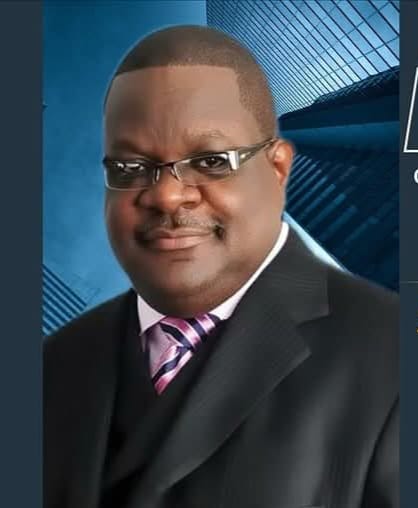
A highly anticipated event is set to take place in Accra, Ghana, as the End of Year Singles Summit takes center stage on Saturday, December 20th. This empowering gathering is designed to equip singles with the right mindset, tools, and insights to navigate the world of relationships and marriage.
The summit promises to be a transformative experience, with renowned host, Bishop Michael Hutton-Wood (UK) and a guest, Chancellor Gideon Titi-Ofei (GH) sharing their expertise on relationship success, purpose, maturity, and marital destiny as a key part of the summit, with practical wisdom, emotional intelligence, and spiritual insight on offer. Attendees will have the opportunity to learn how to:
– *Choose wisely*: Make informed decisions in relationships
– *Avoid mistakes*: Steer clear of common pitfalls
– *Build confidence*: Develop inner strength and self-worth
– *Position for success*: Prepare for a healthy, lasting marriage
– *Become whole*: Embrace personal growth and healing
* Pursue and Fulfil your destiny as you await your marriage partner
* How to make the right choice of a marriage partner
The event is open to all singles seeking clarity, guidance, and a deeper understanding of themselves, relationships and marriage. Admission is free but Registration is required.
Slated to commence on 20th Saturday, December 2025, 10:00 AM at Gold Coast Hall, University of Gold Coast, Spintex Road, Accra
An opportunity to invest in your future and movement towards a more fulfilling life and marriage.

For more information and registration, visit the provided link or call GH 026 388 8555.
society
Agege-Based Larry FC Revived by Former Players
Agege-Based Larry FC Revived by Former Players*
After fifteen years away from competitive football, Larry Football Club once a dominant grassroots team in Lagos State has been officially relaunched by its former players, marking a significant revival of the club’s legacy.
The relaunch took place during a reunion event organized by the ex players, bringing together more than 40 members physically, with several others joining virtually from the diaspora. Their collective presence and support demonstrated a renewed commitment to rebuilding the club that shaped their formative years.
The Chairman and Founder of Larry FC, Mr. Ebenezer Adewale Olanrewaju Sanyaolu, expressed deep joy as he reconnected with his former players. Speaking on the theme “Reviving the Legacy and Building the Future,” he recalled the sacrifices made to keep the club thriving during its active years.
Mr. Sanyaolu recounted how he personally financed the team providing jerseys, boots, equipment, logistics, and transportation. He also shared that he often supported players and officials with their personal needs.
> “There were days I diverted funds meant for my education business just to keep the club running,” he said. “At some point, I nearly crippled my business in the name of keeping the Larry FC dream alive.”
Also reflecting on the club’s achievements, the manager reminded players of Larry FC’s memorable victories, including lifting the Commissioner’s Cup, MAF Cup, Speaker’s Cup, and Oba’s Cup. He also recalled the famous matches against Enyimba FC, where Larry FC triumphed 3–1.
Despite feeling abandoned over the years, Mr. Sanyaolu said he is now filled with hope seeing the club’s legends unite to bring Larry FC back to life.
Representing the Chairman of Orile-Agege Local Council Development Area, Hon. Akinola Idowu, the Chief of Staff, Hon. Tijani Oluwafemi, expressed delight at the club’s revival. He noted that the return of Larry FC will inspire young football talents across the LCDA. During the event, The Orile-Agege LCDA Chairman, Akinola Idowu was also honored with an award and decorated as a Life Patron of the club. The reunion took place on Sunday, December 7, 2025.
The gathering also included a solemn moment of remembrance for former players who have passed on. Attendees emphasized that though they are no longer physically present, their contributions remain unforgettable.
To conclude the celebration, award was presented to Hon. Abayomi Sanyaolu, the Ogun State IPAC Chairman, who also the Chairman political party, Action Alliance, Ogun State chapter and General Secretary of the Larry FC.
Other awardees are players, officials, and supporters whose efforts were instrumental in sustaining and advancing Larry FC during its earlier years.
society
Olómú Festival Gains Strong Backing in Positive Community Push
Coordinator of the Olómú Festival, Olori Ololade Oshin, has announced in Ito Omu that traditional rulers, community leaders, and local institutions have endorsed the Olómú Festival, confirming its maiden 2026 edition as a major eco cultural celebration.
The Olómú Festival is positioned to strengthen environmental awareness, cultural preservation, and sustainable development across the Epe Division of Lagos State.
Olori Oshin, who also doubles as the Iyalaje of Ito-Omu Kingdom, explained that the organisers intend to use the festival as a cornerstone for broader community growth. She revealed that Ito Omu plans to build a tourist village on its vast land, an initiative designed to elevate the festival’s profile and attract both local and foreign visitors.
She added that the community intends to expand agricultural cultivation to improve its contribution to food supply in Nigeria, while also advancing its fishing sector and harnessing the economic potential of its rich palm resources.
She stressed that achieving these ambitions will require committed support from both government institutions and private sector partners.
The coordinator noted that Ito Omu’s cultural heritage, natural wetlands, forested landscapes, and interconnected creek networks provide a compelling foundation for the festival.
She stated that the Lagos State Government, the Lagos State Waterways Authority, Epe Local Government, and the region’s revered monarchs have already offered strong backing. His Royal Majesty Oba Kamorudeen Animashaun, Oloja of Epe; Oba Taiwo Yusuff Gbadamosi, Onitoomu of Ito Omu Ancient Town; and Oba Nurudeen Ebudola Alugbin, Oniladaba of Ladaba, all described the festival as an important driver of cultural revival and sustainable tourism.
A lively boat regatta added colour to the announcement, giving attendees a vibrant preview of the festival’s cultural energy and community spirit.
As preparations continue toward the inaugural 2026 edition, Olori Oshin invited corporate sponsors, development partners, and private organisations to participate in the initiative.
She affirmed that supporting the Olómú Festival offers a meaningful opportunity to promote environmental care, youth empowerment, cultural pride, and long term regional development.
society
From Confrontation to Commendation and When Forgiveness Becomes Diplomacy — Why Omokri Calls Tinubu “Christ-like”
From Confrontation to Commendation and When Forgiveness Becomes Diplomacy — Why Omokri Calls Tinubu “Christ-like”.
By George Omagbemi Sylvester | SaharaWeeklyNG.com
“What Reno Omokri’s Nomination Reveals About Nigeria’s Political Redemption Narrative.”
The recent nomination of Reno Omokri as one of 32 AMBASSADOR-DESIGNATES by Bola Ahmed Tinubu has sparked a torrent of reactions. For many, it is seen as a grand political turn. For others, it is an affront to DIPLOMATIC DECORUM. Though in a stirring statement, Omokri (once a trenchant critic of Tinubu) offered gratitude; more strikingly, he described the president as “CHRIST-LIKE,” arguing that his selection had revealed a deeper lesson about forgiveness, patriotism and national unity.
This essay delves into that transformation: the SYMBOLIC, POLITICAL, MORAL and THEOLOGICAL DIMENSIONS of what it means for a former critic to invoke CHRISTLIKENESS in a man he once assailed. In doing so, it explores the broader implications for LEADERSHIP, REDEMPTION and NATIONAL IDENTITY in NIGERIA.
From Firebrand Critic to Grateful Nominee: The Background Reno Omokri’s elevation to the list of AMBASSADOR-NOMINEES is remarkable; not simply because of the prestige attached to diplomatic office, but because of the man’s journey. Until recently, Omokri was among the most VOCIFEROUS CRITICS of President Tinubu. In one infamous episode, he publicly labelled Tinubu a “DRUG-BARON,” deriding the then-governor as unfit for office.
Political allegiances notwithstanding, that level of animus usually disqualifies one from being considered for high-level governmental appointments. Indeed, some voices within the ruling party itself had earlier condemned the possibility of nominating Omokri, arguing that such a move would erode “the integrity of governance.”
Yet now, in what many interpret as a dramatic turnaround, Omokri not only accepts the nomination but embraces it with open praise. He publicly thanked Tinubu, invoking God, his parents, and his wife; yet it is his theological framing that stands out: stating that Tinubu “has taught me the meaning of forgiveness and has helped me better understand what patriotism entails,” and concluding, “In short, Christlikeness is demonstrated in him.”
For some, this is REDEMPTION; for others, it is CYNICISM. The stark contrast between his past and present posture raises fundamental questions about the SINCERITY, SYMBOLISM and stakes of reconciliation in Nigerian politics.
Why “CHRISTLIKENESS”? The Moral and Symbolic Weight Invoking “CHRISTLIKENESS” is not a casual compliment. Within the Judeo-Christian heritage that shapes much of Nigeria’s moral and cultural discourse, to call someone “Christ-like” is to attribute to them the qualities of MERCY, FORGIVENESS, HUMILITY, SERVICE and SACRIFICIAL LEADERSHIP. It evokes the highest model of moral behavior rooted in SELF-GIVING, RECONCILIATION and TRANSFORMATIVE GRACE.
By describing Tinubu in that light, Omokri is making a bold (and, if sincere, profound) claim: that the president embodied virtues often absent in political leadership. Forgiveness, in particular, has been central to Omokri’s framing. He said the president “taught me the meaning of forgiveness” not merely as a personal virtue, but as an act of leadership.
This reframing resonates with biblical and Christian ethical teachings. As Christian scholar N. T. Wright once wrote in his theological reflections, “Forgiveness is the cost of true freedom and the foundation of every lasting reconciliation.” For Omokri, therefore, accepting the nomination is not just a political transaction; it is a testament to a transformation of heart and mind.
Furthermore, by equating Christlikeness with the readiness and suitability for diplomatic office (“the right man, at the right time, for the right job”) Omokri elevates the role of ambassador beyond mere representation. He suggests that diplomacy requires not just political acumen or loyalty, but moral gravitas and spiritual maturity.
Leadership, Redemption & National Healing: The Political Stakes. Why does this matter for Nigeria? The country (fractured along ethnic, religious, economic and political lines) is in desperate need of gestures of unity and reconciliation. A high-profile conversion from “CRITIC” to “SERVANT of STATE” carries symbolic weight. It sends the message that political rivalries can yield mature reconciliation; that past criticisms can pave the way for collaboration; and that personal enmities are not immutable.
If sincere, Omokri’s acceptance and framing could mark a new paradigm: one where public service is not just a reward for loyalty, but an opportunity for demonstration of character, humility and national commitment. The spiritual overtones might resonate with many Nigerians, giving the administration a semblance of moral rebranding.
Yet this is not uncontested. Critics (such as Ohanaeze Youth Council and Ìgbìnmó Májékóbájé Ilé‑Yorùbá) have denounced the nomination, arguing that someone with Omokri’s past inflammatory statements lacks the moral credibility appropriate for representing Nigeria abroad.
They warn that confirming his nomination would amount to validating his earlier denunciations of the president (including a remark painting Tinubu as a “DRUG LORD”) effectively elevating those previously unproven allegations to the status of vindicated claims.
So the question becomes: is this nomination a genuine act of national reconciliation, or a transactional move cloaked in theological rhetoric?
On Forgiveness and Redemption. What Scholars Say: The theme of political forgiveness is not novel. Political theorist Martha Minow, in her seminal work Between Vengeance and Forgiveness, argues that in societies marred by conflict and polarization, forgiveness offers a pathway to rebuild civic trust but provided it is rooted not in OBLIVION or AMNESIA, but in ACKNOWLEDGMENT and TRANSFORMATION.
Similarly, theologian Desmond Tutu emphasized that “without forgiveness there is no future,” and that healing (whether personal or national) demands a willingness to release the past without forgetting it.
If we view Omokri’s acceptance through this lens, his public profession of gratitude and humility may (potentially) be a step toward national healing, rather than mere opportunism. By acknowledging past divisions and embracing a new role in service of Nigeria, he may be embodying what Minow calls “restorative justice” in the political realm.
Yet Minow and other scholars caution that forgiveness must not mean impunity. It must be accompanied by accountability, transparency and evidence of change. For a diplomatic representative, that especially matters is because an ambassador does not only echo the sentiments of the appointing administration; he becomes the face of the nation abroad.
Thus, while the theology of redemption provides moral weight, the politics of reputation and public trust demand rigorous vetting.
What This Means for Nigeria And What to Watch. A Test of Sincerity: The true gauge of Omokri’s transformation will not be in statements or press releases, but in performance. As ambassador (should he be confirmed), his conduct, professionalism and consistency will reveal whether his “CHRISTLIKENESS” was symbolic poeticism or genuine spiritual renewal.
Diplomacy Beyond Politics: If embraced by the Senate and accepted by Nigerians, his nomination may signal a shift from rewarding loyalty or political convenience, to rewarding moral transformation. That would elevate diplomatic service beyond patronage.
Risk of Backlash: But for many Nigerians (particularly those who suffered under contentious politics) this gesture may appear hollow: a cynical reward for a former critic. Civil society groups have already warned that his confirmation may taint Nigeria’s international image.
Symbolism vs Substance: The contrast between Omokri’s past and present offers a powerful symbolic narrative and one of reconciliation, humility and redemption. Yet symbolism must be matched with substance. Without consistent behavior and ethical diplomacy, the label of “CHRISTLIKENESS” risks becoming hollow branding.
Opportunity for National Healing: In a country where political divisions often turn toxic, moments like this (genuine or otherwise) represent opportunities for unity, introspection and rebuilding trust. If handled with integrity, they could pave the way for a new kind of political engagement rooted in character, forgiveness and shared national purpose.
Closing Thoughts— Redemption, Governance, and the Burden of Representation
Reno Omokri’s public declaration (that Christlikeness is demonstrated in President Tinubu) is more than an act of gratitude. It is a bold moral judgment, a theological statement and a political gambit. In an environment where Nigerian politics is often defined by rivalry, suspicion and retribution, such framing appeals to something deeper: to moral reconciliation, national unity and redemptive politics.
Whether this moment marks a genuine metamorphosis (or a pragmatic repositioning) remains to be seen. What is certain is that Nigeria is watching. In Omokri’s acceptance, in the Senate’s deliberation and in the public verdict, lies a broader question: CAN A NATION BUILT ON FRAGMENTATION EVER HEAL THROUGH INDIVIDUAL ACTS OF FORGIVENESS AND SYMBOLIC CONVERSION?
If so, this ambassadorial nomination could become more than a personal prize, it could become a test case for whether Nigeria can embrace redemption, not only as a theological ideal, but as a foundational principle of governance and national identity.
George Omagbemi Sylvester is a political commentator and writer. SaharaWeeklyNG.com is committed to in-depth analysis, fearless commentary, and sober reflection on the matters shaping Nigeria’s destiny.
-
Politics5 months agoNigeria Is Not His Estate: Wike’s 2,000‑Hectare Scandal Must Shake Us Awake
-
society6 months agoJUSTICE DENIED: HOW JESAM MICHAEL’S KINDNESS WAS TURNED AGAINST HIM
-
celebrity radar - gossips4 months agoWhy Babangida’s Hilltop Home Became Nigeria’s Political “Mecca”
-

society6 months agoNAFDAC ALLEGED EXTORTION OF ₦3.5 BILLION FROM ONISHA TRADERS — IGBOS HEROES FOUNDATION REACTS By Joseph Monday