
celebrity radar - gossips
Prophet Kingsley Aitafo Releases 2026 Prophecy: ‘Nigeria Will Rise, but the World Must Prepare for Turbulence’

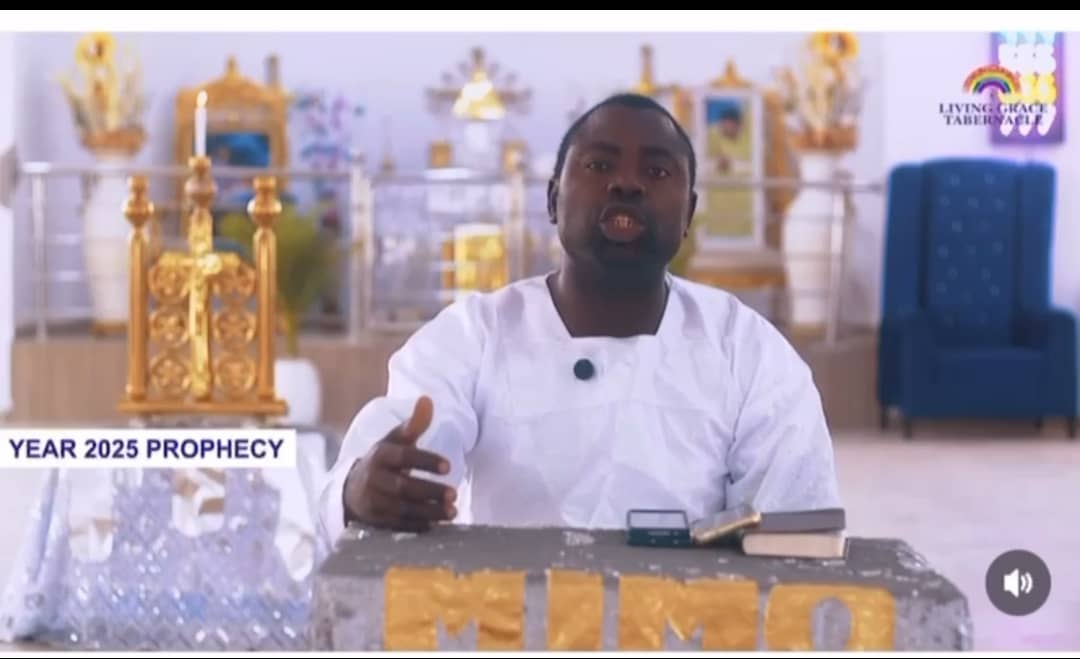
Prophet Kingsley Aitafo Releases 2026 Prophecy: ‘Nigeria Will Rise, but the World Must Prepare for Turbulence’
In a sweeping prophetic message for the year 2026, renowned Nigerian cleric Prophet Kingsley Aitafo has released a series of revelations touching on Nigeria’s economy, global events, political transitions, natural disasters, religious transformations, and the future of world leaders.
Speaking during a special prophetic session, the prophet declared that Nigeria is on the verge of a major economic turnaround, noting that he “sees the economy moving forward soon in a way that will favour every Nigerian citizen.”
But while Nigeria’s fortunes may rise, Prophet Aitafo warned that 2026 will be a year of intense global climate crises, marked by excessive winds, horrifying flooding, tsunamis, earthquakes, and widespread weather disasters. He urged nations, especially China, to “pray seriously against an impending global disaster coming their way.”
Global Warnings: Trump, China, and Worldwide Disasters
Prophet Aitafo called for prayers for former U.S. President Donald Trump, warning of threats of sickness or possible assassination attempts during his tenure. “He must take care of his health,” he emphasized.
He also predicted that plane crashes will increase in 2026, linking the incidents to extreme weather instability.
Nigeria’s Political and Leadership Landscape
In Nigeria, the prophet issued several pointed warnings:

Members of President Bola Tinubu’s cabinet should pray seriously against sickness, noting that “many deaths may occur abroad, especially in London.”
Former Vice President Atiku Abubakar should pray against health challenges.
Peter Obi will receive an offer along the lines of “work for me and I will hand over to you”—but he must ensure any agreement is well-protected.
Former President Goodluck Jonathan should not contest for office, as “it will be a waste of time and resources,” adding that political forces may try to push him into a trap.

Political figures such as Rauf Aregbesola, Nasir el-Rufai, and others “will fade from relevance like traders arriving late to the market.”
He added that Tinubu’s political emergence moving forward will be easier than in 2023, emphasizing that Nigeria has a divine agenda that will be fulfilled, with no division or civil war.
Security, Coup Alerts, and National Stability
Prophet Aitafo urged prayers against military takeovers across Africa, especially in countries with long-ruling presidents. He warned that several former presidents in Nigeria and abroad may “exit the earth in 2026.”
He further predicted that Nigeria’s kidnapping and insecurity crisis will reduce, but warned that “politically motivated sponsors will be exposed and disgraced.”
Religious Prophecies: Church Shake-ups Coming
The prophet issued strong warnings to the Christian community:
New leaders will emerge in a major white-garment denomination, two Nigerian Pentecostal churches, several African countries, and even in the U.S.
False teachings and manipulative doctrines will be widely exposed in 2026.
In the Celestial Church of Christ, court battles “will not stop until God’s plan is fulfilled,” insisting that no human attempt at unification will succeed until God intervenes.
He declared that the return of Jesus Christ is very near, urging the African church—especially Nigeria—to abandon exploitative prosperity doctrines.
Monarchies and Global Figures
Prophet Aitafo called for prayers for the British monarchy, warning of instability around “the seat of the monarch of England.”
Similarly, he cautioned that a highly revered monarch in South-West Nigeria must be covered in prayer to avoid a sudden vacancy on the throne.
He also urged prayers for two world-famous musicians who he said may die unexpectedly.
Entertainment, Sports, and Business Predictions
Despite global turbulence, 2026 will birth “many stars” in music, film, and ministry—especially in Nigeria and Africa. He also warned:
A very popular Nigerian football figure may pass away.
Two Nigerian governors face major health crises, with one at risk of death.
Well-established African business moguls should pray against sudden need for a successor.
Nigeria’s Future, the Igbo Agitation, and Social Movements
Prophet Aitafo said the Igbo freedom agitator must be prayed for intensely, as freedom is close but “his survival in prison is not guaranteed.”
He warned that popular activist VeryDarkMan faces a trap that “may silence him permanently if he falls into it.”
Final Guidance to Nigeria’s Government
The prophet advised the federal government to focus urgently on:
Healthcare reform
Education development
Strengthening state security
Licensing and empowering private and community security systems
Despite all challenges, Prophet Aitafo reaffirmed that God’s promise for Nigeria has not changed. He said the Nigerian church will play a pivotal role in the end-time global gospel agenda.




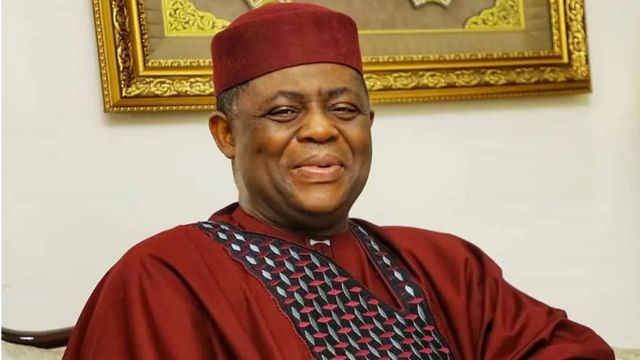
WITH LOVE TO WAZIRI by Chief Femi Fani-Kayode
“I will not respond to Kashim Shettima because he is disrespectful. I am older than him and I have more experience in governance than he does, so I will not respond to him. It is not part of our tradition in the North to disrespect elders. You cannot look at someone who is senior to you in both age and accomplishments and start taunting him. That is not our tradition, so I won’t engage with him.”- Vice President Atiku Abubakar, Wazirin Adamawa, 13th April 2026.
My dear Waziri,
You know I love you very much and have expressed admiration for your efforts from time to time over the last 36 years since I have known you.
You will recall that we first met under the auspices of the now defunct September Club in 1989.
You attended our meeting as a mentee and loyalist of the late and great General Shehu Musa Yar’adua who we all reverred, loved and admired. It was a great event and those of us that hosted you and the General, despite being so young at the time, learnt so much from his wisdom and experience and your unalloyed and abiding devotion and loyalty towards him which was glaring for all to see.
Despite that, I am constrained to write the following.
With the utmost respect and in spite of your cultural sensitivities permit me to remind you of the following and to offer some unsolicited counsel.
You said you cannot answer Vice President Kashim Shettima because he is disrespectful and because you are older and far more experienced than him.
That is strange coming from you because I seem to recall that between 1999 and 2007 when we were in power you openly insulted, disrespected and led a full scale rebellion and unrelenting mutiny against President Obasanjo who was not only your boss and our leader but who also had far more working experience than you and was much older.
The only reason you cannot answer Kashim is because you have nothing to say, you have no answer to his challenge and finally, unlike you ever were or could be, he is totally and completely loyal to his principal and our leader President Tinubu.
As Vice President you could not find the courage to do same. As a matter of fact from day one of the 8 years that you were VP till the day we left office you were plotting to remove OBJ from his seat with the help of other dissidents and make yourself President. What could be more disrespectful than that to an elder or anyone else.
I am a living witness to the whole thing and I am pleased to say that you failed.
Please do not invoke age and experience as a reason for not responding to others when they criticise you. You forfeited that right long ago.
It takes courage and character to be loyal. Kashim has that courage and character but you never did.
Outside of this I wish you well in your endeavours sir and I hope and pray that you can resolve the grave challenges you are facing in your party so that you can meet us in the field of battle and we can trounce you at the polls in 2027.
Permit me to conclude with the following observations.
You said the following to Charles Aniagolu of Arise Television yesterday:
“I know Goodluck Jonathan very well, he is a decent young man but also inexperienced, which contributed to his failure to manage the affairs of the country”.
You refer to a man that has lived on the earth for 68 years and that has had the privilege of not just enjoying the position you once attained as Vice President but also went further than you to become President as a “young man”?
I am astounded by the sheer arrogance of your words.
This is all the more so given the fact that you are only 11 years older than him if reports about your age are to be believed.
You went further by saying that Jonathan was “inexperienced” and “he failed”?
You forgot that during Jonathan’s time Nigeria had the fastest growing economy on the African continent and did so much more but I leave it to his former Government officials and Ministers to defend his record in public office and prevent you from distorting and revising history and attempting to rubbish that record.
What I will say though, as the Director of Jonathan’s Media Presidential Campaign Organisation in 2015, is that he was a loyal Vice President to President Umaru Yar’adua and that he never betrayed his principal, coveted the latters office or tried to rubbish his legacy.
I can also attest to the fact that he was not only humane, gentle, restrained, kind and compassionate to a fault as a leader but that he also did his very best as President at a difficult time when bombs were being dropped all over the North in order to discredit and destroy him and his Government by the usual suspects just as they are attempting to do to Tinubu today in an attempt to bring him down.
Jonathan also displayed virtues of leadership and decency towards his followers the likes of which you cannot possibly imagine, match or emulate.
Through thick and thin even during the most challenging years when many of us faced savage and unrelenting persecution he abandoned none and he stuck by his friends and supporters which is more than I can say for most leaders.
These qualities cannot be taken away from him by anyone, least of all your goodself.
When a man that is incapable of trust, loyalty or fidelity runs down a man like Jonathan who embodies and epitomises all three it is not only painful but also unacceptable and even if the whole world sits by quietly and allows you to get away with it I will not.
I am glad that the Center for Responsible Governance (CRG) responded to you effectively on this issue and defended the honor of Jonathan and I subscribe to all that they said in their communique. I commend them and I salute their courage.
Most important of all is the fact that Jonathan had the courage and decency to walk away from power and hand it to President Buhari on a platter of gold after he lost the election in 2015.
If nothing else you must at least commend him for that.
Given your obsession with power and craving for it, I wonder whether you would have done the same.
It is obvious that despite all your efforts to cobble your platform together you are already anticipating a crushing defeat in next years election and your grave fears and desperate disposition are betrayed by the words you spoke at your so-called party Convention a few days ago where you said the following.
“It is clear that INEC is being used in this country. Let the Federal Government know that we fought the military to bring democracy to this country and we will f!ght the Federal Government to restore democracy.”
You can smell your defeat coming and you know that your ambition to be President of our country is slowly melting away like an iceberg that is approaching the tropics.
Like the mighty ship they called the Titanic your ambitions are about to crash and sink and you are already looking for excuses and threatening fire and brimstone.
Please do those of us that care for you and that respect you a favour by learning to lose with dignity and accepting the virtue of humility because all power comes from God.
When you lose, and lose you will, it will not be because of INEC but because you are running against a man that is far better than you in every shape and form and every way and manner.
It is also because God resists the proud and exalts the humble.
Please leave INEC out of it and prepare to accept the failure that is your portion and that is coming your way.
As for your threats to “fight the Federal Government” when the inevitable happens I can only say that good luck to you and advise you that at your distinguished old age you should know far better.
Whichever way I doubt anyone is losing any sleep over your threats because your assertions and allegations against INEC are not only baseless but also utterly (forgive me for using these words) asinine and nonsensical.
Outside of that they are also very dangerous and may affect the stability and peace of our nation which is precisely what you are attempting to achieve.
I advise you to desist from this reckless course sir and shun those around you that are advising you to tread it because it will not augur well for you or for them.
You are a respected democrat and not a lawless anarchist who seeks to scatter the entire table and pull down the entire house simply because you cannot have your way.
That is not you and you are far better than that. When you lose, kindly take it in good faith, move on and either try again in 2031 or retire from politics accepting that God never intended you to be President.
There is absolutely no shame in that because you have already achieved so much and established a strong and enviable legacy.
Please do not destroy it all out of blind ambition and the desire to get what God has chosen not to give you.
Nigeria has been good to you. Please do not try to set her on fire.
Back to the point.
My dear Waziri, both Kashim Shettima and Goodluck Jonathan were loyal to their bosses and you were incapable of doing the same.
That is where the story begins and ends. Ambition is like a drug that blinds and kills slowly.
I am sorry to say that this affliction has seized you since 1993 and appears to have become even more pronounced today otherwise you would not even dream of opposing the candidacy of President Bola Tinubu after all he did for you over the years after you were driven out of the PDP for your treacher in tatters and disgrace in 2014.
Both the late President Muhammadu Buhari and Tinubu housed you in their new party at the time, rehabilitated you and gave you a new lease of political life only for you to leave them, go back to PDP and oppose them by running against their party for the Presidency six years later in 2019.
Not only that, after you lost the 2019 election you thoroughly destroyed the same PDP that took you back, forgave you and gave you a platform to run on by dividing the party along regional, religious and ethnic lines.
You violated and destroyed its zoning formula by insisting that its presidential candidate (which of course had to be your goodself) must again come from the North in 2023 and you attempted to truncate, destroy and bury the aspirations, political career and trajectory of men like Governor Nyesome Wike who had not only funded the party for years but had welcomed you back into its ranks with open arms in 2017 and supported you for the Presidency in 2019.
Forgive me for saying so but loyalty and commitment to a collective and common cause does not appear to be your forte sir.
The Bible says “He who repays good with evil, evil will never leave his house”.
I do not wish you or yours evil but kindly consider this.
Both Goodluck and Kashim repaid their boss’s good with good whilst you repaid your boss Obasanjo’s good with evil and that is precisely why they have risen and will continue to rise to greater heights than you ever will.
Finally in the same interview with Charles Aniagolu you said the following about your colleagues in your factional ADC party.
“Kwankwaso, El Rufai and Tambuwal are not as popular as I am”.
Again forgive me for saying so but the truth is that you have displayed such a lack of humility, such arrogance and such a glaring display of hubris with these words.
I wonder how those three names you mentioned all feel about what you have said about their popularity or lack of it.
Clearly this is the beginning of the disintegration of the ADC.
By the time this is all over you may well end up having ten factions in your party and not just three.
One thing is clear in all this and that is the fact that you sir are loyal to your ambition and to no-one and nothing else.
It is only a matter of time before your new found friends in the ADC appreciate that and see you for who and what you really are.
I come in peace and I wish you well sir.
(Chief Femi Fani-Kayode, the author of this essay, is an Ambassador Designate of the Federal Republic of Nigeria, a former Minister of Aviation, a former Minister of Culture and Tourism, a former Special Advisor to President Olusegun Obasanjo on Public Affairs, the Sadaukin Shinkafi, the Wakilin Doka Potiskum, the Otunba of Joga Orile, the Aare Ajagunla of Otun Ekiti and a Legal Practioner)

*Mojoyin Fadaka: A Quietly Rising Voice in Nollywood*
Since her debut in 2023, Mojoyin Fadaka has been carving out a steady path in Nollywood—one defined less by noise and more by intention. Rather than chasing visibility, she focuses on growth, craft, and understanding the depth of each role she takes on.
Trained at Del York Creative Academy and KAP Film and Television Academy, Mojoyin built her foundation on discipline as much as talent. For her, acting is not just performance but preparation and emotional awareness—an approach that continues to shape her work across film and television.
Her growing filmography includes titles such as *Instead Of Love*, *Crazy Wives*, *Campus Queen*, *The Last Paycheck*, and *Between The Rails*. Across these projects, she has worked with respected figures in the industry while steadily expanding her range and screen presence.
Beyond acting, Mojoyin also explores storytelling through writing, a passion that influences how she interprets characters. She is drawn to roles that feel authentic and meaningful, avoiding shallow portrayals in favor of emotional depth and purpose.
Her versatility is further strengthened by her ability to perform in English, Yoruba, and Pidgin, with ongoing efforts to learn Igbo. She is also developing physical skills like boxing and swimming to broaden her adaptability for future roles.
Influenced by performers such as Viola Davis and Kehinde Bankole, Mojoyin describes her approach as instinctive—focused on allowing emotion rather than forcing it.


As Nollywood continues to expand, she remains focused on consistency over pressure, growth over speed. For Mojoyin Fadaka, the journey is not about rushing ahead, but building something lasting—one role at a time.

Court Summons Doris Ogala Over False Allegations Against Dr. Chris Okafor
Contrary to the narrative actress Doris Ogala has sought to project on social media, the General Overseer of Greater Liberation City, Dr. Chris Okafor, is not behind her recent invitation or attempted arrest by law enforcement authorities.
Rather, sources indicate that the actress is being sought in connection with a pending criminal suit instituted against her by the Federal Government of Nigeria before the Federal High Court, Lagos Judicial Division, over allegations linked to her social media publications concerning the cleric.
The case, filed as Charge No. FHC/L/2/220C/2026 – Federal Republic of Nigeria v. Doris Ogala, is said to be before Honourable Justice Aluko.
According to sources familiar with the matter, officers of the Nigerian Police Force, Zone 2 Headquarters, Onikan, Lagos, attempted to reach Ogala because she was scheduled for arraignment on Tuesday, April 14, 2026, and remains on administrative bail.
“The officers only sought to serve the defendant with the charge and ensure her appearance before the court,” a source disclosed.
Court documents reveal that the Federal Government has filed a four-count charge against Ogala bordering on alleged cyberstalking, dissemination of false information, harassment, and attempted extortion under the Cybercrimes (Prohibition, Prevention, etc.) Amendment Act, 2024.
The charges include allegations that she:
Published nude and intimate photographs of Dr. Chris Okafor without consent;
Made and disseminated allegations accusing the pastor of rape, ritual practices, and involvement in a death;
Published videos and electronic messages allegedly intended to harass, bully, and intimidate him;
Allegedly threatened continued publication of damaging materials unless compensated or provided with a house.
A source close to the matter insisted that Dr. Chris Okafor is not orchestrating the legal action and has no direct involvement in the prosecution beyond being the nominal complainant.
“Sadly, rather than addressing the issues before the court, Doris continues to drag Pastor Chris Okafor into the matter publicly,” the source said.
“The simple position is that whoever makes allegations must be prepared to substantiate them in court. That is all the court requires. Pastor Chris Okafor has moved on and is not pursuing any personal vendetta. She is the one who must answer to the law.”
The development underscores what insiders describe as a legal process driven by the state and not by personal influence, despite attempts to portray the matter otherwise online.


- African Development Bank, The European Stability Mechanism (ESM) sign Memorandum of Understanding to enhance cooperation April 16, 2026
- Seeing the Unseen – How Canon is Protecting East Africa’s Coral Reefs April 16, 2026
- Sintana Listing Signals New Era for Local Ownership in Namibia’s Oil and Gas Sector April 16, 2026
- The crisis in the Middle East could cost Africa 0.2 percent in economic growth in 2026 April 16, 2026
- Namibia International Energy Conference (NIEC) 2026: Namibia Fast-Tracks Oil Law Reform as President Nandi-Ndaitwah Pushes Amendment Bill Ahead of First Oil April 16, 2026
- Africa’s Energy Wealth: Why Good Governance Must Power a Just Transition (By Sola Adebawo) April 16, 2026
- Emirates and Wesgro sign Memorandum of Understanding (MoU) to Stimulate Inbound Tourism to the Western Cape April 16, 2026
- Banco Sol’s Angola Oil & Gas (AOG) 2026 Sponsorship Affirms Drive to Finance Angolan Service Companies April 16, 2026
- Uganda Development Corporation (UDC) to take 82% of Trade ministry budget April 16, 2026
- Merck Foundation marks ‘World Art Day’ through their Film, Song, Media and Fashion Awards 2026 in partnership with Africa’s First Ladies to raise awareness about social & health issues April 15, 2026
- African Development Bank, The European Stability Mechanism (ESM) sign Memorandum of Understanding to enhance cooperation April 16, 2026
- Seeing the Unseen – How Canon is Protecting East Africa’s Coral Reefs April 16, 2026
- Sintana Listing Signals New Era for Local Ownership in Namibia’s Oil and Gas Sector April 16, 2026
- The crisis in the Middle East could cost Africa 0.2 percent in economic growth in 2026 April 16, 2026
- Namibia International Energy Conference (NIEC) 2026: Namibia Fast-Tracks Oil Law Reform as President Nandi-Ndaitwah Pushes Amendment Bill Ahead of First Oil April 16, 2026
- Africa’s Energy Wealth: Why Good Governance Must Power a Just Transition (By Sola Adebawo) April 16, 2026
- Emirates and Wesgro sign Memorandum of Understanding (MoU) to Stimulate Inbound Tourism to the Western Cape April 16, 2026
-

 news4 months ago
WHO REALLY OWNS MONIEPOINT? The $290 Million Deal That Sold Nigeria’s Top Fintech to Foreign Interests
-

 celebrity radar - gossips3 months ago
Dr. Chris Okafor Returns with Power and Fire of the Spirit -Mounts Grace Nation Altar with Fresh Anointing and Restoration Grace on February 1, 2026
-

 celebrity radar - gossips6 months ago
End of an Era: Nigeria Mourns Evangelist Dr. Uma Ukpai, 80
-

 celebrity radar - gossips5 months ago
Queen of Courage: Sethu, the Voice of South Africa’s Bold New Generation