
celebrity radar - gossips
THE SIEGE ENDS: FG WITHDRAWS CRIMINAL DEFAMATION CASE AGAINST SENATOR NATASHA AKPOTI‑UDUAGHAN


THE SIEGE ENDS: FG WITHDRAWS CRIMINAL DEFAMATION CASE AGAINST SENATOR NATASHA AKPOTI‑UDUAGHAN.
By George Omagbemi Sylvester | Published by SaharaWeeklyNG.com
“A Landmark Victory for Free Speech, Justice, and the Rule of Law in Nigeria.”
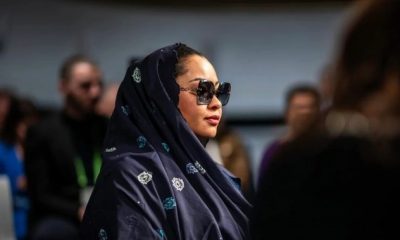
On January 4, 2026, the Federal Government of Nigeria formally withdrew the criminal defamation and cyberbullying charges against Senator Natasha Akpoti‑Uduaghan, the lawmaker representing Kogi Central Senatorial District, ending a legal saga that had gripped national attention for over six months. This case was more than a legal contest; it symbolized the tension between state power, political rivalry, and the fundamental democratic rights of elected officials and citizens.
The withdrawal was formalized through a Notice of Discontinuance, filed on December 12, 2025, and endorsed by the Federal High Court, Abuja Judicial Division, officially ending Charge No: FHC/ABJ/CR/195/2025. Signed on behalf of the Attorney‑General of the Federation and Minister of Justice, Prince Lateef Olasunkanmi Fagbemi, SAN, the notice invoked Sections 108(1), 108(2)(a), and 108(5) of the Administration of Criminal Justice Act, 2015.
This outcome reflects a rare acknowledgment by the government that prosecutorial power must not be abused for political ends, and it marks a pivotal moment for Nigeria’s fragile democratic institutions.

The Story Behind the Case.
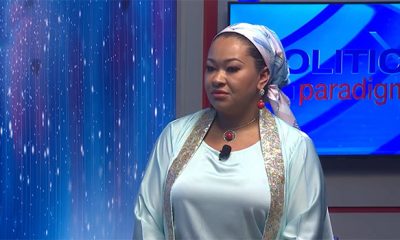
The criminal defamation case stemmed from comments Senator Akpoti‑Uduaghan made in a televised interview on Channels Television’s Politics Today, in which she alleged that her life was under threat due to her public disagreements with Senate President Godswill Akpabio and former Kogi State Governor Yahaya Bello. Instead of investigating her claims of threats, the government accused her of defamation under Section 391 of the Penal Code, Cap 89, Laws of the Federation, 1990, alleging that her statements could harm reputations.
This legal strategy drew immediate criticism from scholars, civil society, and international observers. Critics argued that using criminal law to silence a senator for reporting threats was a blatant misuse of state power and a serious infringement on free expression.
Professor Akin L. Okeowo, a constitutional law expert, stated: “Criminal defamation laws are relics of a bygone era. Modern democracies increasingly recognize that they are incompatible with freedom of speech and political accountability.” The case, therefore, became a national debate about the limits of state power and the protection of dissenting voices.
A Career Marked by Courage.
Senator Akpoti‑Uduaghan has long been a symbol of political courage. A former lawyer and development economist, she entered the national spotlight by advocating for marginalized communities, especially in Kogi State. She is one of the few female senators who consistently challenge entrenched political hierarchies, raising issues ranging from governance transparency to gender inclusion in politics.
Her legislative track record includes championing bills on women’s rights, anti-corruption reforms, and social welfare, earning her both respect and criticism from political heavyweights. This case, some analysts argue, was less about law and more about silencing a politically inconvenient voice.

Criminal Defamation in Nigeria: A Historical Context.
Nigeria’s criminal defamation laws have a long and controversial history. Initially intended to protect personal reputations, these laws have frequently been weaponized against journalists, activists, and political opponents. Over the decades, several high-profile prosecutions have drawn condemnation for undermining free expression and chilling public discourse.
The law permits imprisonment for statements considered damaging to reputations, a practice widely criticized by human rights groups. The African Commission on Human and Peoples’ Rights has repeatedly urged African states, including Nigeria, to review criminal defamation laws, emphasizing that they should not suppress political critique or civic activism.
The withdrawal of the charges against Senator Akpoti‑Uduaghan, therefore, is significant: it signals a rare instance where the state recognized the misuse of law in a politically charged context.
National and International Reactions.
Civil society organizations were quick to commend the government’s decision. Dr. Oby Ezekwesili, a former Minister of Education, hailed the withdrawal as a “step toward protecting democratic norms and ensuring that political speech is not criminalized.” Media freedom advocates also pointed out that the case highlighted the fragility of Nigeria’s press and political discourse, noting that the judiciary had acted to prevent a dangerous precedent.
International observers welcomed the development, emphasizing that freedom of speech is fundamental to democracy. Analysts note that the world is closely watching Nigeria’s handling of political dissent, with implications for foreign relations, investment, and the perception of Nigeria as a democracy.
The Political Implications.
The case carried undeniable political overtones. Senator Akpoti‑Uduaghan is a member of the People’s Democratic Party (PDP), the main opposition party, and her vocal criticisms of government policies had positioned her as a target for political retaliation. The prosecution was widely interpreted as an attempt to intimidate opposition voices in the Senate and signal that dissent could have legal consequences.
Dr. Ifeanyi Eze, a political analyst, noted: “The true test of a democracy is not how the government treats loyalists, but how it treats critics. Using criminal law to silence elected representatives is an affront to the principles of governance.”

The withdrawal, therefore, is a significant victory for democratic accountability, demonstrating that even high-profile government-backed prosecutions can be reversed when they conflict with constitutional principles.
What the Withdrawal Means.
The AGF’s decision to discontinue the case represents a calculated exercise of prosecutorial discretion under Nigerian law. It prevents the state from using the courts as instruments of political repression and reinforces the principle that no public official, regardless of position, can manipulate the judicial system for personal or political gain.
Senior legal experts, including Barrister Chukwuma Onwudiwe, have emphasized that the withdrawal is symbolic as much as it is legal: “It demonstrates that the courts and the AGF can act in the interest of justice, not political expediency.”
While the criminal charges have been discontinued, pending civil defamation suits, including a ₦200 billion claim filed by Senate President Akpabio, remain. Nevertheless, the criminal case’s withdrawal ensures that Senator Akpoti‑Uduaghan’s fundamental rights have been restored, and she can now focus on legislative duties and advocacy without fear of imprisonment.
A Test of Democratic Maturity.
The withdrawal of the criminal defamation case against Senator Natasha Akpoti‑Uduaghan is a defining moment for Nigeria’s democracy. It underscores the delicate balance between state authority and individual rights, between political rivalry and judicial fairness. In a nation where justice is sometimes wielded as a weapon, this outcome signals that constitutional freedoms (especially the right to speak out) can prevail against misuse of power.
Legal scholars emphasize that this decision is symbolic. As Professor Akin L. Okeowo notes, “Democracy is tested not when the powerful speak, but when dissenting voices are protected.” How Nigeria treats its critics is a litmus test of its commitment to democratic principles, accountability, and rule of law.
This case also highlights the urgent need to modernize Nigeria’s defamation laws, ensuring they protect reputations without stifling political discourse or legitimate criticism of government officials.
Ultimately, this development sends a clear message: while political disagreements are inevitable, democracy thrives when citizens can raise concerns, challenge authority, and hold leaders accountable without fear of state reprisal. Senator Akpoti‑Uduaghan’s victory is not merely personal. It is a victory for justice, freedom and the resilience of Nigerian democracy.






U.S. Courtroom Shock: Funke Ashekun, Husband Collapse as MFM Wins

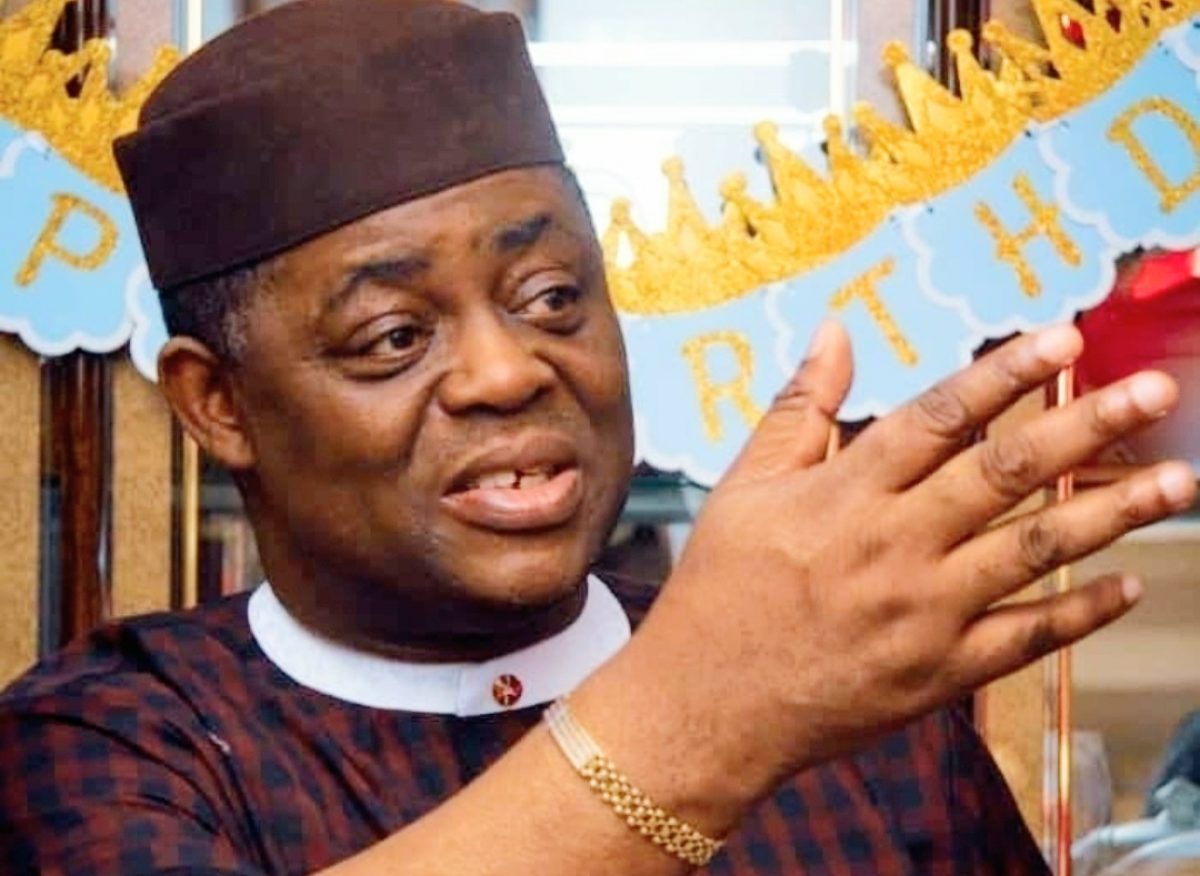
Had FFK Faced Mehdi Hassan, Nigeria Would Have Spoken With Fire
By Mohammed Bello Doka
In politics, timing is everything. In diplomacy, character is everything. And in moments of national importance, leadership must be entrusted to individuals who possess not only experience but courage, intellect and an unshakable commitment to the nation they represent.
It is for this reason that the appointment of Chief Femi Fani-Kayode as Nigeria’s Ambassador to a foreign nation stands out as one of the most consequential diplomatic decisions in recent years.
Chief Femi Fani-Kayode, better known in the South as “FFK” and in the North as “Sadauki”, is one of the most brilliant, experienced, accomplished, vocal, respected, educated, profound, intellectual, patriotic, disciplined, well-read, historically literate, versatile, forceful, persuasive, sophisticated, cosmopolitan, charming, eloquent, courageous and resilient men in Nigerian politics and he has paid his dues and proved his worth over the last 35 years in politics and political discourse.
In each role he has played he has excelled and succeeded even when he was in opposition.
His friends value him as a great and loyal defender and his traducers and political adversaries fear and respect him because when he goes to war he is utterly relentless, takes no prisoners and literally spits fire.
How I wish it was him that was interviewed by Mehdi Hassan of Al Jazeera and not the young and inexperienced Daniel Bwala because he would have not only humbled Hassan but also done Nigeria proud.
He played Bwala’s present role in the Presidential Villa 23 years ago as President Olusegun Obasanjo’s spokesman and not only brought the then President’s domestic enemies to their knees but also had a series of very hot exchanges with foreign Government officials like America’s Under-Secreatary of State for Africa Jendaye Fraser and the White House over the Charles Taylor issue and Liberia.
Tinubu decision to appoint him as an Ambassador for our nation was a wise one because he will fight for and protect the interests of Nigeria and the Nigerian community whetever he goes and will never sell his soul or bow to foreign imperialist interests.
His appointment is not about just rewarding loyalty for the key role he played in Tinubu’s presidentiel campaign organisation as Director of New Media and Special Operations in 2023 and the staunch support he has given the President over the last three years but also about putting a square peg in a square hole.
If you want to put Nigeria first Sadauki is the one to do it.
If he runs the Nigerian Mission in the country that he is sent to in the same way he ran the Ministry of Culture and Tourism and the Ministry of Aviation when he was Minister to each of them one after the other twenty years ago he will do very well and both our nation and whichever nation he is posted to itself will benefit from his efforts.
History teaches that diplomacy is most effective when nations deploy individuals who possess both intellect and courage.
As the American statesman Henry Kissinger once noted, “Diplomacy is the art of restraining power.”
To do so successfully requires deep historical awareness and strategic clarity—qualities that have long defined Fani-Kayode’s political career.
Sending a politically seasoned voice like FFK to any nation that is a key partner to Nigeria signals that Bola Ahmed Tinubu intends to strengthen Nigeria’s diplomatic posture with confidence.
Throughout more than three decades in the political arena, Fani-Kayode has remained one of the most resilient and outspoken figures in Nigerian public life despite numerous challenges which would have broken and destroyed lesser men.
Regardless of all that was thrown at him he continues to pull through and come out victorious which is why many refer to him as the “Akanda Eledumare” and the “Ayanfe Oluwa” which mean “the strange one of God” and “the beloved of the Lord”.
There appears to be a divine dimension to his life that makes him unstoppable and irrepressible even though his enemies are legion.
One wonders what sets him apart and makes him so different.
There is no doubt that his education played a part in it and this set him apart from most.
He never went to school in Nigeria but was educated from the age of eight in England starting off at Holmewood House School in Kent, one of the UK’s best and most famous Preparatory schools, after which he attended the famous Harrow School just outside London which is, together with Eton College, an institution that is the exclusive preserve of high society in the UK, one of the two best private schools in that country where only the ruling elite, the rich, the well-to-do, the famous and only a tiny proportion of those in British high society can afford or even qualify to attend.
No less than eight British Prime Ministers, including the great Sir Winston Churchill, and countless British cabinet ministers attended Harrow and so did many leaders, diplomats and top politicians from many foreign countries.
After finishing at Harrow he attended some of the top universities in the world, including London University (SOAS) and Cambridge University (Pembroke College) where he did so well.
As a matter of fact his great grandfather, Rev. Emmanuel Adelabi Kayode, attended Furrough Bay College which at that time was part of Durham University and graduated with an MA (Hons.) in Theology in 1893. His grandfather Justice Adedapo Kayode attended Cambridge University (Selwyn College) where he studied law and graduated in 1922. His father Chief Remilekun Fani-Kayode attended Cambridge University (Downing College) where he studied law and graduated in 1943. Sadauki himself graduated in law at Cambridge University (Pembroke College) in 1984 whilst his daughter Folake Fani-Kayode graduated from Durham University in 2009.
No African family has an uninterrupted streak of 116 years of Oxbridge-level university graduates except for the Fani-Kayode’s which is something that both his family and every patriotic Nigerian should be proud of.
It therefore makes perfect sense that a man from such a distinguished pedigree and intimidating lineage and that has such an extraordinary intellectual heritage should represent Nigeria on the international stage.
There is also his role in the debate on Gaza which made him a hero in the eyes of millions of people in the Global South both amongst Christians and Muslims.
He spoke out consistently about what he described as the genocide being committed against the Palestinians and he was prepared to put his life and career on the line for this cause even though most Nigerian leaders and politicians refused to say what he was saying publicly out of fear of the Zionist lobby and the Jewish state.
His sense of patriotism is unquestionable and nothing reflects this better than his series of essays written against Kemi Badenoch, the leader of the British Opposition Conservative Party and his write up against one Ben Llewelyn-Jones, who at that time was the Deputy British High Commissioner to Nigeria, when the former consistently sought to insult and denigrate Nigeria and the Nigerian people and the latter attempted to interfere in our internal affairs by making statements in support of Peter Obi and his Obidients in the 2023 presidential elections.
Sadauki successfully put them both in their place and when American Senator Ted Cruz, President Donald Trump, Congressman Tim Riley and other American politicians began to peddle the false narrative and fake gospel of Christian genocide and persecution in Nigeria Sadauki, a devout Christian himself, rose to the challenge and more than any other Nigerian wrote about the issue in a series of essays pointing out the fact that as many Muslims were being killed as Christians by the terrorists in our country and that Christians were not being persecuted by our Government and are in fact faring better when it comes to positions in the security apparatus and governance under Tinubu than they did in the previous administration.
He also spoke out boldly against President Trump and his administration when they accused the Government of South Africa of indulging in genocide against the white minority population in their country and pointed out the fact that South Africa, like Brazil, was a shining example of a successful multi-ethnic, multi-religious and multi-cultural nation that was treating its white minority population with the greatest respect. Few Africans said a word to defend South Africa at the time even though they knew that Trump was wrong but Sadauki did so without thinking twice.
He is clearly a strong Pan-Africanist and a believer in the importance of the African Union, African solidarity, the BRICS coalition and the Global South alliance comprising of China, Russia, South Africa, India, Saudi Arabia, Turkey and other emerging world powers.
This is commendable and it reflects his courage and disdain for those that display ignorance, disdain and contempt for our nation and people and that seek to denigrate and misrepresent us.
Sadauki is not the type that bows and quivers before Westerners like so many other Nigerian leaders and politicians but rather takes pride in his Nigerian culture, race, heritage and identity and is prepared to defend us and speak for us no matter whose ox is gored and who is involved.
In an increasingly competitive global environment, Nigeria requires diplomats capable not only of negotiation but also of defending national interests with conviction.
If the energy, eloquence and intellectual fire that have defined Fani-Kayode’s political life accompany him to the country to which he has been posted, his tenure may well become one of the most consequential chapters in Nigeria’s modern diplomatic engagements.
I wish him well and I thank God that he is back in the saddle of public office after so many years.
What more could any of us ask of this great and noble son of Nigeria?
This is undoubtedly the quality of personnel and leaders that we need on the international stage.
I hope and pray that in his endeavours and during the course of his work he meets with Mehdi Hassan in a debate and prove to him and the rest of the world that Nigeria still has men that can not only match them but that can also remove their trousers in any verbal encounter. Bwala put us to shame but FFK can redeem us before the eyes of the world.
(Mohammed Bello Doka, the author of this essay, is the publisher of Abuja Network News and can be reached via [email protected])
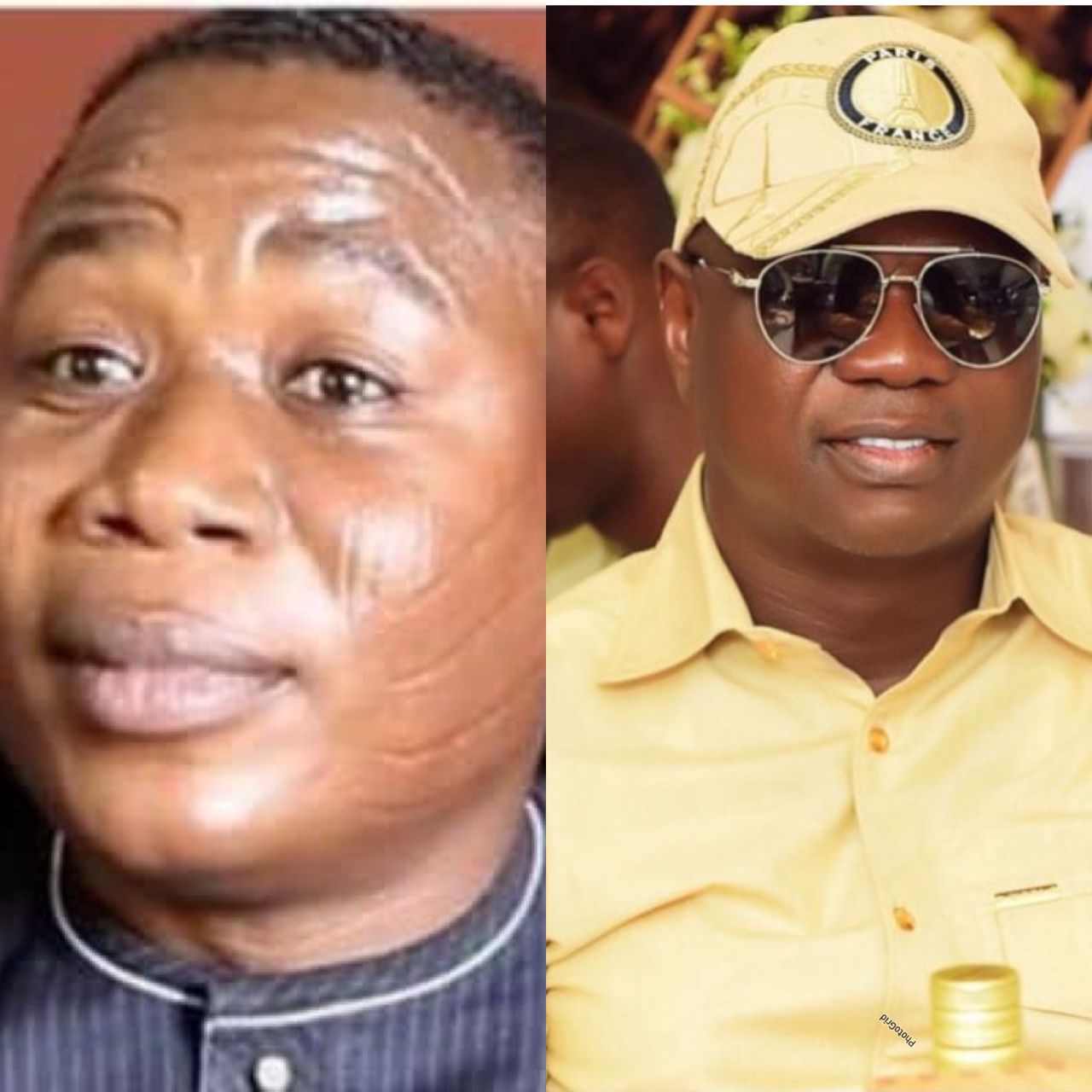
Sunday Igboho Hails IBD Dende’s Exceptional Generosity and Loyalty
By Adeyemi Obadimu
A prominent Yoruba nation activist, Sunday Igboho, has publicly commended renowned businessman and philanthropist, Ibrahim Egungbohun, popularly known as IBD Dende, for what he described as extraordinary generosity and unwavering support during one of the most challenging periods of his life.
Speaking about his experience following his release from detention in the Benin Republic, Igboho disclosed that IBD Dende reached out to him immediately to inquire about his welfare and next destination. According to him, when he explained that he was planning to travel to Germany and that the cost of flight tickets for himself and his wife amounted to ₦6 million, Dende requested his bank details.
In a remarkable show of goodwill, Igboho revealed that Dende transferred ₦20 million to his account far above the stated travel expenses with the reassurance that the extra funds could assist with other pressing needs.
Igboho further recounted that upon his eventual return to Nigeria, despite ongoing financial restrictions, IBD Dende was the first person he met. At that meeting, the businessman reportedly provided an additional ₦10 million to enable him host visitors and manage immediate responsibilities, particularly as his bank account remains frozen.
The activist also expressed profound gratitude to former Oyo State Governor, Rasheed Ladoja, whom he credited for resolving issues between him and President Bola Ahmed Tinubu.
Describing Dende as a man of rare loyalty and compassion, Igboho stated that anyone who harbours ill feelings toward the businessman “is under a curse,” emphasizing the depth of gratitude he holds for the support he received.
The development has sparked conversations across social and political circles, further highlighting IBD Dende’s reputation as a philanthropist and influential figure known for standing by associates in difficult times.


-
 society6 months ago
Religion: Africa’s Oldest Weapon of Enslavement and the Forgotten Truth
-

 news3 months ago
WHO REALLY OWNS MONIEPOINT? The $290 Million Deal That Sold Nigeria’s Top Fintech to Foreign Interests
-

 society6 months ago
“You Are Never Without Help” – Pastor Gebhardt Berndt Inspires Hope Through Empower Church (Video)
-

 Business7 months ago
GTCO increases GTBank’s Paid-Up Capital to ₦504 Billion