
celebrity radar - gossips
One Year On: Eric Chelle’s Transformative, Tumultuous Reign. How the Super Eagles Reclaimed Pride, Passion and Purpose

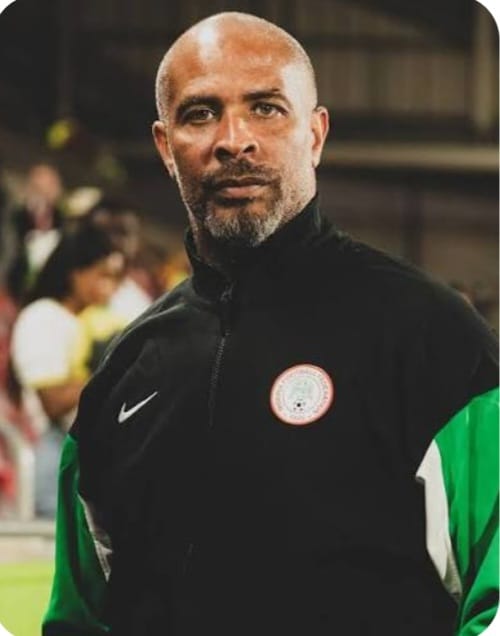
One Year On: Eric Chelle’s Transformative, Tumultuous Reign. How the Super Eagles Reclaimed Pride, Passion and Purpose.
By George Omagbemi Sylvester | Published by SaharaWeeklyNG.com
“Celebrating a Milestone That Redefines Nigerian Football, Beyond Results to Resilience, Identity and National Ambition.”
One year after his appointment as head coach of Nigeria’s Super Eagles, Éric Sékou Chelle has become a figure of both celebration and debate with a coach whose tenure has tested Nigerian football’s resilience, provoked passionate debate among fans and pundits alike and ultimately redefined what it means to rebuild a national team amidst adversity and immense expectation. Nigerians from all walks of life (supporters, former internationals, analysts and young football lovers) have poured praise, criticism, reflection and hope into the narrative of this anniversary. That alone is a testament to the magnitude of what this moment represents.
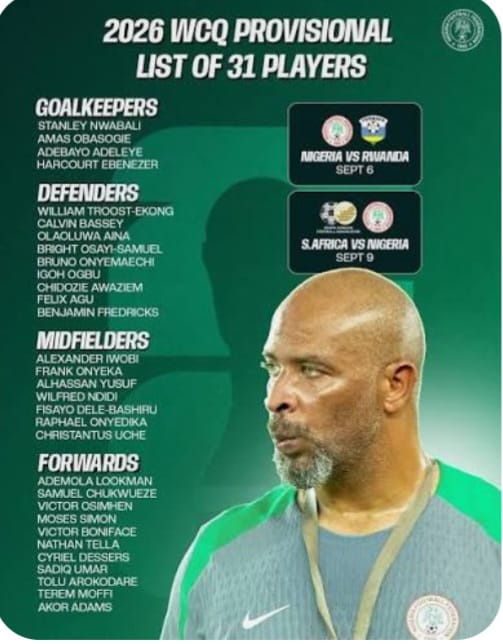
Chelle reached this milestone amid widespread celebrations on social media and in fan communities, a remarkable development considering the turbulent context in which he took charge. His one-year celebration was marked by thousands of fans acknowledging both his courage and commitment and the impact he has had on the squad’s identity and public perception.
From Appointment to Anniversary: A Year of Expectations. When Éric Chelle was unveiled as the Super Eagles head coach on January 7, 2025, it was a bold move by the Nigeria Football Federation (NFF). The decision followed a prolonged period of instability in the coaching office, with caretaker arrangements and short-lived tenures leaving the national team rudderless for months. Chelle succeeded where others struggled, beginning with a mandate both simple and enormous: qualify for the 2026 FIFA World Cup and restore pride in Nigerian football.
Born on November 11, 1977, in Abidjan to a French father and Malian mother, Chelle’s personal and professional journey is emblematic of globalized African football. His formative years in French leagues, where he played as a commanding centre-back for clubs like Valenciennes and Lens, laid the foundation for his later transition into coaching. As a coach, he accumulated experience with GS Consolat, FC Martigues, Boulogne and led the Mali national team to the quarter-finals of the 2023 Africa Cup of Nations before being appointed Nigeria’s coach.
Yet the controversy at his appointment was immediate. Detractors argued that Nigeria’s footballing heartbeat ought to be guided by indigenous minds, that the Super Eagles’ job should belong to the many accomplished Nigerian tacticians who have patiently waited for their chance. Groups like the National Association of Nigerian Students even mobilised protests demanding a reversal of his appointment. Some supporters in Aba decried the decision, claiming it showed a lack of trust in local coaches.
A Leadership Built on Conviction Over Cash.
Chelle has been unequivocal about his motivations: this job was never about personal financial gain. In his own words, he chose Nigeria because of the team’s stature, not the remuneration though reportedly more lucrative than his previous positions. This declaration challenged the common narrative in African football that coaches are driven primarily by financial considerations.
His philosophy echoes the view of respected sports sociologist Dr. Samuel Akintunde, who once said, “A national team coach must embody national aspiration and not merely manage tactics, but shepherd identity, resilience and cultural pride.” Chelle’s emphasis on unity, respect and tactical cohesion speaks directly to this ethos.
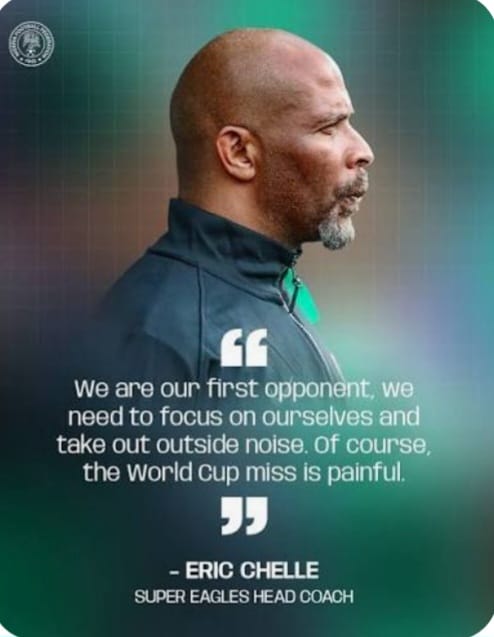
Indeed, throughout the year, Chelle has emphasised a people-first approach, insisting that teamwork and collective belief are fundamental. “When you coach Nigeria, you have to win everything,” he stated, reflecting the heavy burden of expectation on his shoulders and acknowledging that mediocrity is not an option for this footballing giant.
Former Super Eagles defender Chikelue Iloenyosi has lauded Chelle’s man-management and squad cohesion, highlighting the spirited unity within the camp as one of the coach’s greatest achievements. “Team spirit is fantastic,” Iloenyosi remarked, noting that Chelle’s leadership was a driving force behind the team’s harmony on and off the pitch.

Results, Reality and Rebuilding Identity.
Statistically, Chelle’s first year has been a mixture of promise and frustration. Under his guidance, Nigeria saw improved performances in the World Cup 2026 qualifiers, securing key points that rekindled hope. Prior to his arrival, the Super Eagles had been struggling, but Chelle’s leadership brought four wins and two draws from six qualifiers, a stark contrast to earlier campaigns and a reflection of tactical improvement.
Moreover, the Eagles clinched the 2025 Unity Cup title, giving the Nigerian football community a tangible trophy to celebrate and adding a feather to the coach’s cap. This success though minor in global terms but significant in narrative context has helped calm critics and provided a platform for Chelle to build momentum.
Still, his tenure has not been free of turbulence. Nigeria’s failure to qualify for the 2026 FIFA World Cup, following a dramatic playoff loss to DR Congo on penalties, was a painful chapter. The encounter devolved into controversy when Chelle made remarks blaming mystical interference and a comment that drew international attention and underscored the emotional intensity of football in Africa’s most populous nation.
Tactics and Teamcraft: Beyond Results.
Chelle’s tactical profile is defined by adaptive formations, high pressing and creative transitions, yet also an appreciation for defensive solidity, a duality that resonates with modern football theory. According to CAF’s official analysis, his teams use dynamic strategies tailored to exploit weaknesses and build collective resilience.
In the words of football strategist Professor Ayo Oladipo, “Tactics without unity are like engines without fuel though impressive on paper but powerless in reality.” Chelle’s emphasis on unity, therefore, has been as important as his strategic blueprints. His language proficiency including English, French and multiple African dialects has helped bridge cultural gaps within the squad and foster inclusive communication.
Legacy and the Road Ahead.
As he marks this anniversary, Eric Chelle stands at a crossroads of legacy and aspiration. The Super Eagles under his guidance have reclaimed much of their identity, rekindled unity among supporters and charted a vision that goes beyond mere victories. Fans celebrating this milestone are not just praising results but they are acknowledging resilience, courage and the emotional heartbeat that Chelle has nurtured.
Yet the questions remain: Can Nigeria rise to continental supremacy again? Can this journey lead back to the World Cup stage? The answers will depend not just on Chelle’s tactical nous but on the collective will of the players, the federation and the nation that lives and breathes Super Eagles football.
Renowned sport ethicist Dr. Nkechi Ogbuehi summarises this moment perfectly: “Great coaches make their teams believe in themselves; legendary coaches make their nations believe in something greater than football.” As Ghana, Cameroon and Senegal continue to challenge Nigeria’s dominance, Chelle’s influence over the next 12 months could define Nigerian football’s next decade.
Beyond the Moment: A Year Worth Celebrating.
Eric Chelle’s one-year anniversary is more than a milestone though it is a reflection of transformation, resilience and possibility. Nigerians celebrating this moment are not simply looking back; they are looking forward with renewed belief that the Super Eagles, under the right leadership and united purpose, can soar again.
In a nation where football is synonymous with identity and pride, Chelle’s first chapter may have been imperfect, but it has undeniably been powerful. And as George Omagbemi Sylvester writes for SaharaWeeklyNG.com, this anniversary is not just a celebration but it is an affirmation that Nigeria’s greatest victories are won in the heart first, before the scoreboard.






celebrity radar - gossips
Prison Fellowship USA Senior Director Pays Courtesy Visit to President, Association of Models Nigeria

Prison Fellowship USA Senior Director Pays Courtesy Visit to President, Association of Models Nigeria
Lagos, Nigeria — The President of the Association of Models Nigeria, Deji Bakare, popularly known as Mr. Nigeria, has received Dr. David Olatubosun Alabi, D.Min., Senior Director, Correctional Programs, Prison Fellowship USA, on a courtesy visit aimed at strengthening collaboration toward improving Nigeria’s correctional system.
The visit followed Dr. David’s official engagement in Abuja, where he toured the Abuja Correctional Centre as part of ongoing efforts to assess prison conditions and explore impactful reform initiatives. From Abuja, he proceeded to Lagos to meet with Deji Bakare, where both leaders engaged in strategic discussions on advancing the “Hope Beyond Walls” initiative.
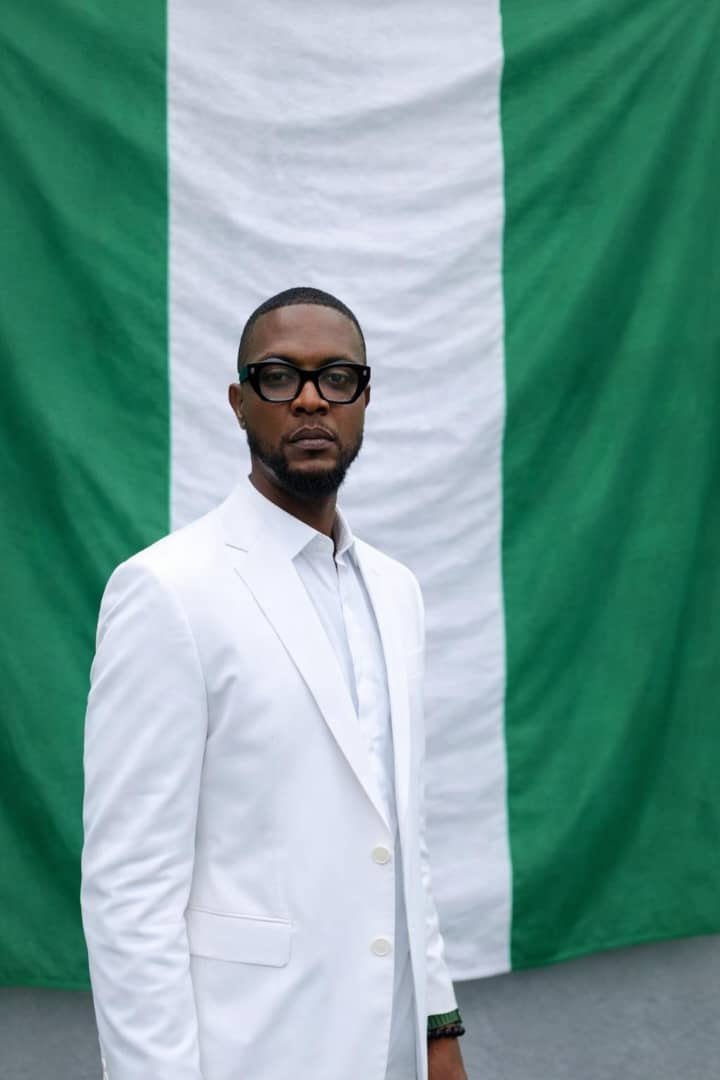
During the meeting, Dr. David expressed a strong commitment to partnering with the Association of Models Nigeria (AMN) to add meaningful value to correctional centres across the country. He emphasized that Prison Fellowship USA’s mission is centered on restoring hope, dignity, and opportunity to inmates, with a focus on rehabilitation, reintegration, and capacity building.
He further disclosed plans to support inmate transformation programmes and ongoing efforts to train correctional centre warders, equipping them with the skills, mindset, and tools needed to create safer, more humane, and more effective correctional facilities nationwide.
Dr. David also highlighted intentions to mobilize additional international and local partners to support prison reform initiatives, address systemic challenges, and help reduce prison-related crises through sustainable, long-term solutions.
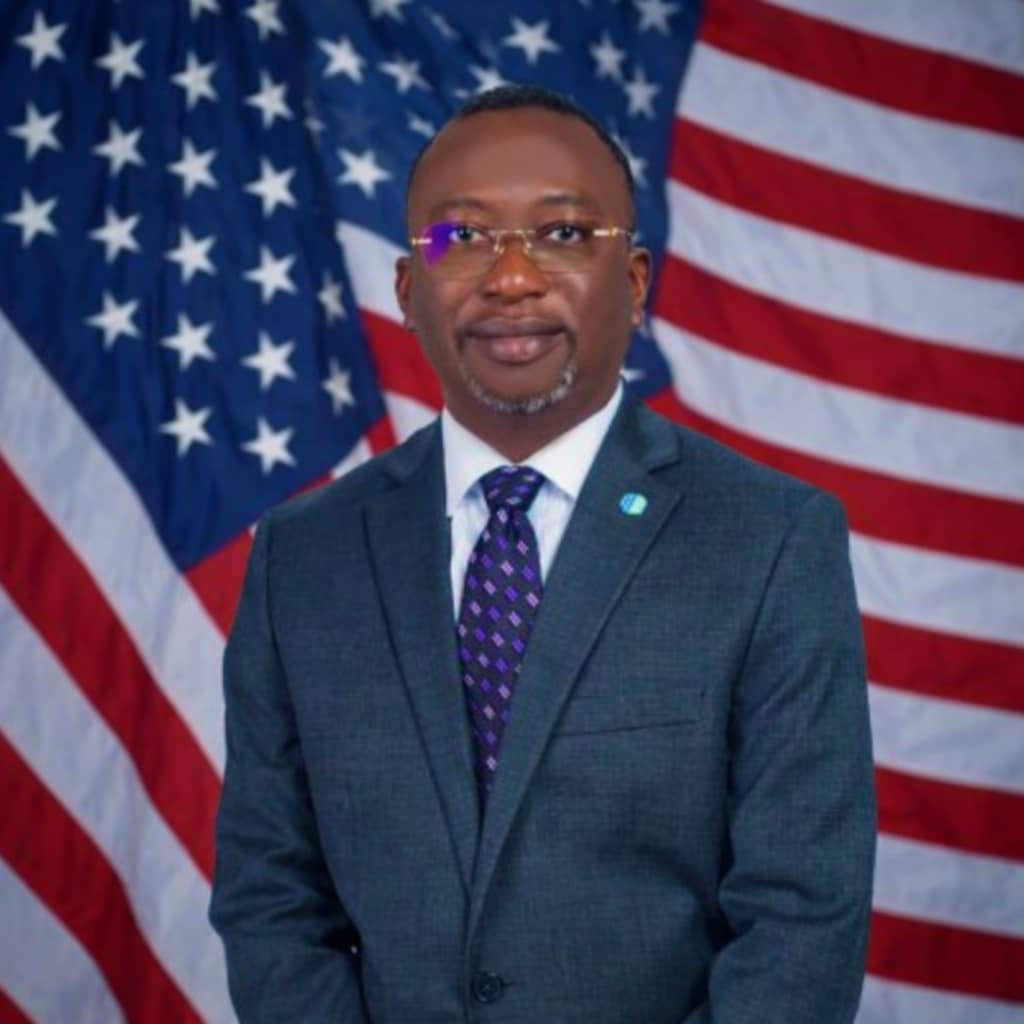
Speaking on the visit, Deji Bakare (Mr. Nigeria) expressed appreciation for the collaboration and reaffirmed the Association of Models Nigeria’s commitment to advocacy, rehabilitation programmes, and strategic partnerships that promote positive transformation within Nigeria’s correctional centres.
The courtesy visit marks a significant step toward international collaboration in prison reform and underscores a shared vision to transform correctional centres into institutions of hope, growth, restoration, and successful reintegration.
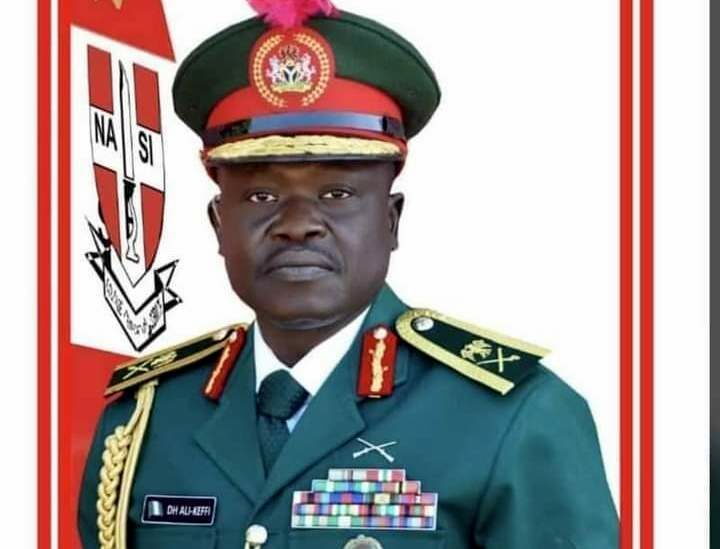
Buratai Sues Ali-Keffi for ₦1bn Over Alleged Terrorism Defamation
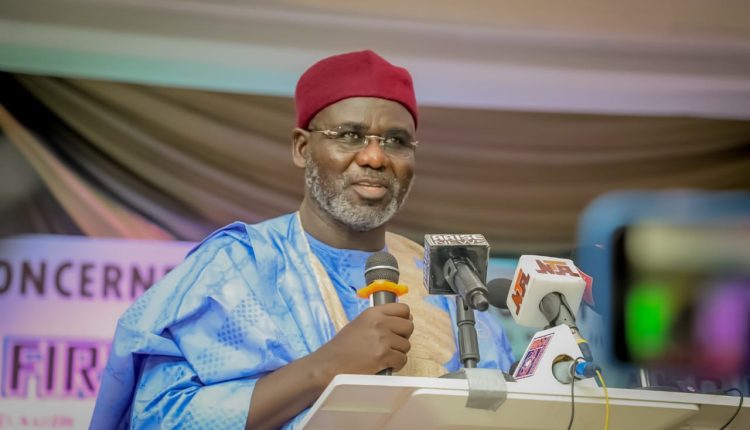
Former Chief of Army Staff, Lt. Gen. Tukur Yusufu Buratai (retd.), has instituted a ₦1 billion defamation suit against another retired senior military officer, Maj. Gen. Danjuma Hamisu Ali-Keffi (retd.), before the Kaduna State High Court.
The suit, filed on January 8, 2026, at the Kaduna Judicial Division of the High Court, accuses Ali-Keffi of making and circulating allegedly false, malicious and defamatory statements linking Gen Buratai to terrorism financing, Boko Haram suspects, and the illegal release and concealment of terror suspects.
Buratai, through his counsel, A.I. Aliyu and A.M. Hassan of Law Plus Consult, is seeking declarations that the statements credited to the defendant and published on several online platforms, including Sahara Reporters and other news and social media outlets, are defamatory and injurious to his reputation.
According to court documents, the plaintiff contends that the defendant granted interviews in 2025 in which he allegedly insinuated that Buratai had links to terror suspects and financiers, and that he was involved in conspiracies to cover up terrorism-related activities during his tenure as Chief of Army Staff.
The former army chief maintains that the publications were widely circulated online and on social media platforms such as Facebook, X (formerly Twitter), WhatsApp and Instagram, giving the allegations national and international reach.
In his statement of claim, Buratai described the allegations as entirely false, stressing that he has never been investigated, indicted or convicted for terrorism, terrorism financing or any related offence.
He argued that the statements portrayed him as corrupt, unpatriotic and complicit in acts inimical to Nigeria’s national security, thereby gravely damaging his reputation, honour and standing locally and internationally.
He further alleged that the defendant acted recklessly and maliciously, despite admitting in the same publications that no investigation had established Buratai’s involvement in terrorism financing.
Buratai is asking the court to order Ali-Keffi to immediately retract the alleged defamatory statements and publish an unreserved public apology with equal prominence in Sahara Reporters, two national newspapers, and on all social media platforms where the statements were circulated.
The plaintiff is claiming ₦1 billion as general damages for libel and injury to reputation, citing the gravity of terrorism-related allegations, the wide circulation of the publications, and the defendant’s status as a retired senior military officer.
In addition, Buratai is seeking a perpetual injunction restraining the defendant from further publishing or repeating the alleged defamatory statements, as well as an order compelling him to pay the full cost of the suit, including solicitor’s fees.
The writ of summons directs Ali-Keffi to enter an appearance within 21 days of service, failing which the court may proceed to hear the matter in his absence.
As of the time of filing this report, no date has been fixed for the commencement of hearing, and the defendant has not filed a response to the suit.
celebrity radar - gossips
THE SIEGE ENDS: FG WITHDRAWS CRIMINAL DEFAMATION CASE AGAINST SENATOR NATASHA AKPOTI‑UDUAGHAN

THE SIEGE ENDS: FG WITHDRAWS CRIMINAL DEFAMATION CASE AGAINST SENATOR NATASHA AKPOTI‑UDUAGHAN.
By George Omagbemi Sylvester | Published by SaharaWeeklyNG.com
“A Landmark Victory for Free Speech, Justice, and the Rule of Law in Nigeria.”
On January 4, 2026, the Federal Government of Nigeria formally withdrew the criminal defamation and cyberbullying charges against Senator Natasha Akpoti‑Uduaghan, the lawmaker representing Kogi Central Senatorial District, ending a legal saga that had gripped national attention for over six months. This case was more than a legal contest; it symbolized the tension between state power, political rivalry, and the fundamental democratic rights of elected officials and citizens.
The withdrawal was formalized through a Notice of Discontinuance, filed on December 12, 2025, and endorsed by the Federal High Court, Abuja Judicial Division, officially ending Charge No: FHC/ABJ/CR/195/2025. Signed on behalf of the Attorney‑General of the Federation and Minister of Justice, Prince Lateef Olasunkanmi Fagbemi, SAN, the notice invoked Sections 108(1), 108(2)(a), and 108(5) of the Administration of Criminal Justice Act, 2015.
This outcome reflects a rare acknowledgment by the government that prosecutorial power must not be abused for political ends, and it marks a pivotal moment for Nigeria’s fragile democratic institutions.

The Story Behind the Case.
The criminal defamation case stemmed from comments Senator Akpoti‑Uduaghan made in a televised interview on Channels Television’s Politics Today, in which she alleged that her life was under threat due to her public disagreements with Senate President Godswill Akpabio and former Kogi State Governor Yahaya Bello. Instead of investigating her claims of threats, the government accused her of defamation under Section 391 of the Penal Code, Cap 89, Laws of the Federation, 1990, alleging that her statements could harm reputations.
This legal strategy drew immediate criticism from scholars, civil society, and international observers. Critics argued that using criminal law to silence a senator for reporting threats was a blatant misuse of state power and a serious infringement on free expression.
Professor Akin L. Okeowo, a constitutional law expert, stated: “Criminal defamation laws are relics of a bygone era. Modern democracies increasingly recognize that they are incompatible with freedom of speech and political accountability.” The case, therefore, became a national debate about the limits of state power and the protection of dissenting voices.
A Career Marked by Courage.
Senator Akpoti‑Uduaghan has long been a symbol of political courage. A former lawyer and development economist, she entered the national spotlight by advocating for marginalized communities, especially in Kogi State. She is one of the few female senators who consistently challenge entrenched political hierarchies, raising issues ranging from governance transparency to gender inclusion in politics.
Her legislative track record includes championing bills on women’s rights, anti-corruption reforms, and social welfare, earning her both respect and criticism from political heavyweights. This case, some analysts argue, was less about law and more about silencing a politically inconvenient voice.

Criminal Defamation in Nigeria: A Historical Context.
Nigeria’s criminal defamation laws have a long and controversial history. Initially intended to protect personal reputations, these laws have frequently been weaponized against journalists, activists, and political opponents. Over the decades, several high-profile prosecutions have drawn condemnation for undermining free expression and chilling public discourse.
The law permits imprisonment for statements considered damaging to reputations, a practice widely criticized by human rights groups. The African Commission on Human and Peoples’ Rights has repeatedly urged African states, including Nigeria, to review criminal defamation laws, emphasizing that they should not suppress political critique or civic activism.
The withdrawal of the charges against Senator Akpoti‑Uduaghan, therefore, is significant: it signals a rare instance where the state recognized the misuse of law in a politically charged context.
National and International Reactions.
Civil society organizations were quick to commend the government’s decision. Dr. Oby Ezekwesili, a former Minister of Education, hailed the withdrawal as a “step toward protecting democratic norms and ensuring that political speech is not criminalized.” Media freedom advocates also pointed out that the case highlighted the fragility of Nigeria’s press and political discourse, noting that the judiciary had acted to prevent a dangerous precedent.
International observers welcomed the development, emphasizing that freedom of speech is fundamental to democracy. Analysts note that the world is closely watching Nigeria’s handling of political dissent, with implications for foreign relations, investment, and the perception of Nigeria as a democracy.
The Political Implications.
The case carried undeniable political overtones. Senator Akpoti‑Uduaghan is a member of the People’s Democratic Party (PDP), the main opposition party, and her vocal criticisms of government policies had positioned her as a target for political retaliation. The prosecution was widely interpreted as an attempt to intimidate opposition voices in the Senate and signal that dissent could have legal consequences.
Dr. Ifeanyi Eze, a political analyst, noted: “The true test of a democracy is not how the government treats loyalists, but how it treats critics. Using criminal law to silence elected representatives is an affront to the principles of governance.”

The withdrawal, therefore, is a significant victory for democratic accountability, demonstrating that even high-profile government-backed prosecutions can be reversed when they conflict with constitutional principles.
What the Withdrawal Means.
The AGF’s decision to discontinue the case represents a calculated exercise of prosecutorial discretion under Nigerian law. It prevents the state from using the courts as instruments of political repression and reinforces the principle that no public official, regardless of position, can manipulate the judicial system for personal or political gain.
Senior legal experts, including Barrister Chukwuma Onwudiwe, have emphasized that the withdrawal is symbolic as much as it is legal: “It demonstrates that the courts and the AGF can act in the interest of justice, not political expediency.”
While the criminal charges have been discontinued, pending civil defamation suits, including a ₦200 billion claim filed by Senate President Akpabio, remain. Nevertheless, the criminal case’s withdrawal ensures that Senator Akpoti‑Uduaghan’s fundamental rights have been restored, and she can now focus on legislative duties and advocacy without fear of imprisonment.
A Test of Democratic Maturity.
The withdrawal of the criminal defamation case against Senator Natasha Akpoti‑Uduaghan is a defining moment for Nigeria’s democracy. It underscores the delicate balance between state authority and individual rights, between political rivalry and judicial fairness. In a nation where justice is sometimes wielded as a weapon, this outcome signals that constitutional freedoms (especially the right to speak out) can prevail against misuse of power.
Legal scholars emphasize that this decision is symbolic. As Professor Akin L. Okeowo notes, “Democracy is tested not when the powerful speak, but when dissenting voices are protected.” How Nigeria treats its critics is a litmus test of its commitment to democratic principles, accountability, and rule of law.
This case also highlights the urgent need to modernize Nigeria’s defamation laws, ensuring they protect reputations without stifling political discourse or legitimate criticism of government officials.
Ultimately, this development sends a clear message: while political disagreements are inevitable, democracy thrives when citizens can raise concerns, challenge authority, and hold leaders accountable without fear of state reprisal. Senator Akpoti‑Uduaghan’s victory is not merely personal. It is a victory for justice, freedom and the resilience of Nigerian democracy.


-
 Politics7 months ago
Nigeria Is Not His Estate: Wike’s 2,000‑Hectare Scandal Must Shake Us Awake
-

 society7 months ago
JUSTICE DENIED: HOW JESAM MICHAEL’S KINDNESS WAS TURNED AGAINST HIM
-

 celebrity radar - gossips5 months ago
Why Babangida’s Hilltop Home Became Nigeria’s Political “Mecca”
-

 society5 months ago
Power is a Loan, Not a Possession: The Sacred Duty of Planting People