
Business
BUA’s Abdul Samad Rabiu Promises $1.5m Windfall, Goal Bonuses as Super Eagles Fly Past Algeria


BUA’s Abdul Samad Rabiu Promises $1.5m Windfall, Goal Bonuses as Super Eagles Fly Past Algeria
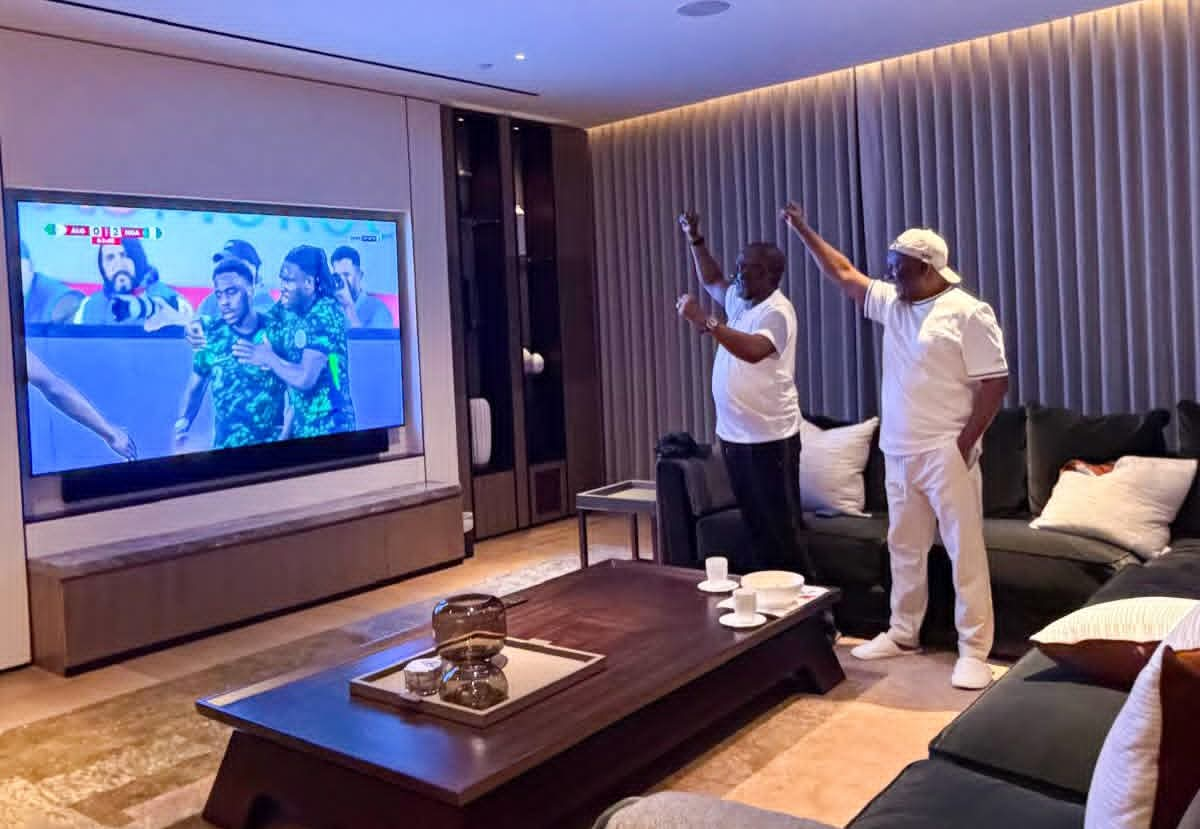
Nigeria’s Super Eagles have received a major morale and financial boost following their emphatic victory over Algeria, as billionaire industrialist Abdul Samad Rabiu announced a multi-million-dollar incentive package to spur the team toward Africa Cup of Nations glory.
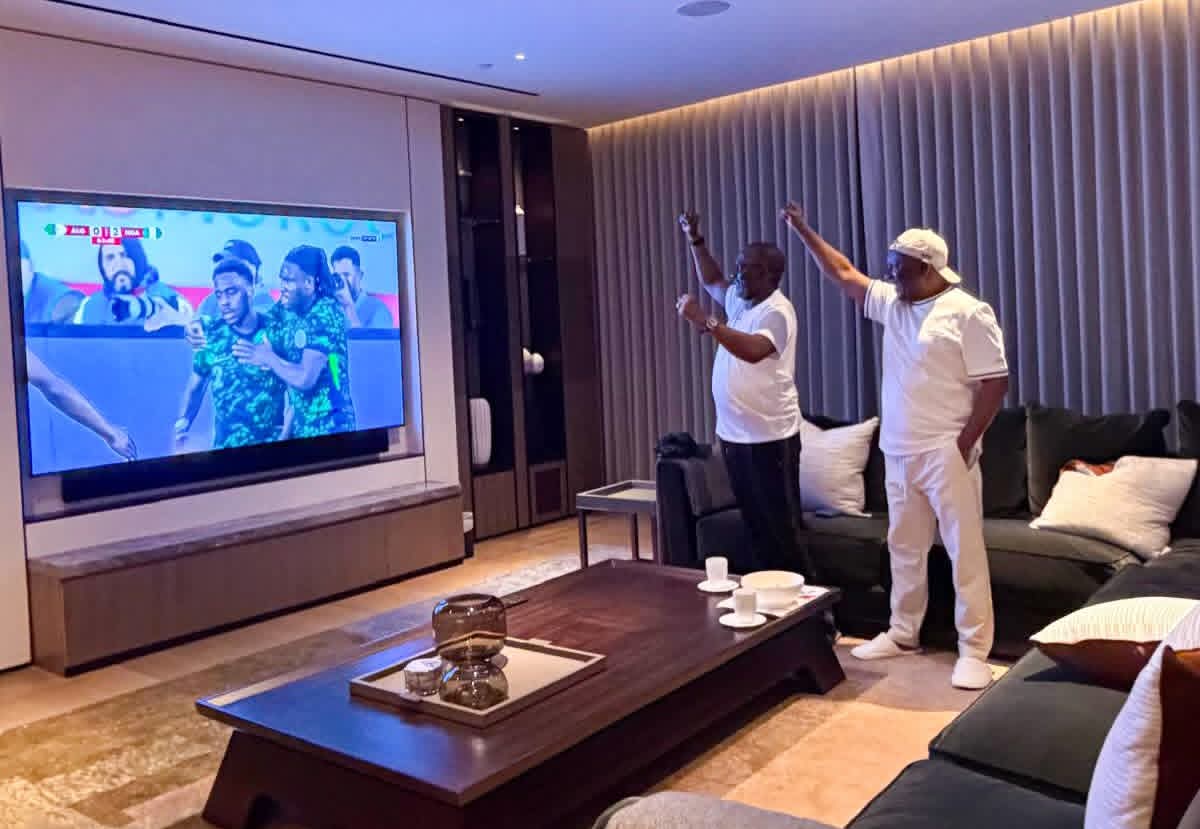
In a statement posted on his verified Facebook page on Friday, the BUA Group chairman congratulated the players on their “brilliant victory against Algeria,” describing the performance as one that lifted the spirit of the nation and rekindled national pride.
“You have lifted the spirit of the nation, and we proudly cheer you on as you prepare for the semi-finals,” Rabiu wrote.
To further motivate the team ahead of the crucial semi-final encounter, Rabiu pledged USD $500,000 to the players upon winning the match, with an additional USD $50,000 bonus for every goal scored.
The incentives rise significantly should the Super Eagles advance to the final and emerge champions. Rabiu announced a further pledge of USD $1,000,000 for winning the final, alongside a USD $100,000 reward for each goal scored in the decisive match.
The announcement has generated widespread excitement among football fans and analysts, who view the gesture as a strong vote of confidence in the team’s ability to go all the way in the tournament.
As Nigeria prepares for the semi-final showdown, Rabiu concluded his message with a patriotic rallying call, urging the players to continue carrying the nation forward and to “keep making Nigeria proud.”
With continental glory, national honour, and substantial financial rewards at stake, the Super Eagles head into the next round buoyed by belief, momentum, and the backing of an appreciative nation.









Adron CEO Reaffirms Support for Nigeria’s Diverse Cultures, Traditional Institutions
The Founder and Chairman of Adron Homes and Properties Limited, Aare Adetola Emmanuel-King, has reaffirmed the company’s unwavering commitment to the preservation and respect of Nigeria’s diverse cultures and traditional institutions, describing them as vital partners in sustainable national development.
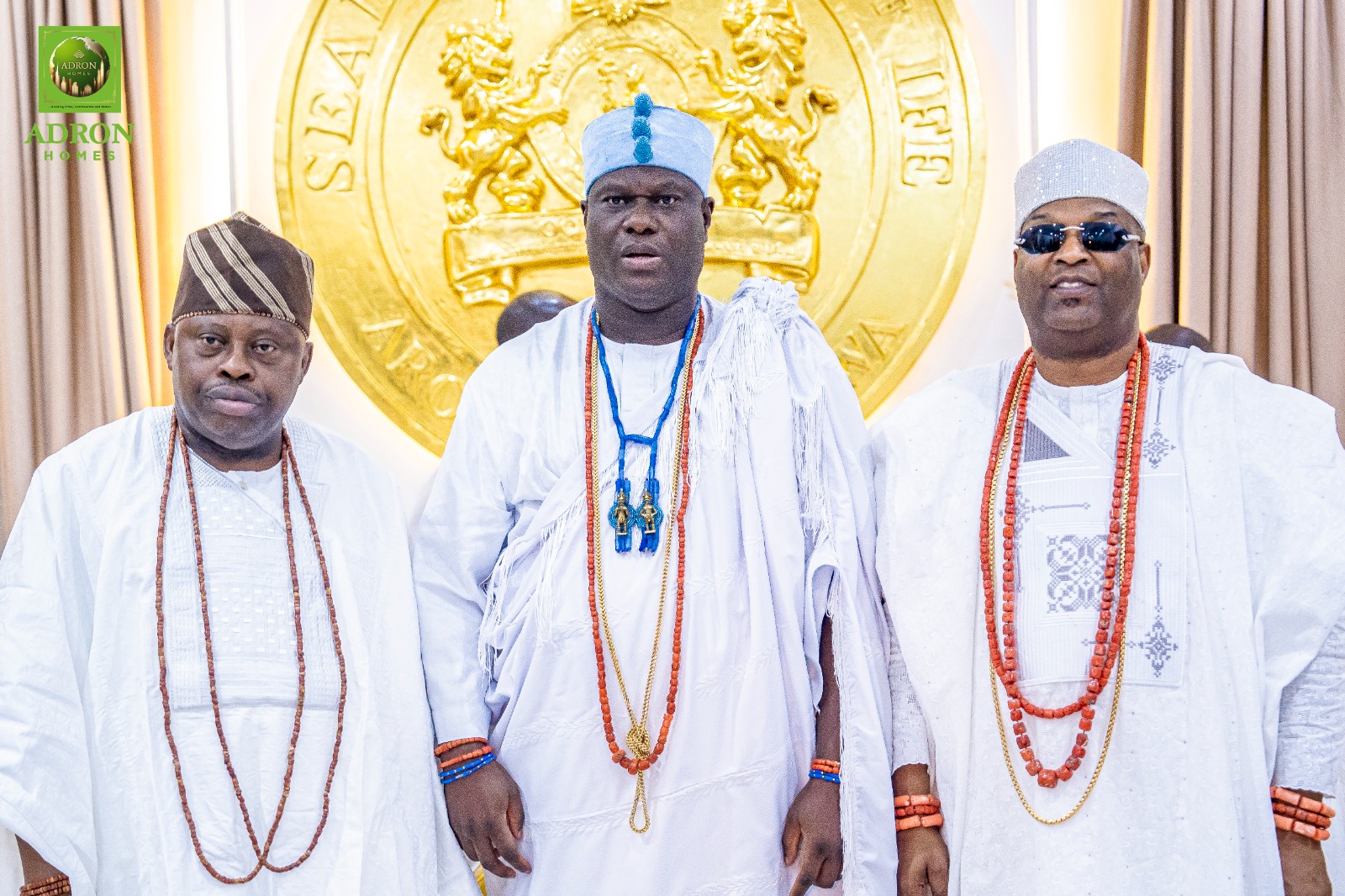
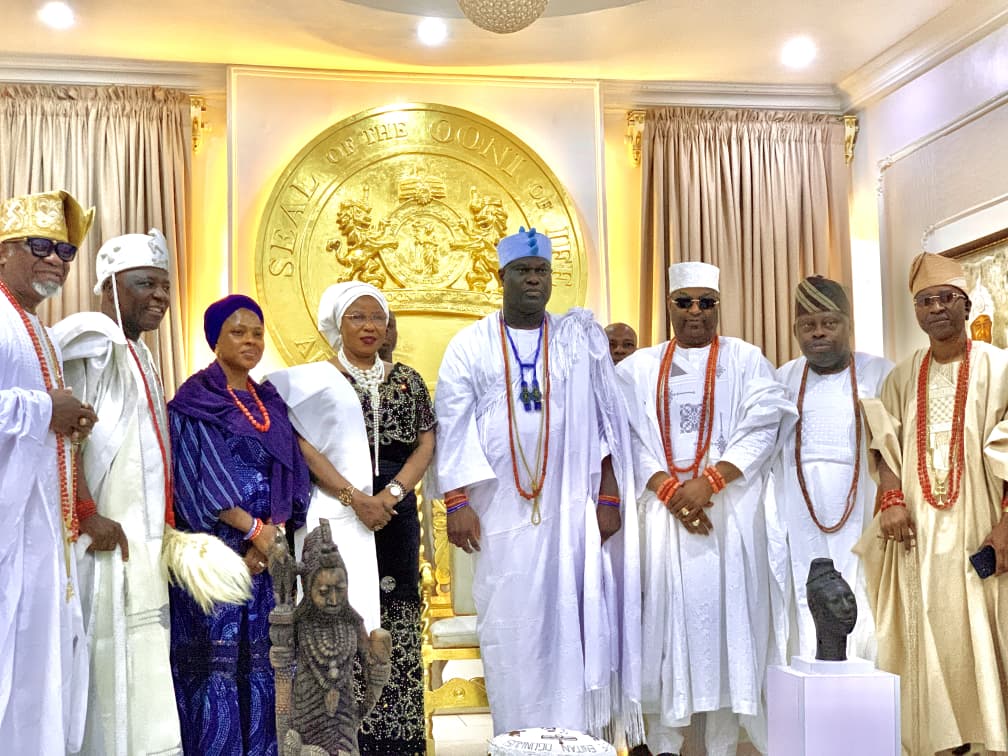
Speaking after a landmark courtesy visit to the House of Oduduwa on Tuesday, 6th January 2026, hosted by His Imperial Majesty, Kabiyesi Arole Oduduwa, Olofin Adimula, the Oonirisa of Ife, HIM Oba Adeyeye Enitan Babatunde Ogunwusi, CFR, Ojaja II, the Adron CEO stressed that the company’s engagement with royal institutions transcends ethnicity and regional boundaries.
According to Aare Emmanuel-King, Adron’s collaboration with traditional authorities is not limited to Yoruba land, but reflects a broader national philosophy that recognises the importance of all ethnic cultures and custodians of heritage across Nigeria in fostering unity, stability, and development.
“At Adron Homes, we believe that land is sacred and that development must be carried out with deep respect for culture, history, and traditional authority — not just in the South-West, but across every region of Nigeria,” he said.
The Adron CEO highlighted the company’s extensive footprint nationwide, noting its contributions to housing delivery, job creation, and economic empowerment across multiple states. He added that meaningful development thrives best when modern enterprise works in harmony with indigenous values and institutions.
As part of Adron’s long-term vision, Aare Emmanuel-King also announced plans for a landmark luxury estate project, ORISUN WHITE PARADISE RESORT, spanning over 200 acres in Ile-Ife, designed to blend modern luxury with cultural identity and tourism.
He expressed appreciation to Kabiyesi Oonirisa for the warm reception and royal blessings, describing the visit as a historic milestone that reinforces Adron Homes’ position as a corporate brand committed to cultural respect, inclusivity, and sustainable development across Nigeria.
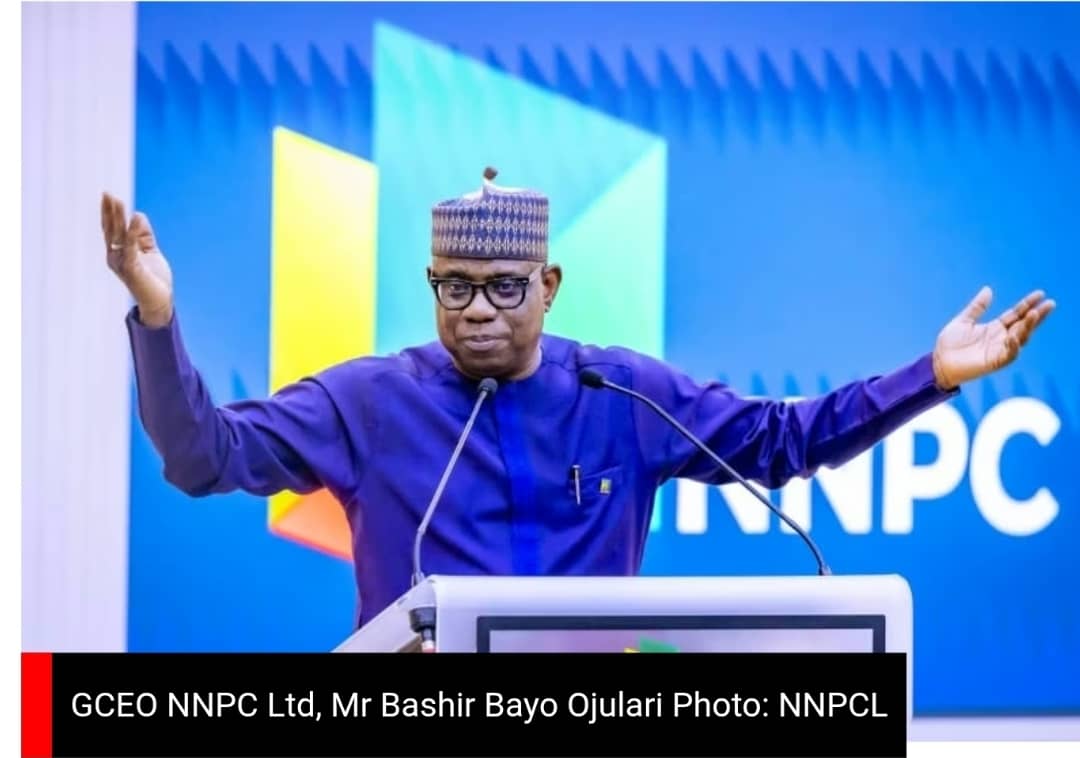
NNPC’s $1.42bn, N5.57trn Debt Write-Off and Test of Nigeria’s Fiscal Governance
BY BLAISE UDUNZE
When the Federal Government approved the write-off of about $1.42 billion and N5.57 trillion in legacy debts owed by the Nigerian National Petroleum Company Limited (NNPC Ltd) to the Federation Account, it was rightly described as a landmark decision. After years of disputes, reconciliations, and contested figures, Nigeria’s most important revenue institution was, at least on paper, given a cleaner slate.
The approval, contained in a report prepared by the Nigerian Upstream Petroleum Regulatory Commission (NUPRC) and presented at the last year November meeting of the Federation Account Allocation Committee (FAAC), effectively wiped out 96 percent of NNPC’s dollar-denominated obligations and 88 percent of its naira liabilities accumulated up to December 31, 2024. It resolved long-standing balances arising from crude oil liftings, joint venture royalties, production-sharing contracts, and related arrangements.
Judging it critically, the decision carries both promise and peril, but can be viewed from the perspective of a country desperate to restore confidence in public finance management. It offers an opportunity to reset relationships, clean up accounting records, and move forward under the Petroleum Industry Act (PIA). Yet, it also exposes deep structural weaknesses in Nigeria’s oil revenue governance, weaknesses that, if left unaddressed, could turn today’s debt relief into tomorrow’s fiscal regret.
Context matters. The debt write-off comes not during a period of revenue abundance, but at a time when Nigeria’s upstream revenue performance is under severe strain. According to the same NUPRC document, the commission missed its approved monthly revenue target for November 2025 by N544.76 billion, collecting only N660.04 billion against a projected N1.204 trillion.
Royalty receipts, the backbone of upstream revenue, tell an even starker story. It is alarming that against an approved monthly royalty projection of N1.144 trillion, only N605.26 billion was collected, leaving a shortfall of N538.92 billion. Cumulatively, by the end of November 2025, the revenue gap stood at N5.65 trillion, with royalty collections alone falling short by N5.63 trillion. These figures underscore how fragile Nigeria’s fiscal position remains, even as trillions of naira in historical obligations are being written off.
To be fair, the debts forgiven were not incurred overnight. They are the product of years of disputed remittances, lacking transparent accounting practices, and overlapping institutional roles, particularly under the pre-PIA regime. As petroleum economist Prof. Wumi Iledare has repeatedly observed, the former Nigerian National Petroleum Corporation combined regulatory, commercial, and operational functions, making revenue reconciliation cumbersome and frequently contested.
That legacy continues to haunt the system, as witnessed with the ongoing dispute between NNPC Ltd and Periscope Consulting, the audit firm engaged by the Nigeria Governors’ Forum, over an alleged $42.37 billion under-remittance between 2011 and 2017, which illustrates how unresolved the past remains. Though NNPC insists all revenues were properly accounted for as claimed, Periscope maintains that significant gaps persist, forcing FAAC to mandate yet another reconciliation exercise. This recurring pattern of audits, counterclaims, and stalemates has weakened trust in the federation revenue system and eroded confidence among states that depend on oil proceeds for survival.
Crucially, the debt write-off does not mean NNPC has turned a corner financially. Statutory obligations incurred between January and October 2025 remain on the books, amounting to about $56.8 million and N1.02 trillion. Although part of the dollar component was recovered during the period under review, the accumulation of new liabilities so soon after reconciliation raises uncomfortable questions about whether old habits are being replaced with genuine fiscal discipline.
More troubling still is what NNPC’s own audited financial statements reveal about its internal financial health. Despite recording a profit after tax of N5.4 trillion on revenues of N45.1 trillion in 2024, the company’s inter-company debts ballooned to N30.3 trillion, representing a 70 per cent increase within a single year. This is not debt owed to external creditors but largely obligations between NNPC and its subsidiaries, effectively the company owing itself.
Records show that of 32 subsidiaries, only eight are debt-free, and the rest, particularly the refineries, trading arms, and gas infrastructure units, remain heavily indebted to the parent company. There was a recurring cycle where profitable units subsidise chronically underperforming ones, and accountability steadily erodes because cash that should fund maintenance, expansion, and efficiency improvements is instead trapped in internal receivables.
The refineries offer a stark illustration whereby the Port Harcourt Refining Company alone owed N4.22 trillion in 2024, more than double its 2023 figure, while Kaduna and Warri refineries followed closely, with debts of N2.39 trillion and N2.06 trillion respectively. Despite the repeated failed turnaround maintenance with many years of rehabilitation spending, none have operated sustainably at commercially viable levels. Their continued dependence on financial support from the parent company highlights the cost of postponing difficult restructuring decisions.
And, for this reason, international observers have long warned about these structural weaknesses. One of the critics, the World Bank, has repeatedly flagged NNPC as a major source of revenue leakages. It further noted that the persistent gaps between reported earnings and actual remittances to the Federation Account. Even after the removal of petrol subsidies, the bank observed that NNPC remitted only about 50 per cent of the revenue gains, using the rest to offset past arrears. Such practices, while perhaps defensible in internal cash management terms, undermine fiscal transparency and weaken Nigeria’s macroeconomic credibility.
This is why the central issue is not the debt write-off itself, but what follows it because debt forgiveness is not reform. Without firm safeguards, it risks entrenching the very behaviours that created the problem in the first place. As Prof. Omowumi Iledare has warned, the scale and pace of the inter-company debt build-up represent a governance test rather than a mere accounting anomaly. Allowing subsidiaries to operate indefinitely without settling obligations is incompatible with the idea of a commercially driven national oil company.
The fact remains that if NNPC wants to function as a true commercial holding company under the PIA, it must enforce strict settlement timelines, restructure or divest non-viable subsidiaries, while clearly separating legacy debts from new obligations. With this, it holds subsidiary leadership accountable for cash flow and profitability. Independent, real-time audits and transparent reporting must become routine features of governance, not emergency responses triggered by controversy.
There is also a broader national implication. At a time when Nigerians are being asked to accept higher taxes, reduced subsidies, and fiscal tightening, large-scale debt write-offs without visible accountability risk undermining the legitimacy of the entire revenue system. Citizens cannot be expected to bear heavier burdens while systemic inefficiencies in the country’s most strategic sector persist.
Of a truth, the cancellation of NNPC’s legacy debts could mark a turning point in Nigeria’s fiscal governance, but only if it is not treated as its conclusion but the beginning of reform.
If discipline, transparency, and commercial accountability follow, the decision may yet help reposition NNPC as a profitable, credible, and PIA-compliant institution. If not, today’s clean slate will simply defer the reckoning until the next reconciliation, the next audit dispute, and the next fiscal crisis.
Blaise, a journalist and PR professional, writes from Lagos and can be reached via: [email protected]

NNPCL’s Repeated Petrol Price Cuts: A Market Awakening or Temporary Relief for Nigerians?
By George Omagbemi Sylvester
“How Competition, Local Refining and Policy Shifts Are Redefining Fuel Pricing in Post-Subsidy Nigeria.”
Introduction: A Break from Nigeria’s One-Way Fuel Price History. In Nigeria’s long and troubled economic history, petrol prices have almost always moved in one direction and or upwards. Every announcement concerning fuel has typically come with public anxiety, protests, and deeper economic pain for citizens already stretched to their limits. Against this grim historical pattern, the Nigerian National Petroleum Company Limited (NNPCL)’s repeated reductions in petrol pump prices represent an unusual and significant departure.
In its latest adjustment, NNPCL reduced the pump price of Premium Motor Spirit (PMS) by ₦20 per litre, bringing the price down to about ₦815 per litre at selected retail outlets, particularly in Abuja. This reduction follows earlier cuts within a short period, signalling a shift that challenges the long-held assumption that petrol prices in Nigeria can only rise.

Beyond the immediate relief, however, lies a more important national question: Is Nigeria witnessing the emergence of a truly competitive fuel market, or is this merely a temporary correction driven by short-term pressures?
Nigeria’s Painful Transition from Subsidy to Deregulation.
For decades, Nigeria’s fuel pricing system was anchored on government subsidies. While politically attractive, the subsidy regime became economically catastrophic. Trillions of naira were spent annually to keep prices artificially low, enriching cartels, encouraging smuggling, and draining public resources that could have been invested in health, education, and infrastructure.
The removal of fuel subsidy in 2023 marked a historic turning point. Petrol prices surged sharply, inflation deepened, transport costs skyrocketed, and millions of Nigerians were pushed further into poverty. By 2024, petrol sold for between ₦850 and ₦950 per litre in many parts of the country, fuelling public anger and skepticism toward deregulation.
Yet economists have consistently argued that deregulation without competition only transfers pain to consumers. Until recently, Nigeria lacked the conditions necessary for a functioning competitive downstream market.
The Dangote Refinery Factor: Disrupting the Old Order.
The single most transformative factor behind the current price reductions is the operational entry of the Dangote Petroleum Refinery into Nigeria’s fuel supply chain. With a refining capacity of 650,000 barrels per day, the refinery has fundamentally altered the economics of petrol supply.
For the first time in decades, Nigeria is refining large volumes of PMS domestically, reducing dependence on imports, foreign exchange exposure, and shipping costs. As the Dangote Refinery repeatedly reduced its ex-depot prices, downstream marketers were forced to respond.
NNPCL, which historically dominated imports and pricing, could no longer maintain higher pump prices without losing market share. In a competitive environment, price rigidity becomes self-defeating.
According to Professor Akinwale Omotola, an energy economist:

“What Nigerians are witnessing is the natural consequence of competition. When supply improves and monopolies weaken, prices respond. This is how deregulation is supposed to work.”
Competition Replaces Monopoly: A Structural Shift.
For years, Nigeria’s downstream sector functioned as a state-controlled system where inefficiencies were passed directly to consumers. The emergence of genuine competition between NNPCL, Dangote Refinery, and independent marketers marks a structural break from that past.
This competition has:
Forced price adjustments downward
Reduced arbitrary pricing practices
Improved supply discipline
Given consumers limited but meaningful choice
NNPCL’s repeated price cuts would have been unthinkable under the old subsidy-dependent structure. Today, the company is compelled to act like a commercial entity rather than a political instrument.
Dr. Muda Yusuf, CEO of the Centre for the Promotion of Private Enterprise (CPPE), explains:
“Competition, not subsidies, is the most sustainable way to protect consumers. The challenge now is ensuring consistency in supply and regulatory clarity.”
Why ₦20 Matters in a Fragile Economy.
Some critics dismiss a ₦20 per litre reduction as insignificant. This view ignores Nigeria’s economic realities. Petrol pricing has a multiplier effect across the economy.
Fuel costs directly influence:
Public transportation fares
Food distribution and logistics
Generator-powered small businesses
Inflation on essential goods
In a country where road transport dominates commerce and millions rely on petrol for daily survival, even modest reductions can ease household pressure and slow inflationary momentum.
Beyond economics, the psychological impact is equally important. Nigerians are seeing proof (however modest) that prices can come down.
Independent Marketers Raise Sustainability Concerns.
While consumers welcome the relief, independent marketers are increasingly cautious. Smaller operators warn that aggressive price competition could compress margins beyond sustainability, particularly in rural and high-cost distribution areas.
The Independent Petroleum Marketers Association of Nigeria (IPMAN) has expressed concern that prolonged price wars may:
Force small marketers out of business
Reduce fuel availability in remote regions
Create uneven regional pricing
Energy analyst Dr. Iyabo Akinwale warns:
“Competition must be managed carefully. If small players collapse, the market risks sliding back into dominance by a few large actors.”
These concerns highlight the importance of balanced regulation.
The Regulatory Test: Market Discipline Without Price Control.
The Nigerian Midstream and Downstream Petroleum Regulatory Authority (NMDPRA) now faces one of its most critical tests. Its responsibility is no longer to fix prices, but to ensure transparency, prevent anti-competitive behaviour, and guarantee product quality and supply stability.
Poor regulation could reverse current gains, while disciplined oversight could institutionalise affordability and efficiency.
As Nobel laureate Joseph Stiglitz once noted:
“Markets do not function in a vacuum. They require strong institutions to prevent exploitation and failure.”
NNPCL’s Institutional Repositioning.
NNPCL’s behaviour also reflects a deeper transformation. Since becoming a commercial entity under the Petroleum Industry Act (PIA), the company is increasingly responding to market realities rather than political directives.
Repeated price reductions suggest a shift toward competitiveness, accountability, and consumer sensitivity and traits long absent from Nigeria’s state-owned oil institutions.
If sustained, this repositioning could restore public confidence and redefine NNPCL’s role in Nigeria’s energy future.
The Road Ahead.
Whether these petrol price cuts endure will depend on several factors:
Sustained domestic refining output
Exchange rate stability
Global crude oil price trends
Regulatory discipline and policy consistency
What is clear is that Nigeria has crossed a critical psychological threshold. Petrol prices have fallen, but not due to subsidies, but because of competition.
If properly managed, this moment could mark the beginning of a more rational, transparent and humane fuel pricing system. If mismanaged, it could become another missed opportunity.
For a nation long traumatised by fuel crises, this development must not be trivialised. It should be protected, strengthened, and institutionalised.
Affordable fuel is no longer just a political promise, it is slowly becoming a market outcome.


-
 Politics7 months ago
Nigeria Is Not His Estate: Wike’s 2,000‑Hectare Scandal Must Shake Us Awake
-

 society7 months ago
JUSTICE DENIED: HOW JESAM MICHAEL’S KINDNESS WAS TURNED AGAINST HIM
-

 celebrity radar - gossips5 months ago
Why Babangida’s Hilltop Home Became Nigeria’s Political “Mecca”
-

 society5 months ago
Power is a Loan, Not a Possession: The Sacred Duty of Planting People