
society
The Severe Consequences of Speaking Against an Altar of God: A Case Study of Grace Nation

The Severe Consequences of Speaking Against an Altar of God:
A Case Study of Grace Nation
By Sunday Adeyemi
Altars can best be described as sacred meeting points where the spiritual intersects with the physical—a place where destinies are shaped and outcomes determined.
Many schools of thought believe that nothing manifests in the physical realm without first being concluded in the spiritual. For this reason, speaking against an altar is considered extremely dangerous, as altars play a decisive role in determining both positive and negative outcomes in human affairs.
This analysis examines the good, the bad, and the ugly consequences associated with speaking against an altar, using the Grace Nation altar as a case study.
The Good: The Power of an Altar
An altar is a powerful spiritual platform where divine transactions take place. It is a place of supernatural intervention, transformation, and restoration. When approached with clean hands, pure intentions, and genuine faith, an altar has the capacity to change narratives—turning negative situations into testimonies.
Commitment and service to an altar speak on behalf of the worshipper. When individuals consistently honour an altar by offering what it requires and approaching it with sincerity, the same altar responds swiftly with favour, breakthroughs, and divine alignment.
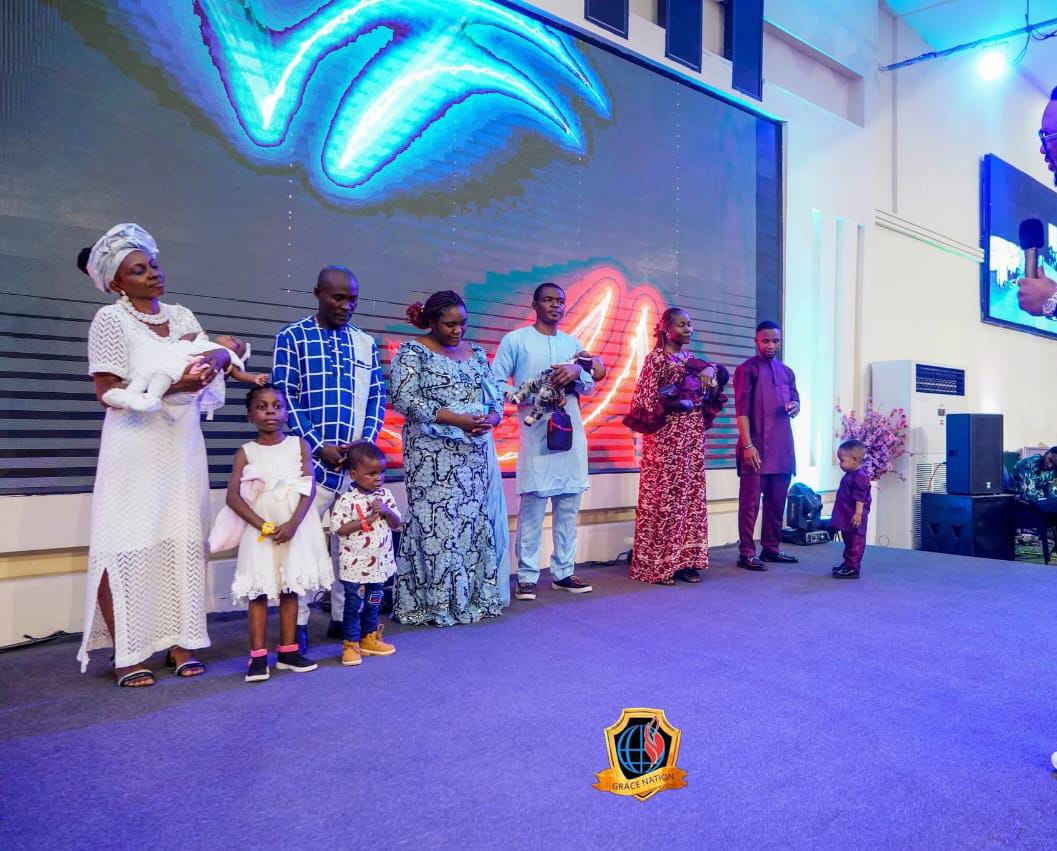
Using the Grace Nation altar as an example, numerous testimonies confirm that it has brought remarkable blessings into the lives of its citizens. Many have experienced positive transformations in long-standing life patterns.
There are documented testimonies of individuals who trusted God through the Grace Nation International (Liberation City) altar and received the fruit of the womb after years of waiting. Others testify to supernatural breakthroughs in foreign opportunities, marital settlements for singles, and unexpected divine benefits.
Further findings indicate that under the leadership of the Set Man, Dr. Chris Okafor, the Grace Nation altar has rewritten negative family patterns, dismantled generational barriers to inheritance, and restored lost glory in many families.
The strength of an altar lies in its ability to examine, scrutinize, and resolve cases presented before it with sincerity and faith. However, altars must never be taken for granted, as they are not only powerful for good but can be severe when dishonoured.
The Bad: The Danger of Speaking Against an Altar
The negative consequences of speaking against an altar are profound and far-reaching. Speaking evil against an altar of God exposes an individual to spiritual vulnerability. The spiritual covering provided by that altar is lifted, leaving the person open to attacks and afflictions.
In such cases, the altar begins to work against the individual and, in some instances, against their generations. Opportunities become blocked, progress is hindered, and efforts are repeatedly frustrated.
In spiritual terms, altars are believed to deploy angels on assignment. For those who speak against an altar, these same spiritual forces are said to oppose their endeavours, blocking blessings and causing persistent setbacks. Nothing appears to work in their favour, and life becomes characterised by struggle and disappointment.
The Ugly: The Ultimate Consequence
Altars are generally categorised into two types: good altars and evil altars. Regardless of the category, speaking against an altar carries grave consequences. The ultimate repercussion, according to spiritual belief, is that an altar can send spiritual agents on assignment to execute judgment against those who dishonour it or the servant who tends it.
This represents the most severe outcome—where consequences escalate beyond correction and into irreversible loss. It is believed that once an altar is provoked through malicious speech or actions, the backlash is unavoidable.
Final Thoughts
It is important to state clearly and without reservation that speaking against any altar—whether perceived as good or bad—invites spiritual repercussions. Whatever is spoken against an altar is believed to rebound upon the speaker. No one speaks against an altar and goes unscathed.
Scripture teaches that the only sin without forgiveness is speaking against the Holy Spirit—often regarded as the ultimate altar of God. Therefore, wisdom, restraint, and reverence are essential when dealing with spiritual matters.
Sunday Adeyemi is a Lagos-based journalist, society writer, and editor with Society Herald Magazine and Online.









How OPay Is Turning Product Architecture Into a Customer Service Advantage
In high-volume fintech markets like Nigeria, customer service can no longer sit at the end of the business process. When a platform serves tens of millions of users and processes millions of transactions every day, the old model of customer service, call centres, long queues, and manual complaint handling quickly becomes too slow, too costly, and challenging to scale.
The future of customer service in fintech is not just about answering calls faster. It is about preventing problems before they happen. This is where product design, technology, and risk systems begin to play a bigger role. Instead of reacting to customer complaints, modern fintech platforms are now building customer protection and support directly into the app experience itself.
OPay is one of the platforms showing how this shift works in practice.
Over the past few years, OPay’s product development has followed a clear pattern. New features are not only designed to make payments easier, but also to reduce errors, prevent fraud, and lower the number of issues that customers need to complain about. In simple terms, many customer service problems are stopped before users even notice them.
One of the strongest examples of this approach is OPay’s real-time fraud and scam alerts. Traditionally, customers only contact support after money has already left their account. At that point, the damage is done, emotions are high, and recovery becomes more complex. OPay’s system works differently. When a transaction looks unusual, based on amount, timing, behaviour, or pattern, the system raises a warning before the transfer is completed. This gives users a chance to pause, review, and confirm. In many cases, this stops fraud before it happens.
For users, this feels like protection built into the app, not an emergency response after a loss. For the business, it means fewer fraud cases, fewer complaints, and less pressure on customer support teams. This proactive model aligns with global fintech best practices, which prioritise prevention over recovery.
Another important layer is step-up security for high-risk or high-value transactions. As users move more money and rely more heavily on digital wallets, security cannot be one-size-fits-all. Adding too many checks to every transaction creates frustration. Adding too few creates risk. OPay balances this by applying stronger security only when it is needed. For example, biometric verification and additional authentication steps are triggered in sensitive situations. This keeps everyday transactions smooth, while adding extra protection when the risk is higher. This approach builds trust quietly. Users may not always notice the security working in the background, but they feel the result: fewer unauthorised transfers and fewer urgent problems that require support intervention.
Beyond visible features, OPay also runs behaviour-based risk systems in the background. These systems monitor patterns such as sudden device changes, unusual login behaviour, or transaction activity that does not match a user’s normal habits. When something looks off, the system responds automatically. Most users never see these checks. But their impact shows up in fewer failed transactions, fewer reversals, and fewer cases where customers need to chase resolutions. As a result, customer service interactions shift away from crisis handling toward simple guidance and assistance.
Together, these layers form what can be called an invisible customer service system. Many issues are intercepted early, long before they become formal complaints. User sentiment on social media provides real-world signals of how this system is being experienced. On X (formerly Twitter), some users have publicly shared their experiences with OPay’s responsiveness and reliability.
One user, @ifedayo_johnson, wrote, “Opay has refunded it almost immediately. Before I even made this tweet but I didn’t notice. logged it as transfer made in error on the Opay app and they acted almost immediately. Commendable. Thank you @OPay_NG. I’m very impressed with this!”
Another user, @EgbonAduugbo, shared “The reason I love opay so much is that you hardly ever have to worry, wait or call their customer service for anything cuz everything just works!”
While social media comments are not formal performance metrics, they matter. They reflect how real users feel when systems work smoothly and issues are resolved quickly, often without friction. This product-led customer service model becomes even more important when viewed in the context of OPay’s scale. At this scale, even minor improvements in fraud prevention or transaction success rates can prevent thousands of potential complaints every day. In this context, customer service is no longer driven mainly by headcount. It is driven by engineering choices, risk models, and system design.
OPay’s journey suggests what the future of fintech in Africa may look like. The next generation of leaders will not only be those with the most users, but those whose systems are designed to protect users, resolve issues quickly, and reduce friction at scale.
society
Phillips Esther Omolara : Answering The Call To Worship And Transforming Lives Through Gospel Music

Phillips Esther Omolara : Answering The Call To Worship And Transforming Lives Through Gospel Music
Introduction : Phillips Esther Omolara (Apple Of God’s Eye) is an Inspirational and passionate Nigerian gospel music minister, singer, and songwriter dedicated to spreading the message of Christ through her songs.
Background : I was born and brought up in Lagos State. I am a devoted gospel minister and a worship leader who began her musical journey in the children choir later graduated to adult church choir at a young age, leading praises and also a vocalist in the choir.
Early Life : I was born on April 8th 1990 in Lagos, Phillips Esther Omolara is a native of Oyo state in Ogbomosho.
Family : Got married to Phillips Oluwatomisin Omobolaji from Ogun State and our union was blessed with children.
Education : I went to Duro-oyedoyin nursery and primary school Ijeshatedo, Lagos, where I laid the foundation for my academic pursuits. For my secondary education, I attended Sanya Grammer school in Ijeshatedo, Lagos.
During my high school years, I was already deeply involved in church activities. After completing my secondary education, Phillips Esther pursed higher education at Lagos State Polytechnic (LASPOTECH).
Musical Style : Known for [e.g., Inspirational songs, Contemporary Worship, Highlife, Reggae, Traditional Yoruba], and my music blends spiritual depth with creative musicality.
INSPIRATIONS AND INFLUENCES : I have no specific role model in the gospel music industry. However, I have expressed my love for songs from several Veteran gospel artists who have influenced my musical journey.
Some of the gospel artists whose music i admires include:
* Mama Bola Are
* Tope Alabi
* Omije Ojumi
* Baba Ara
* Bulky Beks
Mission : My ministry focuses on leading people to the presence of God and creating an atmosphere for miracles.

CHETACHI NWOGA-ECTON EMPOWERS 300 WIDOWS IN IMO
A renowned humanitarian and proud daughter of Mbaise in Imo State, High Chief (Dr.) Princess Chetachi Nwoga-Ecton, has empowered over 300 widows and vulnerable women across the Owerri Zone, in a remarkable demonstration of compassion and service to humanity.

The empowerment programme, which took place at the Palace of the Eze of Ngor Okpala, HRH Eze Engr. Fredrick Nwachukwu, brought together community leaders, traditional rulers, women groups and beneficiaries from different communities within the zone.
During the event, the widows received food materials and cash support, aimed at helping them meet basic needs and strengthen their small-scale businesses.

The initiative was widely applauded as a timely intervention to support women who often face severe economic hardship after losing their spouses.
Many of the beneficiaries expressed heartfelt appreciation to High Chief (Dr.) Nwoga-Ecton, describing the empowerment as a lifeline that would help them take better care of their families.
Some widows, while offering prayers for the philanthropist, noted that the gesture had restored hope and dignity in their lives.
Fondly known as Ada Imo and Adaure, High Chief (Dr.) Princess Chetachi Nwoga-Ecton has earned widespread admiration for her consistent humanitarian efforts both within Nigeria and internationally.
Through her philanthropic activities and foundations, she has continued to support widows, children, and vulnerable communities with interventions in healthcare, welfare and economic empowerment.
Community stakeholders who attended the programme commended the Mbaise-born philanthropist for her generosity and dedication to uplifting the less privileged, noting that her actions reflect true leadership and compassion.
Observers say the initiative further reinforces her growing reputation as one of the most impactful humanitarians of this generation, whose commitment to humanity continues to inspire hope across Imo State and beyond.


-

 society6 months ago
Religion: Africa’s Oldest Weapon of Enslavement and the Forgotten Truth
-

 news3 months ago
WHO REALLY OWNS MONIEPOINT? The $290 Million Deal That Sold Nigeria’s Top Fintech to Foreign Interests
-

 Business6 months ago
GTCO increases GTBank’s Paid-Up Capital to ₦504 Billion
-

 society6 months ago
“You Are Never Without Help” – Pastor Gebhardt Berndt Inspires Hope Through Empower Church (Video)