
society
Tinubu at the Crossroads: The 2027 Calculus, Religious Balance and the Possible Exit of Shettima

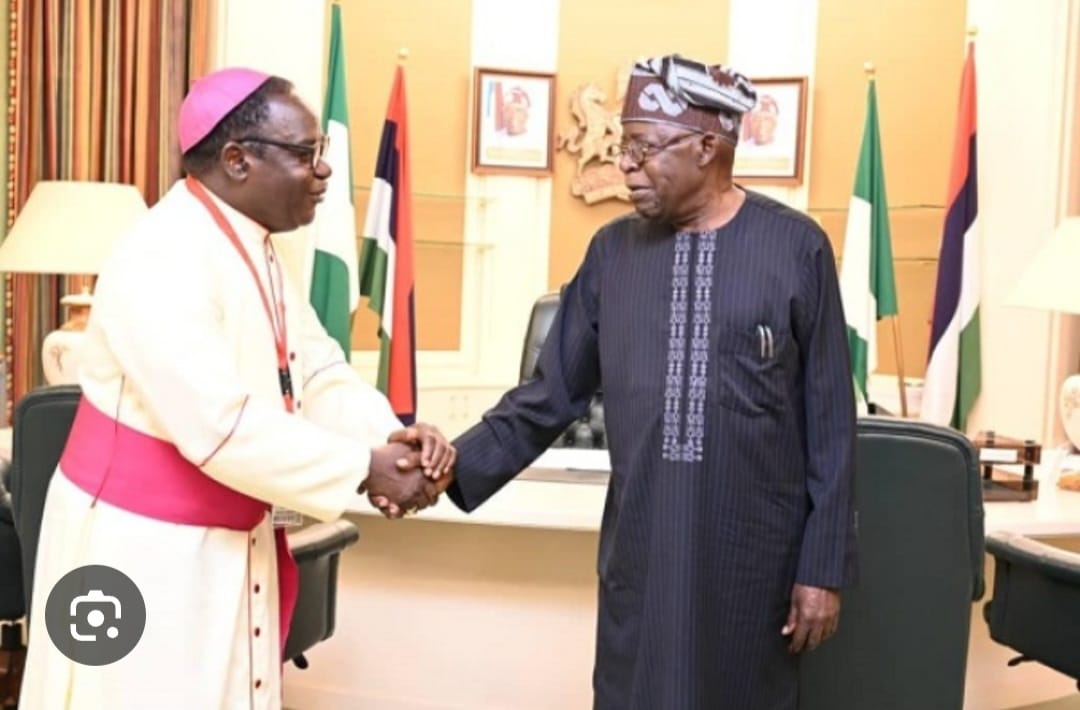
Tinubu at the Crossroads: The 2027 Calculus, Religious Balance and the Possible Exit of Shettima.
By George Omagbemi Sylvester
“A Presidency Tested by Power, Perception and Nigeria’s Fragile Unity.”
As Nigeria inches toward the 2027 general elections, President Bola Ahmed Tinubu stands before one of the most consequential political decisions of his presidency: whether to retain Vice President Kashim Shettima or recalibrate his re-election ticket by choosing a Christian running mate. What initially appeared as insider speculation has now evolved into a serious national conversation touching on RELIGION, POWER, ELECTORAL SURVIVAL and the LONG-TERM cohesion of Africa’s most populous democracy.

Reports suggesting that Tinubu may drop Shettima have generated intense debate across political, religious and diplomatic circles. While the presidency has neither confirmed nor denied such intentions, the mere plausibility of the move speaks volumes about the unresolved tensions created by the Muslim-Muslim ticket that brought the All Progressives Congress (APC) to power in 2023. That ticket, though electorally successful, left deep emotional and symbolic scars in a country where religion remains a defining marker of identity, belonging and political legitimacy.
Tinubu’s defenders have long argued that competence should trump identity. Yet politics is not practiced in abstraction. Nigeria’s history shows that perception often matters as much as policy and symbolism can be as powerful as legislation. The 2023 election may have proven that a Muslim-Muslim ticket could win, but it did not prove that it could unite.

Across Nigeria’s Christian communities (particularly in the Middle Belt and parts of the South) there remains a lingering sense of exclusion. This sentiment has been amplified by persistent insecurity, the targeting of Christian villages by armed groups and a widespread belief that the federal government has not demonstrated sufficient urgency or empathy. In this context, the discussion about Tinubu’s 2027 ticket is not merely about Shettima as an individual, but about what the presidency represents and whose voices are visibly acknowledged at the highest level of power.
It is therefore significant that calls for a Christian running mate are not coming only from southern Christian leaders. Influential northern groups, including inter-ethnic and inter-faith coalitions, have publicly urged the president to consider religious balance in 2027. Their argument is not rooted in hostility toward Shettima, but in political realism. Nigeria, they insist, cannot afford to normalize exclusion in a nation already stretched by ethno-religious fault lines.
Political analysts note that the APC’s internal dynamics further complicate the matter. Kashim Shettima represents continuity, loyalty and northern political strength. Removing him risks alienating a key bloc that remains critical to Tinubu’s electoral math. Northern Nigeria, despite economic hardship and security crises, continues to command decisive voting power. Any perception that the vice president was sacrificed to appease international opinion or southern Christian pressure could provoke backlash within the party and beyond it.
Yet retaining Shettima carries its own risks. The 2027 election will not be fought under the same conditions as 2023. Tinubu now campaigns not as an insurgent political strategist but as an incumbent president whose record will be scrutinized domestically and internationally. Economic reforms, subsidy removal, inflation, currency instability and widespread hardship have reshaped voter expectations. In such an environment, symbolism regains importance. A re-election ticket that appears insensitive to diversity could prove costly, particularly among swing voters and younger Nigerians who increasingly frame politics through inclusion and justice rather than tradition.
International perception also plays a subtle but undeniable role. Nigeria’s strategic partners in the West have grown more vocal about religious freedom, minority protection and inclusive governance. While there is no publicly documented evidence of direct foreign pressure on Tinubu to change his ticket, diplomatic conversations around security and human rights inevitably shape elite political thinking. In a global era where democratic credentials influence investment, security cooperation and diplomatic leverage, Nigeria’s internal political signals matter far beyond its borders.
Scholars have long warned that when democratic systems fail to reflect pluralism, legitimacy erodes. Professor Jibrin Ibrahim, a respected political scientist, has argued that “Nigeria’s stability depends not only on elections, but on the perception that power rotates fairly across identities.” Similarly, Professor Amina Mama, writing on governance in divided societies, has emphasized that “symbolic inclusion is not cosmetic; it is foundational to democratic trust.”
Critics of the proposed change counter that competence and loyalty should outweigh religious arithmetic. They warn that dropping Shettima could fracture the APC and create an image of a president who discards allies when convenient. Some religious leaders have even cautioned that such a move could be interpreted as weakness or betrayal, particularly in a political culture that prizes loyalty. From this perspective, Tinubu’s silence on the matter is itself strategic, allowing speculation to circulate without committing to a course of action too early.
What is often missing from the debate, however, is a deeper reflection on Nigeria’s democratic maturity. The recurring obsession with religious balancing on tickets is itself a symptom of unresolved nation-building. In stable democracies, leadership choices rarely provoke existential anxiety about identity. In Nigeria, they do not just because the state has historically failed to guarantee equal protection, opportunity and justice to all citizens. Until those structural issues are addressed, symbolism will continue to carry disproportionate weight.
The question, therefore, is not simply whether Tinubu will drop Shettima, but what such a decision would signal. Retaining him could be framed as consistency and confidence. Replacing him with a Christian running mate could be framed as reconciliation and responsiveness. Either choice will reshape the political narrative of 2027 and define Tinubu’s legacy as either a consolidator of power or a bridge-builder in a fractured republic.
For Vice President Shettima himself, the speculation is a reminder of the precarious nature of power in Nigerian politics. Vice presidents, historically, have often been expendable pieces on the chessboard of ambition. From Alex Ekwueme to Atiku Abubakar to Yemi Osinbajo, the office has rarely guaranteed political security. The current moment fits that pattern, underscoring how institutions remain weaker than personalities.
As Nigeria approaches another electoral crossroads, the stakes could not be higher. The 2027 election will test not only the APC’s internal coherence but Nigeria’s capacity to learn from its own tensions. A country battling insecurity, poverty and declining trust in public institutions cannot afford leadership decisions that deepen alienation.
In the final analysis, Tinubu’s dilemma reflects Nigeria’s unfinished project. Democracy here is still negotiating its relationship with identity, equity and power. Whether he chooses continuity or recalibration, the decision must rise above short-term electoral calculation and speak to a broader vision of national healing.
History will judge this moment not by political cleverness alone, but by whether leadership choices helped steady a fragile nation or further polarized it. In that sense, the 2027 ticket is not just a campaign tool; it is a statement about the kind of Nigeria its leaders believe is possible; and worth fighting for.









How OPay Is Turning Product Architecture Into a Customer Service Advantage
In high-volume fintech markets like Nigeria, customer service can no longer sit at the end of the business process. When a platform serves tens of millions of users and processes millions of transactions every day, the old model of customer service, call centres, long queues, and manual complaint handling quickly becomes too slow, too costly, and challenging to scale.
The future of customer service in fintech is not just about answering calls faster. It is about preventing problems before they happen. This is where product design, technology, and risk systems begin to play a bigger role. Instead of reacting to customer complaints, modern fintech platforms are now building customer protection and support directly into the app experience itself.
OPay is one of the platforms showing how this shift works in practice.
Over the past few years, OPay’s product development has followed a clear pattern. New features are not only designed to make payments easier, but also to reduce errors, prevent fraud, and lower the number of issues that customers need to complain about. In simple terms, many customer service problems are stopped before users even notice them.
One of the strongest examples of this approach is OPay’s real-time fraud and scam alerts. Traditionally, customers only contact support after money has already left their account. At that point, the damage is done, emotions are high, and recovery becomes more complex. OPay’s system works differently. When a transaction looks unusual, based on amount, timing, behaviour, or pattern, the system raises a warning before the transfer is completed. This gives users a chance to pause, review, and confirm. In many cases, this stops fraud before it happens.
For users, this feels like protection built into the app, not an emergency response after a loss. For the business, it means fewer fraud cases, fewer complaints, and less pressure on customer support teams. This proactive model aligns with global fintech best practices, which prioritise prevention over recovery.
Another important layer is step-up security for high-risk or high-value transactions. As users move more money and rely more heavily on digital wallets, security cannot be one-size-fits-all. Adding too many checks to every transaction creates frustration. Adding too few creates risk. OPay balances this by applying stronger security only when it is needed. For example, biometric verification and additional authentication steps are triggered in sensitive situations. This keeps everyday transactions smooth, while adding extra protection when the risk is higher. This approach builds trust quietly. Users may not always notice the security working in the background, but they feel the result: fewer unauthorised transfers and fewer urgent problems that require support intervention.
Beyond visible features, OPay also runs behaviour-based risk systems in the background. These systems monitor patterns such as sudden device changes, unusual login behaviour, or transaction activity that does not match a user’s normal habits. When something looks off, the system responds automatically. Most users never see these checks. But their impact shows up in fewer failed transactions, fewer reversals, and fewer cases where customers need to chase resolutions. As a result, customer service interactions shift away from crisis handling toward simple guidance and assistance.
Together, these layers form what can be called an invisible customer service system. Many issues are intercepted early, long before they become formal complaints. User sentiment on social media provides real-world signals of how this system is being experienced. On X (formerly Twitter), some users have publicly shared their experiences with OPay’s responsiveness and reliability.
One user, @ifedayo_johnson, wrote, “Opay has refunded it almost immediately. Before I even made this tweet but I didn’t notice. logged it as transfer made in error on the Opay app and they acted almost immediately. Commendable. Thank you @OPay_NG. I’m very impressed with this!”
Another user, @EgbonAduugbo, shared “The reason I love opay so much is that you hardly ever have to worry, wait or call their customer service for anything cuz everything just works!”
While social media comments are not formal performance metrics, they matter. They reflect how real users feel when systems work smoothly and issues are resolved quickly, often without friction. This product-led customer service model becomes even more important when viewed in the context of OPay’s scale. At this scale, even minor improvements in fraud prevention or transaction success rates can prevent thousands of potential complaints every day. In this context, customer service is no longer driven mainly by headcount. It is driven by engineering choices, risk models, and system design.
OPay’s journey suggests what the future of fintech in Africa may look like. The next generation of leaders will not only be those with the most users, but those whose systems are designed to protect users, resolve issues quickly, and reduce friction at scale.
society
Phillips Esther Omolara : Answering The Call To Worship And Transforming Lives Through Gospel Music

Phillips Esther Omolara : Answering The Call To Worship And Transforming Lives Through Gospel Music
Introduction : Phillips Esther Omolara (Apple Of God’s Eye) is an Inspirational and passionate Nigerian gospel music minister, singer, and songwriter dedicated to spreading the message of Christ through her songs.
Background : I was born and brought up in Lagos State. I am a devoted gospel minister and a worship leader who began her musical journey in the children choir later graduated to adult church choir at a young age, leading praises and also a vocalist in the choir.
Early Life : I was born on April 8th 1990 in Lagos, Phillips Esther Omolara is a native of Oyo state in Ogbomosho.
Family : Got married to Phillips Oluwatomisin Omobolaji from Ogun State and our union was blessed with children.
Education : I went to Duro-oyedoyin nursery and primary school Ijeshatedo, Lagos, where I laid the foundation for my academic pursuits. For my secondary education, I attended Sanya Grammer school in Ijeshatedo, Lagos.
During my high school years, I was already deeply involved in church activities. After completing my secondary education, Phillips Esther pursed higher education at Lagos State Polytechnic (LASPOTECH).
Musical Style : Known for [e.g., Inspirational songs, Contemporary Worship, Highlife, Reggae, Traditional Yoruba], and my music blends spiritual depth with creative musicality.
INSPIRATIONS AND INFLUENCES : I have no specific role model in the gospel music industry. However, I have expressed my love for songs from several Veteran gospel artists who have influenced my musical journey.
Some of the gospel artists whose music i admires include:
* Mama Bola Are
* Tope Alabi
* Omije Ojumi
* Baba Ara
* Bulky Beks
Mission : My ministry focuses on leading people to the presence of God and creating an atmosphere for miracles.
CHETACHI NWOGA-ECTON EMPOWERS 300 WIDOWS IN IMO
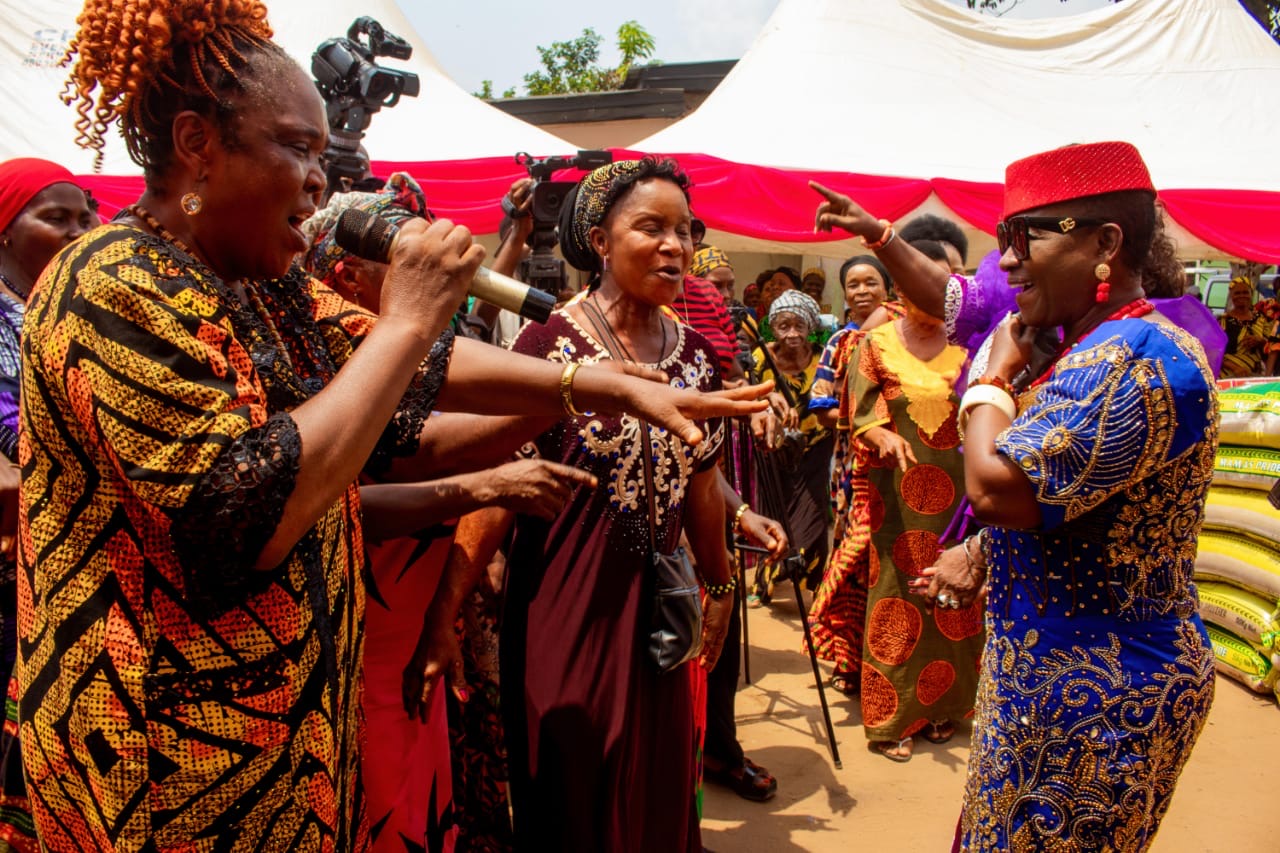
A renowned humanitarian and proud daughter of Mbaise in Imo State, High Chief (Dr.) Princess Chetachi Nwoga-Ecton, has empowered over 300 widows and vulnerable women across the Owerri Zone, in a remarkable demonstration of compassion and service to humanity.

The empowerment programme, which took place at the Palace of the Eze of Ngor Okpala, HRH Eze Engr. Fredrick Nwachukwu, brought together community leaders, traditional rulers, women groups and beneficiaries from different communities within the zone.
During the event, the widows received food materials and cash support, aimed at helping them meet basic needs and strengthen their small-scale businesses.
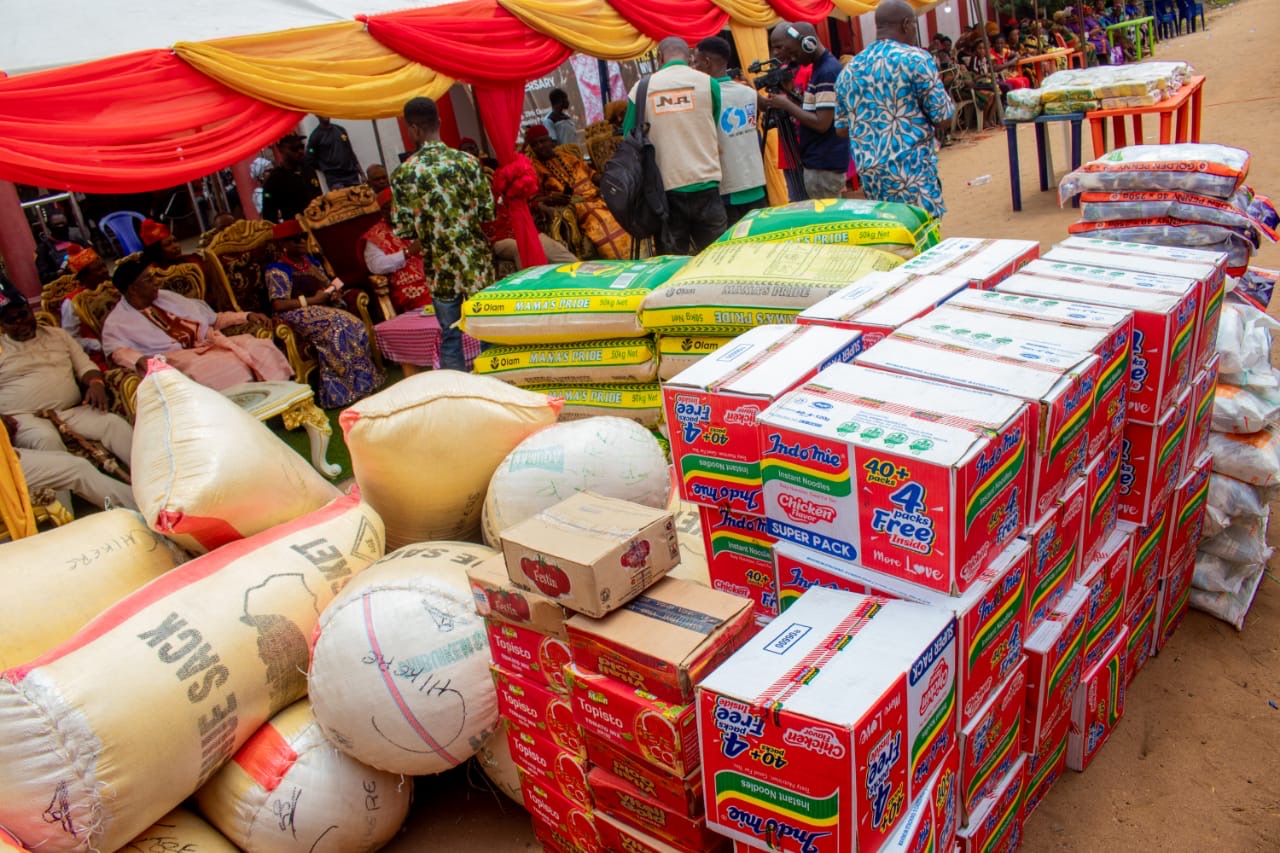
The initiative was widely applauded as a timely intervention to support women who often face severe economic hardship after losing their spouses.
Many of the beneficiaries expressed heartfelt appreciation to High Chief (Dr.) Nwoga-Ecton, describing the empowerment as a lifeline that would help them take better care of their families.
Some widows, while offering prayers for the philanthropist, noted that the gesture had restored hope and dignity in their lives.
Fondly known as Ada Imo and Adaure, High Chief (Dr.) Princess Chetachi Nwoga-Ecton has earned widespread admiration for her consistent humanitarian efforts both within Nigeria and internationally.
Through her philanthropic activities and foundations, she has continued to support widows, children, and vulnerable communities with interventions in healthcare, welfare and economic empowerment.
Community stakeholders who attended the programme commended the Mbaise-born philanthropist for her generosity and dedication to uplifting the less privileged, noting that her actions reflect true leadership and compassion.
Observers say the initiative further reinforces her growing reputation as one of the most impactful humanitarians of this generation, whose commitment to humanity continues to inspire hope across Imo State and beyond.


-
 society6 months ago
Religion: Africa’s Oldest Weapon of Enslavement and the Forgotten Truth
-

 news3 months ago
WHO REALLY OWNS MONIEPOINT? The $290 Million Deal That Sold Nigeria’s Top Fintech to Foreign Interests
-

 Business6 months ago
GTCO increases GTBank’s Paid-Up Capital to ₦504 Billion
-

 society6 months ago
“You Are Never Without Help” – Pastor Gebhardt Berndt Inspires Hope Through Empower Church (Video)