
Politics
2027 POLITICAL EARTHQUAKE: APC ON EDGE AS ATIKU–OBI–KWANKWASO REALIGNMENT SHAKES TINUBU’S RE-ELECTION CALCULUS


2027 POLITICAL EARTHQUAKE: APC ON EDGE AS ATIKU–OBI–KWANKWASO REALIGNMENT SHAKES TINUBU’S RE-ELECTION CALCULUS.
By George Omagbemi Sylvester | Published by saharaweeklyng.com
“How Nigeria’s Fragmented Opposition Is Gradually Finding Common Ground and Why the Ruling Party Is No Longer Laughing.”
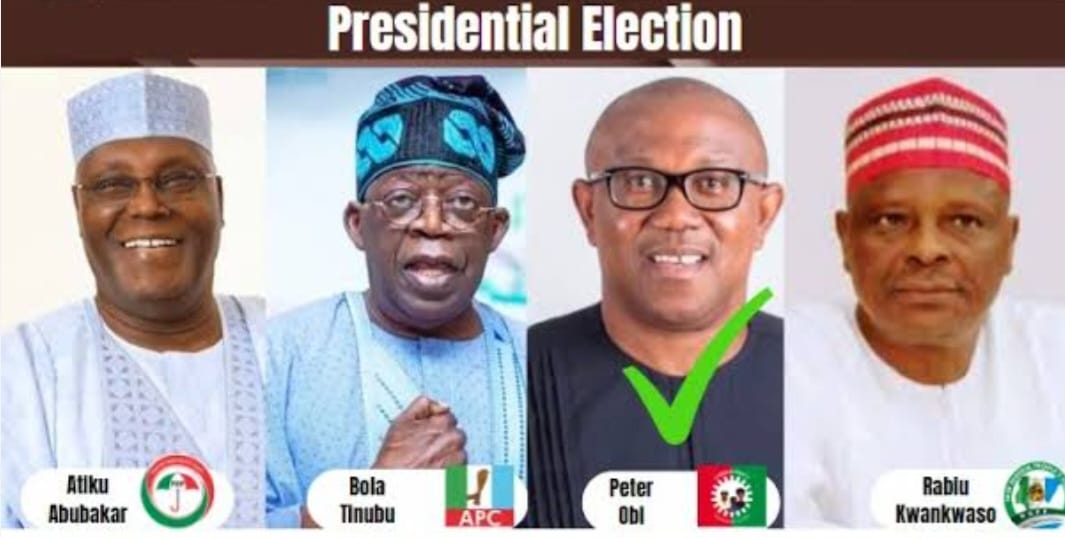
Nigeria’s political atmosphere is once again thick with anxiety, calculations and quiet negotiations as the road to the 2027 general elections begins to take shape. At the centre of this unfolding drama is a development the ruling All Progressives Congress (APC) can no longer afford to dismiss lightly: the growing convergence of interests among Atiku Abubakar, Peter Obi and Rabiu Musa Kwankwaso, all three political heavyweights whose combined electoral footprint poses the most serious threat yet to President Bola Ahmed Tinubu’s second-term ambitions.
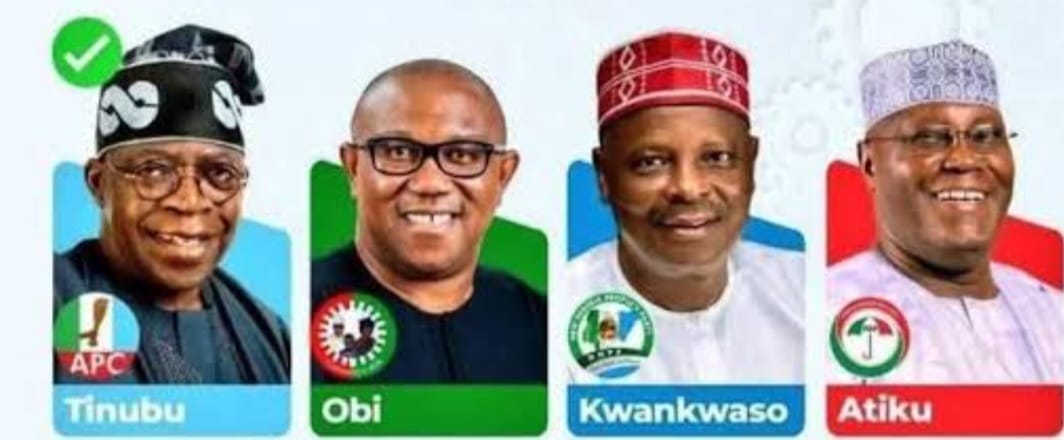
While no formal coalition has been announced, the signals, meetings, public statements and strategic silences emerging from opposition circles have been strong enough to trigger visible unease within APC ranks. Party strategists, according to multiple reports, now privately concede that a united opposition ticket (even one forged through compromise) could fundamentally alter Nigeria’s political arithmetic in 2027.
This fear is not rooted in speculation; it is grounded in electoral mathematics, voter behaviour and Nigeria’s worsening socio-economic realities.
Why the APC Is Worried: The Numbers Do Not Lie. The 2023 presidential election exposed a hard truth the APC has struggled to fully confront: Tinubu won power without a national consensus mandate.
Collectively, Atiku Abubakar (PDP), Peter Obi (Labour Party) and Rabiu Kwankwaso (NNPP) won the majority of Nigeria’s states and the Federal Capital Territory, while Tinubu secured victory largely through vote fragmentation. This outcome, widely acknowledged by political analysts, demonstrated that APC dominance is neither total nor guaranteed.

According to Professor Jibrin Ibrahim, a respected political scientist and Senior Fellow at the Centre for Democracy and Development (CDD),
“The 2023 election revealed a structural vulnerability in Nigeria’s ruling party system. When opposition votes are divided, incumbents benefit. When they are consolidated, incumbency becomes fragile.”
It is this exact vulnerability that now haunts the APC.
The Strategic Weight of Each Opposition Figure. Each of the three opposition leaders brings a distinct and complementary political strength.
Atiku Abubakar, a former Vice President and five-time presidential contender, retains deep political networks across Northern Nigeria, significant influence within the political elite and enduring appeal among business and policy circles.
Peter Obi represents something different and potentially more disruptive. His 2023 performance redefined youth participation, urban voter mobilisation and issue-based campaigning. Obi’s support base cuts across ethnic and religious lines, driven largely by economic frustration, unemployment and anger at elite misgovernance.
Rabiu Kwankwaso, meanwhile, commands a disciplined grassroots structure, particularly in parts of the North-West. His political movement has shown resilience outside traditional party platforms, proving that regional loyalty still matters in Nigeria’s electoral map.
Dr. Sam Amadi, former Chairman of the Nigerian Electricity Regulatory Commission, captures the moment succinctly:
“An Atiku–Obi–Kwankwaso convergence is not about ideology alone; it is about electoral reach. Together, they represent a near-national spread that the APC cannot replicate without extraordinary state leverage.”
APC’s Public Dismissal vs Private Alarm. Publicly, APC officials have attempted to project confidence (sometimes even mockery) towards opposition coalition talks. Statements suggesting that ego clashes, ambition and distrust will derail any alliance have become standard talking points.
However, seasoned political observers note that public bravado often masks private anxiety.
Behind closed doors, APC strategists are reportedly reassessing voter sentiment, regional alliances and internal party cohesion. The ruling party is particularly concerned about:
Urban youth alienation
Economic hardship and inflation
Rising insecurity
Erosion of public trust in governance
These are areas where the Tinubu administration is under intense scrutiny, both locally and internationally.
According to political economist Dr. Ayo Teriba,
“Economic performance will dominate the 2027 election narrative. If inflation, unemployment and debt continue on their current trajectory, no amount of incumbency advantage will fully neutralise voter anger.”
Coalition Politics: Lessons from History. Nigeria’s political history offers a sobering lesson: successful coalitions are rare but decisive.
The APC itself emerged in 2013 from a merger of ideologically diverse parties united by a single goal whereby dislodging the PDP. That coalition succeeded because ambition was temporarily subordinated to strategy.
Ironically, the same logic now threatens APC’s hold on power.
Professor Bolaji Akinyemi, former Foreign Affairs Minister, once noted: “In transitional democracies, alliances are not built on love; they are built on necessity. Survival often determines unity.”
The question, therefore, is not whether Atiku, Obi and Kwankwaso agree on everything, but whether they can agree on enough to present Nigerians with a credible alternative.
The Real Challenge for the Opposition. Unity alone will not guarantee victory.
For an opposition alliance to succeed, it must present:
A clear economic recovery plan
A credible security framework
A governance philosophy beyond personalities
A shared moral argument for national renewal
Without this, Nigerians may view the coalition as merely a recycled elite arrangement rather than a genuine break from the past.
Civil society advocate Aisha Yesufu warns: “Nigerians are tired of power struggles disguised as coalitions. Any alliance that fails to prioritise accountability, competence and transparency will lose public trust quickly.”
Tinubu’s Dilemma: Incumbency Without Comfort. President Tinubu enters the 2027 cycle with the traditional advantages of incumbency, but without the comfort of popular satisfaction.
Economic reforms, while defended as necessary, have inflicted short-term pain on millions of Nigerians. Combined with security challenges and governance controversies, this has created a volatile electoral environment.
In such conditions, a united opposition becomes more than a political threat as it becomes a symbol of protest, hope and possibility.
Power, Politics and the Future: Nigeria at a Crossroads. The anxiety within the APC is not paranoia; it is political realism.
Whether or not an Atiku–Obi–Kwankwaso alliance ultimately materialises, its mere possibility has already altered Nigeria’s political dynamics. It has forced the ruling party onto the defensive and re-energised a restless electorate searching for alternatives.
As 2027 approaches, Nigeria stands at a familiar but critical crossroads: continuity versus correction, power versus performance, entitlement versus accountability.
One thing is clear; the era of complacent incumbency is over. The political contest ahead promises to be fierce, consequential and unforgiving.
And this time, no stone will be left unturned.









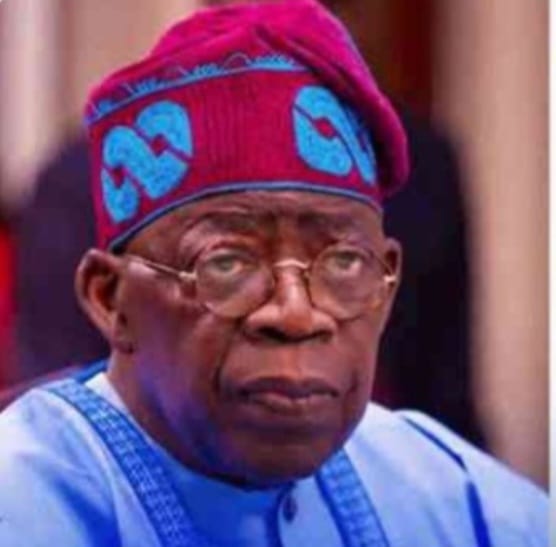
TINUBU RENEWS TENURE OF THREE PERMANENT SECRETARIES
President Bola Ahmed Tinubu has approved the renewal of tenure for three Permanent Secretaries in the Federal Civil Service, in line with existing public service regulations.
The approval was disclosed in a statement issued by the Office of the Head of the Civil Service of the Federation, indicating that the renewed appointments will take effect from April 27, 2026.
The affected officials include Kachallom Shangti Daju, Permanent Secretary in the Federal Ministry of Health and Social Welfare; Beatrice Jedy‑Agba, Solicitor-General of the Federation and Permanent Secretary in the Federal Ministry of Justice; and Mary Ada Ogbe, Permanent Secretary in the Federal Ministry of Regional Development.
According to the statement, the renewal represents a second and final four-year tenure for the officials, in accordance with the provisions of Public Service Rule 020909, which allows Permanent Secretaries an initial four-year term with the possibility of a second term based on satisfactory performance.
The Head of the Civil Service of the Federation, Didi Esther Walson‑Jack, congratulated the Permanent Secretaries on their reappointment and urged them to see the renewed mandate as a call to greater dedication and excellence in service delivery.
She further encouraged them to deploy their experience and professional expertise toward strengthening governance and advancing national development.
The statement was signed by Eno Olotu, Director of Press and Public Relations in the Office of the Head of the Civil Service of the Federation, and dated March 6, 2026.
Politics
Governor Dauda Lawal’s Prompt Action Against Insecurity in Zamfara State Yielding Positive Result’ – GDL Media Force Fires Back at Critics
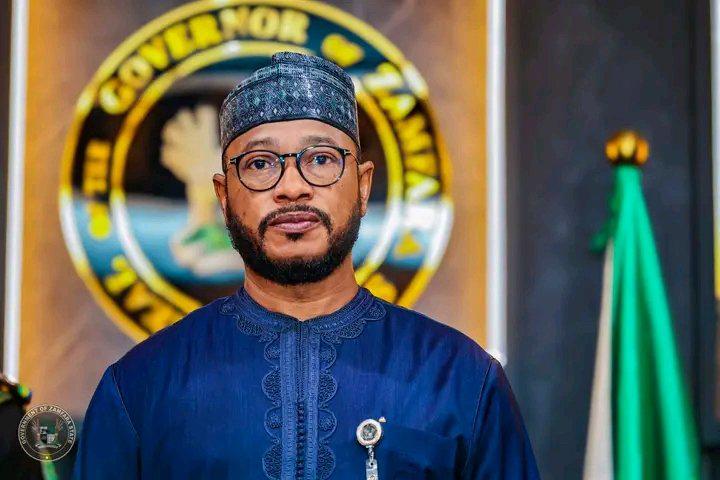
‘Governor Dauda Lawal’s Prompt Action Against Insecurity in Zamfara State Yielding Positive Result’ – GDL Media Force Fires Back at Critics
The attention of GDL Media Force and other well-meaning supporters of the Dauda Lawal-led administration has been drawn to a recent statement syndicated on social media by influencers from a group calling itself the Zamfara Good Governance Forum, which ludicrously attempted to portray the Governor’s security efforts as a “total failure.” This characterisation is not only divorced from reality. Still, it represents a desperate attempt by political opponents to rewrite history and undermine a Governor whose growing influence and performance clearly terrify them. It should be on record that in the whole of the North West region, Governor Dauda Lawal has tackled insecurity head-on with verifiable evidence that even those in the opposition have commended him for his huge investment in equipment that will further give security and armed forces an edge over those fueling insecurity in the country.
Since his assumption as Governor of Zamfara State, Dr Lawal has vowed that as the Chief Security Officer of the state, as well as the chief rescuer, an unprecedented commitment to tackling the security challenges that have plagued Zamfara for over a decade is his top priority and he is engaging it with much gusto. Unlike previous administrations, that engaged in shadowy deals with non-state actors, this Governor has chosen the path of transparency, capacity building, and decisive action. He was one of the Governors who openly declared that His administration would not negotiate with bandit rather his administration with fight them to a standstill and ensure they are cleared out.
In a bid to address the issues of insecurity with a well-planned arrival plan, he procured heavy Security Assets that even the Federal Government commended, him for. The recently procured and unveiled 25 units of Armoured Personnel Carriers (APCs) and an 80-meter endurance surveillance drone capable of covering 50 kilometres and operating continuously for eight hours. This represents the single largest state-government investment in security hardware in the history of Zamfara State.
The Defence Minister, during the inauguration ceremony, praised what he described as a clear demonstration of the Governor’s commitment to protecting lives and property, making the striking projection that “if we continue like this in the second term, Zamfara will look like Dubai”. This is not praise from a partisan source it is professional acknowledgement from the highest level of Nigeria’s defence establishment that Governor Lawal is doing something right.
Beyond heavy military hardware, the Governor has operationalised the Community Protection Guards in accordance with the law, providing them with 60 brand-new, well-equipped Hilux operational vehicles and specialised motorcycles to ensure swift response and effective first-responder services in difficult terrains. This is complemented by the distribution of 150 Hilux vehicles to mainstream security agencies including the Nigeria Police, DSS, and NSCDC, plus 20 Toyota Buffalo vehicles (both armoured and soft-body).
Perhaps most significantly, Governor Lawal established the Zamfara State Security Trust Fund, which provides a predictable, structured framework for logistical support to security forces. This moves the state away from the era of fragmented, reactive responses to a professional, sustainable security architecture.
When recent attacks occurred including the unfortunate February 19 incident in Anka LGA, Governor Lawal did not go into hiding or issue condolence statements from his office in Gusau. He immediately convened and personally presided over an emergency security meeting with all heads of security agencies at the Government House in Gusau, tasking them to urgently review the current security framework and implement coordinated countermeasures.
The Governor charged security chiefs to maintain “heightened vigilance, strengthened intelligence, and immediate, coordinated countermeasures” to ensure that criminal elements do not gain further ground. He also commiserated with affected communities and assured them of his administration’s full support both logistical and institutional. This is not the behaviour of a detached leader. This is the conduct of a Governor who understands that his primary constitutional responsibility is the protection of lives and property.
The public needs to understand the pedigree of those behind these allegations. The so-called “Zamfara Good Governance Forum” has a well-documented history of partisan attacks against Governor Lawal. A simple review of their previous statements reveals a pattern they have consistently attacked the Governor while remaining conspicuously silent during the administrations that presided over the worst years of banditry in the state. Interestingly, these attacks often coincide with political manoeuvres by the immediate past governor, Bello Matawalle, now Minister of State for Defence. The Zamfara State Government has previously accused Matawalle of using federal security apparatus to intimidate opposition figures in the state. The current criticism fits a familiar pattern, when you cannot defeat a Governor politically or at the ballot box, you attempt to undermine him through sponsored propaganda spreading sheer falsehood to ensure the public turns their back on a performing Governor who is rebuilding the rot the Matawale-led administration caused.
These same critics who now demand a “security roadmap” conveniently ignore that Governor Lawal inherited a state that was virtually a failed entity where farmers could not access their lands, where markets were paralysed, and where government had lost all credibility through failed negotiations and ransom payments to bandits.
Critics also conveniently ignore a fundamental reality Governor Lawal is the only opposition governor in the entire North-West geopolitical zone. Since taking office in 2023, his administration has received no federal intervention funds beyond statutory allocations no special palliatives, and no enhanced security support that flows to states with ruling-party governors. Yet despite this political isolation, he has managed to fund security without resorting to new borrowing, while monthly servicing N1.2 billion in inherited debts from the Bello Matawalle-led administration. This is governance under siege fiscally constrained, politically isolated, yet still delivering.
Governor Dauda Lawal has never claimed that the battle against banditry is easy or that success will come overnight. What he has demonstrated is sincerity of purpose, strategic vision, and relentless commitment. From the Security Trust Fund to community protection guards, from armoured personnel carriers to surveillance drones, these are not the actions of a leader who has failed. The growing influence of Governor Lawal across the North-West clearly frightens those who benefited from the old order of insecurity. When banditry thrives, politicians who negotiate with criminals remain relevant. But when peace is restored through genuine security architecture, such elements become obsolete.
Zamfara State is on the path to lasting peace. The detractors may continue their campaign of falsehood, but the facts on the ground speak louder than their sponsored propaganda. Governor Dauda Lawal remains focused, undeterred, and absolutely committed to restoring full normalcy to every inch of Zamfara State. The people of Zamfara see the progress. The Federal Government acknowledges the investment. And history will remember who truly fought for the state’s liberation.
Signed: GDL Media Force Support Group
March 4, 2026
Abuja, Nigeria
Politics
DANFULANI, A PARTY STALWART, MAKES CASE FOR APC PUBLICITY SECRETARY ROLE, PROMISES DIGITAL REVOLUTION, URGES DELEGATES SUPPORT
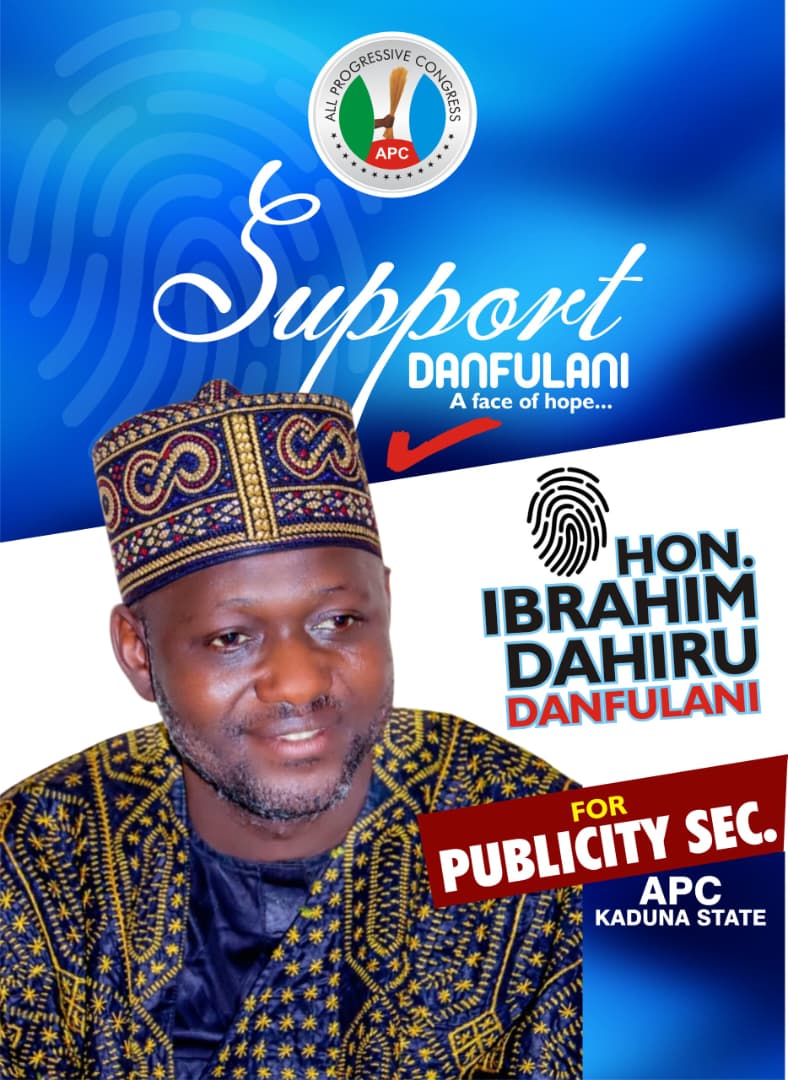
DANFULANI, A PARTY STALWART, MAKES CASE FOR APC PUBLICITY SECRETARY ROLE, PROMISES DIGITAL REVOLUTION, URGES DELEGATES SUPPORT
In a move set to reshape the communication dynamics of the All Progressives Congress (APC) in Kaduna State, a prominent party stalwart has formally declared his intention to contest the position of State Publicity Secretary.
The aspirant, Ibrahim Dahiru Danfulani, brings a deep history of party service to his candidacy. Born in Mando, Afaka ward, Igabi Local Government of Kaduna State, Danfulani was SA Northern media strategies to the APC Publicity Secretary Mr Lai Mohammed, he is also the founder of the APC at Your Door Campaigns Forum. He previously served as the North-west Secretary for the GMB support group, which campaigned extensively for the late President Muhammadu Buhari in 2015. Danfulani was also a founding member of the Tinubu Support Organization and is the Convener of the General Christopher Gwabin Musa Support Initiative. His practical electoral experience includes serving as the Returning Officer for the APC in Afaka ward, Igabi Local Government, during the 2023 Presidential and Gubernatorial elections.
Now holding the traditional title of Sadaukin Garkuwan Keffi/Betara Biu, Danfulani has called upon party leaders, delegates, and critical stakeholders to rally behind his candidacy in the upcoming state congress scheduled for March 3, 2026.
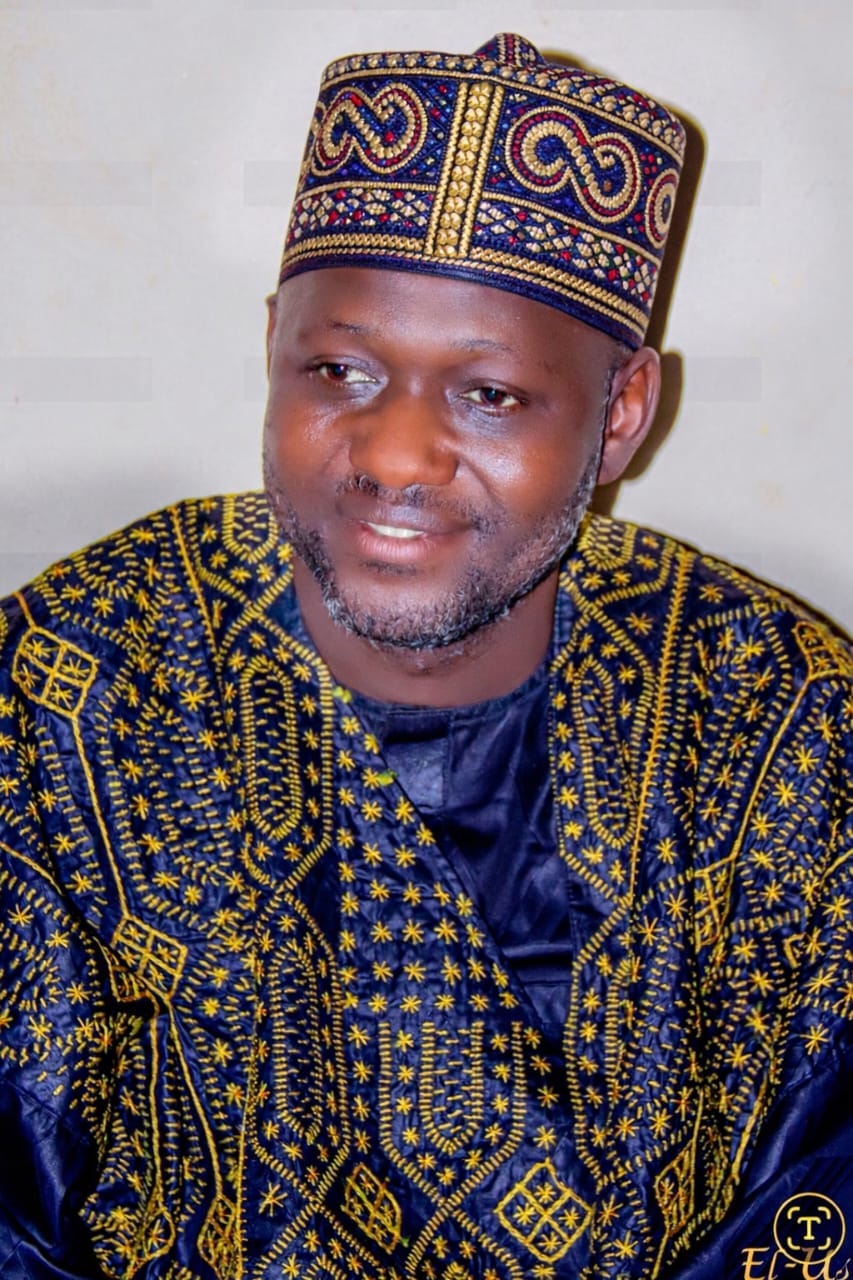
This appeal was contained in a personally signed statement released to the press on Tuesday, wherein Danfulani outlined his vision for a more robust, strategic, and modern party publicity machinery.
Citing his formidable and unparalleled experience spanning over a decade at the intersection of journalism and practical politics, Danfulani positioned himself as the ideal candidate to articulate and defend the party’s programmes, policies, and achievements. He argued that this unique blend of skills is precisely what the APC needs to enhance its narrative, engage a broader electorate, and consolidate its gains in the state.
“My extensive background in media practice and deep-rooted involvement in political mobilisation have equipped me with the requisite insight to drive an effective communication strategy for our great party,” the statement read in part. “I understand both the power of the pen and the pulse of the people.”
In a pledge that signals a forward-looking approach, the aspirant promised to revolutionise the party’s media engagement by introducing several innovative digital media strategies if elected. This proposed digital overhaul aims to leverage social media platforms, data analytics, and targeted content creation to connect with younger demographics, counter misinformation swiftly, and project the APC’s activities with greater clarity and impact.
Political observers note that Danfulani’s entry into the race brings a significant weight of credibility and strategic acumen, bolstered by his extensive grassroots and national campaign experience. His background underscores deep community ties and respect within traditional circles, a factor considered invaluable for trust-building.
The statement concluded with a confident appeal: “I humbly seek your mandate. With your support, I am committed to serving as a dynamic, proactive, and articulate voice for the APC in Kaduna State, ensuring our story is told accurately, persuasively, and consistently across all media frontiers.”
As the congress date approaches, Danfulani’s candidacy—built on a proven track record of party service and a promise of digital innovation—is poised to be a major point of discussion among party faithful seeking a communicative edge for the elections ahead.


-
 society6 months ago
Religion: Africa’s Oldest Weapon of Enslavement and the Forgotten Truth
-

 news3 months ago
WHO REALLY OWNS MONIEPOINT? The $290 Million Deal That Sold Nigeria’s Top Fintech to Foreign Interests
-

 Business6 months ago
GTCO increases GTBank’s Paid-Up Capital to ₦504 Billion
-

 society6 months ago
“You Are Never Without Help” – Pastor Gebhardt Berndt Inspires Hope Through Empower Church (Video)