
society
Nigeria Is Not Poor; It Is Plundered

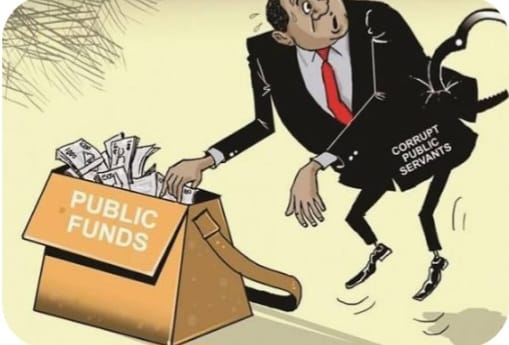
Nigeria Is Not Poor; It Is Plundered.
By George Omagbemi Sylvester
“A Forensic Look at Grand Corruption, State Capture and Why the Ballot Remains Nigeria’s Most Powerful Anti-Looting Tool.”
Nigeria is often described (both at home and abroad) as a poor nation. That description is not only misleading; it is INTELLECTUALLY lazy and MORALLY dangerous. Nigeria is not poor. Nigeria is systematically plundered. What masquerades as poverty is, in truth, the cumulative outcome of decades of grand corruption, elite impunity, institutional decay, and a political culture that privatizes public wealth while socializing suffering.
The long list of scandals. Nigerians now recite almost casually with Abacha loot, Diezani Alison-Madueke, James Ibori, fuel subsidy frauds, NDDC trillions, NNPC opacity, central bank scandals, budget padding, security vote abuses; are not isolated events. They form a clear pattern: state capture by a predatory political elite.
As the late Kenyan scholar Ali Mazrui once observed, “Africa is not underdeveloped; it is over-exploited and internally as much as externally.” Nigeria is perhaps the most painful illustration of this truth.

Looting as a System, Not an Accident. The thefts Nigerians discuss are not market pickpocketing; they are industrial-scale extractions enabled by weak institutions and political protection.
The Abacha loot, recovered over several decades from Switzerland, the UK, the US and other jurisdictions, runs into billions of dollars, officially acknowledged by Nigerian and foreign governments. The very fact that stolen public funds had to be repatriated from foreign vaults is itself an indictment of governance failure.
Diezani Alison-Madueke, former petroleum minister, remains at the center of multiple forfeiture cases in the UK and Nigeria involving luxury properties, cash, and assets allegedly linked to corruption. Several courts have ordered interim and final forfeitures, underscoring that these are not mere rumors but judicially examined matters.
James Ibori, former Delta State governor, was convicted and imprisoned in the United Kingdom for money laundering which is one of the clearest international confirmations of Nigerian elite corruption.
These cases alone debunk the myth of Nigerian poverty. Poor nations do not produce billion-dollar looters. Only resource-rich but poorly governed states do.
The Normalization of the Scandal Economy. From fuel subsidy frauds to the NDDC’s unaccounted trillions, from budgetary insertions to security vote secrecy, Nigeria has normalized what political economists call a scandal economy with a system in which corruption is not an aberration but a routine cost of governance.
Former Central Bank Governor Lamido Sanusi warned years ago that “Nigeria’s problem is not lack of resources but lack of discipline and accountability.” His warning proved prophetic. Revelations around the Central Bank, the opaque operations of NNPC over the years, and audit reports showing trillions in “UNRECONCILED” figures reinforce a disturbing pattern: when oversight disappears, looting accelerates.
The controversies surrounding the Kolmani Oil Project, the Nigeria Air project and disputed figures in the power sector all point to the same structural problem; projects announced with fanfare, funded with public money and later surrounded by opacity, denials and silence.

When Anti-Corruption Becomes Selective. One of Nigeria’s gravest challenges is not merely corruption, but selective accountability. Anti-corruption agencies often act swiftly against political opponents while cases involving powerful insiders stagnate.
Renowned Nigerian historian Professor Toyin Falola has argued that “A state that punishes theft among the poor but negotiates theft among the elite is not fighting corruption; it is managing it.” This perception (whether fully accurate or not) has damaged public trust and weakened civic morale.
Cases involving former governors, ministers, heads of agencies and senior civil servants often drag on for years, creating the impression that justice is negotiable. Meanwhile, Nigerians are told to endure austerity, subsidy removals and tax increases in the name of fiscal discipline.
Poverty as Policy Outcome.
The human cost of looting is not abstract. It is visible in:
Collapsing public hospitals
Underfunded universities and prolonged strikes
Youth unemployment and mass migration
Insecurity fueled by poverty and state weakness
As Nobel laureate Amartya Sen explains, “Poverty is not just lack of income; it is the deprivation of basic capabilities.” In Nigeria, corruption directly strips citizens of these capabilities; health, education, safety and dignity.
When trillions vanish from oil revenues, power budgets or development agencies, Nigerians pay twice: first through stolen resources, and second through deteriorating public services.
The Myth of Scarcity and the Lie of Austerity. Nigerians are constantly told there is “NO MONEY.” Yet history shows that money appears whenever political elites are involvedwith lots of luxury convoys, private jets, overseas medical trips and inflated contracts.
Political economist Claude Ake once warned that “Those who control the state in Africa often see it as an instrument for primitive accumulation rather than public service.” Nigeria’s experience fits this diagnosis precisely.
Austerity imposed on the masses alongside extravagance for the elite is not economic necessity; it is moral failure.

Votes, Accountability, and the Last Line of Defense. Elections in Nigeria have too often been reduced to moments of transactional politics; like rice, cash, T-shirts and slogans. Yet history is clear: no reform survives without political accountability.
As American jurist Louis Brandeis famously said, “Sunlight is the best disinfectant.” In Nigeria, the ballot remains the strongest form of sunlight available to ordinary citizens.
Voting wisely is not about party worship; it is about demanding:
Transparent budgeting
Independent institutions
Swift and equal justice
Asset recovery with public reporting
Until looting carries real political consequences, it will continue.
A Final Reflection: From Plunder to Possibility.
Nigeria’s tragedy is not destiny. It is choice. Nations poorer in natural resources have built prosperity because they chose accountability over impunity. Nigeria can do the same.
The question before Nigerians is no longer whether corruption exists, though it does, abundantly and demonstrably. The real question is whether citizens will continue to legitimize it through silence, cynicism or compromised votes.
Nigeria is not poor.
Nigeria has been robbed repeatedly.
And only an awakened, principled electorate can end the robbery.
As political philosopher Hannah Arendt warned, “The most radical revolutionary will become a conservative the day after the revolution.” Democracy requires constant vigilance, not episodic outrage.
If Nigerians use their votes wisely, corruption will no longer be a lifetime appointment, but it will become a career-ending risk.
That is how nations are reclaimed.








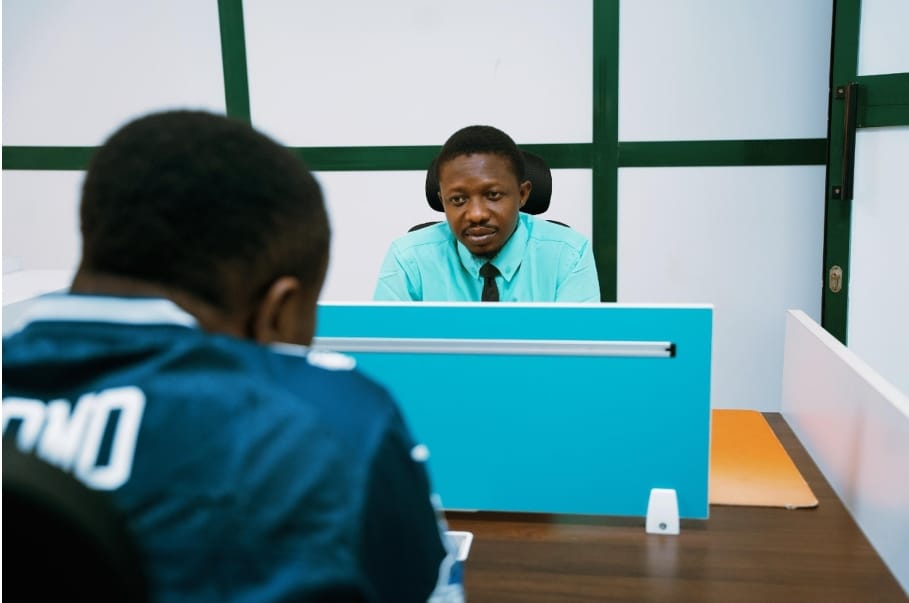
How OPay Is Turning Product Architecture Into a Customer Service Advantage
In high-volume fintech markets like Nigeria, customer service can no longer sit at the end of the business process. When a platform serves tens of millions of users and processes millions of transactions every day, the old model of customer service, call centres, long queues, and manual complaint handling quickly becomes too slow, too costly, and challenging to scale.
The future of customer service in fintech is not just about answering calls faster. It is about preventing problems before they happen. This is where product design, technology, and risk systems begin to play a bigger role. Instead of reacting to customer complaints, modern fintech platforms are now building customer protection and support directly into the app experience itself.
OPay is one of the platforms showing how this shift works in practice.
Over the past few years, OPay’s product development has followed a clear pattern. New features are not only designed to make payments easier, but also to reduce errors, prevent fraud, and lower the number of issues that customers need to complain about. In simple terms, many customer service problems are stopped before users even notice them.
One of the strongest examples of this approach is OPay’s real-time fraud and scam alerts. Traditionally, customers only contact support after money has already left their account. At that point, the damage is done, emotions are high, and recovery becomes more complex. OPay’s system works differently. When a transaction looks unusual, based on amount, timing, behaviour, or pattern, the system raises a warning before the transfer is completed. This gives users a chance to pause, review, and confirm. In many cases, this stops fraud before it happens.
For users, this feels like protection built into the app, not an emergency response after a loss. For the business, it means fewer fraud cases, fewer complaints, and less pressure on customer support teams. This proactive model aligns with global fintech best practices, which prioritise prevention over recovery.
Another important layer is step-up security for high-risk or high-value transactions. As users move more money and rely more heavily on digital wallets, security cannot be one-size-fits-all. Adding too many checks to every transaction creates frustration. Adding too few creates risk. OPay balances this by applying stronger security only when it is needed. For example, biometric verification and additional authentication steps are triggered in sensitive situations. This keeps everyday transactions smooth, while adding extra protection when the risk is higher. This approach builds trust quietly. Users may not always notice the security working in the background, but they feel the result: fewer unauthorised transfers and fewer urgent problems that require support intervention.
Beyond visible features, OPay also runs behaviour-based risk systems in the background. These systems monitor patterns such as sudden device changes, unusual login behaviour, or transaction activity that does not match a user’s normal habits. When something looks off, the system responds automatically. Most users never see these checks. But their impact shows up in fewer failed transactions, fewer reversals, and fewer cases where customers need to chase resolutions. As a result, customer service interactions shift away from crisis handling toward simple guidance and assistance.
Together, these layers form what can be called an invisible customer service system. Many issues are intercepted early, long before they become formal complaints. User sentiment on social media provides real-world signals of how this system is being experienced. On X (formerly Twitter), some users have publicly shared their experiences with OPay’s responsiveness and reliability.
One user, @ifedayo_johnson, wrote, “Opay has refunded it almost immediately. Before I even made this tweet but I didn’t notice. logged it as transfer made in error on the Opay app and they acted almost immediately. Commendable. Thank you @OPay_NG. I’m very impressed with this!”
Another user, @EgbonAduugbo, shared “The reason I love opay so much is that you hardly ever have to worry, wait or call their customer service for anything cuz everything just works!”
While social media comments are not formal performance metrics, they matter. They reflect how real users feel when systems work smoothly and issues are resolved quickly, often without friction. This product-led customer service model becomes even more important when viewed in the context of OPay’s scale. At this scale, even minor improvements in fraud prevention or transaction success rates can prevent thousands of potential complaints every day. In this context, customer service is no longer driven mainly by headcount. It is driven by engineering choices, risk models, and system design.
OPay’s journey suggests what the future of fintech in Africa may look like. The next generation of leaders will not only be those with the most users, but those whose systems are designed to protect users, resolve issues quickly, and reduce friction at scale.
society
Phillips Esther Omolara : Answering The Call To Worship And Transforming Lives Through Gospel Music

Phillips Esther Omolara : Answering The Call To Worship And Transforming Lives Through Gospel Music
Introduction : Phillips Esther Omolara (Apple Of God’s Eye) is an Inspirational and passionate Nigerian gospel music minister, singer, and songwriter dedicated to spreading the message of Christ through her songs.
Background : I was born and brought up in Lagos State. I am a devoted gospel minister and a worship leader who began her musical journey in the children choir later graduated to adult church choir at a young age, leading praises and also a vocalist in the choir.
Early Life : I was born on April 8th 1990 in Lagos, Phillips Esther Omolara is a native of Oyo state in Ogbomosho.
Family : Got married to Phillips Oluwatomisin Omobolaji from Ogun State and our union was blessed with children.
Education : I went to Duro-oyedoyin nursery and primary school Ijeshatedo, Lagos, where I laid the foundation for my academic pursuits. For my secondary education, I attended Sanya Grammer school in Ijeshatedo, Lagos.
During my high school years, I was already deeply involved in church activities. After completing my secondary education, Phillips Esther pursed higher education at Lagos State Polytechnic (LASPOTECH).
Musical Style : Known for [e.g., Inspirational songs, Contemporary Worship, Highlife, Reggae, Traditional Yoruba], and my music blends spiritual depth with creative musicality.
INSPIRATIONS AND INFLUENCES : I have no specific role model in the gospel music industry. However, I have expressed my love for songs from several Veteran gospel artists who have influenced my musical journey.
Some of the gospel artists whose music i admires include:
* Mama Bola Are
* Tope Alabi
* Omije Ojumi
* Baba Ara
* Bulky Beks
Mission : My ministry focuses on leading people to the presence of God and creating an atmosphere for miracles.

CHETACHI NWOGA-ECTON EMPOWERS 300 WIDOWS IN IMO
A renowned humanitarian and proud daughter of Mbaise in Imo State, High Chief (Dr.) Princess Chetachi Nwoga-Ecton, has empowered over 300 widows and vulnerable women across the Owerri Zone, in a remarkable demonstration of compassion and service to humanity.

The empowerment programme, which took place at the Palace of the Eze of Ngor Okpala, HRH Eze Engr. Fredrick Nwachukwu, brought together community leaders, traditional rulers, women groups and beneficiaries from different communities within the zone.
During the event, the widows received food materials and cash support, aimed at helping them meet basic needs and strengthen their small-scale businesses.

The initiative was widely applauded as a timely intervention to support women who often face severe economic hardship after losing their spouses.
Many of the beneficiaries expressed heartfelt appreciation to High Chief (Dr.) Nwoga-Ecton, describing the empowerment as a lifeline that would help them take better care of their families.
Some widows, while offering prayers for the philanthropist, noted that the gesture had restored hope and dignity in their lives.
Fondly known as Ada Imo and Adaure, High Chief (Dr.) Princess Chetachi Nwoga-Ecton has earned widespread admiration for her consistent humanitarian efforts both within Nigeria and internationally.
Through her philanthropic activities and foundations, she has continued to support widows, children, and vulnerable communities with interventions in healthcare, welfare and economic empowerment.
Community stakeholders who attended the programme commended the Mbaise-born philanthropist for her generosity and dedication to uplifting the less privileged, noting that her actions reflect true leadership and compassion.
Observers say the initiative further reinforces her growing reputation as one of the most impactful humanitarians of this generation, whose commitment to humanity continues to inspire hope across Imo State and beyond.


-
 society6 months ago
Religion: Africa’s Oldest Weapon of Enslavement and the Forgotten Truth
-

 news3 months ago
WHO REALLY OWNS MONIEPOINT? The $290 Million Deal That Sold Nigeria’s Top Fintech to Foreign Interests
-

 Business6 months ago
GTCO increases GTBank’s Paid-Up Capital to ₦504 Billion
-

 society6 months ago
“You Are Never Without Help” – Pastor Gebhardt Berndt Inspires Hope Through Empower Church (Video)