
society
THE GREAT LAND SCANDAL: Wike Under Fire for Alleged Illegal Allocation of Abuja’s Green Spaces

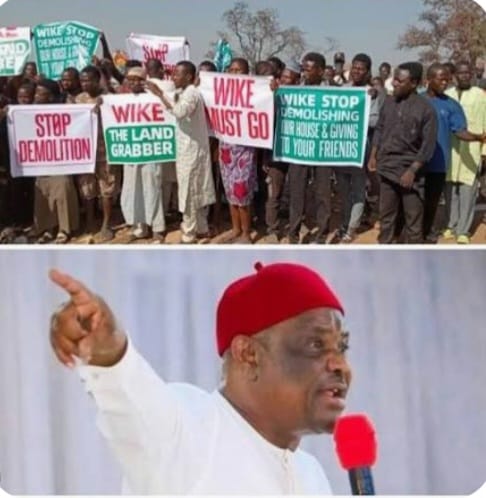
THE GREAT LAND SCANDAL: Wike Under Fire for Alleged Illegal Allocation of Abuja’s Green Spaces
By George Omagbemi Sylvester | Published by SaharaWeeklyNG
“How the Federal Capital’s Urban Integrity Faces an Existential Threat.”
In the heart of Africa’s most politically symbolic city, Abuja, a storm has erupted (not fueled by ideology or electoral dispute) but by an alleged betrayal of urban planning principles, environmental sustainability and public trust. At the centre of this convulsion stands Barrister Ezenwo Nyesom Wike, Nigeria’s Minister of the Federal Capital Territory (FCT), accused by a leading human rights lawyer of illegally allocating protected green areas to developers for luxury residential construction. The controversy has ignited fresh debate about governance, environmental law and the future of Nigeria’s capital city.
The flashpoint was a designated green area in Maitama Extension, one of Abuja’s most prestigious residential districts. This zone was reserved in Abuja’s Master Plan as a green buffer, designed to support stormwater runoff, preserve natural ecology and act as a safety valve against flooding in the rainy season. Yet, according to human rights lawyer and activist Deji Adeyanju, this sacred urban reserve has now been fenced off and construction of upscale duplexes is proceeding unabated on it.

Adeyanju’s allegation is not trivial rhetoric, it is a direct challenge to the sacred covenant between an administration and the public it serves. In his public statement, he described the development as an “outright distortion of the Abuja Master Plan,” warning that it “places private profit above public safety and environmental sustainability.” His imagery was striking: a natural drainage channel turned makeshift access road, a warning sign of impending environmental peril.
Urban Planning vs. Commercial Gain.
The Abuja Master Plan, established as a binding framework for land use and development, includes provisions for green areas precisely to manage stormwater, reduce urban heat islands, conserve biodiversity and serve as public recreational space. Urban planning experts stress that these zones are not just aesthetic features, but functional infrastructure critical to city resilience. When green buffers are compromised, cities face more severe flooding, infrastructure strain and public health risks.
One respected urbanist, speaking on condition of anonymity due to the political sensitivity of the matter, noted:
“Green spaces in planned cities are equivalent to lungs in a human body; deprive a city of its green lungs and you invite systemic failure alongside environmentally and socially.”
Though specific environmental impact assessments for the Maitama Extension project have not been made public, observers note that the area’s natural drainage channels historically diverted heavy rainfall runoff. Interfering with these features could worsen flooding in already vulnerable neighbourhoods.
Allegations, Public Outrage and Official Response.

Adeyanju’s critique exploded on social media and was amplified by civil society groups already sceptical of the FCT Administration’s land policies. Many fear that this is not an isolated issue but a symptom of a broader pattern of land governance that favours powerful interests at the expense of public rights.
In response, the FCT Minister’s spokesperson, Lere Olayinka, defended the administration’s authority over land use decisions. He stated that land designation is not static and can be altered if legally approved, including by the Minister himself. Olayinka argued that reclassifying land use (even from green zone to residential) is permissible under certain conditions and should not be immediately interpreted as illegal.
This response highlights a crucial legal question: What constitutes lawful change of land use in Abuja? The Federal Capital Territory Act and urban planning statutes require that land use alterations must comply with the Master Plan and be transparently processed through appropriate planning authorities. Without full disclosure of approvals, critics argue, any claimed authority to repurpose green areas must be vigorously scrutinised.
Civil Society and Calls for Transparency.
The controversy has drawn more than one voice. A coalition of civic and housing advocacy organisations (including the Housing Development Advocacy Network) has publicly admonished the FCT administration for what they describe as “a dangerous erosion of Abuja’s green infrastructure.” According to the network, parks, gardens and buffer zones originally reserved as the capital’s lungs are being eroded through indiscriminate allocations for commercial or residential developments.
“The loss of green spaces,” the HDAN argued, “threatens not only ecological balance but also the lived quality of citizens and investors alike.” In their view, sustainable development must balance growth with preservation and not sacrifice one at the altar of short-term gain.
Another prominent civil society campaign, carrying the hashtag #StopWikeLandGrab, has called for mass action and independent investigation into alleged cronies benefiting from controversial land deals in the FCT. While some of the more expansive claims (such as massive tracts of land being allocated to family members) have been contested and remain subject to verification, they nonetheless reflect deep public mistrust in the administration’s land management practices.
A transparency advocate from Abuja, Dr. Chibuzo Okeke, offered a stark criticism that resonates with many residents:
“When land intended for the public good becomes a vehicle for private accumulation without clear accountability, it signals a crisis of governance. Abuja belongs to the people not to a selected few.”

Environmental Risks and Urban Futures.
Environmental scientists warn that tampering with natural drainage systems, as alleged in the Maitama case where a canal is reportedly being converted into an access road, could have severe consequences. In cities with similar climates and topographies, the loss of natural channels has been linked with increased frequency and severity of flood events, soil erosion and infrastructure failures.
Professor Amina Suleiman, a climatologist at a Nigerian university, underscores the severity:
“Urban expansion must respect natural hydrology. When you disrupt waterways for development without compensatory engineering or rigorous planning, you court ecological failure.”
In a city like Abuja, which experiences intense seasonal rainfall, the stakes are high. Without green buffers and functioning natural drainage, residents could face heightened flood risk, not just in Maitama, but in neighbouring districts cascading downhill.
Governance, Law and the Public Interest.
The Wike controversy underscores a broader struggle over how public assets are managed, who gets to decide their use, and how transparent those decisions must be. Nigeria’s Constitution and related land laws mandate that public officials act in the public interest and uphold principles of accountability and fairness. When these tenets appear compromised, citizen confidence in governance erodes.
Legal experts suggest that, if substantiated, the allocation of green areas for luxury residential development without demonstrated compliance with planning and environmental safeguards could constitute a breach of administrative law. However, they also note that such matters often hinge on procedural proof, documented approvals, environmental impact assessments and transparent decision-making records.
A Moment of National Reflection.
At its core, the Maitama green area dispute is not merely a local planning controversy, but it is a national litmus test. Nigeria is grappling with rapid urbanisation, environmental vulnerabilities and governance challenges. How these are managed will determine not only the future of Abuja but also signal the country’s commitment to sustainable development and the rule of law.
For now, public outcry continues, civic organisations press for independent investigations, and residents watch with concern as this drama unfolds in the corridors of power.
Yet one truth stands: urban land is not just a commodity, it is a public trust. And any erosion of that principle risks more than controversy; it threatens the environmental sustainability and social fabric of the capital city itself.





society
NATION MOURNS: 22 YEARS SINCE THE PASSING OF RENOWNED ISLAMIC SCHOLAR SHEIKH SIDI ATTAHIRU SOK
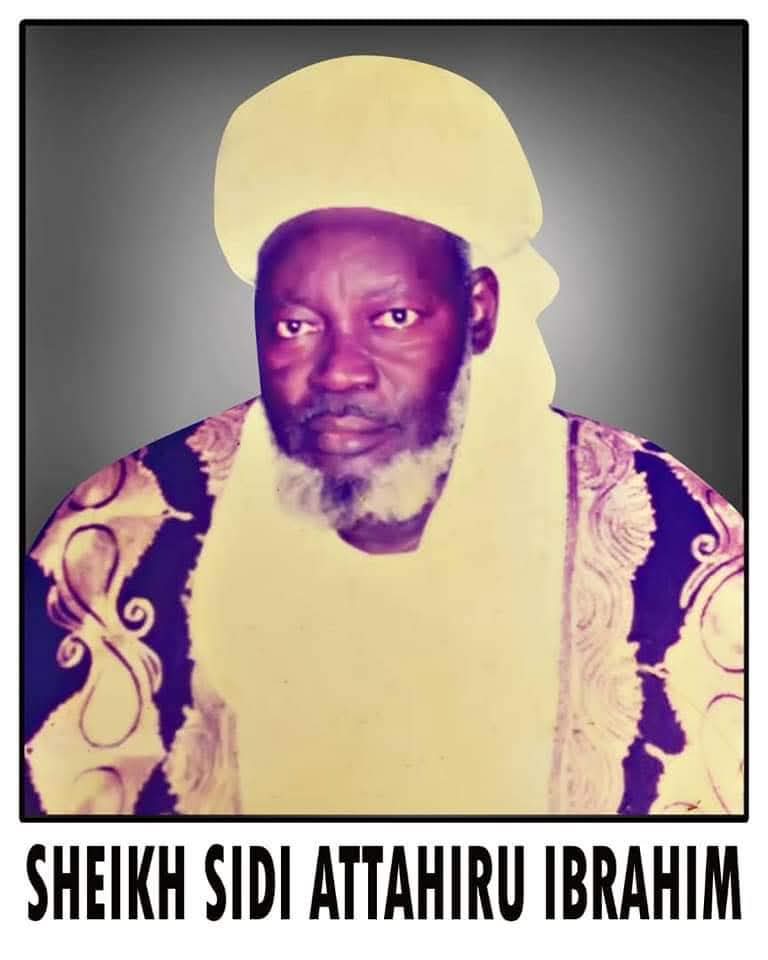
*NATION MOURNS: 22 YEARS SINCE THE PASSING OF RENOWNED ISLAMIC SCHOLAR SHEIKH SIDI ATTAHIRU SOK
Today marks twenty-two years since the demise of one of Nigeria’s most revered Islamic scholars, Sheikh Sidi Attahiru Sokoto, whose legacy continues to inspire millions across the nation and beyond.
Sheikh Sidi Attahiru Sokoto passed away on Friday, April 16, 2004, corresponding to the 28th of Safar in the Islamic calendar. In a heartfelt tribute shared on social media, his son, Sheikh Aliyu Sidi Attahiru founder of the ASAttahir International Foundation, established in honour of his late father recalled the scholar’s life of piety, scholarship, and service.
Accompanying the tribute was a cherished photograph taken on Monday, December 2, 2002 (27th Ramadan 1423 AH), during the naming ceremony of Sheikh Aliyu’s son, Muhammad. The image captures a rare moment of familial joy and spiritual significance, reflecting the scholar’s deep commitment to faith, family, and community.
Sheikh Sidi Attahiru Sokoto was widely respected for his contributions to Islamic education, interfaith dialogue, and moral leadership. His teachings emphasised peace, unity, and the pursuit of knowledge, values that remain pillars for many Islamic institutions and followers today.
The Assattahir International Foundation, named in his memory, continues to propagate his vision through educational programs, humanitarian projects, and religious outreach, ensuring that his intellectual and spiritual legacy endures.
As the nation reflects on his passing, Muslim communities and leaders have called for prayers in his honour, with many echoing the plea: “May Allah have mercy on him, amen.”
Sheikh Aliyu Sidi Attahiru, in his online remembrance, urged the public to uphold the virtues his father championed compassion, integrity, and devotion as the most fitting tribute to a life well-lived.
Sheikh Sidi Attahiru Sokoto may have departed this world, but his influence remains a guiding light, reminding all of the enduring power of faith and scholarship.


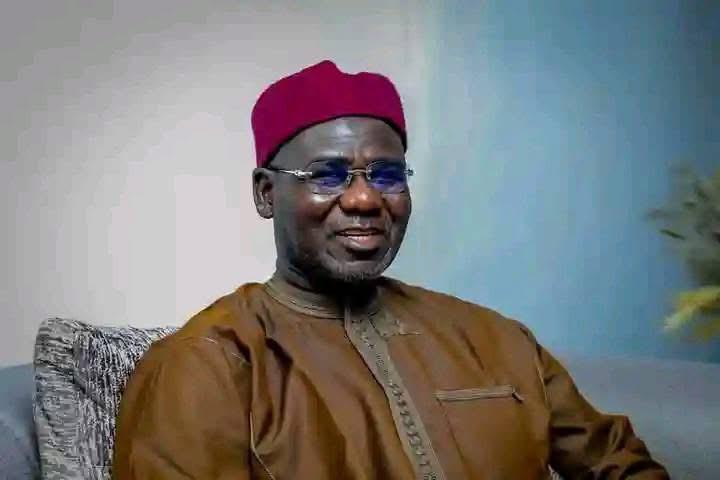
Security, Economy in Focus as Buratai Chairs Aminu Kano Memorial Event
KANO, NIGERIA — Former Chief of Army Staff, Tukur Yusuf Buratai (Rtd), will chair the 24th Annual Symposium commemorating the 43rd memorial anniversary of Aminu Kano, with a strong focus on regional security and economic cooperation in West Africa.

The high-level event, scheduled for Friday, April 17, 2026, at the Sa’adu Zungur Auditorium, Mambayya House in Kano, is expected to convene policymakers, academics, and security experts to examine the evolving role of Economic Community of West African States in maintaining peace and stability across the subregion.
With the theme “ECOWAS and Regional Peace in West Africa: The Security and Economic Implications for Nigeria,” the symposium comes at a critical time when West Africa continues to grapple with security threats, political transitions, and economic pressures.
Buratai, who also served as Nigeria’s Ambassador to the Republic of Benin, is expected to bring his extensive military and diplomatic experience to bear in steering discussions around collective security, cross-border threats, and the strategic importance of regional alliances. His leadership as Chairman of the Occasion underscores the significance attached to the symposium’s deliberations.
The event will be hosted by the Vice Chancellor of Bayero University, Kano, Haruna Musa, while the Governor of Kano State, Abba Kabir Yusuf, will serve as Chief Host.
Katsina State Governor, Dikko Radda, is billed as the Special Guest of Honour, adding further political weight to the gathering.
The symposium will also feature a keynote address by Nazifi Abdullahi Darma, a former Commissioner for Internal Services at the ECOWAS Commission, who is expected to provide insights into the bloc’s internal mechanisms and policy direction.
Other notable discussants include former Comptroller-General of the Nigeria Immigration Service, Muhammed Babandede, and Professor Samaila Suleiman of the Department of History, Bayero University, Kano.
Organised by Mambayya House, Aminu Kano Centre for Democratic Studies, the annual symposium remains a key intellectual platform dedicated to preserving the legacy of Aminu Kano while addressing contemporary governance and security challenges.
Analysts note that Buratai’s central role as Chairman is particularly significant given Nigeria’s frontline position in regional security dynamics. His presence is expected to shape robust conversations on how ECOWAS can better respond to insurgency, military coups, and transnational crime while strengthening economic integration among member states.
The symposium is slated to commence at 9:00 a.m., drawing participants from across government, academia, and civil society in what promises to be a timely and impactful engagement on West Africa’s future.
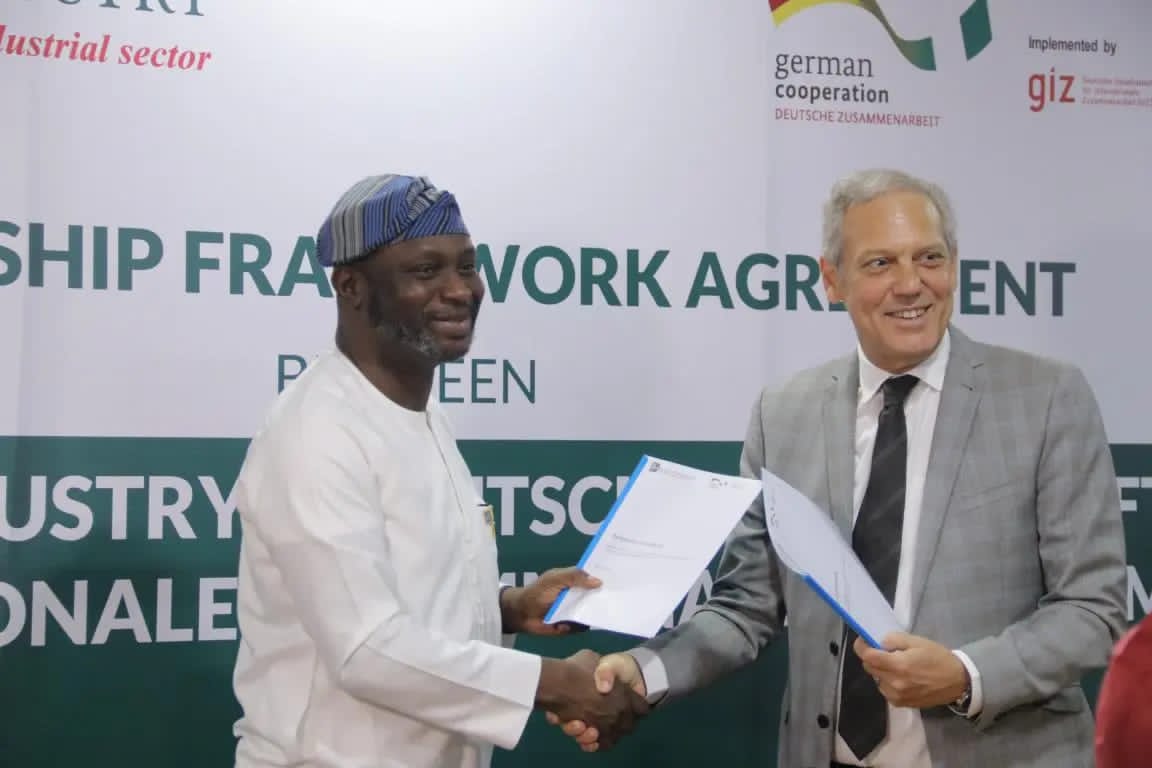
*BOI, GIZ seals strategic partnership to drive enterprise growth, boost climate resilience*
Bank of Industry (BOI), Nigeria’s foremost Development finance institution and a globally recognised organisation specialising in international development cooperation with countries, the German Agency for International Cooperation (GIZ), on Wednesday April 15, 2026, signs a Partnership Framework Agreement to drive sustainable innovation and economic development for large enterprise, and Micro, Small and Medium Enterprises (MSMEs) sector in Nigeria.
The partnership is hinged on delivering coordinated interventions across key strategic pillars including access to finance, entrepreneurship development, capacity building, and market access; and integrates focused support for climate finance and renewable energy investments; and a robust alignment with global sustainability priorities that enables MSMEs to as engines of economic development.
With this landmark agreement, BOI and GIZ are positioned to mutually ensure that capacity building efforts for businesses focuses on strengthening the technical and institutional capabilities of BOI’s Business Development Service Providers (BDSPs), equipping them to deliver higher-impact advisory services to the Bank’s customers; as well as enshrine a structured vocational training provided under the ICSS (Inspire, Create, Start and Scale) entrepreneurship programme to enhance productivity, workforce quality and overall business competitiveness to MSMEs.
The central pillar of this year’s partnership framework is it women’s economic empowerment through targeted financing initiatives; agribusiness development and rural enterprise growth; and climate-focused investment imperative to scale its renewable energy and energy efficiency financing portfolio.
BOI will strategically deepen its efforts to secure endorsement with the Green Climate Fund (GCF) with support from GIZ, a German-led development agency.
Speaking at the announcement ceremony, MD/CEO, Bank of Industry (BOI), Dr. Olasupo Olusi, said “This partnership is about closing the gap between enterprise potential and enterprise reality. Too many Nigerian businesses, particularly MSMEs, have the ideas, the drive, and the market opportunity, but lack the financing, technical capacity, or market access needed to scale. This partnership reflects our unwavering commitment to constantly form new partnerships to strengthen the entrepreneurial ecosystem in Nigeria. By combining our financing expertise with our partner’s international development experience, we are building a comprehensive framework that will directly translate into jobs, innovation, affordable, long-term financing and sustainable growth for MSMEs in Nigeria.”
In his remarks, Country Director, GIZ Nigeria and ECOWAS, Dr. Magnus Wagner, said, “This partnership demonstrates our joint commitments to strengthening Nigeria’s private sector and to advancing sustainable and inclusive economic growth. Through this partnership, we aim to support small and medium enterprises. We are trying more to look at SME, formalized business, which is the resilient backbone of Nigeria’s economy. So, we would like to work, we have decided in areas such as climate and sustainable finance, renewable energy and energy efficiency, entrepreneurship and innovation, women’s economic empowerment, agribusiness and rural transformation, and digital trade and market access. We look forward to a close and successful collaboration with the Bank of Industry, one that delivers tangible results for business, communities, and the country and the population as a whole”.


- Uganda Development Corporation (UDC) to take 82% of Trade ministry budget April 16, 2026
- Merck Foundation marks ‘World Art Day’ through their Film, Song, Media and Fashion Awards 2026 in partnership with Africa’s First Ladies to raise awareness about social & health issues April 15, 2026
- Gabon’s Offshore Comeback: International Oil Companies (IOCs) Return as Exploration Heats Up Ahead of Paris Forum April 15, 2026
- Shell’s Eugene Okpere to Speak at Angola Oil & Gas (AOG) 2026 Amid $1B Angolan Deepwater Drive April 15, 2026
- Oando Joins African Energy Week (AEW) 2026 as Emerald Sponsor as Firm Reports 10% Profit Rise April 15, 2026
- Africa Finance Corporation (AFC) Invests in Dhamana Guarantee Company to Catalyse Local Currency Infrastructure Financing in East Africa April 15, 2026
- WESGRO and Enlit Africa 2026 unite to spotlight the Western Cape’s energy investment opportunity April 15, 2026
- Gianni Merlo re-elected as International Sports Press Association (AIPS) President for sixth and final term in landslide victory April 15, 2026
- African Development Fund approves 1.7 billion CFA francs to boost private sector competitiveness across West African Economic and Monetary Union (WAEMU) countries April 15, 2026
- Knowledge Katti: The Architect Behind Namibia’s Energy Breakthrough April 15, 2026
- Uganda Development Corporation (UDC) to take 82% of Trade ministry budget April 16, 2026
- Merck Foundation marks ‘World Art Day’ through their Film, Song, Media and Fashion Awards 2026 in partnership with Africa’s First Ladies to raise awareness about social & health issues April 15, 2026
- Gabon’s Offshore Comeback: International Oil Companies (IOCs) Return as Exploration Heats Up Ahead of Paris Forum April 15, 2026
- Shell’s Eugene Okpere to Speak at Angola Oil & Gas (AOG) 2026 Amid $1B Angolan Deepwater Drive April 15, 2026
- Oando Joins African Energy Week (AEW) 2026 as Emerald Sponsor as Firm Reports 10% Profit Rise April 15, 2026
- Africa Finance Corporation (AFC) Invests in Dhamana Guarantee Company to Catalyse Local Currency Infrastructure Financing in East Africa April 15, 2026
- WESGRO and Enlit Africa 2026 unite to spotlight the Western Cape’s energy investment opportunity April 15, 2026
-

 news4 months ago
WHO REALLY OWNS MONIEPOINT? The $290 Million Deal That Sold Nigeria’s Top Fintech to Foreign Interests
-

 celebrity radar - gossips3 months ago
Dr. Chris Okafor Returns with Power and Fire of the Spirit -Mounts Grace Nation Altar with Fresh Anointing and Restoration Grace on February 1, 2026
-

 celebrity radar - gossips6 months ago
End of an Era: Nigeria Mourns Evangelist Dr. Uma Ukpai, 80
-

 celebrity radar - gossips4 months ago
Prophet Kingsley Aitafo Releases 2026 Prophecy: ‘Nigeria Will Rise, but the World Must Prepare for Turbulence’