
society
Stakeholders Petitions Tinubu Over Alleged Diversion Of 50 FG-Donated CNG Buses, Accuses Minister, Aide, Ex-NANS Leaders Of Criminal Infiltration


Stakeholders Petitions Tinubu Over Alleged Diversion Of 50 FG-Donated CNG Buses, Accuses Minister, Aide, Ex-NANS Leaders Of Criminal Infiltration
A group of concerned stakeholders within Nigeria’s student movement has written an open letter to President Bola Ahmed Tinubu, alleging large-scale corruption, diversion of public assets and criminal infiltration within the leadership structures of the National Association of Nigerian Students (NANS).
In a letter obtained by SaharaReporters on Wednesday the group accused the Minister for Youth Development, Ayodele Olawande Wisdom, the Senior Special Assistant to the President on Student Engagement, Asefon Sunday Dayo, and two former NANS leaders — Akinteye Babatunde (popularly known as Babtee) and Lucky Emonefe — of misappropriating federal government interventions meant for Nigerian students.
The petitioners alleged that about 50 Compressed Natural Gas (CNG) buses donated by the Federal Government to ease transportation challenges on tertiary campuses were diverted, shared among individuals, and in some cases sold.
According to the letter, the buses were allegedly retained for private commercial arrangements or disposed of outright, rather than deployed to campuses as intended. The group claimed that only a handful of the vehicles are traceable within student communities, while others are unaccounted for.
They called on the President to order an immediate audit to determine the total number and current location of the buses and to retrieve any found to have been wrongfully diverted.
Beyond the buses, the petition accused the same officials and former student leaders of diverting funds raised for NANS conventions and allegedly selling government-facilitated employment opportunities meant for former student leaders.
The group alleged that monies sourced in the name of organising student conventions were mismanaged, leaving delegates stranded without accommodation and logistics support despite substantial funds reportedly being mobilised.
It further claimed that employment slots facilitated through government channels were either sold for millions of naira or allocated to associates with no background in student activism, thereby creating resentment within the student body.
The letter also raised concerns over the alleged sale of food palliatives meant for indigent students during festive and fasting periods.
In a more explosive claim, the petitioners accused one of the aspirants for the 2026 NANS presidency, Akinteye Babatunde, of alleged involvement in an international cyber fraud network, commonly referred to in Nigeria as “yahoo yahoo.”
They alleged that individuals linked to the aspirant use NANS-branded number plates on luxury vehicles to evade scrutiny from security agencies.
The group warned that invoking the name of the President and his son, Seyi Tinubu, in internal NANS politics could damage the Presidency’s image if not addressed.
They alleged that some actors within the student movement frequently claim endorsement from the Presidency to influence convention outcomes and suppress opposition candidates.
The petitioners urged President Tinubu to direct anti-corruption and security agencies to: Conduct a full audit of all CNG buses donated to NANS; Investigate the allocation of government employment opportunities linked to student leaders; Probe allegations of diversion of convention funds; Examine claims of cybercrime involvement among aspirants to NANS leadership; and Ensure that individuals with alleged criminal antecedents are not endorsed or shielded by state actors.
They argued that the student movement, once known for its radical activism during the military era, is now facing what they described as “a crisis of credibility,” warning that failure to act could deepen distrust among Nigeria’s over 40 million students.
The letter framed the controversy as a broader struggle over the future of student unionism in Nigeria, urging the President to distance his administration from any individual accused of exploiting government goodwill for personal gain.









Zenith Bank Plc Hosts 2026 International Women’s Day Seminar with Bold Call to Action:
“Take It, You Own It,” Aligned with Global Theme “Give to Gain”
Zenith Bank Plc will commemorate the 2026 International Women’s Day with a renewed call to purposeful action, leadership, and ownership. As part of activities marking this global celebration, the Bank will host its annual International Women’s Day (IWD) Seminar on Monday, March 9, 2026, at the The Civic Centre.
Aligned with the global theme, “Give to Gain,” which underscores the belief that sustainable progress is achieved when individuals and institutions intentionally invest in women, Zenith Bank’s 2026 IWD Seminar is themed “Take It, You Own It.” The theme reflects the Bank’s conviction that while institutions must give by creating enabling environments and equitable systems, women must also step forward to claim space, own their value, and lead with confidence. It is both an affirmation and a challenge—embrace opportunity, empower yourself and others, and take ownership of your growth journey.
Building on the success of previous editions, including the 2025 seminar themed “Winning On All Fronts,” the 2026 programme is designed to deepen meaningful engagement around women’s empowerment, leadership, and sustainable impact. Over the years, Zenith Bank’s International Women’s Day initiatives have convened women leaders, professionals, entrepreneurs, and emerging talents for dynamic dialogue, inspiration, and shared learning on gender equity, professional growth, and inclusive opportunity.
More than a commemorative gathering, the 2026 seminar is positioned as a convergence of influence, insight, and inspiration, bringing together accomplished women and progressive leaders across business, governance, creative industries, technology, and social impact.
Speaking ahead of the seminar, the Group Managing Director/Chief Executive Officer, Adaora Umeoji, OON, who will deliver the welcome address, said:
“International Women’s Day is a reminder that progress requires intentionality. ‘Give to Gain’ speaks to the responsibility institutions have to create real opportunities, while our theme, ‘Take It, You Own It,’ challenges women to step forward boldly and lead. At Zenith Bank, we are deliberate about building environments where women are supported to grow, thrive, and shape outcomes—not only within our institution but across the communities and industries we serve.”
The seminar will feature sessions focused on leadership insight, professional empowerment, wellbeing, and collaboration, offering participants opportunities to engage deeply with thought leadership and practical strategies for advancing equity.
With a carefully curated programme comprising keynote addresses, panel discussions, interactive Q&A sessions, and creative interludes, Zenith Bank’s 2026 International Women’s Day Seminar is poised to serve as a catalyst for meaningful action.
Through its alignment with “Give to Gain” and its bold seminar theme, “Take It, You Own It,” Zenith Bank reaffirms its belief that when institutions give intentionally and women lead confidently, entire ecosystems rise. As conversations around inclusion continue to shape the future of business and society, the Bank remains steadfast in its mission to create platforms where women’s potential is recognised, amplified, and fully owned.
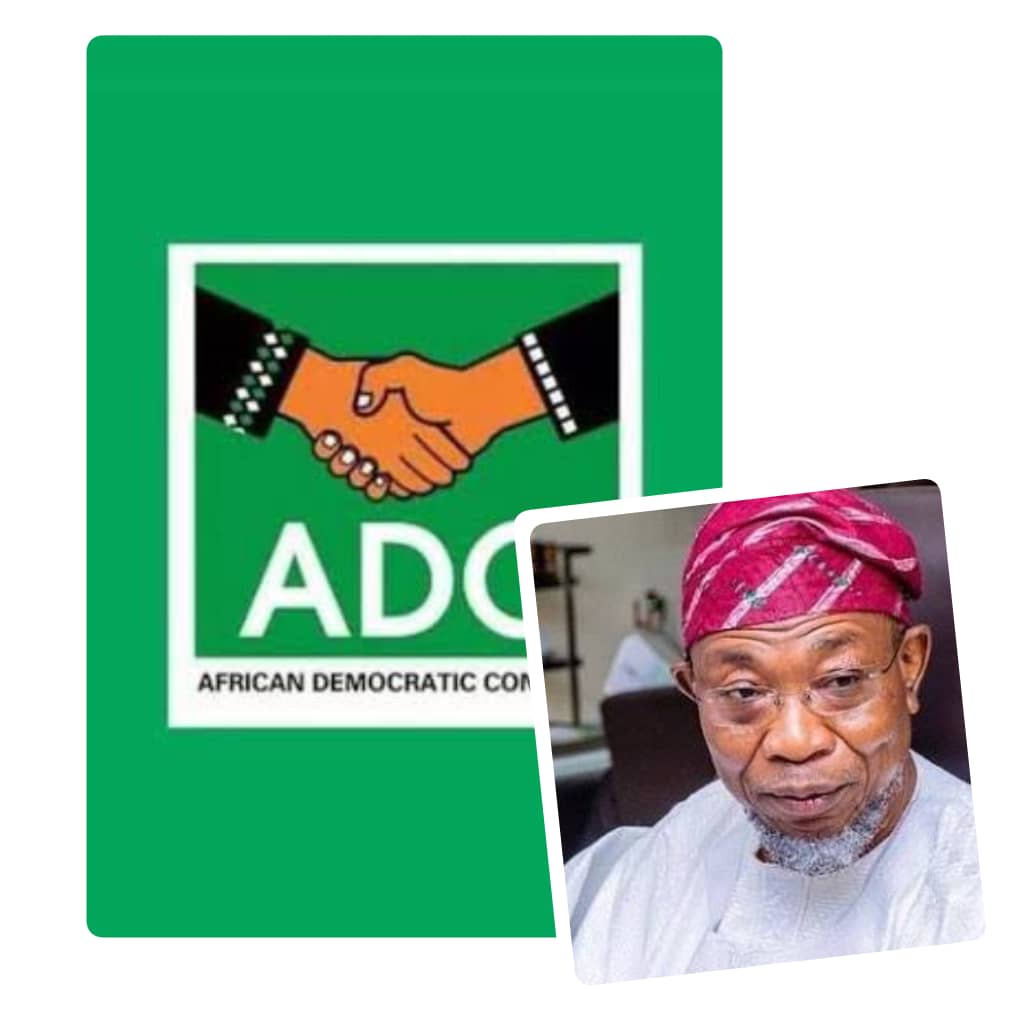
*Aregbesola’s Grassroots Effect Sees Massive e-Registration Of ADC Members In The Southwest*
The political atmosphere in Nigeria’s Southwest has shifted significantly following an unprecedented surge in online membership registration by the African Democratic Congress. Within just 48 hours of launching its upgraded digital portal, the party reportedly recorded over one million new sign-ups, with the bulk of the momentum traced to the Southwest. Analysts widely attribute this dramatic response to the enduring regional clout of former Osun State governor, Rauf Aregbesola, whose political structures and loyal following remain deeply entrenched across the zone.
The ADC’s decision to activate a free nationwide digital registration platform came on the heels of its physical membership and revalidation exercise launched in Abuja last month. Party officials describe the move as both strategic and necessary, particularly in view of the Electoral Act 2026, which mandates credible, verifiable, and digitally maintained party registers. Under the new framework, only members properly captured and authenticated in the official database will be eligible to vote or stand as candidates in party primaries, a provision designed to strengthen internal democracy.
Yet compliance alone does not explain the speed and scale of the Southwest response. The phenomenon widely described as the Aregbesola effect appears to have converted political sympathy into measurable digital action. Across Osun, Lagos, Ogun, Oyo, Ondo, and Ekiti states, established grassroots networks, ward coordinators, youth blocs, and ideological allies reportedly mobilised swiftly, encouraging supporters to align with the ADC. Years of political organisation and movement building have evidently provided a ready structure capable of translating influence into numbers within record time.
Beyond personality politics, the surge also signals a broader recalibration within the region’s political landscape. Many observers interpret the mass registration as an indication of growing appetite for alternative platforms and a restructuring of opposition dynamics. The Southwest has historically played a decisive role in shaping national political currents, and this rapid mobilisation suggests that key actors and voter blocs are reassessing alignments ahead of future electoral contests.
Since February, when the ADC began its nationwide grassroots registration drive, interest had been steadily building across the country and within diaspora communities. The introduction of the online option significantly lowered participation barriers, allowing professionals, artisans, students, and organised support groups to enrol seamlessly. Members who registered under the previous system are now required to revalidate their details on the upgraded portal to ensure full compliance with regulatory standards and electoral guidelines.
While the party continues to voice reservations about aspects of the Electoral Act 2026 and the timetable issued by INEC, it maintains that institutional strengthening remains its priority. In the Southwest, however, the headline is unmistakable. The rapid accumulation of over one million registrations in less than two days underscores not merely administrative efficiency but a potent combination of political influence, organisational readiness, and shifting voter sentiment. At the centre of this development stands Aregbesola, whose regional imprint appears to have catalysed one of the most remarkable digital mobilisations in recent Nigerian party politics.

Celebrating K1 De Ultimate At 69 : The Capo Di Tutti of Fuji Music And The Call For Unity
By Alhaji Arems (Baba Fuji)
Today, the drums roll a little louder for K1 De Ultimate.
Born Wasiu Ayinde Marshal, K1 turns 69 — not merely as a Fuji legend, but as a cultural institution whose influence stretches far beyond the stage. In recent years, admirers and loyalists have increasingly referred to him as *Capo Di Tutti of Fuji Music* — a title borrowed from Italian hierarchy meaning “boss of all bosses.” In Fuji’s world, it signals reverence, seniority, and undisputed authority.
And whether one prefers the classic sobriquet “King of Fuji” or the newer “Capo Di Tutti,” one thing is clear: K1 remains one of the most consequential figures in the genre’s history.
From Talazo To Global Stages :
Fuji music itself evolved from Were — the Ramadan street music of southwestern Nigeria — before being transformed into a commercial force by pioneers like Ayinde Barrister and Kollington Ayinla. But it was K1 who rebranded, modernised, and exported Fuji into elite spaces.
In the late 1980s and 1990s, he introduced the Talazo Fuji concept — sleeker production, cosmopolitan aesthetics, and a performance style that blended tradition with showmanship. Albums like *Talazo ’84, Fuji Music, and later releases cemented him as a bridge between grassroots Fuji and upper-class patronage culture.
He didn’t just perform Fuji; he elevated its perception.
From high-society owambes in Lagos to international tours across Europe and North America, K1 redefined what Fuji could look like — structured bands, refined branding, and a leadership persona that commanded both loyalty and fear.
The Capo Di Tutti Title — What It Represents
Titles in Fuji are not decorative. They are symbolic capital.
To be addressed as Capo Di Tutti of Fuji Music suggests supremacy — not just in discography, but in influence. It acknowledges his seniority in a generation that saw intense rivalries, territorial fan bases, and power struggles.
But titles also carry responsibility.
And that brings us to the conversation many within the Fuji community are quietly having today.
A Moment For Unity :
Beyond celebration, there is an undercurrent of expectation. As K1 marks another year, many fans and insiders believe this is the perfect moment for something bigger than accolades — a moment of reconciliation.
The Fuji industry has long been marked by factions, feuds, and generational divides. Some rifts have been public. Others simmer quietly in the background. As the widely acknowledged Capo Di Tutti, K1 occupies a unique moral and cultural position.
There is a growing call for him to:
1. _Unite all Fuji acts under one umbrella of respect and collaboration._
2. _Forgive those who may have offended him over the years._
3. _Embrace younger and older artistes alike, reinforcing Fuji as one family._
Leadership in music is not only about dominance; it is about stewardship.
And history often remembers peacemakers more kindly than conquerors.
The Legacy Is Already Written — But the Final Chapter Is Still Being Edited
At 68, K1’s legacy is secure. Few artists can boast decades of relevance, sustained patronage, and cross-generational impact. He has influenced not just Fuji, but Nigerian popular culture — from fashion to stagecraft to elite party circuits.
Yet the most powerful moves of any icon often happen in their later years.
Reconciliation. Mentorship. Consolidation.
Fuji today competes in a Nigerian music landscape dominated by Afrobeats and global streaming algorithms. For the genre to maintain cultural weight, unity among its torchbearers matters more than ever.
If K1, as Capo Di Tutti, extends visible gestures of inclusion and healing, it could reset the tone for the entire industry.
A Birthday Beyond Celebration :
Birthdays for legends are never just about cake and tributes. They are checkpoints — moments to reflect, recalibrate, and redefine legacy.
Today, we celebrate K1 De Ultimate for his artistry, his endurance, and his towering presence in Fuji music.
But we also recognise the opportunity before him.
To unify.
To forgive.
To embrace.
To lead — not only in power, but in grace.
Happy 69th Birthday to the Capo Di Tutti of Fuji Music.
The drums are still playing.


-

 celebrity radar - gossips7 months ago
Why Babangida’s Hilltop Home Became Nigeria’s Political “Mecca”
-
 society6 months ago
Religion: Africa’s Oldest Weapon of Enslavement and the Forgotten Truth
-

 society7 months ago
Power is a Loan, Not a Possession: The Sacred Duty of Planting People
-

 news3 months ago
WHO REALLY OWNS MONIEPOINT? The $290 Million Deal That Sold Nigeria’s Top Fintech to Foreign Interests