
celebrity radar - gossips
FG Approves Lagos’ Ownership Of 4 Oil Wells, Disproves 1 Other

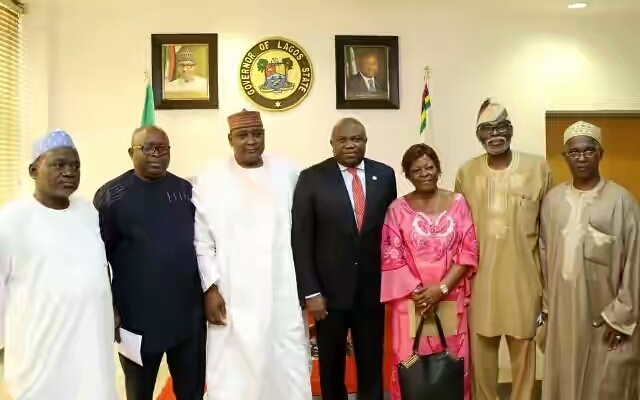

The Federal Government on Wednesday says four of the five oil wells discovered in Lagos truly belongs to the state but disproves the state’s ownership of one other oil well.
The FG said the disproved oil well fell beyond 200 metres isobaths and did not legitimately belong to Lagos State.
A delegation of the Indices and Disbursement Committee, Revenue Mobilisation Allocation and Fiscal Commission, led by its Chairman, Alhaji Aliyu Mohammed visited Governor Akinwunmi Ambode on Wednesday at the State House, Ikeja, Lagos, Southwest Nigeria for the purpose of verifying crude oil and gas production from Aje Oil wells for the purpose of disbursement of 13% derivation fund to the state in line with the constitution of Nigeria.
According to Mohammed, as part of procedure and in pursuant to its constitutional mandate, the commission set up an Inter-Agency Technical Committee which comprised the commission, the Department of Petroleum Resources, DPR, Office of the Surveyor General of the Federation and the National Boundary Commission to determine the location of the Aje oil wells.
“The technical committee recommended that for the purpose of derivation as spelt out under Section 162 (2) of the 1999 constitution (as amended) as well as the provision of the Allocation of Revenue Act 2004, Aje oil wells 1, 2, 4 and 5 fall within the 200m isobaths and therefore should be attributed to Lagos State.
“As a result, the commission and members of the Inter-Agency Committee had to embark on this working visit to conclude the process. Please, note that Aje 3 oil well falls beyond the 200m isobaths and therefore cannot be legitimately attributed to Lagos State,” he stated.
He added that the commencement of oil production from Aje oil field by Yinka Folawiyo Petroleum Company Limited was the first time oil was being produced outside the Niger Delta basin and therefore of a major significance in diversifying the source of crude oil and gas production in the country.
Speaking, Ambode described the visit as historic and one that would go down in the annals of the history of Lagos State, as the visit was the official step that would take Lagos to that final destination as an oil-producing state.
“We are very glad to receive this delegation. We also want to thank the Federal Government, most especially President Muhammadu Buhari for making this to happen very promptly. I want to say that this has been the promptest action that has been taken by RMAFC since I have known the Commission. I used to be a former Account General so I had a lot of transactions and relationship with the institution called RMAFC. Within a span of about 60 days of when we wrote our letter, and even before we wrote the letter, this technical committee was actually set up. It gladdens me to say that the institution works and is working for the good of Nigeria,” he said.
Also thanking the DPR and the boundary commission, Ambode said it was significant that the discovery of oil wells in Lagos was going to be the first time oil would be produced outside the Niger Delta.
“It’s significant for Nigeria, its significant for Lagos, it means that the whole path to diversification is what we are now witnessing. We would also encourage other states in terms of other mineral resources, not necessarily depend on crude oil; whatever it is that can actually allow states to start activating their mineral deposits, it would allow us expand the Internally Generated Revenue
.“It would also give us revenue dependence in a manner that there would be equal growth from all the nooks and crannies of Nigeria. One is happy that RMAFC has taken this step and also to say that they should also encourage other states to engage in such activities that would allow them to be able to activate whatever mineral deposit that we have in the various states in conjunction with the Federal Government, so that we can start to diversify revenue and growth and then create a balanced growth and development for the whole country,” he added.






celebrity radar - gossips
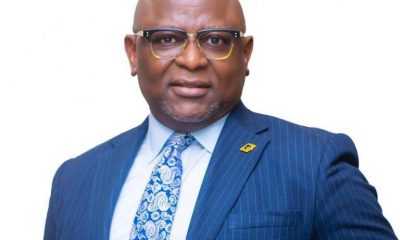
When Power Meets Privilege: Controversy Trails the Rise of NNPC Gas Czar Lekan Ogunleye
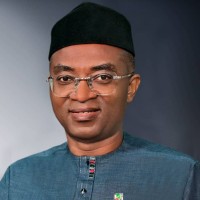
When Power Meets Privilege: Controversy Trails the Rise of NNPC Gas Czar Lekan Ogunleye
Among many of Abraham Lincoln’s popular saying is that “If you want to test a man’s character, give him power.” This saying suggests power and affluence reveals a person’s true nature rather than changing it.
The saying might rightly describe one of NNPC limited eggheads, Lekan Ogunleye, who is the Executive Vice President, Gas, Power & New Energy.
It’s a matter of stating the obvious saying that the former Deputy Managing Director of Nigeria LNG Limited is a brilliant chap. He’s been equipped with significant industry experience in various aspects of the gas value chain, he was made the Managing Director and Chief Executive Officer of Gas Aggregation Company Nigeria Limited (GACN),a firm set up by Federal Government of Nigeria to implement the Nigerian Gas Master Plan and manage domestic supply of gas.
But with all of these achievements, many alleged that a thorn in the flesh that lives with Mr Ogunleye is his fondness for the other gender. Sources close to him alleged that he invests millions in satisfying his cravings to invite them from around the world in different sizes and shapes on regular basis.
Information gathered has it that like many of his class, he has a permanent suite in a luxurious hotel on Lagos Island where he entertains them, it was alleged that his arrangements even provides luxurious treatment for them even when he’s not in town. A recent case of such was when he travelled to UAE during last year December with his family, sources close to him alleged that while he was away, ladies invited from Indonesia and Rwanda were receiving royal treatment in this permanent suite which cost over half a million Naira per night.
The sources also alleged that he’s known to relish his fetish practices with two ladies at the a time, and to watch them play with themselves before joining in the fun.
While his personal life may not be that important, how he was able to sustain such an expensive lifestyle, was scrutinize and it was alleged that he regularly receives kickbacks from NNPC vendors and contractors, especially the foreign partners who have been awarded contracts worth millions of dollars through his assistance.
Some of his close allies alleged that power that his privileged office brought was responsible for his insatiable desires for the opposite sex a situation that led to the collapse of his first marriage before he remarried a few years ago.
In other to establish the true state of things, a query was sent to him especially about the allegation of financial irregularities and the abuse of power and privileges for personal enrichment, the query was left unanswered after more than two weeks even when receipt was confirmed.nleye
celebrity radar - gossips
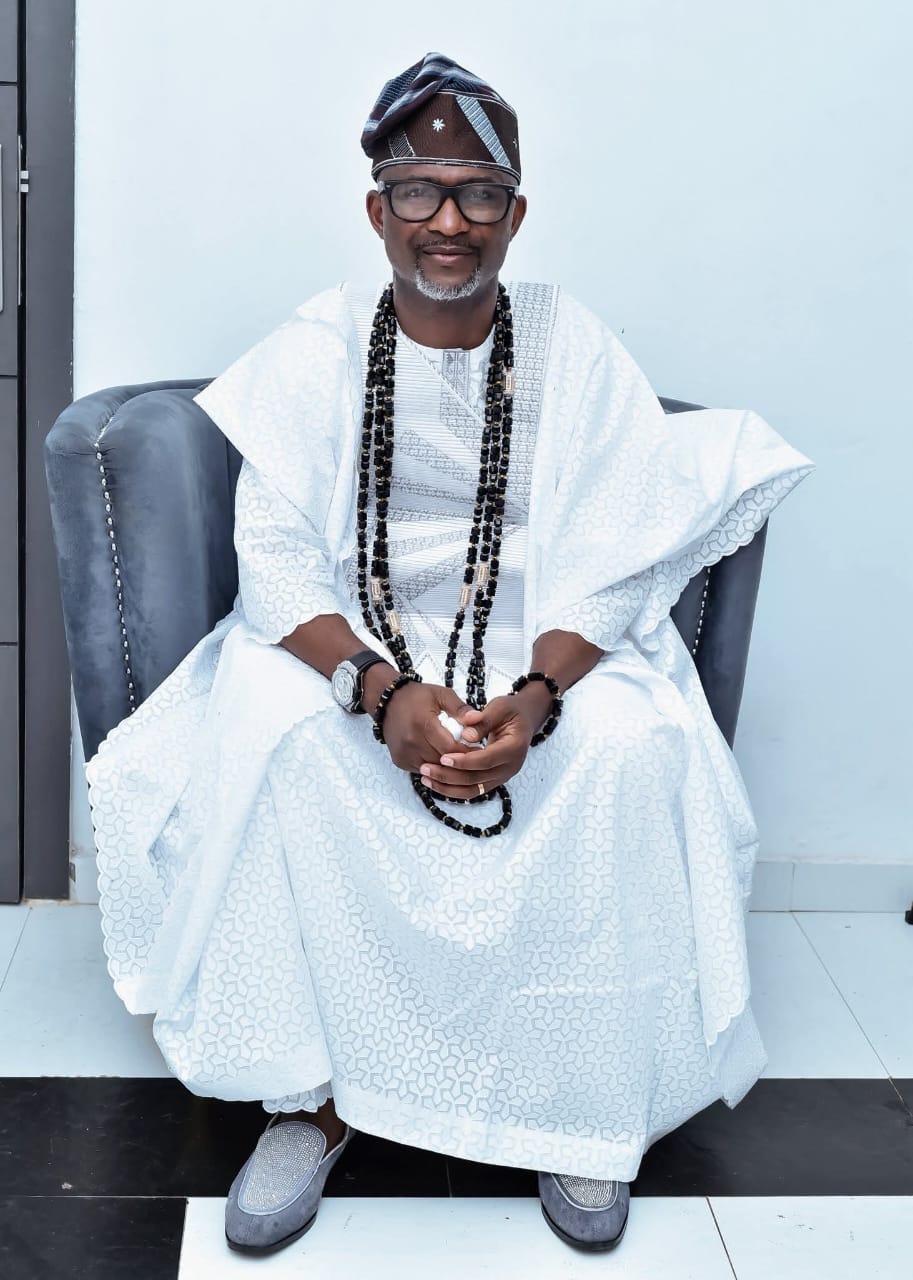
Pomp, Prestige and Purpose: Dr. Mutiu Adewale Badmus Crowned Otunba Alayeluwa Onimolete of Molete, Ogbomoso
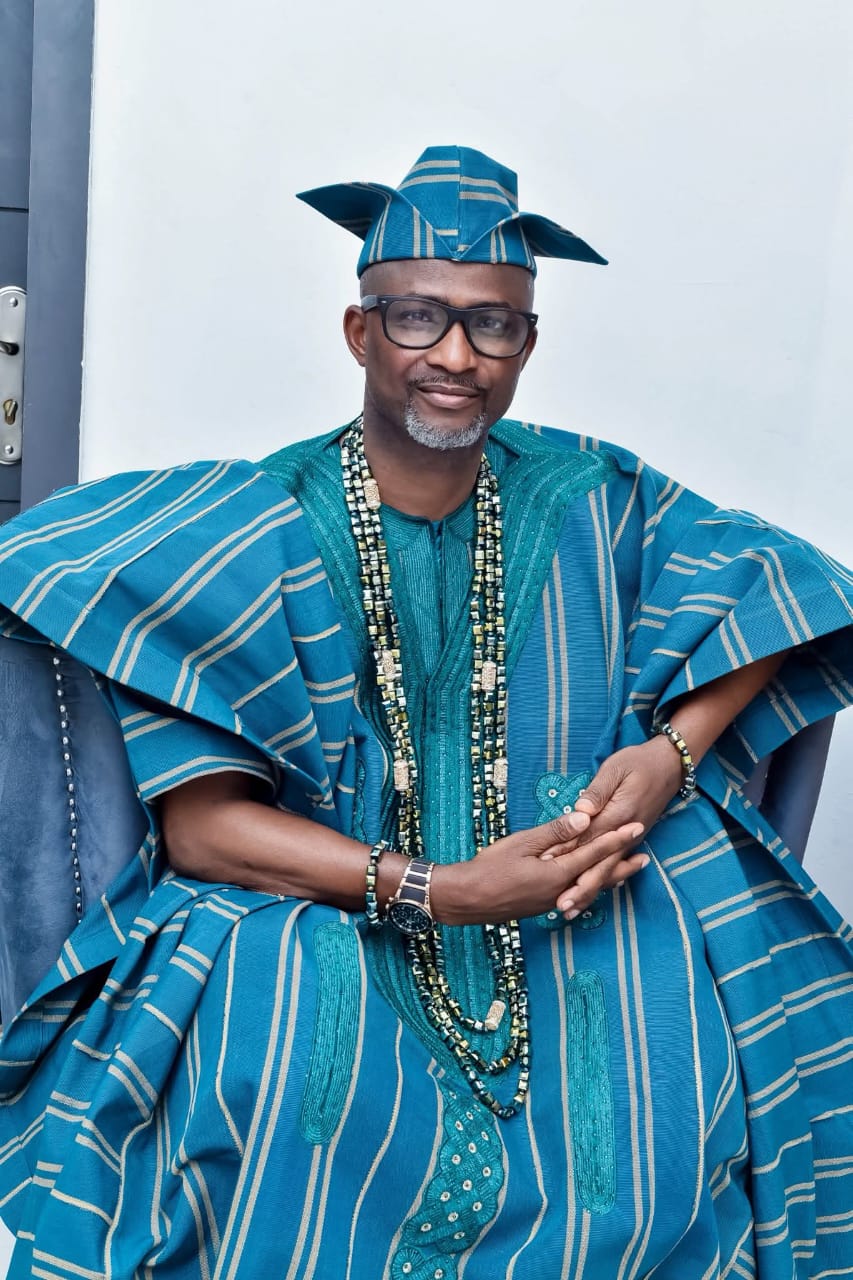
Pomp, Prestige and Purpose: Dr. Mutiu Adewale Badmus Crowned Otunba Alayeluwa Onimolete of Molete, Ogbomoso
Last Sunday was etched in gold in the annals of Molete, Ogbomoso, as the ancient town came alive in colour, culture, and celebration for the conferment of a prestigious chieftaincy title on the erudite entrepreneur and man of many parts, Dr. Mutiu Adewale Badmus.
In a ceremony steeped in tradition and grandeur, Dr. Badmus was formally installed as the Otunba Alayeluwa Onimolete of Molete, Ogbomoso, drawing an impressive gathering of crème de la crème from across the social, business, and cultural strata of society.

The atmosphere was one of pride, reverence, and collective joy as dignitaries, community leaders, friends, and well-wishers thronged the historic town to witness the landmark event.
The honour, bestowed in recognition of his outstanding contributions to societal development and humanity at large, reflects Dr. Badmus’ enduring commitment to service, excellence, and community upliftment. As the Chief Executive Officer of Al-Hatyq Travel and Tours Limited, he has distinguished himself not only as a successful business leader but also as a compassionate humanitarian whose impact transcends commerce.
The colourful ceremony showcased the rich cultural heritage of Ogbomoso, with traditional rites, music, and pageantry underscoring the significance of the occasion. For many in attendance, the conferment was more than a title—it was a celebration of character, legacy, and a life devoted to meaningful service.
As Dr. Mutiu Adewale Badmus assumes his new role as Otunba Alayeluwa Onimolete, expectations are high that his wisdom, vision, and passion for humanity will continue to inspire progress and unity within Molete, Ogbomoso, and beyond.
celebrity radar - gossips
Appeal at the Crossroads: Nnamdi Kanu’s Legal Gamble and the Unresolved Question of Nigeria’s National Unity

Appeal at the Crossroads: Nnamdi Kanu’s Legal Gamble and the Unresolved Question of Nigeria’s National Unity
By George Omagbemi Sylvester | Published by SaharaWeeklyNG
“As the detained IPOB leader challenges his life sentence, the case reopens deep constitutional debates over terrorism, self-determination and the credibility of Nigeria’s justice system.”
The legal battle surrounding Nnamdi Kanu, the detained leader of the Indigenous People of Biafra (IPOB), has entered a new and potentially decisive phase. In early February 2026, Kanu formally filed an appeal against his terrorism conviction and life sentences, asking the Court of Appeal in Abuja to quash the judgment delivered against him in November 2025.
The appeal does not merely represent a routine judicial process. It revives one of the most controversial political trials in modern Nigerian history, a case that has long straddled the uneasy line between national security enforcement and constitutional freedoms. For supporters, Kanu is a political agitator fighting perceived injustice against the Igbo people. For the Nigerian state, he is the leader of a proscribed organisation whose rhetoric and activities were deemed to have crossed into the territory of terrorism.
Now, with his appeal before the higher courts, the question is no longer only about Kanu’s fate. It is about the legal, political and moral direction of the Nigerian federation itself.
The conviction and its legal foundations.
Kanu was convicted on terrorism-related charges by the Federal High Court in Abuja on November 20, 2025. The court found him guilty on multiple counts linked to acts deemed preparatory to terrorism, inciting the public through broadcasts, and leading a proscribed organisation.
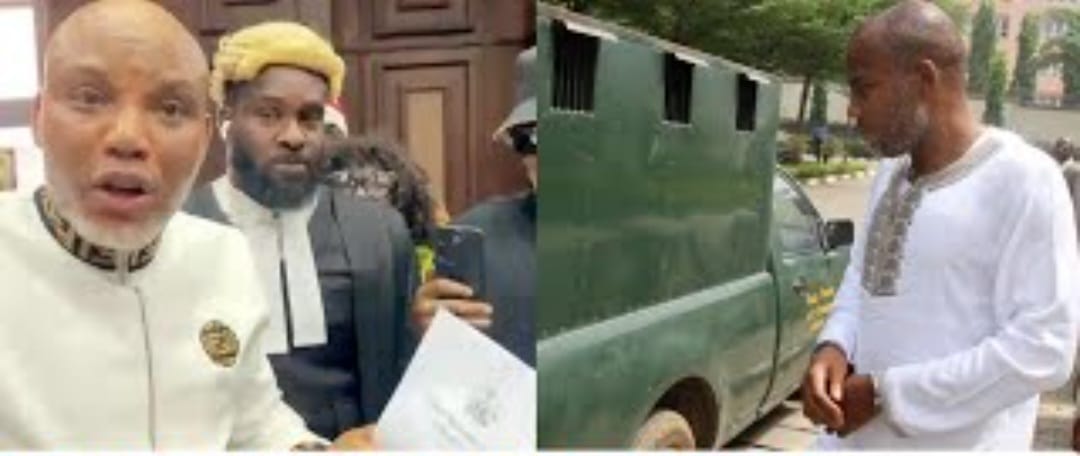
The judgment imposed multiple life sentences and additional prison terms, all to run concurrently, effectively keeping him incarcerated for life.
The conviction followed years of legal controversy, including his arrest, flight from Nigeria, re-arrest and protracted court proceedings. At one stage in 2025, senior lawyers withdrew from his defence, leaving him to represent himself temporarily in court.
In his appeal, Kanu listed more than twenty grounds, arguing that the trial court erred in law and occasioned what he described as a “grave miscarriage of justice.”
He contended that the court failed to address foundational disruptions in the trial process, including the 2017 military operation at his residence, which he claims undermined the legal continuity of the case.
The appeal: a direct challenge to the state’s narrative.
The core of Kanu’s appeal is a demand for the appellate court to overturn his conviction entirely.
Reports indicate that he is seeking acquittal on all charges, arguing that the evidence and legal procedures used against him were flawed.
The appeal comes after his legal team signalled their intention to challenge the ruling immediately after the conviction, questioning the precedent being set.
Politically, the appeal is likely to re-energise the long-running debate about IPOB and the broader Biafra agitation. The organisation seeks the secession of Nigeria’s southeast region, the traditional homeland of the Igbo ethnic group, a demand the federal government has consistently rejected as unconstitutional and dangerous to national unity.
A case with deep historical and ethnic sensitivities
To understand the gravity of the appeal, one must appreciate the historical roots of the Biafra agitation. The original attempt at secession in 1967 led to a brutal civil war that claimed over a million lives, many from starvation and disease. The trauma of that conflict still shapes Nigeria’s political psyche.
In the decades since, agitation for greater autonomy or outright secession has periodically resurfaced, often driven by perceptions of marginalisation among the Igbo population. Kanu’s IPOB movement represents the most organised expression of that sentiment in recent years.

His supporters argue that the case against him is politically motivated. Some political figures have echoed such concerns. Former Senate President Adolphus Wabara, for instance, described the life sentence as unjust, claiming it was not only Kanu who was imprisoned but symbolically “the entire Igbo race.”
Such statements underscore the ethnic and emotional dimensions of the case and dimensions that no court ruling alone can resolve.
The legal and constitutional stakes.
Beyond politics, the appeal raises serious constitutional questions. Nigeria’s 1999 Constitution guarantees freedom of expression and association, but it also empowers the state to restrict such freedoms in the interest of national security.
Where the line lies between political agitation and terrorism remains a contentious legal issue. Kanu’s conviction rested partly on broadcasts that the court ruled were intended to intimidate the population and incite unrest.
Legal scholars often caution against broad interpretations of terrorism laws. As Professor Ben Saul, a leading expert on international terrorism law, has argued, “Overbroad definitions of terrorism risk criminalising political dissent and undermining the legitimacy of counter-terrorism measures.”
Similarly, the late constitutional scholar Professor Yash Ghai once warned that “when security laws are used to silence political grievances rather than address them, they deepen the crisis they seek to contain.”
These perspectives reflect the broader global debate about how democratic states should respond to separatist movements without eroding civil liberties.
International attention and human rights concerns
Kanu’s case has drawn international attention over the years, particularly regarding the circumstances of his arrest and trial. Human rights advocates have previously questioned aspects of Nigeria’s handling of terrorism trials, including issues of due process and transparency.
While the Nigerian government maintains that it is enforcing the law against a proscribed organisation, critics argue that the prolonged legal saga and the severity of the sentence risk fuelling further unrest in the southeast.
Political analysts warn that heavy-handed legal responses to political agitation can backfire. As political scientist Robert Rotberg once observed, “States that mistake political grievances for purely security threats often end up strengthening the very movements they seek to suppress.”
The broader political implications.
The timing of the appeal is politically sensitive. Nigeria continues to grapple with insecurity, economic hardship, and regional distrust. The southeast, in particular, has experienced periodic unrest, sit-at-home orders and confrontations between security forces and armed groups.
A high-profile appeal such as Kanu’s is almost certain to inflame passions on all sides. For his supporters, it represents a final legal lifeline. For the federal government, it is a test of the judiciary’s credibility and the state’s resolve to maintain territorial integrity.
Some analysts argue that the case should never have been handled purely as a criminal matter. They suggest that it reflects deeper political grievances that require dialogue rather than courtroom battles.
Nobel laureate Wole Soyinka has repeatedly emphasised this point in similar contexts, arguing that “the solution to agitation is not brute force, but the courage to confront the causes of that agitation.”
A judiciary under scrutiny
The appeal also places Nigeria’s judiciary under intense scrutiny. The courts are now expected to navigate a case loaded with political tension, ethnic sensitivities and international attention.
If the Court of Appeal upholds the conviction, it may reinforce the state’s authority but risk deepening resentment in parts of the southeast. If it overturns the conviction, it could trigger political backlash and raise questions about the handling of terrorism cases.
Either outcome will have consequences far beyond the courtroom.
The uncertain road ahead
For now, the appeal represents a legal process that could take months, if not years, to resolve. It will likely pass through several stages of judicial review, potentially reaching the Supreme Court before a final decision is made.
Though regardless of the outcome, the case has already reshaped Nigeria’s political landscape. It has reignited debates about federalism, minority rights and the limits of state power. It has also exposed the fragility of national unity in a country still wrestling with the ghosts of its civil war.
As the appeal proceeds, Nigeria stands at a delicate crossroads. The courts will decide the legal questions. The political and moral questions (about justice, inclusion and the meaning of nationhood) will linger long after the final judgment is delivered.
In that sense, Nnamdi Kanu’s appeal is more than a personal legal battle. It is a test of Nigeria’s democracy and it is constitutional maturity and its ability to reconcile security with justice in a deeply divided society.


-

 celebrity radar - gossips6 months ago
Why Babangida’s Hilltop Home Became Nigeria’s Political “Mecca”
-

 society6 months ago
Power is a Loan, Not a Possession: The Sacred Duty of Planting People
-

 Business6 months ago
Batsumi Travel CEO Lisa Sebogodi Wins Prestigious Africa Travel 100 Women Award
-
 news6 months ago
THE APPOINTMENT OF WASIU AYINDE BY THE FEDERAL GOVERNMENT AS AN AMBASSADOR SOUNDS EMBARRASSING
You must be logged in to post a comment Login