
celebrity radar - gossips
UNILAG Promised Us Medicine But Gave Us Botany – Candidates

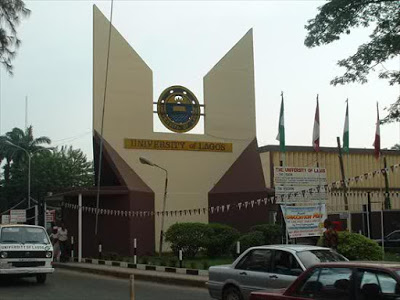

Fresh admission controversy has hit the University of Lagos as some candidates are accusing the authorities of high-handedness, CHARLES ABAH writes
For no fewer than 57 candidates, who participated in the 2015/2016 Foundation programmes that would enable them to study Medicine and Surgery at the University of Lagos, this September seems to be the longest month that they have ever witnessed in life.
In fact, since September 9, these candidates have not known peace, considering what they called high-handedness of the authorities of the university.
According to them, having passed all the necessary qualifying examinations that would enable them to proceed to the medical school, having spent hundreds of naira in terms of tuition and other sundry fees – undergoing a foundation programme – the authorities of the university are now scheming to abort their dreams.
Already, they have written to the Vice-Chancellor, Prof. Rahamon Bello, demanding that the authorities should urgently look into their case.
In the letter dated September 20, 2016, the candidates, under the auspices of 2015/2016 Foundation MBBS, noted that denying them admission to study medicine in the ivory tower would be akin to a miscarriage of justice.
They copied the registrar of the university, director, School of Foundation Studies, provost, College of Medicine, as well as the Joint University Preliminary Examination Board in the petition.
Parts of their letter read, “The School of Foundation Studies admitted over 800 students into its programme with a promise that those who scored AAA (16 points) in all their courses shall be admitted to 200 level to study Medicine. We were asked to pay a huge sum of money – about half a million naira.
“The university tested us with a curriculum and at the end of the exercise, 87 of us obtained the required A’s. As if the management was happy about the less than 10 per cent pass, it came out with another fresh directive, which seems to call a ball that went over the bar a goal. The university said that it could only admit 30 students.
“Are we now being told that the university is nothing but a business centre and the JUPEB programme is nothing but a fraud? We hereby demand justice. This is but a rape on the collective intelligence of Nigerian students and an attempt to reduce the citadel of learning to a mere business venture. No sane society will let this go unchallenged. The university should provide reasons why, despite the recession in the country, parents will be made to cough out such whopping sums on empty promises.”
Our correspondent gathered that each of the candidates paid non-refundable acceptance fees of N25,000; N350,000 tuition; N7,500 medical insurance; N25,000 for examinations; N700 for syllabus, and N850 for biometric identity card. Besides, the candidates made personal arrangements for their accommodation for the one year that the programme lasted.
Beyond the fees, the narratives by some of the affected candidates and their guardians are the type some people will describe as touching.
“I have a B.Sc in Nursing from the Obafemi Awolowo University, Ile-Ife, Osun State. I graduated in 2009. No fewer than 800 of us enrolled for this programme last year and only 87 of us obtained the required three A’s to study medicine. With this, admission to the college of medicine would ordinarily be automatic but the authorities are changing the rules mid way into the game. This is not so in other universities.
“To study medicine in many other universities, one requires only 13 points, but here we all obtained 16 points. Yet, the authorities of UNILAG say they do not have space for us. I know how I struggled to make these grades. I know the psychological stress that I passed through to enable me to achieve this success. This programme nearly cost me my marriage as I struggled daily to cater to my husband and two teenage children.
“Why would I suffer the consequences of lack of space when they admitted so many candidates in the first place? The Federal Government needs to intervene in this matter; otherwise, we shall spend another year at home due to no fault of ours. Today, the authorities are asking us to go for such courses as fishery, botany, cell biology, psychology. Please, when has it become a crime to pass an examination? After having a degree in nursing, they expect me to start another course in fishery,” the candidate, who craved anonymity for fear of victimisation, said.
For another candidate, Adesewa, the decision of the university management will cut short her dream of becoming a medical doctor. The young lady, who said she obtained her WASSCE in 2013, noted that she had forfeited other admission placements just for her to study medicine.
She said, “I abandoned the admission I got to study Bio-Chemistry at the Olabisi Onabanjo University, Ago-Iwoye, Ogun State in 2013 just to study medicine. In 2014, I sat for another UTME and obtained 68.75 aggregate marks. The cut off that year at UNILAG was 70 marks. In 2015, I enrolled for this foundation programme. Now, see the frustration I am facing again.”
But the Director, School of Foundation Studies, Prof. Oluwole Familoni, said the university did not promise any candidate automatic admission for medicine. According to him, both the candidates and their parents knew ab initio that the university had limited spaces for medical students.
He added, “There was no assurance of automatic admission for any candidate. Of course, we could not have done that because the regulators, the Medical and Dental Council of Nigeria, would not allow us to admit more than 100 students.
“Agreed, the 87 candidates did well, they cannot force the authorities to admit them all to the College of Medicine and that is why we have given them the option to enrol for other programmes.”
On why the institution enrolled hundreds of candidates for the programme knowing that it had limited spaces, Familoni said it was a competition thrown open for all interested candidates.
He noted, “We could not have enrolled only 30 candidates for the foundation courses because we have only 30 spaces for them. It is akin to seeking employment in an organisation. Every firm has the right to select from the millions of applicants, those it considers suitable.
“We did not force them to purchase the forms. It’s a pity that they want to destroy the image of the university. They can go to court if they feel so aggrieved. Some persons tried it recently and they lost the case in the court. You cannot force any university to offer you admission.”
But a retiree, Mr. Joseph Taiwo, who said that he sold some of his personal effects, including his car, to ensure that his son sail through the foundation programme, noted that his family had not been in lively spirits since the news got to them.
He added, “When we initially received a report that he was among the few that obtained three straight A’s, we went for thanksgiving in our church. But that bubbling situation has died down in my home. We have all been wearing a mournful look since September 9 when news filtered that only 30 of them would be offered admission. Ordinarily, I would have sent him overseas to pursue the same course but I do not have the wherewithal.”
Appraising the development, the Coordinator, Education Rights Campaign, Mr. Taiwo Hassan, said the handling of the situation by the university was wrong.
“What UNILAG has done is very wrong and unacceptable. It amounts to changing the rules in the middle of the game. What the university has done is a violation of the rights of the students and I urge the affected foundation students not to take this lying low. They should stand up and organise themselves to challenge this injustice legally and politically. No one should accept that nothing could be done about this.
“As far as the ERC is concerned, we believe that this routine violation of students’ rights by UNILAG is one too many. Early in the year, about 102 undergraduates, who came into the university through the UTME for Medicine and Surgery were treated in the same way. Now is the time to say enough is enough to the impunity of the authorities,” the ERC helmsman said.






‘I Never Indicted Egbetokun’ — Jesam Michael Rebuts Sowore’s Allegations
Abuja — Businessman Jesam Michael has strongly refuted claims attributed to him in a recent report by activist and publisher Omoyele Sowore, describing the publication as false, misleading, and a total misrepresentation of his statements.
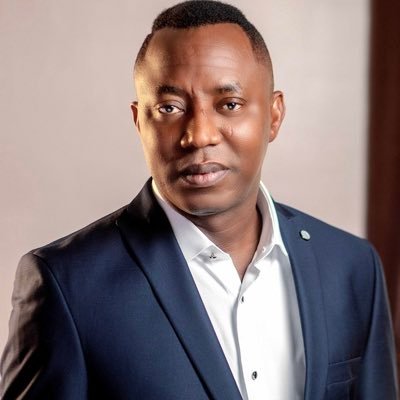
In an exclusive chat on Saturday, Michael denied ever making the allegations credited to him by Sowore concerning the Inspector-General of Police (IGP), Kayode Egbetokun, while both men were reportedly inmates at the Kuje Correctional Centre in October 2025.
Sowore, in a widely circulated account, claimed that Michael had alleged receiving operational support from senior police officers, including the provision of office space within the Nigeria Police Force Headquarters, police protection, and the use of officers to detain individuals connected to a purported Ponzi scheme. The report further alleged financial inducements involving senior police officers.
However, Michael dismissed the account as “entirely fabricated.”
“I never made those statements to Omoyele Sowore or to anyone else,” Michael said. “At no point did I accuse the Inspector-General of Police or any senior police officer of providing me with offices, police units, or protection. The claims attributed to me are false and malicious. I only met him briefly when he came to greet Nnamdi Kanu’s younger brother whom I share a block with here and there is no way we could have sat down to discuss such fabricated stories ”
Michael specifically rejected claims suggesting that he supported or “served” police officers, insisting that he never stated that he had any police unit at his disposal or that law enforcement personnel acted on his instructions.
“I never said I supported police officers or had officers working for me. That allegation did not come from me,” he said.
He also denied claims that his properties were shared among senior police officers, describing the allegation as baseless and untrue.
“At no time did I say that my properties were shared among police officers or anyone else,” Michael stated.
Additionally, Michael categorically refuted allegations credited to him that a retired Deputy Inspector-General of Police, Dasuki Galandanchi, collected ₦250 million or played any role in silencing victims.
“I never mentioned DIG Dasuki Galandanchi, nor did I accuse him or anyone else of collecting money. That statement was never mine,” he said.
Michael further alleged that Sowore, through intermediaries, had previously attempted to persuade him to publicly indict the IGP in exchange for media backing—an offer he said he firmly rejected.
“I was approached repeatedly through a lawyer called Marshall, allegedly acting on Sowore’s behalf, asking that I make statements against the IGP so an article could be published. I refused, and I believe this publication is retaliation for that refusal,” he stated.
According to Michael, he declined to entertain the lawyer again after the initial contact, insisting that he would not be used to advance any personal or political agenda.
Sowore had earlier narrated his detention following the #FreeNnamdiKanuNow protest, alleging harassment by police officers and accusing the IGP of acting unlawfully in office. His report cited conversations he claimed to have had with Michael during their time in custody as further evidence of alleged corruption within the Nigeria Police Force.
Michael, however, maintained that any legal issues surrounding him are already before the appropriate authorities and are being handled by the Economic and Financial Crimes Commission (EFCC).
“My case is before the law. I have not, and will not, make reckless allegations against individuals or institutions to gain favour or sympathy,” he said.
As of the time of filing this report, the Nigeria Police Force has not issued an official response to either Sowore’s allegations or Michael’s rebuttal.
The development adds a new layer to the ongoing public controversy surrounding Sowore’s claims against the police hierarchy, with Michael’s denial raising questions about the accuracy of statements attributed to private individuals in politically sensitive narratives.
Jesam Michael’s business challenges are currently being addressed at the federal high court as well as FCT high court Jabi. He is very confident that justice will surely be done at the end of the day.
Joining Sowore in his pursuit of cheap blackmail against the IGP, other senior police officers or anyone else has never and will never be a part of Jesam Michael.
To say the least, Jesam Michael is totally disgusted by the stories falsely peddled by Sowore and wishes to totally dissociate him self from the false and malicious stories told by Sowore.
Sowore should please look for another willing tool to use not Jesam Michael.
celebrity radar - gossips
When Power Meets Privilege: Controversy Trails the Rise of NNPC Gas Czar Lekan Ogunleye
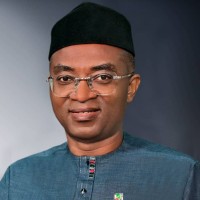
When Power Meets Privilege: Controversy Trails the Rise of NNPC Gas Czar Lekan Ogunleye
Among many of Abraham Lincoln’s popular saying is that “If you want to test a man’s character, give him power.” This saying suggests power and affluence reveals a person’s true nature rather than changing it.
The saying might rightly describe one of NNPC limited eggheads, Lekan Ogunleye, who is the Executive Vice President, Gas, Power & New Energy.
It’s a matter of stating the obvious saying that the former Deputy Managing Director of Nigeria LNG Limited is a brilliant chap. He’s been equipped with significant industry experience in various aspects of the gas value chain, he was made the Managing Director and Chief Executive Officer of Gas Aggregation Company Nigeria Limited (GACN),a firm set up by Federal Government of Nigeria to implement the Nigerian Gas Master Plan and manage domestic supply of gas.
But with all of these achievements, many alleged that a thorn in the flesh that lives with Mr Ogunleye is his fondness for the other gender. Sources close to him alleged that he invests millions in satisfying his cravings to invite them from around the world in different sizes and shapes on regular basis.
Information gathered has it that like many of his class, he has a permanent suite in a luxurious hotel on Lagos Island where he entertains them, it was alleged that his arrangements even provides luxurious treatment for them even when he’s not in town. A recent case of such was when he travelled to UAE during last year December with his family, sources close to him alleged that while he was away, ladies invited from Indonesia and Rwanda were receiving royal treatment in this permanent suite which cost over half a million Naira per night.
The sources also alleged that he’s known to relish his fetish practices with two ladies at the a time, and to watch them play with themselves before joining in the fun.
While his personal life may not be that important, how he was able to sustain such an expensive lifestyle, was scrutinize and it was alleged that he regularly receives kickbacks from NNPC vendors and contractors, especially the foreign partners who have been awarded contracts worth millions of dollars through his assistance.
Some of his close allies alleged that power that his privileged office brought was responsible for his insatiable desires for the opposite sex a situation that led to the collapse of his first marriage before he remarried a few years ago.
In other to establish the true state of things, a query was sent to him especially about the allegation of financial irregularities and the abuse of power and privileges for personal enrichment, the query was left unanswered after more than two weeks even when receipt was confirmed.nleye
celebrity radar - gossips
Pomp, Prestige and Purpose: Dr. Mutiu Adewale Badmus Crowned Otunba Alayeluwa Onimolete of Molete, Ogbomoso
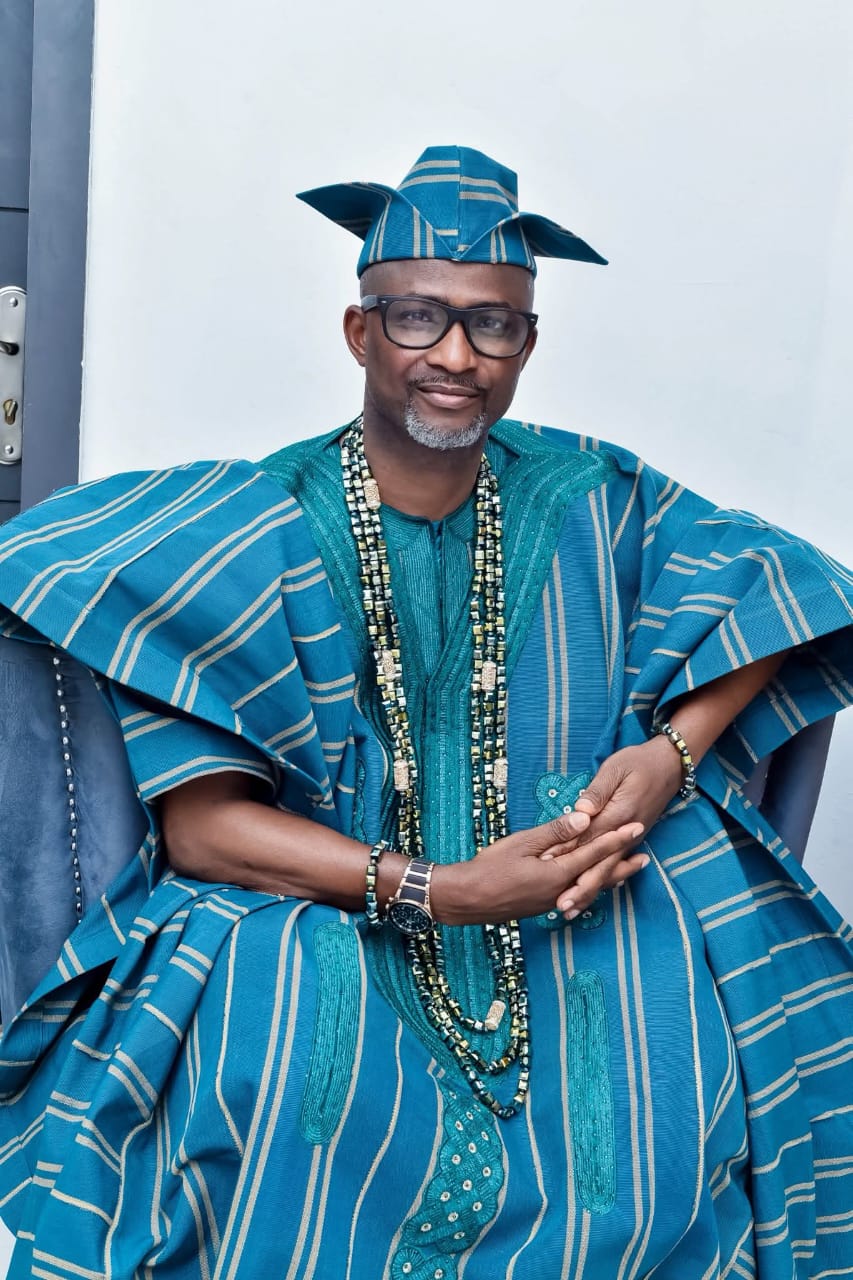
Pomp, Prestige and Purpose: Dr. Mutiu Adewale Badmus Crowned Otunba Alayeluwa Onimolete of Molete, Ogbomoso
Last Sunday was etched in gold in the annals of Molete, Ogbomoso, as the ancient town came alive in colour, culture, and celebration for the conferment of a prestigious chieftaincy title on the erudite entrepreneur and man of many parts, Dr. Mutiu Adewale Badmus.
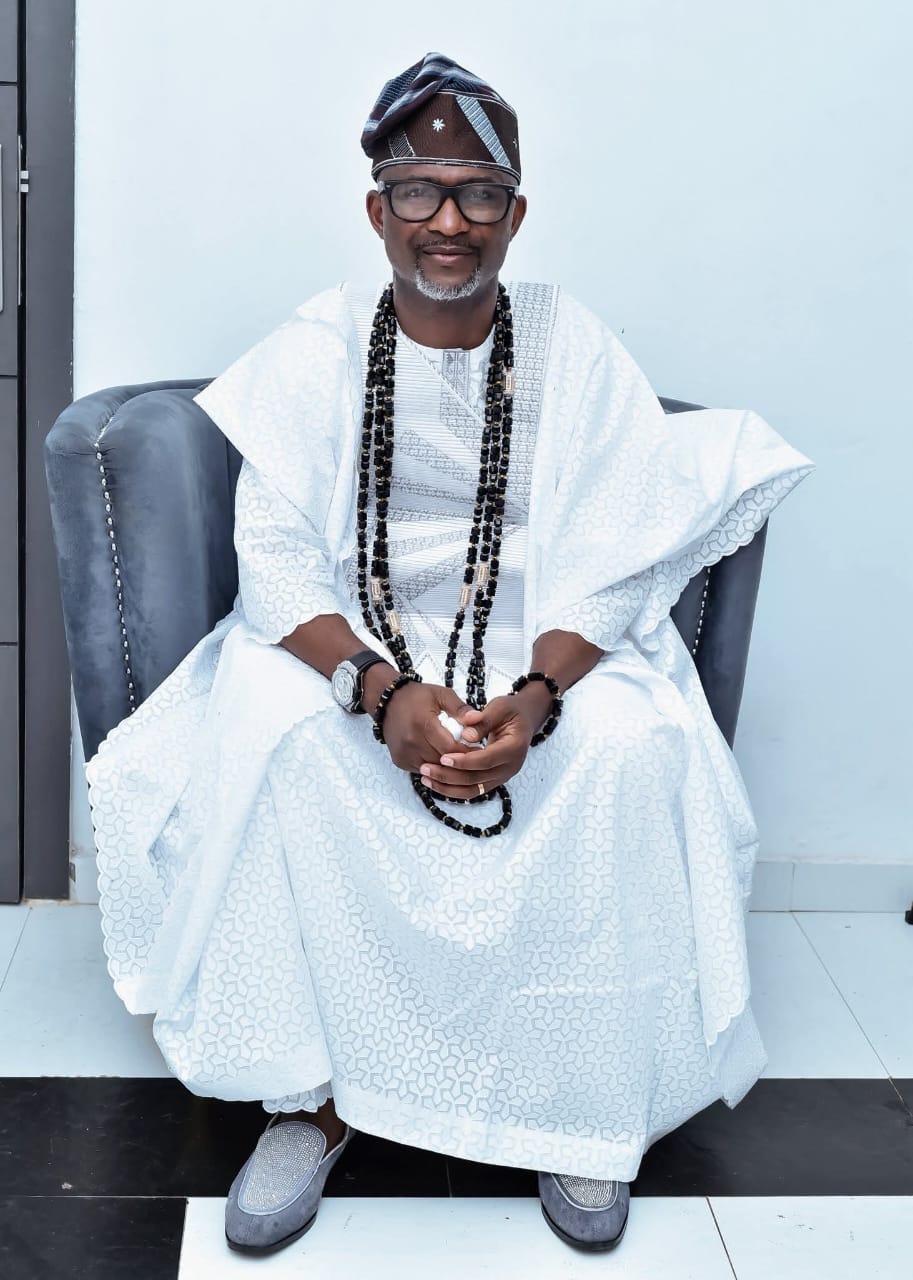
In a ceremony steeped in tradition and grandeur, Dr. Badmus was formally installed as the Otunba Alayeluwa Onimolete of Molete, Ogbomoso, drawing an impressive gathering of crème de la crème from across the social, business, and cultural strata of society.
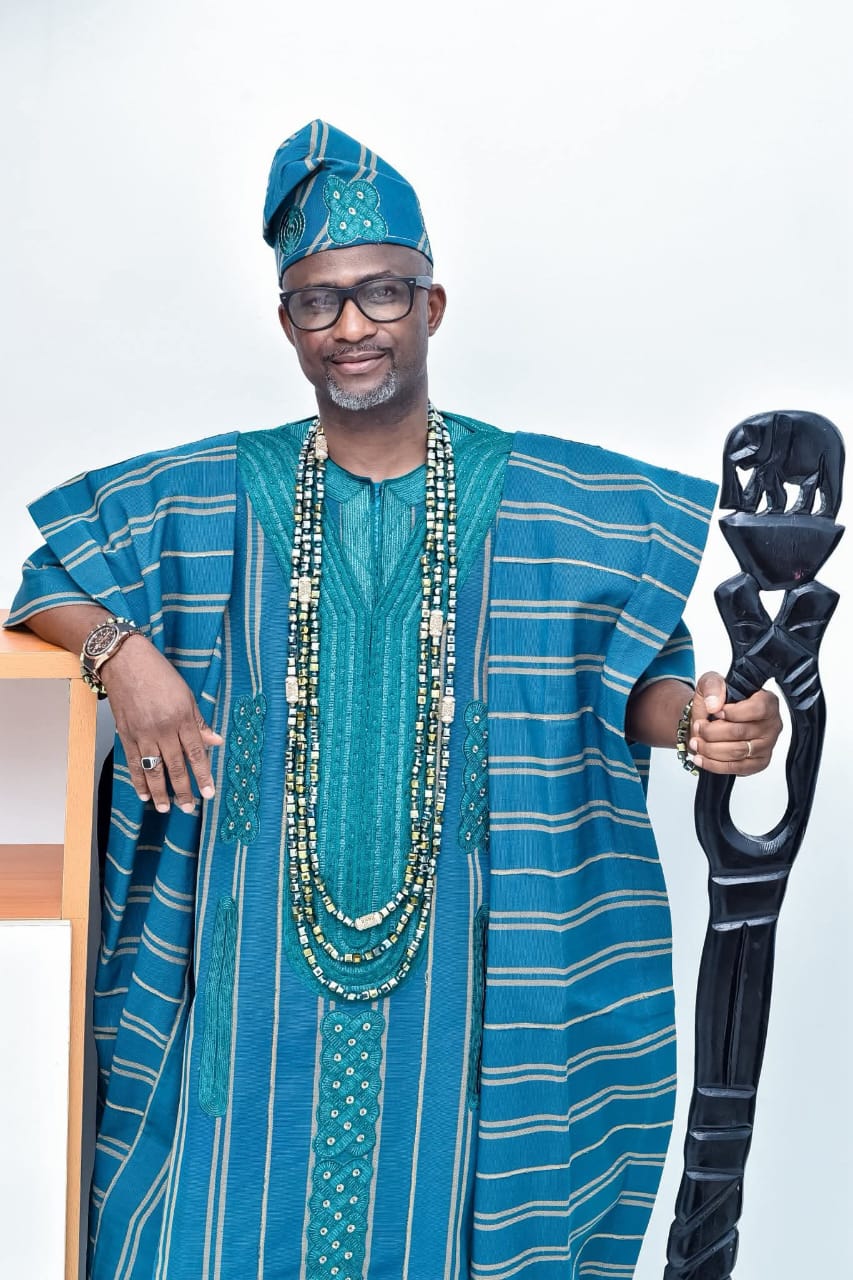
The atmosphere was one of pride, reverence, and collective joy as dignitaries, community leaders, friends, and well-wishers thronged the historic town to witness the landmark event.
The honour, bestowed in recognition of his outstanding contributions to societal development and humanity at large, reflects Dr. Badmus’ enduring commitment to service, excellence, and community upliftment. As the Chief Executive Officer of Al-Hatyq Travel and Tours Limited, he has distinguished himself not only as a successful business leader but also as a compassionate humanitarian whose impact transcends commerce.
The colourful ceremony showcased the rich cultural heritage of Ogbomoso, with traditional rites, music, and pageantry underscoring the significance of the occasion. For many in attendance, the conferment was more than a title—it was a celebration of character, legacy, and a life devoted to meaningful service.
As Dr. Mutiu Adewale Badmus assumes his new role as Otunba Alayeluwa Onimolete, expectations are high that his wisdom, vision, and passion for humanity will continue to inspire progress and unity within Molete, Ogbomoso, and beyond.


-

 celebrity radar - gossips6 months ago
Why Babangida’s Hilltop Home Became Nigeria’s Political “Mecca”
-

 society6 months ago
Power is a Loan, Not a Possession: The Sacred Duty of Planting People
-

 news6 months ago
THE APPOINTMENT OF WASIU AYINDE BY THE FEDERAL GOVERNMENT AS AN AMBASSADOR SOUNDS EMBARRASSING
-

 Business6 months ago
Batsumi Travel CEO Lisa Sebogodi Wins Prestigious Africa Travel 100 Women Award
You must be logged in to post a comment Login