
celebrity radar - gossips
iPhone Theft: Toyin Aimakhu’s Career Is Taking A Hit For Falling In Love With Wrong Person

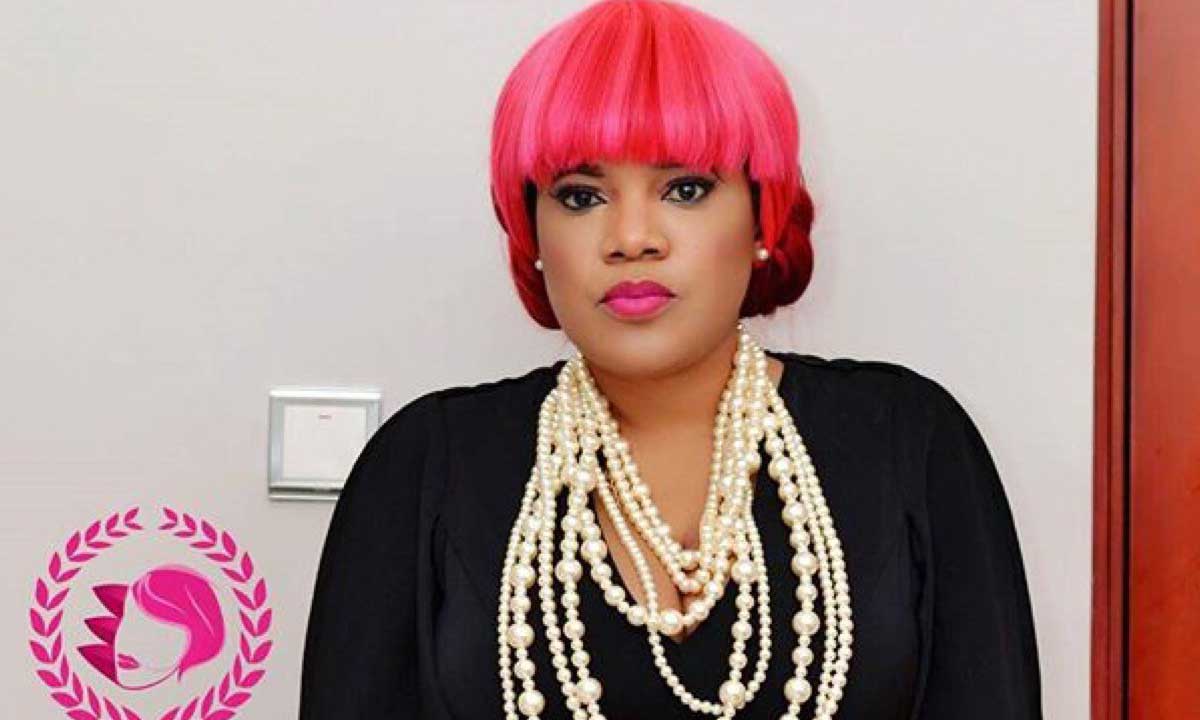

Over the past five years, we’ve watched Toyin Aimakhu rise to the peak of her career in the Yoruba movie scene that presently boasts some of the biggest stars in Nollywood. BUT, the last 365 days have not been inspiring.
First was the time she left her matrimonial home of two years, then she fell in love with the wrong man, Seun Egbegbe, and now, she’s in the news for the wrong reasons.

Toyin separated from her ex-hubby, Adeniyi Johnson over allegations of infidelity a few months to their second wedding anniversary in 2015.
Then, Adeniyi took to Instagram to confess that his wife truly caught him flirting and he urged fans and friends to support him in begging his wife to forgive and forget so they can carry on with their marriage.
‘God will lead me, let him lead us please, I don’t want to make any mistake trying to please you fans I really do appreciate the Love and I’m sure he does too,’ was what the actress said in response to the apology.
Less than three months after their marriage failed, the Yoruba actress’ romance with film-maker and marketer Seun Egbegbe was exposed, and since then, her persona has suffered a hit.

They both went on a secret romantic trip to Dubai in September 2015 under the guise of a working relationship, and he also gifted the actress a grey Range Rover SUV.
In November 2015, Seun was alleged to have stormed a movie location and requested to get his car back, and it was taken to him with the actress’ permission. At the time, it was reported that the jealous film-maker beat her up at home, but she denied the accusations.
‘I have said it times without number that I’m not dating Seun and I have never been beaten to a pulp by any man. Seun is my friend. You can only marry someone you are dating. And I don’t think I have time for any relationship now,’ she told thenetng. At the time it was also rumoured that the pair may walk down the aisle.
And in February 2016, Egbegbe was alleged to have kidnapped the Alakada actress after she made several emotional pleas on social media to a comedian, Twyse, not to commit suicide.
Her relationship with Seun turned sour after her friends confirmed that the movie producer indeed kidnapped her following a fight at a movie location. Seun had to sign an undertaking with the Nigerian police not to disturb Toyin Aimakhu any more after the actress reported his threats to ruin her career.
Toyin, who reportedly went to the station in company of her lawyer, Bosun Osifowora, stated that Seun Egbegbe’s threats affected her business as colleagues and producers were afraid of inviting her for movie shoots because they were aware of his violent nature.

Fast forward to March 2016, Toyin announced her TV Reality Show, Keeping Up With Toyin Aimakhu. In one of the debut episodes, she talked about why she will never go back to her estranged hubby, Adeniyi Johnson. At the time her fans were more concerned about her kidnapping and the split from Seun.

On Tuesday, November 22, Seun Egbegbe was arrested for trying to steal nine iPhones at Computer Village in Ikeja, Lagos. He tried to escape in a jeep but passers-by were quick to nab him.
‘Yes o, na police help am, dem for kill am, he came to the guy store and collected the phones, then told the sales girl that he is coming back,’ an eyewitness told Thenetng in pidgin.
Well, we still believe Seun might have been hypnotised to steal the iPhones because it makes no sense for someone who’s acquired some wealth to steal what he can easily afford.
As expected, Toyin Aimakhu’s name was mentioned during the theft conversations in offices, homes and also on the Internet, after all, she previously dated the film-maker.
This is a bad reputation for Toyin Aimakhu who brought Seun Egbegbe to limelight with her fame, and the implications are now hurting her career.





THE ENEMY WITHIN
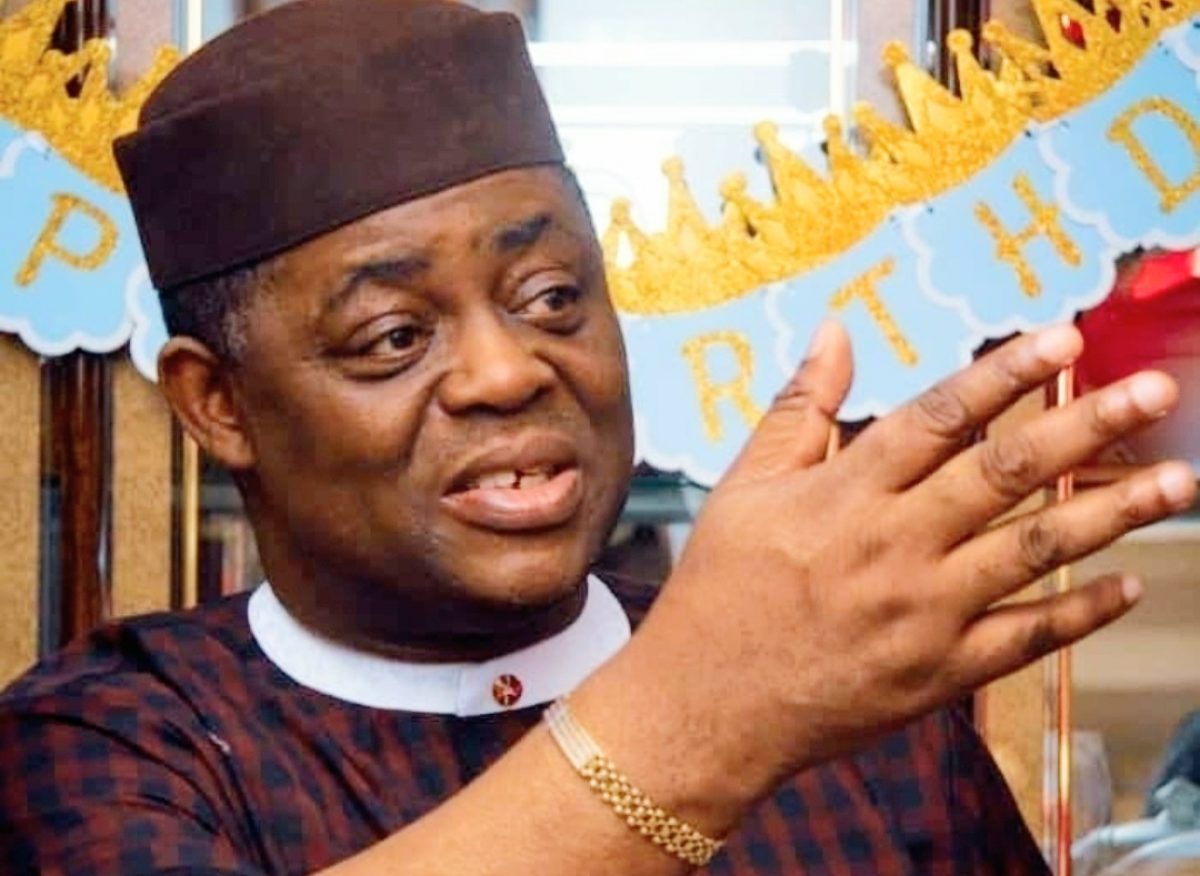
By Chief Femi Fani-Kayode
The enemy within smirks, mocks and laughs when our President slips and falls to the floor in far away Turkiya.
Oblivious of the fact that a democratically-elected President, whether you like or support him or not, is the living manifestation of our nation and the essence and symbol of our national sovereignty and pride they pray for the worse and celebrate it in the inner recesses of their dark, sinister, twisted and malevolent minds.
They forget that when our President falls it essentially means that our nation falls.
They forget that a true patriot is meant to pray for, cheer on and encourage the leader of his country, whether or not he is in opposition, when he is fighting for the future of our people in a foreign land.
They whisper to themselves in their closets and bedrooms that “finally, this is his end”.
With glee they say to themselves and to their grubby little minions that “at last we have him!”
They assume the worse and they desire for the worse.
They forget that anyone can slip and fall at anytime and that the Holy Bible says “rejoice not over me, O my enemy; when I fall for I shall rise and when I sit in darkness, the LORD will be a light to me”- Micah 7:8.
They forget that it also says “for a righteous man may fall seven times
and rise again but the wicked shall fall by calamity”- Proverbs 24:16.
It is to the glory of God and to the shame of our detractors and the enemy within that though our President slipped and fell in Turkey before the entire world, he rose again with strength and pride like the phoenix and he went on to negotiate and sign numerous bilateral agreements which will bring security, succour and prosperity to our nation with President Erdoğan of Turkiya.
That is the lot of a righteous man and a humble, forgiving and kind-hearted leader and it signifies the fact that the Lord is with him and that the enemy within has failed once again.
Yet they never stop and neither will they ever do so because they are seized of a dark, depraved, diseased and sadistic mind that craves failure and chaos and longs for calamity, tragedy, sorrow, tears and malevolence.
The enemy within just loves it when terrible things happen. Like the accursed masochists that they are, that is their pleasure and delight.
They love to hear the cries of infants and babies and they delight in hearing the wailing of widows and the screaming of orphans.
Consider their reaction to the sad and unfortunate events that took place in Kajuru, Kaduna state earlier this month.
I am as saddened and concerned as anyone else about the abductions of the worshippers that took place there and like everyone else I hope and pray for their rescue and safe return back home at the soonest.
I am however constrained to make the following observations and I do so with pain and sorrow.
The reality is that the enemy within, namely a handful of political leaders in the opposition who seek to undermine and discredit our Government and to destabilise our country and who are working in collaboration with foreign powers are part of those that are secretly encouraging and, I suspect, facilitating the abduction of Christians in Nigeria because they make political capital out of it.
They secretly crave it yet openly condemn it because it suits their purpose and it confirms the narrative that they want to establish.
For some it proves that Christians are being targetted in Nigeria and it plays into the Christian genocide and persecution narrative which the Americans have gladly cottoned on to and for others it feeds the erroneous suggestion that having a Christian candidate for the opposition or a Christian running mate for our President in 2027 are the answers to the problem and the only way of proving that Christians are safe and treated with humanity in our country.
Both views do not fully recognise the depth and complexity of the problem and can therefore be fairly described as simplistic, myopic and misplaced because the situation is much more complex than that.
Worse still the specious lies and dubious political motives that fuel this thinking are irresponsible and disingenious.
You cannot play politics with peoples lives and liberty, take advantage of their misery and suffering and use them as pawns in a deadly game of political chess.
Worse still you cannot attempt to distort the narrative, misinform the world and perpetuate and peddle the nonsensical falsehood that only Christians are being abducted and killed by the terrorists in our country and that only Churches are being burnt down whilst Mosques are left standing. This is simply not true.
The reality is that Muslims are also being abducted in massive numbers and a more accurate and honest categerisation of the situation we are faced with would have been that both Christian and Muslim Nigerians are “not safe” in parts of Northern Nigeria because of mass abductions and not just Christians.
Even this categorisation may not be accurate and is possibly unfair because it negates the efforts and successes that the the Nigerian military, the Minister of Defence, the Minister of State for Defence, the National Security Advisor and the Nigerian security forces and Intelligence agencies together with numerous notable Governors from the Northern states like the Governor of Kaduna, the Governor of Kwara, the Governor of Yobe, the Governor of Borno, the Governor of Sokoto and a number of other key Northern leaders such as Vice President Kashim Shettima, Senator Abdul Aziz Yari, Senator Aliyu Wamakko, Senator Shehu Umar Buba and a number of others have made in curbing this menace.
The truth is that for every person that has been abducted hundreds have been protected and delivered from attempts at abduction and virtually every single one of those that were actually abducted before Kajuru have been rescued and returned home safely.
That in itself is encouraging though it does not negate or underplay the problem we have and the challenge we collectively face.
It simply means that despite the problems and challenges and the politically-motivated expressions of angst and concern of the usual suspects at least some progress is being made.
It is deeply saddening and troubling that ANYONE is abducted or killed in the first place and this represents a failure in our efforts to achieve 100% security for Nigerians in the midst of what is essentially an open and horrendous guerrila war where civilian populations are purposely targetted and a massive and unprecedented armed rebellion and relentless insurgency is in full play.
However we must acknowledge that our successes in this respect both in the prevention of even more killings and abductions and in terms of recovery and rescue of those taken is very good.
Sadly people people tend to focus on the failures and remain silent in the face of the successes which is most unfair.
What is even more unfair and extreemly dangerous is to continuously frame the entire matter in religious terms.
I am amongst those that did so in the past but six years ago, after much research and extensive travelling all over the more distant parts of the core North for an investigation into the matter and an extensive 5 week tour my eyes opened and I came to appreciate the fact the Muslims were being targetted with equal ferocity and in equal measure.
This is a fact that the media and most Southern Nigerians, for reasons I cannot fathom or comprehend, appear to ignore and choose to play down and it begs the question whether Muslim lives are considered as being as sacred and precious as Christian ones in their eyes?
The criminals and terrorists that carry out these atrocities do not care whether it is Christians or Muslims that they terrorise, traumatise, kill or abduct. They only care that their victims are Nigerians.
Their war is not against Christians alone but against the Nigerian state and the Nigerian people, both Christian and Muslim.
It is in this light that we must view this harrowing challenge and once we do so we will be in a better position to confront it, defeat the enemy, eliminate the threat and put both our local and foreign detractors to shame.
Permit me to continue this contribution with a sincere and heartfelt word for Mr. Peter Obi, a notable member of the Nigerian opposition.
I refer to your post on the terrible events that took place in Kajuru on Sunday 18th January 2026.
I share your concerns for the safety of those abducted but unlike you mine are from the heart and I am not expressing those concerns for political gain.
At a time like this we should be praying for the rescue of the worshippers and assisting and encouraging our Government to ensure their safe return.
Instead of doing so you are sheepishly asking “what is happening in our country” as if you, your supporters and your insincere and divisive rhetoric are not part of the problem.
You feign concern and focus on the negative never offering support or giving credit to whom it is due when things go well and are done properly.
For example have you ever had the decency or prescence of mind to commend the efforts of the gallant men of our Armed Forces and security agencies or acknowledged the number of people and lives they have successfully defended and saved?
Have you ever considered the fact that many of them are paying the supreme price every day on the frontlines in their attempt to protect and guard the realm and prevent the barbarians from climbing over our walls?
Have you ever thanked them for this or publicly expressed solidarity with or support for them? I doubt it.
Our greatest problem are people like you that openly crave for and secretly celebrate chaos, lawlessness, division and carnage and that see the propagation and execution of such evil as a justification for your futile and pitiful attempt to discredit the Government and gain sympathy and support for yourself.
Simply put you seek to harvest the misery of our people in the same way that some harvest human organs and you celebrate their pain, suffering and tears.
Relevant here are the words of Mr. Dennis Amachree, a former Assistant Director of the DSS, who said the following:
“most of these mass abductions are carried out to spite the Government in power: there are fifth columnists and complicit actors within the system and by the time the Government reacts the damage has already been done”.
I am constrained to ask whether you are part of those that are actually behind these abductions and insurgency simply for political gain?
Let me be clear: this is a question and not an allegation but whatever the answer is (and I do not claim to know it) kindly save your crocodile tears and insincere concern for the welfare and safety of our people whether it be in Kaduna or elsewhere. We know you don’t mean it.
The only thing that is important to you is that all our institutions fail and our nation is burnt to ashes in a religious and ethnic conflagration so that you and your cohorts can divide our country, break it into pieces and share what is left of it amongst yourselves.
Be rest assured that that will NEVER happen and you will NEVER achieve your objectives.
Whatever our challenges may be as a nation and whatever obstacles may be placed in our path, I am persuaded that in peace, love, unity, mutual respect and faith we shall SURELY overcome.
Permit me to add the following.
It has come to my attention that when ESN and IPOB terrorists murder Christians and Muslims in the South East you encourage it by saying nothing and endorse it with your resounding silence.
When Muslims are killed in the North, except on the odd occassion, you say nothing because you do not see them as human beings and you could not care less.
When Christians are killed in the North you feign outrage and you celebrate and magnify it, citing it as evidence of “Christian persecution” and “Christian genocide” and encouraging the right-wing lunatic fringe in American politics to latch on to it.
When Christians are not killed in the North you pretend that they are, inflate numbers and fabricate it in an attempt to plant the seeds of religious division and provoke a sectarian war.
What manner of man are you?
Why are you so hell bent on destroying our country and shattering the unity that we are trying to establish and preserve?
Is it your desire to be President over a broken, bleeding and dying Nigeria and to preside over the corpse of a great nation like ours that you are evidently so desperate to murder?
What pleasure can you possibly derive from your dangerous doublespeak and grave antics and what has Nigeria done to you and yours that you so desperately seek her destruction and demise?
We have seen this desperate thirst and quest for power before and we saw how many bodies littered the streets in an attempt to gain it.
It happened on January 15th 1966 with shocking and devastating consequences for those that were behind it and indeed for the entire nation.
May we never see such again.
You do not have to tear Nigeria apart to achieve your ambition of becoming President: God alone gives power to whom He pleases and when he deems it fit.
I have little doubt that when that time comes, years down the line, and He deems it fit to give it to the South East it will certainly NOT be to you.
I say this because there are men and women from your part of the country that are far better and far more deserving and qualified than you and that are neither divisive or obsessed with the division of our country.
Unlike you such men and women proudly consider themselves as being Nigerians and not Biafrans and they do not make a distinction between Muslims and Christians.
They see all Nigerians, whether Christian or Muslim or whether Northerner or Southerner, as being one and the same and that is what we expect and deserve.
They appreciate the fact that the road to power in a democracy is one of peace, inclusiveness and understanding and not one of discord, strife, violence, lies, insults, disinformation, propaganda, division, historical revisionism, inordinate ambition, greed, entitlement and deceit.
Neither do they believe in the stereotyping or demonising of any of our great ethnic nationalities or religious faiths.
These are the basic and fundamental prerequisites that are required for anyone to lead our great nation and in my humble opinion you do not have them and you are incapable of ever cultivating them.
Yet it doesn’t stop there.
You not only turned on your own Obidient supporters and called them “criminals” (an appelation I will not contest with you) after they complained about the fact that you joined the ADC, a political party that you had earlier described as a “structure of criminality” but you also disavowed and disowned them when they resorted to their usual infantile tantrums after it was brought to their attention that you were considering the possibility of being the running mate to the undisputed leader of that party given the fact that you have no hope in hell of winning the presidential primaries.
Yet all that doublespeak, lack of consistency, opportunism and deceit pales into comparison when compared to what you did to your former presidential campaign manager.
You repaid his good with evil by turning your back on him in his time of need and refused to stand by him and support him when he fell ill. For this alone God will never forgive you.
I will not go into what else you did to him because that is for another day but to say the least you were unfeeling, insensitive and callous towards this profoundly good man who many loved and held in high esteem.
The only mistake he made was that he associated himself with you and joined your bandwagon of misguided and irreverent Obidient cheerleaders.
Thankfully towards the end he saw you for what you were, retraced his steps and returned back to us.
Surely you are not the stuff of which real leaders and Presidents are made. Your loyalty is to your vaulting ambition and to no-one and nothing else.
Your new friends in the ADC will attest to that at a later date after you break ranks with them.
These are my words for you Peter. I sincerely hope that you will consider them.
Permit me to end this contribution with the following.
If truth be told Obi sincerely believes that he has the right to the Presidency just as satan believed he had the right to Moses’ body.
When the latter passed on and satan came for his corpse the Holy Bible tells us that Archangel Michael rose up, confronted him, resisted him and boldly pronounced “the Lord rebuke you satan” after which the devil fled.
Today I say, “the Lord rebuke you Peter” and, like satan, you MUST flee.
Just as he had no right to Moses’ body, you have no right to the Nigerian Presidency!
God alone has the exclusive right to give it to whom He deems fit!
Yet one thing is clear: if it is ever Peter Obi we shall rue the day!
This is a man whose supporters celebrated and lept with joy when President Donald Trump threatened us and described our nation as “a disgraced country” and when he said, “we may very well go into that now disgraced country, guns-a-blazing and if we attack, it will be fast, vicious and sweet”.
This was like music to the ears of Obi and his Obidients but when the narrative changed, sanity prevailed and tempers cooled they could not bring themselves to express a word of support, relief or commendation for the Federal Government after it responded to the Americans in a restrained, mature and profound manner, rebuilt the bridges of friendship and understanding, entered into a joint security agreement with them and started working closely with them to combat the menace of terrorism in an atmosphere of camaraderie and mutual respect.
This is not what Obi and his supporters wanted. What they had in mind was for the Americans to attack Nigeria, kill our people, bomb our cities and implement a Maduro-style regime change before carving us up into at least four separate pieces.
As Otunba Bayo Onanuga, the spokesman to President Tinubu said, “we will NEVER forgive or forget Peter Obi for wanting our nation to be attacked and bombed”.
These words reflect the thinking of not just those in Government but of every right-thinking Nigerian patriot.
To add to that as my friend and brother His Excellency Ambassador-Designate Reno Omokri asked in a recent write up,
“How can an individual like Peter Obi who has divided four different parties in Nigeria want to be President?”
This is a pertinent question which needs to be answered and I add the following: how can an individual who refuses to condemn the wanting acts of mass murder, butchery, abduction, torture and intimidation of the ESN and IPOB and a man who, as far as I am aware, has never condemned the Monday ‘sit at home order’ issued by the terrorists throughout his own South-Eastern region aspire or expect to lead our nation?
Surely the very thought of such a prospect is as frightful as it is perverse.
A fundamental requirement and pre-condtion to being the President of a great nation like ours is surely a deep respect and love for and understanding of ALL the people regardless of where they come from or what their religious faith is and a total and complete rejection of terrorism not just in the North but also in the South.
To be selective in this respect is to be divisive and to be divisive is to be destructive. We do not want or need a destructive President.
We want a Commander-in-Chief, like the one we have today, that will at least endeavour to hold us all together as one and not a Divider-in-Chief that will favour his own and seek to turn the rest of us into serfs and slaves.
We have been down that road before and, by God’s grace, we shall NEVER walk it again.
Whatever the case and whoever the enemy within choose to field in 2027 as their presidential candidate one thing remains clear: in a 36 state Federation our ruling party the APC now controls all but 7 states and of the seven one is in alliance with us.
Given this it is clear that only God can stop President Bola Ahmed Tinubu from being re-elected in 2027.
All the subversion, destabilisation, betrayal, hostility, lies, conspiracies and shenanigans that the enemy within, the opposition and their hordes of foreign friends, attack dogs and bellicose trolls have collectively contrived cannot stop or deter him.
I advise them to focus their presidential aspirations on 2031 and forget 2027 because until then there is no vacancy in Aso Rock.
I also urge them to purge themselves of their divisive and subversive ways and their hate and contempt or, failing that, to leave our shores and embark on a journey of no return.
May God bless and defend the Federal Republic of Nigeria.
(Chief Femi Fani-Kayode is the Sadaukin Shinkafi, the Wakilin Doka Potiskum, the Otunba of Joga Orile, the Aare Ajagunla of Otun Ekiti, a former Minister of Culture and Tourism, a former Minister of Aviation, a former Senior Special Assistant to President Olusegun Obasanjo, a Legal Practioner and an Ambassador-Designate of the Federal Republic of Nigeria)
celebrity radar - gossips
DETERRENCE OR CATASTROPHE? ON THE BRINK OF A REDEFINING MIDDLE EAST WAR: A CALL FOR THE DIPLOMATIC PATH FORWARD
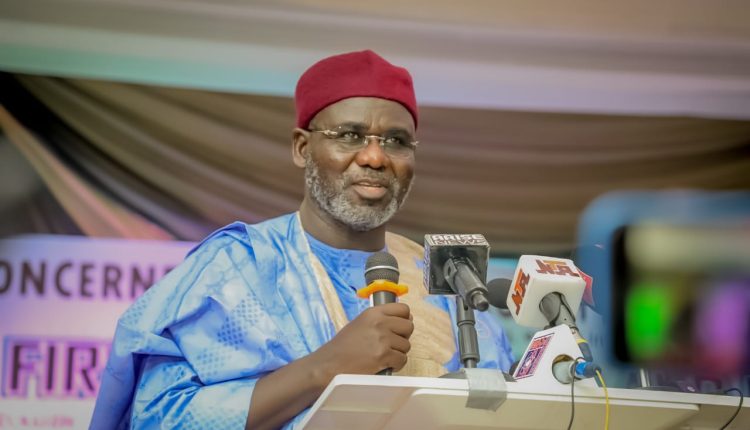
DETERRENCE OR CATASTROPHE? ON THE BRINK OF A REDEFINING MIDDLE EAST WAR: A CALL FOR THE DIPLOMATIC PATH FORWARD
By Lt Gen Tukur Yusufu Buratai Rtd CFR
We stand at a precipice where a single decision could redefine the future of the Middle East and send shockwaves through a fragile global order. The choice appears deceptively simple: to strike militarily in pursuit of deterrence or to withstand perceived aggression. Yet, this framing is a dangerous illusion. A direct, full-scale conflict between the United States, its allies, and Iran would not be a controlled exercise in power projection. It would be the ignition of a regional inferno with no clear exit, where the initial objective of “deterrence” would be consumed within hours by the unforgiving law of unintended consequences. The path of war promises not a decisive victory, but a cascade of devastation—human, economic, and strategic—that would leave all parties and the world profoundly poorer and more unstable. In this stark reality, diplomacy is not a sign of weakness; it is the singular, rational imperative for survival.
The Illusion of a Clear Victory
The allure of a military solution rests on a straightforward calculus: degrade critical nuclear and military infrastructure, cripple the command structures of the Islamic Revolutionary Guard Corps (IRGC), and deliver a blow so decisive that Iran’s regional influence collapses. Proponents envision a rapid, surgical campaign that reestablishes undisputed deterrence. However, this vision fundamentally misjudges the nature of the adversary and the dynamics of the region. As former U.S. Deputy Assistant Secretary of State Andrew P. Miller cautions, even a successful strike “would likely prove a Pyrrhic victory” for broader strategic goals, failing to achieve durable political outcomes. Iran would not absorb a strike passively and capitulate. Retaliation would be swift, multidimensional, and devastating.
Indeed, as noted by Seyed Hossein Mousavian, a former Iranian nuclear negotiator and scholar at Princeton University, Tehran perceives such a confrontation as an “existential war,” a stance that would “eliminate any incentive for restraint, unleashing a conflict that would be impossible to control.” We would witness not a single battle but the violent opening of multiple, simultaneous fronts. Hezbollah’s vast arsenal of precision-guided rockets would rain down on Israeli cities. Iranian proxies in Iraq and Syria would target the U.S. personnel and bases with relentless aggression. The Houthis could unleash further chaos on global shipping. Most critically, Iran itself would likely launch direct missile and drone attacks against Gulf state oil infrastructure and, potentially, attempt to blockade the Strait of Hormuz—a chokepoint for nearly 25% of global seaborne oil trade. The initial “surgical strike” would, within days, metastasize into a sprawling regional war with no defined battlefield and no clear rules of engagement.
The Unbearable Costs: A World Remade by War
The consequences would swiftly spiral beyond the military domain, etching a deep scar across global stability. The human cost would be immediate and horrifying, with casualties mounting not just among combatants but in urban centres targeted by long-range artillery and missiles. As analyzed by the BBC, a primary risk is the collapse of the Iranian regime into chaos or civil war,” which would spark “a severe humanitarian and refugee crisis” of immense proportions, a scenario where “nobody wants to see the largest Middle East nation by population… descend into chaos.”
The economic shock would be felt in every corner of the world. A successful disruption of the Strait of Hormuz, even temporarily, would trigger an instantaneous spike in oil prices, catapulting the global economy into a profound inflationary recession. Supply chains would seize, markets would panic, and the cost of basic necessities would skyrocket worldwide. This is not a speculative risk; it is a guaranteed outcome of Iran’s stated asymmetric doctrine.
Strategically, the war would unmoor the region for a generation. The delicate, if tense, balance among regional powers would shatter. Even if the Iranian regime were severely weakened, the result would not be a peaceful vacuum but a vortex of chaos. As Afshon Ostovar, an associate professor at the Naval Postgraduate School, warns of potential internal collapse, “the ruling apparatus, in other words, would collapse gradually, and then suddenly.” A fractured state could descend into civil conflict, its hardline elements unleashing terror networks, and rival powers scrambling to carve spheres of influence. The painstakingly built, if flawed, security architecture of the past half-century would lie in ruins. The ultimate outcomes of a strike are profoundly unpredictable, but none point toward a more stable or secure order for the United States, Israel, or their allies. Victory, in any meaningful sense, would be unrecognizable.
The Diplomatic Path: Not an Ideal, But a Necessity
Faced with this landscape of ruin, the diplomatic path emerges not as a naive ideal but as the only pragmatic tool for managing an existential threat. It is the circuit breaker for the escalatory spiral that guarantees mutual destruction. This is not an argument for appeasement or for trusting the untrustworthy. It is a cold-eyed recognition that only through calibrated statecraft can we navigate away from the brink. This view is echoed by regional voices, such as an editorial in The National, which asserts that “various regional actors are urging non-military ways to change relationships with Tehran” and that “now is a time for focused and determined diplomacy to chart a path away from war.”
The goal of diplomacy in this context is not to achieve a grand reconciliation overnight but to relentlessly pursue de-escalation and create mechanisms for crisis management. It involves empowering regional dialogue, establishing clear and direct communication channels to prevent miscalculation, and seeking hard-nosed, verifiable agreements that incrementally roll back the most dangerous threats, such as further advances in Iran’s nuclear program and its regional ballistic missile deployments. The international community, including powers with leverage in Tehran, must be rallied not to take sides but to unequivocally advocate for restraint. The collective message must be that while aggression and proliferation are unacceptable, the alternative of total war is a common enemy that will destroy all in its path.
The choice before the international community is now laid bare. One road leads into the fog of war—a fog filled with the echoes of missile fire, the screams of the displaced, and the collapse of economies. It is a path where the very concept of “victory” loses all meaning. The other road, the diplomatic path, is undeniably difficult, fraught with setbacks, and requires immense political courage. It demands negotiating through distrust and managing imperfect outcomes. But it is the only road that leads away from the abyss and toward a future where stability, however fragile, can be rebuilt. The hour is late, but the path forward remains. We must choose diplomacy, not because we believe in the goodness of our adversaries, but because we have stared into the alternative and seen an unbearable catastrophe for all.
By:
Lt Gen Tukur Yusufu Buratai Rtd CFR
Former Chief of Army Staff, Nigerian Army, and former Nigerian Ambassador to the Republic of Benin.
celebrity radar - gossips
Senator Adeola Yayi Bags Royal Blessings at Foundation Laying of Yewa Traditional Council Secretariat in Ilaro
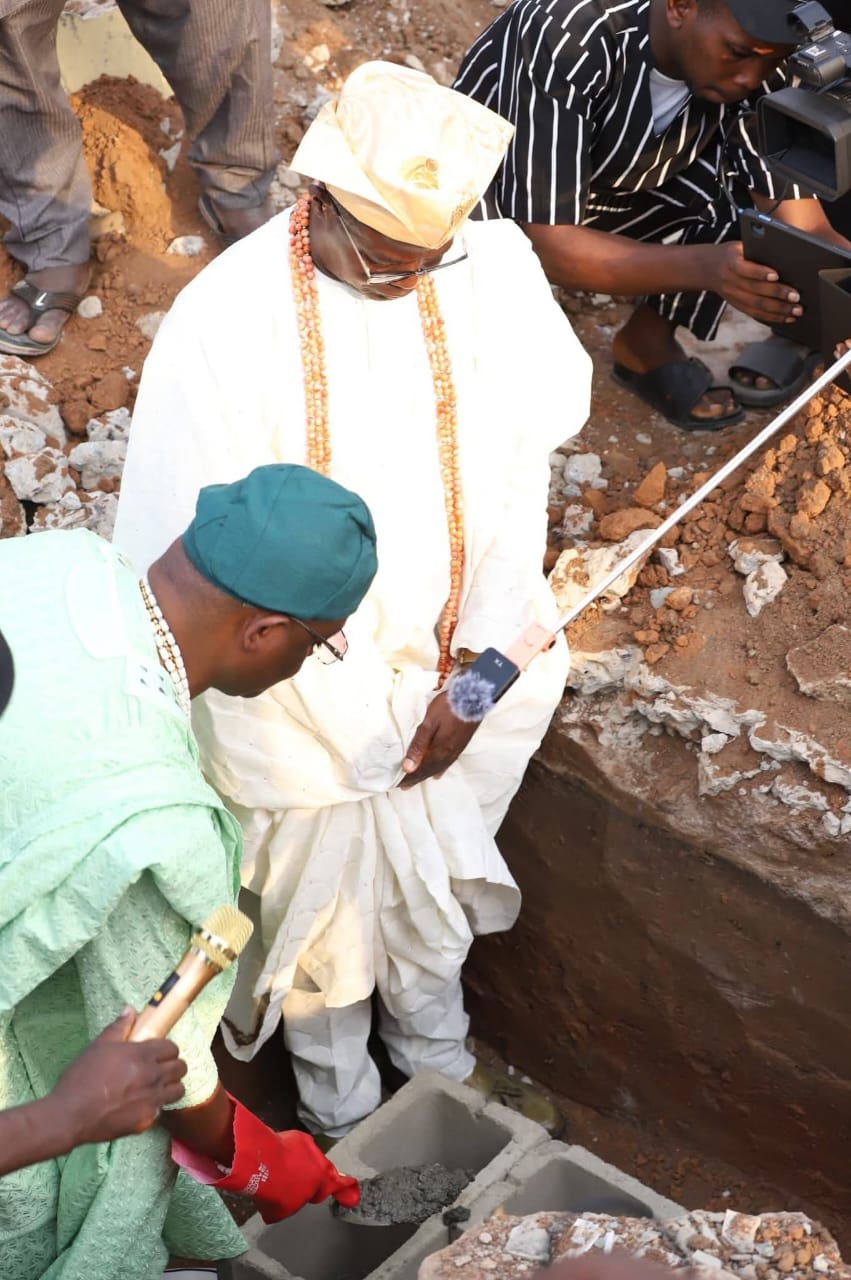
Senator Adeola Yayi Bags Royal Blessings at Foundation Laying of Yewa Traditional Council Secretariat in Ilaro
…Clerics, Monarchs and Political Leaders Offer Prayers for His Future Aspirations
ILARO-YEWA, OGUN STATE — The ancient town of Ilaro, headquarters of Ogun West Senatorial District, came alive on Tuesday, January 27, 2026, as royal fathers, political leaders, clerics and community stakeholders gathered for the historic foundation-laying ceremony of the proposed ultra-modern Yewa Traditional Council (Obas’) Secretariat Complex.
The culturally symbolic project, facilitated by the Senator representing Ogun West at the National Assembly, Distinguished Senator Solomon Olamilekan Adeola (Yayi), attracted widespread commendation, fervent prayers and royal blessings from traditional rulers across Yewaland, alongside leaders and stalwarts of the All Progressives Congress (APC).
The ceremony officially marked the commencement of construction of what is envisioned as a state-of-the-art secretariat that will serve as the institutional headquarters of the Yewa Traditional Council.
Stakeholders described the initiative as a landmark achievement in institutional development and a clear demonstration of Senator Adeola’s sustained commitment to grassroots development, cultural preservation and inclusive governance in Yewaland.
Royal fathers present unanimously agreed that the project represents a significant step toward strengthening traditional governance and preserving Yewa cultural heritage. According to them, the proposed secretariat will function as a unifying administrative hub, enhance collaboration among monarchs and safeguard the cultural identity of the Yewa people for generations to come.
Speaking at the event, the Olu of Ilaro and Paramount Ruler of Yewaland, His Royal Majesty Oba (Dr.) Kehinde Gbadewole Olugbenle, Asade Agunloye IV, poured encomiums on Senator Adeola for his extensive infrastructural interventions and developmental footprints across Yewaland and Ogun State.
The monarch noted that the senator’s contributions have repositioned Yewaland on the path of meaningful progress, urging political leaders and stakeholders to embrace unity, cooperation and harmony.
He emphasized that such collective resolve remains crucial to the long-standing aspiration of producing a Yewa indigene as Governor of Ogun State in 2027.
Oba Olugbenle also used the occasion to encourage residents to actively participate in the democratic process by obtaining their Permanent Voter’s Cards (PVCs), stressing that civic engagement is the surest route to credible leadership.
“Yayi Is a Unique Son of Yewaland” — Deputy Speaker
The Deputy Speaker of the Ogun State House of Assembly, Rt. Hon. (Chief) Mrs. Lateefat Bolanle Ajayi, described Senator Adeola as a “unique and incomparable son of Yewaland,” whose influence transcends Ogun West to Ogun Central and East.
“We have had good sons in Yewaland, but Yayi stands out. His impact is felt in Abeokuta, Ijebu-Ode and beyond. Charity truly begins at home. Even the blind can see and the deaf can hear. We must support him. Come 2027, we have a candidate,” she declared.
Clerics Offer Prayers for Success
Offering prayers at the ceremony, Imam Mohammed Tijani Jamiu, Chief Imam of Surulere Central Mosque, Ilaro-Yewa, prayed for Senator Adeola, the royal fathers of Yewaland and the successful completion of the project.
Similarly, Imam Jamiu Adeniyi Kewulere, Chief Imam of Bibire Central Mosque, Oke-Ola, Ilaro-Yewa, also offered special prayers for peace, progress and divine guidance for all stakeholders.
“A Rare Project of Global Significance” — Yewa South LG Chairman
The Chairman of Yewa South Local Government, Hon. Tunde Ogunshola, described the occasion as one of the happiest moments of his life, noting that the project is unprecedented in scope and cultural significance
.
“This traditional council building is rare, even globally. It is being realized through the support of Governor Prince Dapo Abiodun and facilitated by Senator Adeola. When completed, it will stand as a lasting symbol of our heritage,” he said.
The Ogun State Chairman of Cultural Development, Hon. Olayiwola Taiwo, also hailed the project as a major turnaround for Ogun West, a zone he said had endured years of infrastructural neglect.
“This is a remarkable development. Senator Adeola is truly God-sent to Yewaland,” he stated.
Royal fathers including the Olofin Adimula of Ado-Odo, Oba Idris Olusola Lamidi Osolo, the Abepa of Joga-Orile, Oba Adeyemi Adekeye, and the Onimeko of Imeko, Oba Benjamin Olanite, all expressed confidence that greater projects linked to Senator Adeola would continue to materialize.
A retired Director-General in the Ogun State Civil Service, Mr. Michael Babatunde Ajayi, likened the proposed complex to the Obas’ Secretariat in Abeokuta, noting that it would reduce the need for monarchs in Yewaland to travel to the state capital for meetings.
“This will be the first of its kind in Yewaland. Kudos to Senator Adeola, whose impact is felt across Ogun State,” he said.
APC Leaders Call for Political Mobilisation
The Ogun West APC Chairman, Alhaji Azeez Adisa (Ekwume), alongside party leaders and community stakeholders, described Senator Adeola’s interventions as purposeful and impactful.
They urged party members to consolidate these gains by strengthening party structures and participating actively in voter registration and mop-up exercises, noting that broad-based participation is essential for electoral success.
Anglican Bishop Describes Project as Timely
Speaking with journalists, the Diocesan Bishop of the Anglican Communion, Rt. Revd. M.A. Oluwarohunbi, PhD, described the project as timely and symbolic, adding that it would enhance the role of traditional rulers in governance.
“This is a very important day in the history of Ilaro and Yewaland. The proposed complex will be an ultra-modern edifice befitting our royal fathers,” he said.
He also prayed for Senator Adeola’s continued strength and the realization of his future aspirations.
At the climax of the event, Oba Olugbenle, alongside other eminent kabiyesis, offered royal prayers and blessings for President Bola Ahmed Tinubu, Governor Prince Dapo Abiodun, Senator Solomon Adeola Yayi, and other political office holders across Ogun West and Nigeria, seeking divine wisdom, protection and success in governance.
The well-attended ceremony drew a diverse audience, including revered monarchs from across Yewaland, political leaders, community stakeholders and religious representatives from Christianity, Islam and traditional institutions.
Members of the League of Yewa-Awori Media Practitioners (LOYAMP) were also prominently represented, led by their National Coordinator, Otunba AbuSatar Idowu Hamed.
The colourful event concluded with the formal laying of the foundation stone by royal fathers and distinguished guests, symbolically ushering in a new chapter in the institutional development and cultural renaissance of Yewaland—an occasion many described as another defining milestone in Senator Adeola Yayi’s growing legacy of service and development.
Courtesy: League of Yewa-Awori Media Practitioners (LOYAMP)


-
 celebrity radar - gossips6 months ago
Why Babangida’s Hilltop Home Became Nigeria’s Political “Mecca”
-

 society6 months ago
Power is a Loan, Not a Possession: The Sacred Duty of Planting People
-

 Business6 months ago
Batsumi Travel CEO Lisa Sebogodi Wins Prestigious Africa Travel 100 Women Award
-
 news6 months ago
THE APPOINTMENT OF WASIU AYINDE BY THE FEDERAL GOVERNMENT AS AN AMBASSADOR SOUNDS EMBARRASSING
You must be logged in to post a comment Login