
celebrity radar - gossips
WHY I HAVE NOT BEEN ACTIVE IN YORUBA MOVIE- ADEKUNLE AYANFE


For those who are very observant, they will know that popular Yoruba actor, Adekunle Ayanfe, who is known for either playing a stubborn boy role or an Ifa deity worshipper, has not been regular on films lately.
The versatile script-interpreter told Nigeriafilms.com that he has been away for a long, but now back to take his place in the industry. He disclosed to us that he travelled to South Africa to sharpen his skills in movie directing and cinematography.
The actor told Nigeriafilms.com that “I have not been really based in Nigeria, I am studying cinematography and directing in South Africa, so I am either in South Africa or I’m in Nigeria. I am not leaving the screen, but I just want to know more about my job.“
Ayanfe hailed his colleagues in the Yoruba movie industry, saying they are doing well. He urged them to give room for improvement.




celebrity radar - gossips
” I am unapologetic About my islamic Faith”, Da Amakiri Tubo, Alhaji Mujahid Abubarkr Dokubo-Asari
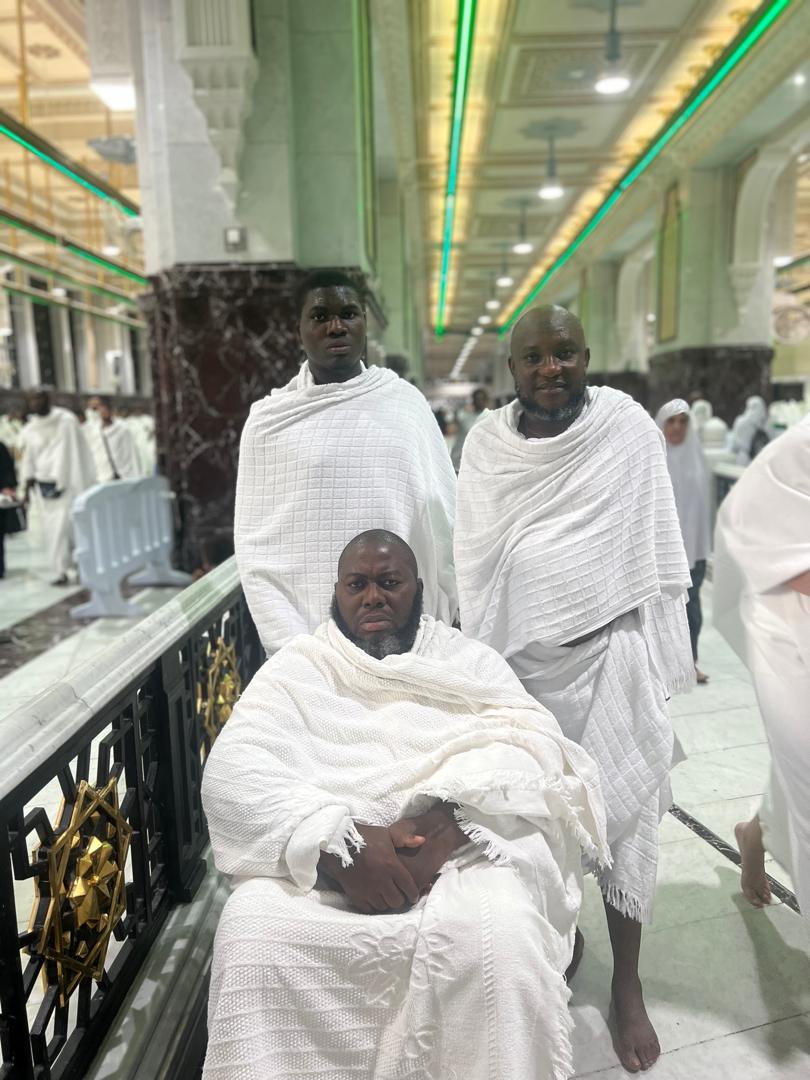
” I am unapologetic About my islamic Faith”,
Da Amakiri Tubo,
Alhaji Mujahid Abubarkr Dokubo-Asari
By: Al Humphrey Onyanabo
On the final day of Ramadan, inside the quiet elegance of the Transcorp Hilton in Abuja, I sat across from Da Amakiri Tubo,
Alhaji Mujahid Abubarkr Dokubo-Asari, Amanyanabo of the oil rich, Elem Kalabari,(The Source,) Torusarama Piri, Dabaye Amakiri 1,
a man many know for his strong voice, controversial positions, and unmistakable presence in Nigeria’s public space.
But beyond the politics, beyond the agitation, beyond the titles, there is a deeper force that defines him — faith.
What emerged in that conversation was not the rhetoric of a public figure, but the conviction of a man whose life is firmly anchored in Islam — not casually, not symbolically, but completely.
A Journey That Became Identity
For him, Islam was not an accident of birth.
It was a journey — one that began with curiosity but matured into total submission.
He spoke of a defining moment — a point where belief stopped being intellectual and became personal, consuming, and irreversible.
From Early Devotion to Spiritual Fulfilment
Long before his public identity took shape,
Alhaji Mujahid Abubarkr Dokubo-Asari was formed in a deeply religious Christian environment — on both his paternal and maternal sides.
To understand the depth of conviction that defines
Alhaji Mujahid Abubarkr Dokubo-Asari today, one must return to the beginning — to a childhood immersed not in Islam, but in an intensely religious Christian environment.
“I was born in an environment that is overtly Christian,” he begins, almost reflectively.
“My grandmother,
She was an Anglican, that’s my father’s mother, Da Amakiri Tubo, Okukuba Wilkinson Dokubo Goodhead, (Nee Ogo Tom Princewill )
who I lived with had a prayer altar where we pray every morning.”
That grandmother — a central figure in his early life — was deeply rooted in Kalabari Christianity, particularly the Teke.
“She believed so much in Kalabari Christianity, Teke. She was an Anglican… a member of St Michael’s Church. She also belonged to the Akasabianga Teke. The Akasabianga Teke was by the side and later, when the prophetess broke away and founded Elijah Teke… she moved.
Sometimes she even went to Obuama to attend Dee Teke.”
Faith, in that household, was not occasional — it was constant.
“Every day was one religious event or the other,” he recalls.
“We had morning devotion, we sang very thoughtful and meaningful Teke songs.”
Even his lineage reinforced that foundation.
“My grandfather, who I did not meet, was an Anglican catechist. He had this very big Bible… there were many other Bibles in the house.”
An Active Faith — But an Unanswered Question
Despite this deeply religious upbringing, his personal path within Christianity took its own direction.
“Though I was not living with my mother’s people, I was attracted more to the Baptist Church than the Anglican Church. I can’t remember, while growing up, any day I attended an Anglican church on Sunday.”
With the freedom his grandmother allowed, he immersed himself fully in the Baptist Church — not as a passive observer, but as an active participant.
“I attended their Sunday services, I took part in their youth activities, and I became a Sunday school teacher.”
His influence was real and traceable.
“There are so many people in the Baptist church today who passed through me. Rev. Dr. Damiete Amachree, pastor of the Agape Baptist church, Obuama, was one of my students.”
He smiles at the memory of a Ghanaian song he introduced during those years — one that still follows him among old companions.
Yet beneath the activity, something was unsettled.
“But I was empty.”
That emptiness persisted even as he deepened his involvement — from the Baptist Church to the Deeper Life Bible Church, and into leadership roles.
“I became President of the Students Christian Movement at Baptist High School, Port Harcourt. I saw people speaking in tongues… and I kept asking questions.”
Then came a moment that would mark a turning point.
“It was when General Sharon of Israel invaded a Palestinian refugee camp in Lebanon which was described as the Sabra and Shatila massacre on September 16 – 18, 1982
that I started questioning my Christian faith.”
His questions were not casual — they were direct, searching, and uncomfortable.
“I wrote to Pastor Kumuyi, the General Overseer, and I asked him: Your God, is He the one that created all of us? Why would He prefer one group of people over another?”
From that point, the certainty he once held began to erode.
“My faith in Christianity started going down. I was no more regular in church.”
Search, Experimentation, and Restlessness
What followed was not an immediate conversion, but a period of intense searching.
He explored Islam early, visiting a mosque in Port Harcourt as a teenager.
“I went to the Yoruba mosque at 16/17 Victoria Stree, Port Harcourt. I met someone, Alhaji Jimoh, who had a relationship with my Auntie, but his understanding of Islam was not very deep. What he told me was not very different from Christianity, so I refused to convert.”
Instead, he turned inward — constructing his own philosophical framework.
” I started preaching Godianism. I created a religion about the worship of Holy God,one spiritual entity and I developed my philosophy. People who did not understand my philosophy back then just like people are still doing today. In Godianism I said that God is One and God does not have a partner. ”
Looking back, he recognises the direction his thoughts were already taking.
“When I reflect now, I can say I was preaching Unitarian Islamic beliefs.”
Still, the restlessness remained.
He returned to church, entered the University of Calabar, and again became deeply involved in Baptist fellowship.
“I became very popular in the Baptist congregation at Calabar… but I was restless. I was not satisfied.”
Even his engagement with Marxism and student activism failed to fill the gap.
“I joined the Movement for a Progressive Nigeria, MPN… but Marxism did not give me spiritual satisfaction.”
The Turning Point: Discovery
Through Study
Then came a defining global event — the Iranian Revolution.
“The Iranian revolution made me start studying Islam.”
What followed was rigorous, almost obsessive intellectual inquiry.
“I went to the library, I spent hours reading… orientalist views of Islam, and I balanced it with what Islam says.”
But there was a problem.
“There were not so many books written by Muslims in our libraries… which is very unfortunate.”
So he improvised.
“I bought books on the road. I read
the Encyclopaedia Britannica… books written by people who are anti-Muslim.”
This was not passive learning. It was investigation.
Conversion and Transformation
On September 17, 1988, the search ended.
“I accepted Islam as my religion at the Bokobiri Mosque in Calabar. Not long after,
I had problems in school. I was rusticated.”
What followed was a period of physical hardship and spiritual clarity.
“I travelled through Nigeria… I stayed with Muslims. Even though I was from a very elitist and noble background, I subjected myself to all manner of things.”
The contrast was stark.
“From living in GRA, Port Harcourt ,Akassa street, to moving from one dirty mosque to another… sleeping in very poor conditions.”
Yet, in that hardship, something changed.
“I discovered I was getting satisfaction in my heart.”
Then came the defining declaration of faith.
“I took the Kalima Shahadah( Declaration of Faith) I found that my life was getting more and more organised.”
For the first time, the restlessness disappeared.
“I no more had the sort of spiritual restlessness I used to have as a Christian.”
A Faith That Answers the Search
Today, when he reflects on that journey, one conclusion stands firm:
“I have always been someone who likes to read, to explore, to innovate.”
And in that spirit of inquiry, Islam did not silence his questions — it answered them.
“I discovered through my studies that there is nobody who will read the Qur’an… even if you use the biggest padlock to lock your heart… and God will not touch you in one way or another.”
That, ultimately, is the foundation of his conviction.
“That was my journey to Islam.”
The discipline he had learned in his Christian upbringing did not disappear; it found new expression. The early morning prayers, the structure, the devotion — they remained, but now anchored in a conviction that felt whole.
And in that transition lies a key to understanding the depth of his present-day conviction.
Over the years, that faith has not remained static. It has deepened, sharpened, and shaped how he sees the world — particularly on issues of justice, power, and responsibility.
Islam, to him, is not just religion.
Whether he is speaking about his faith, Kalabari culture and tradition, the Niger Delta struggle, or the complexities of Nigerian politics, he does so with an abundance of knowledge, depth, and unmistakable conviction. There is no half-measure in his engagement with any subject.
What stands out even more is his command of detail. Dates, events, names, and sequences roll off his tongue with precision, as though each moment has been carefully archived in his mind. It is not rehearsed — it is lived.
In conversation, he does not merely respond; he immerses. He builds context, draws connections, and anchors his arguments in both history and principle. The effect is disarming — you find yourself drawn in, often spellbound, not just by what he says, but by how completely he inhabits it.
It is this rare combination — conviction, depth, and total immersion — that sets him miles apart from the crowd.
Faith as Compass in Controversy
His outspoken support for global Islamic positions — including his controversial alignment with Iran — has drawn criticism, misunderstanding, and even coordinated misinformation, including fabricated AI videos portraying his arrest.
Yet, he remains unmoved.
There is a clarity in his stance that comes from conviction, not convenience. He does not negotiate belief to fit public approval.
That, perhaps, is where many find him difficult — and where others find him deeply compelling.
The King and the Believer
As Amanyanabo of Elem Kalabari, his role sits at the intersection of tradition and faith — a space that often demands compromise.
But he does not see the contradiction.
“When you become Amanyanabo something happens to you: I have to restore all the shrines at Elem Kalabari, because they were there before us, I have to restore the church, The Kalabari National Church, and I have to build a mosque. There is so much activity. All these things spiritually sets you back. In those days I used to read the Qur’an daily. But now I only recite the ones I learnt long ago.
Sometimes, it worries him that he has lost some of his zeal for knowledge and learning to activism and community growth
“When I became a Muslim, I became voracious to read. I wanted to know more, so I thought myself Quoran, I taught myself to read Arabic, nobody taught me. All the recitations I am doing now, they are things I taught myself years ago.
I went out to Maiduguri where I had a friend, Abubarkar Imam, who later became the Grand Kadir I think. And he took me to his village in Gambori where I stayed for sometime. And I became known to so many people in Bornu state, Sherrif…to so many people, to all the Shieks, Sherrif Hussain, Abdulfarhi, traditional rulers…the chief of Ghoza, Shehu Bornu, Emirs and so on, most of them are dead now.
I did a lot of spiritual exercises, but as I started getting involved in community activities, my involvement in Muslim activities started to drop.
Movement for The Ijaw Ethnic Nationality in the Niger Delta, Ijaw National Congress,INC, before then, we had what we call , Committee of Collective Conscience, a group with ideology leaning towards Marxist- Lennism. From there to MOSIEN and then the Ijaw Youth Council, IYC.
With activism and being involved in Kalabari way of life and becoming a chief eroded in me some of the zeal and workaholic style of trying to know everything.”
The values he draws from Islam — justice, discipline, accountability — are not abstract ideals. They are operational principles. These values have made him a champion amongst his kinsmen.
Islam he says has shaped his world view as it pertains to justice and leadership.
“Let me give you a scenario, in my compound, normally people sit down and give judgement. The practice was that you drop money when you have a case. As head of the Edi Abali Group of War Canoe Houses, things have changed.”
He continues,
“People come, we settle them and they go. And because they are afraid of me, they know I can sanction them, when I say go one direction, they go. And there is peace.
Court cases he reveals has dropped to almost Zero in his compound.
” Invocation of JuJu, cultism, drunkenness have dropped, and I introduced free education from nursery to university. At least your tuition is paid. In Omubobrinomoni, that is another level of chieftaincy, they always wait for me to give my views. When the late Amanyanabo, Theophilus Princewill was alive, if they are judging a case and I enter, some people will go and whisper in the ear of the person presiding, he has come oh, he has come oh, and they will ring the bell that the case is adjoined. They are adjoining the case because they know that my views will be for Justice.
Islam, he reveals has made him to stand for justice and it is acclaimed,
” Everybody knows it.
The Kalabari state, gathered and made me, Da Amakiri Ekpeke, the shield of King Amakiri, the Kalabari state also made me Sebromabo, The Messiah, the Saviour of the Kalabari People, And this is evident. Today, Kalabari people can travel freely. For four years, nobody is kidnapping them, nobody is killing them. People travel freely.”
Discipline Beyond Display
There is a noticeable rigor in how he practices his faith. It is not performative. It is structured.
Daily prayers, fasting, study — these are not obligations he struggles with; they are rhythms that sustain him.
During Ramadan, that discipline intensifies — but more importantly, it refines.
For him, Ramadan is not just about abstinence. It is about realignment — a return to purpose, humility, and submission.
Faith in a Divided Society
In a country as religiously complex as Nigeria, his position is both firm and deliberate.
He does not dilute belief in the name of coexistence — but neither does he preach conflict.
To him, Islam already provides the framework for peaceful coexistence — rooted in justice, responsibility, and respect.
A Personal Code That Attracts Others
There is something else — something less obvious but equally powerful.
His faith is not only declared. It is lived.
And that has influence.
Quietly, consistently, people around him are drawn — not by pressure, but by example.
A life of structure. A life of conviction. A life that does not bend easily.
A Moral Environment Defined by Discipline
Spending time around
Alhaji Mujahid Abubarkr Dokubo-Asari leaves a clear and lasting impression — not of excess or indulgence, but of restraint, order, and a firmly held moral code.
There is an unmistakable shift in atmosphere in his presence.
Conversations are measured. Language is deliberate. There is a natural restraint in speech, not imposed, but understood.
People adjust — not out of fear, but out of awareness of the standards he represents.
His environment reflects the same discipline.
There is no tolerance for alcohol.
No space for cigarettes.
No trace of the careless social culture that often surrounds power and influence.
Notably, there are no written rules plastered on the walls — no “No Smoking” or “No Alcohol” signs. None are needed. Those who come into his space already understand what is acceptable and what is not.
His stance is well known, and it is respected.
And so, people do not bring such things near him. It did not start yesterday. People who have been with him for upwards of 25 years confess his standards have never waivered, he can crack jokes and make everyone laugh on general subjects, he can recall things done by his boys at different times and everyone laughs over it, but the unseen lines are always there.
Don’t bring anything criminal to him, don’t try luring him with money. Contentment with a clear conscience has always been his watchword.
It extends beyond substances. There is also a clear rejection of loose living and moral laxity. The environment he maintains is intentional — one that reflects discipline, modesty, and self-control.
This is not about image. It is about alignment.
A man who speaks about faith with conviction, he has chosen to live in a way that does not contradict it.
And in that consistency lies the quiet authority that defines him.
Mentors, Scholars, and the Example of the Prophet
When the conversation turns to influence — to the figures who have shaped his thinking, strengthened his faith, and guided his worldview —
Alhaji Mujahid Abubarkr Dokubo-Asari does not hesitate.
At the centre of it all is one figure whose life, he says, defines everything he strives to be: Prophet Mohammed.
He speaks with intensity, deep reverence, his words measured but deeply felt.
“Everything about the life of the Holy Prophet Mohammed resonates with me… and I copied it based on the Qur’an. His rise… and among religious leaders, Prophet Mohammed was the most humble.”
For him, the distinguishing quality is not just leadership, but humility — a humility he believes sets the Prophet apart across history.
“He tells the world, ‘On my own, I am nobody, everything is Allah. If Allah decides about me, nobody can change it.’
He is unlike other religious leaders who make all manners of claims… we are in this world and we are seeing that their claims do not hold water.”
It is not admiration from a distance. It is a deliberate attempt at imitation.
“He was humane, he was a great man, and everything about his life — that is what I want to live, that is what I want to emulate.”
Guided by Mentors, Strengthened by Companions
Beyond the Prophet, his journey has been shaped by individuals who played practical roles in strengthening his understanding of Islam.
He lists them without hesitation, each name carrying weight.
“Yes, I have mentors like Alhaji Kunle Sanni, Mallam Idris, Prof. Gbadamosi, Alhaji Ekungba, Alhaji Abubakar Imam… and several others.”
But among them, one stands out above the rest.
“Most of them I met through Alhaji Kunle Sanni, who I will say is the greatest person in my life as a Muslim.”
The Scholars Who Shaped His Thinking
His intellectual influences are just as deliberate — drawn from some of the most profound minds in Islamic history.
“The Muslim scholars that have influenced me are Imam Ghazali, Said Qutb of Egypt, and Hassan al-Banna.”
He expands further, drawing distinctions in their contributions.
“I have read the works of Imam Maududi… he and Said Qutb are almost similar, but Said Qutb is the master of shaping a modern Islamic state.”
His analysis is not superficial — it reflects years of study, comparison, and internalisation.
“The deviation from the preaching of the Prophet Mohammed is the introduction of monarchy in Muslim lands… so the scholars that have influenced me in life are Imam Ghazali… the inner dimensions of Islam, then Said Qutb, Hassan al-Banna, and Imam Maududi.”
Identity Without Conflict.
Given the depth of his Islamic conviction, one might expect a tension between faith and cultural identity. He rejects that entirely.
“I don’t need to balance anything. God created me as a Kalabari man. He did not create me an Arab, so I am not going to be an Arab.”
For him, identity is not a contradiction to be managed — it is a reality to be accepted.
“I am a Muslim, yes — but I am a Kalabari Muslim, not an Arab Muslim.”
Faith in a Diverse and Often Divided Space
In navigating Nigeria’s complex religious landscape, his perspective is shaped as such by experience as by doctrine.
“I am lucky because of the traits that are in me that attract people to me.”
He acknowledges the perceptions that often precede him — and how quickly they dissolve upon contact.
“People might have a lot of views about me, but when they come in contact with me, they find that those views are not true and they befriend me.”
Then comes a striking admission — one that challenges common assumptions and his high tolerance for other religions.
“As far as I am concerned, non-Muslims have helped me far, far, far more than Muslims.”
He does not soften the point.
“A lot of Muslims feel I irritate them… especially those who have power to help people.
Muslims have been controlling Government, I am 62, Muslims have never found me worthy to give me anything. Apart from President Buhari who I considered as my enemy. If there was anybody who was criticizing Buhari, it was me. Day and night, it was me, but it was Buhari who I will say, went and opened Central Bank for me, and said, come in and take. Apart from Buhari, no person that has been in Government that is a Muslims, even those who have been my friends, found me worthy of anything….
“It is non-Muslims who made me Vice President of IYC, Deputy President, and President of IYC… they provided me a platform.”
And when it comes to loyalty, his words are even more emphatic.
“It is non-Muslims who stand by me, fight with me and die for me… so why would I do anything to antagonize them. Religious problems in Nigeria are self inflicted and artificial. It’s not there in Ghana, it’s not there in Benin Republic,it’s not there in Togo. I was in Benin Republic, you won’t know the difference between Muslims and Christians.
Muslims are doing forty days prayer, Christians are also doing forty days prayer, they got it from the Muslims.
It is Nigerian churches that are going to Benin Republic to cause confusion, Nigerian 419 preachers.
In Benin, Muslim holidays are there, Christian holidays and voodoo worshippers holidays are also there. Nobody bothers the other person.”
What Still Fuels the Fire?
After all these years, the visibility, the controversies — what keeps the fire burning?
” Islam…being a Muslim and
It is because it gives me peace and it makes me stand shoulder to shoulder with any other person whether they are muslims or non Muslims. It gives me the power, the peace to stand before my fellow man, that you are a man and I am a man.
A Message to the Next Generation of Muslims;
For young Muslims struggling to hold on in a fast-changing world, his message is simple, but not soft:
” Every young muslim, first thing you do is to know your religion, so go and get books, read, be educated, especially, Rivers Muslims from our area, don’t be lazy, go and study your faith. And thereafter, be hard working, when you are poor and struggling, your faith will not last.
When you are in problem and go to a Hausa Muslim or Yoruba Muslim, he will say 419 people have come. When you go to your relatives who are not Muslims, they will tell you to convert to their faith or they won’t help you. You have to struggle.
There are few people from our area that are like me, that have something in my hand to give. After Ramadan, I give out Zakat, I don’t look at my reserve, that is where I will reach before I give, I give far and above what I should because it’s my responsibility.
Unfortunately, a lot of people, you give them N5 million or N10 Million as Zakat, they spend the whole money and next year they are still expecting another Zakat. It’s not encouraging. The hand that is up, is higher than the hand that is below. Don’t go about begging, when you have opportunity, start something to make your life better, go and learn a skill. I send people for skill acquisition, come I will send you to acquire a skill. I am begging you to come, I will send you for skill training.
When you acquire a skill, you will be able to fend for yourself.
The survival of Islam can only come, when our people seek knowledge, acquire knowledge, hold knowledge and also go into commerce and make money for themselves. You cannot be depending on me or other people always. Everybody is becoming PHD now, no jobs. People who cannot speak English have PHD…
My Muslim brothers and sisters, acquire skills with which you can fend for yourself. After acquiring a skill, you can go to school with the money you earn from what you are doing, be it tailoring, welding, carpentry, mechanic. With the small small money you are making, you will be able to go to School, raise a family and you will not be begging people. That is the only way you can be a good, practising Muslim.”
Beyond Barriers: Faith, Trust, and Acceptance
In the complex social fabric of the Niger Delta — where religious identity can sometimes breed suspicion —
Alhaji Mujahid Abubarkr Dokubo-Asari has, in his own way, disrupted that pattern.
Despite being a devout Muslim and unapologetic about his beliefs, he has earned a level of acceptance that transcends religious lines.
This is not accidental.
It is built on consistency.
People encounter not just a man who professes faith, but one who lives it with discipline and clarity. Over time, that consistency has created trust — and in a region where trust is often hard-earned, that matters.
He is seen and respected as a man of his words.
A strict adherent to his religion.
And, importantly, a man who does not stand on the sidelines when it comes to causes he believes in.
Whether it is the Niger Delta struggle, cultural preservation, or political positions, he engages with both intellect and resources — committing himself beyond rhetoric.
That willingness to stand firm — and to invest personally in what he stands for — has shaped how he is perceived.
People may not always agree with him. But they recognise him.
And in that recognition lies something powerful:
A man defined not by labels, but by conviction.
Alhaji Mujahid Abubarkr Dokubo-Asari is the leader of Muslims in the South East and South South of Nigeria. He confesses it has been difficult to function in that office since he was chosen.
” It’s very difficult to be a leader of a religious group. I am not prepared for it, but I am trying my best on the other side of providing assistance and so on but spiritually, to be very candid, I am not qualified. He has built mosques in Emohua, Buguma, Obuama, Degema and I am building one at Elem Kalabari.”
In summarising what islam means to him personally, Alhaji Mujahid Abubarkr Dokubo-Asari says,
“Islam has given me peace, it has given me the strength, the courage to stand before people and say, I am a Muslim, I am a jihadist, I am an Islamist, no apologies.”
Closing Reflection
In a time where faith is often diluted, negotiated, or performed for convenience,
Alhaji Mujahid Abubarkr Dokubo-Asari represents something increasingly rare:
A man who believes — fully, visibly, and without apology.
Whether one agrees with him or not, one thing is difficult to ignore:
His Islam is not an accessory.
It is the centre of his life.
And from that centre, everything else flows.


By; Al Humphrey Onyanabo,
The Storyteller
Tel: 08109975621
Email: [email protected]
celebrity radar - gossips
One SA Bank Equals Nigeria’s Entire Banking Sector – Why Recapitalisation Is Critical for Global Competitiveness
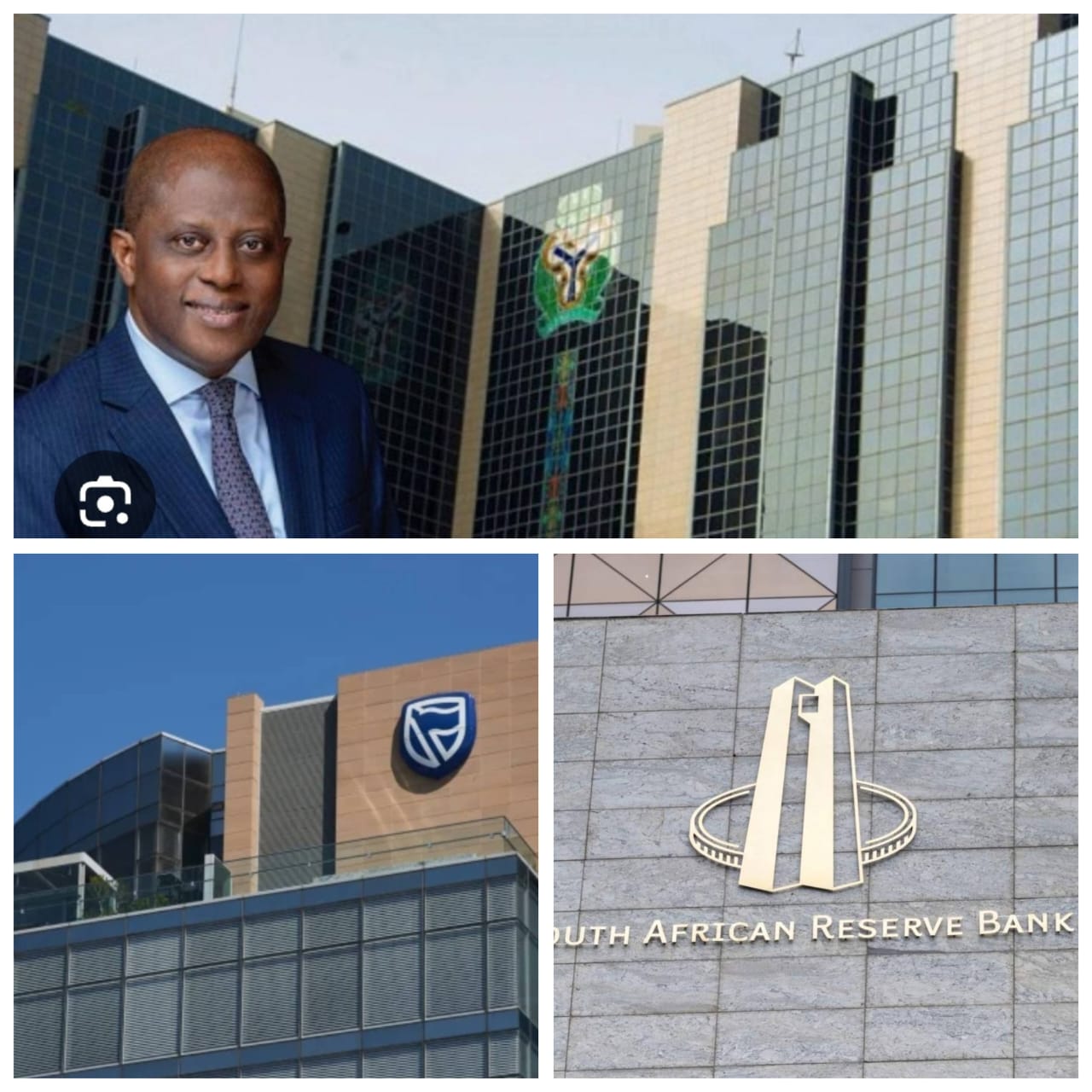
One SA Bank Equals Nigeria’s Entire Banking Sector – Why Recapitalisation Is Critical for Global Competitiveness
BY BLAISE UDUNZE
Nigeria has always prided itself as Africa’s largest economy and most populous nation. Currently, its banking sector is confronting a moment of truth that should send shockwaves. Today, a single South African bank, Standard Bank Group, commands a market value at roughly $21-22 billion that rivals and, in some comparisons, exceeds the entire Nigerian banking industry. Though it may seem to be unbelievable, it is real. This striking imbalance is not merely about market valuations for individuals who are perturbed by this alarming revelation. Hence, it must be known that this reflects deeper structural challenges in Nigeria’s financial system and underscores why the Central Bank of Nigeria’s recapitalisation drive has become essential for restoring competitiveness, resilience, and global relevance.
Without any iota of doubt, for a nation of over 200 million people and Africa’s largest economy by several metrics, this reality is more than an uncomfortable statistic. This is truly a reflection of deeper structural weaknesses within the financial system. It highlights the urgent need for reform and explains why the ongoing recapitalisation drive by the Central Bank of Nigeria has become one of the most consequential policy interventions in the country’s banking industry in two decades.
Recapitalisation is not merely a regulatory exercise. If, genuinely, the key stakeholders consider this exercise as an attempt to reposition Nigerian banks to compete with global peers, strengthen financial stability, restore investor confidence, and enable the banking sector to support economic transformation, they must not handle this report with bias.
The disparity between Nigerian and South African banks illustrates the scale of the challenge.
While Standard Bank Group, the largest by assets, has a market capitalization of roughly R372 billion ($21-22 billion = N32.66 trillion). Similar whooping amounts valued in the multi-billion-dollar range as of 2025 apply to several other South African banks, including FirstRand, Absa Group, and Nedbank. For apt juxtaposition from what is obtainable with the South African bank, the combined market capitalisation of 13 Nigerian banks listed on the Nigerian Exchange (NGX) stood at about N16.14 trillion ($10.87 billion) as of 2025-2026. However, the earlier benchmarks show that around May 2025, it was about N11.07 trillion. The current valuation of N16.14 trillion is a result of the funds tapped by some banks from the capital market through rights issues and public offerings.
Nigeria’s largest banks tell a different story. Guaranty Trust Holding Company, widely regarded as one of Nigeria’s most efficient banks, is valued at less than $2 billion (N3.3 trillion). Access Holdings, despite managing assets exceeding $70 billion, carries a market capitalisation of under $1 billion.
To further buttress Africa’s largest financial institution’s position, as of June 30, 2025, Standard Bank Group of South Africa reported total assets of R3.4 trillion. This amount is equivalent to $191.8 billion, and it points to the fact that it is at the top in Africa’s financial space. The equivalent in naira at Nigeria’s exchange rate of N1,484.50 to $1. Hence, $191.8 billion translates to approximately N284,983 trillion, or roughly N285 trillion. This means a single South African bank now outvalues the entire Nigerian banking industry, when compared to the 10 largest lenders collectively holding N218.99 trillion in assets. Though Nigerian banking industry assets were projected to reach N242.3 trillion ($151.4 billion) by 2025-2026.
The obvious and alarming disconnect between asset size and market value signals a deeper crisis of confidence as enumerated thus far. One underlying mistake is to understand that investors are not merely assessing balance sheets; they are evaluating governance standards, currency stability, regulatory predictability, and long-term growth prospects, as these remain their focal interests. The market’s verdict is clear: Nigerian banks remain undervalued because investors perceive higher systemic risks.
It would be recalled that Nigeria has travelled this road before, in 2004-2006, which didn’t end as planned. The then-governor of the Central Bank, Charles Soludo, launched a bold consolidation reform that reshaped the banking industry. Also, it would be recalled that Nigeria, in numbers, had 89 banks, which were more than what is in operation today, and many of them were small, fragile, and undercapitalised.
Similar steps are being witnessed today, as Soludo then raised the minimum capital base from N2 billion to N25 billion, triggering a wave of mergers and acquisitions that reduced the number of banks to 25. The industry witnessed the emergence of champions as the reform produced stronger institutions, such as Zenith Bank, United Bank for Africa, Guaranty Trust Bank, and Access Bank.
For a period, the experience was that Nigerian banks expanded aggressively across Africa and emerged as formidable competitors on the continent, but unfortunately, the momentum gradually faded because of certain missing pieces, and this must be addressed if the industry is ready for economic relevance.
The global financial crisis of 2008 exposed weaknesses in risk management and regulatory oversight. With the industry reacting, several banks were heavily exposed to the stock market and the oil sector. This led to another wave of reforms under former CBN governor Sanusi Lamido Sanusi in 2009.
Although one would say that those interventions stabilised the system. But more harm than good, they also ushered in a more conservative banking culture, as witnessed in the system, where many institutions prioritised survival over innovation.
Two decades after the Soludo reforms, Nigeria’s financial landscape has changed dramatically.
The size of the economy has expanded, inflation has eroded the real value of bank capital, and global regulatory standards have become more demanding. Banks that once appeared adequately capitalised now find themselves operating with limited buffers against economic shocks.
Recognising these vulnerabilities, the CBN introduced a new recapitalisation framework requiring banks to raise their capital bases to the following thresholds: N500 billion for international banks, N200 billion for national banks, and N50 billion for regional banks.
As has always been the case, these requirements are designed to ensure that Nigerian banks possess the financial strength required to compete with institutions in advanced economies.
The Nigerian banking sector should take a new leaf as the recapitalization exercise comes to an end, with the understanding that capital adequacy is not merely a regulatory metric; it determines how much risk banks can absorb, how much they can lend, and how resilient they remain during economic crises, which must be accompanied by innovation.
In developed financial systems, banks operate with deep capital buffers, which is common with South African banks that allow them to finance infrastructure, industrial projects, and large corporate investments. Without similar capital strength, Nigerian banks cannot effectively support large-scale economic development.
One of the most persistent obstacles facing Nigeria’s banking sector is currency volatility. The Nigerian naira has experienced repeated devaluations in recent years, eroding investor returns and weakening confidence in local financial assets.
When the currency depreciates sharply, equity valuations expressed in dollars decline even if banks report strong profits in local currency. This dynamic partly explains why Nigerian banks appear profitable domestically yet remain undervalued in international markets.
In contrast, South Africa’s financial system benefits from a more stable currency environment and deeper capital markets.
The strength of the Johannesburg Stock Exchange allows South African banks to attract large pools of institutional capital from pension funds, asset managers, and international investors. Nigeria’s financial markets, though improving, remain comparatively shallow.
Another irony in Nigeria’s banking sector is the difference between reported profits and genuine productivity within the economy, and the contradiction is glaring. Though it is known that many Nigerian banks recorded extraordinary profit growth in recent years, partly driven by foreign-exchange revaluation gains following the depreciation of the naira but the contradiction is that such gains do not necessarily reflect improvements in efficiency, innovation, or lending performance.
One measure the apex bank adopted was recognising the risks and restricting banks from paying dividends derived from these gains, insisting they be retained as capital buffers.
This intervention revealed how much of the apparent profitability was linked to currency fluctuations rather than sustainable business growth.
True banking strength lies not in accounting windfalls but in the ability to finance real economic activity, and this should be one of the ongoing recapitalisation targets.
The core function of banks in any economy is to channel savings into productive investment. Yet Nigerian banks have increasingly shifted toward safer and more profitable activities, such as investing in government securities, which has continued to weigh negatively on the growth of the real economy.
Other mitigating headwinds, such as high interest rates, regulatory uncertainty, and credit risks, discourage lending to manufacturing firms and small businesses. The result is a financial system that often prioritises short-term returns over long-term economic development.
By contrast, South African banks play a more significant role in financing infrastructure projects, corporate expansion, and consumer credit.
Recapitalisation aims to address this imbalance by strengthening banks’ capacity to support the real economy. The fact is that stronger balance sheets will allow Nigerian banks to finance large projects in sectors such as energy, transportation, agriculture, and manufacturing; alas, the narrative is totally different, going by what is obtainable in the Nigerian finance sector when compared to others.
Investor perception is shaped not only by financial performance but also by governance standards. International investors place significant emphasis on transparency, regulatory stability, and corporate accountability.
While Nigerian banks have made relative progress in improving governance frameworks, concerns remain about insider lending, regulatory inconsistencies and complex ownership structures, as these issues have continued to weigh on the industry, while some of these obvious factors may have contributed to the challenges observed in the operations of institutions such as First Bank Plc and another example is the liquidation of Heritage Bank.
Recapitalisation provides an opportunity to strengthen governance by attracting new institutional investors and enforcing stricter disclosure requirements and not mainly dwelling on the pursuit of bigger capital because capital alone does not guarantee resilience, as it would be recalled that Nigeria has travelled this road before.
Larger, better-capitalised banks tend to operate with more robust governance systems because they face greater scrutiny from regulators and shareholders.
The global banking industry has become increasingly competitive, which should be a wake-up call for the Nigerian banking industry.
Technological innovation, cross-border expansion, and regulatory harmonisation have transformed how financial institutions operate and this means that African banks, especially Nigeria known as the economic giant of Africa, must therefore compete not only with regional peers but also with global players.
Recapitalisation is essential if Nigerian banks are to participate meaningfully in this evolving landscape. On this aspect, it must be emphasised that stronger capital bases will enable banks to invest in digital infrastructure, expand internationally, and develop sophisticated financial products.
Besides, they will also enhance the ability of Nigerian banks to participate in large syndicated loans and international trade financing.
Without adequate capital strength, Nigerian banks risk being marginalised in the global financial system and for this reason, the CBN must ensure that every dime injected or raised for recapitalisation is genuinely devoid of any form of irregularities.
At the same time, traditional banks face increasing competition from financial technology companies. Nigeria has emerged as one of Africa’s leading fintech hubs, attracting billions of dollars in venture capital investment. These companies are reshaping payments, lending, and digital banking services.
While fintech innovation presents opportunities for collaboration, it also poses a competitive threat to traditional banks. To remain relevant, banks must invest heavily in technology and digital transformation.
The CBN must ensure that the ongoing recapitalisation provides the financial capacity needed to support such investments, just like its counterpart in South Africa’s banking sector, which operates with a large pool of capital.
The success of Nigeria’s recapitalisation programme will depend on more than regulatory mandates, which is a fact that must be taken into cognizance. Since banks must demonstrate a genuine commitment to transparency, innovation, and long-term economic development.
Policymakers must also address the broader macroeconomic environment. Of a truth, the moment Nigeria maintains a stable exchange rate, lower inflation, and predictable regulatory policies, it will be essential to restoring investor confidence and if aptly implemented effectively, recapitalisation could usher in a new era for Nigeria’s banking sector.
The country does not necessarily need dozens of weak banks competing for limited opportunities. What Nigeria truly needs are just fewer, stronger institutions capable of financing industrialisation, supporting entrepreneurs, and competing globally.
Nigeria often describes itself as the giant of Africa. But size alone does not determine financial strength. The comparison with South Africa’s banking sector serves as a sobering reminder that institutional quality matters far more than population size.
The ongoing recapitalisation exercise which is due March 31, 2026, represents an opportunity to rebuild Nigeria’s financial architecture and position its banks for global competitiveness.
If the reforms succeed, Nigerian banks could once again emerge as powerful players on the African stage. If they fail, the uncomfortable reality will persist, one South African bank standing taller than an entire Nigerian banking industry.
Blaise, a journalist and PR professional, writes from Lagos and can be reached via: [email protected]
celebrity radar - gossips
From Friendship to Tragedy: IBB Recounts Executing Childhood Friend Mamman Vatsa
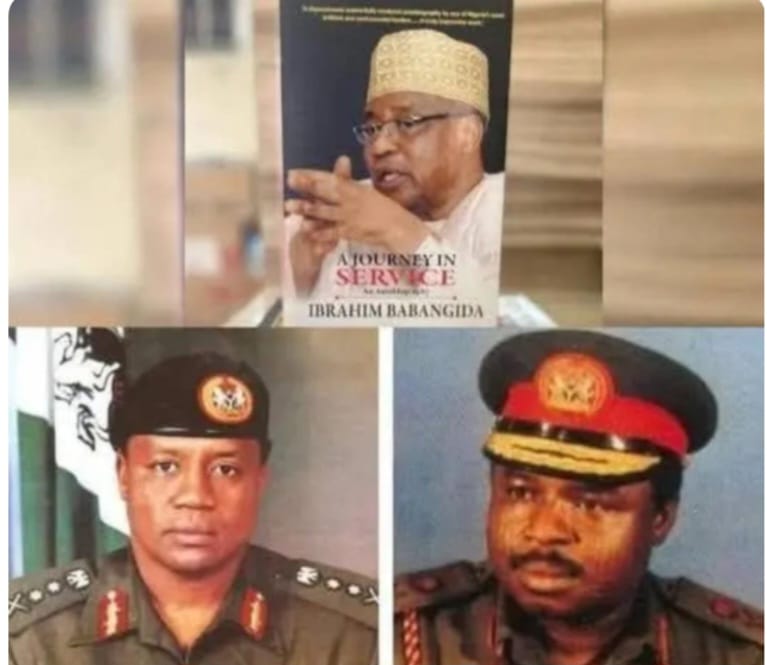
From Friendship to Tragedy: IBB Recounts Executing Childhood Friend Mamman Vatsa
By George Omagbemi Sylvester
“When Loyalty Clashes with Duty; IBB Reflects on Betrayal, Heartbreak and the Heavy Burden of Leadership”
In his recently published autobiography, A Journey of Service, former Nigerian military ruler Ibrahim Badamosi Babangida has opened up about the heart-wrenching decision to execute his childhood friend, General Mamman Vatsa, following a failed coup plot in 1986.
Released on February 20, 2025, Babangida’s memoir provides an unprecedented glimpse into the emotional struggle of balancing personal loyalty with national security. He recalls first hearing rumors of a coup allegedly involving Vatsa, which he initially dismissed as the result of jealousy or political rivalry. However, further investigations and consultations with senior officers (including Generals Nasko, Garba Duba, and Wushishi) uncovered evidence that Vatsa had provided funds to other officers to further the coup plan.
The plot, Babangida recounts, involved bombing Lagos’ Eko Bridge, disrupting Air Force operations, and targeting the presidential aircraft, actions that threatened the stability of the nation. Vatsa had attempted to explain his financial involvement as a contribution to a farming project, but Babangida said the evidence from covert investigations was undeniable.
Reflecting on his personal anguish, Babangida admitted, “I experienced a profound personal sense of betrayal. They had orchestrated a violent coup that threatened to shroud the nation in darkness. I faced an impossible choice: save a friend’s life or safeguard the future of my country.” Despite their shared youth and years of friendship in Minna, Babangida prioritized national stability over personal grief.
Vatsa’s execution in March 1986, alongside other coup plotters, left a deep personal void for Babangida, who described the loss as both “a personal tragedy” and a necessary step to protect Nigeria. He emphasized that the unity of the armed forces and the nation’s survival outweighed private sorrow, insisting that the rule of law and the demands of national security must take precedence over friendship.
The former military ruler also highlighted later attempts to politicize the incident, stating that some officers were displeased with Vatsa’s appointment as Minister of the Federal Capital Territory due to lingering perceptions about past coups. Nonetheless, Babangida maintained he had always sought to honor their friendship, accommodating Vatsa’s personality and character wherever possible. “I stayed loyal to our friendship and went above and beyond to accommodate his excesses and boisterous behavior,” he wrote.
Scholars and historians reviewing Babangida’s account note that the execution of a childhood friend underscores the extraordinary pressures faced by leaders during periods of national crisis, highlighting the intersection of personal ethics and state responsibilities. Dr. Chukwuemeka Okeke, a Nigerian historian, commented, “IBB’s narrative shows the stark reality of leadership in times of upheaval. Personal relationships, even lifelong friendships, can be overshadowed by national imperatives.”
Babangida’s account provides a rare, candid exploration of the emotional burden borne by leaders forced to make life-and-death decisions. The memoir paints Vatsa not only as a friend but also as a symbol of the painful sacrifices that leadership demands, illustrating the complexities of governance in a nation fraught with political instability and internal dissent.
Ultimately, A Journey of Service chronicles a delicate balance: the tension between human attachment and the responsibility to safeguard a nation. The story of Vatsa’s execution is a stark reminder that the path of leadership is often laden with moral dilemmas and irrevocable decisions, where loyalty to country may exact the ultimate personal cost.
Babangida’s revelation adds a deeply human dimension to historical events that have long been analyzed in military and political textbooks, shedding light on the emotional and ethical struggles of one of Nigeria’s most influential military rulers.


Published on Wednesday, March 18, 2026.


-

 society6 months ago
Religion: Africa’s Oldest Weapon of Enslavement and the Forgotten Truth
-

 news3 months ago
WHO REALLY OWNS MONIEPOINT? The $290 Million Deal That Sold Nigeria’s Top Fintech to Foreign Interests
-

 society6 months ago
“You Are Never Without Help” – Pastor Gebhardt Berndt Inspires Hope Through Empower Church (Video)
-

 society7 months ago
Who is Chief Kestin Pondi? Niger Delta’s “People’s Chief” Winning Hearts With Hundreds of Millions in Generosity
You must be logged in to post a comment Login
You must log in to post a comment.