
Politics
2019: DON’T TAKE ELECTORATE, VOTERS FOR GRANTED, NIM CAUTIONS LAGOS GOD FATHERS, POWER BROKERS · Congratulates Osun People for ‘rejecting god fathers politics’

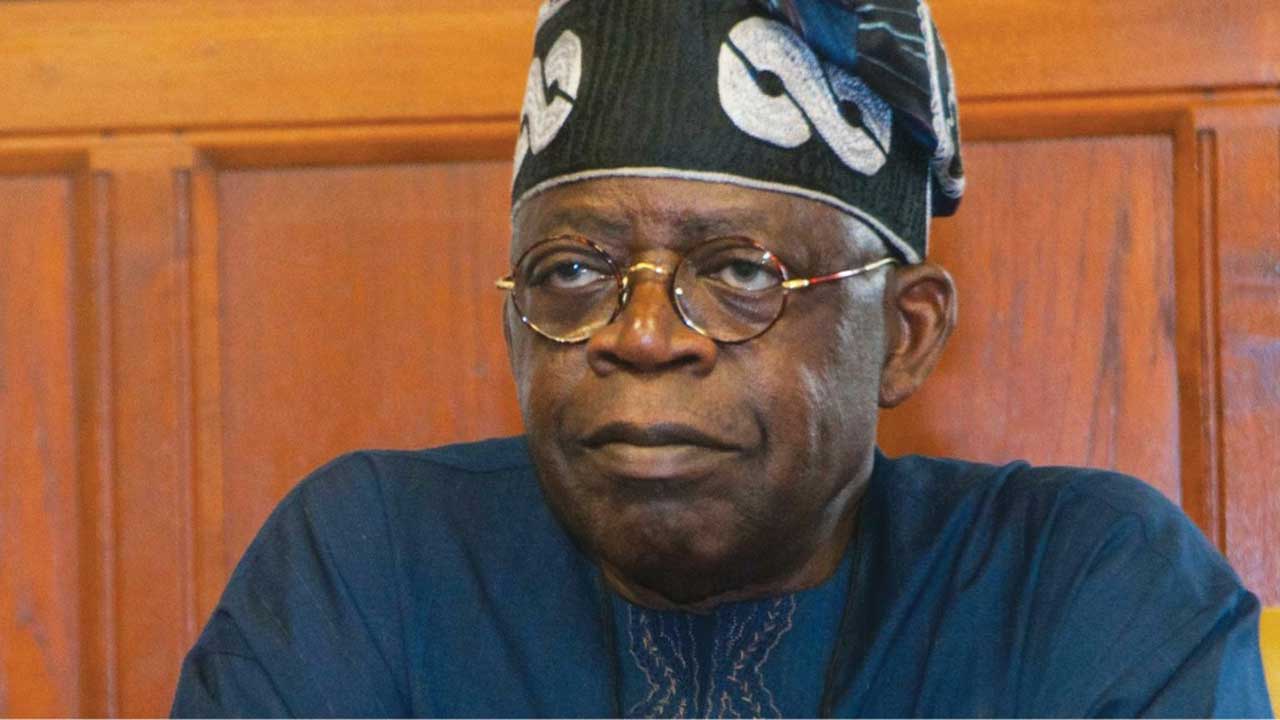
The Nigeria Intervention Movement (NIM), the umbrella platform of fresh breed political leaders in the emergent third force movement of Nigeria, has cautioned the National Leader of All Progressives Congress (APC), Asiwaju Bola Tinubu and other power brokers in Nigeria to learn from the outcome of the Osun State gubernatorial elections and desist from actions tending towards taking voters and electorate for granted.
NIM, in a statement by National Publicity Secretary, Mallam Naseer Kura, said it was particularly important for Tinubu and his political loyalists in the southwest to immediately stop abusing the goodwill of the electorate but to quickly learn from the strong signals from Osun election which, according to it, clearly rejected politics of godfather and imposition of anointed candidates by the electorate
Reacting to the Osun elections which was declared inconclusive by the Independent National Electoral Commission (INEC), NIM strongly chided power brokers and godfathers in the country for indulging in taking the Nigerian electorate for a ride by engaging in what it termed “cabalistic self – serving politics” which is currently rocking and heating polity.
Also, NIM, decried the unfolding political drama within the Lagos APC, saying it was time for the actors to stop their reckless display of power without proper considerations for the voters.
“We, the fresh breed political leaders in the country again wish to decry the unfolding political drama in Lagos, which is involving the ruling APC cabal in Lagos and the State Governor, Mr. Akinwunmi Ambode, who is being pressurized by power brokers within the Lagos Mandate Group, to step down and forgo his reelection bid for their anointed candidate, in person of one Jide Sanwoolu.
“We think this kind of reckless power display by a clique of King makers in Lagos makes a mockery of the principle of internal party democracy as it also demeans the value and dignity of Lagos teeming electorate and voting populace to the effect that they can date jettison the performance of Ambode, who is regarded as the whiz-kid of Lagos development for the blind loyalty of a crony,” NIM said.
The movement, which is being jointly led by human rights icon, Dr Olisa Agbakoba (SAN) and Dr. Abdujalil Tafawa Balewa, son of the former Nigeria’s Prime Minister, added that the ‘sort of paternalistic politics,’ being displayed by the Lagos Mandate group could be best described as self-overreaching and abusive of the longstanding goodwill the party had been enjoying in Lagos.
While congratulating Osun electorate for rejecting what it called ‘Lagos king makers,’ NIM said it was not surprising that the people spoke with their vote to reject Tinubu and his overreaching actions and power show.
“To us, the Osun Governorship elections could not have come at a better time than this as the outcome has turned out to be a big sign of what is to come in 2019, especially in Lagos. So, in a State like Lagos where Tinubu’s power brokers are already boasting about unilaterally determining, who becomes the next Governor of the State, we are of the firm opinion that the electorate would be wise enough this time to reject any anointed candidate of godfathers, as any attempt to deny Ambode the APC ticket in Lagos, should really send a strong signal to the Lagos electorate that their power and mandate are being undermined.
“The APC power brokers should know that the electorate can reenact the Osun 2018 dose again in Lagos for the first time since 1991, when a similar power tussle among power brokers in the camp of the more popular Social Democratic Party (SDP) providentially foisted the candidate of the National Republican Convention (NRC), the Late Sir Michael Otedola as the Governor of Lagos,” the group said.
Signed
Mallam Nasser Kura
(0803 384 2591)
National Publicity Secretary
Nigeria Intervention Movement, NIM







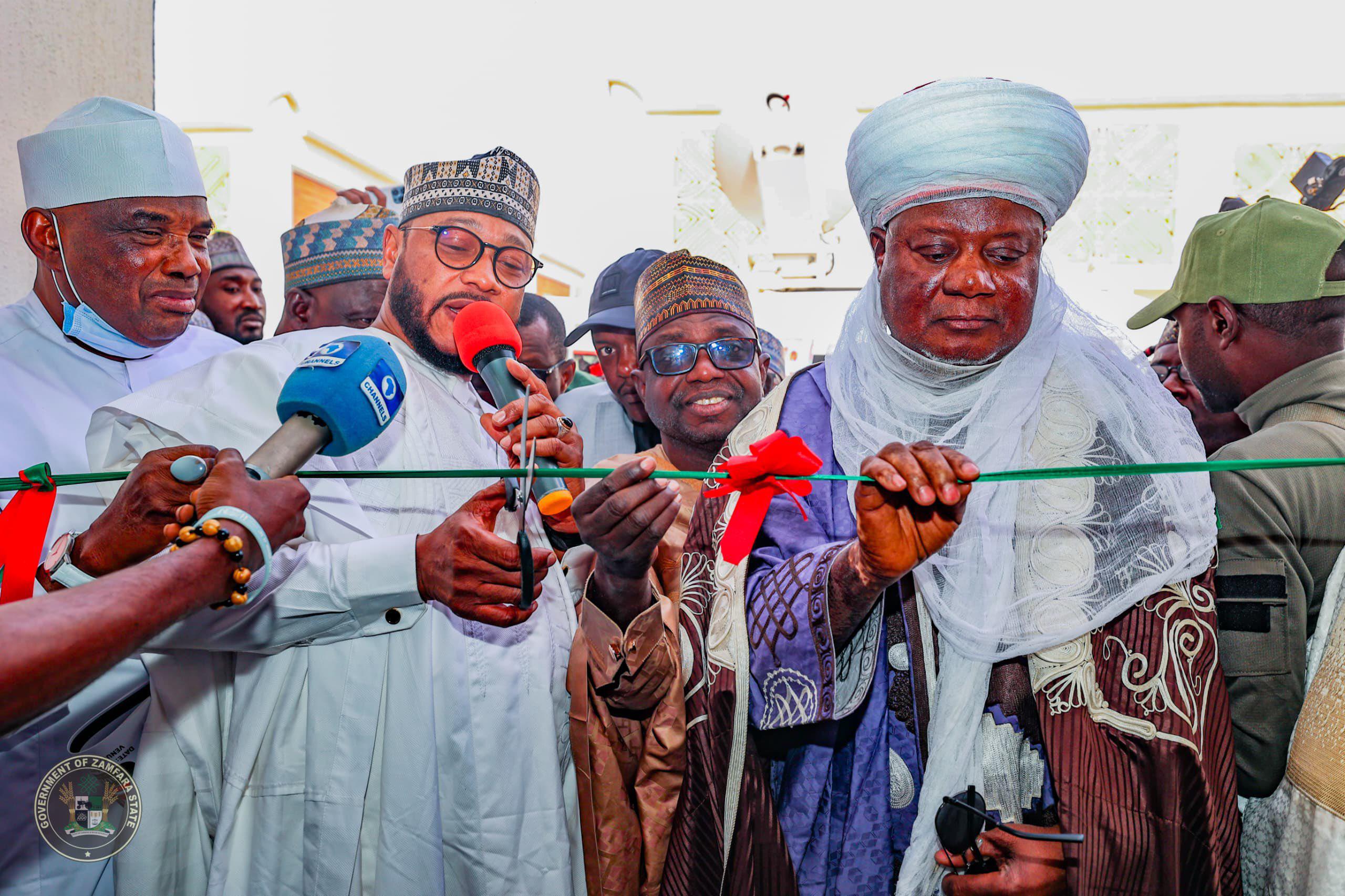
Gov. Dauda Lawal commissions projects in Anka LGA, Commits to Sustainable Development
The Executive Governor of Zamfara State, Dr. Dauda Lawal, has reiterated his administration’s steadfast commitment to guiding Zamfara State towards sustainable development by inaugurating and initiating a series of pivotal projects in the Anka Local Government Area.
Among the key undertakings announced are the comprehensive reconstruction and modernization of the Emir of Anka’s palace, signaling a revitalization of traditional leadership; the initiation of work on the crucial Anka–Abbare Road, which is expected to significantly improve connectivity; and the construction of a new Local Government Secretariat.
Additionally, the projects encompass the establishment of dedicated offices for the Hisbah Commission and the Community Protection Guards, alongside the reconstruction of the Safe School in Anka, emphasizing the administration’s focus on enhancing educational infrastructure.
During the commissioning event, Governor Lawal highlighted that these projects are a fulfillment of commitments made during his campaign, aimed at transforming the local landscape by improving infrastructure, stimulating economic growth, bolstering public service efficiency, and enhancing the capacities of security agencies. He called for a collective effort from the community to ensure proper maintenance of these facilities, underscoring the shared responsibility in preserving public assets.
Governor Lawal shared that similar projects have also been inaugurated in Tsafe, with plans for upcoming projects in Kaura Namoda, Moriki, Bungudu, Bukkuyum, and Zurmi, all expected to be completed and inaugurated by the year’s end. This ambitious timeline reflects the administration’s urgency in addressing the development needs of various regions within the state.
In his remarks, the governor urged residents and local traditional institutions to collaborate closely in maintaining the newly commissioned structures and supporting the overarching objectives of his administration. “I stand here in Anka today to honor our commitments to the people of Anka Local Government and all of Zamfara State. The official opening of the new palace for the ‘Sarkin Zamfaran Anka’ and the Zamfara State Council of Chiefs is a significant milestone that wraps up today’s agenda,” he stated.
Governor Lawal emphasized the strategic importance of the Anka–Abbare Road, describing it as a critical artery that will not only enhance access to remote areas but also stimulate economic activities and generate multiplier effects throughout the local economy. He articulated the necessity of providing a conducive work environment for civil servants, affirming that the new local government secretariat and dedicated offices will significantly contribute to strengthening law and order within the state.
“Education is the cornerstone of any thriving society. Our focused initiatives are oriented towards fostering a safe, secure, and supportive environment for our students. I am also proud to announce the completion and commissioning of the reconstructed SAFE School Anka today,” he remarked, reaffirming the administration’s dedication to education.
The governor further noted that the commissioning of the Emir’s Palace serves to restore the historical prominence of traditional institutions, which he regards as pivotal custodians of the region’s culture and heritage. He underlined the administration’s awareness of the invaluable role that these institutions play in fostering the state’s growth and emphasized the necessity of aligning development projects with cultural values.
In conclusion, the governor mentioned that after the successful commissioning in Anka and Tsafe, future projects in Kaura Namoda and Moriki will follow suit, while those in Bungudu, Bukkuyum, and Zurmi remain on track for completion and official commissioning before the year concludes.
news
GEN CHRISTOPHER GWABIN MUSA SUPPORT INITIATIVE HAILS GOVERNOR UBA SANI’S APPOINTMENT AS RENEWED HOPE AMBASSADOR
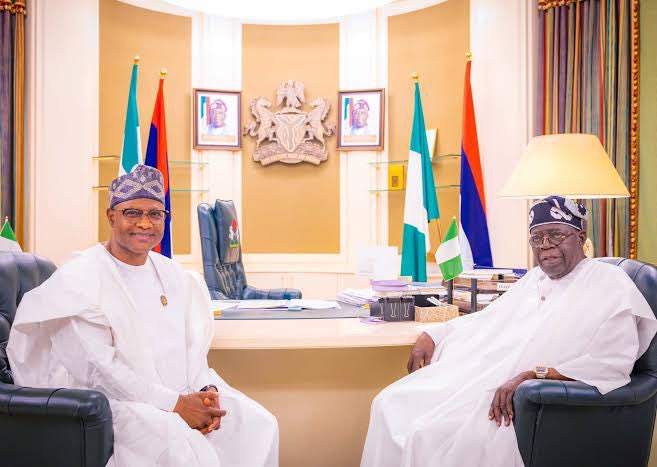
GEN CHRISTOPHER GWABIN MUSA SUPPORT INITIATIVE HAILS GOVERNOR UBA SANI’S APPOINTMENT AS RENEWED HOPE AMBASSADOR
The Gen Christopher Gwabin Musa Support Initiative (GCGMSI) has extended its warm congratulations to His Excellency, Mallam Uba Sani, the Executive Governor of Kaduna State, following his recent appointment as a Renewed Hope Ambassador and Deputy Director-General for Party Outreach, Engagement, and Mobilisation by the All Progressives Congress (APC).
This felicitation was formally conveyed in a statement signed by the Initiative’s Convener, Ibrahim Dahiru Danfulani, Sadaukin Garkuwan Keffi/Betara Biu, and disseminated to the press.
The statement highlighted that the Grand Patron of the GCGMSI, His Excellency General Christopher Gwabin Musa, OFR, Minister of Defence of the Federal Republic of Nigeria, received the news of the appointment with great pride but without surprise. According to the statement, General Musa expressed unwavering confidence in Governor Uba Sani’s proven capability and salient leadership qualities, affirming that the Governor is eminently equipped to deliver on every task entrusted to him.
The Grand Patron further extended profound appreciation to the President and Commander-in-Chief of the Armed Forces, His Excellency Asiwaju Bola Ahmed Tinubu, GCFR, for recognising and finding Governor Uba Sani worthy of this critical national assignment. The appointment, which takes effect immediately, was made by the President in his capacity as the leader of the APC, citing the Governor’s exceptional organisational abilities and strategic acumen.
In his new role, Governor Sani is tasked with working in close collaboration with the Director-General of the Renewed Hope Ambassadors and the party hierarchy, including the National Chairman of the APC. His primary mandate is to ensure harmony, inclusiveness, and strategic coordination across all levels of the party’s mobilization and engagement architecture, a vital function for advancing the political agenda.
Demonstrating its commitment to national service and effective governance, the GCGMSI, under the direct directive of its Grand Patron, General Musa, has officially mobilised its formidable structure. The Initiative has pledged the full deployment of its extensive network, seasoned personnel, and robust operational framework to assist and support Governor Uba Sani in the successful execution of his new responsibilities.
The Gen Christopher Gwabin Musa Support Initiative, renowned for its disciplined organisation, widespread grassroots penetration, and capacity for large-scale civic mobilisation, stands ready as a pivotal force. This move underscores the GCGMSI’s pivotal role as a key support system for national development initiatives and its unwavering dedication to fostering unity and progress under the Renewed Hope agenda.
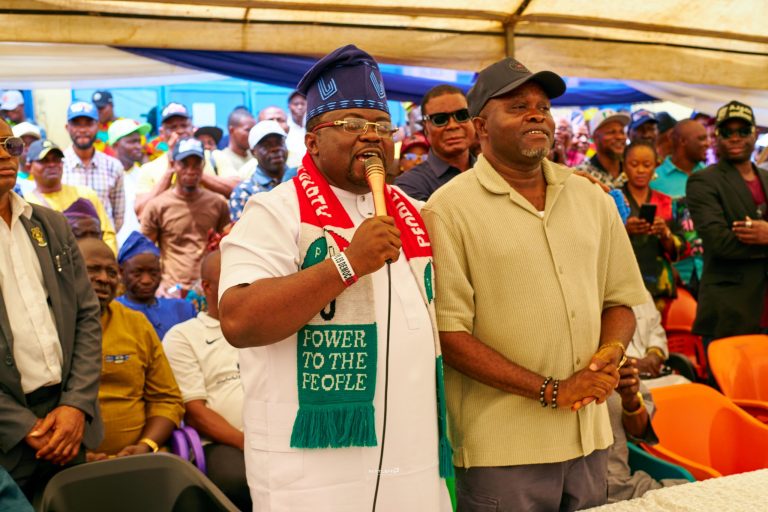
Oyo 2027: Ajadi Says PDP Will Retain Power
…..Tasks PMS To Remain United, Peaceful
A leading People’s Democratic Party (PDP) governorship aspirant in Oyo State, Ambassador Olufemi Ajadi Oguntoyinbo, has urged the people of Oyo State to remain steadfast, saying they will continue to enjoy good governance because the PDP will produce the next governor in the 2027 general elections.
Ajadi, who made this known while addressing transport unions under the Park Management System (PMS) at their headquarters, New Garage, Ibadan, on Tuesday, urged the park managers to remain united and maintain the love and peace currently prevalent among them.
According to him, “My advice to the Park Managers and the commercial drivers in Oyo State is that they should continue the love and peaceful attitudes. They should remain united. They should not ‘scattelegs’.
“Don’t let anybody deceive you, remain steadfast. Let me assure you that our party, the PDP, will produce the next governor come 2027,” Ajadi said.
He said he came to the PMS headquarters to meet with transporters and park managers to inform them of his aspiration to serve the people of Oyo State as governor come 2027.
“Today I joined my people, the park managers in Oyo State, to familiarize myself with them and inform them of my intention to serve the people of Oyo State as the next governor by the Grace of God.”
On the plans for the transporters, Ajadi said he first wants to change the look of the City Cabs, which will be done in collaboration with the Park Management System.
He also plans to increase the number of Mass Transit buses and make them available in all locations of the State.
He said the Mass Transit buses will operate in partnership with the Park Managers.
Ajadi, who commended Governor Makinde on the newly established bus terminals in the State, said his government will ensure adequate usage of the facilities.age of the facilities.


-

 celebrity radar - gossips6 months ago
Why Babangida’s Hilltop Home Became Nigeria’s Political “Mecca”
-

 society6 months ago
Power is a Loan, Not a Possession: The Sacred Duty of Planting People
-

 news6 months ago
THE APPOINTMENT OF WASIU AYINDE BY THE FEDERAL GOVERNMENT AS AN AMBASSADOR SOUNDS EMBARRASSING
-

 society5 months ago
Religion: Africa’s Oldest Weapon of Enslavement and the Forgotten Truth
You must be logged in to post a comment Login