
Politics
Gov. Amosun Deserves UN Recognition For His Govt’s Belief In Green Revolution, Peace And Security” …Comrade Olufemi Aduwo

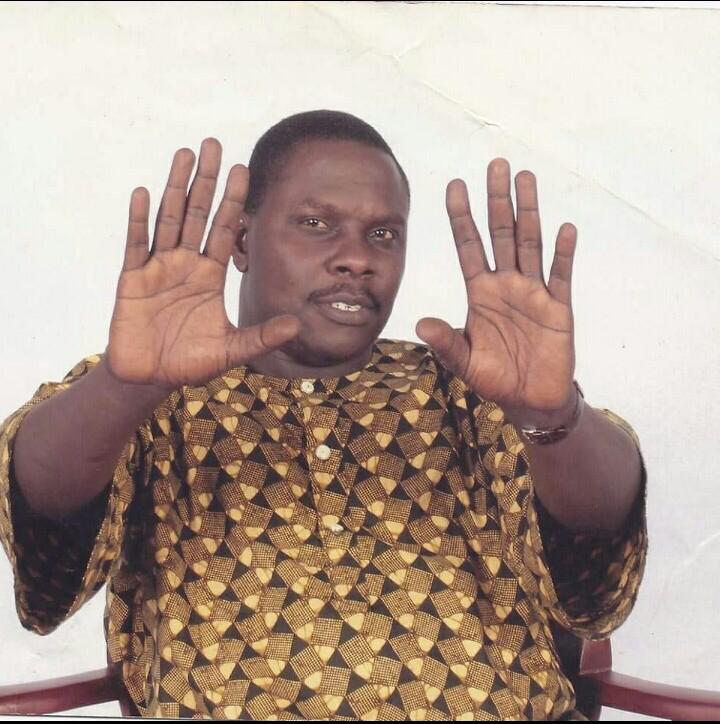
Olufemi Aduwo, human rights crusader and president/CEO at Rights Monitoring Group, Centre For Convention On Democratic Integrity, Nigeria and United States, in this interview, speaks on state of the nation, particularly relating to election and people’s lack of interest in voting, fuel subsidy controversy, state of Nigeria’s democracy, why the UN, based on his NGO’s recommendation, is honouring Ogun State governor, Amosun in August 2019, his lifestyle, and more. Excerpt…
Share your experience at the last World Bank meeting in America and how the outcome can be utilized for the benefit of the Nigerian state.
I started attending the World Bank meeting in 2012. In 2014, I became a Returnee, which means permanently I have to be attending at least two times in a year. The World Bank and IMF Board of Governors meeting is one of the unique forums in the world where economic and financial issues concerning the global are being formulated. Where you are seeing the gathering of central bank governors from all over the world, finance ministers from all over the world, captains of industry and other experts and civil society groups, something robust must come out from that meeting. In terms of ideas and networking, it has been a fantastic experience. The last meeting of the civil society forum with the executive Governor of World Bank was moderated by me and a friend from India. That’s a place where the civil society forum has one on one discussion with directors of the World Bank. In a day, you may have about one to fifty sessions. But the World Bank knows it is the civil society forum that spread the news of its activities. So, we the civil society forum are really given the freedom to express ourselves and to excel. We do a session on the economy, accountability and transparency. The only area that I disagree with is the comment made by the IMF managing director, Christine Lagarde about oil subsidy removal in Nigeria. We met with her and the civil society was able to express our feelings and opinions on some of the issues. We believe she doesn’t understand how Nigeria’s oil business is being managed. I recall that in 2015, during the election campaign, President Muhammadu Buhari, who is a former petroleum minister, said that subsidy is fraud. If you add the cost of production of crude oil, transportation and refining, how do you come about the issue of subsidy? Apart from the 2 billion barrels of oil that Nigeria produces daily as a member of OPEC, we have always produced since the Babangida regime 400,000 barrels for local consumption. The question is, since we say that the refineries are not working, where do we refine the 400, 000 barrels for local consumption? Who are those refining it and at what cost; what is the landing cost? After President Buhari had liberalized the market by increasing fuel price from 87 naira to 145 naira, why are the oil companies still not allowed to import refined products, why is it only the NNPC? Then we should look at the NNPC as the place where the fraud is happening. We are surprised that in 2018, the NNPC declared a loss whereas Saudi Arabia’s equivalent of NNPC declared 111.1 billion dollars profit. It is an aberration. So, we have to find out what are we really paying. All over the world, governments look for ways to raise revenues through taxation. Of course, there is nothing bad with that, but there must be palliative measures. There must be reward for the tax payer. With due respects, people may have their reason for labeling Abacha a bad man, but he did one thing that is very unique while in power. When he increased the petroleum price, he established Petroleum Trust Fund (PTF) with the current president, Buhari as chairman and set aside funds from the increment to repair roads, schools and hospitals. Nigerians could feel directly the positive effects of that increment in the fuel price. What are we getting for paying so much for fuel now? Nothing. Buhari may mean well, but he has to sit with experts on this. Why someone like me is against Buhari is because he failed in certain aspect. When he came to power he should have ensured that at least two or three refineries were working at a maximum level. It is a shame that we are still here.
How do you see the PDP’s statement against the government’s position that VAT could be increased to pay the new minimum wage?
I don’t agree with PDP and Tinubu’s political blackmail on this. The VAT must be increased; it must be increased on luxury things. A man that is buying a house of 1.1 billion naira in Banana Island should be ready to pay government 200 million naira VAT. A man that is buying Rolls Royce of 200 million should be ready to pay government at least 40 million VAT. We should tax luxury things, not garri, beans, rice or pepper.
Nigerians are worried that human rights violations and brutality by the police are becoming a trend. What do you think is the solution?
Well, this is not happening in Nigeria alone. Even in America, the people are experiencing police brutality. The problem is that, in Nigeria, it is becoming almost a daily occurrence. And this is sad. Things have to be done to really reorganize our police, like retraining. If I had my way, I would advise the President to deploy an Army general who has background in military policing for the overhauling of the police. The police rank and file has become notorious and dirty. For instance, a soldier can’t expend a bullet without accounting for it. But nobody questions a policeman how he spend bullets in his gun. They don’t give account. When policemen stop your car and you decide to make them happy like giving them some wads of naira notes, they just release bullets to the air to appreciate you. It is that bad. The police as they presently are, to me, are careless, untrained and uncultured. A police sergeant will meet an ASP and wouldn’t salute. And this idea of wielding guns in the public by policemen and wearing –Tshirts in the name of SARS, for God’s sake, should be done away with. They should be disbanded. Police are meant to arrest criminals. But when you give them a tag and give them special names, they become criminals themselves because this will go into their head and make them to misbehave.
Voter apathy is becoming a big challenge during elections in Nigeria. What is the best solution to people’s lack of interest in voting lately?
Voter apathy is a new phenomenon across the world, even in America. People are not interested in voting. And there are many factors involved. The last election in India which is the largest democracy in the world, about 100 million people turned out to vote. In the case of Nigeria, I would say it is lack of education and lack of awareness. People do not know the importance of the voter card. I was one of the people that moved the idea that there should be a law to compel people to vote. About five countries have done it that if you don’t vote, it is a criminal offence. Once you are 18 years of age, it should become an obligation for you as a citizen to cast your vote. The way we are going in Nigeria, it would get a time where just two million people would show interest in voting in an election. So, it becomes embarrassing. Nigeria should make it a punishable offence that if you are 18 you must cast your vote during election.
People probably are losing interest in voting because they believe their votes don’t count…
… (cuts in) That is carelessness. Every vote counts. Your duty is to participate. When a lot of people are participating, it reduces the influence of money politics and vote buying. How many people will you bribe when several million people are voting? It is appalling to see about four million people registering to vote and less than one million actually vote. In some states where there are four million voters, governors are elected by just 200, 000 voters. Some senators are elected by less than 30,000 voters, whereas in a senatorial district you have more than four million people. So, voter education goes beyond political parties. It involves the political parties, the government, credible NGOs and INEC. Unfortunately, the national orientation agency that should take up this responsibility is not doing well. It is a waste.
What is your social life like?
I’m a good Christian. I’m an ordained minister in a church. So, I’m not really an outgoing person. I’m a worker in Redeemed Church. I’m an Elder in my mother’s church in my village, Erinje in Ondo State. And I belong in many Christian associations either as an Elder, secretary and other titles. Although, some people think I’m an extrovert because of the way I carry myself, I’m not. I don’t attend social parties to drink and sit with strange women. But I’m a good dancer. I relax more by reading books.
Recently, you rated the administration of Governor Ibikunle Amosun of Ogun State high. Would you say his achievement exceeded the governments before his?
By the nature of what I do, some of these governors we monitor their performance from a distance. Amosun happens to be one of them. I can tell you that today in the Southwest, the only governor who brought a lot of innovation into governance, is the former governor of Ondo State, Dr. Olusegun Mimiko. Mimiko brought a scheme called ‘Abiye’ (safe motherhood). The programme was a home-grown comprehensive health initiative formulated to tackle the challenges of maternal mortality and diseases in the State. When a pregnant woman had her baby, she paid only one thousand naira as maternity fee. That was a fantastic initiative, and that was the reason we supported him. He was supported by the UN. He was in fact the first Nigerian governor to address the UN based on that beautiful concept. What Mimiko did is an idea whereby you can have the record of the total of babies born in a state within one year and you reduce mortality rate. So, Amosun too has brought a lot of innovations to governance. Go to Ogun State and see. In the area of green economy, he has tried in the aspect of maintaining the forest without being deforested. One of the major causes of poverty in the world is the abuse of ecosystem. It is deforestation that causes climate change. In Ogun State, you have about 90 to one government forest reserve, particularly the Aworo Forest plan. The last time when President of France came to Nigeria, one of the reasons he came was to sign the agreement with Ogun State government and another partner to plant trees. For me, I have said it, whoever is coming to office after Amosun, is lucky. Amosun’s successor would just be commissioning projects for the next four years. I know that the governor-elect, Dapo Abiodun, is a businessman. The only area I disagree with his approach is drawing a list of economic committee of about 100 people. He didn’t need that. Mr. Tunde Lemo is a first class economist. Dapo should just have appointed him to head about six or ten other credible people. Ogun is not a new state. he should just have set up a small special committee to work with the outgoing governor, find out where the projects would stop, how much the contracts cost so that there won’t be dubious variations. All the projects that Amosun embarked on are ongoing. I was with him some days ago in the company of other people in the NGO to inspect some of the projects. Nothing is going to be abandoned in what is going on in Ogun State. Governemtn is a continuum. Amosun has done extremely well and very soon, he will get international recognition. In fact, some of the NGOs have nominated Governor Amosun for SDGs Action Award of New York. Why we are honouring him is because, the Sustainable Development Goals Award is put in place by United Nations to celebrate some individuals in government, especially those who have done well in the area of promotion of SDGs. It can be some of the targets or some of the goals. We have 17 goals with more than 300 targets. This year, in our capacity as NGO with consultative status with UN, we submitted Amosun’s name for the award, and this is the first time a name is coming from sub-Sahara Africa. We are the only NGO that have the mandate to do the climate assessment of the World Bank and in Nigeria for many years. Fortunately, we have never been mandated to conduct the same thing in Ogun State. But based on what Amosun has done in the area of afforestation, Ogun State under him is one of the few states with full-fledged ministry of forestry. President Macron of France was here to sign an agreement with the Ogun State government and an organization from France and Lafarge on planting of trees in Aworo. Planting trees is a serious issue for mitigation against deforestation. When you go to Ogun State, you see everywhere is green because the government encourages planting of trees. Some of the other goals are peace and security, which Amosun’s government believes in and promotes. These are the issues we took into consideration when his name was submitted and more than 20 other NGOs in sub-Sahara Africa supported us.
Tell us about your NGO and what project are you into at the moment?
Based on what I’m doing right now; my NGO is registered in the US. We have three NGOs. There is Rights Monitoring Group (RMG), which comprises other NGOs. RMG is involved with election monitoring, anti-corruption and others. We have Center for Convention on Democratic Integrity (CCDI) limited by guarantee, Nigeria; and we have Center for Convention on Democratic Integrity (CCDI) incorporated, Maryland, US. We are developing it and we are resuming in US very soon with our workers. I’m a permanent representative of my NGO in UN. When I go to New York, I’m being addressed as an ambassador based on my status as a permanent representative of my NGO in US, UN, Vienna and Geneva offices. Then, there is this project we did with World Bank on climate assessment. We started the first phase in 2014 and ended in 2016. The World Bank is renewing the project with us this September 2020 for another four years. It is time consuming and it involves a lot of intellectual undertakings.
How have you been coping since 2010 as a lone parent?
My wife was a wonderful woman. To the glory of God, my children are doing fine. I married a good woman with whom I shared love. And when she died, she took the love key with her. So, He is a good God.
How would you describe the present state of democracy in Nigeria?
Democracy is revolving. Democracy is the same across the world. However, there are certain features that must be prominent in the practice of democracy. I’m talking of characteristics like rule of law, separation of power, power of the judiciary and making votes count. Twenty years in the life of democracy is small but it doesn’t mean we cannot do a lot of things right. For example, all the Second Republic governor of Lagos State, Alhaji Lateef Jakande, had to transform Lagos State was just four years in office. Before Jakande came to power in 1979, people were going to school three times in a day. When Jakande introduced the free education, he foresaw that there must be a university, so established the Lagos State University. To tackle the problem of traffic in Lagos State, Jakande said let the ferries work. With the elephant projects everywhere in Lagos today, if the ferries are working in Mile 2, Badagry and Ikorodu, the road problem in Lagos State would be resolved. If you have about 100 boats plying Badagry through Mile 2 to Marina, nobody wants to get stuck on the Iganmu road for three hours. So, democracy has its challenges too. Look at Nigeria for instance; we are talking about power shift, zoning and federal character principle, which is not an issue in a country like America. Nevertheless, so far, we are not doing badly, although there are challenges.
Do you think the Nigerian media is making its contributions in making democracy work?
From my observation, the media in Nigeria has been caged. Let me use America as an example. In the US, the Republican knows that CNN is pro the Democrat. The media in America don’t hide their interest; they let you know where they belong. The media in America is the godfather of democracy, in terms of opinion polls and what have you. If you looked at the last presidential election in Nigeria, you could see where different opinions were focused although most of them failed at the end of the day. in Nigeria, the media is the problem. When I say the media, I’m not talking about the journalists because there is nothing wrong with Nigerian journalists. Journalists in Nigeria, from my study, are capable and well trained, but ownership is the problem. A Nigerian publisher that doesn’t even know anything about journalism wants to interfere with what goes in the editorial page. And some of these publishers are politicians. This is one of the challenges of the media in Nigeria. Also, journalists are not well remunerated in Nigeria. This problem started with the newspapers proprietors who ensure that the media council lacks the teeth to regulate media practice. The media council should be able to enforce the standard that journalism is a profession. Even if you have PhD in English you must have a minimum of diploma in Mass Communication from school of journalism. Then you can guide on the ethics of practice and salary.
What is your honest assessment of the Buhari’s administration so far?
Buhari is a good man. Many people don’t even know that I don’t belong in any political party. I’m for good governance. I have friends in many political parties, PDP, APC, name it. There are bad and credible people in both APC and PDP. People brought Buhari to be president because they believe he was credible. The little we knew about him when he came as military ruler in 1983, he tried to instill discipline into society. And many believed he was able to stop the leakages. But today, he is in a different society. People that brought him back now, majority of them are terrible criminals. They brought him not because of national interest but because of their selfish interest. That is the area where I disagree with them. My advice for him is that, in this second term, he should rewrite his name in gold. What else does he want in life? At the age of 76, God has been so good to him. In a society where life expectancy is 50 and below, God has been good to him. He should work during his second term and leave a good name as his legacy. This he can achieve if he appoints people who are credible, people who can deliver, to work with him.


Journalists for Good Governance Shines Searchlight on Local Government Administration
…Calls for Accountability in Nigeria’s Grassroots Governance
LAGOS, Nigeria — A civil society coalition known as Journalists for Good Governance(JGG) has intensified public debate on transparency and accountability within Nigeria’s local government system, urging media professionals, civil society actors, and citizens to hold grassroots leaders accountable.
Speaking an event in Lagos recently, the acting chairman of the society, Comrade Bunmi Obarotimi said that despite reforms such as the Supreme Court’s 2024 ruling granting financial autonomy to all 774 Local Government Areas (LGAs), systemic challenges continues to hinder effective service delivery and responsible stewardship of public funds.
“Local governments are the closest tier of government to the people — yet too often they remain the least transparent. Without civic oversight and vibrant media, promises of autonomy ring hollow.” the acting chairman said.
The Journalist for Good Governance emphasised crucial roles that journalists can play in uncovering discrepancies in council spending, flagging poor service delivery, and educating citizens on their rights. Their call comes amid wider efforts by media and civic organisations to bridge accountability gaps. The civil society initiatives had previously launched monitoring campaigns to track local government expenditures and have been quietly advocating for transparency in how public money is deployed.
The leaders of the Journalists for Good Governance (JGG) highlighted the importance of physical assessment and citizens engagement on projects to boost people’s confidence, urging local councils to adopt open data platforms and proactive information dissemination in compliance with the Freedom of Information Act. Experts say the majority of LGAs currently lack operational websites or digital portals, further limiting public scrutiny.
The Journalists for Good Governance initiative aligns with sustained advocacy by civil society groups and governance experts calling for a collective approach to strengthening democratic accountability, and has decided to engage in critical and holistic assessments of how Local Governments is being run and the impact and quality of projects they embark-on and to address deficits in transparency and public trust.
Meanwhile, some state governments have signalled support for improved community engagement. In Lagos State, authorities reiterated a commitment to enhancing community media platforms as vehicles for civic participation and accountability at the grassroots level.
The renewed spotlight on local government administration has reignited public debate over fiscal responsibility and priorities. Controversies such as the widely criticised Adamawa council chairmen’s wives trip to Istanbul — which drew public outrage for perceived misuse of public funds — underscore why watchdog groups say stronger oversight mechanisms are urgently needed at the grassroots.
Citizens and activists have welcomed the journalists’ initiative, calling for sustained media engagement that goes beyond headlines to influence policy and accountability reform.
The civic rights advocates note that real change will require robust legal frameworks, a free press, and empowered communities equipped to demand transparency at every level of governance.
As Journalists for Good Governance mobilises its members, the coming months are likely to see heightened media attention on grassroots administration — from council budgets and service delivery to the enforcement of public information laws and digital transparency initiatives.
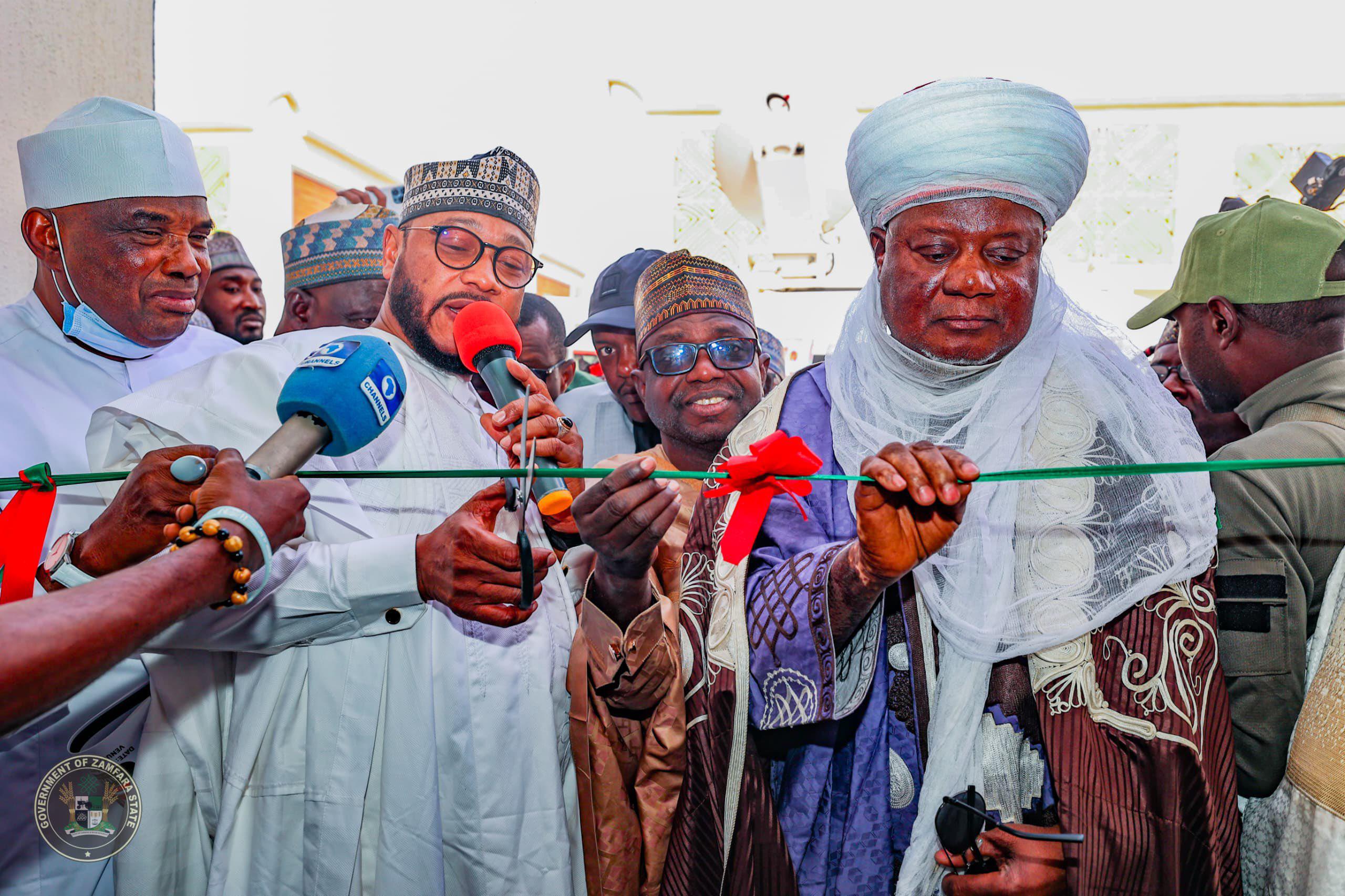
Gov. Dauda Lawal commissions projects in Anka LGA, Commits to Sustainable Development
The Executive Governor of Zamfara State, Dr. Dauda Lawal, has reiterated his administration’s steadfast commitment to guiding Zamfara State towards sustainable development by inaugurating and initiating a series of pivotal projects in the Anka Local Government Area.
Among the key undertakings announced are the comprehensive reconstruction and modernization of the Emir of Anka’s palace, signaling a revitalization of traditional leadership; the initiation of work on the crucial Anka–Abbare Road, which is expected to significantly improve connectivity; and the construction of a new Local Government Secretariat.
Additionally, the projects encompass the establishment of dedicated offices for the Hisbah Commission and the Community Protection Guards, alongside the reconstruction of the Safe School in Anka, emphasizing the administration’s focus on enhancing educational infrastructure.
During the commissioning event, Governor Lawal highlighted that these projects are a fulfillment of commitments made during his campaign, aimed at transforming the local landscape by improving infrastructure, stimulating economic growth, bolstering public service efficiency, and enhancing the capacities of security agencies. He called for a collective effort from the community to ensure proper maintenance of these facilities, underscoring the shared responsibility in preserving public assets.
Governor Lawal shared that similar projects have also been inaugurated in Tsafe, with plans for upcoming projects in Kaura Namoda, Moriki, Bungudu, Bukkuyum, and Zurmi, all expected to be completed and inaugurated by the year’s end. This ambitious timeline reflects the administration’s urgency in addressing the development needs of various regions within the state.
In his remarks, the governor urged residents and local traditional institutions to collaborate closely in maintaining the newly commissioned structures and supporting the overarching objectives of his administration. “I stand here in Anka today to honor our commitments to the people of Anka Local Government and all of Zamfara State. The official opening of the new palace for the ‘Sarkin Zamfaran Anka’ and the Zamfara State Council of Chiefs is a significant milestone that wraps up today’s agenda,” he stated.
Governor Lawal emphasized the strategic importance of the Anka–Abbare Road, describing it as a critical artery that will not only enhance access to remote areas but also stimulate economic activities and generate multiplier effects throughout the local economy. He articulated the necessity of providing a conducive work environment for civil servants, affirming that the new local government secretariat and dedicated offices will significantly contribute to strengthening law and order within the state.
“Education is the cornerstone of any thriving society. Our focused initiatives are oriented towards fostering a safe, secure, and supportive environment for our students. I am also proud to announce the completion and commissioning of the reconstructed SAFE School Anka today,” he remarked, reaffirming the administration’s dedication to education.
The governor further noted that the commissioning of the Emir’s Palace serves to restore the historical prominence of traditional institutions, which he regards as pivotal custodians of the region’s culture and heritage. He underlined the administration’s awareness of the invaluable role that these institutions play in fostering the state’s growth and emphasized the necessity of aligning development projects with cultural values.
In conclusion, the governor mentioned that after the successful commissioning in Anka and Tsafe, future projects in Kaura Namoda and Moriki will follow suit, while those in Bungudu, Bukkuyum, and Zurmi remain on track for completion and official commissioning before the year concludes.
news
GEN CHRISTOPHER GWABIN MUSA SUPPORT INITIATIVE HAILS GOVERNOR UBA SANI’S APPOINTMENT AS RENEWED HOPE AMBASSADOR
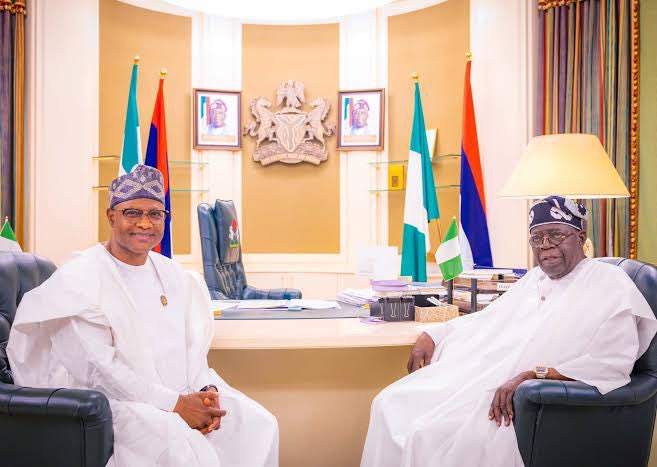
GEN CHRISTOPHER GWABIN MUSA SUPPORT INITIATIVE HAILS GOVERNOR UBA SANI’S APPOINTMENT AS RENEWED HOPE AMBASSADOR
The Gen Christopher Gwabin Musa Support Initiative (GCGMSI) has extended its warm congratulations to His Excellency, Mallam Uba Sani, the Executive Governor of Kaduna State, following his recent appointment as a Renewed Hope Ambassador and Deputy Director-General for Party Outreach, Engagement, and Mobilisation by the All Progressives Congress (APC).
This felicitation was formally conveyed in a statement signed by the Initiative’s Convener, Ibrahim Dahiru Danfulani, Sadaukin Garkuwan Keffi/Betara Biu, and disseminated to the press.
The statement highlighted that the Grand Patron of the GCGMSI, His Excellency General Christopher Gwabin Musa, OFR, Minister of Defence of the Federal Republic of Nigeria, received the news of the appointment with great pride but without surprise. According to the statement, General Musa expressed unwavering confidence in Governor Uba Sani’s proven capability and salient leadership qualities, affirming that the Governor is eminently equipped to deliver on every task entrusted to him.
The Grand Patron further extended profound appreciation to the President and Commander-in-Chief of the Armed Forces, His Excellency Asiwaju Bola Ahmed Tinubu, GCFR, for recognising and finding Governor Uba Sani worthy of this critical national assignment. The appointment, which takes effect immediately, was made by the President in his capacity as the leader of the APC, citing the Governor’s exceptional organisational abilities and strategic acumen.
In his new role, Governor Sani is tasked with working in close collaboration with the Director-General of the Renewed Hope Ambassadors and the party hierarchy, including the National Chairman of the APC. His primary mandate is to ensure harmony, inclusiveness, and strategic coordination across all levels of the party’s mobilization and engagement architecture, a vital function for advancing the political agenda.
Demonstrating its commitment to national service and effective governance, the GCGMSI, under the direct directive of its Grand Patron, General Musa, has officially mobilised its formidable structure. The Initiative has pledged the full deployment of its extensive network, seasoned personnel, and robust operational framework to assist and support Governor Uba Sani in the successful execution of his new responsibilities.
The Gen Christopher Gwabin Musa Support Initiative, renowned for its disciplined organisation, widespread grassroots penetration, and capacity for large-scale civic mobilisation, stands ready as a pivotal force. This move underscores the GCGMSI’s pivotal role as a key support system for national development initiatives and its unwavering dedication to fostering unity and progress under the Renewed Hope agenda.


-
 celebrity radar - gossips6 months ago
Why Babangida’s Hilltop Home Became Nigeria’s Political “Mecca”
-

 society6 months ago
Power is a Loan, Not a Possession: The Sacred Duty of Planting People
-
 society5 months ago
Religion: Africa’s Oldest Weapon of Enslavement and the Forgotten Truth
-
 news6 months ago
THE APPOINTMENT OF WASIU AYINDE BY THE FEDERAL GOVERNMENT AS AN AMBASSADOR SOUNDS EMBARRASSING
You must be logged in to post a comment Login