
Metro
Why Lagos Residents Should Embrace Restriction Ban On Okada,Keke Napep

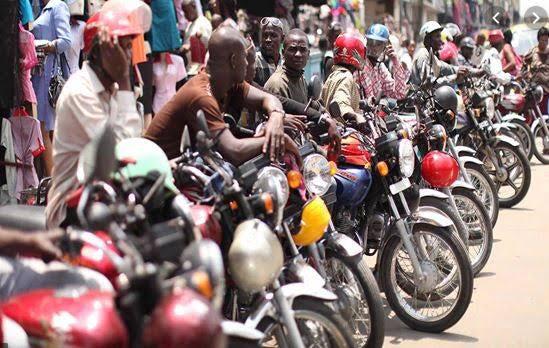
That Governor Babajide Olusola Sanwo-Olu of Lagos State has gone ahead to implement the restrictions or as some people call it, ban of the movement of commercial motorcycles (okada) and tricycles (Keke Marwa) is no news.
The decision was met with criticism and condemnation of the government by several residents of the state owing to what they perceive as the inconveniences the policy or the decision would cause.
But beyond the inconveniences and disadvantages of the policy, it is necessary to trace the genesis of the restrictions and what it portends to the residents of the metropolitan city on the long run.
It should be recalled that the restriction/ban of Okada operations as recently announced by the Lagos State Government is not a new policy.
The Policy predates the current government as it took off in 2012 during the tenure of former governor Babatunde Raji Fashola.
What the Sanwo-Olu Government did was just to effect the policy, which was neglected by the government of Mr. Akinwunmi Ambode from 2015 to May, 2019.
Going down memory lane, in March 2012, about eight (8) years ago, Governor Fashola announced a total ban of Okada from all major bridges and the whole of Ikeja.
This ban was instigated by the Nigeria Police, who had been hapless from the incessant rise in crime in the highly populated state.
Three months later, it was extended to parts of Surulere and Lagos Island. Specifically the Business district, parts of Victoria Island and Falomo, Ikoyi.
For the other areas, government decided to regulate Okada riders and came up with a licensing scheme which stipulated that Okada riders needed to learn how to ride bikes and must obtain a riders licence (As is applicable in most countries).
This they did in partnership with the FRSC. This scheme was ignored totally.
As a matter of fact the two main Okada unions took the government to court over this.
The FRSC ended confiscating over 15,000 bikes for non-compliance. Still, riders were going about undocumented.
At that time, there were just about 50,000 Okada’s in Lagos. The government also introduced the use of crash helmets due to incessant casualties from accidents. This too was largely ignored.
Today, there are over 250,000 Okadas with 78% of the riders being indigenes of Chad, Niger and Mali.
The significant rise was within the last 18 months. The most significant development that jolted the Lagos State Government was the recent influx of over 40,000 Nigeriens and Malians under the guise of looking for a means of sustenance as Okada riders.
They were all undocumented, with no form of identification whatsoever.
The Lagos State Government quickly set up a committee to look into this.
Early January, in trying to enforce registration in Apapa, Iganmu Orile, where we have the largest concentration of Okada riders from Niger and Mali, government ended up seizing about 150 Okadas, whose owners did not have riders permit.
Within a few hours, irate Hausa/Fulani youths invaded Apapa- Iganmu LCDA headquarters at Marine Beach, chased all the workers away and set the office complex ablaze and also vandalised vehicles within the vicinity causing millions of Naira in damage. No serious government would watch and not take action, most especially with the insurgency in the North East.
What we should note here is that there is a total ban on Okada in Kano, Katsina, Zamfara, Sokoto, Kaduna, Kebbi and Niger State for security reasons.
Those, who did not study the situation properly have been condemning the government of Mr. Sanwo-Olu for its action.
However, they ought to know that Sanwo-olu’s government didn’t just wake up and effect the ban! It was as a result of a report presented by the Lagos State Security Council and they sought advise from the OPS as well.
The Corporate Okada companies were given ample time to implement government policy on the management of their riders but they simply just took the government for granted.
They felt that this is Nigeria, where people believe that anything goes.
In their own thinking government would not be that audacious with an outright ban.
With the millions of dollars raised at start-up, all the corporate Okada companies were interested in, was the revenue. They were interested in the N3,000 daily they were charging riders.
The companies became reckless after the Lagos State introduced N25M as annual licensing fees for 1000 riders and then N30,000 per bike thereafter.
This means that the companies would paying N295M if they had 10,000 Okada riders including tax and VAT on revenue generated.
Meanwhile the companies were earning over N1m per rider annually. They became very greedy and complacent and ceased to keep any verifiable database of the their riders with the required background checks. (This was largely done, to avoid charges).
The main concern of the owner of Gokada’ Bangladeshi was how to roll out Gokada in the thousands rather than making sure there was value added and compliance.
So most of this companies have themselves to blame. The Corporate Okadas market share in Lagos is less than 5%. TBC.
What the Lagos State Government is to sanitize the system and restore the lost glory of the state and make things work better in the centre of excellence.
The Sanwo-Olu Government means well for the residents of the state and this would be noticeable in its progressive programmes for the generality of the masses.
Residents of the state should commend the sensitivity of the Sanwo-Olu government to provide succour with the release of 65 buses and ordering additional 550 buses to ameliorate the challenge facing commuters.
The Governor knows the implications of the restrictions of the movement of okada and Keke Marwa and he is thinking outside the box on a daily basis to provide succour.
The major reason for the restrictions/ban should not be lost on the discerning residents of the state, it is meant to reduce crime and protect lives and properties as hoodlums have reportedly perfected the use of okada to commit crime with impunity.






Business
Elon Musk’s Team Accuses FEMA of Misusing $59 Million to House Illegal Migrants in Luxury Hotels

Elon Musk’s Team Accuses FEMA of Misusing $59 Million to House Illegal Migrants in Luxury Hotels
Elon Musk’s Department of Government Efficiency (DOGE) has made serious allegations against the Federal Emergency Management Agency (FEMA), claiming that the agency misused $59 million to accommodate illegal migrants in luxurious hotels.
The billionaire entrepreneur revealed this in a tweet on Monday morning, stating that the discovery was made last week. According to Musk, the funds were intended for American disaster relief but were instead diverted in violation of national regulations.
He wrote: “The @DOGE team just discovered that FEMA sent $59M LAST WEEK to luxury hotels in New York City to house illegal migrants. Sending this money violated the law and is in gross insubordination to the President’s executive order. That money is meant for American disaster relief and instead is being spent on high-end hotels for illegals! A clawback demand will be made today to recoup those funds.”
The revelation has sparked controversy, with critics arguing that FEMA’s allocation of funds should prioritize American citizens affected by disasters. The allegations have also intensified scrutiny on FEMA, which has faced previous accusations of financial mismanagement.
An inspector general audit recently revealed that FEMA mishandled nearly $10 billion in COVID-19 relief funds. The audit stated that $8.1 billion in costs remained questionable, while $1.5 billion was allocated prematurely and could have been better utilized for other emergencies.
As scrutiny mounts, former President Donald Trump has reportedly considered abolishing FEMA, describing the agency as “a disaster.” To address these concerns, Trump has established a council, led by Homeland Security Secretary Kristi Noem and Defense Secretary Pete Hegseth, to review FEMA’s operations and propose necessary reforms by late June.
The allegations against FEMA have triggered a broader debate on the proper allocation of taxpayer funds and the government’s role in disaster management. More updates are expected as the situation develops.

Shepherd freight Cargo services Now in Lagos and Ibadan Nigeria.




Access Holdings: Imprints of a Thriving Banking Powerhouse, By Bolaji Israel
Access Holdings has continued to evolve and reinforce its corporate stature as a formidable force in Nigeria’s financial sector, demonstrating capacity for relentless growth, resilience and ambition through strategic expansion and innovative approaches. The entity owes its significant bulk to the Access Bank Group, supported by other allied services firms.
Also known as Access Corporation, the group has grown over the last 35 years to emerge as Nigeria’s largest financial holding company, offering services such as commercial banking, lending, payment, insurance, and asset management.
Though Access started off as a corporate bank, it swiftly expanded into personal and business banking in 2012, solidifying its role as a well rounded financial solutions provider.
In his memoir, ‘Leaving the Tarmac: Buying a Bank in Africa, ‘ Aigboje Aig-Imoukhuede detailed how himself and his partner, Herbert Wigwe walked the delicate path of buying Access Bank and never looked back since.
The bank’s acquisition in March 2022 by the maverick duo of Aig-Imoukhuede and Wigwe, which changed its entire growth, profit and branding trajectory as well as its merger with Diamond Bank in 2019 which shot up its customer base to over 42 million, granting it a status of the largest bank in Africa by customer base and the largest in Nigeria by assets, form a part of its remarkable and turnaround milestone.
With a keen focus on digitisation-driven growth and customer satisfaction, it has not only solidified its status in Nigeria but has also set its sights on becoming a formidable player in the international banking arena.
The group’s growth and expansion drive has been marked by a series of strategic acquisitions and mergers aimed at enhancing its market presence and delivering value to customers. In 2021, Access Bank acquired African Banking Corporation (ABC Holdings), a move that significantly bolstered its operations in Southern Africa. This acquisition allowed Access Bank to enter markets such as Botswana, Mozambique, and Zambia, thereby enhancing its regional footprint and customer base.
In addition to its African ventures, Access Holding has been eyeing opportunities in Europe and Asia. Recent announcements highlight the bank’s interest in potential partnerships and acquisitions that could facilitate its entry into these lucrative markets. The bank’s management has stated, “We are committed to diversifying our operations and exploring new markets that align with our growth strategy.”
The results of the expansion efforts have been promising. For the year ending 2023, Access Holding reported a staggering 300 percent growth in profit after tax to N612.4 billion, from N204.1 billion in 2022. This represents the largest profit ever recorded by the company, under the leadership of its late co-founder, Herbert Wigwe.
It revenue soared by 80% to N2.6 trillion, from N1.4 trillion in 2022 while assets rose by 78% to N26.7 trillion, from N14.99 trillion in 2022, marking a significant growth trajectory that positions Access Holding as one of Nigeria’s largest and most influential banks.
Leading Force in Financial Sector
Access Holding’s influence in the financial sector extends beyond its impressive growth metrics. The bank has taken on a leading role in advocating for financial inclusion and economic empowerment across Nigeria and Africa. Through various initiatives, Access Holdings is committed to providing access to banking services for underserved populations, thereby contributing to the broader goal of economic development.
The bank’s emphasis on technology and innovation has positioned it as a leader in the digital banking space, setting benchmarks for other financial institutions to follow. By continuously enhancing its service offerings and embracing new technologies, Access Holding is shaping the future of banking in Nigeria and beyond.
Innovations and Technological Advancements
Access has prioritized innovation as a cornerstone of its growth strategy. Over the past two years, the bank has invested heavily in upgrading its technology infrastructure to provide customers with seamless and efficient banking experiences. The launch of a robust digital banking platform is a clear testament to this commitment. The improved platform allows customers to perform a wide range of transactions, from fund transfers to bill payments, all from the convenience of their mobile devices.
The bank’s mobile banking app has also seen significant upgrades, incorporating features such as biometric authentication, personalized financial insights, and enhanced security protocols. These innovations have resulted in a marked increase in user engagement, with over 10 million active users reported in 2024.
Moreover, Access has revitalized its Point of Sale (POS) services to cater to the growing demand for cashless transactions. The bank has deployed thousands of POS terminals across Nigeria, facilitating secure and efficient payment solutions for businesses and consumers alike.
Leadership and Succession
The unfortunate demise of Dr Herbert Wigwe, CFR, the Company’s founding Group Chief Executive Officer and former Group Managing Director of its flagship subsidiary, Access Bank Plc on Friday, February 9, 2024, in a helicopter accident in the United States of America, would have constituted a permanent clog for any company without a formidable structure.
Access Holdings has however been able to rise above the dark moment and steadied the ship with the return of Aigboje Aig-Imoukhuede as Chairman and emergence of Bolaji Agbede as GCEO. The swift realignment is a clear testament to the group’s ability to deftly manage succession.
Growth Outlook and Ambition
Access growth results and targets highlight its ambitious nature. The banking group aims to achieve a market capitalization of ₦10 trillion by 2025, with plans to expand its customer base to over 50 million across its operational territories. This ambition is supported by strategic partnerships and potential mergers, not only within Nigeria but globally.
Analysts have noted that Access Holdings is well-positioned to capitalise on the growing demand for financial services across Africa and beyond. With a solid foundation and an eye on expansion, the bank is poised to become a leading financial institution on the global stage.
The landscape of mergers and acquisitions in the banking sector has been vibrant, and Access Holdings is keen on exploring potential opportunities. In Nigeria, the banking industry has witnessed a wave of consolidation, with several banks seeking to enhance their market positions through strategic mergers. Access has expressed interest in potential acquisitions that align with its growth strategy, particularly in the areas of technology and customer service.
Globally, the banking group is also exploring partnerships that can facilitate its entry into new markets. The management has indicated that Access Holding is open to collaborating with fintech companies and other financial institutions that can complement its service offerings and enhance customer value.
Awards and Commendations
Access Corp’s commitment to excellence and innovation has earned it numerous accolades over the past year. The bank was recognized as the “Best Bank in Nigeria” at the Global Finance Awards, a prestigious honour that underscores its leadership position in the industry. Additionally, the bank received the “Most Innovative Bank” award at the African Banking Awards, highlighting its commitment to embracing technology and improving customer experiences.
These awards reflect a solid dedication to maintaining high standards of service and its ability to adapt to the rapidly changing financial landscape.
Access Holdings trajeectory stands as a testament to what can be achieved through strategic expansion, innovation, and effective leadership. With its aggressive growth strategy, commitment to technological advancement, and dedication to customer satisfaction, it is firmly establishing itself as a thriving banking conglomerate.


-

 celebrity radar - gossips6 months ago
Why Babangida’s Hilltop Home Became Nigeria’s Political “Mecca”
-

 society6 months ago
Power is a Loan, Not a Possession: The Sacred Duty of Planting People
-

 Business6 months ago
Batsumi Travel CEO Lisa Sebogodi Wins Prestigious Africa Travel 100 Women Award
-

 news6 months ago
THE APPOINTMENT OF WASIU AYINDE BY THE FEDERAL GOVERNMENT AS AN AMBASSADOR SOUNDS EMBARRASSING