
celebrity radar - gossips
How our monarchs, parents can truly preserve Yoruba language – Obasa

How our monarchs, parents can truly preserve Yoruba language – Obasa
– Olota of Otta honours Speaker with traditional title
– Says Obasa’s leadership of the Assembly has benefitted Awori people in Lagos
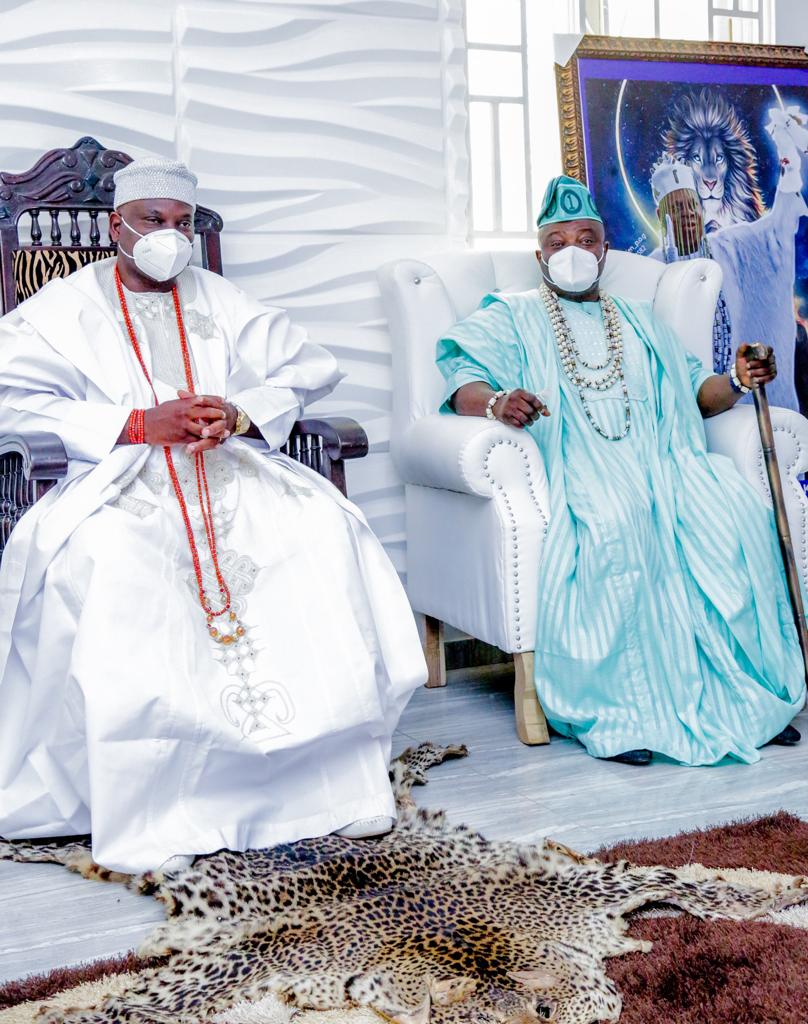
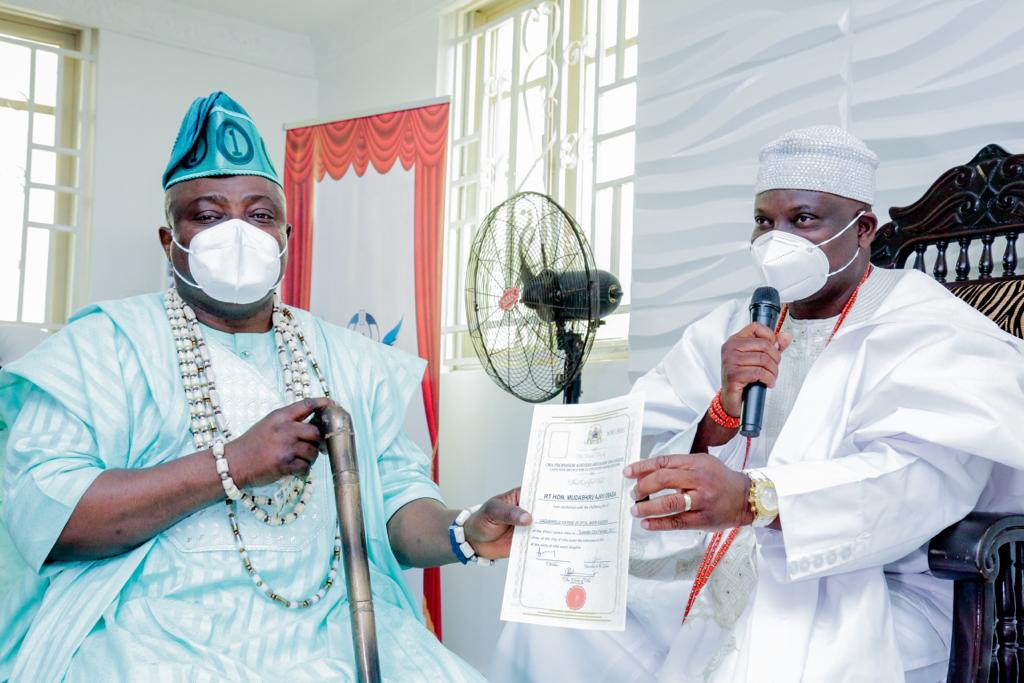
The Speaker of the Lagos State House of Assembly, Rt. Hon. (Dr) Mudashiru Obasa, has urged traditional rulers in the Southwestern part of Nigeria to continue to protect the culture and tradition of the people of the zone by constantly speaking the Yoruba language.
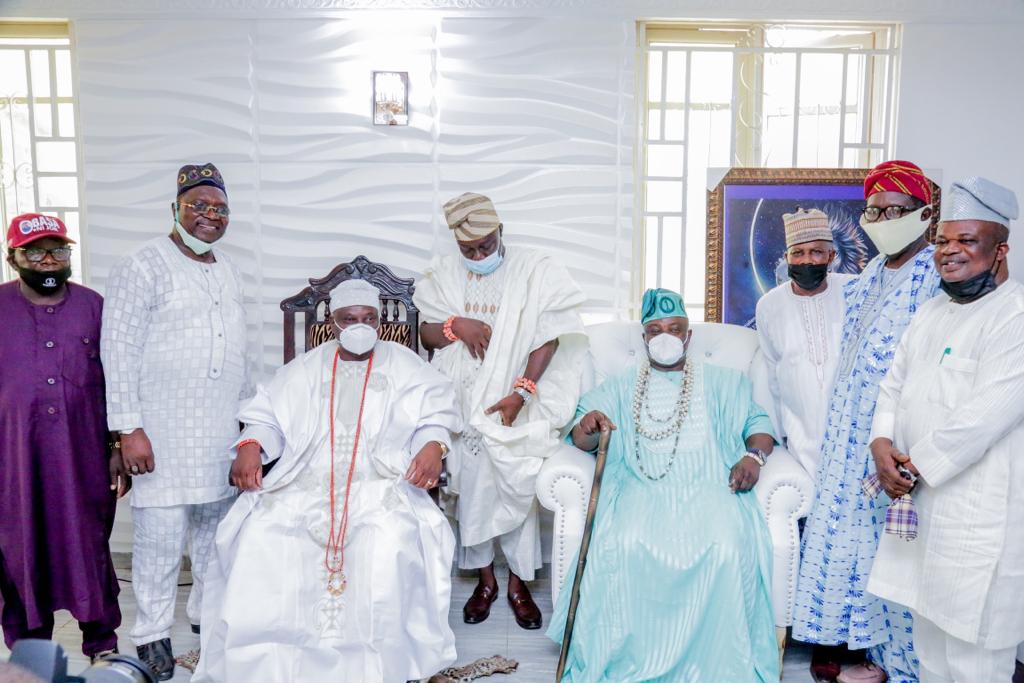
Speaker Obasa made the plea on Tuesday at the palace of the Olota of Otta, His Royal Majesty, Prof Adeyemi Obalanlege, where he was honoured with the traditional title of Jagunmolu Taiyese of Otta Awori kingdom.
While thanking the Olota for the honour, Obasa commended the monarch for propagating the Yoruba tradition saying this had reflected in the way the monarch and the Olota-in-council spoke Yoruba language all through the event.
“Beyond your educational status, you still limited yourself to our own mother-tongue. I have been to many palaces and have always maintained that the royal fathers should always distinguish our culture before anyone and in any place.
“How do we do this? It is by using our mother-tongue to communicate with whosoever the visitor is, no matter the status and wherever he comes from. That is one of the sure ways we can propagate and preserve our custom and tradition.
The Speaker noted that the need to preserve the language, custom and culture of the Yoruba race resulted in the decision of the Lagos State House of Assembly to carry out plenary activities in the native language on Thursdays.
He said the House reasoned that promoting the language during plenary would help more residents understand some of the laws that guide their daily activities.
“We have also agreed that all the laws passed by the House would now be translated into Yoruba for the benefit of those we are representing.
“When Christianity was introduced to Nigerians, their holy book was translated into Yoruba. The holy book of the Muslims has also been translated into Yoruba for more people to understand,” the Speaker said.
He urged parents to speak the language at home as, according to him, understanding one’s native language does not hinder one from being able to speak English fluently.
Earlier, the Olota had praised the Speaker for the successes his leadership of the Lagos Assembly had registered saying the activities of the House had also positively impacted on the Awori people in the state.
The traditional ruler urged the Speaker to see and take Otta as his second home.








celebrity radar - gossips
Shadows of Greed: Alison‑Madueke’s UK Corruption Trial and the Cost of Power
Shadows of Greed: Alison‑Madueke’s UK Corruption Trial and the Cost of Power
By George Omagbemi Sylvester | Published by SaharaWeeklyNG.com
When today’s headlines speak of corruption, they often do so as a distant abstraction as a vague moral failure with little bearing on everyday life. But the unfolding corruption trial of Diezani Alison‑Madueke in a London court throws into glaring relief the real, human and systemic consequences of unchecked power merged with self‑interest. This is not merely the story of an individual on trial; it is a lens through which the world must scrutinise the fragile intersection of governance, resource wealth and public trust.
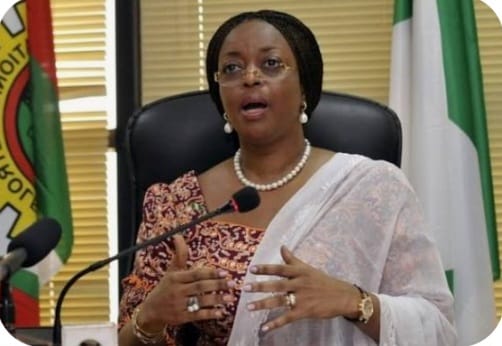
Diezani Alison‑Madueke, once Nigeria’s Minister of Petroleum Resources and later the first woman president of the Organisation of the Petroleum Exporting Countries (OPEC), now stands accused before Britain’s Southwark Crown Court of multiple counts of bribery and conspiracy. The accusations against her (which she vehemently denies) paint a portrait of opulence allegedly funded through pay‑to‑play politics that ignored the public good and rewarded those who could feed her lavish lifestyle.
A Life in Oil, a Life Under Scrutiny.
Alison‑Madueke’s tenure as petroleum minister, from twenty ten until twenty fifteen, coincided with a period of immense oil revenue for Nigeria, a country sitting atop the largest oil reserves in Africa. Yet that wealth did not translate into broad‑based prosperity for the citizens she was meant to serve. Instead, British prosecutors allege that her privileged access to that sector was exploited for personal gain.
According to court indictments, she is accused of accepting bribes not in vague promises, but in concrete, high‑value luxury benefits and including cash, chauffeur‑driven vehicles, private jet travel, the use of multiple high‑end properties in London, funded renovations, personal household staff and even costly designer goods purchased at establishments like Harrods and Louis Vuitton. Prosecutors told the court these were not mere gifts, but “financial or other advantages” given by industry players “who clearly believed she would use her influence to favour them.”
The former minister, now sixty‑five, has pleaded not guilty to all charges. Alongside her in the dock are two co‑defendants: oil executive Olatimbo Ayinde and her brother, Doye Agama, both of whom deny the charges connected to the same alleged bribery scheme.
The Anatomy of Allegations.
What makes this trial especially significant is the detail and scale of the alleged benefits. Prosecutors have asserted that Alison‑Madueke was offered:
Access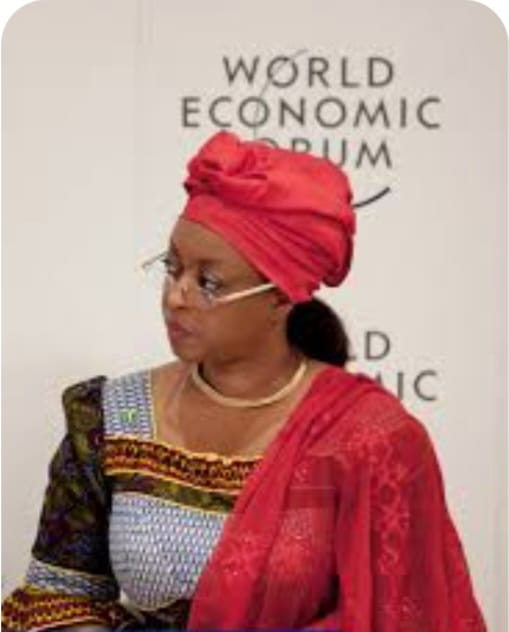 to luxury homes and private residences in London, bought and maintained by associates seeking lucrative Nigerian contracts.
At least a six‑figure sum in direct cash payments.
Private jet flights and schooling fees for her children.
Vast quantities of luxury goods and services from upscale retailers.
While the prosecution concedes it has not yet produced direct evidence that she awarded specific contracts to individuals who should not have had them, it maintains that the acceptance of such benefits by a public official who oversaw multi‑billion‑dollar contracts is inherently improper and contrary to fundamental principles of public service.
Voices of Accountability.
The allegations have drawn sharp commentary from observers worldwide who see the trial as emblematic of broader governance challenges across resource‑rich nations.
Nigerian social justice advocate Aisha Bello has observed, “Corruption is not a peripheral defect in governance but a corrosive disease that accelerates inequality. When leaders treat public office as a gateway to private treasure, citizens pay with lost opportunities and diminished hope.”

Similarly, Professor John Githongo, a renowned anti‑corruption scholar, argues that “Transparency and accountability are not optional extras in public administration; they are indispensable pillars of a just society. When the public good is subverted for private gain, the very fabric of trust unravels.”
These sentiments resonate deeply in contexts where natural wealth exists alongside persistent challenges in education, healthcare and infrastructure also illustrating that corruption is not an isolated moral failing, but a fundamental impediment to development.
Corruption Beyond Borders.
What makes this case notable on the global stage is not just its connection to a former minister, but its international footprint. The United Kingdom’s National Crime Agency (NCA) has taken up the case because many of the alleged transactions (the properties, cash flows, and luxury perks) touched British jurisdiction. This underlines a critical truth: corruption today is not contained by national boundaries. Illicit financial flows, luxury goods, and asset holding often travel across continents, making international cooperation essential in pursuit of justice.
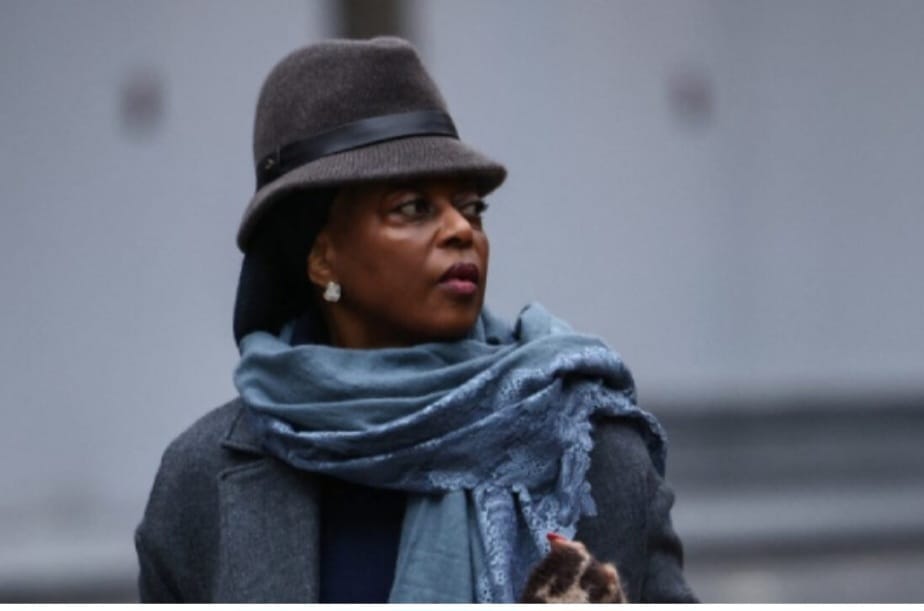
Andy Kelly, head of the NCA’s International Corruption Unit, stated during earlier proceedings that investigations revealed “financial rewards” accepted by Alison‑Madueke that were “suspected to relate to the awarding of multi‑million‑pound contracts.” He emphasised that such impropriety has “devastating consequences for developing nations.”
This collaborative legal action reflects a growing global consensus: no public official, regardless of stature, should be beyond accountability. When a former head of state institutions is brought before a foreign court, it is not just a legal milestone but it is a moral affirmation of shared values in the rule of law.
The Nigerian Context.
In Nigeria, the oil sector has long been both a blessing and a burden. Despite generating huge revenues, mismanagement and corruption have often undermined potential gains for the wider population. A 2023 report by Nigeria’s statistics agency ranked corruption as one of the most significant challenges facing the country. It is a sobering backdrop that shapes how this trial is interpreted at home and abroad.
Former officials and critics alike have noted that transparency in governance is not merely a matter of legality but one of national dignity. As legal scholar Dr. Funke Adekola puts it, “When leaders betray public trust, they erode the very essence of citizenship. Restoring that trust requires not just trials, but systemic reform in values and institutions.”
What Lies Ahead.
The trial, expected to stretch over several months of testimony and evidence examination, is itself a test of judicial endurance and political will. It presents complex questions about proof, credibility, and moral accountability. Yet beyond the sterile halls of courtrooms, its wider implications reverberate in global public discourse about how nations manage wealth and how societies hold leaders accountable.
For ordinary citizens around the world, this case is riveting not because of luxury houses or private jets, but because it forces a collective reckoning: What price should a society pay when those entrusted with public resources place personal enrichment above national welfare?
Summative Insight.
As Diezani Alison‑Madueke’s trial unfolds before the world’s eyes, it stands as a stark reminder that the fight against corruption must be relentless and unflinching. It exposes the corrosive effects of unethical conduct at the highest levels of power and underscores the necessity of accountability, irrespective of nationality or office.
In the final analysis, justice is not only about punishment, but about restoring faith in the systems meant to protect the common good. As the British court hears testimony and as evidence is meticulously weighed, the world watches a profound test of justice, one that could shape how future generations understand leadership, integrity and the true cost of power.
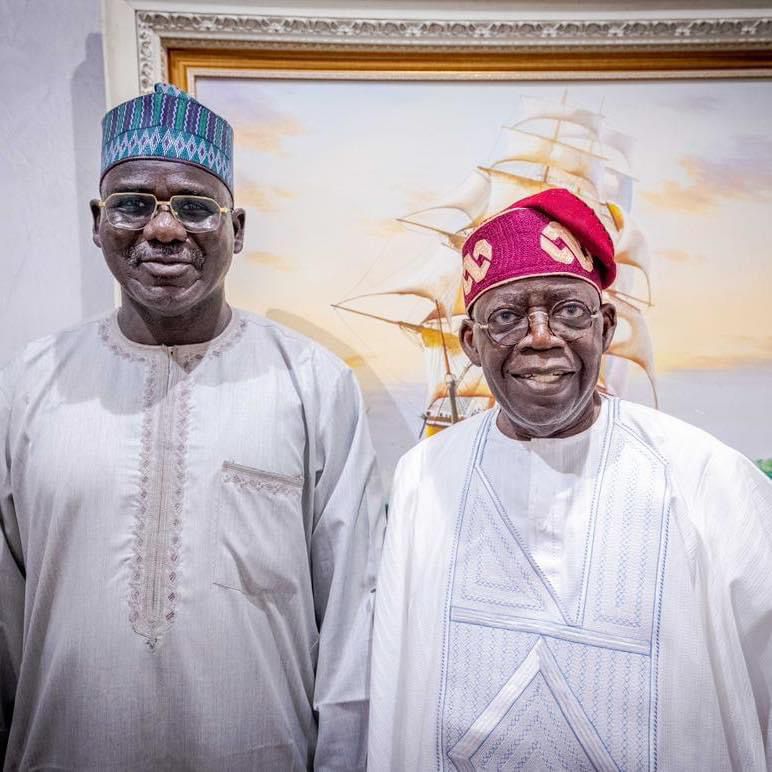
The Resilience in a Moment — Twenty Positive Impacts of a Human Event
By Tukur Buratai
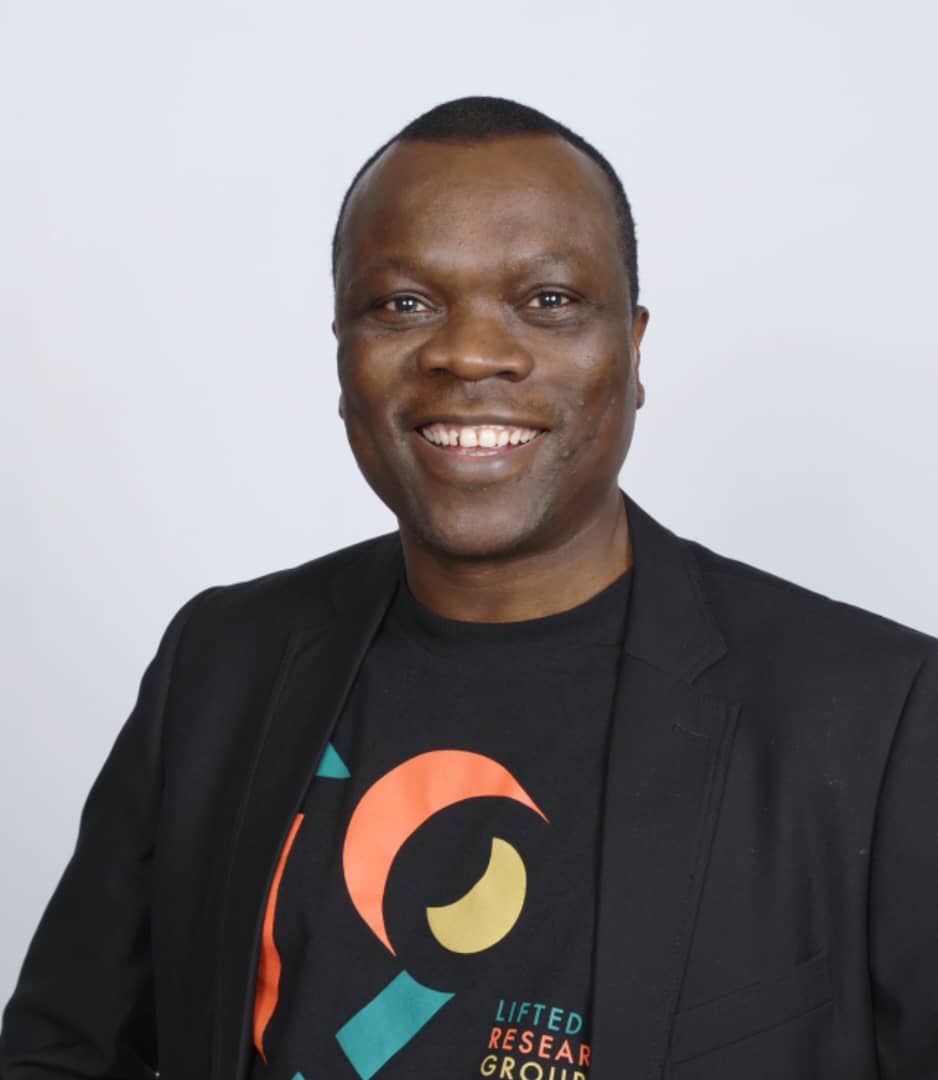
Fela Created the Game, Wizkid Mastered It — Ope Banwo
Music executive and Stingomania Records founder, Dr. Ope Banwo, has weighed in on the recurring comparisons between Afrobeat icon Fela Anikulapo-Kuti and global superstar Wizkid, offering a perspective he says puts respect on both names without forcing an unnecessary rivalry.
According to Banwo, the debate misses a key point: the two artistes are not competitors, but products of different moments in music history.
“Fela created the game. Wizkid mastered it,” Banwo said.
He described Wizkid as one of the most successful African musicians of the modern era, praising his global reach, consistency, and ability to take Afrobeat to mainstream audiences across continents.
“Wizkid is a certified global superstar — hit records, international awards, sold-out arenas, and undeniable influence. He has taken Afrobeat to places many of us never imagined,” Banwo stated.
However, Banwo noted that Fela’s contribution operates on a different level entirely, one that transcends commercial success.
“Fela didn’t just make music; he invented a sound, a movement, and a cultural language. Afrobeat did not exist until Fela created it. He wasn’t chasing charts — he was shaping identity, resistance, and consciousness through music,” he said.
The Stingomania Records founder explained that while Wizkid represents the peak of Afrobeat’s global success, Fela represents its origin.
“You compare Wizkid with the giants of his generation — Burna Boy, Davido, Drake. But Fela belongs in the category of creators and revolutionaries. He changed the ecosystem itself,” Banwo added.
Banwo stressed that comparing the two directly ignores the natural evolution of music.
“You don’t compare the inventor of the game to the player who perfected it. Wizkid is playing at an elite level, but he is playing on a field Fela built,” he said.
He concluded by emphasizing that acknowledging Fela’s foundational role does not diminish Wizkid’s greatness.
“Wizkid is great — no debate there. But Fela is legacy. One mastered the game; the other created it. Both deserve respect, but they are not in the same lane.”


-

 celebrity radar - gossips5 months ago
Why Babangida’s Hilltop Home Became Nigeria’s Political “Mecca”
-

 society5 months ago
Power is a Loan, Not a Possession: The Sacred Duty of Planting People
-

 Business6 months ago
Batsumi Travel CEO Lisa Sebogodi Wins Prestigious Africa Travel 100 Women Award
-

 news6 months ago
THE APPOINTMENT OF WASIU AYINDE BY THE FEDERAL GOVERNMENT AS AN AMBASSADOR SOUNDS EMBARRASSING