
Politics
Okpe is the most short-changed ethnic group in Delta State – Okpe Leaders

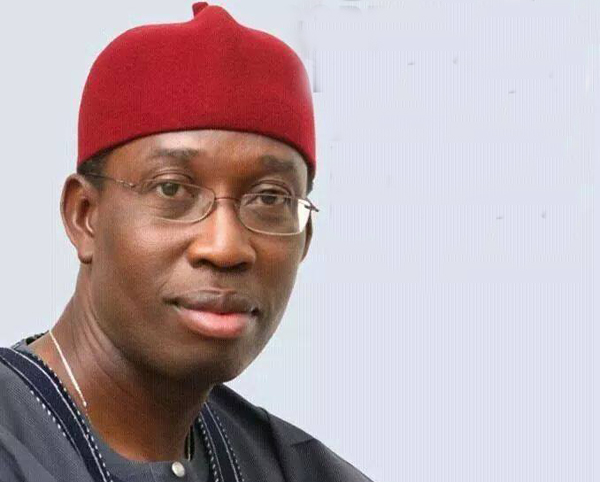
Okpe is the most short-changed ethnic group in Delta State – Okpe Leaders
Notable Okpe leaders on Sunday continued the campaign of Okpe as a distinct ethnic nationality in Nigeria.
‘’ The Okpe Union strongly affirms that Okpe is Okpe and not a sub-group or a clan of any other ethnic nationality. The letter of Udogun Okpe is an example of a person cutting his nose to spite his face. The Udogun Okpe letter has brought the Okpe Kingdom to global ridicule’’.
A publication authored by the Udogun-Okpe last week made several spurious statements discrediting the letter of the Okpe Union addressed to the Governor of Delta State, Dr. Ifeanyi Okowa on the 22nd of June 2021 requesting for the recognition of Okpe as a distinct ethnic nationality.
But the prominent leaders in Okpe Kingdom on Sunday reaffirmed Okpe Union’s commitment to the agitation for the reinstatement and recognition of Okpe as a distinct ethnic nationality.
‘’The NEC received the Udogun Okpe open letter to the Governor with shock, disbelief and regret as such a poorly worded piece, which contained several expressions intended to pit some Okpe nationals against others, is claimed to have emanated from the highest traditional authority of Okpe’’.
In a communiqué of the Okpe Union from the emergency meeting of the national executive council, held on July 15 and 17, 2021, the union vowed to intensify its sensitization activities in Okpe Nation regarding the fact that Okpe is a distinct ethnic nationality as well as the benefits of recognizing Okpe as a distinct ethnic nationality.
‘’NEC shall continue its liaison with the Government of His Excellency, Senator Dr. Arthur Ifeanyi Okowa and the Delta State House of Assembly for the restatement and recognition of Okpe as a distinct ethnic nationality. The attainment of Okpe Identity is a sacred historical mission of the Okpe Union’’ the leaders stated.
Signed by the Okpe Union President General, Professor Igho Nature, and General Secretary, Barrister Akpederin Kingsley, the union urged the Okpe traditional ruler to reconcile his present position with the position he brilliantly espoused in defence of Okpe Identity in his Keynote Address at the 3rd AGM of the Okpe Union of North America on September 1, 2007, at College Park, MD, USA.
“Your activities have helped tremendously to positively define, sustain and advance the place as well as the interest of Okpe in the comity of Nigerian nationalities’’
The Okpe monarch was quoted as saying that Okpe Kingdom was a unique ethnic nationality.
‘’Located in the central senatorial district of Delta State in Nigeria, Okpe is a unique ethnic nationality. It has distinctive roots in ancient history, tradition, culture, custom, and language. The historical tract of the Okpe people is conclusive. The Okpe people are the most populous monolithic ethnic nationality in Delta State. Our people are rooted in-migration from the Bini Kingdom. This historical experience is similar to most other ethnic nationalities of the Western Niger Delta. Of all these nationalities, however, Okpe history, language, tradition, and culture are closer to those of Bini which form part of the Edo group of languages.”
The Okpe leaders noted that the authors of the Udogun Okpe rejoinder clearly have no understanding of the benefits of recognizing Okpe as a distinct ethnic nationality
‘’The Okpe people will immediately occupy their pride of place in the comity of ethnic nationalities in Delta State and Nigeria as the misconception that Okpe is under another ethnicity would be buried forever. As an ethnic nationality that exclusively owns at least two local government areas in Delta State, the Okpe Nation shall immediately be recognized in DESOPADEC and therefore be entitled to an exclusive Commissioner and an Executive Director like our neighbour oil-producing ethnicities of Delta State. The advantages of this include a direct budget for the area, specific slots for different empowerment programs and policies e.g., bursary awards for Okpe students which they now share with Urhobo students under crass discrimination, and many other direct allocations’’. ‘
The Union went further to say that ‘’ the development and teaching of Okpe language in all schools in Okpeland and beyond can generate immediate employment for Okpe language teachers which other fully recognized ethnicities currently benefit’’
The Union enlightened that the ‘’Okpe language will occupy its place in public broadcast be it radio and television as well as interpretation in churches and other public places’’
‘’Okpe music, traditional masters of ceremonies and orators shall flourish thereby generating more local employment. The development of the Okpe language will promote the survival of the language and also enhance literary advantages in the academics of Okpe children as African languages have proven to have an appreciable impact in the arts generally. The self-esteem for Okpe nationals that the recognition of Okpe ethnicity will bring about is unquantifiable. A robust self-esteem is a sine qua non for success in businesses, politics, and several other vocations. Politically, Okpe shall become a recognized bloc that is negotiated with on its own recognition with the cards placed on the table objectively and equitably. The crisis of identity which has been faced by Okpe nationals, who have, since colonial times, rejected the burden of a false identity, will finally be lifted from the shoulders of the Okpe people’’.
The angry Okpe leaders said the Okpe Union was registered to function with an unambiguous constitution
‘’The Okpe Union has the highest respect for the Orodje of Okpe Kingdom. The Okpe Union affirms that the Udogun Okpe is the apex Traditional Council of Okpe Kingdom. The Okpe Union is the apex Socio-cultural organization and membership-based organ of all Okpe, legally registered to so function with an unambiguous constitution. Okpe Union shall continue to execute this function in Okpe Nation across all the 13 Districts. The registered office of the Okpe Union is No. 67 (new No. 65), Moshalashi Street, Ikoyi, Lagos. This secretariat building of the Okpe Union named “Okpe House”, Obalende, Lagos is the property of the Okpe Union and the fact that it is the registered office of the Okpe Union can be verified with the Corporate Affairs Commission. It is true that the Union had in principle agreed to build a befitting headquarters in Okpeland, which is still a work in progress’’.
The Okpe Union leaders declared that ‘’the dissolution decree of October 3, 2020, is a breach of the sacred history of unbroken democratic transition in the Okpe Union in the over 91(ninety-one) years of existence and an unconstitutional action by the Orodje to convert the Okpe Union into an administrative arm of the Palace’’.
‘’The October 3, 2020, purported dissolution of the democratically elected leadership of the Okpe Union and banning of NEC members from contesting elective positions by HRM, Orhue 1, the Orodje of Okpe Kingdom is ultra vires and a violation of the Okpe Union Constitution’’
‘’As a legal entity, the procedure for dissolution or removal of any elected official of the Okpe Union and election of a National Executive Council of the Union is clearly provided for in its constitution. Therefore, any action by any person or group of persons purporting to remove or dissolve the democratically elected Okpe Union leadership outside the provisions of its Constitution is not binding, void and of no effect whatsoever’’.
The union condemned the attempt to return to the deceased concept of the divine rights of kings.
The leaders commended the courage of members of the Okpe Union from branches all over the country whose delegates met in the General Assembly of the Union on the 14th of November 2020 which resolved to reject the 3rd October, 2020 decree by the Orodje and opted for democratic elections.
‘’The Okpe Union recognizes the elected Okpe Union National Executive Council led by Prof. Igho Natufe that emerged during the national elections of the union at the Okpe Union General Assembly of May 15, 2021, and the purported nine-man interim regime imposed by the Orodje on October 3, 2020, lacks the authority and legitimacy to speak on behalf of the Okpe Union and the Okpe Nation. It is an illegal entity and a disgrace to democratic practice. It is important to highlight the fact that only two out of the nine persons imposed interim group are members of the Okpe Union. It is, therefore, a contraption unknown to the Okpe Union’’.
According to the union, ‘’The democratically elected leadership of the Okpe Union that emerged at its General Assembly possesses both historical and legitimate rights to speak on behalf of the Okpe Union and the Okpe Nation.
‘’ The capacity of the Okpe Union to speak on behalf of the Okpe people was clearly acknowledged in the open letter to the Governor of Delta State written for Orhue I, Orodje of Okpe and the Udogun Okpe on the 13th of July 2021’’.
The union leaders continued ‘’It is necessary for the Okpe public and friends of the Nation to know that for over six months from the date of the October 3, 2020 Orodje’s decree, the Okpe Union elected leadership had sought mediated ways out of the differences which were all rebuffed by the palace’’.
‘’Since its inception on May 16th, 1930, the Okpe Union played and continues to play critical roles in the growth and development of the Okpe Kingdom. The restoration of the Okpe Monarchy in 1945, after almost 200 years of interregnum, was due primarily to the fearless and selfless agitations and leadership of the Okpe Union. Thus, the Okpe Union birthed the modern Okpe Monarchy. The Okpe Union has been an independent organization from the administrative control of all Orodjes since 1945. This separation of powers has served Okpe Kingdom very well’’.
The leaders affirmed that ‘’the Orodje and the Udogun Okpe are not the ultimate authority to decide the fate of the Okpe people, without consulting the Okpe Agbamua-eni (Okpe People’s Assembly) which comprises the Udogun Okpe, representatives of all Okpe communities, and the Okpe Union’’.
‘’We remind the Orodje of the efforts of the Okpe Union in getting Nigerian post-secondary institutions to recognize Okpe students associations in their respective campuses. We hate to contemplate the difficulties and setbacks the letter of Udogun Okpe of July 13, 2021, is going to cause to our children’’.
The leaders eulogized the founding fathers of the Okpe Union for raising the Okpe Kingdom to an enviable height.
‘’The Okpe Union reaffirms its selfless services to the Okpe people and Okpe Nation as it has done over the decades with some notable successes which include the prosecution of landmark cases to retain the ownership of Sapele and other areas of Okpeland; the sponsorship of several Okpe sons overseas with Okpe Union scholarships, and the launching of the fund-raising process which saw the building of the modern Orodje of Okpe Palace, Orerokpe’’.
The leaders appealed to all members of Okpe Union and Okpe people the world over to be calm and law abiding as the vision of the founding fathers of the Okpe Nation for a stable and constitutionally limited monarchy which serves only the interests of the Okpe Nation shall never be extinguished’’.





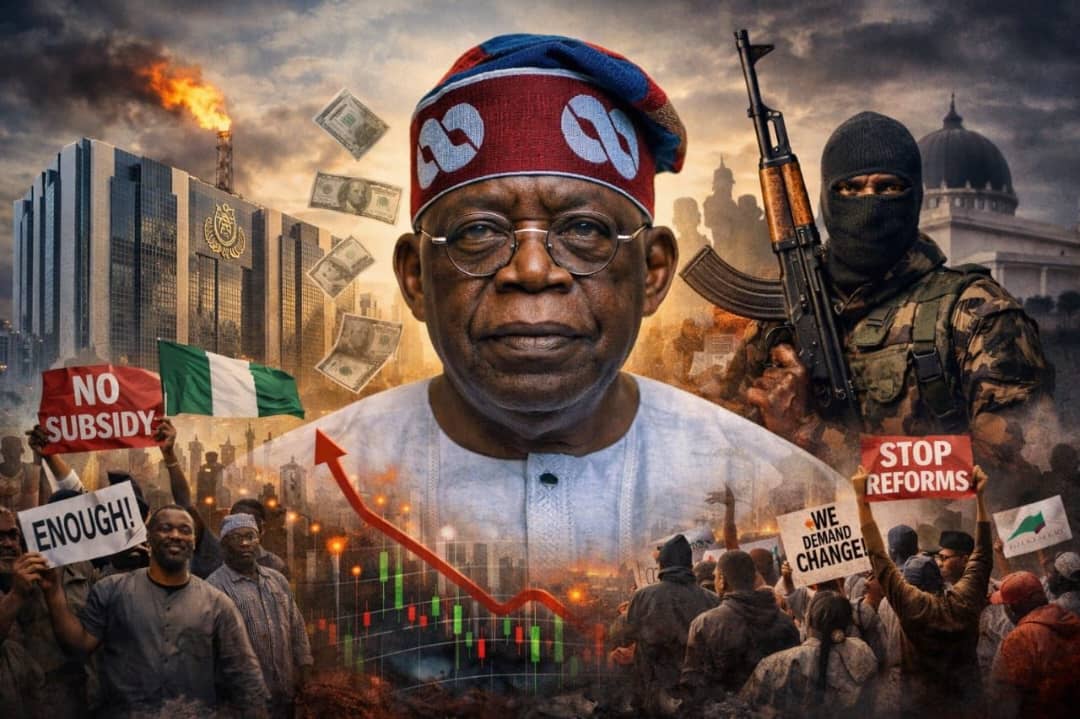
Are You Better Off? Two Years On, Nigerians Ask Hard Questions
Two years after this administration took office, Nigerians are confronted with a hard and unavoidable question: are we truly better off? For many households, the answer is no. The cost of living has risen sharply, purchasing power has collapsed, and daily survival has become a struggle. What was promised as renewed hope now feels like renewed hardship, especially for ordinary Nigerians who bear the brunt of economic decisions.
Since 2024, an estimated 14 million more Nigerians have slipped into poverty, pushing the total number of people living below the poverty line to about 129 million. This is not just a statistic but a human tragedy. It speaks to empty kitchens, withdrawn children, shuttered small businesses, and families forced to choose between food, education, and healthcare. At such a moment, leadership is expected to respond with empathy, urgency, and clear welfare policies. Instead, Nigerians hear promises without visible plans or measurable outcomes.
History offers a powerful contrast. Chief Obafemi Awolowo built his leadership on a simple philosophy: the welfare of the people must come first. His introduction of free universal primary education in the Western Region transformed literacy and opportunity, while free healthcare for children and disciplined public finance proved that social welfare and fiscal responsibility can coexist. His vision showed that government exists to lift the many, not protect the few.
That tradition of people centred governance did not end with Awolowo. In recent years, the Buhari administration rolled out the largest social investment programme in Nigeria’s history. Initiatives such as N Power, conditional cash transfers, school feeding, and trader support schemes reached millions of vulnerable Nigerians. While imperfect, these programmes acknowledged poverty as a national emergency and treated welfare as a core responsibility of government.
At the state level, examples from Osun and Kaduna reinforced the same lesson. In Osun, Rauf Aregbesola prioritised youth employment, school feeding, social welfare for the elderly, digital learning tools, and massive school infrastructure, earning national and international recognition. In Kaduna, Nasir El Rufai expanded free education, scholarships, healthcare access, and women empowerment programmes, proving that subnational governments can deliver real social protection when there is political will.
Aregbesola’s administration launched the Osun Elementary School Feeding and Health Programme (O-MEALS), which provided daily meals to over 250,000 pupils in public primary schools across the state. The programme directly empowered more than 3,000 local food vendors and caterers, most of them women, while creating a steady market for local farmers, especially poultry farmers, vegetable growers, and food suppliers. Beyond improving school attendance and nutrition for pupils, O-MEALS reduced the financial burden on parents and injected income into rural economies. Complementing this was the O-YES youth empowerment scheme, which engaged about 40,000 young people in public works, community services, and vocational training. Massive investments in modern school infrastructure, digital learning tools (Opon Imo), social welfare support for the elderly, and health initiatives earned Osun national and international recognition. These interventions demonstrated that with political will, subnational governments can protect the vulnerable, stimulate local economies, and deliver inclusive development even in fiscally constrained environments.
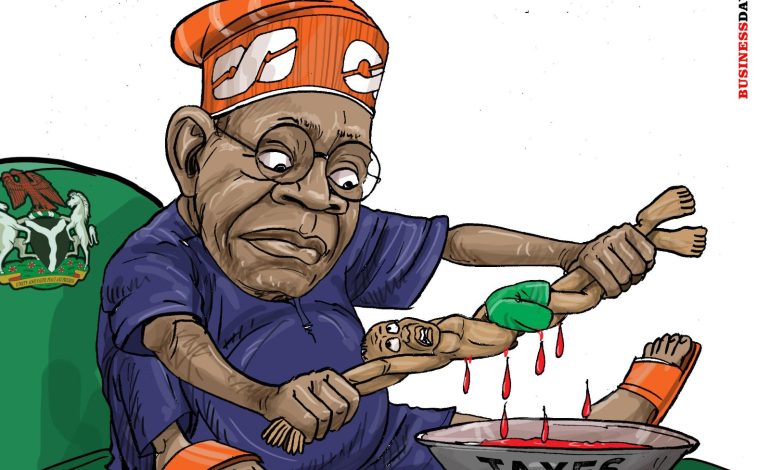 ;
;
These policies are not distant memories or theoretical ideas. They are recent, verifiable interventions that improved lives and expanded opportunity. They demonstrate that governance rooted in compassion, planning, and accountability can soften economic shocks and protect the vulnerable, even in difficult times.
Today, many Nigerians feel abandoned by a system that appears more responsive to elites than to the masses. The absence of strong, visible welfare policies in the face of rising poverty raises a troubling question about our national priorities. A society that allows suffering to deepen without intervention risks losing not just stability, but its moral compass.
Nigeria must return to a simple principle: leadership exists to serve the people. A country where the child of a poor family has the same chance as the child of the powerful is not built by slogans, but by deliberate policies. Nigerians must demand better governance, resist the temptation to trade their votes for short term gain, and insist on a future where leadership truly cares.
A Nation in Distress: How APC’s Years in Power Have Deepened Nigeria’s Crisis
By George Omagbemi Sylvester | Published by saharaweeklyng.com
“A Nation at the Brink — Why APC’s Failures Demand a New Political Direction.”
Nigeria stands today at a perilous crossroads with economically strained, socially fragmented and morally wounded. The promise that once accompanied the rise of the All Progressives Congress (APC) has given way to widespread disillusionment. What was sold as a vehicle for national renewal has, in reality, become a synonym for hardship, division and stagnation. This is not hyperbole. It is the sobering verdict of millions of citizens whose lived realities speak louder than partisan spin.
From the economy to national unity, from domestic politics to global standing, from tribal tensions to religious relationships, the APC’s record has been a catalogue of missed opportunities and deepening crises. Nigeria deserves better. Nigerians deserve another party, one that puts the people above politics, unity above division and progress above self-interest.
ECONOMIC DECLINE: Hunger, Poverty, and Eroded Hope.
The heart of any nation’s stability is its economy. On this front, the APC’s performance has been deeply disappointing. Bold reforms such as the removal of fuel subsidies and foreign exchange liberalisation were touted as necessary moves to stabilise the economy and attract investment. Yet, for millions of ordinary Nigerians, these policies have translated into unbearable hardship. Prices of essential goods have soared, inflation has blasted household budgets and poverty has become entrenched in everyday life.
Critics inside and outside Nigeria point to a stark reality: despite claims of economic recovery, the benefits remain out of reach for the majority. Food inflation, transport costs and the cost of living have escalated beyond what most families can afford. Various reports highlight that poverty and food insecurity have worsened, even as macroeconomic figures are debated.
As economist and social critic Ha-Joon Chang once reminded the world, “An economy’s success should be measured by how its most vulnerable citizens fare, not by abstract figures on paper.” Today, Nigeria’s most vulnerable are sinking deeper into deprivation.
TRIBAL AND RELIGIOUS RELATIONSHIPS: Division Instead of Unity.
Nigeria’s diversity is its strength with a mosaic of peoples, cultures and histories. Yet under the APC, this diversity too often became a source of division rather than a foundation for unity. Competing ethnic interests have periodically been manipulated for political advantage, reopening old wounds and aggravating suspicions between communities. Observers have noted that political rhetoric and strategic statements have at times undermined national cohesion, diverting attention from governance failures to age-old regional tensions.
A healthy polity celebrates differences while forging shared purpose. A government should foster cooperation across tribes and religions not exploit fault lines for political survival. Nigerian scholar and author Wole Soyinka’s enduring wisdom resonates here: “The greatest threat to a nation is the corruption of its conscience.” A leadership that fuels division corrodes the moral fabric of the nation.
REGIONAL RELATIONSHIPS: Neglect and Fragmentation.
A nation for the people must not be a nation divided. Though many Nigerians feel left behind. Regions that should be engines of growth have languished under policies that prioritise political expediency over structural development. The promise of balanced regional development has often been drowned by centralised decision-making that pays lip service to inclusivity but delivers little in tangible benefits.
Nigeria’s unity must be more than rhetoric; it must be reflected in policy outcomes, improved infrastructure and equitable opportunities for all regions. When citizens feel marginalised or unheard, the very idea of a united nation weakens.
PARTY RELATIONSHIPS: Internal Disarray and Erosion of Trust.
Political parties thrive on discipline, vision and inclusive leadership. Yet the APC has struggled with internal cohesion. Public disputes, defections and power struggles have underscored deeper conflicts over direction and purpose. Instead of engaging critics with constructive dialogue, party rhetoric too often resorts to personal attacks and defensive posturing, closing off spaces for genuine critique and reform.
Strong parties are not built on silencing dissent but on embracing diverse viewpoints and using them to strengthen policy and practice. The APC’s internal dynamics reflect a larger problem: a disconnect between leadership and the lived experiences of citizens.
THE NATIONAL ASSEMBLY: Compromise Over Accountability.
A robust legislature is a cornerstone of democratic governance — a check on executive power and a voice for the people. Yet, under APC dominance, the National Assembly has often appeared more an instrument of acquiescence than one of accountability. Rather than provide independent oversight, it has been criticised for aligning too closely with executive priorities, even when those priorities fail to address fundamental public needs.
Democracy is not measured by elections alone but by the capacity of institutions to hold leaders to account and to represent the interests of all citizens not just a political elite.
INTERNATIONAL RELATIONS: Reputational Strains and Missed Opportunities.
On the global stage, Nigeria’s voice once carried remarkable moral weight in Africa and beyond. Though when domestic weaknesses are projected internationally (from economic instability to insecurity) that voice diminishes. Diplomatic engagement demands a strong, confident nation, secure in its foundations and clear in its values.
While governments change and global dynamics shift, a consistent lesson from international relations scholars is that credibility comes from internal strength. A nation beset by internal anxieties cannot project the confidence needed to lead on the world stage.
HUMANITY FIRST: Policies That Hurt the People.
Above all, governance must centre on human dignity. When policies deepen suffering, particularly for the most vulnerable, leadership has lost its moral compass. The APC era has witnessed protests, public frustration and grassroots movements demanding dignity and relief from hardship. The “End Bad Governance” protests, for example, were driven by widespread discontent with rising hunger and economic distress with realities far removed from official narratives of ‘RECOVERY’.
True leadership listens first to the voices of its people not to spin doctors or political strategists.
THE TIME FOR CHANGE IS NOW.
This is not an indictment born of bitterness, it is a call to action. Nigeria deserves a politics that places the welfare of citizens above all else. A politics that unites rather than divides. A politics that fosters prosperity, justice and opportunity for every Nigerian.
Renowned Nigerian historian and scholar Chinua Achebe once wrote that “Until the lion learns to write, every story will glorify the hunter.” It is time for Nigerians themselves (not the political elite) to reclaim the narrative of this nation.
The APC’s record across economy, unity, governance and leadership is a compelling reason to consider another party with one that builds bridges, uplifts citizens and strengthens institutions. Nigeria’s journey toward greatness cannot wait another decade in the hands of leaders who promise change but deliver distress.
Let this be the clarion call for a new chapter with one defined by responsibility, humanity, and genuine progress.
Politics
Governor Dauda Lawal Commissions Key Strategic Projects in Tsafe LGA, Commits to Responsive Development
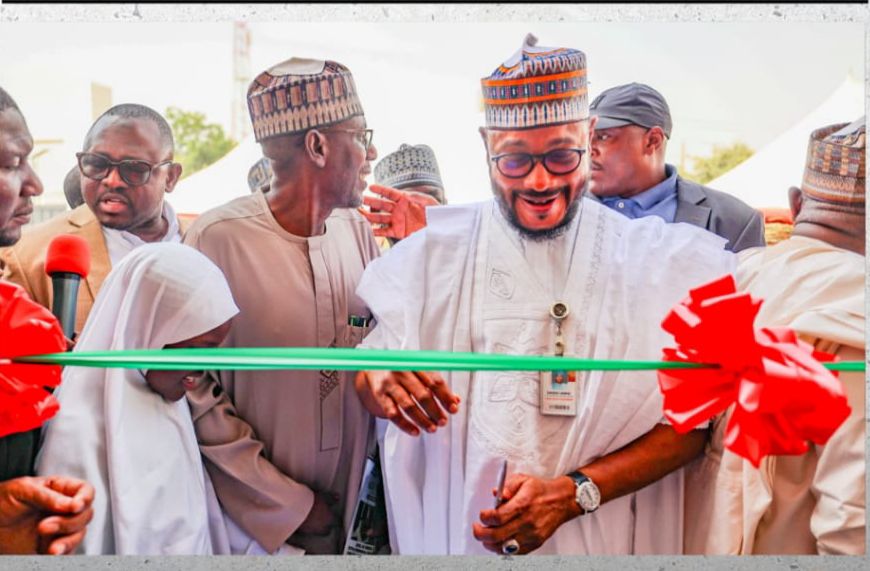
Governor Dauda Lawal Commissions Key Strategic Projects in Tsafe LGA, Commits to Responsive Development
In a significant display of commitment to the people of Zamfara State, Governor Dauda Lawal emphasized the importance of development that is not only visible but also functional and responsive to the community’s needs. On Friday, he inaugurated five pivotal projects in the Tsafe Local Government Area, aimed at enhancing the quality of life for residents and bolstering local infrastructure.
According to a statement released by the governor’s spokesperson, Sulaiman Bala Idris, the projects unveiled include a fully reconstructed modern motor park, a refurbished market, a rehabilitated educational institution, an upgraded and equipped general hospital, and a renovated emir’s palace. Each of these initiatives plays a crucial role in various aspects of community life, encompassing leadership, education, healthcare, commerce, and mobility. The governor underscored that these projects are designed not only to serve practical needs but also to instill a sense of pride and ownership among the residents.
During the commissioning ceremony, Governor Lawal highlighted that these five facilities represent the commitment of his administration to fortify public institutions, revitalize infrastructure, and enhance the palpable impact of governance on the populace. “The reconstructed Emir’s Palace in Tsafe stands as a symbol of continuity, authority, and cultural identity,” he stated. He further noted the essential role of traditional institutions in grassroots governance, underscoring their function as peacemakers, custodians of values, and community partners. “This palace’s reconstruction reflects our respect for tradition and acknowledges the pivotal role of traditional rulers in maintaining harmony, resolving conflicts, and fostering unity. Our administration will continue to collaborate with these trusted allies to rebuild and rejuvenate Zamfara State.”
In addressing the issues of education and human capital development, the governor declared, “The College of Health Technology in Tsafe plays a critical role in training health professionals who provide essential care to the community. By enhancing the school’s environment and infrastructure, we are investing in the future competence and confidence of these future health workers. Renovating this college strengthens our healthcare foundation and supports the development of a skilled, service-oriented workforce.”
Linked to these educational improvements is the comprehensive rehabilitation and re-equipping of the General Hospital in Tsafe, a vital secondary healthcare facility that serves as a bridge between primary and specialized medical care. The governor explained that these upgrades are intended to elevate service delivery and enhance patient experiences while providing much-needed support to healthcare workers. “Access to quality healthcare is a top priority for our administration, and we are fully committed to strengthening health facilities across the state,” he added.
Governor Lawal also spoke about the economic implications of the newly inaugurated facilities. “Economic activity is the engine of growth, employment, and stability within our communities. The Tsafe Market and Motor Park are integral to the local economy, serving as hubs for trade, supporting farmers, vendors, artisans, and small business owners. The motor park not only connects communities but also facilitates broader economic exchanges. By enhancing these facilities, we are promoting productivity, ensuring order, and enabling sustainable livelihoods. These improvements not only boost local revenue but also promote safety and uphold the dignity of all users.”
In a call to action, the governor urged all stakeholders including traditional leaders, community members, traders, transport operators, healthcare professionals, and local authorities to take collective ownership of the newly commissioned facilities. “Public infrastructure thrives where there is a shared sense of responsibility and civic duty. Proper utilization and care of these facilities will ensure they effectively serve the community for many years to come,” he concluded, reinforcing the need for continued cooperation in maintaining and protecting these vital resources.


-

 celebrity radar - gossips6 months ago
Why Babangida’s Hilltop Home Became Nigeria’s Political “Mecca”
-

 society6 months ago
Power is a Loan, Not a Possession: The Sacred Duty of Planting People
-

 Business6 months ago
Batsumi Travel CEO Lisa Sebogodi Wins Prestigious Africa Travel 100 Women Award
-

 news6 months ago
THE APPOINTMENT OF WASIU AYINDE BY THE FEDERAL GOVERNMENT AS AN AMBASSADOR SOUNDS EMBARRASSING