Connect with us

society

Agitation For Secession Not The Solution – Obianuju Agwuna, IPAN’s Students

Published

on

Agitation For Secession Not The Solution – Obianuju Agwuna, IPAN’s Students

Agitation For Secession Not The Solution – Obianuju Agwuna, IPAN’s Students Coordinator

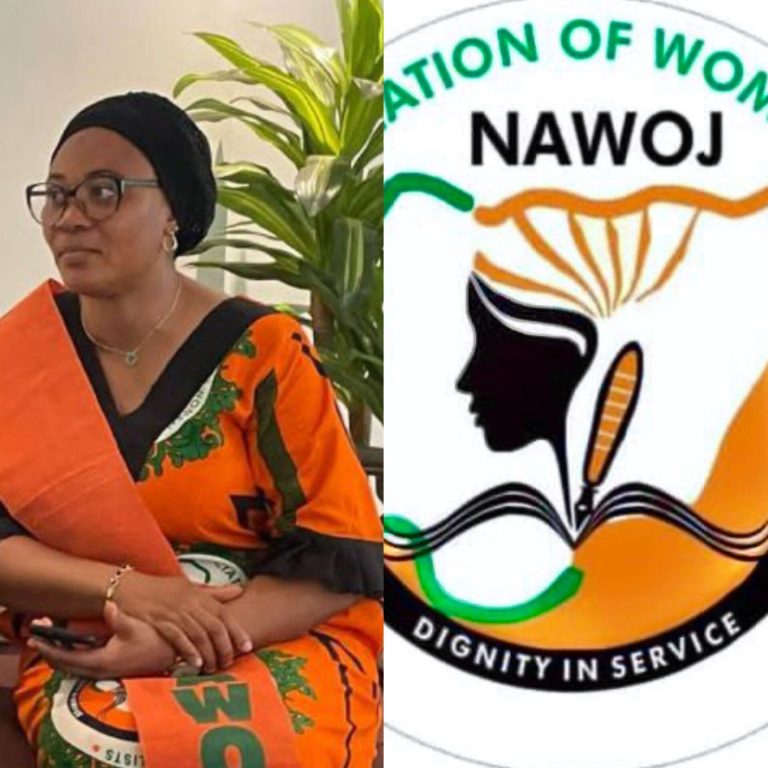
Agwuna Favour Obianuju, a 400l Pharmacy Student of the University of Nigeria, Nsukka, is the leader for Igbos For A Progressive Nigeria, IPAN’s Students wing.
Always craving for peace among Igbo youths, the young and progressive Miss Agwuna from Ukpo in Dunukofia Local Government Area of Anambra State tells us all about her challenges in her efforts at preaching peach among Igbo youths. Enjoy it…
Agitation For Secession Not The Solution – Obianuju Agwuna, IPAN’s Students
Tell us about yourself.
My name is Agwuna Favour Obianuju, a 400l pharmacy student at the prestigious University of Nigeria, Nsukka. I am from Ukpo in Dunukofia local government area, Anambra state. I speak English and Igbo fluently. I participate in social and volunteering activities. I relish writing and researching.
Why is IPAN clamoring for a united peaceful Nigeria?
IPAN is clamoring for a united and peaceful Nigeria because nobody loves war and anything that will not bring peace among all the ethnic groups can lead to war. Therefore, as we are recognized as one Nigeria, our paramount strive will be to maintain a peaceful country through peaceful dialogue and understanding of one another.
What is your message to the people who are agitating for secession?
My message to them is that agitating for secession is not the best way to deal with the situation in Nigeria. They should ask themselves if they divide, do they think there won’t be any conflict among them? So, I believe there must be a way out and that’s one of the reasons IPAN was formed; to bridge the gap between the major ethnic groups striving for secession.
What do you think are some of your roles as the national coordinator of IPAN Students Wing?
My roles include: to proclaim and create awareness of the IPAN’s ideology in schools, to let students know that secession can only ruin people instead of what people think it will bring, to seek peace among the students irrespective of their states, religions, and ethnic groups, to carry all the students along, and to ensure that there’s a peaceful existence among the students.
You have been pushing IPAN’S ideology of peace and unity in schools, how would you describe the challenge?
Being a coordinator or leader of a particular wing or group comes with myriads of challenges because if you don’t express your ideas or reasons for the establishment of the organization properly, many will see you as a jester.
You also coordinate activities concerning IPAN amongst students, how would you describe your experience with some of these students?
Students are not handily coordinated, it takes a lot to impact and convince them of the importance of a particular organization.
The reply I always get whenever I post the flyer is “are they giving us money? So, it has been a laborious thing to do but through persistent, cordial, and good communication skills, we’ve been getting some positive feedback. They are beginning to understand what IPAN has to offer.
Why do you share the vision behind IPAN?
It is because IPAN’S vision is lucid and applaudable, and with it, Nigeria will go far.
How responsive were the students in driving the objectives of IPAN?
Many of the students that have joined see IPAN’S objectives as the propeller of Nigeria’s progress, so they have agreed to participate fully in IPAN and also encourage their friends to join.
What advice would you give your fellow students on the need to embrace IPAN’s ideology?
I would advise my fellow students to know that peace and unity as stated in IPAN ideology is essential for our continuous existence. Years back during the war, a lot of young people died. So, anything that warrants war in Nigeria will definitely affect the young ones (students), hence, there is a need to partake in the ideology of IPAN. This will heighten the progress of our dear Nigeria.

society

PMAN Backs Police Report on Kukwaba Land Dispute, Cuts Ties with Olusco

Published

on

PMAN Backs Police Report on Kukwaba Land Dispute, Cuts Ties with Olusco


Abuja, Nigeria — The Performing Musicians Employers’ Association of Nigeria (PMAN) has endorsed the findings of the Inspector-General of Police (IGP) Monitoring Unit on alleged fraudulent activities linked to Olusco Heritage & Investment Ltd and its Managing Director, Mr. Olufemi Olumeyan, about Plot 504, Kukwaba, Abuja.


PMAN Backs Police Report on Kukwaba Land Dispute, Cuts Ties with Olusco


According to the police investigation, there is a prima facie case of fraud, intimidation, violence, and breach of peace arising from unauthorised dealings on the land. PMAN, the rightful title holder, said the report confirms long-standing concerns about irregular transactions and thanked the police for their professionalism.


The controversy began in 2023 when PMAN signed a joint venture agreement with Olusco. The agreement, however, was subject to the payment of a premium which Olusco never fulfilled, leaving it unenforceable. Despite this, Olusco allegedly went ahead to advertise and sell portions of the land.


PMAN Backs Police Report on Kukwaba Land Dispute, Cuts Ties with Olusco


PMAN said the situation worsened after Olusco requested that foreign investment funds be paid into a personal account, a move the association rejected. Later, it emerged that Olusco had struck a separate ₦350 million development deal with G & D Building & Engineering Ltd before disputes arose, leading to petitions to the police.


The Monitoring Unit also flagged the involvement of former PMAN officials, including Mr. Boniface Itodo and entertainer Mr. Zakky Azzay, who were accused of impersonating executives after their dismissal, thereby misleading the public and aggravating the crisis.


On December 7, 2024, PMAN formally terminated its arrangement with Olusco, citing breaches and risks to the public. The association has since tightened security on the site with police support. During one operation, officers dispersed trespassers, and one person sustained a minor injury while fleeing. PMAN clarified that no shots were fired, countering sensational online reports.


National President, Pretty Okafor, said PMAN’s focus is now on accountability and protecting members of the public. “Anyone who paid money to unauthorised parties should come forward. We are working with the IGP Monitoring Unit and EFCC to trace funds, identify victims, and ensure justice,” he said.


PMAN stressed that no sale or allocation on Plot 504 is valid without its written approval and urged potential buyers to exercise caution

Continue Reading

society

Blood on the Prayer Mat: Katsina’s Unguwan Mantau Massacre Exposes a Republic That Cannot Protect Its Own

Published

on

Blood on the Prayer Mat: Katsina’s Unguwan Mantau Massacre Exposes a Republic That Cannot Protect Its Own.

Written by George Omagbemi Sylvester | published by SaharaWeeklyNG.com


At dawn (an hour meant for quiet devotion) gunmen invaded the small community of Unguwan Mantau in Malumfashi Local Government Area, Katsina State and turned a mosque into a killing ground. Worshippers had gathered for morning prayers when the assailants opened fire and set homes ablaze in nearby villages. By midweek, officials confirmed that at least 50 people were dead and around 60 others abducted, a toll that is as staggering as it is shameful for a state that claims a monopoly on force.

Blood on the Prayer Mat: Katsina’s Unguwan Mantau Massacre Exposes a Republic That Cannot Protect Its Own.
Written by George Omagbemi Sylvester | published by SaharaWeeklyNG.com

Authorities and residents describe a grim sequence: 30 worshippers shot inside the mosque and 20 more burned to death as the attackers extended their carnage to surrounding settlements. Local legislator Aminu Ibrahim briefed the Katsina State House of Assembly on the horror, while state officials deployed security forces after the fact; too late to save the dead, too thin to deter the abductors.

Early accounts suggest the assault may have been retaliation after townspeople reportedly ambushed and killed several gunmen days earlier. That cycle (residents defending themselves in the absence of reliable protection, only to face brutal vengeance) has become a deadly pattern in northwestern Nigeria, where armed groups and “BANDITS” exploit rainy-season cover and thin state presence to RAID, BURN, KIDNAP and KILL.

Let us be clear: this is not an inevitable tragedy of geography. It is a FAILURE of GOVERNANCE, of SECURITY PLANNING, and of JUSTICE. Over the past years, the northwest and north-central regions have endured relentless attacks linked to FARMER-HERDER tensions over land and water, predation by organized criminal gangs and the broader erosion of state authority outside major urban centers. The line between “CONFLICT” and outright criminal insurgency is now razor-thin.

Political theory provides a precise yardstick for this disgrace. Over a century ago, sociologist Max Weber wrote that a state is “a human community that successfully claims the monopoly of the legitimate use of physical force within a given territory.” When citizens are gunned down in prayer while perpetrators roam and re-attack, that monopoly is shattered and with it, the state’s basic claim to legitimacy.

The late Kofi Annan fused security, rights and development into a single doctrine: “We will not enjoy development without security, we will not enjoy security without development, and we will not enjoy either without respect for human rights.” This massacre in Katsina is the brutal embodiment of that warning. Without security, farmers cannot farm; traders cannot trade; children cannot attend school and families cannot even pray in peace. Development, under such conditions, is a cruel mirage.

What Happened and Why It Matters?

THE ATTACK: Armed men stormed the Unguwan Mantau mosque during Fajr prayers and extended the assault to nearby homes. Dozens were killed; many more abducted.

POSSIBLE TRIGGER: Officials and residents say it may have been a reprisal for an earlier community ambush that killed several gunmen.

THE PATTERN: Such dawn and nighttime raids are frequent in the northwest, where armed groups exploit weak policing, limited military resources across vast rural terrain and dense foliage during the rainy season.

Blood on the Prayer Mat: Katsina’s Unguwan Mantau Massacre Exposes a Republic That Cannot Protect Its Own.
Written by George Omagbemi Sylvester | published by SaharaWeeklyNG.com

THE TREND: Initial reports counted 13–27 deaths; by Wednesday, the figure rose to about 50, with around 60 abducted, underscoring how quickly casualty numbers escalate as the dust settles.

This is not simply about numbers; it is about a citizen (state covenant in tatters). When communities are compelled to self-arm and mount ambushes (because formal protection is unreliable) retaliation is almost guaranteed and civilians are the softest targets. The state’s reactive deployments after massacres are emblematic of STRATEGY-BY-PRESS-RELEASE, not the PROACTIVE, INTELLIGENCE-DRIVEN SECURITY ARCHITECTURE demanded by these threats.

The Deeper Rot.
The criminal economies driving banditry (KIDNAP-FOR-RANSOM, PROTECTION RACKETS, CATTLE RUSTLING, ILLEGAL MINING CORRIDORS) thrive where the state is ABSENT, PREDATORY or CORRUPT. Meanwhile, climate stress and shrinking livelihoods intensify local disputes. But to reduce this to “AGE-OLD CLASHES” is to excuse the inexcusable. A sovereign republic cannot outsource the safety of its citizens to luck, weather or vigilante valor.

Economist Amartya Sen has argued that “development is freedom,” and freedom requires protective security; the guarantees that shield people from “unfreedoms” such as violence and fear. In Unguwan Mantau, that protective security failed catastrophically. The cardinal test of government (to keep people alive) was not met.

What Must Happen Now.
Relentless, intelligence-led pursuit of the perpetrators. Nigeria’s security agencies must treat this as a priority counter (organized-crime operation) not a one-off sweep. Establish a fusion cell covering Katsina, Kaduna, Zamfara corridors to map command structures, financiers, armories and kidnap logistics. Use signals intelligence, human sources and air-ground coordination to preempt, not merely respond. (The rainy season cover cited by officials must be factored into surveillance and patrol patterns not used as an alibi.)

Secure worship spaces and rural choke points. Pre-dawn prayers and market days are high-risk windows. Station mobile units and community-alert networks around mosques, schools and feeder roads, especially in Malumfashi LGA and adjacent hot spots. Visible deterrence is itself a lifesaver.

Ransom-proof the landscape. Every abduction that results in a quiet payout feeds the monster. Create a state-backed Victim Support & Rapid Recovery Fund tied to non-payment protocols, combined with swift asset seizures from suspected collaborators and money handlers. Follow the money. (Sahara and others report dozens abducted here; if ransoms flow, future attacks are financed before our eyes.)

Professionalize community defense, don’t romanticize it. Where auxiliary community guards exist, fold them into a regulated, trained and accountable rural constabulary under state oversight, with clear rules of engagement to minimize reprisals and human rights abuses that fuel revenge cycles. The alternative (ad hoc vigilantism) invites more massacres.

Justice that is seen and felt. Special fast-track courts for terror, mass murder and banditry, with witness protection, are essential. Publicize arrests, prosecutions and convictions. Impunity is the oxygen of repeat offenses.

Address the economic logic of violence. Expand livelihood programs along known attack corridors, integrate pastoral routes and grazing policy into land-use planning and disrupt illegal mining and gun-running networks that bankroll banditry. Security without economic chokeholds is whack-a-mole policy.

National coordination and honest metrics. Standardize incident reporting and response time audits across the northwest. Publish monthly dashboards, attacks prevented, abductees rescued, networks dismantled. What gets measured gets managed. What is hidden festers.

A Country at a Crossroads.
The killings in Unguwan Mantau join a long, painful ledger of atrocities that stain our conscience and corrode our democracy. This is not the northeast’s Boko Haram front (though its ghosts haunt us still) it is the northwest’s criminal insurgency that feasts on governance voids. The Associated Press, Reuters, Al Jazeera and Anadolu Agency document the evolution of the death toll and the abductions; the facts are uncontested, the devastation undeniable.

And yet, facts alone do not move nations; resolve does. Weber’s test (the monopoly of legitimate force) is not a seminar abstraction; it is the thin line between a republic and a ravaged territory. If Nigeria cannot guarantee that its citizens will not be butchered at prayer, then every promise of reform rings hollow.

Kofi Annan’s injunction should be plastered on the wall of every security council chamber and governor’s office: there is no development without security and no security without human rights. Secure the people; uphold the law; choke the money flows; measure honestly; punish swiftly. Anything less is complicity by incompetence.

Unguwan Mantau is not a headline. It is a warning. If we do not break the cycle (today, not tomorrow) more families will bury their dead after morning prayers and bandits will tighten their grip on the rural heartland. The state must reclaim its authority or concede that others wield it.

May the victims REST IN PEACE. May the ABDUCTED RETURN ALIVE. And may those who failed to protect them feel the full weight of accountability that a republic demands.


Blood on the Prayer Mat: Katsina’s Unguwan Mantau Massacre Exposes a Republic That Cannot Protect Its Own.
Written by George Omagbemi Sylvester | published by SaharaWeeklyNG.com

Continue Reading

society

Ajadi Rejects Pay Rise For President, Others, Says Proposal Insensitive To Nigerians Suffer

Published

on

Ajadi Rejects Pay Rise For President, Others, Says Proposal Insensitive To Nigerians Suffer

Ajadi Rejects Pay Rise For President, Others, Says Proposal Insensitive To Nigerians Suffer


A South West Chieftain of the New Nigeria Peoples Party, (NNPP) has said that he rejects the reported plan by the Federal Government to raise the salaries of political office holders, including the President, Vice-President, Ministers and others, saying such move is insensitive to the current plights of Nigerians due to the present economic challenges.

Ajadi said many Nigerians are groaning under unprecedented hardship due to the harsh economy, saying what is expected of the political office holders is to make sacrifices.

Ajadi Rejects Pay Rise For President, Others, Says Proposal Insensitive To Nigerians Suffer

It could be recalled that the Revenue Mobilisation Allocation and Fiscal Commission, (RMAFC) has hinted at plans to review the salaries of political office holders in Nigeria, describing current earnings as inadequate, unrealistic, and outdated in the face of rising responsibilities and economic challenges.

At a press briefing in Abuja on Monday, RMAFC Chairman, Mohammed Shehu, disclosed that President Bola Tinubu presently earns N1.5m monthly, while ministers receive less than N1m, figures that have remained unchanged since 2008.

According to Shehu, “You are paying the President of the Federal Republic of Nigeria N1.5m a month, with a population of over 200 million people. Everybody believes that it is a joke.

“You cannot pay a minister less than N1m per month since 2008 and expect him to put in his best without necessarily being involved in some other things. You pay either a CBN governor or the DG ten times more than you pay the President. That is just not right. Or you pay him [the head of an agency] twenty times higher than the Attorney-General of the Federation. That is absolutely not right”.

However, Ajadi in a statement made available to journalists on Wednesday, said at a time when reforms demand sacrifice, this proposal smacks of greed, tone-deafness and moral bankruptcy.

Ajadi said a progressive government in moments of economic crisis like Nigeria is currently going through will reduce the cost of governance rather than inflate it.

According to him, it is insensitive to increase political office holders’ salaries while workers have been struggling for a living wage without appropriate response from the governments.

“The proposed increase in salaries of the President, Vice and other political office holders at this time of economic hardship will amount to insensitivity to the plights of ordinary Nigerians

“The current Workers’ minimum wages is not enough to provide the means of livelihood for any worker. The inflation is biting harder on Nigerians. Contrary to the poor conditions of Nigerians, political office holders are flashing their riches, and displaying their wealth openly with utter disregard to the conditions of ordinary citizens. To now increase the salaries of these political office holders will not augur well for our country.

“In countries where the economy is bad, what obtained is for the political office holders to reduce their earnings as a sacrifice. It is with this that they will have the moral right to preach to ordinary citizens to make.sacrifice.

“In New Zealand, Prime Minister Jacinda Ardern and her cabinet reduced their pay by 20% during the COVID-19 pandemic.

“During the 2008 financial crisis, Ireland slashed ministerial and parliamentary salaries by as much as 30%.

“In the midst of Greece’s sovereign debt crisis, ministers and the Members of Parliament took salaries cuts in solidarity with citizens.

“True leaders tight their belts first before asking citizens to bear the burden of reform. For Nigeria’s political class to even consider “jumbo salaries” at a time of rising inflation, subsidy removal, unemployment and worsening poverty is unconscionable.

“RMAFC must immediately drop this self-serving scheme.What the nation requires today is fiscal discipline, leadership by sacrifice, not political overlords fattening themselves while citizens starve”.

Continue Reading

Cover Of The Week

Trending