
Sports
An Unplayed Australian Open Is a Turning Point for Novak Djokovic ( Opinion)

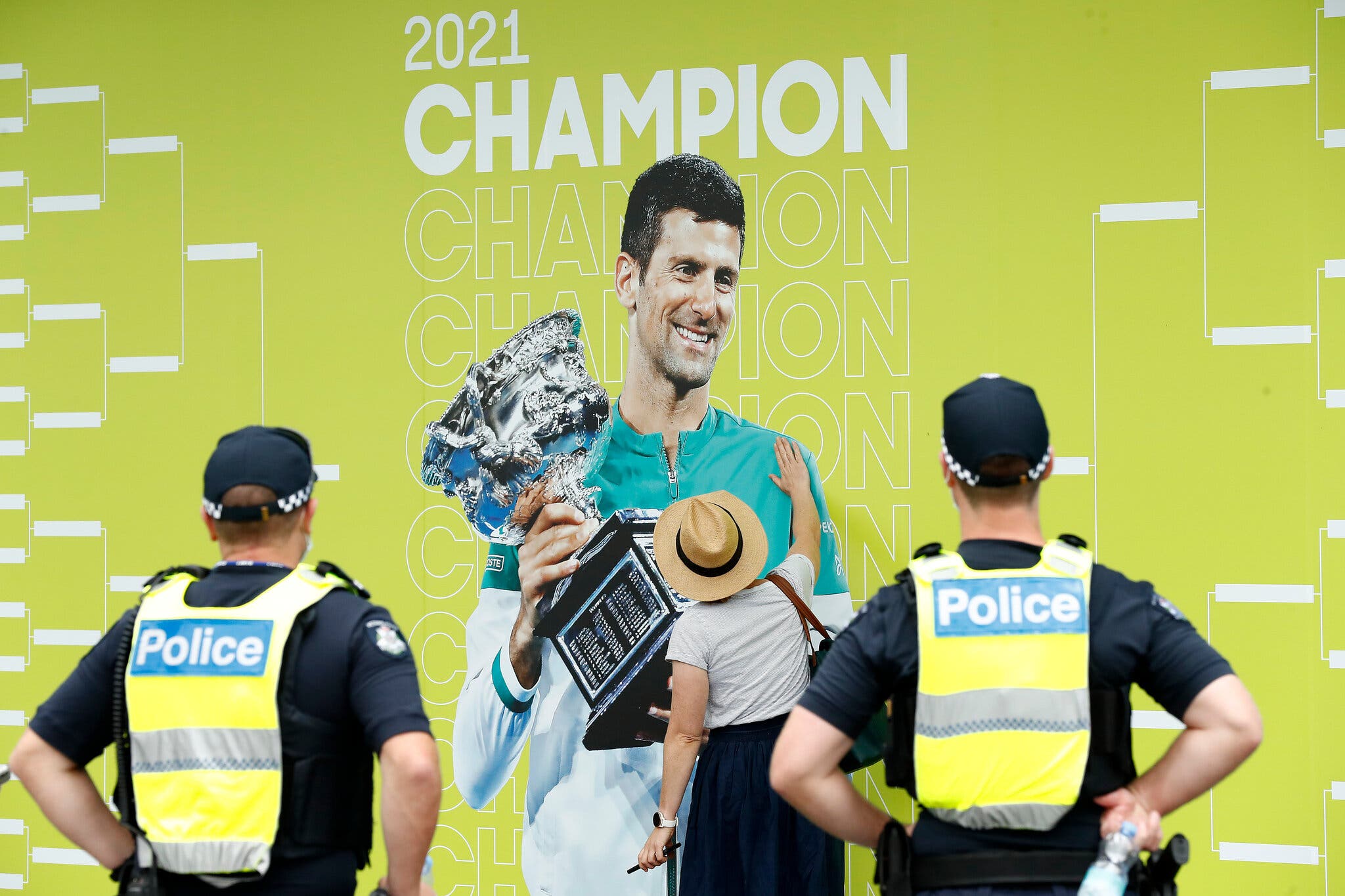
An Unplayed Australian Open Is a Turning Point for Novak Djokovic ( Opinion)
Even after being ejected from Australia, Novak Djokovic will remain No. 1 in the men’s tennis rankings at the end of the Australian Open, which began on Monday without him.
He still holds the titles at the French Open and Wimbledon; still has supple limbs, formidable tennis skills and a deep history of resilience in the face of hostile crowds and long odds.
But in a what-have-you-won-for-me-lately sport that is often categorised by eras and the champions who define them, it would come as no surprise if Sunday marked a turning point, symbolised by his long, grim walk to the airport gate in Melbourne under the escort of immigration officials.
Djokovic is 34, and as he left Australia against his will after his Visa was cancelled, a new generation of taller, talented stars in men’s tennis was preparing to pursue the title at the Grand Slam tournament he has dominated like no other and may never play again, if his three-year ban from the country is not rescinded.
“This certainly could knock him back,” John Isner, a friend of Djokovic’s and one of the top-ranked American players, said on Sunday. “I honestly don’t know which way it will go. It could take him a long time to recover, or light a fire under him.”
Djokovic has rebounded from demoralising periods in the past and resumed winning. In 2017, after perhaps the most dominant phase of his career, he struggled with his motivation and lost his edge for more than a year amid personal problems and a persistent right elbow injury. He had a commitment to natural healing that foreshadowed his decision not to be vaccinated for the coronavirus. But after playing and struggling at the Australian Open in 2018 with his elbow supported by a compression sleeve, he decided, tearfully he has said, to undergo surgery.
Five months later, he was a Grand Slam champion again, winning the 2018 Wimbledon title and soon re-establishing himself as No. 1, at the expense of his career-long rivals, Roger Federer and Rafael Nadal.
In early 2020, Djokovic was still on a roll, starting the year with 18 straight victories before the pandemic shut down the sport for five months in 2020. He organized an ill-advised exhibition tour in Serbia and Croatia in June during the enforced break that turned into a superspreader event and public-relations bonfire as he and other players and team members, including Djokovic’s coach Goran Ivanisevic, danced and partied unmasked in a Balkan nightclub, thoroughly out of sync with the global mood.
The tour was cancelled. Djokovic; his wife, Jelena; Ivanisevic; and others tested positive for the coronavirus, and when Djokovic did return to Grand Slam action, at the 2020 U.S. Open, he proceeded to eliminate himself from the tournament in the fourth round by hitting a ball in frustration after losing his serve and inadvertently hitting a lineswoman in the throat. He was defaulted by the tournament referee and returned to Europe to regroup. A young Austrian, Dominic Thiem, eventually won the title.
After all the dubious decisions and dents to his image, another Djokovic tailspin was hardly out of the question, but in a reflection of his tenacity and talent, he roared back in 2021 with one of his finest seasons: winning the first three Grand Slam tournaments and coming within one match of achieving the first men’s Grand Slam in singles in 52 years before losing to Daniil Medvedev in the U.S. Open final.
That display of resilience in 2021 should give pause to all those who might expect Djokovic to curl himself into a ball on the floor of his Monte Carlo apartment in the aftermath of the Australian affair.
We are talking about a player who became a champion despite growing up in Belgrade during the violent breakup of Yugoslavia, when NATO bombing forced him to interrupt tennis practices. He left home at 12 for a tennis academy in Germany as his parents and family borrowed and improvised to fund his training in the hope that the sport would be his route, and theirs, to better days. Djokovic told me that his father, Srdjan, once gathered the family and slammed a 10 Deutsche mark on the kitchen table and explained that this was all the money they had left.
“He said that more than ever we have to stick together and go through this together and figure out the way,” Djokovic said in that interview. “That was a very powerful and very impactful moment in my growth, my life, all of our lives.”
What is one deportation in comparison with all of that?
The answer seems self-evident, but the body blows can add up. Djokovic is accustomed to being the outsider, to hearing the roars of support for Federer and other opponents and winning anyway. He has even gone so far as to imagine that the crowds are chanting his name instead, but he has never been a global target to this degree.
Though he insists he does not want to be an anti-vaccine champion, the fallout from his iconoclastic stance in Australia — he is one of only three top-100 men’s players to be unvaccinated — means that he will be indelibly associated with the issue. And as long as he remains unvaccinated, he will face challenges entering some other countries and tournaments.
Energy is one of Djokovic’s hallmarks. Spend time with him one on one and his life force and restless curiosity come through, but he has expended a great deal of effort in recent years on causes beyond winning tennis matches: taking on the status quo on the men’s tour and creating a new player group to promote — so far unsuccessfully — change and more decision-making power for players at all levels of the rankings. He has helped start a new tournament in Belgrade, done charitable work in Serbia and the Balkan region and has cooperated with a behind-the-scenes documentary that is expected to be released in 2022.
It should have no dearth of content: no shortage of major triumphs and brutal setbacks. At what point does it all dull his edge? The answer could be right about now.






Sports
Super Eagles Soar: Nigeria Storms AFCON 2025 Semifinals in a Showcase of Resilience and Continental Football Supremacy
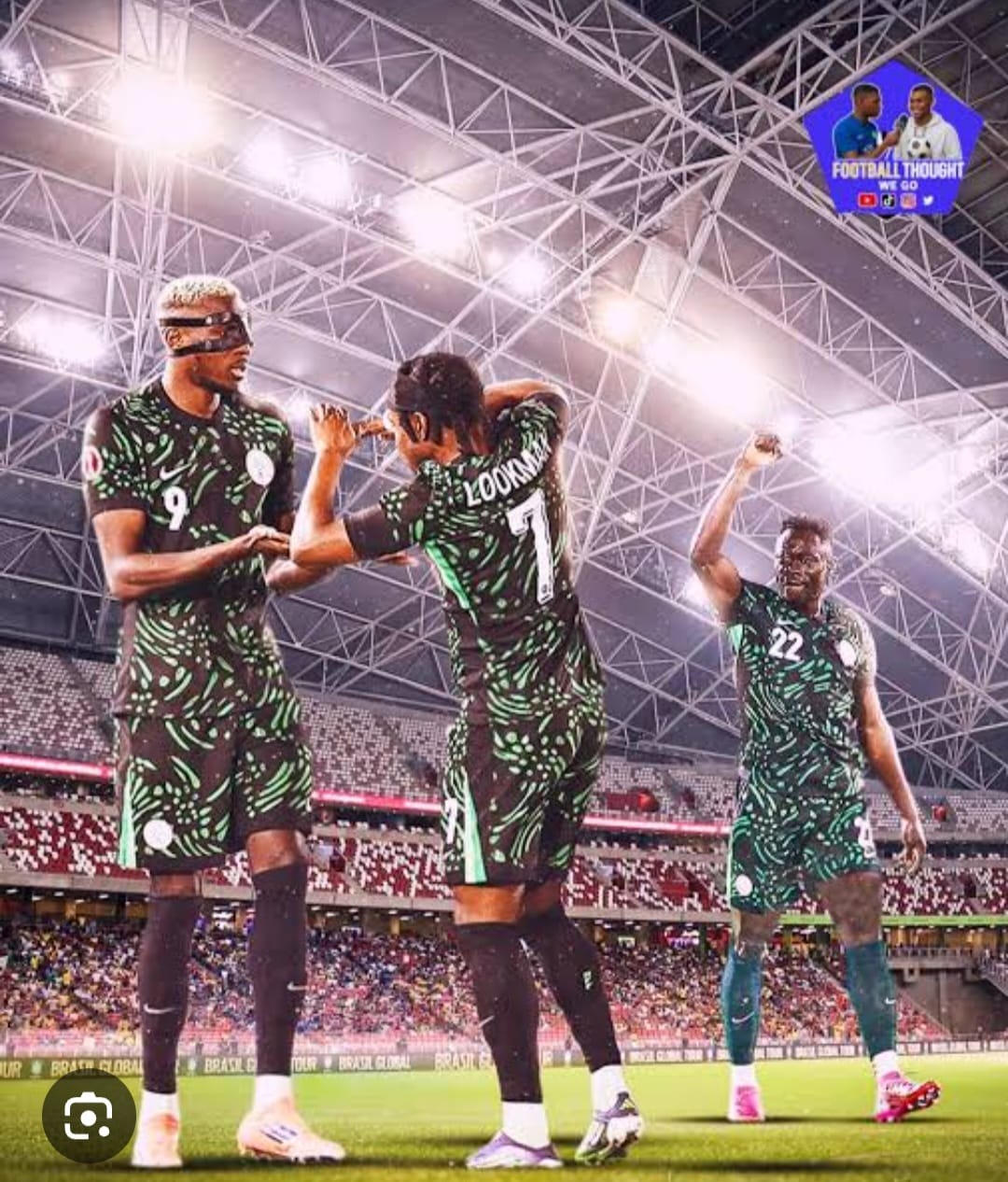
Super Eagles Soar: Nigeria Storms AFCON 2025 Semifinals in a Showcase of Resilience and Continental Football Supremacy.
By George Omagbemi Sylvester
saharaweeklyng.com
“After a commanding 2-0 win over Algeria and quarter-final upsets across the board, Nigeria sets up a blockbuster semi-final against hosts Morocco as Egypt and Senegal also advance in the Africa Cup of Nations.”
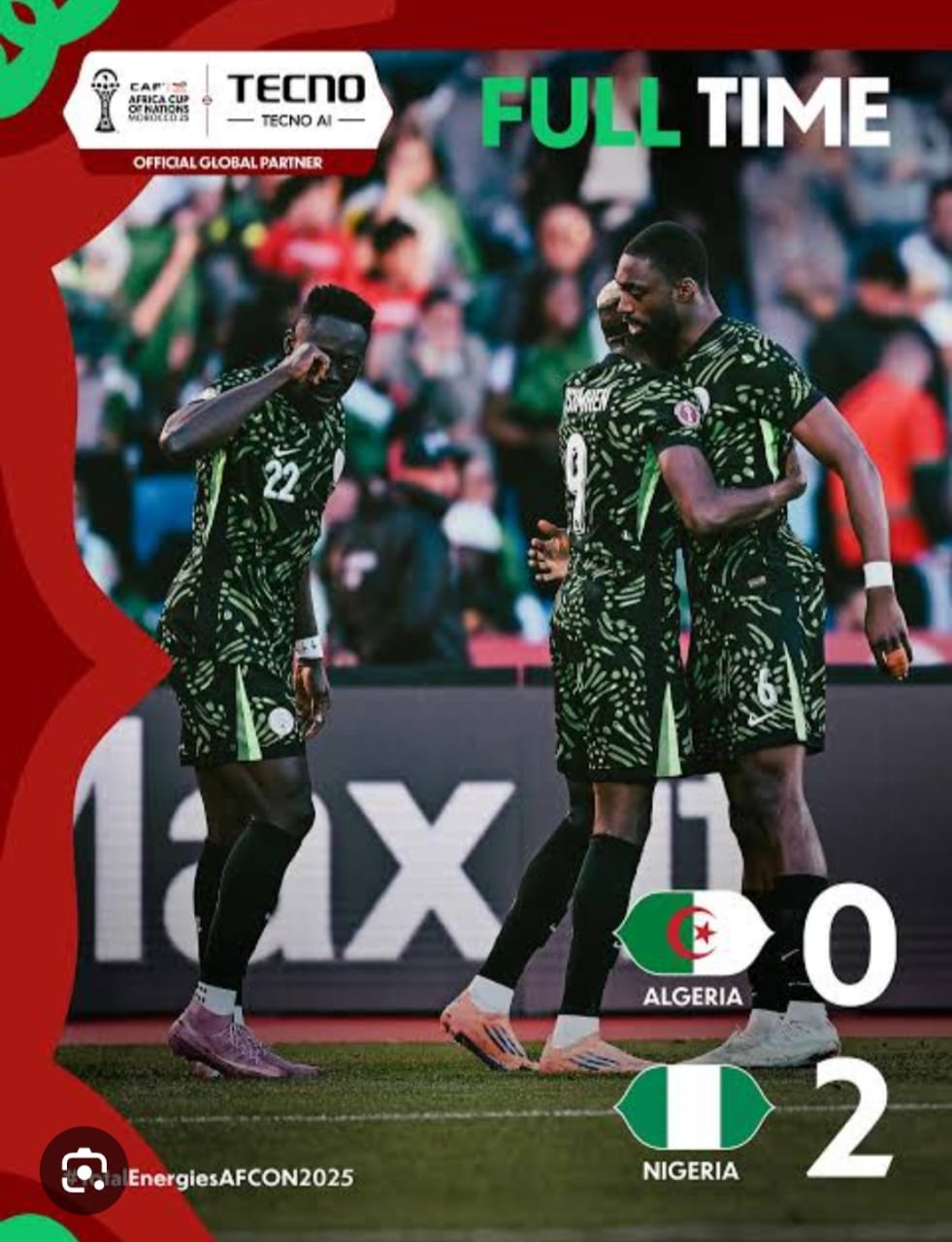
When the whistle blew in Marrakech’s Grand Stade on January 10, 2026, history was reaffirmed: Nigeria’s Super Eagles, Africa’s perennial powerhouse, soared into the AFCON 2025 semifinals with a convincing 2-0 triumph over Algeria in the quarter-finals. Driven by tactical intelligence, physical dominance and individual brilliance, the Nigerian side not only dispatched a formidable North African foe but did so with the authority and poise expected of a team with genuine title ambitions.
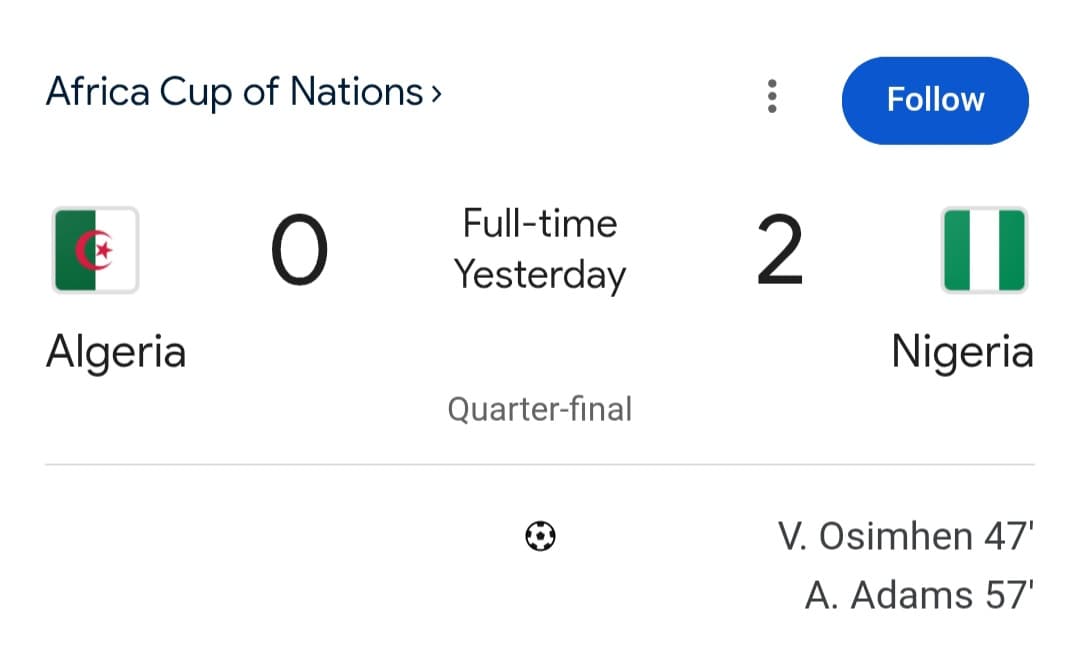
It was a performance that combined discipline and flair, a perfect example of why Nigeria has become regular visitors to football’s final four. Led by stars like Victor Osimhen (the 2023 African Player of the Year) and Akor Adams, the Super Eagles delivered a masterclass under pressure.
Nigeria vs. Algeria: Tactical Supremacy and Clinical Execution.
From the first whistle, Nigeria wrested control of the tempo. Dominant possession, coordinated pressing, and superior fitness allowed them to dictate play against an Algeria side that had previously relied on experience and technical skill. Despite a bright early threat from Algeria (who came into the game after a taxing extra-time victory in the round of 16) the Super Eagles held the balance of play throughout.
The breakthrough came immediately after halftime and a moment that in elite football often decides destiny. In the 47th minute, Nigeria’s attacking interplay culminated in a Victor Osimhen header from a precise Bruno Onyemaechi delivery, piercing Algeria’s resistance and igniting Nigerian belief.
Ten minutes later, Osimhen turned provider with an unselfishly feeding Akor Adams, who calmly rounded Algeria’s goalkeeper Luka Zidane and slotted home Nigeria’s second goal.
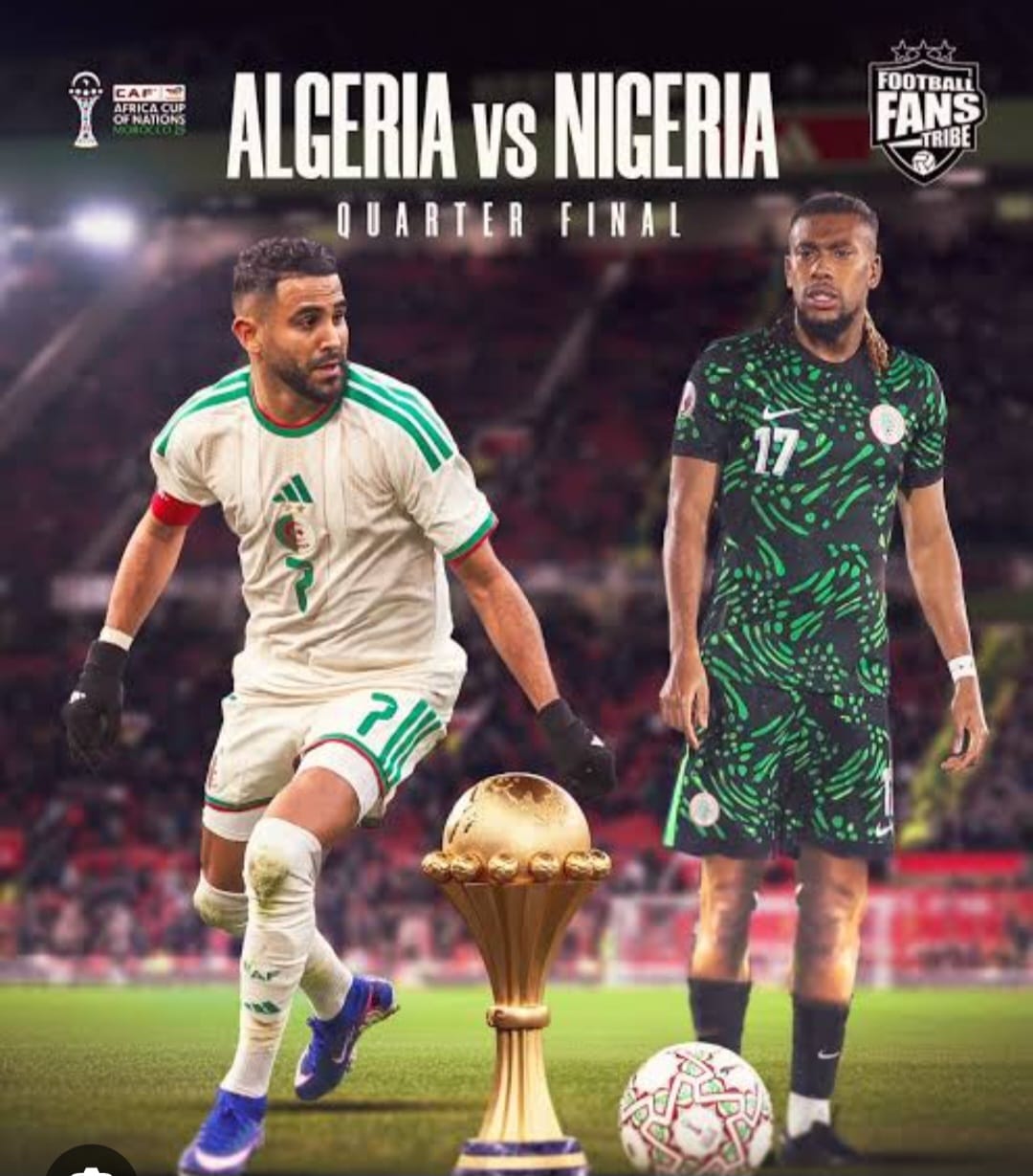
Both goals were TEXTBOOK EXAMPLES of Nigeria’s attacking versatility. Where the first came from intelligent aerial play, the second was built on patient build-up and incisive final third creativity.
For renowned football analyst Dr. Abdulazeez Hassan, such performances reflect the psychological maturity of current Nigerian squads:
“Modern African football demands not only technical ability but mental resilience. Nigeria’s ability to control both possession and tempo against Algeria demonstrated an evolution in tactical discipline seldom seen in earlier Super Eagles sides.” says Dr. Abdulazeez Hassan, African Football Analyst.
The Broader AFCON 2025 Landscape.
Nigeria’s victory unfolded amidst waves of dramatic results across the tournament’s other quarterfinal matches, each with far-reaching implications for the continent’s football hierarchy.
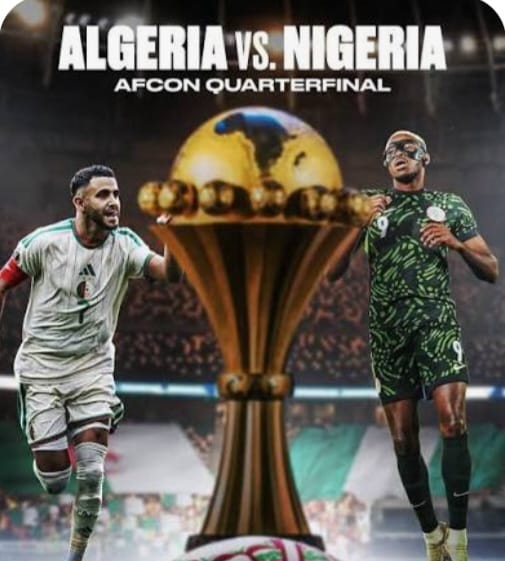
Morocco’s Historic Progress.
Co-hosts Morocco continued their impressive campaign by defeating Cameroon 2-0 to reach the semifinals for the first time since 2004. With a brilliant display in Rabat, the Atlas Lions⚽ confirmed their intent to secure the first AFCON title in half a century. Morocco’s progress carries weight beyond sport. Football historian Khalid El Idrissi explains:
“Football in Morocco has become a symbol of national unity and ambition. This run speaks to more than talent—it is a reflection of strategic development, investment, and a generation determined to leave its mark.” says Khalid El Idrissi, Football Historian.
Worth noting is the tournament’s structural significance: Morocco also plays co-host to the 2030 FIFA World Cup and a testament to Africa’s rising stature in global football.
Egypt and Senegal Forge Onward.
The quarterfinal stage delivered drama in North Africa too. Egypt, led by talisman Mohamed Salah, edged past Ivory Coast 3-2 in a clash that will live long in the memories of African football fans. Salah’s performance, featuring a record-equalling scoring tally, embodied Egypt’s blend of veteran skill and domestic league grit.
Meanwhile, Senegal (arguably one of the tournament’s most complete sides) secured a semifinal berth with a win over Mali, setting up an electrifying encounter with Egypt. Their journey has showcased tactical adaptability and unyielding defensive shape, attributes lauded by coaches and pundits alike.
For sports strategist Dr. Farouk Conteh, Senegal’s rise is emblematic:
“Senegal is not just winning games; they are defining a new model of African success—balance between defense and attack, and a psychological fortitude earned through continental competitions.” says Dr. Farouk Conteh, Sports Strategist.
Setting the Semifinal Stage: What’s at Stake.
With the stage now set for two electrifying semifinals (Morocco vs. Nigeria and Senegal vs. Egypt) the drama of AFCON 2025 has never been richer.
Morocco vs. Nigeria: A Clash of Titans.
The Nigeria-Morocco matchup epitomizes the essence of African football: flair versus experience, speed versus structure and underdog resolve against home-support fervor.
For Nigeria, this game is more than tactical; it is symbolic. After missing out on the FIFA World Cup qualification, the Super Eagles have channeled national disappointment into continental determination. Their performance against Algeria was evidence not of mere resilience but of a collective hunger to restore Nigerian excellence on Africa’s grandest stage.
Veteran coach Emmanuel Okoye captures the sentiment succinctly:
“Nigeria’s football identity must always reflect passion, pace and boldness. In Morocco, they have found themselves again in an assertive, cohesive and lethal when the moment demands.” says Emmanuel Okoye, Veteran Football Coach.
For Morocco, buoyed by home support and a fervent quest for victory, the semifinal in Rabat will be no less than a national festival. Their defensive solidity and midfield creativity will test Nigeria’s counterattacking dynamism.
Egypt vs. Senegal: Tradition vs. Tenacity.
The other semifinal pits history against speed. Egypt, the record seven-time AFCON champions, carry a legacy of brilliance. But Senegal’s physicality and depth (fast becoming one of Africa’s most feared teams) promise a tactical chess match that could redefine continental power structures.
Football journalist Sophie Adesina notes:
“Egypt’s experience versus Senegal’s modern athleticism is a narrative rich with contrast. Either side could change the storyline of African football for years to come.” says Sophie Adesina, Football Journalist.
Final Thoughts: The Contest for Continental Supremacy.
As AFCON 2025 edges toward its climax, the narrative is clear: this tournament has reintroduced Africa to its footballing soul (passionate, unpredictable, and unbounded by stereotype. Nigeria’s journey to the semifinals is not merely a statistical achievement; it is a reaffirmation of African football’s dynamism) where talent, strategy and heart converge in spectacular fashion.
The Super Eagles’ triumph over Algeria was not only a win, bit it was also a message.
A message that says Nigeria remains a continent marked not by past struggles but by future potential; that in football (as in life) resilience and unity can subdue adversity.
And in Morocco’s Rabat, when these two clubs of African myth meet, the beautiful game will once again affirm why it is Africa’s greatest shared passion.
Published by saharaweeklyng.com – Your trusted source for African sports journalism.
Business
BUA’s Abdul Samad Rabiu Promises $1.5m Windfall, Goal Bonuses as Super Eagles Fly Past Algeria
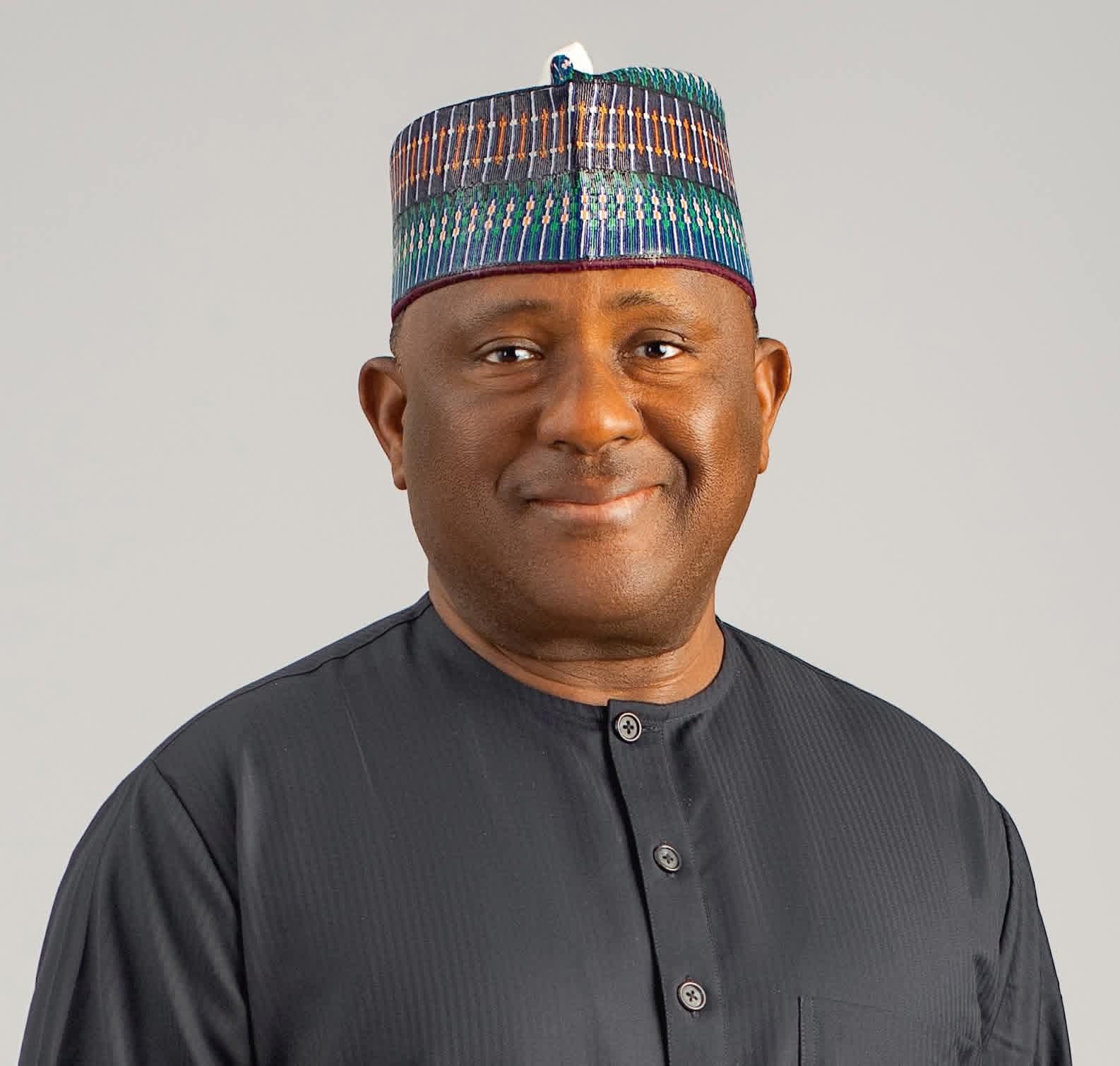
BUA’s Abdul Samad Rabiu Promises $1.5m Windfall, Goal Bonuses as Super Eagles Fly Past Algeria
Nigeria’s Super Eagles have received a major morale and financial boost following their emphatic victory over Algeria, as billionaire industrialist Abdul Samad Rabiu announced a multi-million-dollar incentive package to spur the team toward Africa Cup of Nations glory.
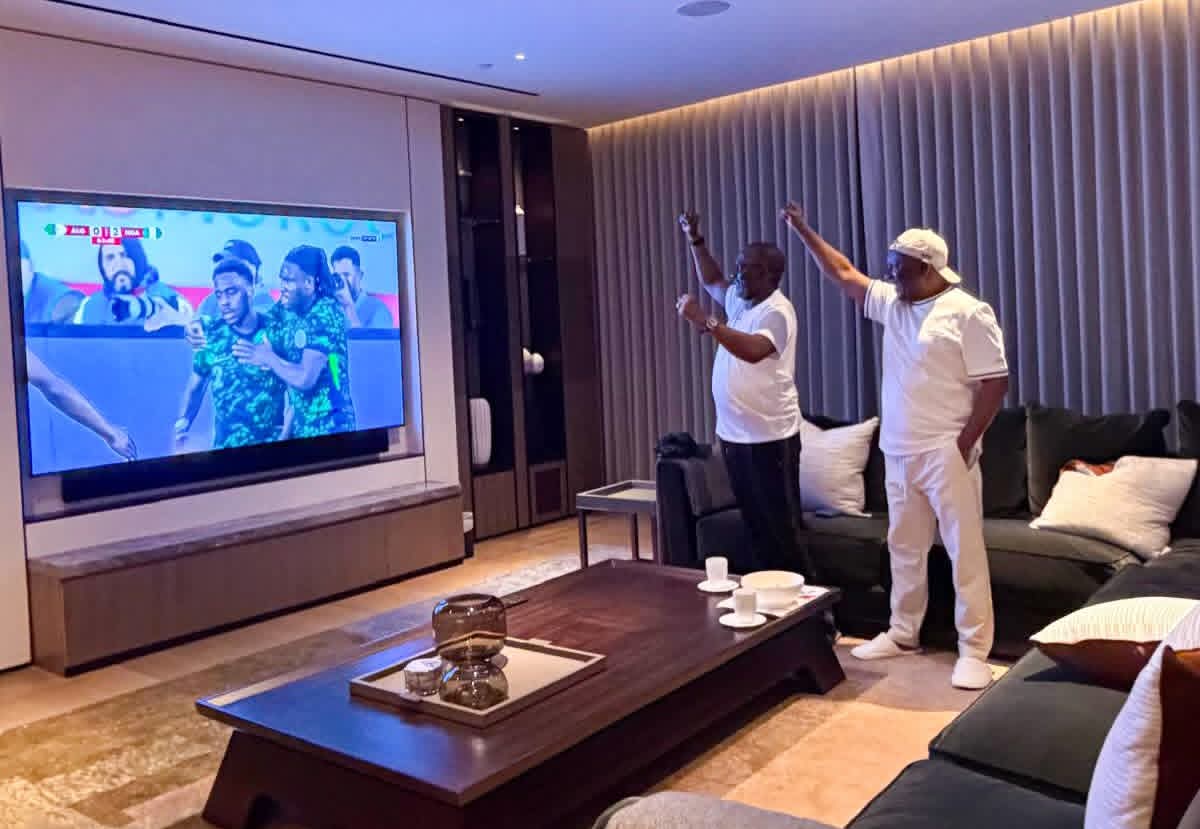
In a statement posted on his verified Facebook page on Friday, the BUA Group chairman congratulated the players on their “brilliant victory against Algeria,” describing the performance as one that lifted the spirit of the nation and rekindled national pride.
“You have lifted the spirit of the nation, and we proudly cheer you on as you prepare for the semi-finals,” Rabiu wrote.
To further motivate the team ahead of the crucial semi-final encounter, Rabiu pledged USD $500,000 to the players upon winning the match, with an additional USD $50,000 bonus for every goal scored.
The incentives rise significantly should the Super Eagles advance to the final and emerge champions. Rabiu announced a further pledge of USD $1,000,000 for winning the final, alongside a USD $100,000 reward for each goal scored in the decisive match.
The announcement has generated widespread excitement among football fans and analysts, who view the gesture as a strong vote of confidence in the team’s ability to go all the way in the tournament.
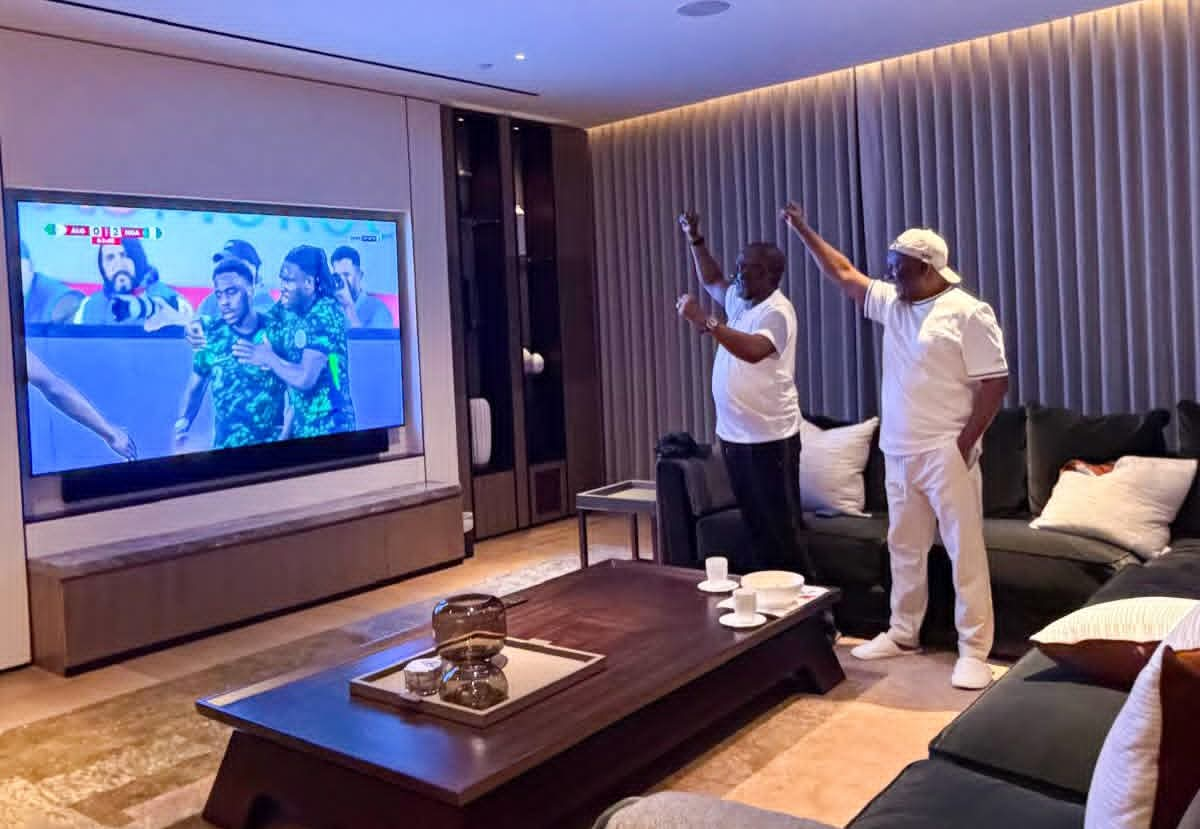
As Nigeria prepares for the semi-final showdown, Rabiu concluded his message with a patriotic rallying call, urging the players to continue carrying the nation forward and to “keep making Nigeria proud.”
With continental glory, national honour, and substantial financial rewards at stake, the Super Eagles head into the next round buoyed by belief, momentum, and the backing of an appreciative nation.
celebrity radar - gossips
One Year On: Eric Chelle’s Transformative, Tumultuous Reign. How the Super Eagles Reclaimed Pride, Passion and Purpose
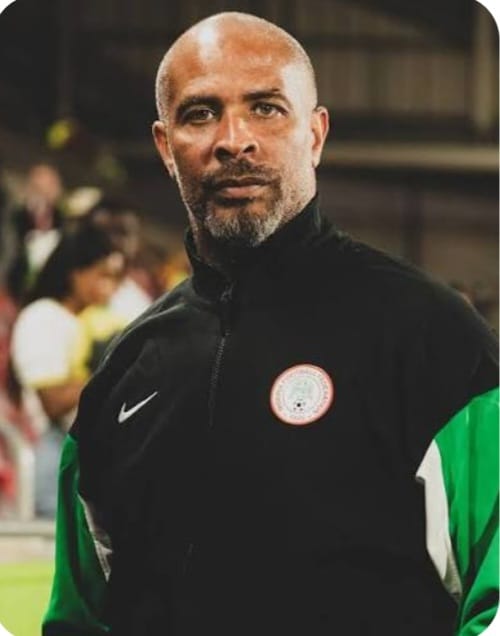
One Year On: Eric Chelle’s Transformative, Tumultuous Reign. How the Super Eagles Reclaimed Pride, Passion and Purpose.
By George Omagbemi Sylvester | Published by SaharaWeeklyNG.com
“Celebrating a Milestone That Redefines Nigerian Football, Beyond Results to Resilience, Identity and National Ambition.”
One year after his appointment as head coach of Nigeria’s Super Eagles, Éric Sékou Chelle has become a figure of both celebration and debate with a coach whose tenure has tested Nigerian football’s resilience, provoked passionate debate among fans and pundits alike and ultimately redefined what it means to rebuild a national team amidst adversity and immense expectation. Nigerians from all walks of life (supporters, former internationals, analysts and young football lovers) have poured praise, criticism, reflection and hope into the narrative of this anniversary. That alone is a testament to the magnitude of what this moment represents.
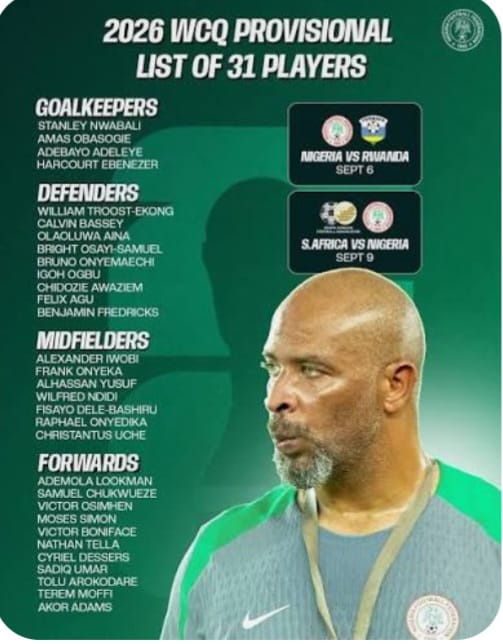
Chelle reached this milestone amid widespread celebrations on social media and in fan communities, a remarkable development considering the turbulent context in which he took charge. His one-year celebration was marked by thousands of fans acknowledging both his courage and commitment and the impact he has had on the squad’s identity and public perception.
From Appointment to Anniversary: A Year of Expectations. When Éric Chelle was unveiled as the Super Eagles head coach on January 7, 2025, it was a bold move by the Nigeria Football Federation (NFF). The decision followed a prolonged period of instability in the coaching office, with caretaker arrangements and short-lived tenures leaving the national team rudderless for months. Chelle succeeded where others struggled, beginning with a mandate both simple and enormous: qualify for the 2026 FIFA World Cup and restore pride in Nigerian football.
Born on November 11, 1977, in Abidjan to a French father and Malian mother, Chelle’s personal and professional journey is emblematic of globalized African football. His formative years in French leagues, where he played as a commanding centre-back for clubs like Valenciennes and Lens, laid the foundation for his later transition into coaching. As a coach, he accumulated experience with GS Consolat, FC Martigues, Boulogne and led the Mali national team to the quarter-finals of the 2023 Africa Cup of Nations before being appointed Nigeria’s coach.
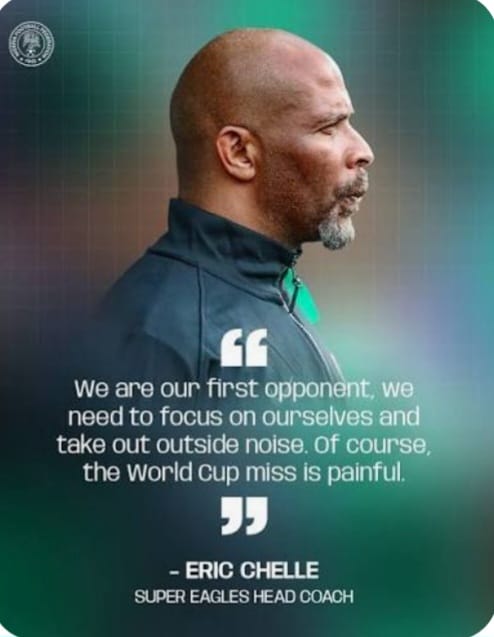
Yet the controversy at his appointment was immediate. Detractors argued that Nigeria’s footballing heartbeat ought to be guided by indigenous minds, that the Super Eagles’ job should belong to the many accomplished Nigerian tacticians who have patiently waited for their chance. Groups like the National Association of Nigerian Students even mobilised protests demanding a reversal of his appointment. Some supporters in Aba decried the decision, claiming it showed a lack of trust in local coaches.
A Leadership Built on Conviction Over Cash.
Chelle has been unequivocal about his motivations: this job was never about personal financial gain. In his own words, he chose Nigeria because of the team’s stature, not the remuneration though reportedly more lucrative than his previous positions. This declaration challenged the common narrative in African football that coaches are driven primarily by financial considerations.
His philosophy echoes the view of respected sports sociologist Dr. Samuel Akintunde, who once said, “A national team coach must embody national aspiration and not merely manage tactics, but shepherd identity, resilience and cultural pride.” Chelle’s emphasis on unity, respect and tactical cohesion speaks directly to this ethos.
Indeed, throughout the year, Chelle has emphasised a people-first approach, insisting that teamwork and collective belief are fundamental. “When you coach Nigeria, you have to win everything,” he stated, reflecting the heavy burden of expectation on his shoulders and acknowledging that mediocrity is not an option for this footballing giant.
Former Super Eagles defender Chikelue Iloenyosi has lauded Chelle’s man-management and squad cohesion, highlighting the spirited unity within the camp as one of the coach’s greatest achievements. “Team spirit is fantastic,” Iloenyosi remarked, noting that Chelle’s leadership was a driving force behind the team’s harmony on and off the pitch.

Results, Reality and Rebuilding Identity.
Statistically, Chelle’s first year has been a mixture of promise and frustration. Under his guidance, Nigeria saw improved performances in the World Cup 2026 qualifiers, securing key points that rekindled hope. Prior to his arrival, the Super Eagles had been struggling, but Chelle’s leadership brought four wins and two draws from six qualifiers, a stark contrast to earlier campaigns and a reflection of tactical improvement.
Moreover, the Eagles clinched the 2025 Unity Cup title, giving the Nigerian football community a tangible trophy to celebrate and adding a feather to the coach’s cap. This success though minor in global terms but significant in narrative context has helped calm critics and provided a platform for Chelle to build momentum.
Still, his tenure has not been free of turbulence. Nigeria’s failure to qualify for the 2026 FIFA World Cup, following a dramatic playoff loss to DR Congo on penalties, was a painful chapter. The encounter devolved into controversy when Chelle made remarks blaming mystical interference and a comment that drew international attention and underscored the emotional intensity of football in Africa’s most populous nation.
Tactics and Teamcraft: Beyond Results.
Chelle’s tactical profile is defined by adaptive formations, high pressing and creative transitions, yet also an appreciation for defensive solidity, a duality that resonates with modern football theory. According to CAF’s official analysis, his teams use dynamic strategies tailored to exploit weaknesses and build collective resilience.
In the words of football strategist Professor Ayo Oladipo, “Tactics without unity are like engines without fuel though impressive on paper but powerless in reality.” Chelle’s emphasis on unity, therefore, has been as important as his strategic blueprints. His language proficiency including English, French and multiple African dialects has helped bridge cultural gaps within the squad and foster inclusive communication.
Legacy and the Road Ahead.
As he marks this anniversary, Eric Chelle stands at a crossroads of legacy and aspiration. The Super Eagles under his guidance have reclaimed much of their identity, rekindled unity among supporters and charted a vision that goes beyond mere victories. Fans celebrating this milestone are not just praising results but they are acknowledging resilience, courage and the emotional heartbeat that Chelle has nurtured.
Yet the questions remain: Can Nigeria rise to continental supremacy again? Can this journey lead back to the World Cup stage? The answers will depend not just on Chelle’s tactical nous but on the collective will of the players, the federation and the nation that lives and breathes Super Eagles football.
Renowned sport ethicist Dr. Nkechi Ogbuehi summarises this moment perfectly: “Great coaches make their teams believe in themselves; legendary coaches make their nations believe in something greater than football.” As Ghana, Cameroon and Senegal continue to challenge Nigeria’s dominance, Chelle’s influence over the next 12 months could define Nigerian football’s next decade.
Beyond the Moment: A Year Worth Celebrating.
Eric Chelle’s one-year anniversary is more than a milestone though it is a reflection of transformation, resilience and possibility. Nigerians celebrating this moment are not simply looking back; they are looking forward with renewed belief that the Super Eagles, under the right leadership and united purpose, can soar again.
In a nation where football is synonymous with identity and pride, Chelle’s first chapter may have been imperfect, but it has undeniably been powerful. And as George Omagbemi Sylvester writes for SaharaWeeklyNG.com, this anniversary is not just a celebration but it is an affirmation that Nigeria’s greatest victories are won in the heart first, before the scoreboard.


-

 celebrity radar - gossips6 months ago
Why Babangida’s Hilltop Home Became Nigeria’s Political “Mecca”
-

 society6 months ago
Power is a Loan, Not a Possession: The Sacred Duty of Planting People
-

 Business6 months ago
Batsumi Travel CEO Lisa Sebogodi Wins Prestigious Africa Travel 100 Women Award
-

 news6 months ago
THE APPOINTMENT OF WASIU AYINDE BY THE FEDERAL GOVERNMENT AS AN AMBASSADOR SOUNDS EMBARRASSING