
SECURITY
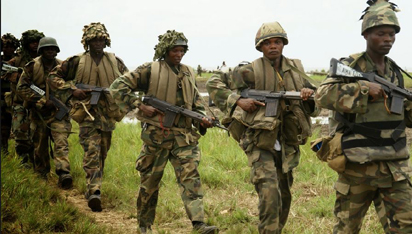
NO ATTACK ON CRITICAL NATIONAL INFRASTRUCTURE…TROOPS AMBUSHED IN RESPONSE TO DISTRESS CALL IN SHIRORO

NO ATTACK ON CRITICAL NATIONAL INFRASTRUCTURE…TROOPS AMBUSHED IN RESPONSE TO DISTRESS CALL IN SHIRORO
By Olorunfemi Adejuyigbe
On Wednesday 29 June 2022, troops of the Nigerian Army (NA) deployed in Shiroro general area responded to a distress call of bandits attack on people operating a mining site. Enroute the location, the troops ran into an ambush staged by the criminal elements. Sadly, a number of personnel paid the supreme price in fierce firefight that ensued.
Subsequently, the location has been reinforced and troops are on the trail of the criminals with some already neutralized. The GOC 1 Division has moved to the location to take charge of the follow on operations.
The NA notes that some clips of the incident have surfaced online and wish to encourage well meaning Nigerians to exercise some restraint in posting images of such occurrence, mindful that our brothers and sisters who may have lost their breadwinners deserve to be properly notified and not to get such information via the media. We mention this, mindful of the inalienable rights of citizens to use the social media which is respected.
It is also necessary to clarify that activities of the criminals was not on any critical national asset or infrastructure. Furthermore, the NA calls on all Nigerians to continue to support the efforts of their military personnel who continue to confront the enemies of our dear nation.
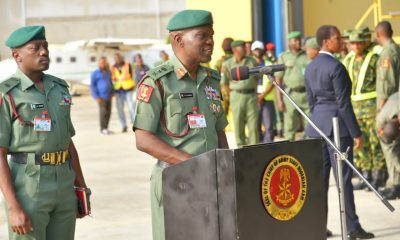
ONYEMA NWACHUKWU
Brigadier General
Director Army Public Relations
30 June 2022





SECURITY
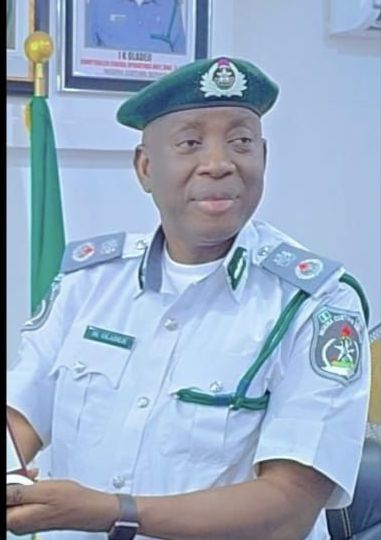
COMPTROLLER KOLA OLADEJI: THE TRAILBLAZING CUSTOMS CHIEF WHO TRANSFORMED BORDER SECURITY AND REVENUE GENERATION AT FOU ZONE A
COMPTROLLER KOLA OLADEJI: THE TRAILBLAZING CUSTOMS CHIEF WHO TRANSFORMED BORDER SECURITY AND REVENUE GENERATION AT FOU ZONE A
Sahara Weekly Unveils That In the often chaotic landscape of Nigeria’s border security and revenue collection, one individual has emerged as a transformative leader: Comptroller Kola Oladeji, the immediate past Comptroller of the Federal Operations Unit (FOU) Zone A. Over the course of his 12-month tenure, Oladeji has not only revolutionized Customs operations within that region but has also set a new standard for effective, compassionate, and intelligent border protection in 21st-century Africa. His strategic interventions and leadership approach have created a model that may pose a significant challenge for his successor to fill the substantial gaps left by his redeployment.
Comptroller Oladeji attributes his remarkable achievements to the unwavering support and guidance he received from the current Comptroller General of Customs, CGC Bashir Adewale Adeniyi, as well as the collaboration from all members of the Management of the Service. This backing not only facilitated smoother operations but also empowered him to fulfill his mandate with remarkable efficiency. Under his leadership, the FOU Zone A experienced enhanced operational effectiveness, improved revenue collection, and strengthened border security measures, paving the way for a more organized and secure customs process that benefits both the government and the citizens.
The data available presents a compelling narrative of success; however, it is important to note that as of Wednesday, April 23, there was a noticeable absence of FOU Zone A operatives on the roads of Lagos. Despite this lack of visible presence, the FOU ‘A’, led by the former Comptroller Oladeji, continued to fulfill its primary mission effectively. In recent operations, the unit conducted significant seizures, including a cache of arms and ammunition in Oshodi, Lagos, all based on reliable intelligence. Remarkably, these operations were carried out without seeking media attention, underscoring the commitment of the team to their duties and the delicate nature of their work. Such efforts highlight the ongoing commitment to maintaining security and public safety, even amidst challenges in visibility and outreach.
The impressive performance he has displayed is a direct extension of the outstanding work he accomplished while serving as the Coordinator of the Joint Border Patrol Team for the North West Zone – Sector 2. During his tenure in this role, he not only demonstrated strong leadership and strategic planning but also fostered collaboration among various agencies to enhance border security. His successful initiatives and commitment to excellence in this position ultimately paved the way for his transition to the Federal Operations Unit (FOU) Zone A, where he continues to build on his accomplishments and drive positive results.
When Oladeji took the helm at the Federal Operations Unit (FOU) Zone A, few could have anticipated the remarkable turnaround that would follow. Under his leadership, Zone A exceeded its 2024 revenue target by an astonishing 57.6%, transforming it into Nigeria’s premier revenue-generating unit within the Customs Service. Faced with the challenge of operating without direct control over any major ports, Oladeji and his dedicated team set an ambitious approved revenue target of ₦569 million. Through strategic initiatives, heightened enforcement, and intensified anti-smuggling operations, they achieved a staggering revenue collection of ₦896 million. This achievement not only underscores Oladeji’s exceptional leadership skills but also reflects his ability to innovate and maximize resources in a challenging environment.
But Oladeji’s impact wasn’t just about the figures. It was about a total overhaul, changing the way things were done, shattering off mediocrity. The days of violent clashes with smugglers are behind us. In their place is “Operation Swift Sting” – a smart, intelligence-driven strategy that blends the latest surveillance tech with good old-fashioned detective work. The outcomes have been nothing short of amazing: ₦18 billion worth of contraband seized, including 10,000 donkey skins valued at ₦8 billion that were just moments away from being illegally exported.
One of the most telling seizures was the interception of 11,870 cutlasses, which sent shockwaves through criminal networks in the Southwest. This wasn’t just a Customs operation; it was a proactive move to prevent potential violence. Other seizures read like a list of threats to national security: 50,000 bags of foreign rice that could harm local farmers, 191,000 liters of diverted PMS, 7,861kg of cannabis, and 37,630 doses of Tramadol – each interception a significant step against the forces undermining Nigeria’s stability.
What set Oladeji’s approach apart wasn’t just what he seized, but how he did it. His philosophy was refreshingly straightforward: “We don’t chase smugglers – we outsmart them.” This mindset led to a revenue surge in July 2024, reaching ₦133 million, a 245% increase from the previous year, achieved not through brute force but through careful document checks and demand notices. It proved that brains are far more effective than brawn in customs operations.
The House of Representatives Committee on Customs witnessed this transformation firsthand during their oversight visit. Committee Chairman Leke Abejide didn’t hold back: “What we’ve seen here redefines Customs excellence.” In an organization often linked with controversy, Oladeji built something truly remarkable – a high-performance operation that resists corruption while balancing strict enforcement with community engagement.
As Nigeria faces an economic crossroads, the Oladeji model offers more than just success stories; it provides a roadmap. A roadmap for how technology can outsmart smuggling networks. A roadmap showing that revenue generation and humane enforcement can go hand in hand. And, most importantly, a roadmap highlighting how visionary leadership can turn even the toughest government institutions around.
With the Fourth Mainland Bridge and Lekki Deep Sea Port set to open soon, Oladeji’s strategic position allows him to achieve even greater results. If he’s accomplished this much in just 15 months, imagine the possibilities if his innovative approach were applied nationwide. In a time that craves transformative leadership, Kola Oladeji has not only raised the bar for customs operations – he’s demonstrated what’s achievable when skill, creativity, and courage come together in Nigeria’s public service.
The takeaway is clear: Nigeria’s fight for economic security doesn’t need more weapons – it needs more leaders like Oladeji. Leaders who recognize that true security comes not from guns, but from the smart use of law, technology, and, above all, principled leadership. A remarkable feat of Comptroller Oladeji ‘s tenure was the huge quantum of seizures recorded without firing a single shot at any Nigerian, nor recording a Protest of Nigerians. As his reforms gain national attention, one truth stands out: this is what happens when Nigeria’s brightest minds are given the chance to serve.
Business
Elon Musk’s Team Accuses FEMA of Misusing $59 Million to House Illegal Migrants in Luxury Hotels

Elon Musk’s Team Accuses FEMA of Misusing $59 Million to House Illegal Migrants in Luxury Hotels
Elon Musk’s Department of Government Efficiency (DOGE) has made serious allegations against the Federal Emergency Management Agency (FEMA), claiming that the agency misused $59 million to accommodate illegal migrants in luxurious hotels.
The billionaire entrepreneur revealed this in a tweet on Monday morning, stating that the discovery was made last week. According to Musk, the funds were intended for American disaster relief but were instead diverted in violation of national regulations.
He wrote: “The @DOGE team just discovered that FEMA sent $59M LAST WEEK to luxury hotels in New York City to house illegal migrants. Sending this money violated the law and is in gross insubordination to the President’s executive order. That money is meant for American disaster relief and instead is being spent on high-end hotels for illegals! A clawback demand will be made today to recoup those funds.”
The revelation has sparked controversy, with critics arguing that FEMA’s allocation of funds should prioritize American citizens affected by disasters. The allegations have also intensified scrutiny on FEMA, which has faced previous accusations of financial mismanagement.
An inspector general audit recently revealed that FEMA mishandled nearly $10 billion in COVID-19 relief funds. The audit stated that $8.1 billion in costs remained questionable, while $1.5 billion was allocated prematurely and could have been better utilized for other emergencies.
As scrutiny mounts, former President Donald Trump has reportedly considered abolishing FEMA, describing the agency as “a disaster.” To address these concerns, Trump has established a council, led by Homeland Security Secretary Kristi Noem and Defense Secretary Pete Hegseth, to review FEMA’s operations and propose necessary reforms by late June.
The allegations against FEMA have triggered a broader debate on the proper allocation of taxpayer funds and the government’s role in disaster management. More updates are expected as the situation develops.

Shepherd freight Cargo services Now in Lagos and Ibadan Nigeria.





-

 celebrity radar - gossips6 months ago
Why Babangida’s Hilltop Home Became Nigeria’s Political “Mecca”
-

 society5 months ago
Power is a Loan, Not a Possession: The Sacred Duty of Planting People
-

 Business6 months ago
Batsumi Travel CEO Lisa Sebogodi Wins Prestigious Africa Travel 100 Women Award
-

 news6 months ago
THE APPOINTMENT OF WASIU AYINDE BY THE FEDERAL GOVERNMENT AS AN AMBASSADOR SOUNDS EMBARRASSING