
celebrity radar - gossips
A BOOK THAT STIRRED A NATION by Chief Femi Fani-Kayode.

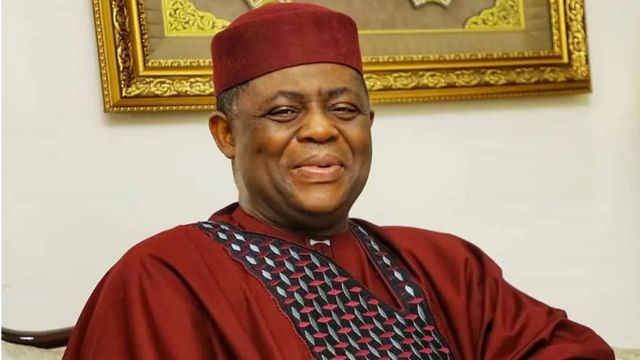
A BOOK THAT STIRRED A NATION by Chief Femi Fani-Kayode.
Much has been said and written since President Ibrahim Badamasi Babangida’s book, titled ‘A Journey In Service: An Autobiography’ was launched.
As to be expected, the reviews are interesting and the commentary has been in some cases good, in some bad and in some ugly.
This is a healthy development because the worst that one can do to a book or an essay is to ignore it.
Whether you agree with it’s contents or not or whether you like the author or not is not the point: what makes it worth writing is the commentary that follows and the oftentimes divided opinions.
This more than anything else makes the literary contribution a success and as the saying goes: it is better for it to be spoken about, even in negative terms, than for it to be ignored.
There is no doubt in my mind that few can ignore either Babangida or his controversial yet factual book and ever since it’s launching on February 20th 2025 it has been the talk of not just the town but the entire nation.
I welcome and encourage such discourse wholeheartedly because it engenders intellectual debate and it enriches and deepens our knowledge of history.
I do however take objection to those that have gone a little too far and that have characterised Babangida as “a coward” and “a weakling” simply because he spoke the truth about the role General Sani Abacha, his Chief of Defence Staff, played in the annulment of the June 12th election.
In the book Babangida displayed humility and remorse and assumed “full responsibility” for the annulment as Head of State.
He also pointed out the fact that he chose to tread that precarious and regrettable path primarily as a consequence of the immense pressure that he was subjected to by General Sani Abacha.
By bringing these facts to public glare and establishing this narrative he was not, as some have argued, “making excuses” for his actions but rather he was attempting to put them in context and, for historical purposes and the record, enlighten the Nigerian people about precisely which personalities and circumstances caused him to make the decision that he eventually made.
This surely ought to be commended and not condemned as it can only enrich the historical discourse and shed more light on the darkest corners of our journey as a nation.
I say this because I believe that the Nigerian people have a right to know about the real causes of the terrible trauma they were put through as a consequence of the annulment with its attendant loss of liberty and life and the 6 long years of suffering, strife, division and misery that it brought our people.
Sadly as a consequence of his submission about their patriach’s role in the whole sordid affair certain members of General Abacha’s family, some very young and some a little older, took umbrage and offence and publicly described Babangida as “weak” and as “a coward”.
This is not only a false characterisation of a man that has proved his courage on several occasions in our history and has put his life on the line for Nigeria many times but it is also very unkind given the strong friendship and trust that Babangida and Abacha themselves shared over the years and given the close relationship that their respective families have enjoyed ever since the Nigerian civil war.
Outside of that anyone that says IBB is “weak” or “a coward” does not know IBB.
It is better that we do not open up this debate because if we do those that are saying these uncharitable things will be worsted.
It really is advisable for them to sheath their swords at this early stage in order to ensure that their father’s tenure is not subjected to even more public scrutiny than it already is.
As they say sometimes silence is golden.
Some of us lived the experience whilst some of those talking today had not even been conceived let alone born.
Between the father and grandfather of those who are throwing bricks today and calling IBB “weak” and a “coward” we know who the monster and cold-blooded killer was.
Granted that it was under his watch that the June 12th election was annuled but what cannot be denied is that the real reign of terror began after Babangida left office and after Abacha toppled the Ernest Shonekan-led Interim National Government in a coup, took power and turned state-sponsored terror and murder into an art.
For five years the entire nation and particularly the Yoruba people were subjected to the worst form of barbarity and tyranny that our nation had ever known.
Many were falsely accused, persecuted, humiliated, killed, incarcerated, tortured and driven into exile to suffer in some foreign land whilst others, like the former military Head of State and later President, President Olusegun Obasanjo, General Shehu Musa Yar’adua (the second in command to General Obasanjo when he was military Head of State and the older brother to President Umaru Musa Yar’adua) and General Paul Oladipo Diya (General Sani Abacha’s second in command) were imprisoned for no just cause and one of them (Yar’adua) was pinned down and forcefully injected with strange and toxic substances, poisoned and murdered whilst there.
Meanwhile Abiola’s wife, Alhaja Kudirat Abiola, along with many others including a young man by the name of Toyin Onagoruwa who was the son of Dr. Olu Onagoruwa SAN (Abacha’s Attorney General and Minister of Justice who had earlier resigned in protest against all the atrocities that the Government he served were committing), were either gunned down in the streets or, like Bagudu Kaltho, blown up with bombs.
What can one say about a man who, according to Onagoruwa himself, could order the murder of his own Minister of Justices’ son simply because the man gave a press conference, criticised his brutal policies and heinous practices and resigned.
Then there was the judicial murder of the activist and environmentalist Ken Saro-Wiwa.
Even after the international community pleaded with him not to hang this man and implored him to at least allow him to challenge his “conviction” for murder before what was to all intents and purposes a kangaroo court and go to the Court of Appeal, Abacha refused to listen and had the poet and human rights activist hanged in the middle of the night.
Worse of all is the fact that Saro-Wiwa was his close friend. This was singularly one of the most wicked and callous acts that took place under Abacha’s watch.
Saro-Wiwa deserved to at least go on Appeal and exhaust the opportunities that the law and the legal system availed to him.
It was a national tragedy and the Commonwealth nations particularly were so shocked that Nigeria’s membership was suspended.
Yet it didn’t end there and there is so much more to say.
For example brutal psychopaths like Colonel Frank Omenka and his gang of heartless cut throats tortured people, including women and children, with sadistic pleasure in the dungeons of the Directorate of Military Intelligence in Apapa, Lagos.
Few left there alive.
Most of the young people talking and writing on social media today know nothing about these ugly events or this time because they were not born and they know NOTHING about the history of the country.
We lived it, we were part of the struggle, we paid the price, it was hell and all of it happened under Abacha’s watch.
Yet how did we get there, what transpired, who were the major actors and who actually annuled the June 12th election and took us down that hideous path?
This is the million dollar question and Babangida finally answered it in his book.
The truth is that had it not been that IBB sheathed his sword, held his peace and conceded to the dark, sinister and evil forces that coordinated, orchestrated, initiated, effected and announced the annulment without his knowledge and behind his back there would have been a very bloody military coup which would have in turn been violently resisted by the IBB faction and thereby result in a long and protracted civil war.
Those that led these dark and evil pro-annulment forces were General Sani Abacha, Brigadier General David Mark, Lt. General Joshua Dogonyaro, Air Vice Marshal Nurudeen Imam, Colonel Lawan Gwadabe, Major General Alwali Kazir, Lt. General Ishaya Bamaiyi, Major General Jeremiah Useni and many others.
Had Babangida resolved to resist them, renounce the unauthorised announcement and de-annul the election (which he could easily have done) I have no doubt that Abiola, his wives, his children, his key supporters, many of those heroes that were to later become the leaders of NADECO, IBB himself and all his key loyalists including Major General Salihu Ibrahim (the Chief of Army Staff), Brigadier General Haliru Akilu, Major General Aliyu Gusau, Colonel Sambo Dasuki, Colonel Abubakar Umar, General Gado Nasko, Air Vice Marshall Hamza Abdullahi, Colonel Habibu Shuaibu, General Abdulsalami Abubakar, General Garba Duba, General Sani Bello, Colonel Nuhu Bamalli (as he then was), Major General Isola Williams, Admiral Augustus Aikhomu and many others would have been targetted for assassination and our country would have been plunged into a cataclysmic bloodbath given the fact that Babangida’s men would have struck back with equal ferocity and in equal measure.
More likely than not few of the main players on both sides, including Abacha, Abiola and Babangida themselves, would have survived the conflagration and the country would have been at war with itself, brother killing brother, for an indefinate period of time.
Anyone that doubts this or the horrific nature of such conflicts should remember what happened during the Nigeria/Biafra civil war and consider what is happening in Sudan today.
When senior and powerful military officers each with a massive following in the Armed Forces refuse to tread the path of compromise, peace and sanity and take up arms against one another EVERYONE loses and the entire country implodes into ashes and crumbles into dust.
I do not seek to justify the annulment and at the time, along with millions of others, I opposed it with all my heart and every fiber of my being but the reality was that IBB was faced with a very difficult choice.
As he said in his book he was indeed “caught between the devil and the deep blue sea”.
He could have done what some may deem right right by resisting the deceit, betrayal, perfidy, pressure and subterfuge from the Abacha faction of the military, refuse to accept the illegal and unconciable annulment, declare it as “null and void” and consequently spark off a bloody chain of events and a civil war or he could have chosen to do what some may deem wrong by keeping his cool, letting Abacha have his dastardly way, conceeding to the dark forces, accepting the annulment and thereby save lives and maintain a tenuous even though short-lived peace.
He chose the latter, saved MKO Abiola’s life and that of many others and maintained the fragile unity of the military and by extention the country by doing so.
Yet whichever option he opted to take, Babangida was not the villainous usurper, traitor and Kingslayer here: Abacha and his vile power-hungry cohorts were.
This is what IBB has now firmly established in his book and we await sensible literary responses from those that are still alive and that were in the Abacha camp.
They are more than welcome to dispute the facts and tell their side of the story and we are eager to hear them.
However until they do so and provide the necessary evidence to establish the veracity of their claims yours truly along with many others are constrained to accept Babangida’s narrative because, in my view, he remains a respected elderstatesman and a man of integrity and secondly his account appears to credible and plausible.
For the benefit of those that may not have the book I would urge them to get a copy and read from pages 274 to 276 in order to get a clear picture of what actually transpired and the truth is that it is shocking!
Due to space constraints permit me to qoute just a portion of it from page 275 where he wrote,
“On the morning of June 23, I left Abuja for Katsina to commiserate with the Yar’Adua family over the death of their patriarch, Alhaji Musa Yar’Adua.
The funeral had taken place, and as I got ready to leave, a report filtered to me that the June 12 elections had been annulled.
Even more bizarre was the extent of the annulment because it terminated all court proceedings regarding the June 12 elections, repealed all the decrees governing the Transition and even suspended NEC! Equally weird was the shabby way the statement was couched and made.
Admiral Aikhomu’s press secretary, Nduka Irabor, had read out a terse, poorly worded statement from a scrap of paper, which bore neither the presidential seal nor the official letterhead of the government, annulling the June 12 presidential elections. I was alarmed and horrified.
Yes, during the stalemate that followed the termination of the results announcement, the possibility of annulment that could lead to fresh elections was loosely broached in passing but annulment was only a component of a series of other options.
To suddenly have an announcement made without my authority was, to put it mildly, alarming.
I remember saying: ‘These nefarious inside forces opposed to the elections have outflanked me!’
I would later find out that the ‘forces’ led by General Sani Abacha annulled the elections.
There and then, I knew I was caught between the devil and the deep blue sea!
From then on the June 12 elections took on a painful twist for which, as I will show later, I regrettably take responsibility.of its worst political crises ever.
Like many of us in government, the political class was stunned.”
All this yet Babangida still opted to take full responsibility for these troubling events and great injustice and kept his lips sealed about the abominable role that General Sani Abacha and his group played in the annulment of the June 12th election and the rape and usurpation of the mandate that was freely given to Chief MKO Abiola and his running mate Ambassador Babagana Kingibe by the Nigerian people.
To drive home the point about how dangerous the situation was for all and sundry permit me to remind those that were alive at the time about the meeting that Babangida had with Abiola after the annulment in which he told him that “these people” meaning the Abacha group would “kill me, you and all the rest of us” if the election result was “de-annulled” and allowed to stand.
His words were leaked to the media and widely reported at the time yet they were never denied by either Babangida or Abiola.
Again there was the infamous contribution from Colonel David Mark (as he then was) who had hitherto been a Babangida loyalist where he was reported to have said “we will not allow Abiola to be sworn in as President and if NEC swears him in we will shoot him”.
Those that doubt this should read Professor Omo Omoruyi’s book titled ‘The Tale Of June 12th: The Betrayal Of The Democratic Rights Of Nigerians’.
Omoruyi, who was the Director General of the Center For Democratic Studies, was not only an Advisor and insider in the Babangida Government but he was also very close to the Head of State and a strong ally and voice of the pro-democracy and anti-annulment movement within the regime.
He was a formidable intellectual who was credible, humane, decent, cerebral and highly respected and I have no reason to doubt his word.
Ironically after the annulment took place and Babangida “stepped aside” from office Mark fell out with Abacha and fled the country for his life.
Then there was the case of Colonel Lawan Gwadabe who actually told one of Babangida’s children that they would pick up his/her father and “deal with him” if he allowed Abiola to take over.
Ironically the same Gwadabe who at that time was in the Abacha camp was later arrested by Abacha and tortured brutally for planning a coup. He was beaten so badly that he almost lost his life.
Both Mark (who 14 years later was elected Senate President) and Gwadabe were originally IBB boys but they turned their back on their mentor, joined the pro-annulment camp and vehemently opposed the election and mandate of MKO Abiola.
Thankfully not all of IBB’s boys shifted camps at that crucial time and most remained loyal to him.
Brigadier General Haliru Akilu, the clinically efficient Director of National Intelligence and the man who detected and prevented numerous coup attempts, exposed many conspiracies and single-handedly kept Babangida in power for 8 years never faltered or failed and remains loyal to IBB till today.
Colonel Sambo Dasuki, IBB’s erstwhile ADC (who became National Security Advisor to President Goodluck Jonathan 20 years later) was as constant as the Northern star and was loyal till the end.
Thankfully there were many others but worthy of mention for his remarkable courage and gallantry at the time was Colonel Abubakar ‘Dangiwa’ Umar (my erstwhile Polo Captain from Lagos Polo Club and the former Governor of Kaduna state) who was the shining star of the Babangida inner circle.
A former ADC to General Hassan Katsina (the Chief of Army Staff when General Gowon was Head of State), Umar was young, tough, outspoken, courageous, suave, sophisticated, dashing and very good-looking.
He was also very pro-June 12th and was one of IBB’s greatest loyalists in the military hierarchy.
Permit me to share a few words that I extracted from my essay titled ‘President Ibrahim Babangida: An Irrepressible Enigma And Enduring Institution’ which I wrote the day after the launch of President Babangida’s book.
I wrote, inter alia,
“Babangida has explained to us his own side of the story and told us exactly what transpired.
He refused to remain silent, he did not shy away from speaking the truth or refuse to accept responsibility and he did not pass the buck.
Instead he came clean, displayed immense courage and did the right and proper thing.
That is what leaders are meant to do and he did it without fear or favour regardless of whose ox was gored. Kudos to him.
We need to appreciate this gesture, eschew all bitterness, let go of all our pent up anger, forgive him for what many perceive to be his sins and move on.
Equally we need to accord him his rightful place in history as one of the the greats despite his fallibility.
He is after all a mere man, albeit a great one, and not God. Only God is free of fault and is infallible and there is not one man that has ever lived, led or ruled that can claim to be perfect.
All those insulting and abusing him for putting the facts and his experiences on record in his book are malevolent, bitter, twisted souls and unenlightened, ignorant, cowards who have no appreciation of history or what this man actually achieved in his 8 years in office.
Again they cannot fully comprehend or appreciate the complex events that led up to the annulment of June 12th.
They only see things in part and have allowed their emotions rather than their heads to rule them.
I was in the NADECO trenches during that difficult time and like many others paid my dues too but I can boldly say that outside of the June 12th matter IBB did more for Nigeria than virtually any other President or Head of State.
He left power 32 years ago and yet every single living former Nigerian President and Head of State bar President Muhammadu Buhari who he had removed from power in a coup in 1985 attended his book launch in person and despite all Buhari actually sent a representative and a warm message.
It was an extraordinary event and I witnessed it with my own eyes because I had the privilege of being invited.
If the number of leaders that attended, which included President Bola Ahmed Tinubu, former Head of State General General Yakubu Gowon, former Head of State General Abdulsalami Abubakar, former President and former Head of State President Olusegun Obasanjo, former President Goodluck Jonathan, former President of Ghana Nana Akufo Addo, former President of Sierra Leone President Koroma, former Vice President Yemi Osinbajo, former Vice President Namadi Sambo and former Vice President Atiku Abubakar does not prove to Nigerians the high esteem that the ruling elites have for him then nothing will.
My prayer is that God continues to be with this great and inspiring man who has displayed immense discipline, resilience, dignity, self-respect, courage and humility throughout his distinguished and illustrious life.
I pray he continues to share his vast reserves of experience, knowledge and wisdom and make his contributions to national development for many years to come.
Whether his numerous detractors like it or not IBB remains an enigma, an institution and the most consequential Head of State and President in our history.
No-one can take that away from him and we are very proud of him. I wish both him and his family well”.
I stand by every word.
Permit me to conclude this contribution with a quote from Babangida’s book which many have chosen to ignore or misinterpret.
For posterity’s sake we must put what he has said on record lest the uninformed, ignorant, unlettered and intellectually dishonest amongst us have a field day and misinform future generations about those that were behind the first coup d’etat in our country which took place on January 15th 1966 and which was led by Major Emmanuel Ifeajuna and Major Chukwuemeka Kaduna Nzeogwu respectively.
On page 39 of the book Babangida wrote the following:
“It was heinously callous for Nzeogwu to have murdered Sir Ahmadu Bello and his wife, Hafsatu, because not only were they eminently adored by many but also because they were said not to have put up a fight. From that moment the putsch was infiltrated by “outsiders” to its supposed original intention and it took on an unmistakable ethnic coloration compounded by the fact that there were no related coup activities in the Eastern Region”.
I hate to burst the bubble of those that are beating their chests like puerile apes and think otherwise but there is NOWHERE in Babangida’s book that he said that the coup of January 15th 1966 was NOT an Igbo one.
In fact he alluded to the contrary when he said the coup had taken on an “unmistakable ethnic coloration”.
That is what he wrote and that is the reality.
The coup was indeed an ethnic one and the ethnic group he was referring to were none other than the Igbo!
Those that have purposely twisted and misinterpreted his words and have said that he wrote that the coup was “not an Igbo coup” are either misguided and misinformed or are being mischievous and patently dishonest.
Most of them have a poor understanding of the English language and have not even read the book and instead are relying on erroneous and nonsensical social media headlines, fake news, fake qoutes and well-crafted propaganda and disinformation.
I suggest that they procure a copy of the book, read it from cover to cover and stop attempting to revise history by misinterpreting the words of the esteemed author.
Babangida, in his characteristic manner, was charitable to the Igbos in his book but that does not give anyone licence to misinterpret his words and conclusions or use them in a self-serving manner in an attempt to revise history.
Whether anyone likes it or not the facts are clear and they are as follows.
99% of the officers that planned and executed the January 15th 1966 coup and that were involved in the execution of the mutiny were Igbo and 99% of those that were murdered by them were non-Igbo military officers and political leaders in some cases including their wives.
We owe it to the memory of those that were so callously slaughtered not to hide, distort or sugar coat the bitter truth, not to revise history and not to tell pernicious lies.
The coup was UNMISTAKEABLY and UNEQUIVOCALLY an Igbo one and Babangida made this very clear when he wrote about its “ethnic coloration”.
I urge all those that have a poor understanding of the English language and that cannot read more than three lines of any book or essay to stop using his words to establish their revisionist and patently dishonest narrative and their futile attempt to perpetuate an age-old mendacity and delusion.
Falsehood, deceit, specious lies and intellectual fraud have no place in a civilised society or the world of the educated and literate.
The truth is that the January 15th 1966 coup WAS an Igbo one and I am glad to say that Babangida has confirmed it.
This is a FACT and as our journalist friends will tell you ‘facts are sacred and opinion is cheap”.
God bless Nigeria!
(Chief Femi Fani-Kayode is the Sadaukin Shinkafi, the Wakilin Doka of Potiskum, a former Minister of Culture and Tourism and a former Minister of Aviation)




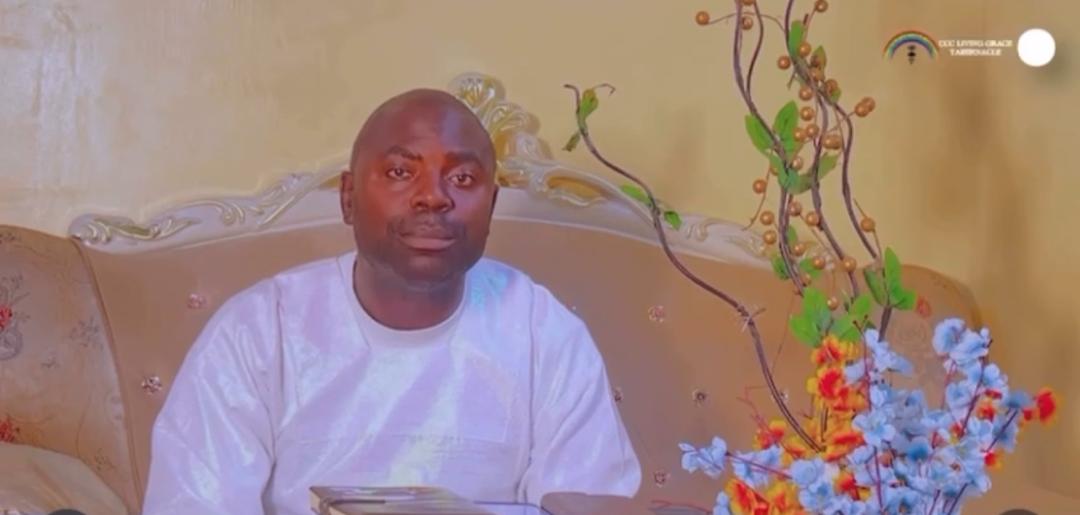
PROPHET KINGSLEY AITAFO MARKS BIRTHDAY WITH MESSAGE OF FAITH, SERVICE
LAGOS, NIGERIA — Renowned cleric, Prophet Kingsley Aitafo, is being celebrated today by followers, associates, and members of the Christian community as he marks his birthday, with tributes pouring in to honor his spiritual impact and years of dedicated service.
The birthday of the respected prophet has become more than a personal milestone, as admirers describe it as a moment to reflect on a life devoted to faith, leadership, and humanitarian outreach.
Known for his passionate teachings and prophetic ministry, Aitafo has built a reputation as a voice of hope to many within and beyond Nigeria.
Close associates say the cleric’s journey has been defined by unwavering commitment to spiritual growth and the upliftment of lives. Through his ministry, he has continued to emphasize prayer, discipline, and a deep connection with God as pathways to personal transformation.
In commemoration of the occasion, special prayers and goodwill messages have been organized by followers across different platforms, many of whom credit his teachings for inspiring positive change in their lives.
“His life is a testimony of grace and dedication,” one associate noted. “He has remained steadfast in his calling, impacting countless lives with messages of faith and encouragement.”
Observers also highlight his role in mentoring young believers and providing spiritual guidance in challenging times, describing him as a leader whose influence extends beyond the pulpit.
As he celebrates another year, well-wishers have continued to pray for greater strength, wisdom, and expansion of his ministry, expressing confidence that his influence will continue to grow in the years ahead.
Today’s celebration stands not only as a birthday tribute, but as a recognition of a life many say has been committed to service, faith, and the advancement of the gospel.
celebrity radar - gossips
BURATAI HAILED AS ‘FRONTLINE GENERAL’ AS PRAISE TRAILS MILITARY, DIPLOMATIC SERVICE
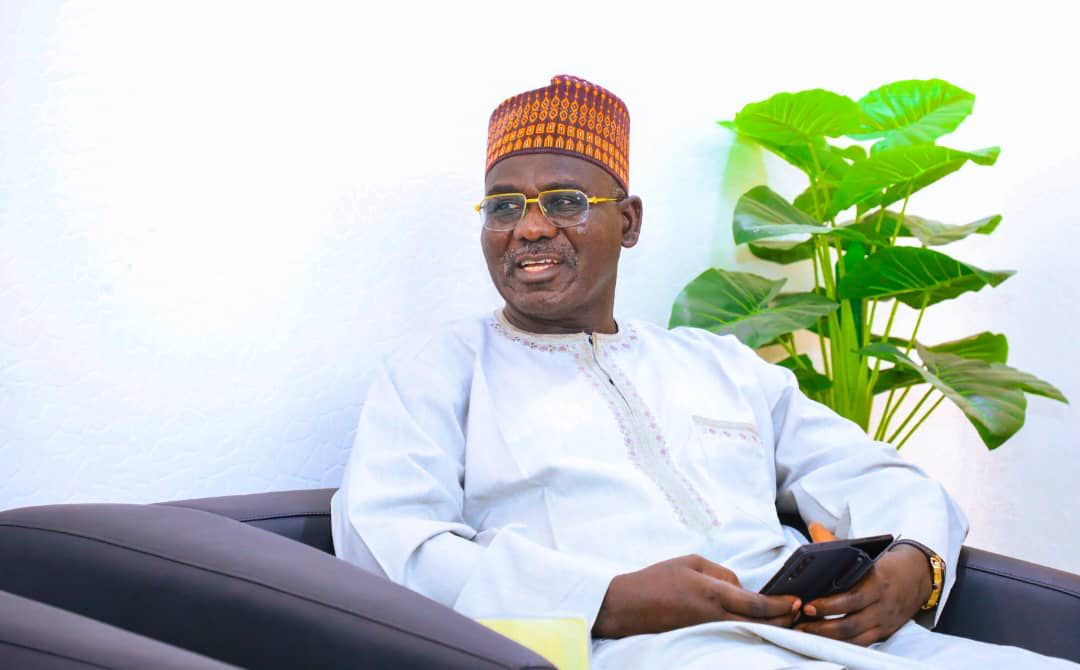
BURATAI HAILED AS ‘FRONTLINE GENERAL’ AS PRAISE TRAILS MILITARY, DIPLOMATIC SERVICE
ABUJA — Former Chief of Army Staff, Tukur Buratai (Rtd), has been described as a “frontline general” whose leadership redefined military command during Nigeria’s prolonged battle against insurgency.
The commendation, contained in a statement by KPUGHUR Sunday Christopher, highlighted Buratai’s direct involvement in combat theatres, noting that his decision to lead from the front distinguished him from many of his contemporaries.
According to the statement, the retired army chief’s presence in conflict zones at critical moments of the war effort underscored his commitment to national security and territorial integrity.
“He was not a distant commander. He was present where it mattered most,” the statement said.
The tribute also emphasized Buratai’s reputation as a detribalized leader, stressing his consistent advocacy for unity and peaceful coexistence across Nigeria’s diverse population.
Observers note that his tenure coincided with some of the country’s most challenging security periods, during which the military recorded significant operational strides against insurgent groups.
Beyond his military career, Buratai’s subsequent diplomatic engagement was also cited as evidence of his versatility in national service.
The statement concluded that his continued involvement in national discourse after retirement reflects a sustained commitment to Nigeria’s progress, describing him as “a statesman whose service transcends uniform.”
celebrity radar - gossips
Prophet Kingsley Aitafo to Mark Birthday with Global Prayer Session, Honours Spiritual Fathers
Prophet Kingsley Aitafo to Mark Birthday with Global Prayer Session, Honours Spiritual Fathers
Renowned cleric, Prophet Kingsley Aitafo, is set to mark his birthday on March 23 with a global prayer session, offering what he described as a “spiritual gift” to followers across the world.
In a departure from conventional birthday celebrations, the prophet announced a Special Live Prayer Session scheduled to hold from 10:00 a.m. to 11:00 a.m. (Nigeria time). The one-hour intercession is expected to draw participants from various countries, focusing on thanksgiving and collective prayers.

According to him, the initiative is aimed at fostering spiritual reflection and unity among believers, rather than personal festivities.
Ahead of the event, Prophet Aitafo paid tribute to his spiritual mentors, acknowledging the profound influence of Prophet and Founder of Celestial church of Christ, Prophet Samuel Bilehou Joseph Oshoffa and Bishop David Olaniyi Oyedepo on his ministerial journey.
He noted that the legacies and “exploits in ministry” of the revered clerics have continually inspired him to pursue greater depth, purpose, and impact in his calling.
The upcoming prayer session is expected to be streamed live across his ministry’s platforms, with followers encouraged to join in the global moment of intercession.


-

 society6 months ago
Religion: Africa’s Oldest Weapon of Enslavement and the Forgotten Truth
-

 news3 months ago
WHO REALLY OWNS MONIEPOINT? The $290 Million Deal That Sold Nigeria’s Top Fintech to Foreign Interests
-

 society6 months ago
“You Are Never Without Help” – Pastor Gebhardt Berndt Inspires Hope Through Empower Church (Video)
-

 celebrity radar - gossips2 months ago
Dr. Chris Okafor Returns with Power and Fire of the Spirit -Mounts Grace Nation Altar with Fresh Anointing and Restoration Grace on February 1, 2026