
Politics
A Close Shave With Death: Account of Prince Segun Akanni, Ex- CoS To Aare Gani Adams


He once walked through the valley of the shadow of death but came out unscathed.
Prince Segun Akanni ex- Personal Assistant and later Chief of Staff to Aare Gani Adams, who is the National Coordinator of Oodua Peoples Congress, (OPC) and now the 15th Aare Ona Kakanfo of Yoruba land, says he has everything to be grateful to His creator.
In December 2018, he was ‘sacked’ by his former boss Aare Adams, on allegation of ‘dining with his boss’ enemy (Asiwaju Bola Ahmed Tinubu)’. Six months later, precisely June 5, 2019, Akanni was attacked in Gbagada, Lagos by a mob whom he suspected were sent by his former boss to eliminate him. Adams has since denied the allegation and has even gone further to institute a legal battle with his erstwhile godson.
It’s exactly a year when Akanni escaped from his attackers, albeit by hair’s breath. To celebrate the first anniversary of the horrid experience, Akanni, The Publisher of The Drum Online Media who has since relocated to Canada to join his family for fear of being attacked again, maintains that his former boss orchestrated the attack and he is still after his life.
In this interview, Akanni who claims he has put 21 years of his lifetime in OPC and 17 as Adams’ Man Friday, bears it all. It is simply as explosive as irresistible!
Excerpts:
How did you feel exactly a year after that attempted assassination?
Sincerely, I don’t know how to thank God for sparing my life over series of attacks against me, most especially that of June 5, 2019, which I will describe as a ‘miraculous escape’. I return all the glory and honor to Almighty God because I would have been dead but for his grace. Every June 5 will forever remain a memorable day in my life. A lot have gone through a similar incident.
You were in Nigeria when this happened.
Did you ever see it coming?
Before the attack of June 5, my house in Magboro, Ogun State had been attacked and ransacked twice. I reported the incidents at Ibafo Police Station. The records are still there till tomorrow but the police couldn’t do anything. The good thing was that neither me, nor any of my brothers were at home on the two occasions.
When those two attempts failed, I started contacting some monarchs and personalities who are close to my former boss Aare Gani Adams to talk to him because I knew where the attacks were coming from. I did not get any feedback from them, so I resorted to hiding here and there.
Did you have a premonition?
Of course!
A month before the attack, I got a tip off that Aare Gani Adams was accusing some OPC (Oodua Peoples Congress, a Yoruba socio-cultural organisation which Adams remains a National Coordinator till date) members of allowing me to walk freely, that if it was when OPC was still OPC, Segun Akanni would have been a dead man. I never believed such statement could come from someone I diligently served wholeheartedly for almost 17 years as well as followed blindly for about 22 years with all my life being put at risk.
I called a prominent royal father and told him of the statements he (Aare Adams) uttered. He promised to reach out to him which I believed he did. In the evening of that day, I was attacked in Gbagada, immediately called the same royal father and narrated everything to him, he was speechless. The only comments he made was: “Ahhhhhh, Segun!!! You said there was a plan to attack, now I believe you. Where are you now?” I told him I was still hiding somewhere before going to the hospital.
Be sincere, is that anybody you offended or defrauded that you felt was after your life?
I’ve never involved in any dubious or shady deals to think of someone whom I had dealt with was after my life. My ways are pure but I knew the attacks were from my former boss, Aare Gani Adams. I said this because I don’t think that position is meant to sniff out the lives of people.
Could you recall how you parted ways with your former boss?
It all started on Monday December 3rd, 2018. I was in his (Adams) house at Omole Phase II. As usual, we were preparing to go to Ajah for a meeting. I was chatting in the lobby of his house with a popular Nollywood Actor. Aare just came to where we were and asked me to leave his house and pack all my things. He alleged me of holding a meeting with Chief Femi Davies (Mr Femi Davies was a friend to Aare and a Publisher of Metronewsonline) on Wednesday November 28th, 2018, and another one on Sunday December 2 at 1am.
Aare Adams said Niyi (one of his staff in the office who was sick and was then at home) was also there in the meeting. I’ve never met with Asiwaju Bola Tinubu ( former Lagos State Governor and National Leader of APC) for once; only Ogbeni Rauf Aregbesola (a two-time governor of Osun State) knows me.
He said we agreed in the said meeting to plant an explosive in his house and in the OPC’s NCC (National Coordinating Council) meeting slated for Ajah later that day.
What was your reaction then?
I was dumbfounded!!!
Before then, I’ve not seen Chief Femi Davies for over four months.
He (Aare Adams) stated further that i have alliance and allegiance with Asiwaju Bola. Tinubu and some of his men and I was also revealing his secrets to Tinubu; that Asiwaju gave us N200m, a house in Canada and in Lekki. Just like that?
Aare Adams said I used to visit Asiwaju Tinubu’s house in Bourdillon (in Okoyi, Lagos) at night after leaving his house. All the allegations against me are baseless, frivolous and unfounded. I didn’t have any meeting whatsoever with Asiwaju Bola Tinubu, Chief Femi Davies or any of their representatives. Everything was like a dream to me.
And how long has this suspicion been sustained?
It’s been quite sometime!
I recall similar thing happened in 2012 when I was also alleged of romancing with Tinubu, alongside with one of his former friends, Mr. Wale Adedayo. That time, he said Asiwaju Tinubu gave me a poison to put in his food.
I was out of office for two months. He eventually called me back to resume because the allegations were not true.
But you were also alleged of instigating his wife against him to cause family dis-harmony.
I’m aware of the allegation but I’m not guilty. Aside instigating his wife, I was also alleged of getting Canadian visas for his wife and children.
Meanwhile, it was Aare himself who removed the names of his wife and that of his children from the Canadian visa applications on the ground that the wife was being rude to him. It was later that his wife went ahead and applied for the visa on her own, and was granted visa with the children. On this issue, I invited Zaki of Arigidi (the monarch of Arigidi in Ondo State) to Lagos to appeal to Aare for amicable settlement with his wife before the woman took that action. Whereas, he later bought tickets for his wife and the kids to use the visas before they expired. If he wasn’t happy about the Visas, would he have bought tickets for them to travel to Canada with the same Visas?
Could you still recall vividly that near-death experience, and how you escaped?
Yes, I can!
The attacked happened at the Mobil Filling Station in Gbagada, Lagos by some OPC members on the instruction of my former boss. I was there to visit a friend.
The attack was masterminded by two of Aare Gani Adams’ men. As I said earlier, I heard about their plans over a month before the attack.
It was carefully arranged to eliminate me, so as to leave an impression that i died in a mob attack. I couldn’t have imagined what would have happened to me if I didn’t have a brainwave and take to my heels to escape being lynched by the rampaging daredevil mob. They chased me everywhere and started shouting: ‘thief’! thief’!!, when it turned out they could not catch up with me.
In fact their intention was to push me to the express way so as to be run over by a moving vehicle. It was by the grace of God that I escaped.
Was there anything like a severance package after you quit relationship with your former boss?
You won’t believe that as at when I was leaving his house, I had no car or even money in my three accounts after almost 17 years of working with him and 21 years in OPC. I was doing everything because of future and the love I have for Yoruba land.
The worst of it all was that all leaders of Oodua People’s Congress (OPC) were asked to swear an oath for seven days never to relate with me again. Even, some members of Oodua Progressive Union (OPU is an offshoot of OPC established to woo Yoruba nationals in diaspora to return to their father land and invest) were placed on oath as well.
I was banned and barred from OPC and OPU activities, the organisation we jointly struggle to found and built together.
I remembered one night, during our normal discussions, I advised him to sheathe sword with Asiwaju Bola Tinubu because of the role he (Asiwaju Tinubu) played when he (Adams) was incarcerated for 14 months in 2005. He (Tinubu) was there for us morally, physically and financially. He even sent former Governor of Osun State, Ogbeni Rauf Aregbesola to check on him in Kuje Prison then.
It was only Asiwaju Tinubu, Otunba Gbenga Daniel (another former governor of Ogun State), Ogbeni Rauf Aregbesola and a former Senator from Osun State, Chief Felix Ogunwale who were there for us at those trying times. I guess that was when Aare started thinking otherwise. I never knew he was going to take the advice personal.
You were once a strong member of OPC and Personal Assistant to Otunba Adams. Did you suspect your splitting with your former boss could have inspired the attack?
“SPLITTING? I DIDN’T SPLIT UP WITH HIM, HE EDGED ME OUT WHEN HE REALISED I WAS BECOMING TOO POPULAR MORE THAN WHAT HE EXPECTED. HE TOLD A LOT OF PEOPLE THAT IF HE DIDN’T TAKE SUCH ACTION, “SEGUN MIGHT LIKELY TAKE OVER THE ORGANISATIONS FROM HIM IN FUTURE BECAUSE PEOPLE PREFER TO REACH OUT TO SEGUN FOR ANYTHING INSTEAD OF HIM.” ALL THE ATTACKS AGAINST ME HAPPENED AS A RESULT OF THE WAY HE ASSASSINATED MY CHARACTERS.”
Were there things you think you did wrong while with OPC?
I didn’t do anything wrong to have deserved such humiliation and victimisation. My ways are pure. I was loyal to him 101 per cent. I was so loyal to the extent of stepping on so many toes because of him.
How many will I mention? I swear!!! I didn’t betray him. Quote me.
Your boss is now the Aare Ona Kakanfo of Yoruba land, as his former PA and later CoS, how would you describe your personal relationship with him?
My relationship with him was very cordial. I was so loyal to him. I never thought of any downfall for him once. I always thought of progress, promotion and elevation for him because I believe if he’s elevated, we would all benefit from it.
I can’t count my contributions to his achievements and progress right from when I started working with him from 2002 till December 3rd, 2018 when he edged me out unceremoniously. Was it during the factional crises in OPC or when he was incarcerated for 14 months? Is it about my role in his aspirations to become Aare Onakakanfo of Yoruba land, the pre and post 2015 general elections or in the area of branding and repackaging of OPC? The formation of OPU.
No holidays, no weekend, no time for my family. I worked everyday but God knows the best! He will surely judge.
As a former insider in OPC, what do you think actually create this animosity? Is it suspicion on the part of your former boss or carelessness on your own part?
The answer is simple!
As a matter of fact, Aare should stop creating enemies for himself. No one is after him; therefore he should stop suspecting people. He has trained lots of men, but none of those good hands are with him anymore. Once he suspects anyone, he tags that individual an enemy of OPC or OPU and sends him away from the organisations. Voluntary organizations? This is uncalled for, it’s ridiculous. Lots of foundation members of OPC and OPU have been edged out by him. Why?
Same goes for his friends who had been there for him when the going was rough and tough in the past. None of them are with him again. This is where he’s getting things wrong, truth must be said. If he continues this way, the leaders and the members of the organizations will revolt against him one day. This will be highly disastrous, he should restrain himself from bringing people down. Chief Obafemi Awolowo who he claims he’s emulating didn’t live his life in this manner. That’s why people still believe in him after death.
“AS A MATTER OF FACT, AARE SHOULD STOP CREATING ENEMIES FOR HIMSELF. NO ONE IS AFTER HIM; THEREFORE HE SHOULD STOP SUSPECTING PEOPLE. HE HAS TRAINED LOTS OF MEN, BUT NONE OF THOSE GOOD HANDS ARE WITH HIM ANYMORE. ONCE HE SUSPECTS ANYONE, HE TAGS THAT INDIVIDUAL AN ENEMY OF OPC OR OPU, AND SENDS HIM AWAY FROM THE ORGANISATIONS. VOLUNTARY ORGANIZATIONS? SAME GOES FOR HIS FRIENDS WHO HAD BEEN THERE FOR HIM WHEN THE GOING WAS ROUGH AND TOUGH IN THE PAST. NONE OF THEM ARE WITH AGAIN. THIS IS WHERE HE’S GETTING THINGS WRONG, TRUTH MUST BE SAID.”
Are there things you regret now as non-member of OPC?
I don’t have any regret for joining OPC. I joined the organisation in 1998 as a way of contributing my efforts to the yearnings of depressed and deprived people of Yoruba land. The Yoruba land is marginalised and I believed I could play my own roles.
That was the reason why I joined the organisation then.
What did that experience teach you?
The experience taught me not to put my hope in the hands of anyone because I trusted Aare with all my life. I never thought I could be treated like a common criminal. It’s a lesson for others to learn from.
Are there things you suffered as a result of having to run out of Nigeria to save your life and that of your family?
I don’t want to remember many of challenges I faced again. When a complainant became an accused person, what will you do? Run for your life especially when I didn’t have anyone to rescue me. Police failed to rescue me. I was in SARS (Police Special Anti-Robbery Squad) to report the matter again, nothing was done.
The next thing was that Aare took me to court, claiming I lied against him, despite clear evidence and facts against him. Can you imagine? I don’t want to talk too much. You can see I’ve been avoiding talking to the media since the inception of this issue.
I have my reasons. I will write a book to set the record straight but not now.
We also learned that you wrote a petition to United Nation alleging that your former boss was after your life. How true and what’s the update now?
What will I achieve from it? No, I never did. It was my NGO-Global Forum for Human Rights and Sustainable Development that issued a press statement when I was attacked ostensibly to draw the public’s attention to my plight. The organisation appealed to Yoruba traditional rulers, prominent people, United Nations and many other institutions on my behalf.
I can’t pay evil with evil. I wasn’t brought up in that way. He (Aare) has been helpful to me in one way or the others before. For that alone I can’t write petition against him. I’ve left everything to God to judge.
Aare knows I have my own influences and contacts but I will never write any petition against him to the UN, EU (European Union) or anywhere. My visit to United Nations’ office in the New York was for another purpose. I’ve left everything to God to judge. God knows the best. God is the decider, controller and everything.
Some people believed there are some deep secrets or should we call it unwritten laws within the OPC which is not known to non-initiates. Perhaps, your breaching some of these unwritten laws may have led to your ordeal. How true is this?
As I said earlier, I don’t want to expatiate further. I will write a book to put the record straight when it is time but i never breached any unwritten law as believed by some people. I was a loyal and dedicated member of OPC. Correct me if I’m wrong. No one can beat my record. You can never hear any of his secrets from me. I was brought up in a good family.
You are now in Canada with your family. What do you miss about Nigeria and how soon would you wish to come back?
I don’t miss anything about Nigeria because it’s a lawless nation, where you may never get justice even when you are right.
And to come back to Nigeria? Not now!
Do you know how many people who had died in Nigeria as a result of this kind of attacks without any trace?
My life and that of my family are in danger in Nigeria, I can’t dare it. OPC members are spread around Nigeria and Aare has castigated me before them. Once they sight me, I might not have opportunity of escaping again. Let me remain here. Aare is still after my life. If I had an opportunity of taking my siblings out of Nigeria, I will do as my house in Magboro has been deserted because of fear of attack. If not for God, I would have been a dead man.
Someone who sends my name everywhere, reining curses on me everyday. How would he feel if someone does same to his kids? Will he be happy? How could you build a house and destroy it? He keeps tarnish my good image, even up till tomorrow. Whenever people visit him, he welcomes them with my issues.
What have you been doing in Canada to keep body and soul together?
To God be the glory, I’ve acquired more education opportunities here. I’ve added to my certificates and I believe i will still study further more.
Once this COVID-19 is over, I will get a good job from a good company. I have all it takes to get a good job, the certificates are there to proof my competency.
Finally, do a comparison between Nigeria and Canada in terms of security and relate it with that attack that eventually forced you out of the country.
This is incomparable my brother! it’s like comparing death with sleeping. It’s far away. You can’t do such and get away with it here. It’s not possible, you will be caught, prosecuted and send to prison. No matter who you are. No one is above the law here.
A Close Shave With Death: Account of Prince Segun Akanni, Ex- CoS To Aare Gani Adams
He once walked through the valley of the shadow of death but came out unscathed.
Prince Segun Akanni ex- Personal Assistant and later Chief of Staff to Aare Gani Adams, who is the National Coordinator of Oodua Peoples Congress, (OPC) and now the 15th Aare Ona Kakanfo of Yoruba land, says he has everything to be grateful to His creator.
In December 2018, he was ‘sacked’ by his former boss Aare Adams, on allegation of ‘dining with his boss’ enemy (Asiwaju Bola Ahmed Tinubu)’. Six months later, precisely June 5, 2019, Akanni was attacked in Gbagada, Lagos by a mob whom he suspected were sent by his former boss to eliminate him. Adams has since denied the allegation and has even gone further to institute a legal battle with his erstwhile godson.
It’s exactly a year when Akanni escaped from his attackers, albeit by hair’s breath. To celebrate the first anniversary of the horrid experience, Akanni, The Publisher of The Drum Online Media who has since relocated to Canada to join his family for fear of being attacked again, maintains that his former boss orchestrated the attack and he is still after his life.
In this interview, Akanni who claims he has put 21 years of his lifetime in OPC and 17 as Adams’ Man Friday, bears it all. It is simply as explosive as irresistible!
Excerpts:
How did you feel exactly a year after that attempted assassination?
Sincerely, I don’t know how to thank God for sparing my life over series of attacks against me, most especially that of June 5, 2019, which I will describe as a ‘miraculous escape’. I return all the glory and honor to Almighty God because I would have been dead but for his grace. Every June 5 will forever remain a memorable day in my life. A lot have gone through a similar incident.
You were in Nigeria when this happened.
Did you ever see it coming?
Before the attack of June 5, my house in Magboro, Ogun State had been attacked and ransacked twice. I reported the incidents at Ibafo Police Station. The records are still there till tomorrow but the police couldn’t do anything. The good thing was that neither me, nor any of my brothers were at home on the two occasions.
When those two attempts failed, I started contacting some monarchs and personalities who are close to my former boss Aare Gani Adams to talk to him because I knew where the attacks were coming from. I did not get any feedback from them, so I resorted to hiding here and there.
Did you have a premonition?
Of course!
A month before the attack, I got a tip off that Aare Gani Adams was accusing some OPC (Oodua Peoples Congress, a Yoruba socio-cultural organisation which Adams remains a National Coordinator till date) members of allowing me to walk freely, that if it was when OPC was still OPC, Segun Akanni would have been a dead man. I never believed such statement could come from someone I diligently served wholeheartedly for almost 17 years as well as followed blindly for about 22 years with all my life being put at risk.
I called a prominent royal father and told him of the statements he (Aare Adams) uttered. He promised to reach out to him which I believed he did. In the evening of that day, I was attacked in Gbagada, immediately called the same royal father and narrated everything to him, he was speechless. The only comments he made was: “Ahhhhhh, Segun!!! You said there was a plan to attack, now I believe you. Where are you now?” I told him I was still hiding somewhere before going to the hospital.
Be sincere, is that anybody you offended or defrauded that you felt was after your life?
I’ve never involved in any dubious or shady deals to think of someone whom I had dealt with was after my life. My ways are pure but I knew the attacks were from my former boss, Aare Gani Adams. I said this because I don’t think that position is meant to sniff out the lives of people.
Could you recall how you parted ways with your former boss?
It all started on Monday December 3rd, 2018. I was in his (Adams) house at Omole Phase II. As usual, we were preparing to go to Ajah for a meeting. I was chatting in the lobby of his house with a popular Nollywood Actor. Aare just came to where we were and asked me to leave his house and pack all my things. He alleged me of holding a meeting with Chief Femi Davies (Mr Femi Davies was a friend to Aare and a Publisher of Metronewsonline) on Wednesday November 28th, 2018, and another one on Sunday December 2 at 1am.
Aare Adams said Niyi (one of his staff in the office who was sick and was then at home) was also there in the meeting. I’ve never met with Asiwaju Bola Tinubu ( former Lagos State Governor and National Leader of APC) for once; only Ogbeni Rauf Aregbesola (a two-time governor of Osun State) knows me.
He said we agreed in the said meeting to plant an explosive in his house and in the OPC’s NCC (National Coordinating Council) meeting slated for Ajah later that day.
What was your reaction then?
I was dumbfounded!!!
Before then, I’ve not seen Chief Femi Davies for over four months.
He (Aare Adams) stated further that i have alliance and allegiance with Asiwaju Bola. Tinubu and some of his men and I was also revealing his secrets to Tinubu; that Asiwaju gave us N200m, a house in Canada and in Lekki. Just like that?
Aare Adams said I used to visit Asiwaju Tinubu’s house in Bourdillon (in Okoyi, Lagos) at night after leaving his house. All the allegations against me are baseless, frivolous and unfounded. I didn’t have any meeting whatsoever with Asiwaju Bola Tinubu, Chief Femi Davies or any of their representatives. Everything was like a dream to me.
And how long has this suspicion been sustained?
It’s been quite sometime!
I recall similar thing happened in 2012 when I was also alleged of romancing with Tinubu, alongside with one of his former friends, Mr. Wale Adedayo. That time, he said Asiwaju Tinubu gave me a poison to put in his food.
I was out of office for two months. He eventually called me back to resume because the allegations were not true.
But you were also alleged of instigating his wife against him to cause family dis-harmony.
I’m aware of the allegation but I’m not guilty. Aside instigating his wife, I was also alleged of getting Canadian visas for his wife and children.
Meanwhile, it was Aare himself who removed the names of his wife and that of his children from the Canadian visa applications on the ground that the wife was being rude to him. It was later that his wife went ahead and applied for the visa on her own, and was granted visa with the children. On this issue, I invited Zaki of Arigidi (the monarch of Arigidi in Ondo State) to Lagos to appeal to Aare for amicable settlement with his wife before the woman took that action. Whereas, he later bought tickets for his wife and the kids to use the visas before they expired. If he wasn’t happy about the Visas, would he have bought tickets for them to travel to Canada with the same Visas?
Could you still recall vividly that near-death experience, and how you escaped?
Yes, I can!
The attacked happened at the Mobil Filling Station in Gbagada, Lagos by some OPC members on the instruction of my former boss. I was there to visit a friend.
The attack was masterminded by two of Aare Gani Adams’ men. As I said earlier, I heard about their plans over a month before the attack.
It was carefully arranged to eliminate me, so as to leave an impression that i died in a mob attack. I couldn’t have imagined what would have happened to me if I didn’t have a brainwave and take to my heels to escape being lynched by the rampaging daredevil mob. They chased me everywhere and started shouting: ‘thief’! thief’!!, when it turned out they could not catch up with me.
In fact their intention was to push me to the express way so as to be run over by a moving vehicle. It was by the grace of God that I escaped.
Was there anything like a severance package after you quit relationship with your former boss?
You won’t believe that as at when I was leaving his house, I had no car or even money in my three accounts after almost 17 years of working with him and 21 years in OPC. I was doing everything because of future and the love I have for Yoruba land.
The worst of it all was that all leaders of Oodua People’s Congress (OPC) were asked to swear an oath for seven days never to relate with me again. Even, some members of Oodua Progressive Union (OPU is an offshoot of OPC established to woo Yoruba nationals in diaspora to return to their father land and invest) were placed on oath as well.
I was banned and barred from OPC and OPU activities, the organisation we jointly struggle to found and built together.
I remembered one night, during our normal discussions, I advised him to sheathe sword with Asiwaju Bola Tinubu because of the role he (Asiwaju Tinubu) played when he (Adams) was incarcerated for 14 months in 2005. He (Tinubu) was there for us morally, physically and financially. He even sent former Governor of Osun State, Ogbeni Rauf Aregbesola to check on him in Kuje Prison then.
It was only Asiwaju Tinubu, Otunba Gbenga Daniel (another former governor of Ogun State), Ogbeni Rauf Aregbesola and a former Senator from Osun State, Chief Felix Ogunwale who were there for us at those trying times. I guess that was when Aare started thinking otherwise. I never knew he was going to take the advice personal.
You were once a strong member of OPC and Personal Assistant to Otunba Adams. Did you suspect your splitting with your former boss could have inspired the attack?
“SPLITTING? I DIDN’T SPLIT UP WITH HIM, HE EDGED ME OUT WHEN HE REALISED I WAS BECOMING TOO POPULAR MORE THAN WHAT HE EXPECTED. HE TOLD A LOT OF PEOPLE THAT IF HE DIDN’T TAKE SUCH ACTION, “SEGUN MIGHT LIKELY TAKE OVER THE ORGANISATIONS FROM HIM IN FUTURE BECAUSE PEOPLE PREFER TO REACH OUT TO SEGUN FOR ANYTHING INSTEAD OF HIM.” ALL THE ATTACKS AGAINST ME HAPPENED AS A RESULT OF THE WAY HE ASSASSINATED MY CHARACTERS.”
Were there things you think you did wrong while with OPC?
I didn’t do anything wrong to have deserved such humiliation and victimisation. My ways are pure. I was loyal to him 101 per cent. I was so loyal to the extent of stepping on so many toes because of him.
How many will I mention? I swear!!! I didn’t betray him. Quote me.
Your boss is now the Aare Ona Kakanfo of Yoruba land, as his former PA and later CoS, how would you describe your personal relationship with him?
My relationship with him was very cordial. I was so loyal to him. I never thought of any downfall for him once. I always thought of progress, promotion and elevation for him because I believe if he’s elevated, we would all benefit from it.
I can’t count my contributions to his achievements and progress right from when I started working with him from 2002 till December 3rd, 2018 when he edged me out unceremoniously. Was it during the factional crises in OPC or when he was incarcerated for 14 months? Is it about my role in his aspirations to become Aare Onakakanfo of Yoruba land, the pre and post 2015 general elections or in the area of branding and repackaging of OPC? The formation of OPU.
No holidays, no weekend, no time for my family. I worked everyday but God knows the best! He will surely judge.
As a former insider in OPC, what do you think actually create this animosity? Is it suspicion on the part of your former boss or carelessness on your own part?
The answer is simple!
As a matter of fact, Aare should stop creating enemies for himself. No one is after him; therefore he should stop suspecting people. He has trained lots of men, but none of those good hands are with him anymore. Once he suspects anyone, he tags that individual an enemy of OPC or OPU and sends him away from the organisations. Voluntary organizations? This is uncalled for, it’s ridiculous. Lots of foundation members of OPC and OPU have been edged out by him. Why?
Same goes for his friends who had been there for him when the going was rough and tough in the past. None of them are with him again. This is where he’s getting things wrong, truth must be said. If he continues this way, the leaders and the members of the organizations will revolt against him one day. This will be highly disastrous, he should restrain himself from bringing people down. Chief Obafemi Awolowo who he claims he’s emulating didn’t live his life in this manner. That’s why people still believe in him after death.
“AS A MATTER OF FACT, AARE SHOULD STOP CREATING ENEMIES FOR HIMSELF. NO ONE IS AFTER HIM; THEREFORE HE SHOULD STOP SUSPECTING PEOPLE. HE HAS TRAINED LOTS OF MEN, BUT NONE OF THOSE GOOD HANDS ARE WITH HIM ANYMORE. ONCE HE SUSPECTS ANYONE, HE TAGS THAT INDIVIDUAL AN ENEMY OF OPC OR OPU, AND SENDS HIM AWAY FROM THE ORGANISATIONS. VOLUNTARY ORGANIZATIONS? SAME GOES FOR HIS FRIENDS WHO HAD BEEN THERE FOR HIM WHEN THE GOING WAS ROUGH AND TOUGH IN THE PAST. NONE OF THEM ARE WITH AGAIN. THIS IS WHERE HE’S GETTING THINGS WRONG, TRUTH MUST BE SAID.”
Are there things you regret now as non-member of OPC?
I don’t have any regret for joining OPC. I joined the organisation in 1998 as a way of contributing my efforts to the yearnings of depressed and deprived people of Yoruba land. The Yoruba land is marginalised and I believed I could play my own roles.
That was the reason why I joined the organisation then.
What did that experience teach you?
The experience taught me not to put my hope in the hands of anyone because I trusted Aare with all my life. I never thought I could be treated like a common criminal. It’s a lesson for others to learn from.
Are there things you suffered as a result of having to run out of Nigeria to save your life and that of your family?
I don’t want to remember many of challenges I faced again. When a complainant became an accused person, what will you do? Run for your life especially when I didn’t have anyone to rescue me. Police failed to rescue me. I was in SARS (Police Special Anti-Robbery Squad) to report the matter again, nothing was done.
The next thing was that Aare took me to court, claiming I lied against him, despite clear evidence and facts against him. Can you imagine? I don’t want to talk too much. You can see I’ve been avoiding talking to the media since the inception of this issue.
I have my reasons. I will write a book to set the record straight but not now.
We also learned that you wrote a petition to United Nation alleging that your former boss was after your life. How true and what’s the update now?
What will I achieve from it? No, I never did. It was my NGO-Global Forum for Human Rights and Sustainable Development that issued a press statement when I was attacked ostensibly to draw the public’s attention to my plight. The organisation appealed to Yoruba traditional rulers, prominent people, United Nations and many other institutions on my behalf.
I can’t pay evil with evil. I wasn’t brought up in that way. He (Aare) has been helpful to me in one way or the others before. For that alone I can’t write petition against him. I’ve left everything to God to judge.
Aare knows I have my own influences and contacts but I will never write any petition against him to the UN, EU (European Union) or anywhere. My visit to United Nations’ office in the New York was for another purpose. I’ve left everything to God to judge. God knows the best. God is the decider, controller and everything.
Some people believed there are some deep secrets or should we call it unwritten laws within the OPC which is not known to non-initiates. Perhaps, your breaching some of these unwritten laws may have led to your ordeal. How true is this?
As I said earlier, I don’t want to expatiate further. I will write a book to put the record straight when it is time but i never breached any unwritten law as believed by some people. I was a loyal and dedicated member of OPC. Correct me if I’m wrong. No one can beat my record. You can never hear any of his secrets from me. I was brought up in a good family.
You are now in Canada with your family. What do you miss about Nigeria and how soon would you wish to come back?
I don’t miss anything about Nigeria because it’s a lawless nation, where you may never get justice even when you are right.
And to come back to Nigeria? Not now!
Do you know how many people who had died in Nigeria as a result of this kind of attacks without any trace?
My life and that of my family are in danger in Nigeria, I can’t dare it. OPC members are spread around Nigeria and Aare has castigated me before them. Once they sight me, I might not have opportunity of escaping again. Let me remain here. Aare is still after my life. If I had an opportunity of taking my siblings out of Nigeria, I will do as my house in Magboro has been deserted because of fear of attack. If not for God, I would have been a dead man.
Someone who sends my name everywhere, reining curses on me everyday. How would he feel if someone does same to his kids? Will he be happy? How could you build a house and destroy it? He keeps tarnish my good image, even up till tomorrow. Whenever people visit him, he welcomes them with my issues.
What have you been doing in Canada to keep body and soul together?
To God be the glory, I’ve acquired more education opportunities here. I’ve added to my certificates and I believe i will still study further more.
Once this COVID-19 is over, I will get a good job from a good company. I have all it takes to get a good job, the certificates are there to proof my competency.
Finally, do a comparison between Nigeria and Canada in terms of security and relate it with that attack that eventually forced you out of the country.
This is incomparable my brother! it’s like comparing death with sleeping. It’s far away. You can’t do such and get away with it here. It’s not possible, you will be caught, prosecuted and send to prison. No matter who you are. No one is above the law.




Politics
Ogun Central To Host Final Zonal Townhall Meeting for Sen. Solomon Olamilekan Adeola, April 30
Ogun Central To Host Final Zonal Townhall Meeting for Sen. Solomon Olamilekan Adeola, April 30
-.Removes Hon.Olugbenga Lekuti as Deputy Director General,Ogun East
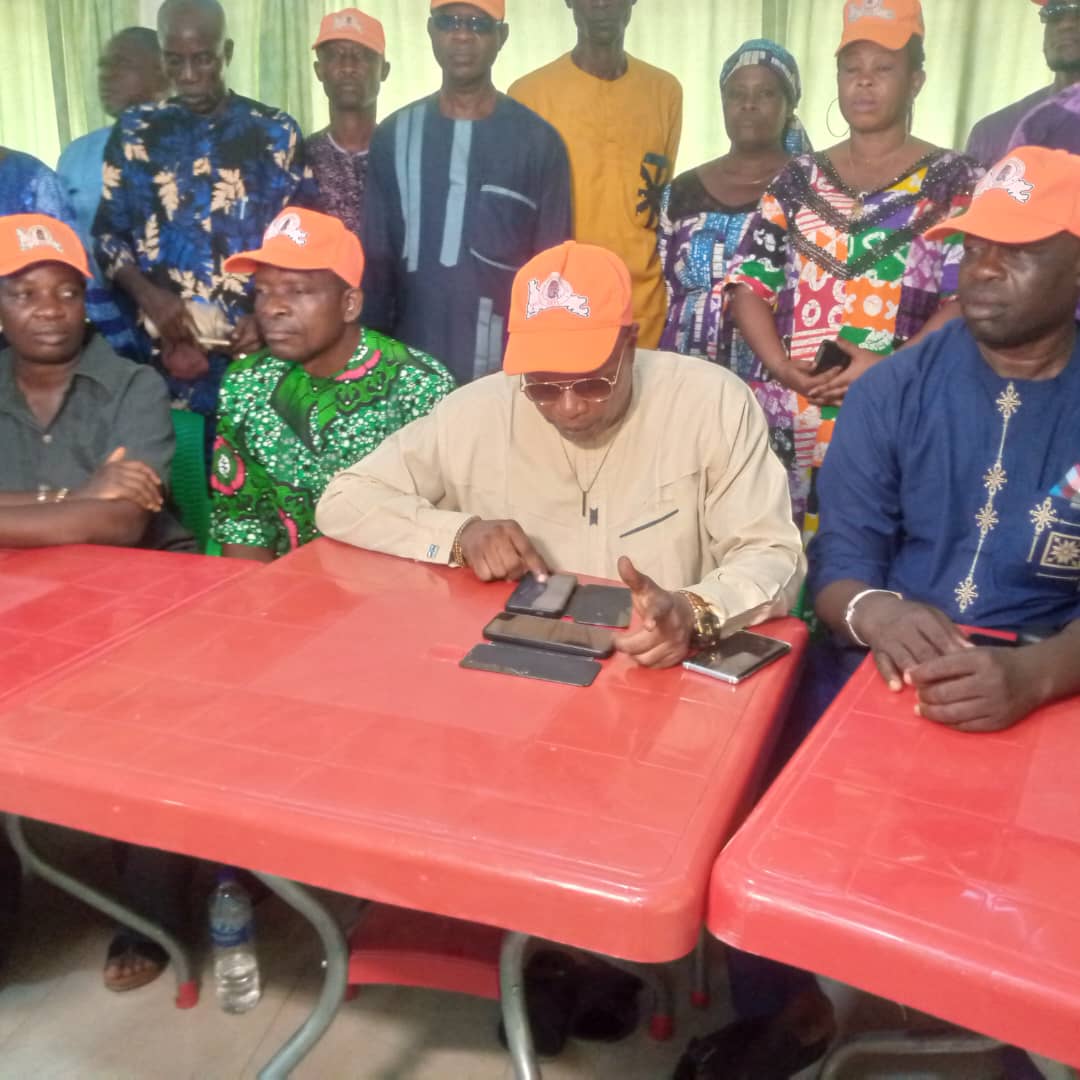
One of the leading Political Groups, Ogun Visionaries is set to host the final zonal edition of the Sen. Solomon Adeola Yayi town hall meetings in Abeokuta, Ogun State capital. The Ogun Central Edition, scheduled for April 30, 2026, aims to engage the electorate and push for Senator Yayi’s Governorship bid in 2027.
The event is themed ‘Ogun 2027: Yayi For All,’ marking the finale of the zonal town hall meetings.
Addressing Journalists on Tuesday in Abeokuta, Ogun State Capital,the Director General of Ogun Visionaries, Hon. Leye Odunjo, said the meeting will draw key stakeholders from Ogun Central’s political power circle.
Hon.odunjo stated that the event will kick off with a health walk, ‘Ogun Visionaries For Yayi Unity Walk,’ in the morning of April 30, 2026.The walk is themed ‘Let’s Walk for A United and Prosperous Ogun State,’ aiming to rally support for Senator Solomon Olamilekan Adeola Governorship aspiration.
“The town hall meeting is expected to feature prominent personalities, including Senator Solomon Olamilekan Adeola Yayi as the Special Guest of Honour. The event will provide a platform for interaction and engagement with the electorate”.
Ogun Visionaries has successfully held town hall meetings in Ogun West and Ogun East senatorial districts. The Ogun Central Edition is the final zonal meeting before moving to LGAs and wards.
The Director General while acknowledging the support received from various personalities since inception of the group,disclosed that distinguished individuals would be honoured with Award of Recognition during the event.
Odunjo, who is also a Senior Legislative Aide to the Deputy Senate President said “The political atmosphere in Ogun State is reportedly in tune with the people’s yearning for Yayi’s emergence. Ogun Visionaries is at the forefront of making this a reality.
“The event aims to unite stakeholders and push for a prosperous Ogun State. With Senator Yayi’s popularity growing, the meeting is expected to draw a large turnout.
“The Ogun Central Edition will provide a platform for stakeholders to interact and engage with the electorate. The event is seen as a crucial step towards achieving the group’s goals.
“Senator Solomon Olamilekan Adeola Yayi’s presence is expected to energize supporters and further boost his campaign for 2027” he added
Meanwhile, Ogun Visionaries has announced removal of Hon Olugbenga Lekuti as the Deputy Director General, DDG,Ogun East, of the group.
Announcing the removal in a brief statement made available to Journalists, Hon.Odunjo stated that Hon.Lekuti was relieved of the position as a result of his anti -group and anti -Yayi’s acts.
He added that a new Deputy Director General would be announced in due course.
Politics
Political Earthquake in Kano: How, Senator Rabiu Musa Kwankwaso, Nasiru Gawuna’s Move to ADC Reshapes North-West Politics
Political Earthquake in Kano: How, Senator Rabiu Musa Kwankwaso, Nasiru Gawuna’s Move to ADC Reshapes North-West Politics
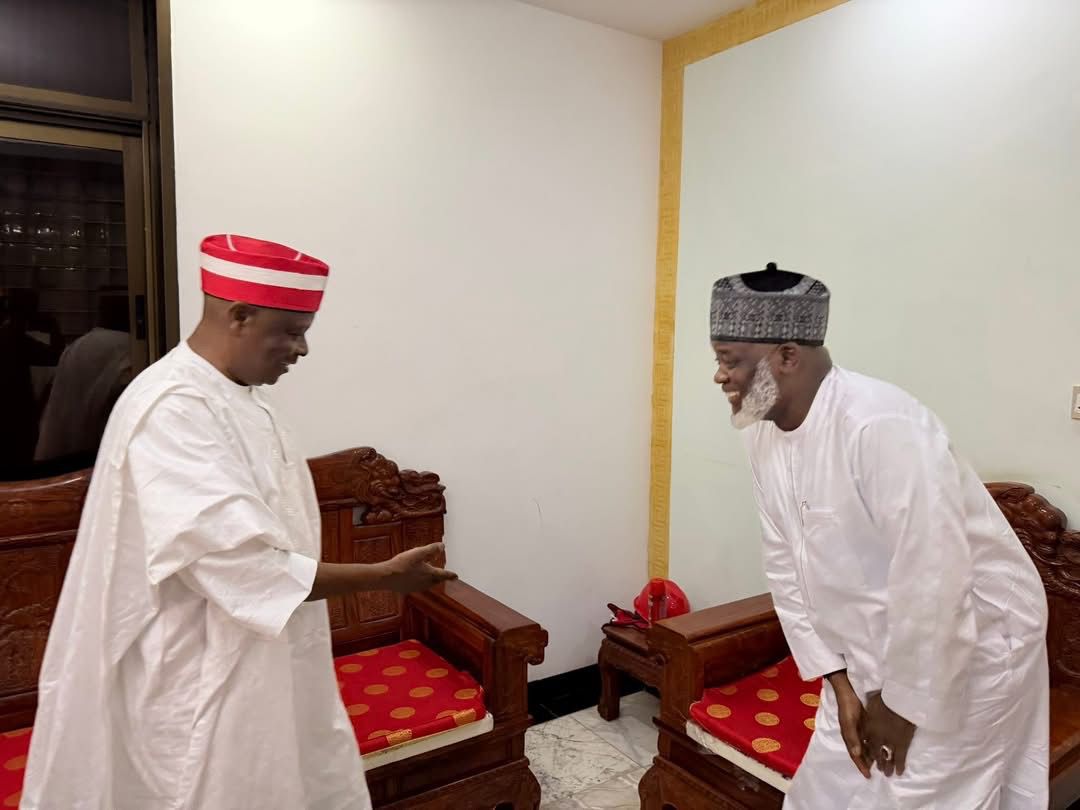
The political atmosphere of Nigeria’s North-West was fundamentally altered on a sweltering afternoon in 2026 after Senator Rabiu Musa Kwankwaso former Governor of Kano State and Former Minister for Defence who is also the “Grand Commander” of the Red-Cap revolution, finalized a move that many viewed as the ultimate masterstroke of his political career. By transitioning from the NNPP to the African Democratic Congress (ADC), Kwankwaso did more than change platforms; he effectively reset the coordinates of the nation’s largest voting bloc.
Senator Kwankwaso’s pedigree is defined by a singular devotion to human capital development and an almost mythical grassroots loyalty preceded him. He turned a local movement, the Kwankwasiyya, into a disciplined, ideological army that transcends traditional party structures. His entry into the ADC instantly transformed a secondary party into a formidable fortress, signaling to the ruling elite that the North-West is no longer a monolith under their control.
The gravity of this shift is most profound in Kano, the heartbeat of Northern commerce. For years, the state was a polarized battlefield between the Kwankwasiyya and established conservative wings. However, the entry of Nasiru Yusuf Gawuna into the same ADC orbit has created a “Kano Super-Alliance” that was previously unthinkable. Kwankwaso, the visionary architect who sent thousands of Kano’s children to global universities, now finds his populist ideology merging with Gawuna’s administrative steadiness and deep-rooted institutional connections.
This synergy is a seismic departure from the politics of “zero-sum” rivalry; it is a calculated fusion of mass appeal and the strategic machinery required to protect and deliver votes.
This move reshuffles the entire North-West deck. As Kwankwaso plants the ADC flag across the region, he is attracting a wave of heavyweights from Kaduna to Sokoto who feel marginalized by the status quo. His political pedigree allows him to speak with a regional authority that others lack, positioning himself as a protector during a time of economic uncertainty. By bringing Gawuna into this fold, the dynamics of Kano politics have shifted from a war of attrition to a coalition of necessity. This alliance creates a “Third Way” that bypasses the failures of the old guard, promising a return to the rapid growth that defined the Kwankwaso years, but with a broader, more inclusive base that could dictate the occupant of Aso Rock in 2027.
Kwankwaso’s career has always been defined by a uniquely personal brand of power. From 1999 to 2015, he served two terms as Governor of Kano State, in addition to roles as Minister of Defence and Senator. While many were surprised by his recent maneuvers; especially following closed-door meetings with President Bola Tinubu, he chose the emerging ADC over the ruling APC.
In the high-stakes theater of Nigerian politics, few events have jolted the region quite like the defection of Nasiru Yusuf Gawuna from the APC to the ADC on March 31, 2026. Coming just twenty-four hours after Kwankwaso’s move, Gawuna’s transition fundamentally has also altered the political calculus in Kano. What makes this moment remarkable is the sheer drama of the reversal. Gawuna’s political journey has been a steady, calculated ascent through Kano’s establishment. He first shot to prominence as Commissioner of Agriculture under Governor Abdullahi Umar Ganduje, earning a reputation for hands-on management in a state where farming is the economic backbone. He eventually rose to Deputy Governor, serving for nearly six years and gaining invaluable executive experience. Beyond partisan politics, Gawuna distinguished himself as Chairman of the Governing Council of Bayero University and, most recently, as Chairman of the Federal Mortgage Bank of Nigeria (FMBN). He resigned from the FMBN on March 27, 2026, citing compliance with presidential directives regarding political appointees.
A look back at the 2023 gubernatorial election reveals just how significant Gawuna is. Running under the APC, he polled over 890,000 votes against the formidable Kwankwasiyya machine. This proved that he is one of the few politicians in Kano who can genuinely compete with Kwankwaso’s electoral machinery. His strength is threefold: he appeals to the youth, the religious establishment (Ulama), and the business community; he has the capacity to split the APC vote; and he has demonstrated he can deliver votes independently of a larger party wave. To understand the magnitude of this defection, one must appreciate the complete inversion of alliances since 2023. Back then, Governor Abba Kabir Yusuf ran on the NNPP ticket with Kwankwaso’s backing, while Gawuna carried the APC banner with Ganduje’s support. By 2027, the roles will likely reverse: Governor Yusuf is positioned to run under the APC with Ganduje’s blessing, while Gawuna is poised to run under the ADC with Kwankwaso’s endorsement.
From the perspective of the Kwankwasiyya movement, Gawuna’s arrival is a “return” rather than a “recruitment,” as he was part of the movement’s pioneer cohort. This narrative neutralizes accusations of opportunism. For his part, Gawuna framed his move in terms of service and divine guidance, with sources indicating he felt marginalized within the APC after his 2023 defeat.
The reaction from within the APC has been one of worry and regret. President Tinubu, recognizing the stakes, reportedly directed party leaders to prevent Gawuna’s move, even offering him an automatic Senatorial ticket for 2027. The failure of this pressure campaign, Gawuna reportedly placed his phone on “Do Not Disturb” and traveled abroad to avoid lobbyists represents a significant defeat for the presidency’s political management. This crisis prompted emergency meetings between President Tinubu, Dr. Ganduje, and Badaru Abubakar at the Presidential Villa to reorganize their strategy.
The long-term implication is the potential break of the APC-PDP duopoly. The ADC is now positioning itself as a genuine “third force” in the North-West. The defection of high-profile figures like Senator Ahmed Babba-Kaita, Senator Aishatu “Binani” Ahmed, and former Justice Minister Abubakar Malami suggests a coordinated realignment. This competition could force more substantive policy debates and reduce the “zero-sum” intensity of regional elections.
The projected 2027 gubernatorial rematch between Gawuna (ADC) and Governor Yusuf (APC) will be a battle between two men with established records. Voters will have a genuine choice between performance and platform rather than just shifting loyalties. As Gawuna put it: “Allah gives power to whom He wants and when He wants.” While the 2027 elections will reveal where that power flows, it is already clear that the political landscape of the North-West will never look the same again.
Governor Dauda Lawal Approves Gratuity Payment
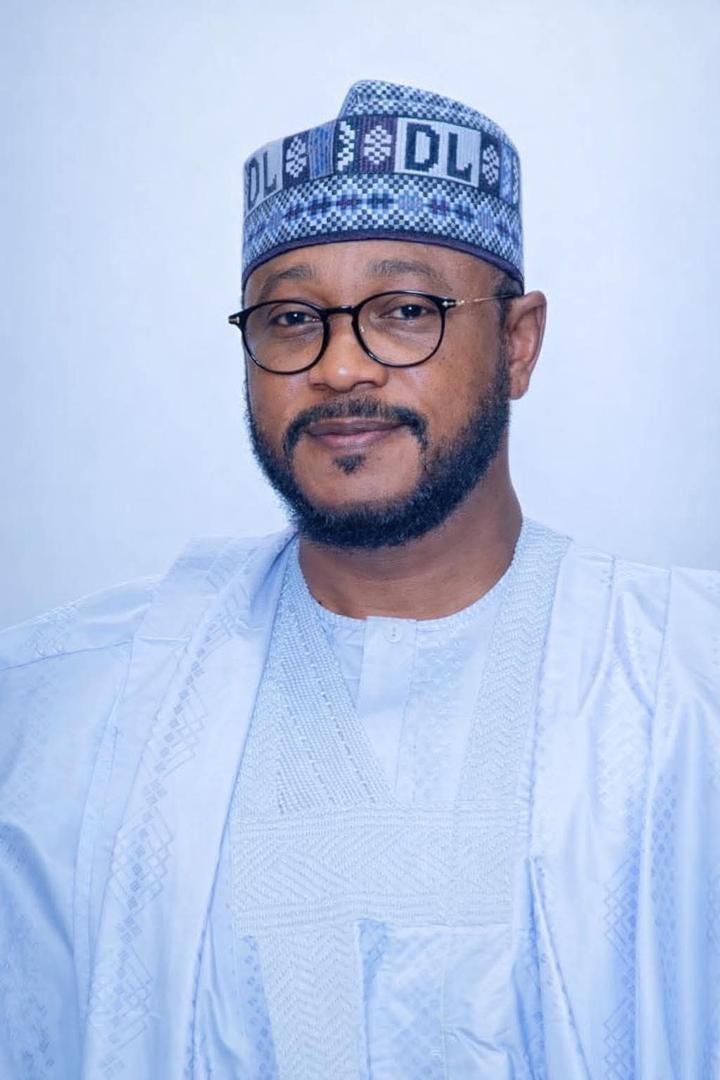
The Zamfara State Government, under the visionary leadership of Governor Dauda Lawal, has approved the release of funds for the payment of Gratuity Batch 3 for the 2024/25 period. This decisive action underscores the administration’s unwavering commitment to the welfare of retired civil servants who dedicated years of service to the state’s development.
The Accountant General of the State is already working diligently to ensure that all eligible retirees receive their payments promptly and efficiently, reflecting the government’s resolve to uphold transparency and accountability in the disbursement process.
This timely gratuity payment is a testament to Governor Dauda Lawal’s people-centered leadership, which recognizes the sacrifices and contributions of retirees to the progress and stability of Zamfara State. It also reaffirms the government’s pledge to honor its financial obligations without unnecessary delays.
The Zamfara State Government calls on all retirees in the affected batch to exercise patience as the necessary administrative and financial processes are finalized. Every effort is being made to ensure smooth and uninterrupted payments.
This initiative is part of Governor Dauda Lawal’s broader vision to empower citizens and retirees, strengthen confidence in public service, and sustain the morale of those who have committed their lives to the growth of Zamfara State.


- Seychelles Strengthens Human Rights Reporting through National Workshop April 8, 2026
- ABB’s Application Configurator brings speed and precision to grid-feeding protection system design April 7, 2026
- Can Equatorial Guinea Reposition as West Africa’s Gas Hub? April 7, 2026
- Afreximbank Partners with African Energy Week 2026 to Drive Africa-Led Energy Deals April 7, 2026
- Merck Foundation Marks ‘World Health Day’ 2026 – Transforming Patient Care in Africa and Beyond through 2600+ Scholarships for Healthcare Providers From 52 Countries April 7, 2026
- Morocco Gas Plan Reset Could Open Door to New Investment Models April 7, 2026
- African Petroleum Producers Organization (APPO) Secretary General Joins Angola Oil & Gas (AOG) 2026 as African Energy Bank Eyes June 2026 Debut April 7, 2026
- Ghanaian Biomedical Specialist Receives International Award April 7, 2026
- Grey Connects the Africa-Canada Money Corridor With Instant Transfers via Interac April 7, 2026
- Nigeria’s Oil Revival in Focus as Petroleum Minister Lokpobiri Joins Paris Energy Forum April 7, 2026
- Seychelles Strengthens Human Rights Reporting through National Workshop April 8, 2026
- ABB’s Application Configurator brings speed and precision to grid-feeding protection system design April 7, 2026
- Can Equatorial Guinea Reposition as West Africa’s Gas Hub? April 7, 2026
- Afreximbank Partners with African Energy Week 2026 to Drive Africa-Led Energy Deals April 7, 2026
- Merck Foundation Marks ‘World Health Day’ 2026 – Transforming Patient Care in Africa and Beyond through 2600+ Scholarships for Healthcare Providers From 52 Countries April 7, 2026
- Morocco Gas Plan Reset Could Open Door to New Investment Models April 7, 2026
- African Petroleum Producers Organization (APPO) Secretary General Joins Angola Oil & Gas (AOG) 2026 as African Energy Bank Eyes June 2026 Debut April 7, 2026
-

 news4 months ago
WHO REALLY OWNS MONIEPOINT? The $290 Million Deal That Sold Nigeria’s Top Fintech to Foreign Interests
-

 society7 months ago
“You Are Never Without Help” – Pastor Gebhardt Berndt Inspires Hope Through Empower Church (Video)
-

 celebrity radar - gossips2 months ago
Dr. Chris Okafor Returns with Power and Fire of the Spirit -Mounts Grace Nation Altar with Fresh Anointing and Restoration Grace on February 1, 2026
-

 celebrity radar - gossips4 months ago
Prophet Kingsley Aitafo Releases 2026 Prophecy: ‘Nigeria Will Rise, but the World Must Prepare for Turbulence’