
Politics
A Democracy in Shackles: How APC’s Tyranny Redefines Governance in Nigeria

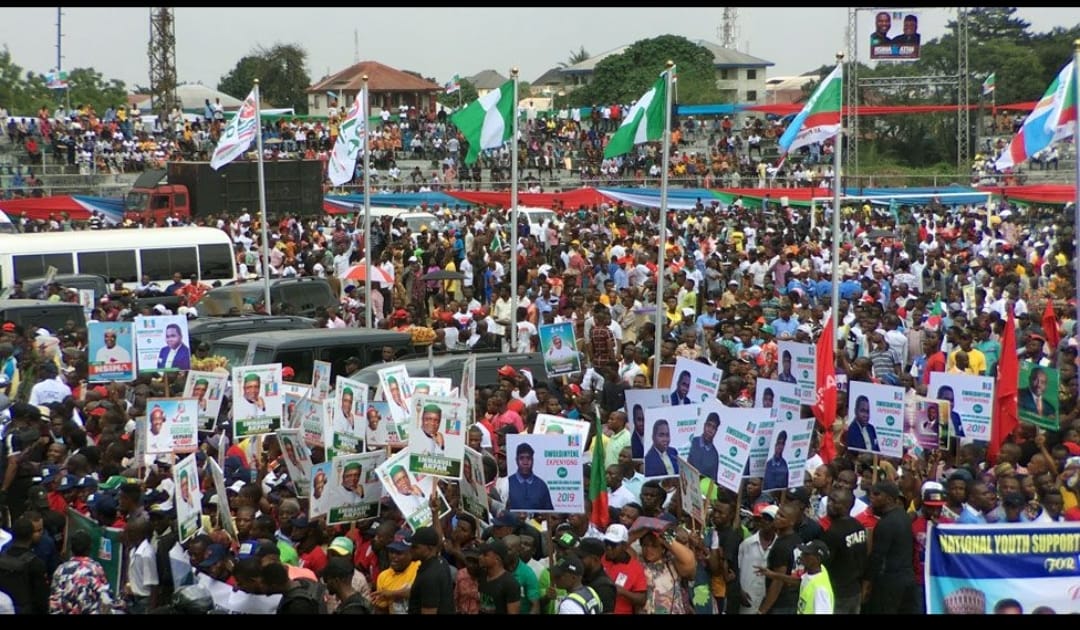
A Democracy in Shackles: How APC’s Tyranny Redefines Governance in Nigeria
By George Omagbemi Sylvester
In a move that reeks of insecurity and political cowardice, a prominent opposition figure was recently denied access to a Nigerian state governed by the All Progressives Congress (APC). It was an act so ridiculous, so blatantly undemocratic, that it should outrage every Nigerian who still believes in the sanctity of our constitution. Yet in the twisted world of Nigerian politics under APC rule, such abuses of power are now routine, laughed off by party loyalists and excused by compromised institutions.
This incident, though outrageous, is nothing new. It is just the latest entry in the growing catalogue of authoritarianism that defines APC’s version of democracy. While it may serve as a grim masterclass for future administrations on how to stifle dissent and weaponize state power, it also marks a dangerous shift away from democratic norms and toward full-blown tyranny.


Constitutional Rights Under Siege
Section 41(1) of the 1999 Nigerian Constitution is clear: “Every citizen of Nigeria is entitled to move freely throughout Nigeria and to reside in any part thereof.” Denying any Nigerian, let alone a public figure with national relevance, the right to enter any state is not only unconstitutional, it is criminal. When a government starts deciding who can and cannot enter parts of the country based on political affiliation, that government is no longer democratic. It is dictatorial.
It is important to remember that political opposition is not a crime. It is a necessary pillar of democracy. The APC’s action is not governance, it is an attempt to choke the very air democracy breathes.
A Pattern of Repression
This is far from an isolated event. Since the APC took power in 2015, Nigeria has witnessed an unprecedented erosion of democratic values. The government has systematically turned law enforcement agencies into tools of oppression. Peaceful protesters are arrested. Opposition campaigns are blocked. Media outlets are intimidated. And now, opposition leaders are being barred from entire states.
In 2018, the Department of State Services (DSS) infamously barricaded the National Assembly, attempting to forcefully change legislative leadership in broad daylight. That same year, the police under the command of the APC-led executive blocked Senate President Bukola Saraki’s convoy. These events were not just violations of individual rights, they were direct attacks on the democratic institution of checks and balances.
Freedom House, the globally respected democracy watchdog, classified Nigeria as “Partly Free” in its 2023 report, citing increased government intimidation of journalists, political opposition, and civil society. Transparency International has consistently ranked Nigeria poorly in corruption perception indices, highlighting the decay of both moral and institutional integrity under APC rule.
Weaponizing Security Forces
The selective use of security forces by APC governors and the presidency has become a dangerous norm. Instead of ensuring public safety and upholding the rule of law, police and military personnel are deployed to serve narrow political interests. During elections, they harass voters and opposition agents. During rallies, they intimidate citizens exercising their constitutional rights.
The recent blockade of an opposition figure’s convoy from entering a state controlled by the APC is yet another abuse in a long line of infractions. This is state-sponsored lawlessness masquerading as governance. What we are witnessing is not just the death of democracy, but it is the burial of accountability.
APC’s Hypocrisy and Double Standards
Perhaps the most galling aspect of this unfolding drama is APC’s shameless hypocrisy. When in opposition, APC politicians cried foul at the slightest provocation. They championed free speech, free movement, and fair elections. Yet now, in power, they have become the very monsters they once condemned.
APC accuses opposition parties of inciting unrest, but tolerates its own thugs terrorizing political opponents. It claims to uphold rule of law, yet governs through executive orders, illegal detentions, and manipulated court judgments. The irony is both tragic and revolting.
Even APC’s internal party structure is a caricature of democracy. Candidates are imposed, primaries are rigged, and dissent is criminalized. It is no wonder that a party so allergic to internal democracy would extend its tyranny to national governance.
A Dangerous Precedent
Let it be clear: what APC has done sets a precedent that should terrify every Nigerian. If one political party can deny access to a state today, what stops another from declaring entire regions as “off-limits” tomorrow? Today it’s an opposition figure; tomorrow it could be a journalist, a protester, a community leader, or even an ordinary citizen with a dissenting voice.
The implications are massive. It undermines national unity. It fosters regional tension. It invites violence. Most dangerously, it signals that political might, not the constitution, now governs Nigeria.
Compromised Institutions, Complicit Silence
Where are the institutions that should speak up? Where is the Nigerian Human Rights Commission? Where is INEC? Where is the National Assembly? Where are the religious leaders, the civil society organizations, the Nobel laureates and public intellectuals?
Their silence is deafening, and dangerous. In democratic societies, institutions are designed to act as guardrails against tyranny. But Nigeria’s have been captured, bullied, or bought. The judiciary, which should be the last line of defense, often bows to political pressure. The legislature acts like an extension of the executive, not a check on it.
When all arms of government fail to stand for justice, the collapse of democracy becomes not just possible, but inevitable.
Democracy Must Be Defended
What the APC is doing is not democracy. It is autocracy painted in green and white. And it must be rejected by all well-meaning Nigerians.
The people must rise, not with violence, but with voices, votes, and vigilance. Civil society must mobilize. The press must expose. International observers must take note. The coming elections must be more than a contest of ballots and they must be a referendum on tyranny.
The opposition must also rise above fear. They must confront the APC not just with outrage, but with strategy, solidarity, and strength. If the democratic space continues to shrink unchecked, Nigeria risks descending into the abyss of fascism.
In conclusion: Defining Our Democracy
If the APC insists on defining its own version of democracy; one built on exclusion, suppression, and brute force, then the Nigerian people must define a democracy that includes every voice, protects every right, and defends every citizen.
Let no one be deceived: this is not about a single state, a single politician, or a single party. It is about the soul of a nation. The battle for Nigeria’s democracy will not be won in silence or cynicism. It will be won by citizens who say enough is enough…who reject fear and demand freedom.
History will not be kind to the APC if it continues down this dark path. And neither will the people, who, when truly awakened, have the power to end any regime that forgets who truly holds sovereignty in a democracy: the people.
Sylvester is a distinguished political and prolific writer. He writes from Johannesburg




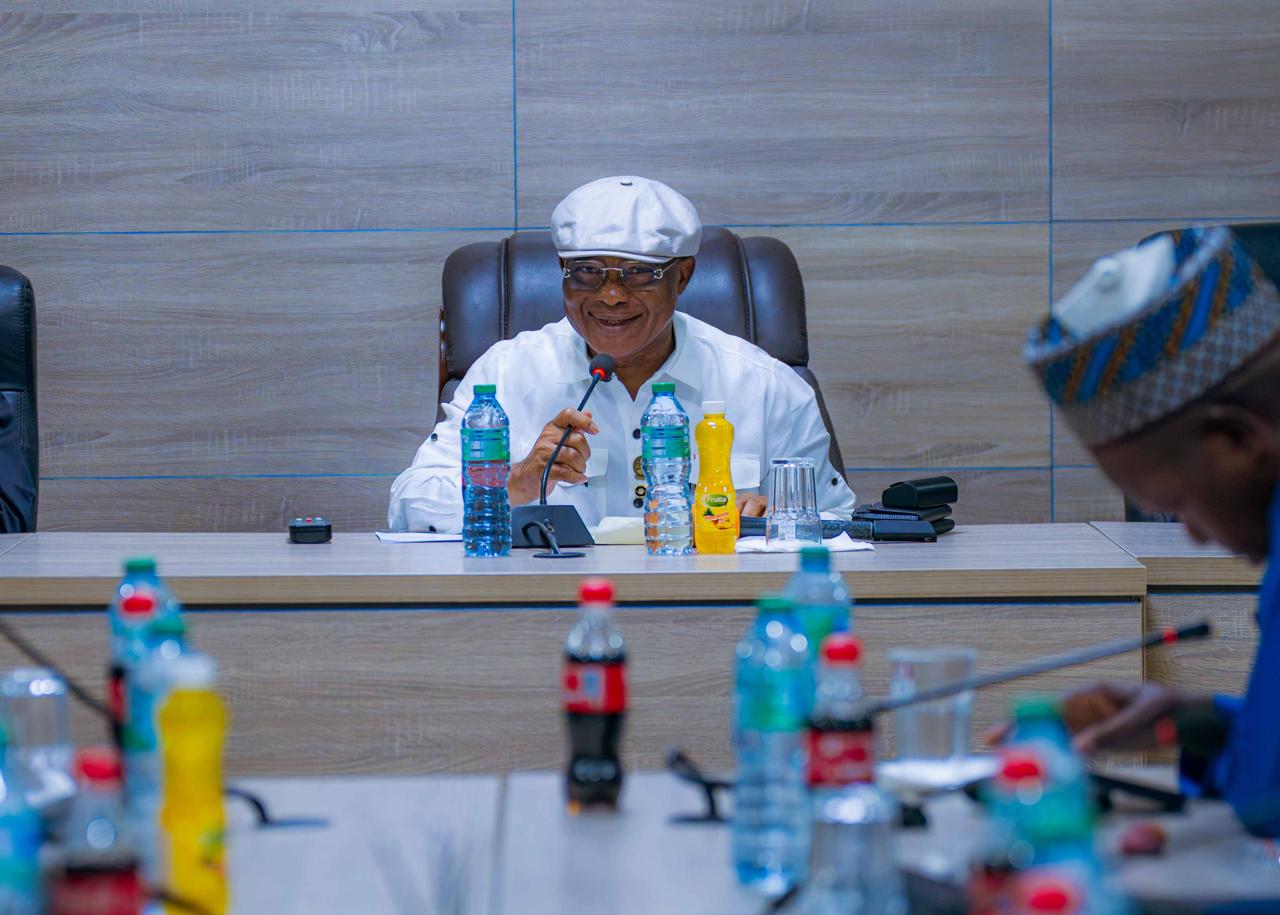
*Renewed Hope Ambassadors Step Into the Next Phase
Fresh from the successful APC 2026 National Convention, the Renewed Hope Ambassadors National, Zonal, and State leadership gathered in Abuja over the weekend, for its fourth strategic meeting, setting the tone for nationwide grassroots activation ahead of 2027.
Chaired by Governor Hope Uzodinma (Imo State) the Director General and National Coordinator of the Renewed Hope Ambassadors, alongside Deputy Director-General, Governor Uba Sani of Kaduna State, and Governor Inuwa Yahaya of Gombe State as Secretary, the session reinforced one clear direction: One Party. One Message. One Mobilization whilst also laying out a strategic roadmap for the activation of the network across all communities in Nigeria.
Backed by the strength of 31 APC-led states, the Renewed Hope Agenda is taking Bola Ahmed Tinubu’s message of progress and reform to every corner of Nigeria.
From bold economic restructuring to initiatives like NELFUND, the increase in the national minimum wage from ₦30,000 to ₦70,000, and strategic investments in critical sectors, including PNiCGI, the mission remains clear: helping Nigerians understand both the purpose and the progress of the Renewed Hope vision.
This is coordination at scale. This is grassroots engagement with purpose. This is the next phase of Renewed Hope with One Party, One Message, and One Mobilisation framework
#RenewedHopeAmbassadors #APC #WeAreAPC


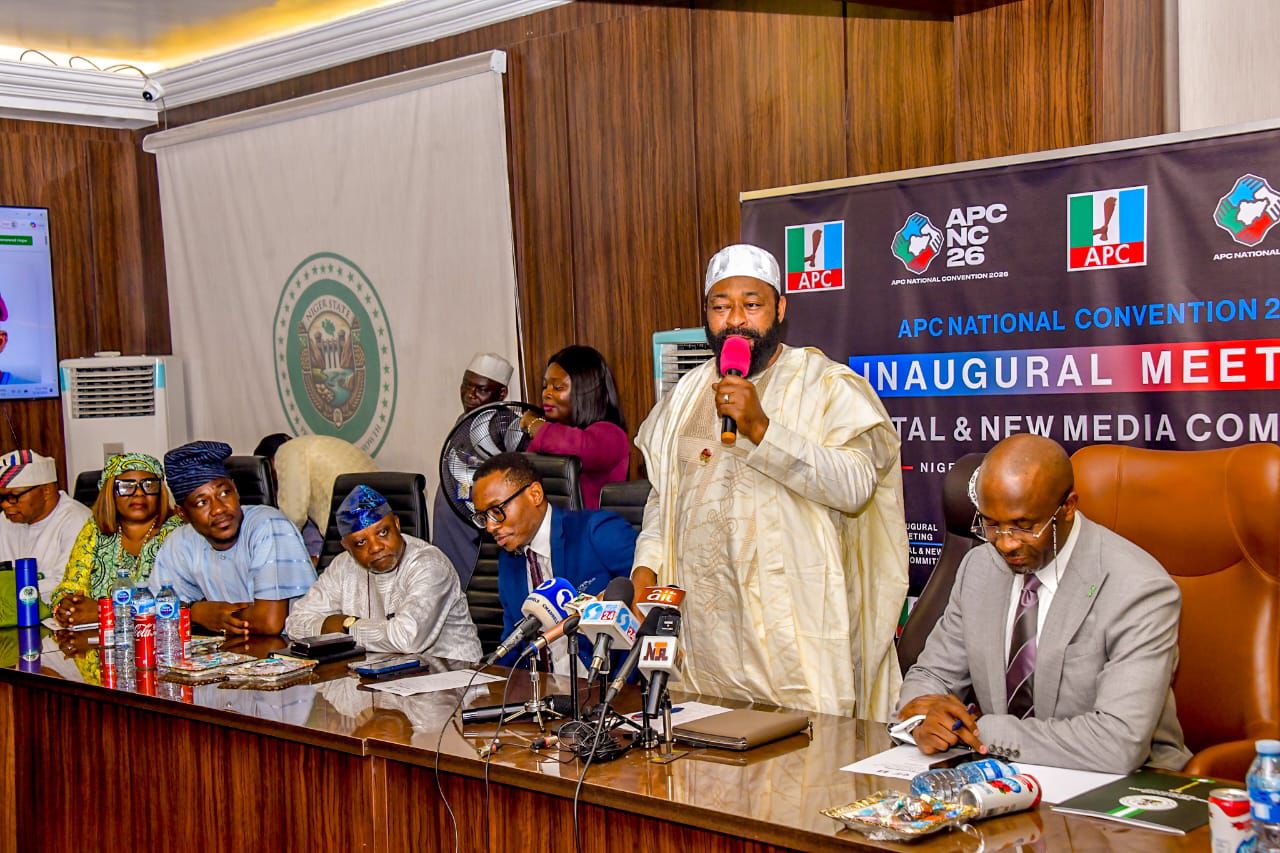
Governor Bago Inaugurates APC Digital Media Sub-Committee Ahead of National Convention.
Governor Umaru Bago has inaugurated the Digital Media Sub-Committee for the forthcoming National Convention of the All Progressives Congress (APC), scheduled to hold on March 27 and 28, 2026 in Abuja.
Chairing the sub-committee, Governor Bago tasked members with the responsibility of effectively communicating the party’s manifesto to the public.
He emphasized the need to leverage social media platforms to highlight the achievements and ongoing efforts of President Bola Ahmed Tinubu, noting that communication gaps have posed challenges that must now be decisively addressed.
The Co-Chair of the sub-committee, Hon. Benjamin Kalu, Deputy Speaker of the House of Representatives, echoed the Governor’s position, urging members to project the activities of both the party and the government to a broader audience.
He called for a deliberate and coordinated effort to showcase the party’s achievements and policy direction, stressing the importance of shaping a compelling and consistent narrative across all digital platforms.
Delivering a presentation to the committee, Otega Ogra, SSA to the President on New Media, who serves as Secretary of the sub-committee, outlined strategic focus areas to guide the team’s operations.
His presentation highlighted communication priorities and actionable steps to achieve the committee’s mandate and strengthen the party’s digital engagement.


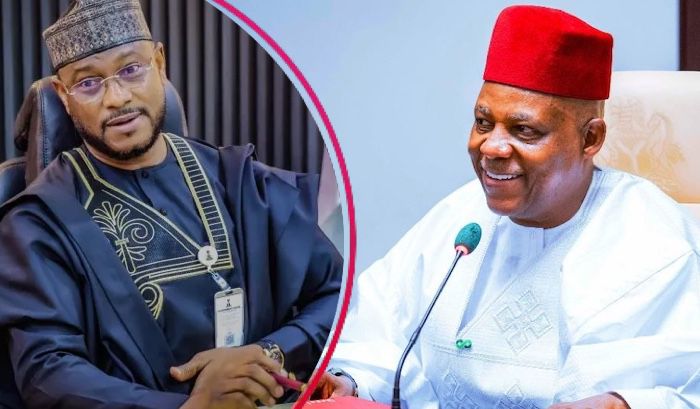
VP Shettima Set to Lead Delegation to Zamfara as Governor Dauda Lawal Formally Joins APC
The Zamfara State chapter of the All Progressives Congress (APC) has finalized plans to receive Vice President Kashim Shettima for the formal defection and reception of Governor Dauda Lawal into the ruling party, scheduled to take place on Tuesday.
State APC Chairman, Tukur Danfulani Maikatako, disclosed this during a high-level stakeholders’ meeting held in Gusau, the state capital. He noted that the Vice President would be joined by the party’s national leadership to mark what he described as a landmark political realignment in the state.
Maikatako expressed the party’s excitement over Governor Lawal’s return, recalling that Zamfara had historically been an APC stronghold and that the Governor was previously a bona fide member of the party before his earlier exit.
“We all know that Zamfara has long been one of the APC’s stronghold states, where the defected Governor was once a bona fide member. Now that he has decided to return home, having been satisfied that the APC remains his second choice after the one he left for obvious reasons,” Maikatako stated.
The Chairman called on all party faithful across the 147 wards in the state’s 14 local government areas to turn out en masse to honour the Vice President’s visit. He emphasized that the event was strategically positioned to bolster the party’s popularity and strengthen its structures ahead of the 2027 general elections.
In a strong appeal for unity, Maikatako urged members to set aside all factional tendencies, stressing that the APC remained one political family with shared goals, particularly the ambition to make Zamfara and Nigeria great again.
Echoing similar sentiments, a former state APC Chairman, Lawal M. Liman, appealed to members to cascade the message to their wards and local government areas. He reinforced the need for cohesion, noting that the party’s collective strength would be critical to achieving success in future elections.

All eyes are now on Gusau as the ruling party prepares for a high-profile political gathering expected to further consolidate its influence in Zamfara State.


-

 society6 months ago
Religion: Africa’s Oldest Weapon of Enslavement and the Forgotten Truth
-

 news4 months ago
WHO REALLY OWNS MONIEPOINT? The $290 Million Deal That Sold Nigeria’s Top Fintech to Foreign Interests
-

 society6 months ago
“You Are Never Without Help” – Pastor Gebhardt Berndt Inspires Hope Through Empower Church (Video)
-

 celebrity radar - gossips2 months ago
Dr. Chris Okafor Returns with Power and Fire of the Spirit -Mounts Grace Nation Altar with Fresh Anointing and Restoration Grace on February 1, 2026