
Business
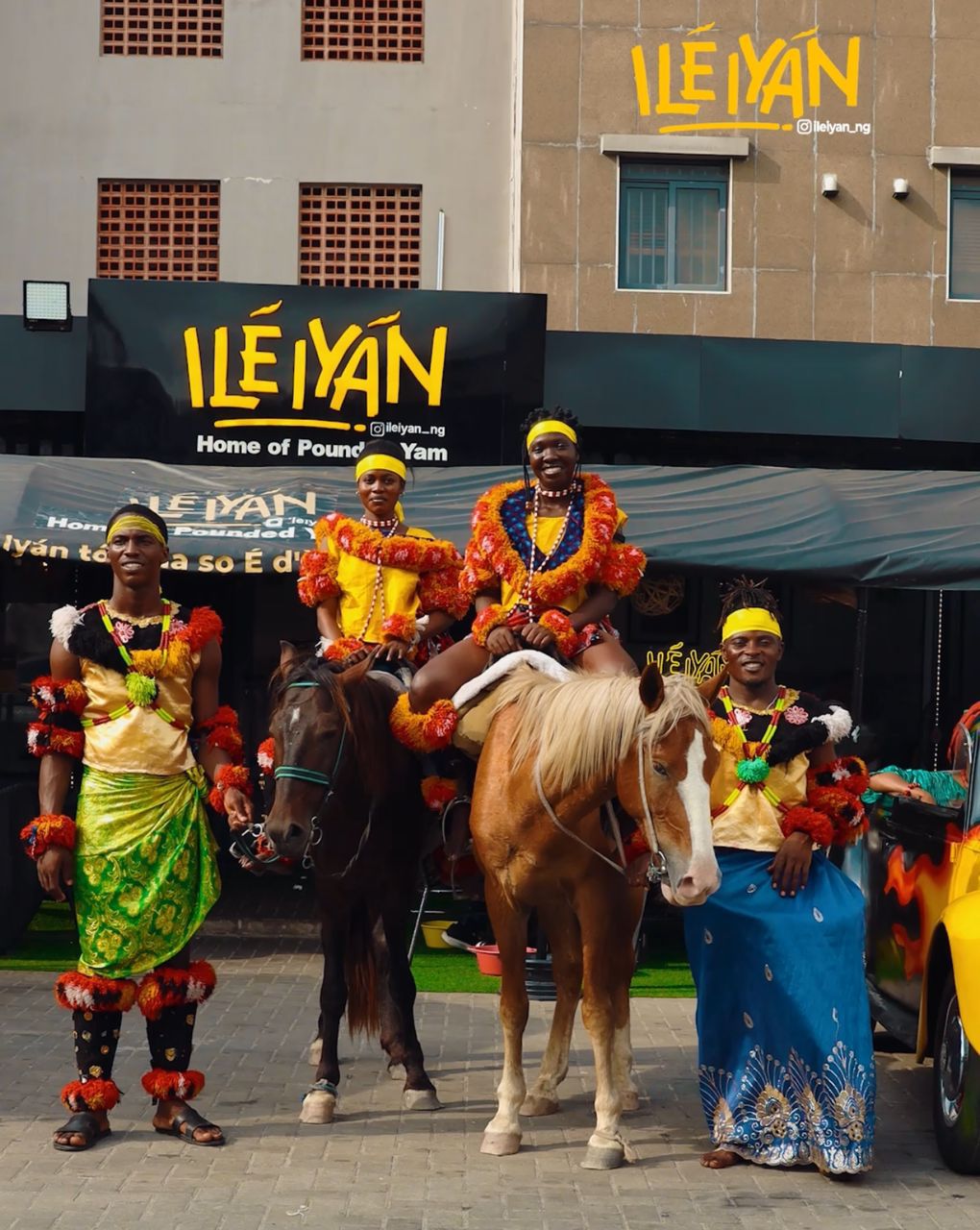
Hostile Takeover: A Failed Plot to Seize Control of the ILÉ IYÁN Brand”

“Hostile Takeover: A Failed Plot to Seize Control of the ILÉ IYÁN Brand”
Under the leadership of Sheriff Sanni, aka Sannikayz, ILÉ IYÁN has become an iconic brand, captivating over 12 million social media engagements worldwide and achieving remarkable growth in revenue and brand equity. This brand, recognized both locally and internationally, has served distinguished clientele, including high-net-worth individuals, government officials, corporate organizations, and A-list celebrities in entertainment. With over 15 years of experience in the hospitality industry, Sannikayz has built ILÉ IYÁN into a thriving, well-respected establishment promoting the Arts, Culture and Tourism in Nigeria and also celebrated for its excellence and integrity locally and Internationally.
Yet, in a desperate bid to silence the truth and stifle justice, brand hijackers and their paid voices have spun a web of falsehoods against Sannikayz, distorting the narrative in the public eye.
**False Claims of a Six-Month Rift with Initial Co-Founder**
The rumor mills claim that Sannikayz’s relationship with his initial investor soured within six months, suggesting a pattern of untrustworthiness with investors. In truth, this investor contributed N5M and has always maintained a warm, respectful relationship with Sannikayz till date. They both hold each other in high regard, and the surrender of shares was carried out through mutual agreement.
**Myth of Sannikayz Seeking Investment from Olasunkanmi Mustapha, aka Musty**
It is a blatant falsehood to claim that Sannikayz approached Musty for investment. In reality, Musty—through his staff Princess Michelle, a long-time customer—persistently pursued Sannikayz, keen on investing in ILÉ IYÁN’s expansion. Initially, Sannikayz was hesitant to allow Musty’s involvement, but Musty persisted, using unsolicited gifts to Sannikayz’s relatives as a ruse to appear trustworthy. This facade masked his true intent: an attempt to hijack a thriving business built on years of Sannikayz’s hard work.
**Inflated Claims of Musty’s Hospitality Credentials**
Musty’s narrative of 20 years of hospitality experience lacks any tangible proof. The restaurant he previously managed in Ikeja ended abruptly, leaving no credible brand or legacy in its wake. Unlike industry leaders with notable projects, Musty has no significant presence in the hospitality world. Hijacking ILÉ IYÁN appears to be his opportunistic plan to build a fictitious reputation on the back of another’s accomplishments.
**Unjust Share Allocation for Musty**
At the time of Musty’s entry, ILÉ IYÁN had evolved into a household name for premium pounded yam, with substantial brand value. Based on this valuation, Musty’s investment should have earned him a mere 20% share, yet Sannikayz generously granted him 30%, believing in Musty’s supposedly genuine intentions.
**Concealed Financial Gains and Exploitation of Resources**
Since his initial investment, Musty has received substantial returns: in December 2023, ILÉ IYÁN paid him N2,020,306 in profit from just the Lekki branch, followed by a total of N14,964,291 in March 2024 from both branches. Yet, Musty’s family which includes his wife Abiola Mustapha, his brother Pelumi Mustapha, his wife’s Niece and close associates Ayoola Ajuwon, Jaiyeola Ayoola-Ajuwon were placed on inflated salaries for minimal work, costing the business N4,710,000 monthly even Musty (the investor ) was earning N1,000,000 monthly. They disregarded corporate governance and fostered nepotism, placing two couples on the management team—decisions that disrespected ILÉ IYÁN’s established culture and principles.
Total payments made to investor from profit sharing and Management fees is over N30M which is close to 40% of his initial investment of N80,000,000.
**Harming ILÉ IYÁN’s Reputation**
Under Musty’s management, the Ikeja branch saw a downturn, with complaints piling up. One manager, Emmanuel Oluwabusayo, hired by Musty’s wife, even assaulted a female employee, resulting in a public scandal on a human rights blog. Despite Sannikayz’s pleas to dismiss the manager, Musty’s team retained him, prioritizing profit over integrity and brand reputation. This situation compelled Sannikayz to halt ILÉ IYÁN’s Canada expansion and return to Nigeria to address these crises.
**Exploitation of ILÉ IYÁN’s Brand Name**
Behind closed doors, Musty and his wife falsely presented themselves as owners of ILÉ IYÁN, and even attempted to position the brand as a subsidiary of Musty’s company. When asked to sign a shareholder agreement, Musty refused and instead led armed men to shut down ILÉ IYÁN’s Ikeja GRA branch, assaulting staff and deleting CCTV footage. Some of the staff were administered Post Traumatic Stress Disorder ( PTSD ) first aid and also one Emily Balogun also reported to be Injured by one of the armed men. She was also reported to suffer a neck injury during this tragic event. The Founder, Sannikayz filed a Petition against Musty at the Office of The Commissioner for Police, Lagos State Command. He later went ahead to establish a replica company, “ILÉ IYÁN by PODS,” hoping to erase the original brand and replace it with his counterfeit venture.
**Increased Costs and Employee Exploitation**
Between February and April 2024, ILÉ IYÁN was unknowingly paying salaries to Musty’s staff under the guise of management fees. These individuals increased operational costs, engaged in dubious procurement practices, and disrespected employee rights, especially targeting individuals they deemed “poor” or “female”—values antithetical to ILÉ IYÁN’s founding principles of respect and inclusivity.
Food Handlers Test and Staff Hygiene.
As part of ILÉ IYÁN’s commitment to maintaining the highest standards of food safety and customer service, all staff members are required to complete a Food Handlers Test and attend Customer Service Training periodically.
These claims are false accusations in a-bid to tarnish the ILÉ IYÁN’S brand reputation.
**The Myth of “Japa” to Canada**
It’s either ignorance or calculated malice to claim that Sannikayz abandoned ILÉ IYÁN for Canada. In fact, the plan for an international presence was mutually agreed upon to reach the Nigerian diaspora, beginning with Canada. During this official trip, Sannikayz remained in close contact with Musty, discussing registration and market strategies for the Canadian outlet.
Sannikayz also frequents Nigeria to monitor closely the growth and development of the ILÉ IYÁN Nigeria brand. This is also not limited to the his attendance at the GTbank Food and Drinks Event 2024 and other Hospitality related activities ultimately for the overall progress of the Company.
**Baseless Claims of Unpaid Debts**
Musty’s accusations of unpaid debts are not only false but an attempt to manipulate public sentiment. Outside his initial investment, no additional funds were extended by Musty’s company.
**False Allegations of Lavish Lifestyle**
In today’s social media era, Sannikayz’s lifestyle is anything but secretive. Claims of excessive spending are baseless, without any proof to support them. Sannikayz is a seasoned and prudent entrepreneur whose dedication to his business has always taken precedence.
**Musty’s Attempt to Wipe Out ILÉ IYÁN’s Legacy**
In a final move to erase Sannikayz’s legacy, Musty’s company filed a petition to dissolve ILÉ IYÁN. Yet, when confronted by Sannikayz’s legal team, Musty’s lawyers began to foot-drag with the court even awarding costs against them for time-wasting. His plan to hijack the brand through family appointments, staff mismanagement, and frivolous lawsuits fell apart, underscoring that one cannot steal another’s hard-earned success and prosper.
The ILÉ IYÁN NIGERIA brand has also made Legal action against Musty and his entities at the State and Federal High Courts for breach of contract, trust and agreement and passing off.
There are also numerous reports from other Founders who have suffered similar exploitation at the hands of Musty. His reputation for using police intimidation and scare tactics to coerce young Nigerian entrepreneurs into surrendering their businesses has left a trail of victims. This alarming trend, and the story of ILÉ IYÁN’s attempted hijacking, serves as a rallying call to protect Nigerian entrepreneurs from malicious individuals like Musty.





Fidelity Bank grows gross earnings by 38% to N434.95b in Q1
Fidelity Bank Plc recorded 37.9 per cent growth in gross earnings to N434.95 billion in first quarter 2026 as the international commercial bank continued to expand its core banking market share.
Interim report and accounts of Fidelity Bank for the three months ended March 31, 2026 released at the Nigerian Exchange (NGX) showed that gross earnings rose from N315.42 billion in first quarter 20025 to N434.95 billion in first quarter 2026, representing an increase of 37.9 per cent.
The top-line performance was driven by impressive growth in the bank’s core business operations with interest incomes rising by 22.8 per cent to N314.48 billion in first quarter 2026 as against N256.10 billion in first quarter 2025.
With net interest income at N180.97 billion, the bank closed the period with profit before tax of N92.48 billion. After taxes, net profit stood at N74.47 billion for the three-month period. Earnings per share remained high at N5.69, underlining the capacity of the bank to reward its shareholders.
The balance sheet of the bank also emerged stronger. Total assets crossed the N11 trillion mark to N11.35 trillion by March 2026 compared with N10.46 trillion recorded in December 2025. Customers’ deposits increased from N6.89 trillion to N7.38 trillion. Total equity rode on the back of earnings growth to a 27.5 per cent increase from N1.09 trillion in December 2025 to N1.39 trillion by March 2026.
The first quarter 2026 results further consolidated the strong earnings outlook of the bank, which had successfully completed its recapitalisation amidst impressive earnings performance in 2025.
Fidelity Bank had recorded double-digit growths in interest and non-interest incomes as well as key balance sheet items during the year ended December 31, 2025.
The audited report showed that gross earnings rose from N1.04 trillion in 2024 to N1.52 trillion in 2025, an increase of 45.6 per cent. Interest and similar incomes had grown by 38.7 per cent from N803.1 billion in 2024 to N1.11 trillion in 2025. Fees and commission incomes also rose by 44.7 per cent from N78.4 billion to N113.4 billion. The bank recorded net profit after tax of N242.4 billion in 2025.
The bank’s balance sheet emerged stronger with total assets rising by 18.6 per cent to N10.46 trillion in 2025 as against N8.82 trillion in 2024. Customer deposits increased by 16.1 per cent from N5.94 trillion to N6.89 trillion, reflecting continued franchise strength and an improved funding profile. Net loans and advances meanwhile declined by 2.4 per cent to N4.28 trillion in 2025 as against N4.39 trillion in 2024, attributable to customers paying down on their mature obligations.
The bank had in 2025 strengthened its capital position, with eligible capital rising to N561 billion, above the regulatory minimum of N500 billion for banks with international authorisation. In addition, capital adequacy had remained robust, with Capital Adequacy Ratio of 30.94 per cent by December 2025 as against 23.47 per cent by December 2024.
Managing Director, Fidelity Bank Plc, Dr. Nneka Onyeali-Ikpe, said the first quarter 2026 results reinforced the bank’s strong and resilient business model.
She noted that with the remarkable success of its recapitalisation programme and continuing expansion, Fidelity Bank has entered a new era of growth and impressive returns.
“We are on a stronger footing and confident that we will set new growth records that are reflective of our legacy and the future we are working on,” Onyeali-Ikpe said.
Business
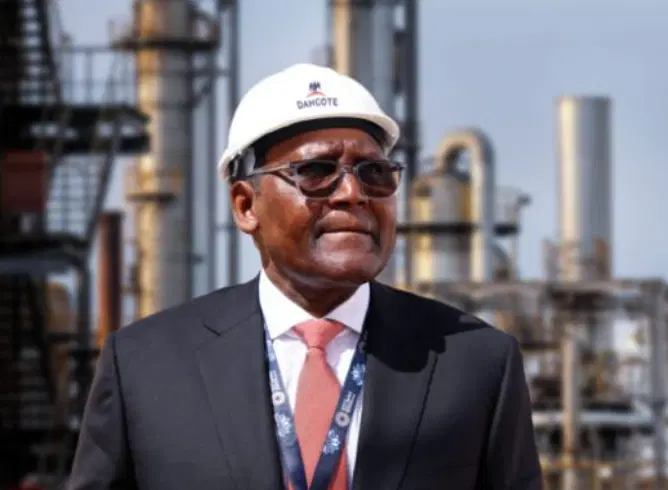
Dangote Refinery Ends Nigeria’s Era of Fuel Import Dependence, Boosts GDP, FX Earnings — EIU
Dangote Refinery Ends Nigeria’s Era of Fuel Import Dependence, Boosts GDP, FX Earnings — EIU
The operational ramp up of the 650,000 barrels per day Dangote Petroleum Refinery & Petrochemicals is fundamentally reshaping Nigeria’s downstream oil sector, significantly reducing the country’s dependence on imported refined petroleum products and strengthening its external position, according to the Economist Intelligence Unit (EIU).
In its latest assessment on Nigeria’s fuel market and regulatory environment, the EIU said the refinery has already transformed a sector that was previously characterised by heavy reliance on imported fuel despite Nigeria being Africa’s largest crude oil producer. The report noted that the refinery met nearly 80 per cent of domestic petrol demand in April and produced enough volumes to satisfy local consumption requirements as operations approached full capacity.
The EIU described Nigeria’s downstream petroleum sector before the refinery as “long dysfunctional”, noting that the country had remained almost entirely dependent on costly imported fuel while producing nearly 1.5 million barrels of crude oil daily.
According to the report, the emergence of the refinery has reduced import dependence, improved domestic fuel availability and strengthened Nigeria’s balance of payments position through lower import demand and rising exports of refined petroleum products.
“The gradual ramp up of the 650,000 barrel/day Dangote refinery since May 2023 has transformed Nigeria’s long dysfunctional downstream sector,” the report stated. “The country’s main refineries, all state owned, had been inoperative for years and Nigeria was almost entirely reliant on costly imported fuel.”
The research and analysis division of The Economist Group, London added that the refinery’s attainment of full operational capacity and its planned expansion would further support Nigeria’s economic growth and foreign exchange earnings over the medium term.
“Meanwhile, the attainment of full capacity at, and an increase in exports from, the Dangote refinery will support real GDP growth and foreign exchange earnings in 2026 and 2027 and beyond, as a planned doubling of the plant’s output comes on stream around the end of the decade,” it added.
Industry analysts said the refinery is increasingly positioning Nigeria as an emerging refining and export hub, altering energy trade flows across Africa and reducing the vulnerability associated with fuel import dependence.
The EIU noted that the refinery’s expansion has coincided with major reforms in Nigeria’s downstream sector, including the removal of fuel subsidies and the introduction of market driven pricing mechanisms.
The report, however, said the transition from a state dominated fuel import structure to large scale domestic refining has triggered resistance from interests linked to the old import regime.
The latest tensions emerged following the decision by the Nigerian Midstream and Downstream Petroleum Regulatory Authority to relax restrictions on petrol imports despite the refinery’s growing capacity to meet domestic demand.
Dangote Industries subsequently initiated legal action, arguing that continued import approvals undermine domestic refining investments and conflict with the objectives of the Petroleum Industry Act, which seeks to encourage local refining capacity and reduce import dependence.
Analysts noted that the availability of large-scale domestic refining capacity has improved Nigeria’s energy security and reduced exposure to external supply shocks and foreign exchange volatility.
The Centre for the Promotion of Private Enterprise also cautioned against unrestrained importation of petroleum products, warning that such a policy could weaken Nigeria’s industrialisation drive and discourage investments in domestic refining.
Chief Executive Officer of CPPE, Muda Yusuf, said continued dependence on imported fuel had historically contributed to pressure on foreign reserves, exchange rate instability and fiscal leakages.
The refinery’s growing impact is also being reflected in Nigeria’s broader macroeconomic indicators. Earlier this month, S&P Global Ratings cited increased domestic refining capacity and rising hydrocarbon exports among the major factors supporting Nigeria’s sovereign credit rating upgrade – the first in 14 years.
Beyond Nigeria, analysts said the refinery is increasingly being viewed as a strategic industrial asset for Africa, where many countries remain heavily dependent on imported fuel despite rising demand for transportation, manufacturing, and power generation.
Business
BREAKING: Court Dismisses $19.6 Million Claim Against NNPCL — Rules Contract Scope Cannot Be Changed Orally
BREAKING: Court Dismisses $19.6 Million Claim Against NNPCL — Rules Contract Scope Cannot Be Changed Orally
In a landmark ruling on Friday, May 22, 2026, the Federal Capital Territory High Court in Abuja threw out a $19.6 million lawsuit filed by Alternate Dimensions Ventures Ltd against the Nigerian National Petroleum Company Limited (NNPCL), affirming a key legal principle: a written contract cannot be expanded through oral agreements or conduct.
Alternate Dimensions had sought $19,600,000 in professional fees, claiming the scope of its Direct Sale, Direct Purchase (DSDP e-pro) contract with NNPCL was orally expanded. Represented by counsel Patrick Peter, the firm argued it was entitled to the revised sum for services rendered under the alleged new terms.
But NNPCL, through its lawyer Ituah Imhanze of KENNA LP, pushed back sharply, arguing that parties are bound exclusively by the clear terms of their written agreement. Imhanze contended that without any written amendment, the claim was legally unsound, and the court agreed.
Delivering judgment, Justice Hamza Mu’azu upheld NNPCL’s defense, stating that the contract was unambiguous and that no evidence was adduced during the trial, which supported the alleged scope expansion. The court further found that NNPCL fully complied with all contractual terms and committed no breach.
Dismissing the suit as meritless, Justice Mu’azu reinforced the doctrine of sanctity of contract: any amendment to a written agreement must be express, unequivocal, and documented, not implied or verbal.
The ruling spares NNPCL from the S19.6 million claim and also a floodgate of similar potential liabilities.


- Deputy (Dep.) Finance Minister Courts Investors to Transform Ghana’s rice Economy June 4, 2026
- Mobile health services in Kenya reduce the risk of stillbirths June 4, 2026
- JustMarkets Research Highlights Global Growth Divergence as a Key Market Driver June 4, 2026
- African Development Bank Group approves $125 million investment in African Trade and Investment Development Insurance (ATIDI) to expand risk insurance capacity in Africa June 4, 2026
- Congo Energy & Investment Forum 2027 to Position Brazzaville as a Hub for Global Energy Deal-Making June 4, 2026
- Africa Skills Hub (ASH) Transitions to ASH Africa as it Marks 10 Years of Impact June 4, 2026
- When women farm better, Eswatini eats better June 3, 2026
- Togo Hosts the 8th Annual Forum of National Volunteer Agencies in the Economic Community of West African States (ECOWAS) Region June 3, 2026
- Indigenous Peoples gravely vulnerable to Ebola epidemic, warn United Nations (UN) independent experts June 3, 2026
- Meeting between Parliamentary Vice-Minister ONISHI and His Excellency (H.E.) Mr. Cosgrow, Principal Minister and Minister for Agriculture, Fisheries and Blue Economy of Seychelles June 3, 2026
- Deputy (Dep.) Finance Minister Courts Investors to Transform Ghana’s rice Economy June 4, 2026
- Mobile health services in Kenya reduce the risk of stillbirths June 4, 2026
- JustMarkets Research Highlights Global Growth Divergence as a Key Market Driver June 4, 2026
- African Development Bank Group approves $125 million investment in African Trade and Investment Development Insurance (ATIDI) to expand risk insurance capacity in Africa June 4, 2026
- Congo Energy & Investment Forum 2027 to Position Brazzaville as a Hub for Global Energy Deal-Making June 4, 2026
- Africa Skills Hub (ASH) Transitions to ASH Africa as it Marks 10 Years of Impact June 4, 2026
- When women farm better, Eswatini eats better June 3, 2026
-

 news6 months ago
WHO REALLY OWNS MONIEPOINT? The $290 Million Deal That Sold Nigeria’s Top Fintech to Foreign Interests
-

 society1 month ago
SOCIAL MEDIA IS NOT A BATTLEFIELD COMMAND – WHY THE NIGERIAN ARMY’S ACTION AGAINST JUSTICE CRACK IS A NATIONAL SECURITY IMPERATIVE
-

 celebrity radar - gossips4 months ago
Dr. Chris Okafor Returns with Power and Fire of the Spirit -Mounts Grace Nation Altar with Fresh Anointing and Restoration Grace on February 1, 2026
-

 celebrity radar - gossips6 months ago
Prophet Kingsley Aitafo Releases 2026 Prophecy: ‘Nigeria Will Rise, but the World Must Prepare for Turbulence’