
Politics
A Hollow Order of Injustice: How Wike’s Court Ruling Becomes Tinubu’s Weapon Against Democracy


A Hollow Order of Injustice: How Wike’s Court Ruling Becomes Tinubu’s Weapon Against Democracy.
By George Omagbemi Sylvester | Sahara Weekly
When the judiciary bends, democracy breaks; Nigeria must resist this orchestrated assault on justice.
Introduction: The Court as a Weapon, Not a Sanctuary.
In a country where the judiciary should serve as the last hope of the common man, Nigeria has tragically descended into a terrain where the gavel has been hijacked by political gladiators. The latest ruling (widely seen as a hollow order) emanating from a judge loyal to Nyesom Wike, has revealed once again how President Bola Ahmed Tinubu and the All Progressives Congress (APC) are using the courts as instruments of destabilization rather than bastions of justice.

This is not merely a legal misstep; it is a calculated attempt to cripple democracy in Nigeria. When courts become pawns in the political chessboard, democracy does not just weaken, it collapses under the weight of judicial compromise.
Wike’s Shadow Over the Bench.
Nyesom Wike, a political strongman with a well-documented history of coercion and manipulation, now casts a long shadow over the judiciary. Since his emergence as Minister of the Federal Capital Territory (FCT), his influence has been systematically extended into the judiciary, where certain judges appear to dance to his drumbeats.

Legal experts have pointed out that the order in question carries the hallmarks of political interference. According to Professor Itse Sagay, a respected constitutional lawyer, “When judicial orders begin to align suspiciously with political interests, one must question whether the courts are still guided by law or by unseen puppeteers.”
This so-called ruling is less about law and more about consolidating power for Tinubu’s APC, with Wike serving as the enforcer of the new political order.

The Judiciary in Chains.
Nigeria’s judiciary has historically faced accusations of compromise, but the present climate is dangerously unprecedented. A 2024 report by Transparency International placed Nigeria among the top 30 countries where judicial corruption is “systemic and politically motivated.”
Instead of functioning as impartial interpreters of the constitution, judges are increasingly being deployed to deliver predetermined outcomes. The hollow order from Wike’s judge is a glaring example of this trend.
The late Justice Chukwudifu Oputa once said, “A judge who has sold his conscience for political reward is worse than an armed robber, for he robs not just one man, but the entire nation of justice.” Today, those words echo like a warning bell across Nigeria’s fragile democracy.
Tinubu’s Playbook: Undermine to Dominate.
President Tinubu’s administration has consistently relied on a pattern: weaken institutions, manipulate the judiciary, and control narratives. During the 2023 elections, multiple cases were dismissed or decided in ways that raised eyebrows among observers. Amnesty International and the European Union Election Observation Mission both flagged “judicial complicity” in electoral disputes.
The hollow order is not isolated, it is part of Tinubu’s broader playbook. By destabilizing legal processes, the APC ensures that opposition voices are weakened, dissenting platforms are strangled and democracy is reduced to an empty slogan.
As Chinua Achebe warned in The Trouble with Nigeria, “The problem is unwillingness or inability of its leaders to rise to the responsibility, to the challenge of personal example, which is the hallmark of true leadership.” Tinubu’s reliance on judicial manipulation demonstrates precisely this unwillingness.
Democracy Under Siege.
The danger of this trend cannot be overstated. Democracy thrives on separation of powers; executive, legislature and judiciary acting independently. Once the judiciary becomes a tool of the executive, dictatorship is born under democratic disguise.
Political analyst Dr. Hakeem Baba-Ahmed notes, “The greatest danger to Nigeria today is not even corruption or insecurity, but the collapse of institutions meant to protect us from bad governance. The judiciary is top of that list.”
The hollow order from Wike’s judge is not a legal pronouncement; it is a political strategy. It is designed to silence opposition, intimidate civil society and normalize executive overreach. If this trend persists, Nigerians will wake up one day to realize that democracy was overthrown, not by soldiers in uniform, but by judges in robes.
Facts Behind the Hollow Order.
Let us be clear: NO SERIOUS LEGAL FOUNDATION EXISTS FOR THIS RULING. Analysts have described it as vague, contradictory and unenforceable in any constitutional democracy. The order lacks jurisprudential depth and fails the basic test of legal reasoning.
Fact-checking the order reveals:
Constitutional Contradictions ~ Several provisions of the 1999 Constitution (as amended) clearly nullify the premises of the order.
Absence of Precedent ~ No judicial precedent supports the decision, suggesting it was crafted for political convenience rather than legal clarity.
Conflict of Interest ~ The judge’s known proximity to Wike raises ethical questions about impartiality, contravening the Bangalore Principles of Judicial Conduct.
Thus, describing it as hollow is not hyperbole; it is a fact.
Scholars and Experts Weigh In.
Respected voices across law, governance and civil society have condemned the trend.
Professor Akin Oyebode, international law scholar: “When courts become marketplaces for political bargains, justice dies. Nigeria is approaching that dangerous precipice.”
Dr. Jibrin Ibrahim, political scientist: “The judiciary has become the last nail in the coffin of Nigeria’s democracy. Unless Nigerians resist, the APC will use the courts to legitimize tyranny.”
Nelson Mandela, though speaking decades ago, provides timeless wisdom: “Our freedom is incomplete without the rule of law.” Nigeria’s current reality proves Mandela right – without law, freedom is fiction.
The International Dimension.
The world is watching. The hollow order has already triggered concerns among international observers. The U.S. State Department, in its 2024 Nigeria Human Rights Report, warned about “judicial partiality and undue political interference.”
If Nigeria continues on this trajectory, it risks isolation. Investors will flee, fearing instability. Civil liberties will shrink. And Nigeria, Africa’s largest democracy by population, may slide into the ignominy of authoritarianism.
The People’s Mandate: Resist Judicial Capture.
At this critical juncture, Nigerians must refuse to accept hollow orders as legitimate. Civil society must intensify pressure, the Bar Association must defend its oath and ordinary citizens must raise their voices. Silence is complicity.
As Martin Luther King Jr. declared, “Injustice anywhere is a threat to justice everywhere.” Allowing APC and Tinubu to weaponize the judiciary endangers not just political opponents but every Nigerian seeking justice tomorrow.
A Call to Action.
The judiciary must be reclaimed from political hijackers. Reform is urgent:
Judicial Independence: Appointment processes must be insulated from political manipulation.
Accountability: Judges complicit in political rulings must face disciplinary and legal sanctions.
Civil Resistance: Nigerians must demand that the courts serve people not politicians.
The hollow order should be remembered as a turning point – where citizens decided that enough was enough.
Final Word.
Nigeria’s democracy is bleeding and the latest ruling is a dagger in its heart. Wike’s influence and Tinubu’s manipulation have combined to transform the judiciary into a weapon of oppression. But history teaches us that hollow orders cannot stand against a determined people.
The court may have spoken, but its words ring hollow. The people must now speak louder.
By George Omagbemi Sylvester | Sahara Weekly





Politics
APC Group Endorses Fubara for 2027, Calls on Tinubu and APC to Prioritise Performance Over Politics in Backing Governor’s Second Term Ambition
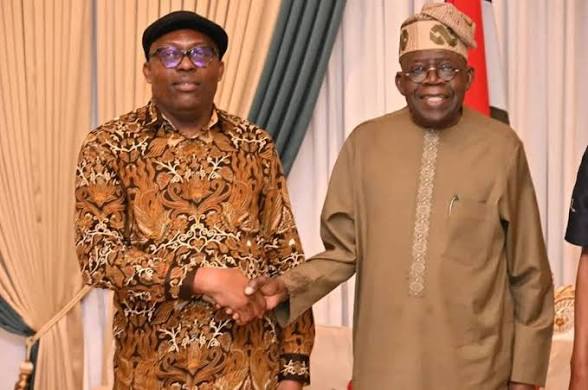
*APC Group Endorses Fubara for 2027, Calls on Tinubu and APC to Prioritise Performance Over Politics in Backing Governor’s Second Term Ambition*
The APC National Vanguard has appealed to President Bola Ahmed Tinubu and the leadership of the All Progressives Congress (APC) to support a second term in office for Siminalayi Fubara, citing what it described as “impressive and verifiable developmental strides” across Rivers State.
In a statement issued on Thursday by its National President, Dr Gbenga Salam (JP), the group said its position followed an extensive assessment tour of key infrastructure and public service projects executed under the Fubara administration.
The APC National Vanguard said the appeal was based strictly on performance, arguing that governance outcomes should outweigh partisan considerations, particularly in a state as economically significant as Rivers.
“We respectfully urge President Bola Ahmed Tinubu and the leadership of the All Progressives Congress to support the continuity of Governor Siminalayi Fubara beyond his current tenure, in recognition of his commitment to development, prudent resource management, and people-focused governance,” the statement read.
According to the group, its delegation visited multiple project sites across the state, observing ongoing and completed works spanning road construction, urban renewal, and public infrastructure upgrades.
It noted that the scale and distribution of these projects reflect a deliberate effort by the state government to extend development beyond traditional urban centres and into underserved communities.
“Our findings from the tour reveal a government that is not only active but intentional in its development agenda. The execution of capital projects across various parts of Rivers State demonstrates a clear understanding of the needs of the people and a commitment to addressing them,” Dr Salam said.
The group particularly commended what it described as prudent financial management by the administration, noting that the projects reviewed showed evidence of careful planning and efficient allocation of resources.
“At a time when economic pressures are evident across the country, it is commendable that the Rivers State government has managed its resources in a way that delivers visible and impactful development without signs of fiscal recklessness,” the statement added.
The APC National Vanguard further observed that despite political tensions in the state, the Fubara administration has maintained focus on governance, ensuring continuity in project execution and service delivery.
The group argued that such stability is critical for sustained development and should be encouraged rather than disrupted.
“Leadership must ultimately be judged by results. In Rivers State, there is clear evidence of progress—projects that are not only announced but executed, and policies that translate into real benefits for citizens,” Dr Salam noted.
The group warned that discontinuity in leadership could stall ongoing projects and reverse gains already recorded, stressing the importance of allowing a performing administration to consolidate its achievements.
“Rivers State is at a pivotal stage where continuity will allow for the completion of ongoing initiatives and the deepening of development gains. Supporting Governor Fubara for a second term is, therefore, a decision in the best interest of the people,” the statement said.
In addition to its call on the APC leadership, the group reaffirmed its support for President Tinubu, expressing confidence in his administration’s broader economic and governance reforms.
The APC group urged Nigerians to remain supportive of efforts aimed at stabilising the economy and strengthening public institutions.
“We reiterate our endorsement of President Bola Ahmed Tinubu for a second term in office, in recognition of his leadership and commitment to national development. With sustained support, the administration can consolidate its reform agenda for the benefit of all Nigerians,” Dr Salam added.
The APC National Vanguard concluded by calling on political actors to prioritise development and public interest over partisan divides, insisting that governance should always be guided by performance and accountability.
“Where leadership demonstrates prudence, delivers development, and remains focused on the welfare of the people, it deserves continuity. This is the position we have reached after a careful and independent assessment of Rivers State,” the statement added.
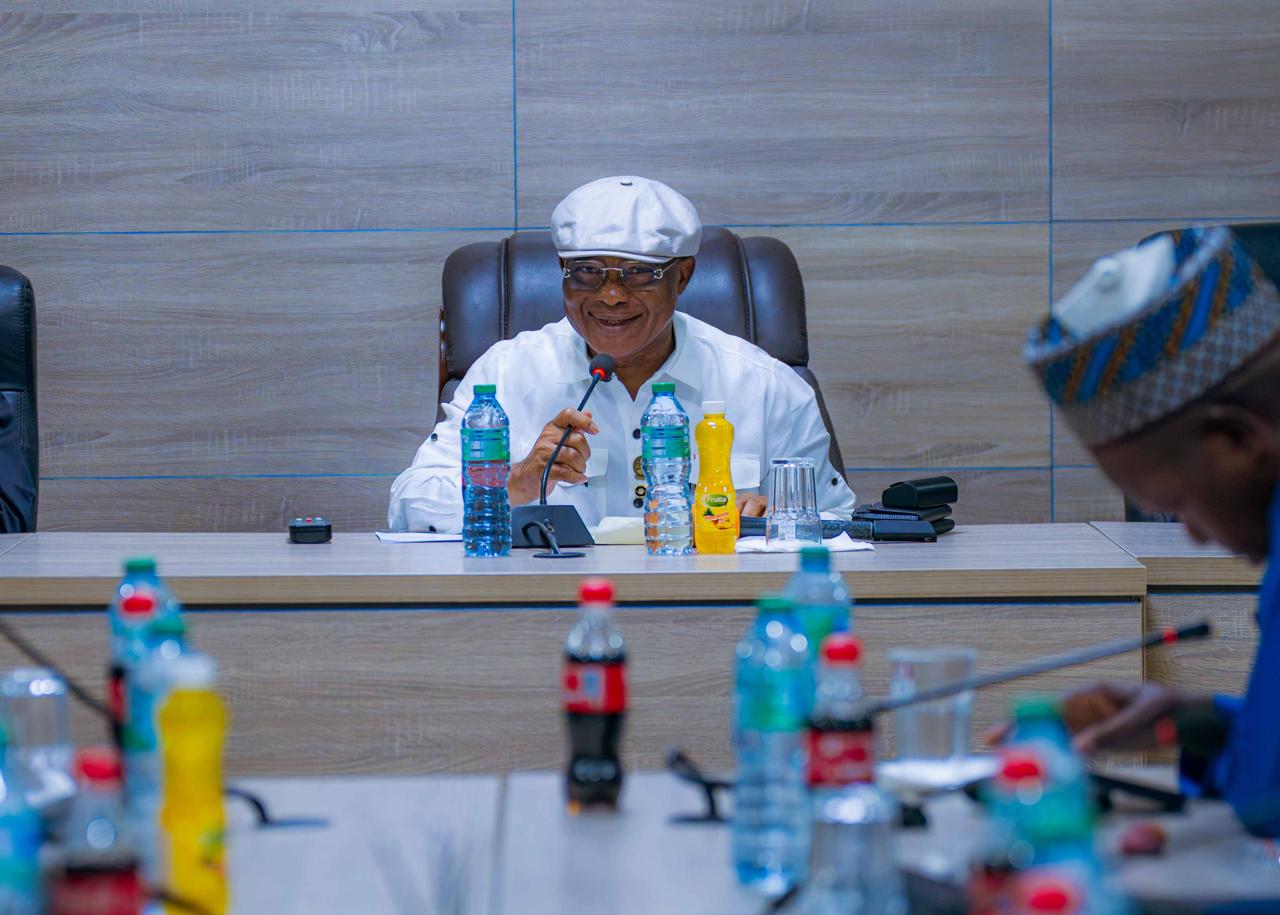
*Renewed Hope Ambassadors Step Into the Next Phase
Fresh from the successful APC 2026 National Convention, the Renewed Hope Ambassadors National, Zonal, and State leadership gathered in Abuja over the weekend, for its fourth strategic meeting, setting the tone for nationwide grassroots activation ahead of 2027.
Chaired by Governor Hope Uzodinma (Imo State) the Director General and National Coordinator of the Renewed Hope Ambassadors, alongside Deputy Director-General, Governor Uba Sani of Kaduna State, and Governor Inuwa Yahaya of Gombe State as Secretary, the session reinforced one clear direction: One Party. One Message. One Mobilization whilst also laying out a strategic roadmap for the activation of the network across all communities in Nigeria.
Backed by the strength of 31 APC-led states, the Renewed Hope Agenda is taking Bola Ahmed Tinubu’s message of progress and reform to every corner of Nigeria.
From bold economic restructuring to initiatives like NELFUND, the increase in the national minimum wage from ₦30,000 to ₦70,000, and strategic investments in critical sectors, including PNiCGI, the mission remains clear: helping Nigerians understand both the purpose and the progress of the Renewed Hope vision.
This is coordination at scale. This is grassroots engagement with purpose. This is the next phase of Renewed Hope with One Party, One Message, and One Mobilisation framework
#RenewedHopeAmbassadors #APC #WeAreAPC


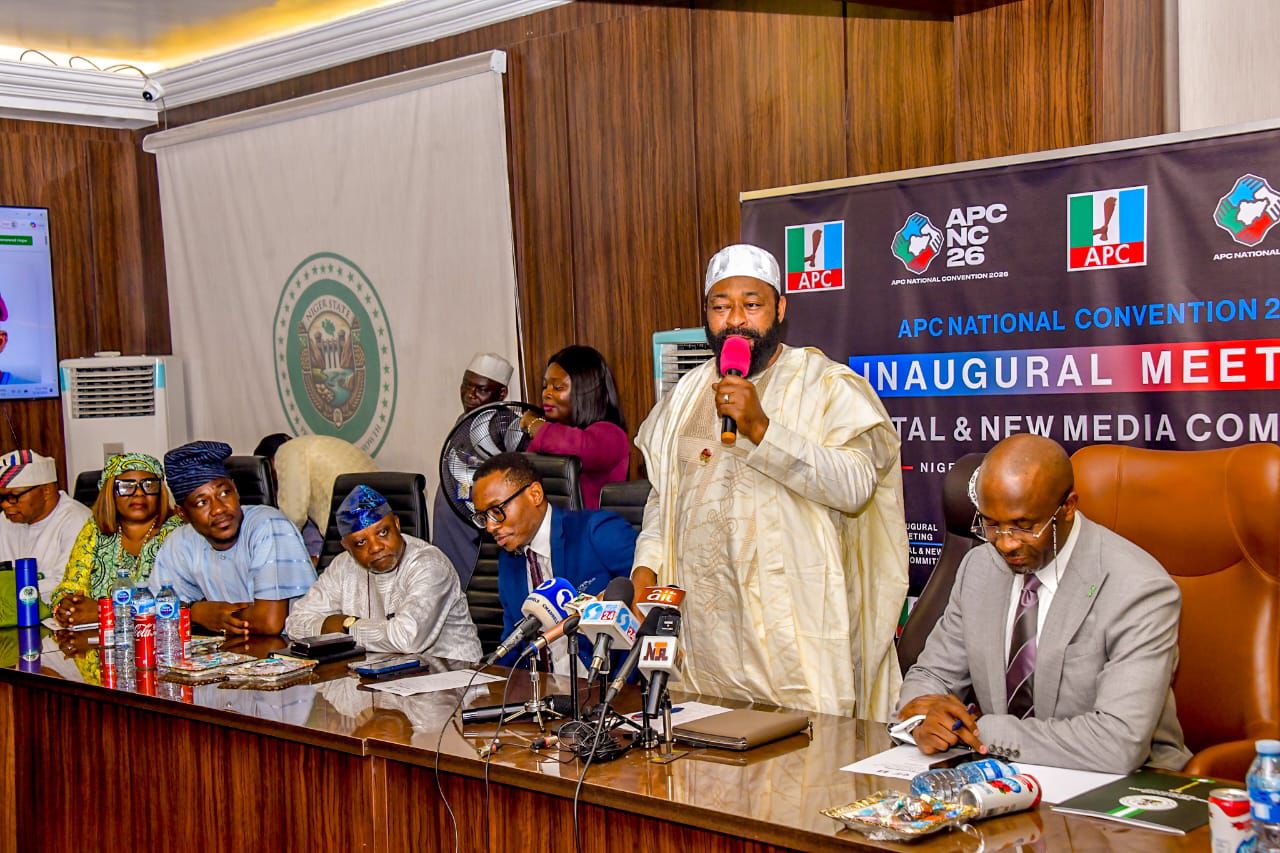
Governor Bago Inaugurates APC Digital Media Sub-Committee Ahead of National Convention.
Governor Umaru Bago has inaugurated the Digital Media Sub-Committee for the forthcoming National Convention of the All Progressives Congress (APC), scheduled to hold on March 27 and 28, 2026 in Abuja.
Chairing the sub-committee, Governor Bago tasked members with the responsibility of effectively communicating the party’s manifesto to the public.
He emphasized the need to leverage social media platforms to highlight the achievements and ongoing efforts of President Bola Ahmed Tinubu, noting that communication gaps have posed challenges that must now be decisively addressed.
The Co-Chair of the sub-committee, Hon. Benjamin Kalu, Deputy Speaker of the House of Representatives, echoed the Governor’s position, urging members to project the activities of both the party and the government to a broader audience.
He called for a deliberate and coordinated effort to showcase the party’s achievements and policy direction, stressing the importance of shaping a compelling and consistent narrative across all digital platforms.
Delivering a presentation to the committee, Otega Ogra, SSA to the President on New Media, who serves as Secretary of the sub-committee, outlined strategic focus areas to guide the team’s operations.
His presentation highlighted communication priorities and actionable steps to achieve the committee’s mandate and strengthen the party’s digital engagement.


-

 society6 months ago
Religion: Africa’s Oldest Weapon of Enslavement and the Forgotten Truth
-

 news4 months ago
WHO REALLY OWNS MONIEPOINT? The $290 Million Deal That Sold Nigeria’s Top Fintech to Foreign Interests
-

 society6 months ago
“You Are Never Without Help” – Pastor Gebhardt Berndt Inspires Hope Through Empower Church (Video)
-

 celebrity radar - gossips2 months ago
Dr. Chris Okafor Returns with Power and Fire of the Spirit -Mounts Grace Nation Altar with Fresh Anointing and Restoration Grace on February 1, 2026