
Business
A Nation on Its Knees: How Nigeria Crumbled Before Our Eyes

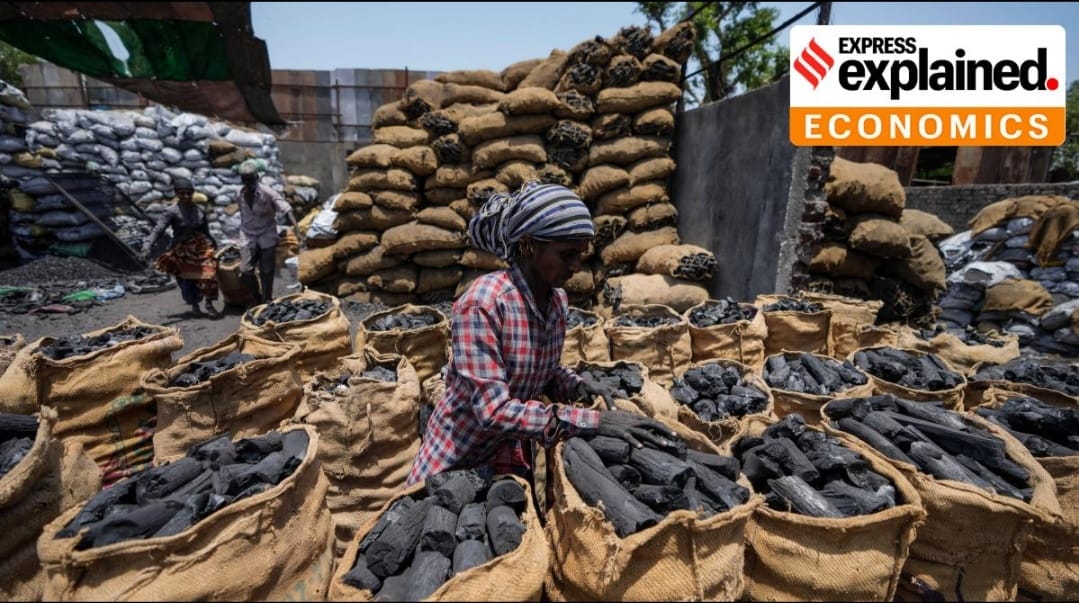
A Nation on Its Knees: How Nigeria Crumbled Before Our Eyes.
By George Omagbemi Sylvester | saharaweeklyng.com
“Wake up Nigeria, we can not reclaim our throne when we are deep asleep on the job.”
NIGERIA (the land of vast potential, resplendent hope and a future once imagined so bright) has fallen into a quagmire of broken promises, shattered expectations and systemic decay. Once touted as Africa’s rising star, we now endure a reality of no reliable electricity, crumbling road networks, failing governance, a free-falling naira, insecurity and poverty levels that soar to new heights. In short: how can we reclaim the title of Giant of Africa when the foundations have collapsed?
What went wrong?
1. GOVERNANCE FAILURE.
At the heart of Nigeria’s decline lies the collapse of governance. A scholarly review noted that “despite being Africa’s largest economy, Nigeria faces governance deficits that hinder sustainable development and economic growth.” According to the same study, Nigeria’s power generation stagnated at 5,500 MW in 2023 while demand soared to around 30,000 MW. When governance fails to deliver the basics (power, rule of law, infrastructure) hope dies.

The former President of the NBA, Olisa Agbakoba SAN, warned that Nigeria can only reach a ₦500 trillion economy with “robust legal and institutional frameworks.”
We have the institutions on paper; what is lacking is integrity, capacity and political will.
2. ECONOMIC MISMANAGEMENT & OVER-RELIANCE ON OIL.
Nigeria’s economic malaise is not for lack of resources. The country is rich – in people, in land, in energy. Yet the so-called “RESOURCE CURSE” is very real. As one recent article summarised: “This study identifies political and administrative corruption, as well as low productivity, as key structural barriers to economic transformation.”
Our economy has remained overly dependent on oil, IMPORT-HEAVY and SHOCK-PRONE.
According to International Monetary Fund (IMF): “Between 2014 and 2023, real per capita GDP declined on average by 0.7 percent annually. In 2023 the poverty rate stood at 42 percent.” The naira crash, inflation and debt burden all result from decades of mis-prioritisation.

3. INFRASTRUCTURE COLLAPSE & SERVICE DELIVERY FAILURE.
How can farms prosper when there’s no road to bring produce to market? How can factories thrive when electricity is erratic and cost of doing business is punitive? Infrastructure is the backbone of growth and Nigeria’s backbone is broken. From dilapidated classrooms to degraded hospitals, with no street lights, neglected parks and streets, the promise of public service delivery lies in ruins. Education, for example, receives about 6 to 7 percent of the annual budget, far below UNESCO’s recommended minimum of 15 percent.
When schools are crumbling, teachers demoralised, classes crowded, the future shrinks. Health systems are overstretched; security infrastructure inadequate. In one study, “Effect of insecurity, no-one farms, output falls.”
4. SECURITY CRISIS & SOCIAL DISINTEGRATION.

You cannot build or grow in fear. Yet Nigeria’s security situation has deteriorated dramatically, insurgency in the North East, banditry in the North West, separatist violence in the South East, kidnappings and terror everywhere. The GOVERNANCE-INFRASTRUCTURE-SECURITY complex has collapsed. One article points to a “growing issue of terrorism financing” and noted that “137 out of 261 borders in the North-East and North-West remain unguarded.”
When citizens fear for their lives, investors stay away, agriculture shrinks and social capital bleeds away.
5. CURRENCY COLLAPSE, POVERTY SURGE & PUBLIC DESPAIR.
The currency is the barometer of trust in an economy. The fall of the naira, hyper-inflation, food insecurity, these are not merely economic metrics but human tragedies. In 2025, almost 129 million Nigerians were reported to live under the national poverty line; around 60 percent of the population.
And still we speak of “GIANTS”. A bigger statistical GDP does not mean new schools, new roads or new hope. As one expert warned after rebasing, the economy looked bigger, though it was “not more productive, nor more industrialised.”
Money is meaningless when schools are empty, clinics dilapidated and the streets unsafe.

HOW DID WE GET HERE?
The path to crisis is rarely sudden; it is built by years of neglect, bad decisions and compounding error.
After independence, Nigeria soared and hoping to be the model of African success. Oil money flooded in.
Instead of investing in infrastructure, diversification and human capital, elites chased rents, the institutions stagnated, corruption spread and oil-money dependency took root.
The roads were not built, the power plants were not completed, the schools were not upgraded. Governance became transactional. The public service, a career; accountability, optional.
Every crisis was met with bandaid (fuel subsidies, borrowed money, unsustainable spending) while the foundational work languished.
The economy remained fragile, when oil dropped, the rest of the system creaked. Export diversification (agriculture, manufacturing, services) was ignored or mis-managed.
Meanwhile security deteriorated: as poverty increased, marginalised youths turned to crime; state legitimacy waned; local grievances ballooned.
Now we arrive at a paradox, Nigeria has the youth, the land, the potential, but none of the trust, institutionality or infrastructure to harness it.
WHO CAN RESCUE US?
Rescue is not coming from outside. It must come from US (the citizens, the activists, the business owners, the churches, the societies) and the leadership we force to act.
POLITICAL LEADERSHIP WITH BACKBONE.
We need leaders who view their roles not as patrons, but as trustees. Leaders willing to discipline themselves, reduce wasteful governance costs and invest in the citizens. The NBA’s Agbakoba admonished that without “robust legal and institutional frameworks” Nigeria cannot achieve greatness.
A leader with moral authority, vision, discipline and one who prioritises the long game over short-term gain.
INSTITUTIONAL OVERHAUL & GOVERNANCE REFORM.
Formal institutions exist; what they lack is strength. We must build accountability systems, independent judiciary, transparent procurement, strong sub-national governments. As one article stressed: “Nigeria must prioritise transparency, accountability and inclusivity to foster national stability and prosperity.”
Real reform will destroy the rent-seekers and empower the productive.
INFRASTRUCTURE INVESTMENT & HUMAN CAPITAL.

The giant awakens when his spine is rebuilt. Roads. Schools. Hospitals. Electricity. Parks. Mines. Farms. This is not charity; it is investment in the future. According to the IMF, Nigeria’s “real reforms can help Nigeria realize its potential as an African and global economic powerhouse.”
We can not wait for foreign capital; we must mobilise domestic capital, diaspora remittances, public-private partnerships and ensure the results reach the ground.
ECONOMIC DIVERSIFICATION & PRODUCTIVITY CULTURE.
Oil is not the future. Nigeria’s future lies in agriculture, manufacturing, ICT, service exports, renewable energy. We must shift from monoculture to multi-pillar productivity. A deeper study pointed out how “unproductivity stems from poor resource usage and lack of diversification.”
When we make something, we manufacture value, we employ our Youth, we transform from consumers to producers.
CIVIC AWAKENING & DEMAND-DRIVEN ACCOUNTABILITY.
No one will do it for us. Citizens must rise. Vote consciously. Demand accountability. Monitor budgets. Report looters. Build local associations. The Reddit-commentary is blunt:
“Nigerians are pretenders. They know they are a reflection of what their leaders represent.”
Indeed, the giant cannot stand while the people sleep. Civic duty is no longer optional, but imperative.
The Way Foward.
The path forward is clear, but the will is weak. Nigeria can be the Giant of Africa again, but not by default. It will require decisive action, brutal honesty, structural reforms and collective courage. We must stop treating crisis as normal. We must stop rationalising failure. We must demand better.
The blazing truth is this, the country that fails to govern its internal house cannot govern itself; the country that cannot provide roads, schools, electricity and security cannot dream of greatness. We are capable. We have the people. The land. The future.
Now we must muster the will. For without will, even the greatest of nations will shrink. Nigeria, it is time to wake up. Your giant is asleep and your future depends on whether you rise and shake the dust from his shoulders.
Published on saharaweeklyng.com. Author: George Omagbemi Sylvester.





Fidelity Bank grows gross earnings by 38% to N434.95b in Q1
Fidelity Bank Plc recorded 37.9 per cent growth in gross earnings to N434.95 billion in first quarter 2026 as the international commercial bank continued to expand its core banking market share.
Interim report and accounts of Fidelity Bank for the three months ended March 31, 2026 released at the Nigerian Exchange (NGX) showed that gross earnings rose from N315.42 billion in first quarter 20025 to N434.95 billion in first quarter 2026, representing an increase of 37.9 per cent.
The top-line performance was driven by impressive growth in the bank’s core business operations with interest incomes rising by 22.8 per cent to N314.48 billion in first quarter 2026 as against N256.10 billion in first quarter 2025.
With net interest income at N180.97 billion, the bank closed the period with profit before tax of N92.48 billion. After taxes, net profit stood at N74.47 billion for the three-month period. Earnings per share remained high at N5.69, underlining the capacity of the bank to reward its shareholders.
The balance sheet of the bank also emerged stronger. Total assets crossed the N11 trillion mark to N11.35 trillion by March 2026 compared with N10.46 trillion recorded in December 2025. Customers’ deposits increased from N6.89 trillion to N7.38 trillion. Total equity rode on the back of earnings growth to a 27.5 per cent increase from N1.09 trillion in December 2025 to N1.39 trillion by March 2026.
The first quarter 2026 results further consolidated the strong earnings outlook of the bank, which had successfully completed its recapitalisation amidst impressive earnings performance in 2025.
Fidelity Bank had recorded double-digit growths in interest and non-interest incomes as well as key balance sheet items during the year ended December 31, 2025.
The audited report showed that gross earnings rose from N1.04 trillion in 2024 to N1.52 trillion in 2025, an increase of 45.6 per cent. Interest and similar incomes had grown by 38.7 per cent from N803.1 billion in 2024 to N1.11 trillion in 2025. Fees and commission incomes also rose by 44.7 per cent from N78.4 billion to N113.4 billion. The bank recorded net profit after tax of N242.4 billion in 2025.
The bank’s balance sheet emerged stronger with total assets rising by 18.6 per cent to N10.46 trillion in 2025 as against N8.82 trillion in 2024. Customer deposits increased by 16.1 per cent from N5.94 trillion to N6.89 trillion, reflecting continued franchise strength and an improved funding profile. Net loans and advances meanwhile declined by 2.4 per cent to N4.28 trillion in 2025 as against N4.39 trillion in 2024, attributable to customers paying down on their mature obligations.
The bank had in 2025 strengthened its capital position, with eligible capital rising to N561 billion, above the regulatory minimum of N500 billion for banks with international authorisation. In addition, capital adequacy had remained robust, with Capital Adequacy Ratio of 30.94 per cent by December 2025 as against 23.47 per cent by December 2024.
Managing Director, Fidelity Bank Plc, Dr. Nneka Onyeali-Ikpe, said the first quarter 2026 results reinforced the bank’s strong and resilient business model.
She noted that with the remarkable success of its recapitalisation programme and continuing expansion, Fidelity Bank has entered a new era of growth and impressive returns.
“We are on a stronger footing and confident that we will set new growth records that are reflective of our legacy and the future we are working on,” Onyeali-Ikpe said.
Business
Dangote Refinery Ends Nigeria’s Era of Fuel Import Dependence, Boosts GDP, FX Earnings — EIU
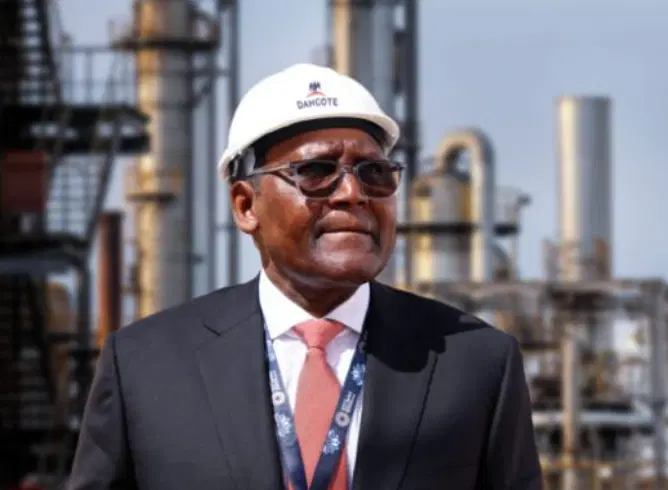
Dangote Refinery Ends Nigeria’s Era of Fuel Import Dependence, Boosts GDP, FX Earnings — EIU
The operational ramp up of the 650,000 barrels per day Dangote Petroleum Refinery & Petrochemicals is fundamentally reshaping Nigeria’s downstream oil sector, significantly reducing the country’s dependence on imported refined petroleum products and strengthening its external position, according to the Economist Intelligence Unit (EIU).
In its latest assessment on Nigeria’s fuel market and regulatory environment, the EIU said the refinery has already transformed a sector that was previously characterised by heavy reliance on imported fuel despite Nigeria being Africa’s largest crude oil producer. The report noted that the refinery met nearly 80 per cent of domestic petrol demand in April and produced enough volumes to satisfy local consumption requirements as operations approached full capacity.
The EIU described Nigeria’s downstream petroleum sector before the refinery as “long dysfunctional”, noting that the country had remained almost entirely dependent on costly imported fuel while producing nearly 1.5 million barrels of crude oil daily.
According to the report, the emergence of the refinery has reduced import dependence, improved domestic fuel availability and strengthened Nigeria’s balance of payments position through lower import demand and rising exports of refined petroleum products.
“The gradual ramp up of the 650,000 barrel/day Dangote refinery since May 2023 has transformed Nigeria’s long dysfunctional downstream sector,” the report stated. “The country’s main refineries, all state owned, had been inoperative for years and Nigeria was almost entirely reliant on costly imported fuel.”
The research and analysis division of The Economist Group, London added that the refinery’s attainment of full operational capacity and its planned expansion would further support Nigeria’s economic growth and foreign exchange earnings over the medium term.
“Meanwhile, the attainment of full capacity at, and an increase in exports from, the Dangote refinery will support real GDP growth and foreign exchange earnings in 2026 and 2027 and beyond, as a planned doubling of the plant’s output comes on stream around the end of the decade,” it added.
Industry analysts said the refinery is increasingly positioning Nigeria as an emerging refining and export hub, altering energy trade flows across Africa and reducing the vulnerability associated with fuel import dependence.
The EIU noted that the refinery’s expansion has coincided with major reforms in Nigeria’s downstream sector, including the removal of fuel subsidies and the introduction of market driven pricing mechanisms.
The report, however, said the transition from a state dominated fuel import structure to large scale domestic refining has triggered resistance from interests linked to the old import regime.
The latest tensions emerged following the decision by the Nigerian Midstream and Downstream Petroleum Regulatory Authority to relax restrictions on petrol imports despite the refinery’s growing capacity to meet domestic demand.
Dangote Industries subsequently initiated legal action, arguing that continued import approvals undermine domestic refining investments and conflict with the objectives of the Petroleum Industry Act, which seeks to encourage local refining capacity and reduce import dependence.
Analysts noted that the availability of large-scale domestic refining capacity has improved Nigeria’s energy security and reduced exposure to external supply shocks and foreign exchange volatility.
The Centre for the Promotion of Private Enterprise also cautioned against unrestrained importation of petroleum products, warning that such a policy could weaken Nigeria’s industrialisation drive and discourage investments in domestic refining.
Chief Executive Officer of CPPE, Muda Yusuf, said continued dependence on imported fuel had historically contributed to pressure on foreign reserves, exchange rate instability and fiscal leakages.
The refinery’s growing impact is also being reflected in Nigeria’s broader macroeconomic indicators. Earlier this month, S&P Global Ratings cited increased domestic refining capacity and rising hydrocarbon exports among the major factors supporting Nigeria’s sovereign credit rating upgrade – the first in 14 years.
Beyond Nigeria, analysts said the refinery is increasingly being viewed as a strategic industrial asset for Africa, where many countries remain heavily dependent on imported fuel despite rising demand for transportation, manufacturing, and power generation.
Business
BREAKING: Court Dismisses $19.6 Million Claim Against NNPCL — Rules Contract Scope Cannot Be Changed Orally
BREAKING: Court Dismisses $19.6 Million Claim Against NNPCL — Rules Contract Scope Cannot Be Changed Orally
In a landmark ruling on Friday, May 22, 2026, the Federal Capital Territory High Court in Abuja threw out a $19.6 million lawsuit filed by Alternate Dimensions Ventures Ltd against the Nigerian National Petroleum Company Limited (NNPCL), affirming a key legal principle: a written contract cannot be expanded through oral agreements or conduct.
Alternate Dimensions had sought $19,600,000 in professional fees, claiming the scope of its Direct Sale, Direct Purchase (DSDP e-pro) contract with NNPCL was orally expanded. Represented by counsel Patrick Peter, the firm argued it was entitled to the revised sum for services rendered under the alleged new terms.
But NNPCL, through its lawyer Ituah Imhanze of KENNA LP, pushed back sharply, arguing that parties are bound exclusively by the clear terms of their written agreement. Imhanze contended that without any written amendment, the claim was legally unsound, and the court agreed.
Delivering judgment, Justice Hamza Mu’azu upheld NNPCL’s defense, stating that the contract was unambiguous and that no evidence was adduced during the trial, which supported the alleged scope expansion. The court further found that NNPCL fully complied with all contractual terms and committed no breach.
Dismissing the suit as meritless, Justice Mu’azu reinforced the doctrine of sanctity of contract: any amendment to a written agreement must be express, unequivocal, and documented, not implied or verbal.
The ruling spares NNPCL from the S19.6 million claim and also a floodgate of similar potential liabilities.


- Qrent says delaying Information Technology (IT) refresh cycles may be increasing operational risk for businesses in Africa May 27, 2026
- Dentons’ Iyunola Adekanye Appointed to African Mining Week (AMW) Advisory Board May 27, 2026
- United Nations (UN) Women Liberia and Partners Convene for Spotlight Initiative 2.0 Women’s Economic Empowerment Inception Meeting May 27, 2026
- African Mining Week (AMW) to Host Central Bank Governors Roundtable as Monetary Authorities Deepen Role in Mining Sector Growth May 27, 2026
- Eritrea: Diaspora Nationals Celebrate Independence Day Anniversary May 27, 2026
- Africa Unveils Landmark Humanitarian Coordination Platform to Strengthen aligned Response to Humanitarian Crises May 27, 2026
- Seychelles: President Herminie Engages with Police and Fire Services on Praslin May 27, 2026
- Issue 3 of Mining Review Africa now available for free download May 27, 2026
- NOV Joins African Energy Week (AEW) 2026 as Gold Sponsor Amid Africa’s Offshore Expansion Push May 26, 2026
- African Union of Broadcasting (AUB) and United Nations University Institute for Water, Environment and Health (UNU-INWEH) Launch Landmark Webinar Series on Africa’s Water Crisis, Starting June 2, 2026 May 26, 2026
- Qrent says delaying Information Technology (IT) refresh cycles may be increasing operational risk for businesses in Africa May 27, 2026
- Dentons’ Iyunola Adekanye Appointed to African Mining Week (AMW) Advisory Board May 27, 2026
- United Nations (UN) Women Liberia and Partners Convene for Spotlight Initiative 2.0 Women’s Economic Empowerment Inception Meeting May 27, 2026
- African Mining Week (AMW) to Host Central Bank Governors Roundtable as Monetary Authorities Deepen Role in Mining Sector Growth May 27, 2026
- Eritrea: Diaspora Nationals Celebrate Independence Day Anniversary May 27, 2026
- Africa Unveils Landmark Humanitarian Coordination Platform to Strengthen aligned Response to Humanitarian Crises May 27, 2026
- Seychelles: President Herminie Engages with Police and Fire Services on Praslin May 27, 2026
-

 news5 months ago
WHO REALLY OWNS MONIEPOINT? The $290 Million Deal That Sold Nigeria’s Top Fintech to Foreign Interests
-

 society3 weeks ago
SOCIAL MEDIA IS NOT A BATTLEFIELD COMMAND – WHY THE NIGERIAN ARMY’S ACTION AGAINST JUSTICE CRACK IS A NATIONAL SECURITY IMPERATIVE
-

 celebrity radar - gossips4 months ago
Dr. Chris Okafor Returns with Power and Fire of the Spirit -Mounts Grace Nation Altar with Fresh Anointing and Restoration Grace on February 1, 2026
-

 celebrity radar - gossips6 months ago
Prophet Kingsley Aitafo Releases 2026 Prophecy: ‘Nigeria Will Rise, but the World Must Prepare for Turbulence’