
Bank
Recapitalisation Reality Check: Uncovering the Truth Behind Nigeria’s Banking Boom

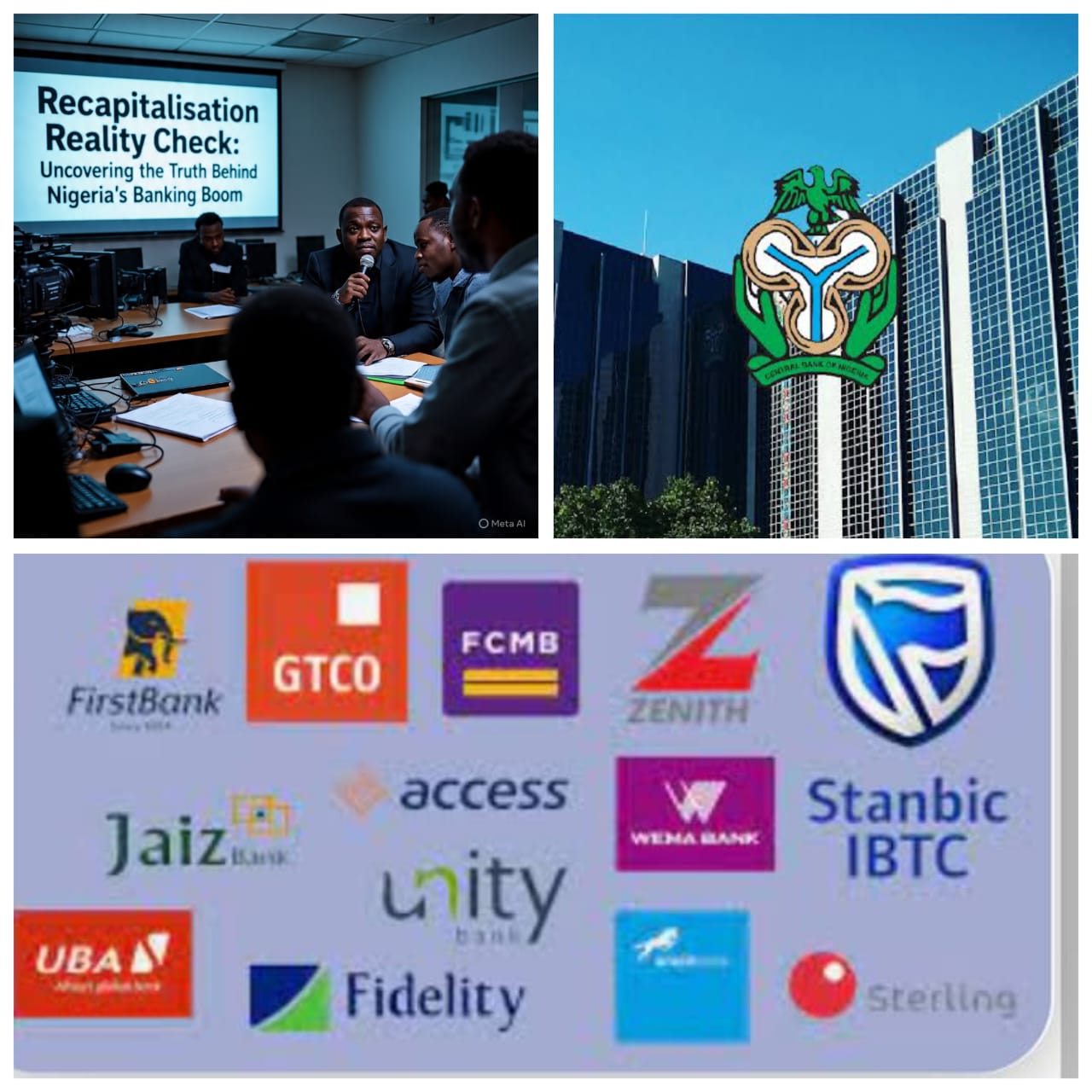
Recapitalisation Reality Check: Uncovering the Truth Behind Nigeria’s Banking Boom
BY BLAISE UDUNZE
When the Central Bank of Nigeria (CBN) announced a new round of bank recapitalisation in March 2024, many expected the leading banks, especially those boasting record-breaking profits in the hundreds of billions and trillions, to sail through with ease. Their financial statements glistened with prosperity, with expanding balance sheets, rising dividends, and bullish share prices.
Indeed, five of Nigeria’s top 10 banks reported a combined pre-tax profit of N4.6 trillion in 2024, showing a staggering 70 percent increase from the previous year, with Zenith Bank and Guaranty Trust Holding Company crossing the trillion-naira mark for the first time. The results painted a picture of robust profitability and resilience.
Yet, barely months after the profit announcements, the same banks found themselves racing back-to-back to the capital market to raise fresh funds. By the first half of 2025, Nigeria’s banking industry was at a crossroads. Behind the glitter of trillion-naira profits lay a more sobering reality of an industry scrambling to meet the CBN’s recapitalisation directive.
The contradiction is stark: record profits on one hand, desperate fundraising on the other. If the banks were truly as profitable and resilient as they claimed, they wouldn’t be begging investors for fresh equity to meet new thresholds.
Behind the strong showing of the market leaders lies an even deeper concern. The smaller commercial and regional banks are struggling to formulate credible recapitalisation strategies. As the March 31, 2026 deadline looms, the CBN has confirmed that only 14 banks have so far scaled the recapitalisation hurdle. That leaves nearly 19 institutions still in search of capital in a market already skeptical of their true worth.
The recapitalisation push has therefore become the clearest indicator of the sector’s underlying fragility. The CBN’s new capital requirements of N500 billion for international banks, N200 billion for national banks, and N50 billion for regional banks have forced lenders to confront a fundamental question. How much of their reported profits actually represents real financial strength?
Much of Nigeria’s profit boom has been a deception, a mirage built on foreign exchange revaluation gains and arbitrary fees rather than genuine operational efficiency. The unification of exchange rates and subsequent naira depreciation in 2023 and 2024 delivered massive revaluation windfalls on dollar-denominated assets, inflating balance sheets overnight. But these were paper gains, not cash profits, and could not be deployed to strengthen capital or fund new loans.
Beyond FX gains, Nigerian banks have increasingly relied on fees and charges as easy revenue. Despite repeated CBN sanctions for breaching its Guide to Charges, banks continue to extract billions from customers through transfers, withdrawals, ATM fees, SMS alerts, and account maintenance. With over 312 million active bank accounts, these charges now contribute more to profitability than traditional lending or genuine financial intermediation.
It is little surprise, then, that the recapitalisation exercise has exposed the widening gap between declared profitability and true solvency. While five Tier-1 banks together raked in N4.6 trillion in pre-tax profit in 2024, nearly 70 percent higher than in 2023, many mid-tier banks can barely keep pace. The recapitalisation gap across the sector is now estimated at N4.7 trillion.
As of September 2025, only 14 banks had crossed the line, while others scramble for mergers, rights issues, or license downgrades to survive. The CBN’s insistence that only paid-up capital and share premium will count while excluding retained earnings has stripped away the accounting camouflage that once masked weakness.
For the market leaders, the race has been aggressive but achievable. Access Holdings raised N351 billion through a fully subscribed rights issue. Zenith Bank’s N350.4 billion hybrid offer was oversubscribed by 160 percent. Wema Bank, once a mid-tier lender, successfully raised N200 billion and became a national success story. Among specialised institutions, Greenwich Merchant Bank sealed its own recapitalisation, supported by capital injections and debt-to-equity conversions that secured its merchant banking license, while Jaiz Bank rose above the N20 billion target to remain the flagship of Islamic banking. Lotus has met the N10 billion bar, consolidating its place in Nigeria’s fast-growing alternative sector.
Another notable entrant is Globus Bank, which in 2024 raised N52.9 billion to lift its capital to N98.6 billion and followed in 2025 with a further N102 billion via rights issues and private placements. The raise subscribed entirely by existing shareholders took its capital above N200 billion. The bank now awaits final verification from the CBN before being formally recognized as compliant.
For others, however, it has been a painful crawl. Fidelity Bank’s N205.45 billion hybrid offer still leaves a N160 billion gap to the N500 billion benchmark. Guaranty Trust Bank reached its own target through a two-phased approach that started with a rights issue in Nigeria that netted N365.8 billion. Subsequently, GT listed shares on the London Stock Exchange with proceeds of $105 million to reach the required target, while UBA Plc launched a N157 billion rights issue in July 2025, following a N239 billion offer in November 2024 that was oversubscribed at N251 billion, with N240 billion accepted. The new offer, extended to September 19, 2025, helped the bank meet the CBN’s N500 billion capital requirement.
As of September 2025, First Bank has secured N187.6 billion and plans an additional N350 billion in private placements, but it still needs to secure the remaining funds to meet the CBN’s requirements. FCMB Group Plc launched a N160 billion public share offer to meet the CBN’s N500 billion capital requirements for international banks, with the offer closing on November 6, 2025. The offer follows a successful N147.5 billion share sale in 2024.
Fidelity raised N176 billion in fresh capital in 2024 and is moving to get an additional N195 billion via private placement before the end of the year. Sterling Bank has not yet completed its recapitalisation as it commenced an N87.067 public offer. This offer follows completion of a N75 billion private placement and a N28.79 billion rights issue, which was significantly oversubscribed by its shareholders.
Consolidation pressures are once again reshaping Nigeria’s banking landscape. Titan Trust’s acquisition of Union Bank and the completed Providus and Unity Bank’s merger reflect the reality that not every institution will raise sufficient equity alone. More combinations are expected in the months ahead, with smaller lenders likely to be folded into stronger franchises as the recapitalisation deadline approaches.
This trend mirrors the 2005 consolidation era, which trimmed 89 banks down to 25, ushering in a new era of scale and scrutiny. The 2024-2026 recapitalisation may well repeat history, producing fewer but sturdier players, banks large enough to finance Nigeria’s economic transformation.
But history offers a warning that recapitalisation is not reform. Bigger balance sheets may shield banks from global shocks, but they do not guarantee developmental relevance. Unless the philosophy of Nigerian banking itself changes from profit-first to purpose-driven intermediation, the sector will keep producing “giant banks in a fragile economy.”
The real challenge is not size, but substance. Nigeria doesn’t just need bigger banks; it needs better banks. It needs institutions that see SMEs as partners rather than liabilities, that lend to real producers rather than recycle deposits into government securities. It needs lenders that adopt fintech-driven underwriting, regulators that reward productive lending, and policymakers that create the infrastructure, power, and security needed to make risk-taking viable.
Recapitalisation, in this light, should not be seen merely as a regulatory hurdle but as a mirror reflecting both the success and the shame of Nigeria’s banking system. The trillion-naira profits may have dazzled investors, but the scramble for new capital reveals the truth that the sector’s foundations remain fragile, its governance inconsistent, and its contribution to real economic development still limited.
The CBN’s policy, painful as it may be, is a necessary reality check. It forces banks to prove that their wealth is more than paper-deep and that their balance sheets can support Nigeria’s ambitious $1 trillion economy vision. For investors and depositors, it is a wake-up call that what glitters in the financial statements may not always be gold.
In the end, recapitalisation is not just about raising funds; it is about restoring credibility. Because trust, once eroded by profit manipulation and corporate posturing, takes far more than a balance sheet to rebuild.
Blaise, a journalist and PR professional writes from Lagos, can be reached via: [email protected]




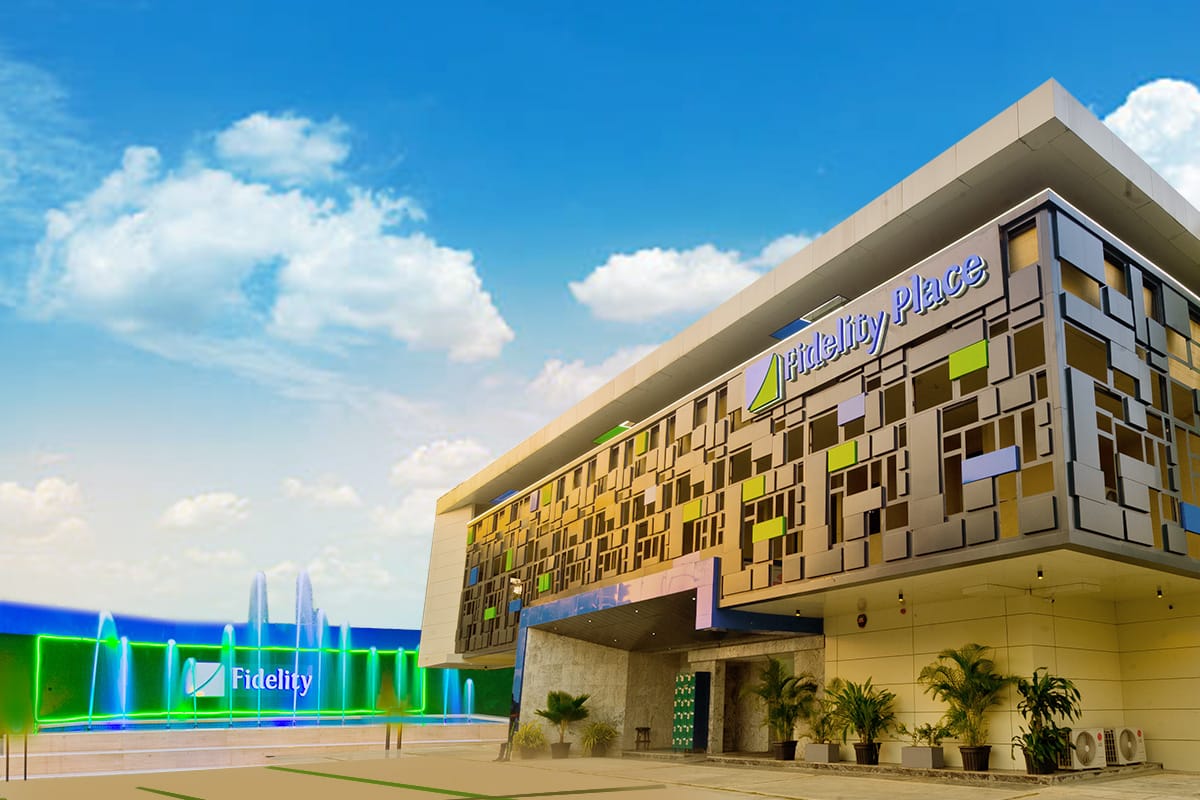
Fidelity Bank grows gross earnings by 38% to N434.95b in Q1
Fidelity Bank Plc recorded 37.9 per cent growth in gross earnings to N434.95 billion in first quarter 2026 as the international commercial bank continued to expand its core banking market share.
Interim report and accounts of Fidelity Bank for the three months ended March 31, 2026 released at the Nigerian Exchange (NGX) showed that gross earnings rose from N315.42 billion in first quarter 20025 to N434.95 billion in first quarter 2026, representing an increase of 37.9 per cent.
The top-line performance was driven by impressive growth in the bank’s core business operations with interest incomes rising by 22.8 per cent to N314.48 billion in first quarter 2026 as against N256.10 billion in first quarter 2025.
With net interest income at N180.97 billion, the bank closed the period with profit before tax of N92.48 billion. After taxes, net profit stood at N74.47 billion for the three-month period. Earnings per share remained high at N5.69, underlining the capacity of the bank to reward its shareholders.
The balance sheet of the bank also emerged stronger. Total assets crossed the N11 trillion mark to N11.35 trillion by March 2026 compared with N10.46 trillion recorded in December 2025. Customers’ deposits increased from N6.89 trillion to N7.38 trillion. Total equity rode on the back of earnings growth to a 27.5 per cent increase from N1.09 trillion in December 2025 to N1.39 trillion by March 2026.
The first quarter 2026 results further consolidated the strong earnings outlook of the bank, which had successfully completed its recapitalisation amidst impressive earnings performance in 2025.
Fidelity Bank had recorded double-digit growths in interest and non-interest incomes as well as key balance sheet items during the year ended December 31, 2025.
The audited report showed that gross earnings rose from N1.04 trillion in 2024 to N1.52 trillion in 2025, an increase of 45.6 per cent. Interest and similar incomes had grown by 38.7 per cent from N803.1 billion in 2024 to N1.11 trillion in 2025. Fees and commission incomes also rose by 44.7 per cent from N78.4 billion to N113.4 billion. The bank recorded net profit after tax of N242.4 billion in 2025.
The bank’s balance sheet emerged stronger with total assets rising by 18.6 per cent to N10.46 trillion in 2025 as against N8.82 trillion in 2024. Customer deposits increased by 16.1 per cent from N5.94 trillion to N6.89 trillion, reflecting continued franchise strength and an improved funding profile. Net loans and advances meanwhile declined by 2.4 per cent to N4.28 trillion in 2025 as against N4.39 trillion in 2024, attributable to customers paying down on their mature obligations.
The bank had in 2025 strengthened its capital position, with eligible capital rising to N561 billion, above the regulatory minimum of N500 billion for banks with international authorisation. In addition, capital adequacy had remained robust, with Capital Adequacy Ratio of 30.94 per cent by December 2025 as against 23.47 per cent by December 2024.
Managing Director, Fidelity Bank Plc, Dr. Nneka Onyeali-Ikpe, said the first quarter 2026 results reinforced the bank’s strong and resilient business model.
She noted that with the remarkable success of its recapitalisation programme and continuing expansion, Fidelity Bank has entered a new era of growth and impressive returns.
“We are on a stronger footing and confident that we will set new growth records that are reflective of our legacy and the future we are working on,” Onyeali-Ikpe said.
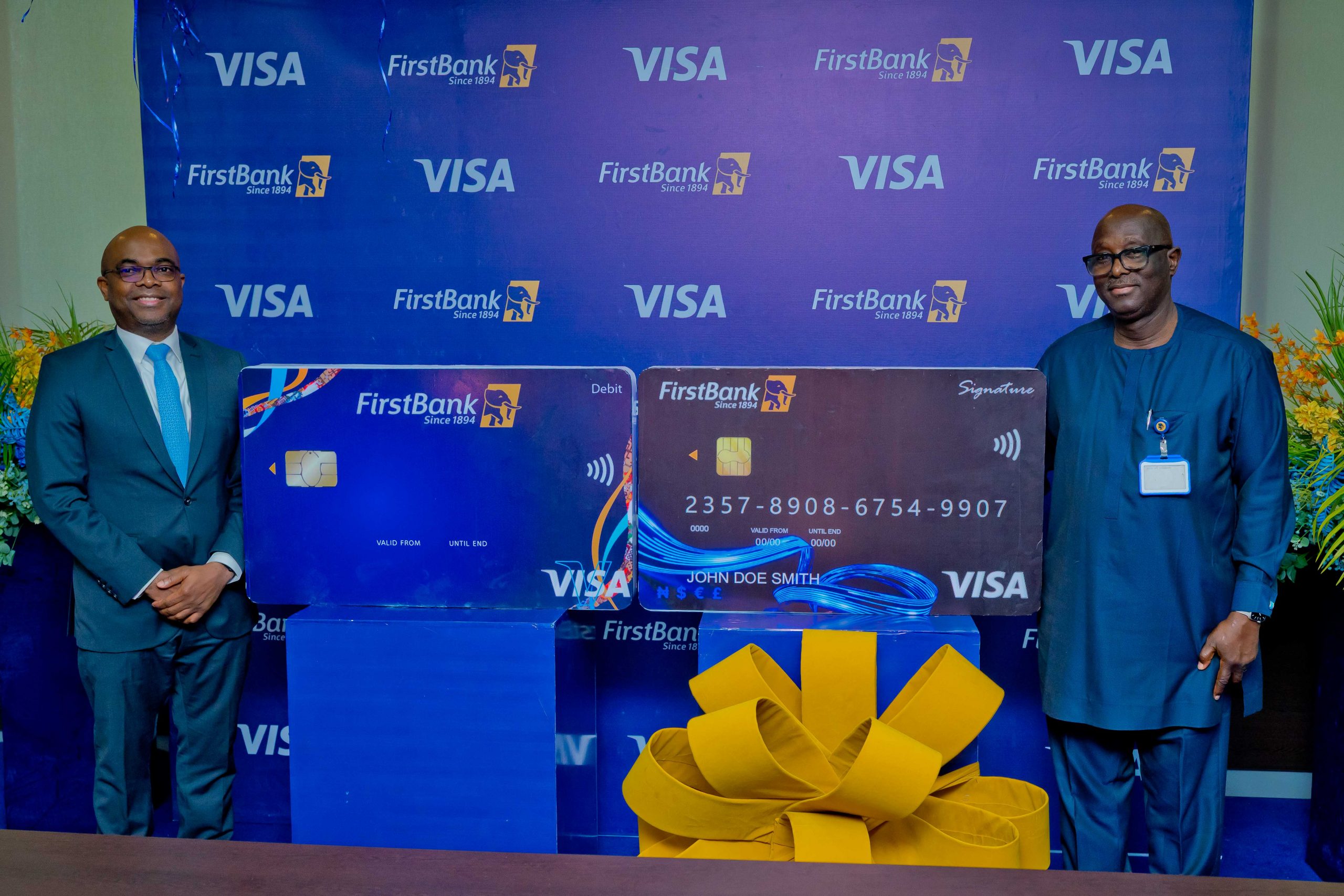
FirstBank, Visa Expand Premium Card Portfolio with Visa Signature Launch
Designed for Nigeria’s affluent segment, Visa Signature unlocks world-class benefits through Visa’s global network across travel, lifestyle, and premium merchant offers.
Lagos, Nigeria – May 15, 2026 – First Bank of Nigeria Limited, in partnership with Visa, has announced the launch of Visa Signature, a premium card offering designed for Nigeria’s affluent segment. The card unlocks an exclusive portfolio of lifestyle benefits, global travel privileges, and curated merchant offers through Visa’s worldwide acceptance network, giving high-spending Nigerians a product built around how they live.
Visa Signature targets Nigeria’s top executives, business owners, and frequent international travelers who expect more from their financial products. Through Visa Global benefits and Visa Destination offers, cardholders gain access to preferential rates, premium experiences, and priority services across hundreds of partner merchants, hotels, airlines, and destinations around the world. The card supports both domestic and cross-border transactions, ensuring seamless payment experiences whether cardholders are in Lagos, London, or Dubai.
Commenting on FirstBank’s ambition for its premium cardholders, Chuma Ezirim, Group Executive, eBusiness & Retail Products, FirstBank, said: “At FirstBank, we are dedicated to creating financial solutions that reflect the evolving lifestyles of our customers. We understand that our premium customers aspire to experiences that reflect their global outlook. Visa Signature is crafted to meet those expectations, offering access to exclusive experiences, global connectivity, and lifestyle privileges that empower our customers to live without boundaries. We remain focused on creating value and reinforcing our position as the partner of first choice for Nigerians at home and abroad.”
Highlighting the strategic importance of the FirstBank partnership, Andrew Uaboi, Vice President and Cluster Head, West Africa, Visa, noted: “Nigeria’s affluent consumers are among the most active and globally connected spenders on the continent. Visa Signature is designed to serve that profile with the depth of benefits and the breadth of acceptance they deserve. We are delighted to work with FirstBank in making this available to the Nigerian market.”
The launch marks a strategic step for FirstBank in deepening its premium product offering. FirstBank’s existing Visa portfolio already serves millions of Nigerians across everyday retail, cross-border commerce, and online transactions through Visa Infinite, Visa Gold, Naira Credit, and Visa Prepaid cards. Visa Signature adds a dedicated tier for the affluent segment, giving this customer group the recognition and privileges their spending profile demands.
Visa Signature is available to eligible FirstBank customers. Interested customers can visit any FirstBank branch nationwide or contact their dedicated relationship manager to apply.

Visa (NYSE: V) is a world leader in digital payments, facilitating transactions between consumers, merchants, financial institutions, and government enti
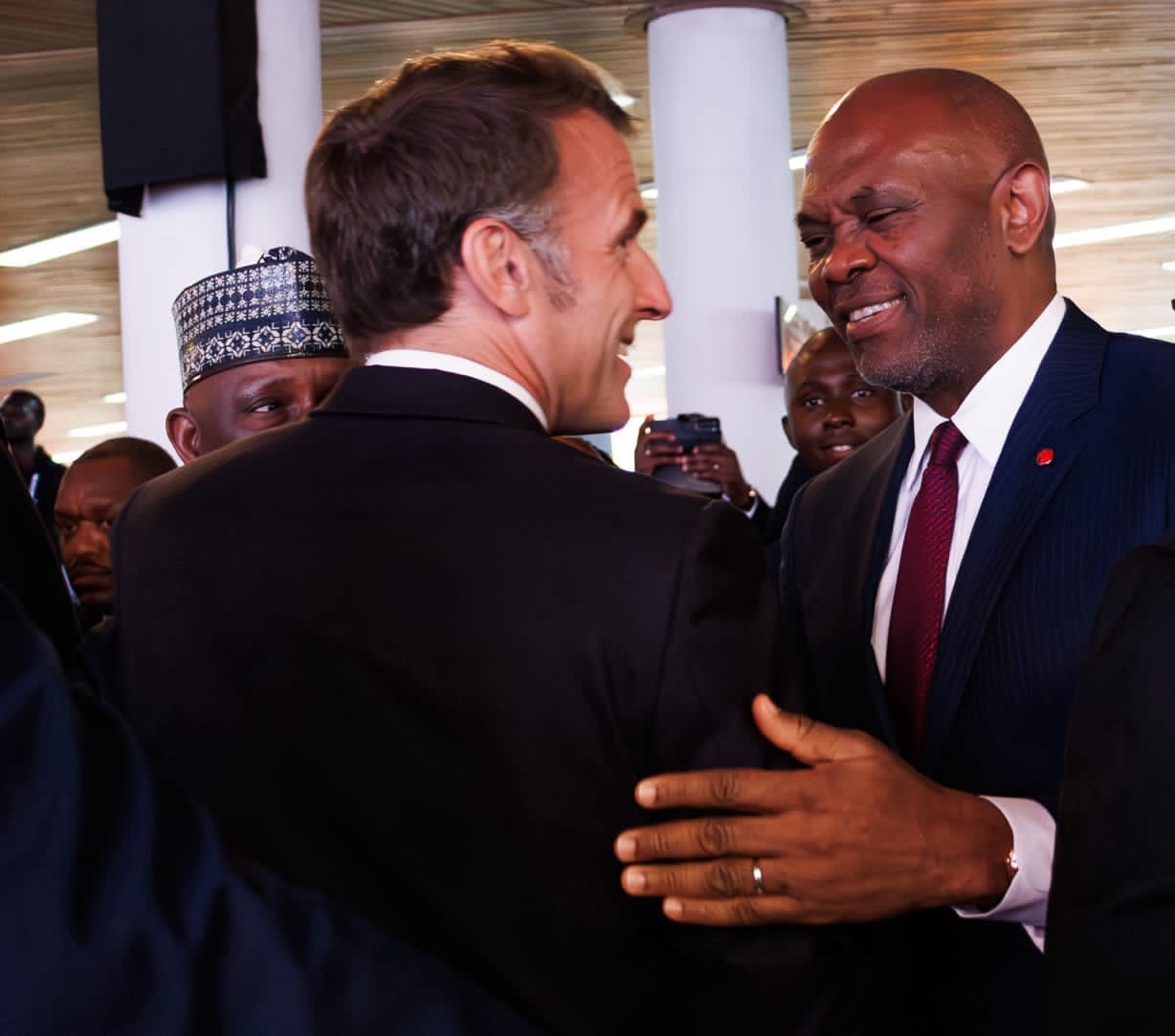
Tony Elumelu at Africa Forward Summit: “Our Youth Do Not Need Handouts”
Heirs Holdings Founder tells Presidents Ruto and Macron that Africa wants partners of substance, based on equality, and that power and infrastructure must come first.
At the 2026 Africa Forward Summit, convened by Kenyan President H.E. William Ruto and French President H.E. Emmanuel Macron, Heirs Holdings Founder and Group Chair, Tony O. Elumelu, CFR, delivered a direct message to a room of heads of state, investors, and global business leaders: Africa is open for partnership, not patronage.
“We welcome true partnership — partnerships of substance and based on equity — where Africans and African solutions catalyse Africa’s future”, he remarked.
Elumelu argued that Africa’s transformation hinges on two foundational investments — electricity and infrastructure — and that private capital must do the heavy lifting.
“The private sector is what will help us mobilise capital to drive investment in infrastructure, investment in electricity. These are two critical requirements for the economic prosperity and development of Africa,” he said. “If we create the right operating environment, we will create jobs for our people. We will alleviate poverty and deliver growth and prosperity.”
With more than 65 percent of Africans under 35, Elumelu pushed back hard against the traditional language of aid.
aid.
“In Africa, we have a young population. There is no room for victim mentality. Our youth do not need handouts; they need jobs, they need improved access to electricity, they need to join the internet. What is important is providing this enablement, this infrastructure requirement, so that our young ones can realise their potential.”
His Tony Elumelu Foundation (TEF) has now provided access to training for 2.5 million young Africans and funded over 27,000 entrepreneurs across all 54 African countries — the continent’s largest entrepreneurship platform.
Elumelu signalled openness to every credible partner, regardless of geography.
“It is a good place to be at, as Africans, now. We should embrace those who want to help us catalyse growth in Africa. And let us not forget Africa is the fastest growing region globally – and it is not just demographics” he said.
“In the 21st century, the mindset must change. It should be a mindset that embraces economic prosperity and development, a mindset that creates the environment that will help us alleviate poverty in Africa, create jobs for our young people.”
Tony Elumelu’s participation at the summit aligns with Heirs Holdings’ broader commitment to driving long-term African development through strategic investments across sectors critical to economic transformation, including power, financial services, healthcare, hospitality, and technology.
The 2026 Africa Forward Summit concluded with renewed calls for deeper collaboration between governments, development institutions, and the private sector, as leaders exploredaid.
“In Africa, we have a young population. There is no room for victim mentality. Our youth do not need handouts; they need jobs, they need improved access to electricity, they need to join the internet. What is important is providing this enablement, this infrastructure requirement, so that our young ones can realise their potential.”
His Tony Elumelu Foundation (TEF) has now provided access to training for 2.5 million young Africans and funded over 27,000 entrepreneurs across all 546 African countries — the continent’s largest entrepreneurship platform.
Elumelu signalled openness to every credible partner, regardless of geography.
“It is a good place to be at, as Africans, now. We should embrace those who want to help us catalyse growth in Africa. And let us not forget Africa is the fastest growing region globally – and it is not just demographics” he said.
“In the 21st century, the mindset must change. It should be a mindset that embraces economic prosperity and development, a mindset that creates the environment that will help us alleviate poverty in Africa, create jobs for our young people.”
Tony Elumelu’s participation at the summit aligns with Heirs Holdings’ broader commitment to driving long-term African development through strategic investments across sectors critical to economic transformation, including power, financial services, healthcare, hospitality, and technology.
The 2026 Africa Forward Summit concluded with renewed calls for deeper collaboration between governments, development institutions, and the private sector, as leaders explored pathways to accelerate inclusive growth and strengthen Africa’s position within the global economy.


- Qrent says delaying Information Technology (IT) refresh cycles may be increasing operational risk for businesses in Africa May 27, 2026
- Dentons’ Iyunola Adekanye Appointed to African Mining Week (AMW) Advisory Board May 27, 2026
- United Nations (UN) Women Liberia and Partners Convene for Spotlight Initiative 2.0 Women’s Economic Empowerment Inception Meeting May 27, 2026
- African Mining Week (AMW) to Host Central Bank Governors Roundtable as Monetary Authorities Deepen Role in Mining Sector Growth May 27, 2026
- Eritrea: Diaspora Nationals Celebrate Independence Day Anniversary May 27, 2026
- Africa Unveils Landmark Humanitarian Coordination Platform to Strengthen aligned Response to Humanitarian Crises May 27, 2026
- Seychelles: President Herminie Engages with Police and Fire Services on Praslin May 27, 2026
- Issue 3 of Mining Review Africa now available for free download May 27, 2026
- NOV Joins African Energy Week (AEW) 2026 as Gold Sponsor Amid Africa’s Offshore Expansion Push May 26, 2026
- African Union of Broadcasting (AUB) and United Nations University Institute for Water, Environment and Health (UNU-INWEH) Launch Landmark Webinar Series on Africa’s Water Crisis, Starting June 2, 2026 May 26, 2026
- Qrent says delaying Information Technology (IT) refresh cycles may be increasing operational risk for businesses in Africa May 27, 2026
- Dentons’ Iyunola Adekanye Appointed to African Mining Week (AMW) Advisory Board May 27, 2026
- United Nations (UN) Women Liberia and Partners Convene for Spotlight Initiative 2.0 Women’s Economic Empowerment Inception Meeting May 27, 2026
- African Mining Week (AMW) to Host Central Bank Governors Roundtable as Monetary Authorities Deepen Role in Mining Sector Growth May 27, 2026
- Eritrea: Diaspora Nationals Celebrate Independence Day Anniversary May 27, 2026
- Africa Unveils Landmark Humanitarian Coordination Platform to Strengthen aligned Response to Humanitarian Crises May 27, 2026
- Seychelles: President Herminie Engages with Police and Fire Services on Praslin May 27, 2026
-

 news5 months ago
WHO REALLY OWNS MONIEPOINT? The $290 Million Deal That Sold Nigeria’s Top Fintech to Foreign Interests
-

 society3 weeks ago
SOCIAL MEDIA IS NOT A BATTLEFIELD COMMAND – WHY THE NIGERIAN ARMY’S ACTION AGAINST JUSTICE CRACK IS A NATIONAL SECURITY IMPERATIVE
-

 celebrity radar - gossips4 months ago
Dr. Chris Okafor Returns with Power and Fire of the Spirit -Mounts Grace Nation Altar with Fresh Anointing and Restoration Grace on February 1, 2026
-

 celebrity radar - gossips6 months ago
Prophet Kingsley Aitafo Releases 2026 Prophecy: ‘Nigeria Will Rise, but the World Must Prepare for Turbulence’