
society
Abiodun approves construction of more roads in Ijebu Ode metropolis

Abiodun approves construction of more roads in Ijebu Ode metropolis
…commissions Molipa/Fusigbuwa/Ojofa Road
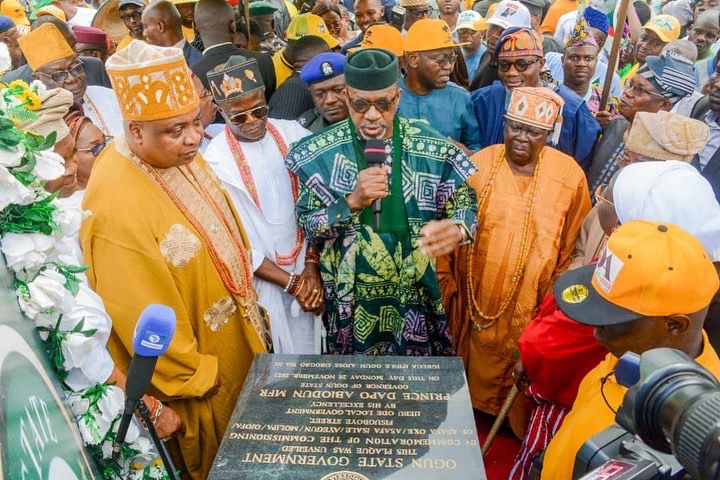
The Ogun State governor, Dapo Abiodun, on Monday, announced the approval for the reconstruction of some major roads in Ijebu Ode metropolis and Ijebu Local Government Area.
The governor, who made the announcement at the official inauguration of Molipa/Fusigboye/Ojofa road in Ijebu-Ode, listed Igbeba, Ilese, Awokoya Street, Balogun Kuku and Ijebu-Ode Club roads as some of the key roads to be embarked upon for rehabilitation by his administration.
He said that the 3.2km road which were in a deplorable state and made worse by serious erosion, were abandoned by previous administrations.
Abiodun noted that the newly inaugurated road apart from further expanding the economic activities of the area by making them accessible, the roads would help in the control of erosion and flood in the axis.
The governor disclosed that the road was recommended by the people for reconstruction, saying that several of such projects across the state done by his administration, have rekindled hope and trust of the people in government’s ability to deliver good governance.
He added that such commitment had also helped in establishing trust between his government and the private sector, which according to him spurred Dangote Nigeria Plc coming to reconstruct the Papalanto-Ilaro road.
While emphasizing that Ogun is no longer a civil service state, but an industrial hub of the country courtesy of administration’s policies, said six roads were under construction in Ijebu Ode, assuring that his administration would not rest until all bad roads are put in good shape.
He lauded the people for remaining peaceful and law abiding, saying development could not take place in an atmosphere of chaos, hence, the need for the people to continue to maintain peace at all times.
While pleading with the youths to shun cultism and embrace sports, the governor stated that Sports and Youths Trust Fund would soon be launched to empower the youth and support students in the state.
“I have bided for the Nigeria University Games in 2024 because of you, I want to bring it here so that as we are having the games here in Ijebu-Ode, we are also doing it in Remo, Abeokuta and Ilaro to ensure that our youths are engaged.
“I will soon be launching a sports trust fund; I will be launching it myself and government will be putting a certain percentage of our contract sum in that fund.
“I have assurance from the organized private sector that they will donate generously to that fund. That fund will be used to empower our youths and support our students.
“Please, do not allow yourselves to be used as thugs in the hands of desperate politicians, let me remind you that the Independent National Electoral Commission has asked us to come and collect our PVCs, you must exercise your franchise”, the governor submitted.
The Commissioner for Works and Infrastructure, Akin Adesanya, in his welcome address, said that the road whose construction started in August, was unaccessible and flood prone, which adversely affected the properties and the socio-economic activities of the people of the area, adding that “with the construction of this road, economic activities are expected to increase here”.
The Awujale and Paramount Ruler of Ijebuland, Oba Sikiru Adetona, represented by the Dagburewe of Idowa, Oba Yinusa Adekoya, noted that area where the road is constructed is an ancient place where cultural festival of the town was celebrated.
The Awujale described the governor as a performer who has taken developmental projects to every parts of the state, saying his administration has touched all sectors including agriculture, health, education and infrastructure, expressing optimism that he would perform better during his second term in office.
The Olu of Ilaro and Paramount Ruler of Yewaland, Oba Kehinde Olugbenle, in his remarks, attested to the fairness of the current administration in ensuring that all parts of the state benefit from the state government, adding that Yewaland is not left out in the distribution of projects.
The Akarigbo and Paramount Ruler of Remoland who is also the Chairman, Ogun State Traditional Council, Oba Babatunde Ajayi, opined that the current administration is different in its style of governance as it is fair, responsive and just in delivering projects across the state.
Earlier, the chairman of Ijebu-Ode Local Government Area, Emiola Gazal, said Ijebu-Ode has in the past been denied developmental projects, stressing that the road had been in bad shape for long and the people of the area had lost hope of it being repaired.
He thanked the state government for responding to the cries of the people by repairing the road.





celebrity radar - gossips
Accolades to Empress Genevieve Wining as she Celebrate birthday in Grand style

Accolades to Empress Genevieve Wining as she Celebrate birthday in Grand style
Emmanuel Clement
Vilnius, Lithuania – The Grand Hotel Vilnius will host a grand birthday celebration in honor of Her Majesty The Empress Genevieve Wining of the United Kingdom of Atlantis (UKA) on April 4th, 2026.
The four-day event promises to be an extravagant affair, marking the special birthday of Empress Genevieve Wining. The celebration will take place at the prestigious Grand Hotel Vilnius, Lithuania, renowned for its luxurious ambiance and exceptional service.

According to the event flyer, the birthday celebration will be a spectacular occasion, fitting for an empress. Guests can expect an elegant setting adorned with golden accents, sparkling champagne, and festive decorations, creating a regal atmosphere befitting the occasion.
The Empress Genevieve Wining of UKA is expected to grace the event, which will include various festivities and celebrations in her honor. The occasion aims to bring together dignitaries, followers, and guests to commemorate the empress’s birthday with grandeur and joy.
For media inquiries, accreditation, or further information about the birthday celebration of The Empress Genevieve Wining of UKA, please contact the event organizers.
Courtesy of His Excellency Emperor Prof. Solomon Wining. UKA
Democratic Accountability in Focus as NGIJ Courts NILDS for Strategic Collaboration
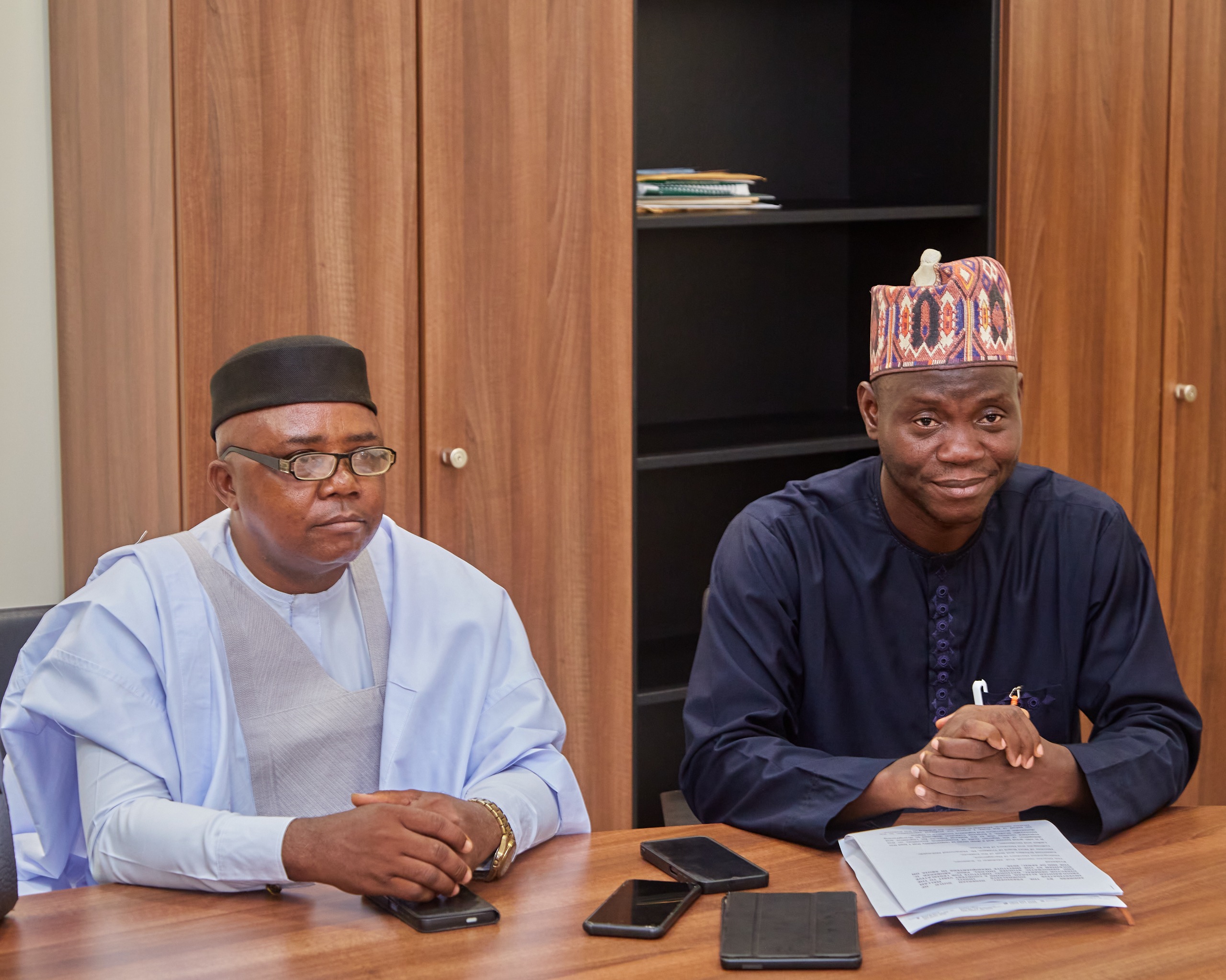
The Nigerian Guild of Investigative Journalists (NGIJ) has sought a strategic partnership with the National Institute for Legislative and Democratic Studies (NILDS) to enhance legislative reporting, strengthen democratic accountability, and promote evidence-based journalism in Nigeria.
The proposal was made during a courtesy visit by the NGIJ delegation, led by its President, Mallam Abdulrahman Aliagan, to the Institute’s headquarters in Abuja.
The Director-General of NILDS, Professor Abubakar O. Suleiman, was represented at the meeting by the Director of Legal Services, Professor Ibrahim Danwanka. Also in attendance were the Special Adviser to the DG on Media, Mr. Muhammad Abdulkadir and the Director of Information, Mr. Emmanuel Atakpo.
Speaking during the visit, Aliagan described the engagement as a strategic step toward building synergy between investigative journalism and legislative research institutions. He commended the leadership of Professor Suleiman for transforming NILDS into a leading centre for legislative studies and democratic governance in Africa.
“This visit is not merely ceremonial—it is deeply strategic. NGIJ and NILDS share a common vision of strengthening democracy, promoting accountability, and deepening good governance in Nigeria,” Aliagan said.
He explained that while NILDS advances democratic governance through research and legislative capacity development, NGIJ complements these efforts through investigative journalism and public-interest reporting.
Aliagan highlighted the Guild’s activities across the country, particularly its Governance Assessment Visits conducted in Kogi, Bayelsa, Ondo, Kwara, Osun, and Kaduna states, noting that such engagements have improved public discourse and strengthened accountability at the subnational level.
“Our mission is to promote ethical investigative journalism, strengthen transparency in governance, and build capacity for data-driven reporting that connects citizens with democratic institutions,” he said.
The NGIJ President also proposed collaboration in areas such as training on legislative processes, joint research and publications, policy dialogues, data sharing, and fellowship programmes for journalists and researchers.
He further informed the Institute of the Guild’s plan to host the Dele Giwa Memorial Annual Lecture on Investigative Journalism in June as part of activities marking Democracy Day. The Guild requested that Professor Suleiman serve as keynote speaker and sought approval to use NILDS’ auditorium for the event.
“We are confident that your presence and intellectual contribution will greatly enrich the discourse and lend national significance to the event,” Aliagan added.
Responding on behalf of the Director-General, Professor Danwanka welcomed the proposal and described the initiative as timely and beneficial to national development. He commended NGIJ for its commitment to accountability journalism and its recognition of the Institute’s growing impact.
“If there is any institution journalists need to collaborate with, it is NILDS.
Legislative reporting requires specialised knowledge that many journalists currently lack,” Danwanka said.
He explained that NILDS was established by an Act of Parliament in 2011 and later expanded in 2017 to include broader responsibilities covering democratic institutions and civil society organisations.
According to him, the Institute has grown significantly under Professor Suleiman’s leadership, expanding from four departments to eleven, with increased staff strength and wider national, regional, and continental visibility.
Danwanka noted that NILDS currently provides research and capacity-building support not only to Nigeria’s legislature but also to parliaments across West Africa and other parts of the continent, including Kenya, Zimbabwe, Malawi, Ghana, and Togo.
“Legislature is a specialised field. Even experts from other disciplines must acquire knowledge of its processes to report it accurately. That is where NILDS comes in,” he said.
He assured the NGIJ delegation that all requests presented during the visit, including collaboration proposals, the use of the Institute’s facilities, and the invitation to the DG would be communicated for necessary action.
Danwanka also acknowledged NGIJ’s commendation of the appointment of Mr. Abdulkadir as Special Adviser on Media, describing the recognition as thoughtful and well-deserved.
The meeting ended with both parties expressing optimism about establishing a formal framework for collaboration, with a shared commitment to strengthening democratic institutions and improving governance through knowledge-driven journalism.
“This engagement marks the beginning of a sustainable partnership that will advance legislative excellence and investigative journalism in Nigeria,” Danwanka said.


GOVERNMENT MUST TACKLE NATION’S PRESSING CHALLENGES — BISHOP MARTINS URGES AT CHRISM MASS
By Ifeoma Ikem
The Holy Cross Cathedral, Lagos, was filled with joy, reverence, and renewed commitment on Holy Thursday as Catholic faithful across the metropolis gathered for the annual Chrism Mass — a solemn celebration marking the institution of the priesthood, the Holy Eucharist, and the blessing of sacred oils used throughout the liturgical year.

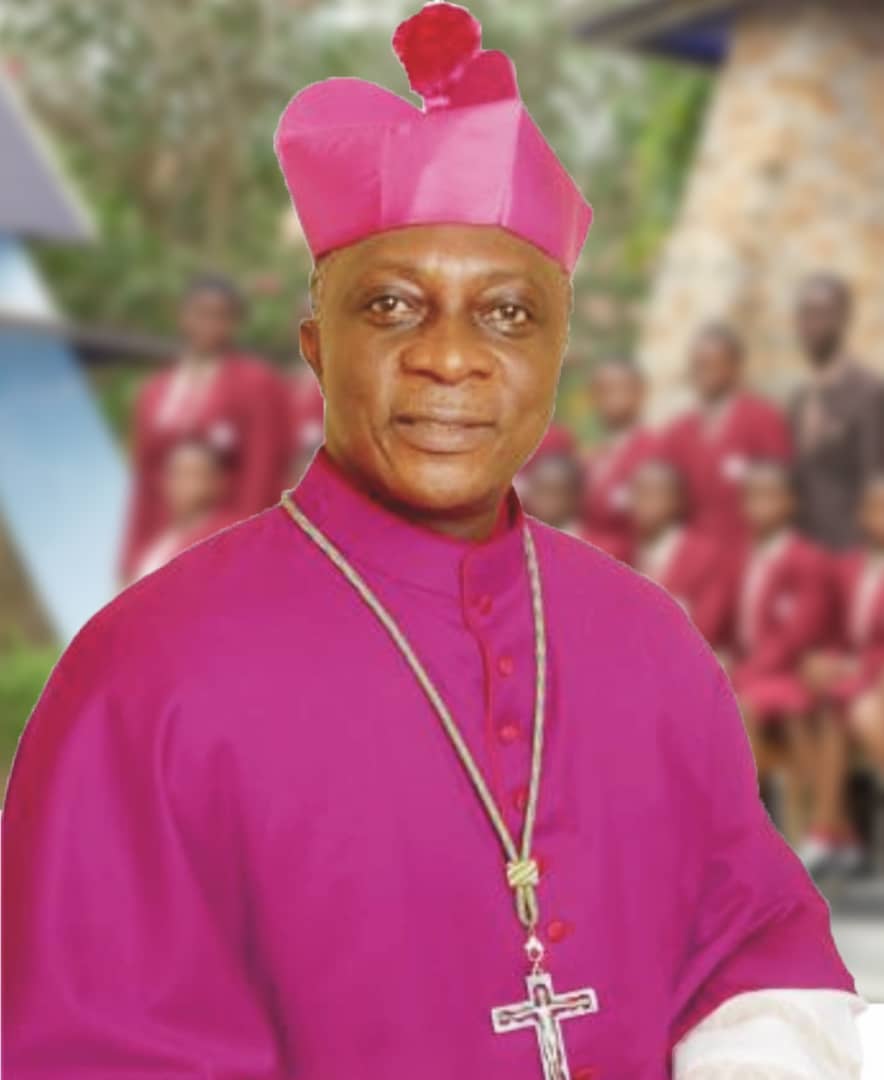
During the ceremony, the Catholic Archbishop of Lagos, Most Rev. Adewale Martins, described the Chrism Mass as a profound moment in the life of the Church.
He noted that it offers priests an opportunity to renew their vows and reflect on the centrality of the Eucharist, which he emphasized remains the heartbeat of the Catholic faith.
Addressing national issues, Bishop Martins acknowledged the government’s ongoing efforts to tackle Nigeria’s current challenges.
However, he stressed the need for more decisive and accelerated interventions, particularly in securing lives and easing the economic burdens confronting citizens.
He congratulated priests on their feast day and reflected on the rising influence of digital evangelization. While recognizing that many people now “inhabit online spaces,” he warned clergymen to handle social media with caution, discipline, and fidelity to Church teachings. According to him, digital influence must never overshadow spiritual integrity.
“The oils blessed today are not simply symbols; they speak of being set apart by a mark not earned, not crafted, but given,” he said. “As we renew our promises, we do not recreate ordination; we awaken memory. We were not ordained to build profiles but to bear Christ.”
He further noted that the digital world has become a place where people “gather, argue, celebrate, confess, misunderstand, and sometimes encounter truth.” For this reason, he said the Church recognizes the need to take the Gospel into that space without compromising its authenticity.
In his homily, Rev. Fr. Paul Akin-Otiko, Chaplain of St. Thomas More Catholic Chaplaincy, University of Lagos, emphasized the enduring significance of the Chrism Mass as an ancient tradition where sacred oils are consecrated.
He urged priests to pray fervently for the sick using the blessed oils, reminding them that true healing comes from God.
Fr. Akin-Otiko encouraged clergy to remain selfless, warning them never to turn the Church into a source of personal gain.
He stressed that their primary duty is the salvation of souls and the welfare of the people entrusted to them.
Monsignor John Aniagwu took a moment to appreciate Anthony Cardinal Olubunmi Okogie for his fatherly guidance and exemplary leadership. He prayed for God’s continued blessings, asking that all present be granted good health to witness many more Chrism Masses.
The highlight of the ceremony was the renewal of vows by hundreds of priests, who reaffirmed their commitment to lives of dedication, chastity, and obedience to the Church and their bishop — an act that drew heartfelt applause from the congregation.
The celebration concluded with songs of thanksgiving, joy, and renewed devotion.


-

 society7 months ago
Religion: Africa’s Oldest Weapon of Enslavement and the Forgotten Truth
-

 news4 months ago
WHO REALLY OWNS MONIEPOINT? The $290 Million Deal That Sold Nigeria’s Top Fintech to Foreign Interests
-

 society6 months ago
“You Are Never Without Help” – Pastor Gebhardt Berndt Inspires Hope Through Empower Church (Video)
-

 celebrity radar - gossips2 months ago
Dr. Chris Okafor Returns with Power and Fire of the Spirit -Mounts Grace Nation Altar with Fresh Anointing and Restoration Grace on February 1, 2026