
celebrity radar - gossips
Adaobi Alagwu Blasts Tunde Ayeni, Berates Him for Insisting on DNA Test for Love-Chil


Adaobi Alagwu Blasts Tunde Ayeni, Berates Him for Insisting on DNA Test for Love-Child
Go To Hell! Tunde Ayeni’s Side-Chick, Adaobi Alagwu, Berates Him for Insisting on DNA Test for Love-Child*His Plot to Warm His Way to Tinubu’s Govt Through Timbo Ayinde Unveiled Deflated. Defeated. Distraught. These adjectives aptly describe what has become the present status of the former chairman of the now-defunct Skye Bank, Tunde Ayeni.

Still smarting from the callosal electoral loss of Atiku Abubakar, with whom he pitched his tent in the just held presidential election, the businessman is presently being cut to sizes by his side-chick, Adaobi Alagwu, who once worshipped the ground on which he walked. The basis for this embarrassing upbraiding and confrontation he is facing from Adaobi emanated from his decision to surreptitiously carry out a DNA test on their love child, whom has become a subject of controversial paternity. Against all known facts, Tunde Ayeni has suddenly chosen to deny the child he had with Adaobi; while Adaobi has decided to take the battle to him in equal measure.Sources privy to the ongoing imbroglio between the estranged lovebirds reveal that Adaobi, an Abuja-based lawyer who happened to be a classmate of Ayeni’s daughter, has dared Ayeni to come close to her and her daughter if he would not be disgraced. When she got wind of Ayeni’s plan to disentangle himself from the child as it has become worryingly difficult for him to take care of certain responsibilities based on the present parlous state of his finances, Adaobi berated him, called his bluff, then ask him to “go to hell with whatever test he is planning to conduct.”
In a letter, she wrote to him Adaobi was unsparing, acerbic, and direct in calling him unprintable names. She let him know in unmistakable terms that she would not let go of the property and that she knew he has become flatly broke and desperate, which was why he was looking for anything to cling unto.Adaobi has also vowed to drag Ayeni through the mud until he took full responsibility for the baby girl. “She is ready to drag him through the mud if he continues to deny the paternity of her daughter. She said he was the one who encouraged her to get pregnant and many witnesses can attest to it. According to her, early last year, she was a constant face at his Solween house as she lived with him in his Rhine street address.“Ada also told us that many times in the past, she had actually walked out of the relationship with Ayeni only for him to run to her mother and other family members on bended knees to beg,” a source revealed.
According to the sources, Ayeni has been running from pillar to post to salvage what is left of his diminishing resources and has therefore chosen to go the DNA test route to determine the girl’s paternity in the hope that the test would return negative. Adaobi, when she heard of this, was said to be furious and battle ready for Ayeni over the matter. Adaobi was quoted to have told Tunde to go rue his losses and steer clear of her child, as he is too flatly broke to be embroiled in any paternity tussle at the moment. Tunde Ayeni has since recoiled to his shell; though sources say he has really fallen on bad times and has been struggling to keep up with his lifestyle of luxury for which he was hitherto known. He is said to be left with the hard option of retrieving some of the properties he bought for Adaobi, including an office building he reportedly gifted her.Meanwhile, Adaobi’s mother has advised those close to Tunde Ayeni to warn him to desist from making dirty moves against her daughter, as she would not intervene when he comes back to Adaobi begging for forgiveness, as he is in the habit of. According to Adaobi’s mother, Ayeni was only seeking unnecessary attention which he does not have enough strength of character to see through. “This is not his first time of embarking on such frivolous moves. He always comes back begging. If you know him well, warn him to stop this childish behaviour. I would not beg on his behalf this time around when he reaches out to me to beg Ada,” she said.
It will be recalled that Ayeni’s tales of woes started when he outsmarted his friend, Greg Nwanseru, to poach Adaobi from him. Adaobi was Greg’s former babe before Ayeni lured her with expensive gifts and money. Adaobi was about 24 when she fell for Ayeni’s antics. Ayeni even had send his daughter, who was Adaobi’s friend, to the Lagos campus of Nigeria Law School, so she would not be a clog in the wheel of his romantic whirlwind with Adaobi, who was posted to Abuja like his daughter. Not that Adaobi was a saint before meeting Ayeni; in fact, reports have it that he already had a child and was crusing G-Wagon in Abuja, as she rolled with big-time politicians and rich corporate dudes. There are reports that she was older than she claimed. She contested the Most Beautiful Girl in Nigeria (MGBN) 2014, and it has been revealed she got into modelling in 2007.
Well, Ayeni might have found a worthy company in Atiku Abubakar who also has made a mess of the marriage institution with his divorce case with Jennifer who is far younger than Atiku’s first five children. Ayeni was once close to the powers that be and wielded huge influence in the nation’s socio-economic milieu so much that he could get whatever he desired. Unknowing to him, he was embarking on a journey of perdition that has seen him record huge losses and collateral damage that has plummeted his wealth. Not only has he lost a huge chunk of his estate, as AMCON and EFCC are on his neck trying to recover huge debts he is owing; he has also gone ahead to make enemies of people who were once his friends, family, and support structures. He has reportedly confided in few of his friends that he knew Adaobi has been a bad luck to him since their ways crossed. He was reported to have said that Atiku’s loss at the poll might not be unconnected to Adaobi’s ill-luck.Ayeni’s once-upon-a-time closely knit family has since become a shadow of its old self. His dutiful wife, Biola, was not only heartbroken by Tunde’s betrayal and his lecherous ways, but also turned a prayer-warrior when Tunde almost sniffed life out of her. His kids were deeply saddened by the harrowing experience he made them and their mother go through.
Overtly clever and covetous, besides being instrumental to bringing Skye Bank to its knees through his sleight of hand, his records of fraudulent deals to dispossess his business partners (alive and late) and shareholders in companies in which he was a stakeholder of their hard-earned monies remain subjects of rave reviews in the conventional media as well as the new media. From late Captain Idahosa Okunbo to late Dipreye Alamiesiegha, Ayeni was brutal in his attempts to take over their estates and even continues to fight them in their respective graves. Recently, Ayeni reportedly entered a plea bargain with the Economic and Financial Crimes Commission over the N25.4 billion corruption case it filed against him and the Managing Director of defunct Skye Bank, Timothy Oguntayo. According to reports, the EFCC entered into a secret settlement with Ayeni and Oguntayo that might have involved the forfeiture of N15 billion in cash and assets.The EFCC under the leadership of Ibrahim Magu had on March 7, 2019 arraigned him, Oguntayo, and two other companies before Justice Ijeoma Ojukwu of a Federal High Court, Abuja on 10 charges bordering on money laundering to the tune of N25.4bn. One of the counts had read, “That you, Tunde Ayeni, whilst being the Chairman, Board of Directors of the defunct Skye Bank Plc, between the 1st of January, 2014 and 31st December, 2014 at Abuja within the jurisdiction of this honourable court did commit an offence, to wit: converting the aggregate sum of N17,415,080,000 taken in cash from defunct Skye Bank Plc Suspense Account and delivered to you by the staff of the defunct Skye Bank Plc, which money you reasonably ought to have known forms part of the proceeds of an unlawful act, to wit: fraud and thereby committed an offence contrary to and punishable under Section 15(2)(b) and (3) of the Money Laundering (Prohibition) Act, 2011 (as amended).
”Nemesis might be catching up with Ayeni, as his underhand dealings at one point or the other have fleeced thousands of depositors and shareholders of their monies. Karma, they say, bides its time, and can be unforgiving when it is payback time. After all, the evil that men do live after them.In the meantime, Ayeni has been perfecting plots to warm his way into the imminent Asiwaju Bola Tinubu-led government, now that he has lost out in his miscalculation that Atiku would win the presidential election, which he had hoped to use as a launchpad back to reckoning and the corridors of power. He was said to have boasted that he would use his suspicious relationship with a popular city lady named Timbo Ayinde (who is reputed to have dated many powerful men in the corridors of power and is well-connected in the oil sector) to gain access to the Tinubu-led administration. Timbo is reported to be close to Tinubu. It is not clear how Ayeni intends to do creep into Tinubu’s government but people in the know claim that he sounded so confident that he would win over Timbo’s heart and use her for his ulterior motive. It is yet to be seen how he intends to achieve this, with the methodical and strategic Tinubu who knows how to ward off the activities of bad luck and saboteurs like Ayeni.While he wielded influence in the corridor, Ayeni was notorious for using state agencies to threaten and intimidate his perceived foes and even friends who attempted to stand up to him. He was one of those fingered to have compromised the professionalism of many men of these agencies through inducements and coercion. He recently boasted that he would “deal with a lot of people, especially in the media,” a source said. The source said he had a list of Nigerian journalists to clamp into jail for “maligning him” if Atiku won the election. His now estranged side-chick is also culpable of using state agents to intimidate people. Not too long ago, she ordered the arrest of a journalist.
The arbitrary arrest was roundly condemned by the media and well-meaning Nigerians. Meanwhile, the National Alliance of Media Practitioners (NAMP) has condemned the arrest of the journalist instigated by Adaobi. In a strong-worded media release by the body, Adaobi was warned to desist from using state agencies to harass journalists again, as “doing so would incur the wrath of its members who go to any length to get justice.” The statement also admonished the Nigerian Police and other law enforcement agencies to stop being willing tools in the hands of some Nigerians. “There are fair and just ways to address issues relating to media practice in Nigeria; Nigerian law enforcement agencies should also educate this group of Nigerians about exploring these laws, rather than being willing tools in their hands,” the statement read.




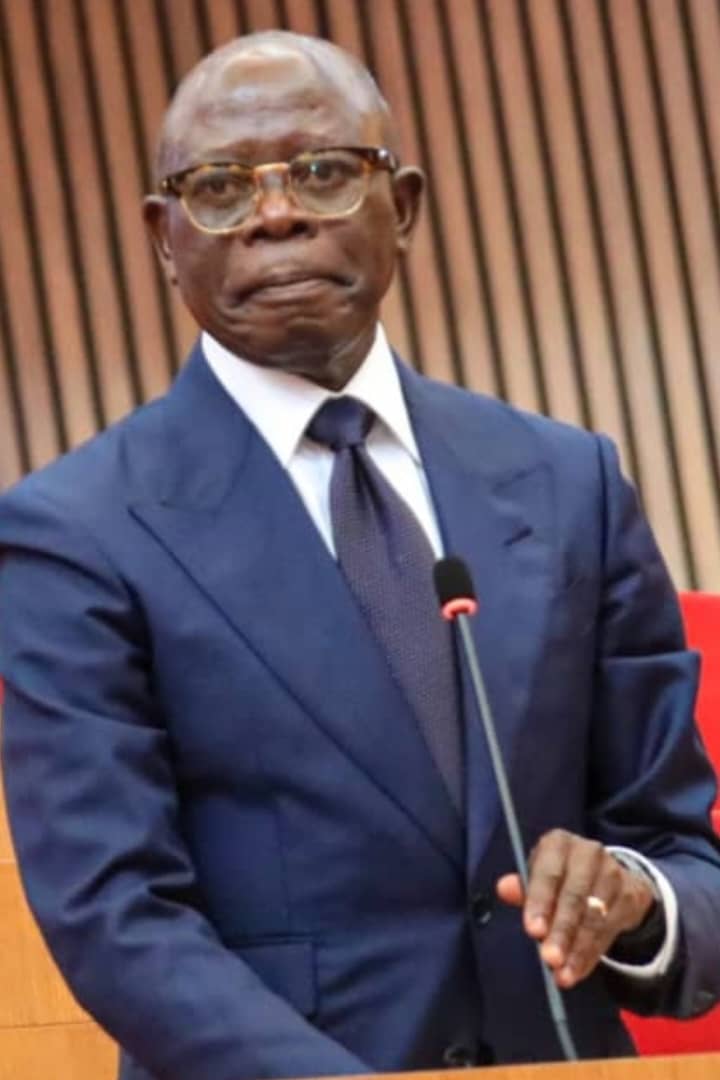
Daniel Eromosele Eulogize Adams Oshiomole as he turns 74 years
Today, I celebrate an exceptional leader, a fearless voice for the people, and a man whose life has remained a symbol of courage, sacrifice, and unwavering commitment to justice—Distinguished Comrade Senator Adams Aliu Oshiomhole.

Your journey has been nothing short of inspiring. From your days as a vibrant labour leader to your impactful tenure as the Executive Governor of Edo State, and now as a respected Senator of the Federal Republic, you have consistently demonstrated what it means to serve with integrity, strength, and purpose. Your contributions to the growth of our nation and the development of Edo State remain indelible and deeply appreciated.
You have not only built structures and institutions but have also built people. I am personally a beneficiary of your leadership, your guidance, and your belief in empowering others. Your influence in my life has been profound, and I remain grateful for the opportunities and inspiration you have given me.
On this special day, I celebrate not just your achievements, but the man you are—resilient, principled, and ever committed to the progress of Nigeria and her people.

May this new year bring you renewed strength, greater wisdom, good health, and more remarkable accomplishments. May your legacy continue to shine brighter with each passing year.
Happy Birthday, sir. Wishing you many more fruitful and impactful years ahead.
celebrity radar - gossips
Accolades to Empress Genevieve Wining as she Celebrate birthday in Grand style

Accolades to Empress Genevieve Wining as she Celebrate birthday in Grand style
Emmanuel Clement
Vilnius, Lithuania – The Grand Hotel Vilnius will host a grand birthday celebration in honor of Her Majesty The Empress Genevieve Wining of the United Kingdom of Atlantis (UKA) on April 4th, 2026.
The four-day event promises to be an extravagant affair, marking the special birthday of Empress Genevieve Wining. The celebration will take place at the prestigious Grand Hotel Vilnius, Lithuania, renowned for its luxurious ambiance and exceptional service.

According to the event flyer, the birthday celebration will be a spectacular occasion, fitting for an empress. Guests can expect an elegant setting adorned with golden accents, sparkling champagne, and festive decorations, creating a regal atmosphere befitting the occasion.
The Empress Genevieve Wining of UKA is expected to grace the event, which will include various festivities and celebrations in her honor. The occasion aims to bring together dignitaries, followers, and guests to commemorate the empress’s birthday with grandeur and joy.
For media inquiries, accreditation, or further information about the birthday celebration of The Empress Genevieve Wining of UKA, please contact the event organizers.
Courtesy of His Excellency Emperor Prof. Solomon Wining. UKA

Today, Dr. Chris Okafor turns a year older
~By Sunday Adeyemi
It is widely acknowledged that the exceptional Dr. Chris Okafor, a man of great character, always celebrates his birthday on April 4th, and in recognition of this occasion, I am inspired to write this special tribute to honor him.
Today marks a momentous occasion as we commemorate the birthday anniversary of Dr. Chris Okafor, a rare gem, a perfect gentleman, and the revered founder of Grace Nation Church, aka Liberation City.
Without reservation, this versatile and dependable Oracle foundry has consistently proven itself worthy of the accolades bestowed upon it on this notable anniversary.
Let it be reiterated that Dr. Chris Okafor is a leader known for his generosity and commitment to humanity’s welfare and advancement. The special gifts donated recently to widows and widowers within and outside the church are a testament to his exceptional leadership.
Your reputation as an outstanding and authentic man of God is evident in your exceptional goodwill and philanthropic endeavors.
Your dedication and perseverance have yielded impressive results, and numerous people, including myself, are justifiably proud of the remarkable work you are doing.
You have consistently exemplified outstanding leadership in the Christian community, demonstrating the profound impact of your role as a gift from God to humanity. I firmly believe this to be true.
Here’s to a year of productivity, success, and happiness. Congratulations and warm wishes on your birthday, sir.
Sunday Adeyemi
Your Son


-

 society7 months ago
Religion: Africa’s Oldest Weapon of Enslavement and the Forgotten Truth
-

 news4 months ago
WHO REALLY OWNS MONIEPOINT? The $290 Million Deal That Sold Nigeria’s Top Fintech to Foreign Interests
-

 society6 months ago
“You Are Never Without Help” – Pastor Gebhardt Berndt Inspires Hope Through Empower Church (Video)
-

 celebrity radar - gossips2 months ago
Dr. Chris Okafor Returns with Power and Fire of the Spirit -Mounts Grace Nation Altar with Fresh Anointing and Restoration Grace on February 1, 2026