Politics
ADC Picks Rt. Hon. Najeem Salaam To Lead Osun’s Future Through People-Centred Governance
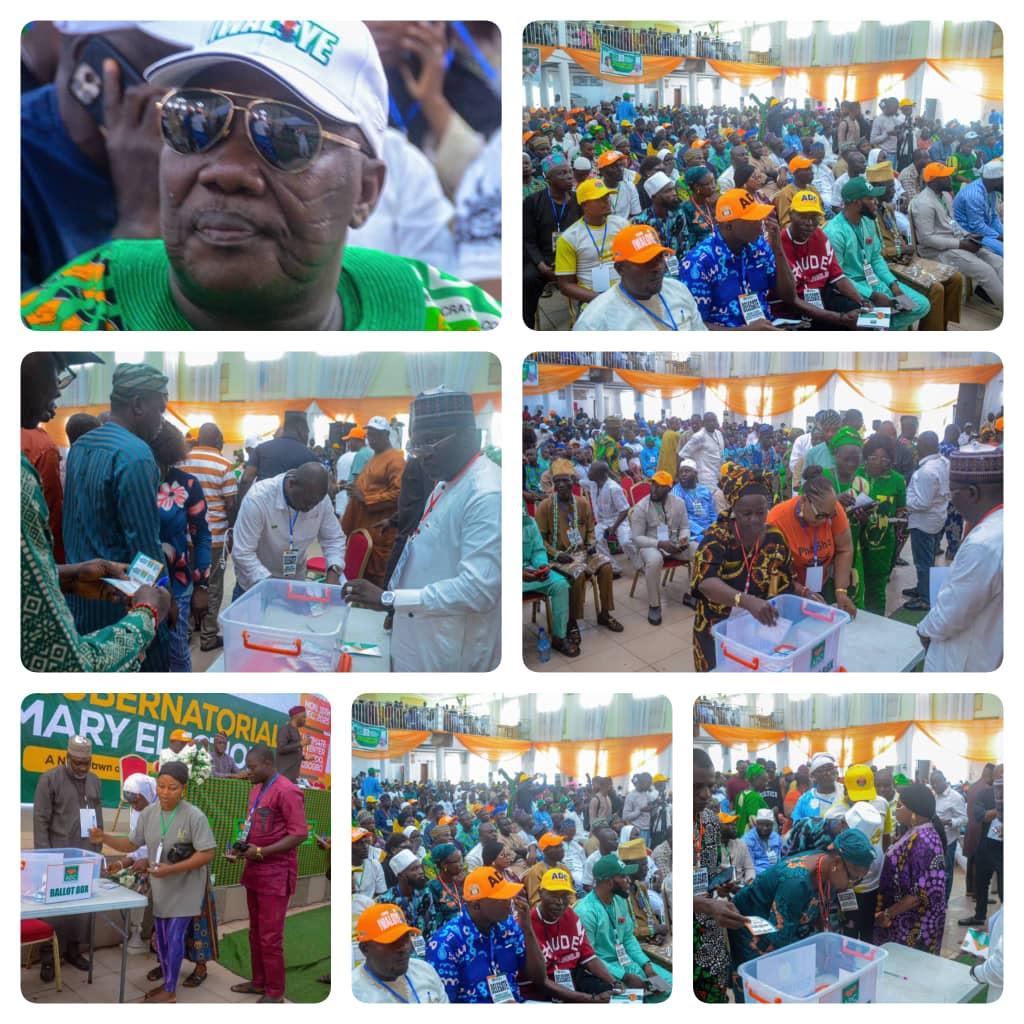
Today at the Osun African Democratic Congress governorship primary, history was made as Rt. Hon. Dr. Najeem Folasayo Salaam emerged as the party’s candidate for the 2026 Osun State governorship election. The primary was peaceful, transparent, and well coordinated, allowing party members from across the state to freely express their choices in an atmosphere that reflected credibility and openness.
The conduct and outcome of the primary demonstrated the ADC’s commitment to internal democracy and participatory politics. Party members exercised their right to choose without imposition, affirming the ADC’s belief that leadership should emerge through consensus and the free will of the people. The process reinforced confidence in the party as a platform built on fairness, inclusion, and respect for democratic principles.
Rt. Hon. Salaam’s emergence signals a shift in Osun’s political mood. Across the state, citizens are increasingly disillusioned with politics driven by personal ambition rather than public interest. Many now identify with a movement that prioritises competence, accountability, and leadership guided by conscience. The enthusiasm surrounding the primary reflects a growing readiness among the people for purposeful change.
The ADC is positioning itself as a credible alternative by articulating clear policies focused on social welfare and inclusive development. Central to its agenda are the restoration and expansion of free school feeding, mass youth employment and empowerment, robust social investment programmes, and unprecedented rural and urban renewal initiatives. These policies are designed to improve living standards, stimulate local economies, and ensure that governance directly impacts households and communities.
As preparations toward the 2026 election continue, one message is becoming unmistakable. The people of Osun are reclaiming their voice and rallying around a party and a candidate committed to people centred governance. With the ADC and Dr. Najeem Salaam, the state appears poised for a future driven by service and opportunity.
Politics
Airspace, Arrogance and Anarchy: Why Burkina Faso’s Seizure of a NAFc C-130 and 11 Nigerian Servicemen Threatens Regional Order
Airspace, Arrogance and Anarchy: Why Burkina Faso’s Seizure of a NAFc C-130 and 11 Nigerian Servicemen Threatens Regional Order.
By George Omagbemi Sylvester | Published by saharaweeklyng.com
“How an “UNAUTHORISED” emergency landing in Bobo-Dioulasso exposed the fracture between the Alliance of Sahel States and ECOWAS — and why legal norms, diplomacy and cool heads must prevail.”
On 8 December 2025 a routine ferry flight by a Nigerian Air Force C-130 turned overnight into one of West Africa’s most dangerous diplomatic dramas. What Nigerian authorities describe as a precautionary, technical landing in Bobo-Dioulasso was treated by Burkina Faso and its Sahel partners as an airspace violation. Eleven Nigerian military personnel were detained and the aircraft impounded whereby a flashpoint in an already fractured regional landscape. The fallout since has been swift, ugly and instructive.
This is not a story about a single aircraft. It is a story about sovereignty, competing regional blocs, the fragility of international aviation law under political strain and the damage that escalatory language can do when armed governments face one another across a thin skin of protocol and precedent.
The facts (what we can establish reliably). Nigerian accounts say the C-130 was en route on a ferry mission to Portugal when a “TECHNICAL CONCERN” forced a precautionary landing in Bobo-Dioulasso; Nigeria’s Air Force insists crew and passengers were safe and that normal aviation procedures were followed. Burkina Faso’s ruling military authorities though speaking through the Alliance of Sahel States (AES) – say the aircraft entered Burkinabé airspace without prior authorisation and described the incident as an “UNFRIENDLY ACT.” The Alliance warned that in future it would neutralise unauthorised aircraft. Sahara reporters and the Nigerian media have all reported these competing claims.
Why this incident matters beyond the immediate headlines. Sovereignty and the primacy of airspace control. Under the Chicago Convention and customary international practice every State enjoys complete and exclusive sovereignty over the airspace above its territory. States may (and do) take defensive measures when they believe their airspace has been violated. Though that rule coexists with another clear principle: emergency landings for safety are an accepted feature of civil-military aviation and normally trigger established communications, escorts or diplomatic notifications though not seizing and publicly humiliating crew. The collision of these two principles creates a dangerous grey zone.
AES vs ECOWAS: a geopolitical schism. The seizure cannot be divorced from the political context: Burkina Faso, Mali and Niger have broken with the Economic Community of West African States (ECOWAS) and formed the Alliance of Sahel States (AES). That split has hardened narratives of hostility between the two blocs. Recent Nigerian involvement in neighbouring crises (including air operations connected to events in Benin) has heightened AES suspicions about Nigerian military activity in the region. This is not merely a diplomatic spat; it is the manifestation of two competing systems for regional order. Analysts at the Institute for Security Studies have warned that “stability in West Africa requires that both organisations take pragmatic and flexible approaches.” That warning has never been more urgent.
The risks of escalation. When a military junta pronounces it will “NEUTRALISE” unauthorised aircraft, that is not mere rhetoric but it is a doctrine that invites miscalculation. Intercepting or firing on a military transport (even one allegedly in breach of airspace rules) could produce casualties, retaliation, wider interstate military posturing, or a tit-for-tat pattern that drags neighbouring states into open confrontation. The incident exposed how quickly regional norms can be weaponised.
Where the Nigerian government stands (and why diplomacy must lead). The Federal Government opened diplomatic channels immediately after the incident. Abuja insists the landing was precautionary and says its crew were treated humanely; the Nigerian Air Force publicly denied a deliberate airspace violation and described the landing as an emergency measure. At the same time, Nigeria cannot treat the episode as simply an operational mishap: it is a diplomatic crisis that requires urgent, senior-level engagement to avoid further deterioration. Reports confirm that Abuja has moved to raise the matter through its foreign ministry and through regional interlocutors.
Voices and warnings from the region and experts
(Assimi Goïta, the Malian figurehead of the AES, publicly called the incident an “UNFRIENDLY ACT” and directed AES partners to treat unauthorised incursions firmly) language that underscores how seriously the alliance regards perceived threats. That tone, while politically resonant within AES constituencies, is dangerous in interstate practice because it narrows the margin for de-escalation.
– On the other side, the Nigerian Air Force’s spokesman, Air Commodore Ehimen Ejodame, categorically described the landing as a precautionary move due to technical concern; Abuja’s account stresses standard aviation safety obligations and seeks to frame the episode as a non-hostile emergency landing. That competing narrative, unresolvably opposed in public, fuels popular outrage on both sides.
– Regional analysts Djiby Sow and Hassane Koné of the ISS have cautioned that “stability in West Africa requires that both organisations take pragmatic and flexible approaches,” an apt reminder that durable security cannot be built on unilateral muscle or provocative signalling. Their analysis points to the deeper structural problem: two rival regional orders with overlapping geographies and incompatible political projects.
Legal notes for what international law allows and forbids:
International aviation law recognises both the sovereignty of states over their airspace and the necessity of emergency landings for safety. There is precedent for interception and diversion in bona fide security scenarios, but the law expects proportionality, communication and diplomatic resolution, but not detention and seizure as a first response. States that callously or reflexively detain foreign crews after emergency landings risk breaching obligations of humane treatment and peaceful dispute settlement. In practice, the legal rules require interpretation through a prism of good faith and common sense.
Recommendations and how to prevent this episode from becoming a catastrophe:
Immediate, senior diplomatic engagement. Nigeria must pursue quiet, high-level talks with Burkina Faso mediated by neutral ECOWAS or AU envoys to secure the immediate release of any property still impounded and to establish transparent facts. Public posturing should be replaced by private negotiation.
An independent fact-finding and technical review. Aviation experts (ICAO-compatible) should be given access to the aircraft and records to determine whether the landing was an unavoidable emergency or avoidable deviation. A neutral technical finding would deprive propagandists of oxygen.
Confidence-building measures between AES and ECOWAS. The two blocs must restore minimum channels for incident management: hotlines, agreed protocols for overflight and emergency landing, and mutually accepted procedures for military aircraft transiting neighbouring states. The alternative is a drift into permanent suspicion and frequent crises.
A public narrative of restraint. Leaders must avoid escalationist language. Warnings about “neutralising” airborne platforms are inflammatory and unnecessary when diplomacy and technical verification remain available.
Endnote; the test of leadership. This episode is a test. It tests Nigeria’s capacity for sober diplomacy; it tests Burkina Faso’s willingness to separate security concerns from showmanship; it tests the region’s ability to manage rival blocs without sliding into armed confrontation. If handled well, the incident can be contained and even used as a spur to create robust incident-management mechanisms. If mishandled, it could set a precedent for a dangerous new normal: where emergency landings become pretexts for seizure, and interstate suspicion becomes a constant driver of instability.
In the end, airplanes are not the only things that fly — words and consequences do too. The courageous, responsible thing now is restraint, verification and a deliberate commitment to dialogue. Anything less will turn an avoidable emergency into a preventable tragedy.
Politics
LIES VS FACTS: Revisiting The Aregbesola Years In Osun
Public debates about Rauf Aregbesola’s time as Osun governor often swing between praise and criticism, but many arguments overlook the economic realities of that period. The nationwide recession from 2014 to 2016 hit state finances hard, with 23 states unable to pay salaries at all. Osun faced a sharp drop in federal allocation and internally generated revenue, forcing difficult decisions.
One of the biggest misconceptions is that Aregbesola intentionally paid half salaries. In reality, the Labour Government Salary Apportionment Committee, which was made up of labour leaders and government officials, jointly agreed on a temporary modulated payment structure to prevent mass layoffs. Throughout the recession, over 70 percent of workers (junior staff, teachers, health workers and local government employees) continued receiving full salaries and pensions. The modulation applied mainly to senior officers and political appointees.
Another widespread falsehood is that Aregbesola’s successor, Gboyega Oyetola, inherited the salary modulation. Records show this is untrue. A few outstanding balances of the modulated salaries were already cleared before Aregbesola handed over, and full salary payment had resumed eight months before the end of his administration.
Beyond the salary debate, Osun continued major development programmes. The School Feeding initiative served 254,000 pupils daily and later became a national policy. Thousands of classrooms were constructed or rebuilt, the OYES youth programme absorbed unemployed youths, and road projects continued across the state despite the financial strain.
It is true that the recession created emotional and financial pain for many families, and their feelings are valid. But emotions cannot replace verified facts. Transparency was maintained throughout the crisis, and Aregbesola’s strong grassroots support today reflects public recognition of his long term developmental impact.
The Aregbesola years were a mix of economic challenges and visible transformation. Narratives based on half truths may trend online, but they cannot erase the documented reforms, infrastructural investments and social programmes that reshaped Osun during one of Nigeria’s toughest economic periods.
Politics
Ogun 2027: APC Chieftain, Hon Abiodun Isiaq Akinlade Eyes Governorship Seat
One of the most influential political figures in the state, Hon Abiodun Isiaq Akinlade has declared interest in the Ogun Governorship seat ahead of the 2027 general election.
Akinlade, Chairman, House of Representatives Committee on Agricultural Colleges and Institutions who doubles as the Baba Adinni of Yewaland is tipped as one of the most experienced grassroots politicians in the state who had long been at the forefront of the Yewa Governorship agenda.
A Chieftain of the All Progressives Congress, APC, Hon Akinlade made his intention known yesterday while addressing Owode-Yewa Youth during their socio-cultural event, which held in Owode Yewa.
Akinlade declared that God willingly, he shall be the next Governor of the state come 2027.
In his own words, ” We have a lot of people who can develop Yewaland. I can authoritatively tell you that, it is only God that can give people position. And I am assuring in the name of Almighty Allah, that I will be coming to this same event in 2027 as the Governor of the state”, he declared.
A quiet philanthropist who has been a major source of employment generation to Youths in Ogun West senatorial districts shares strong affiliations among the political class in the state regardless of political leanings.
Prominent at the event, Kabiyesi HRM Oba Matthew Akindele Olu of Owode. Honourable Babatunde Olaotan, Alhaji (Dr.) Mutiu Adewale Badmus Chairman Al-Hatyq Travels And Tours, Chief Sunday Adeleye (Sunday Ibadan) Chairman Julianky Petroleum.
“Earlier today, I had the honour of joining my revered Kabiyesi, the Olu of Owode‑Yewa, HRM Oba Matthew Akindele JP, and fellow brothers and sisters from Owode‑Yewa to celebrate the 2025 Owode‑Yewa Youth Week
I reaffirm my commitment to the youth of Yewaland and pledge continued support for empowerment programmes, job creation, and skill‑acquisition projects. Together, we will build a brighter future for Owode‑Yewa and for Ogun State at large.
Congratulations to all sons and daughters of Owode‑Yewa on the huge success of this year’s celebration”
Rt. Hon. Abiodun Isiaq Akinlade
Asiwaju of Owode‑Yewa
Baba Adinni of Yewaland
Chairman, House Committee on Agricultural Colleges and Institutions
-
Politics6 months agoNigeria Is Not His Estate: Wike’s 2,000‑Hectare Scandal Must Shake Us Awake
-
society6 months agoJUSTICE DENIED: HOW JESAM MICHAEL’S KINDNESS WAS TURNED AGAINST HIM
-
celebrity radar - gossips4 months agoWhy Babangida’s Hilltop Home Became Nigeria’s Political “Mecca”
-
society4 months agoPower is a Loan, Not a Possession: The Sacred Duty of Planting People