
society
Africa’s Energy Icon: Dr Olakunle Williams Turns 38, Bags Honorary Doctorate Award as His Legacies Resounds Across Africa

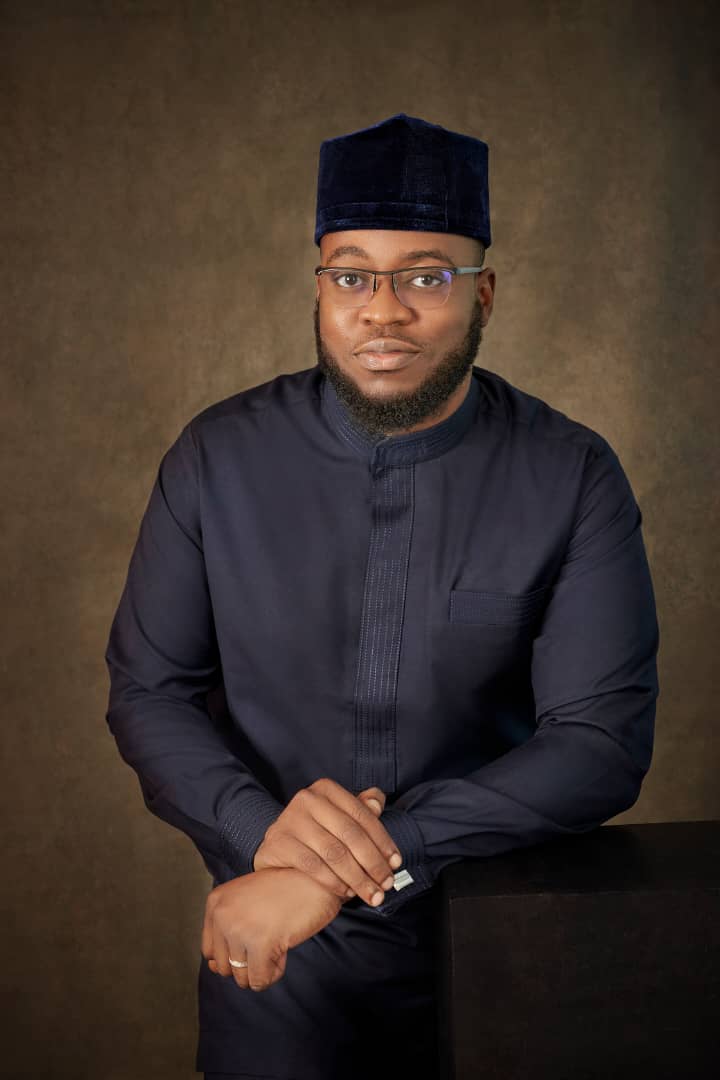
Africa’s Energy Icon: Dr Olakunle Williams Turns 38, Bags Honorary Doctorate Award as His Legacies Resounds Across Africa
By Chinedu Nsofor
Today the African energy community joins family, friends, partners and admirers around the world to celebrate a man whose life has become a testimony of brilliance purpose and visionary leadership. Dr Olakunle Williams (President and Chief Executive Officer of Tetracore Energy Group) and one of Africas most influential voices in the natural gas and power industry as he marks his thirty eighth birthday today.
His birthday this year carries a deeper glow, a richer meaning and a wider celebration. Only a few days ago on the 3rd of December Lead City University Ibadan conferred on him the Doctor of Business Administration in recognition of his outstanding achievements and transformative contributions to the energy sector. The timing could not be more symbolic. It is as if the universe chose to honour a life of excellence just before another year of impact began. His new doctorate is not only an academic distinction. It is a mirror reflecting the depth of his work across Africa.
Dr Williams’s journey is one defined by clarity of purpose and an uncommon drive. With over sixteen years of experience across the natural gas and power value chain he has contributed to some of the most impactful energy developments in the region. His story began in the world of finance and advisory where he distinguished himself at Akintola Williams Deloitte as a Senior Tax Consultant. His brilliance earned him the Outstanding Tax Consultant award in the twenty eleven twenty twelve financial year. He advised major global companies including Agip Energy and Natural Resources Heineken International and Siemens Nigeria shaping tax strategies mergers acquisitions and investment structuring.
His transition into the national energy space marked the arrival of a new force. At the Nigerian National Petroleum Company he was instrumental in the establishment of the Nigerian Gas Marketing Company and in a span of only two years drove gas marketing initiatives that delivered more than twenty five million standard cubic feet of gas daily. His work in expanding gas supply into the West African region demonstrated his continental foresight and ability to convert vision into value.
As an alumnus of Lead City University where he graduated with First Class Honours in Law and as a holder of an international Master of Business Administration he embodies both academic excellence and corporate mastery. He is also a Fellow of the Institute of Management Consultants a Certified Management Consultant a Project Management Professional and a member of international professional bodies including the International Bar Association the Chartered Institute of Taxation and the Institute of Arbitrators.
His greatest imprint however lives in the legacy he is building through Tetracore Energy Group. Under his leadership Tetracore has become a continental powerhouse and one of the most important players in Africa’s gas future. Tetracore today maintains the largest gas trading portfolio in Nigeria with over ninety million standard cubic feet delivered daily. His projects power more than three hundred megawatts of industrial generation across the country. His forty million cubic feet City Gate in Edo State energizes more than eighteen industries. His compressed gas facility in Ogun State continues to strengthen the southwest industrial corridor. His development of a ten million cubic feet LNG plant and a one hundred megawatt power project demonstrates his unwavering commitment to energy security.
Beyond Nigeria his vision travels across borders. With a regional shippers license he is expanding gas into Ghana where Tetracore is developing the first compressed gas mother station in Tema. In Central Africa he has advanced liquefied gas infrastructure for power generation and industrial manufacturing. These are not ordinary achievements. They are the works of a man who sees Africa not as it is but as it can become.
His numerous recognitions reflect this greatness. He has been celebrated as the Nigeria Domestic Gas Ambassador. He has been named among the twenty five energy personalities to watch in Africa. He has received the Innovative Gas Company award the Fin Forbes Award of Excellence the Vanguard Energy Icon award the Nigeria Energy Champion award and a feature among the Choiseul one hundred Africa which honours the continent’s most influential young leaders. He was recently named Business Icon of the Year and decorated with the Professional Doctorate and Corporate Leadership Excellence Award in Ghana.
As he turns thirty eight today we celebrate not just the years he has lived but the lives he has touched, the industries he has shaped and the future he continues to power. May this new year open even greater doors. May his light shine brighter than every city his work has illuminated. May favour surround him like a shield and may the wisdom that guides him grow richer and deeper.
Happy birthday Dr Olakunle Williams(President/CEO Tetracore Energy Group). Africa celebrates you. The energy world honours you. The future waits for your next chapter.
You are Africa’s energy champion today and always.




society
GEN CHRISTOPHER GWABIN MUSA SUPPORT INITIATIVE EXTENDS WARM BIRTHDAY FELICITATIONS TO PRESIDENT TINUBU ON 74TH BIRTHDAY
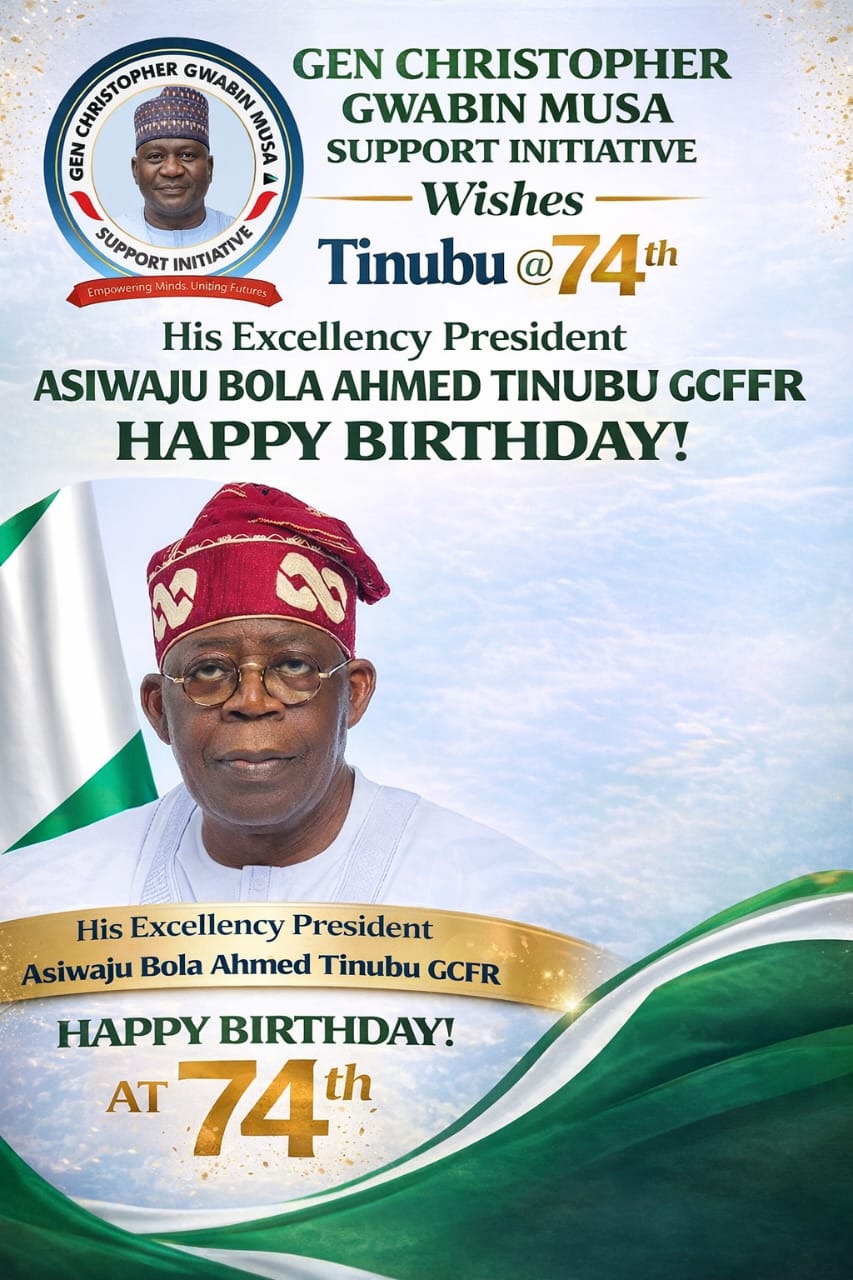
GEN CHRISTOPHER GWABIN MUSA SUPPORT INITIATIVE EXTENDS WARM BIRTHDAY FELICITATIONS TO PRESIDENT TINUBU ON 74TH BIRTHDAY
The Gen Christopher Gwabin Musa Support Initiative has extended heartfelt congratulations to His Excellency President Asiwaju Bola Ahmed Tinubu, GCFR, on the occasion of his 74th birthday.
In a statement released to the press, the Initiative conveyed warm wishes for the President’s personal well-being and for his continued leadership of the nation. The statement, signed by the Convener, Ibrahim Dahiru Danfulani, Sadaukin Garkuwan Keffi/Betara Biu, expressed hope that the coming year would bring the President “renewed strength and more wisdom in guiding the nation.”
The statement further noted that the Grand Patron of the Initiative, His Excellency Gen Christopher Gwabin Musa, OFR, Minister of Defence of the Federal Republic of Nigeria, joined in celebrating the milestone. It added, “Wishing Your Excellency continued good health, vitality, and determination as you lead the country towards greater unity and progress.”
The message underscores support for President Tinubu’s administration and its national objectives, marking the birthday as an occasion to reaffirm commitment to the nation’s unity and advancement under his stewardship.
society
Dominion City to Host Global Camp Meeting, “2 Nights of Glory” 2026 in Lagos, Enugu …Calls for Moral Renewal
*Dominion City to Host Global Camp Meeting, “2 Nights of Glory” 2026 in Lagos, Enugu
…Calls for Moral Renewal
Lagos – Dominion City has announced plans to host its annual Global Camp Meeting alongside a special “2 Nights of Glory” gathering in April 2026, with events scheduled to be held simultaneously in Lagos and Enugu.
The week-long programme is expected to draw tens of thousands of participants onsite and millions of virtual attendees from across the globe.
The Global Camp Meeting will run from Wednesday, April 1 to Monday, April 6, featuring daily sessions at 8:00 a.m. and 5:00 p.m. The “2 Nights of Glory” is slated for Friday, April 3 and Saturday, April 4 at the Golden Heart Place, Km 22 Lekki-Epe Expressway, beside Lagos Business School, Ajah, Lagos.
Organised by Dominion City, a global church focused on raising transformational leaders, the conference will centre on revival, spiritual renewal, and practical teachings. This year’s theme, “Redigging the Wells of Our Fathers,” underscores a call to return to foundational values and principles.
Speaking ahead of the event, Nobbert Onaga, President, Golden Heart Foundation and Senior Pastor, DC Lagos & Europe, emphasised the need for moral reawakening as a pathway to national transformation. He described the Church as “the pillar and foundation of truth,” noting that the conference aims to confront moral decline and restore core values within society.
“We are going back to foundational truths that established the Church. These truths will help repair societal damage and reposition the Church as a source of hope and light,” Onaga said.
Also speaking, Shola Olapade, Senior Pastor of Dominion City Headquarters, highlighted the Church’s role in addressing ethical and cultural challenges, particularly among young people. He added that the programme would go beyond spiritual teachings to include sessions on artificial intelligence, innovation, business, media, arts, and career development.
“We are equipping people not just spiritually, but with relevant 21st-century skills to thrive in today’s world,” Olapade noted.
The conference will feature teachings and ministrations from a lineup of international ministers, including Dr. David Ogbueli, Dr. Charles Ndifon, Andres Bisonni, Pastor Randy Mitchell, Apostle Ikechukwu Peter Nnajiofor, Dr. Ferdinand Nweke, Apostle Ben Hanyani Ndobe, Evangelist Dan Scott, and Dr. Chiefo Ejiofobiri.
Music ministrations will also be led by notable gospel artists such as Grace Idowu, Rhema Onuoha, Once More Six, David Nkennor, Anthony Kani, and GUC.
Organisers disclosed that over 30,000 participants are expected to attend in person, with free transportation provided from designated locations across Lagos to ease access. In addition, free medical services will be offered daily, building on previous outreaches that benefited over 1,700 people.
To ensure safety and order, more than 200 traffic marshals will be deployed in collaboration with relevant authorities.
Beyond its spiritual impact, organisers project that the event will stimulate local economic activity across hospitality, transportation, and retail sectors.
The Global Camp Meeting remains a key platform for spiritual impartation, leadership development, and societal transformation, aligning with Dominion City’s mission to equip believers to influence their communities positively.
Participation is open to the public, with registration available online for both physical and virtual attendance. //END.//
*PHOTO CAPTIONS:*
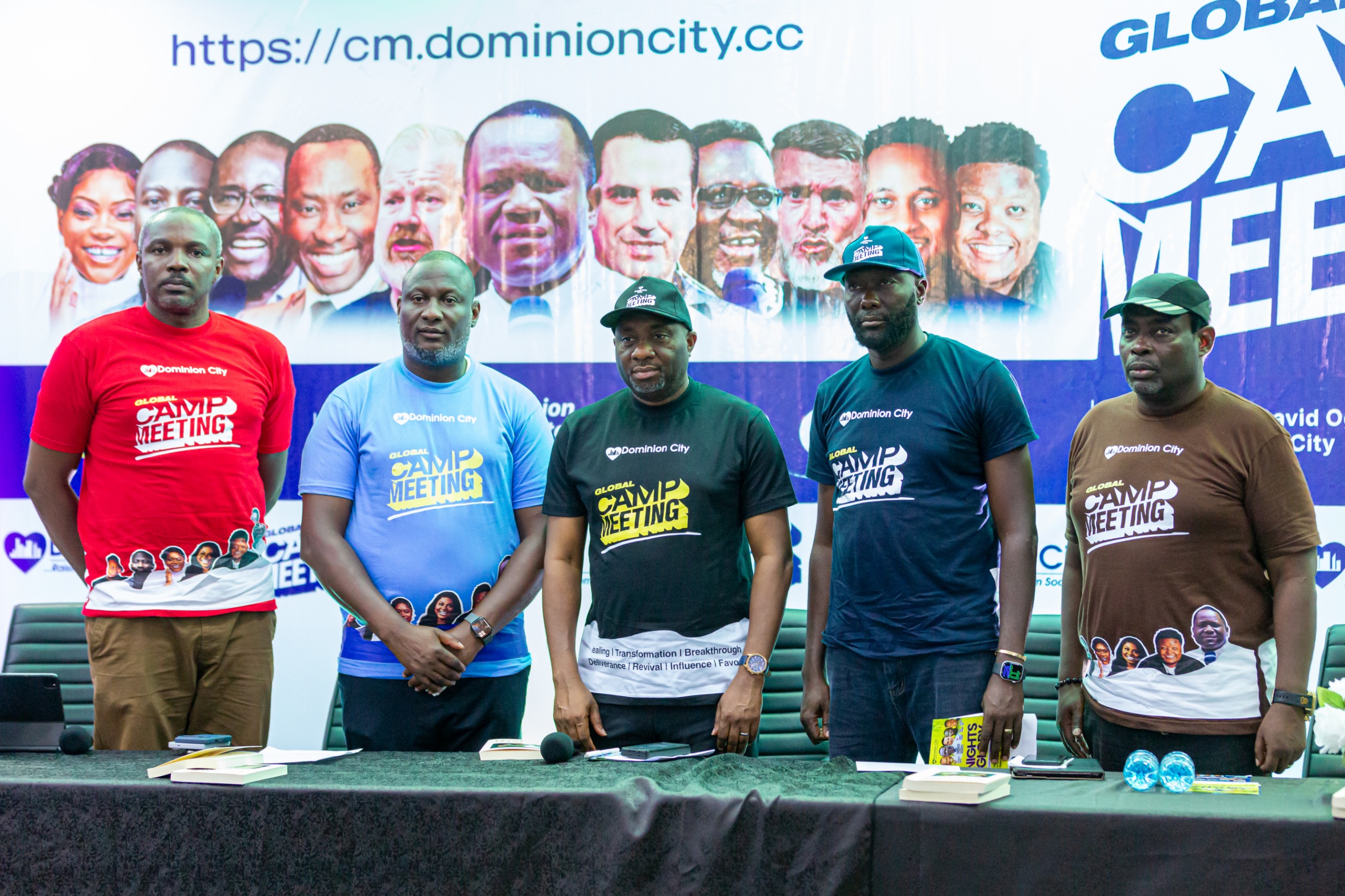
L-R: Dr. Godwin Efobi, Head, Medical Team, Dominion City Headquarters (DCHQ); Pastor Shola Olapade, Senior Pastor, DCHQ; Pastor Nobbert Onaga, President, Golden Heart Foundation and Senior Pastor, DC Lagos & Europe; Pastor Chuks Anochie, Head of Security and Traffic Control, Dominion City Headquarters (DCHQ), Camp Meeting 2026; Pastor Josh Tim Vaduchi, Head of Event & Programmes, DCHQ, during the press briefing of the forthcoming Global Camp Meeting, held the weekend of 2026 at the Dominion City Headquarters (DCHQ), Lagos.
L-R: Pastor Chuks Anochie, Head of Security and Traffic Control, Dominion City Headquarters (DCHQ), Camp Meeting 2026; Pastor Shola Olapade, Senior Pastor, DCHQ; Pastor Nobbert Onaga, President, Golden Heart Foundation and Senior Pastor, DC Lagos & Europe; Dr. Godwin Efobi, Head, Medical Team, DCHQ; and Pastor Josh Tim Vaduchi, Head of Event & Programmes, during the press briefing of the forthcoming Global Camp Meeting, held over the weekend in 2026 at the Dominion City Headquarters (DCHQ), Lagos.
society
Oloworo of Oworosoki Kingdom, Oba Babatunde Saliu, Felicitates President Bola Ahmed Tinubu at 74
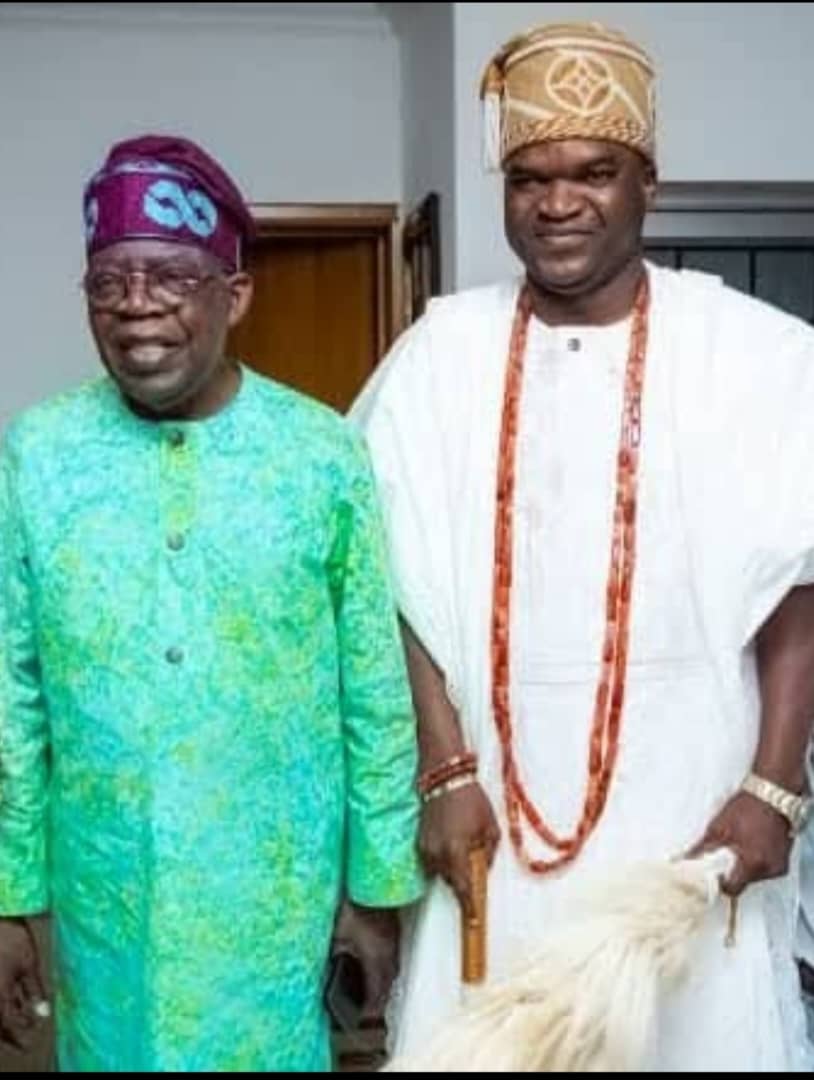
Oloworo of Oworosoki Kingdom, Oba Babatunde Saliu, Felicitates President Bola Ahmed Tinubu at 74
By Adeyemi Obadimu
The Oloworo of Oworosoki Kingdom, His Royal Majesty, Oba Babatunde Saliu, Elebo II, has extended warm felicitations to the President of the Federal Republic of Nigeria, Bola Ahmed Tinubu, GCFR, on the occasion of his 74th birthday.
In a goodwill message issued from his palace, the revered monarch described President Tinubu as a visionary statesman, a courageous reformer, and an indefatigable democrat whose lifelong commitment to nation-building continues to shape Nigeria’s progress.
Oba Babatunde Saliu praised the President’s unwavering dedication to public service, noting that his leadership has ushered in a new phase of economic reform, infrastructural renewal, and institutional strengthening across the country.
According to the monarch, the President’s Renewed Hope Agenda has begun yielding tangible relief and renewed confidence among citizens, reflecting his determination to reposition Nigeria for sustainable growth and prosperity.
“President Bola Ahmed Tinubu has demonstrated exceptional resilience, strategic foresight, and a deep love for Nigeria. His administration’s bold initiatives are laying the foundation for long-term national transformation. At 74, he remains steadfast in his resolve to build a stronger, more united, and economically vibrant nation,” the monarch stated.
Oba Babatunde further commended the President’s legacy of leadership, describing him as a bridge-builder, a mentor to many leaders, and a symbol of democratic stability. He acknowledged the President’s decades of sacrifice and contribution to the advancement of democracy in Nigeria.
On behalf of the Oworosoki Kingdom, the royal father prayed for divine wisdom, sound health, and renewed strength for the President to successfully complete the noble reforms and developmental strides he has embarked upon for the benefit of all Nigerians.
“As Your Excellency marks 74 remarkable years, we pray that Almighty God grants you long life, continued wisdom, and the fortitude to steer our great nation toward greater heights. May your days be filled with strength and grace as you continue to serve Nigeria with distinction,” Oba Babatunde Saliu added.
President Bola Ahmed Tinubu clocks 74 as a leader whose enduring influence, bold reforms, and steadfast patriotism remain central to Nigeria’s ongoing journey of national renewal.


-

 society6 months ago
Religion: Africa’s Oldest Weapon of Enslavement and the Forgotten Truth
-

 news4 months ago
WHO REALLY OWNS MONIEPOINT? The $290 Million Deal That Sold Nigeria’s Top Fintech to Foreign Interests
-

 society6 months ago
“You Are Never Without Help” – Pastor Gebhardt Berndt Inspires Hope Through Empower Church (Video)
-

 celebrity radar - gossips2 months ago
Dr. Chris Okafor Returns with Power and Fire of the Spirit -Mounts Grace Nation Altar with Fresh Anointing and Restoration Grace on February 1, 2026