Connect with us

Politics

America Decides: Why Joe Biden Will Win US Election By Jumu’ah Abiodun

Published

on

Why Russia Death Merchant Viktor Bout Told Trump To Flee To Russia 
America Decides: Why Joe Biden Will Win US Election By Jumu’ah Abiodun
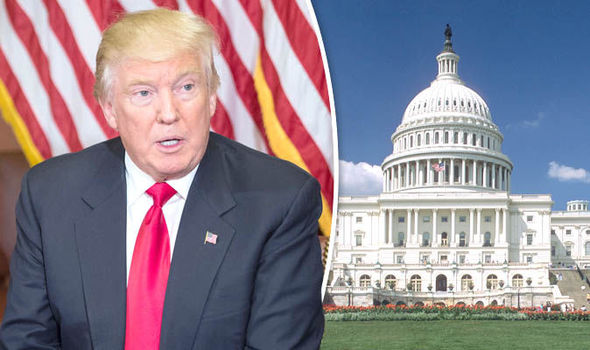
As the whole world is looking forward to the much-awaited United States election slated for Tuesday, November 3, 2020, there are lots of political intrigues to the poll. This is the 59th quadrennial presidential election of the country.
Major issues that shape the election include Climate Change, COVID-19 pandemic, the death of George Floyd which gave birth to the Black Lives Matter protests across the world and the death of other African-Americans, pushing for the repeal of Obama Care, Economy, Faceoff with China among other issues.
COVID-19:
Presently in the United States, over 9 million cases were confirmed and 231, 000 deaths recorded. It was reported that President Trump ignored experts advice and undermined the pandemic.
George Floyd’s Death:
The Majority of Americans ranging from whites and black believe the President didn’t handle the killings of Black Americans with care.
Obama Care:
President Trump got it wrong when he started pushing for the repeal of Obama Care which millions of Americans are benefiting from.
Climate Change:
President Trump doesn’t seem to show enough concern about Climate Change.
It’s worth noting that the US election is not about the total number of votes cast or states won but satisfying the 270 or above Electoral College votes needed to win the White House.
If no candidate receives the minimum 270 electoral votes needed to win the election, the United States House of Representatives will select the president from the three candidates who received the most electoral votes, and the United States Senate will select the vice president from the candidates who received the two highest totals. The election will occur simultaneously alongside elections for the House of Representatives, Senate, and various state and local-level elections.
In 2016, President Trump won the Electoral College with 304 votes compared to 227 votes for former Secretary of State, Hillary Clinton. Though, Clinton won by 65,853,625 (48.0%) to Trump’s 62,985,106 (45.9%) of popular votes.
With my holistic view of how the campaigns across the country have taken shape, you would agree with me that typical Americans prefer Republican candidate, President Donald Trump while the Latino, African-American, Indian-American, and the Asian-American voters queue behind the former Vice President and Democratic candidate, Joe Biden.
While doing my state by state analysis that might give Joe Biden the victory prompted my explanation in assessing the states in alphabetical order.
The Republican party is expected to win in Alabama, Alaska, Arkansas, Georgia, Idaho, Indiana, Kansas, Kentucky, Louisiana, Mississippi,  Missouri, Montana  Nebraska, (Statewide), North Dakota, Ohio, Oklahoma, South Carolina, South Dakota, Tennessee, Texas, Utah, West Virginia, Wyoming
The Democratic party is expected to win convincingly in  Arizona, California, Colorado, Connecticut, Delaware, Hawaii, Illinois, Iowa, Maine, Maryland, Massachusetts, Michigan, Minnesota, Nevada, New Hampshire, New Jersey, New Mexico, New York, North Carolina, Oregon, Pennsylvania, Rhode Island, Vermont, Virginia, Washington, Wisconsin.
California is the home state of Democratic Vice Presidential candidate, Kamala Harris. So, Democrats are expected to win with about 60-65% while Republican struggle with 30-32% votes.
Delaware, the home state of Democratic Presidential candidate, Joe Biden. The democratic party is expected to garner about 55-60% while Republican struggle 35-40% votes
Florida is the home state of President Trump, the state and Iowa are expected to be a tight race for both major political parties. Democratic  Party also is expected to win with a slim margin of 2-5% above Republican in Michigan.
In Indiana, the Republican Vice-President candidate, Mike Pence state, his party is expected to win with about 55-60% to Democratic 30-35% votes.
In Minnesota, the election in the state will be determined by the aftermath of George Floyd’s death which gave birth to the Black Lives Matter movement, Democratic party expected to garner 46-52% votes.
For record purposes no Republican has won the White House in nearly a century without winning Florida, and for Trump to win he needs the Sunshine State and its 29 electoral votes too.
In light of my above analysis, President Joe Biden is expected to win the Tuesday election convincingly.
If Biden wins the election, his victory then becomes historical. He would become the oldest person to serve as president of the United States at 78-year-old on the day of his inauguration and the first candidate to defeat an incumbent president in 28 years since Democrat Bill Clinton defeated Republican George Walker Bush in 1992.
His running mate, Kamala Harris would also become the first woman to serve as vice-president of the United States.
It’s worthy of noting that this is the first election in the history of the United States in which both major parties candidates are over 70 years of age.
Jumu’ah Abiodun is a Social Commentator, Columnist and Political Analyst writes in from Lagos, Nigeria

Politics

Pro-Tinubu Group Demands Sack of Badaru, Other Ministers Who Lost Polling Units in Bye-Elections

Published

on

Pro-Tinubu Group Demands Sack of Badaru, Other Ministers Who Lost Polling Units in Bye-Elections

Pro-Tinubu Group Demands Sack of Badaru, Other Ministers Who Lost Polling Units in Bye-Elections


The Asiwaju Network has called on President Bola Ahmed Tinubu to immediately disengage underperforming ministers who failed to deliver their polling units and wards during the just-concluded bye-elections.


The group also urged a cabinet reshuffle to inject fresh energy and ensure that only those who can add political and governance value remain in the Federal Executive Council.


In a statement issued on Monday in Abuja and signed by its president, Alhaji Musa Ibrahim Dandoka, the Asiwaju Network said the results of the elections were a litmus test that exposed the political weaknesses of some ministers entrusted with strategic national assignments.


At Babura Kofar Arewa Primary School in Jigawa State, where the Minister of Defence, Alhaji Muhammad Badaru Abubakar, cast his vote, the Peoples Democratic Party (PDP) scored 308 votes to defeat the All Progressives Congress (APC), which managed only 112.


Badaru, a former governor of Jigawa and APC chieftain, left the venue without addressing journalists after casting his vote amid heavy security presence.


Dandoka said it was troubling that, despite his high office, the Defence Minister could not secure victory in his polling unit.


He argued that such political setbacks undermine the strength of the APC and the credibility of President Tinubu’s Renewed Hope government.


“This defeat is both embarrassing and unacceptable. A minister who cannot win his polling unit cannot claim to possess the political capital required to defend the APC or promote the President’s Renewed Hope Agenda. President Tinubu must act quickly to weed out weak links in his cabinet and replace them with men and women who have proven grassroots capacity,” Dandoka stated.


The group noted that Badaru was not alone in this failure, stressing that another minister from Jigawa and one from Enugu State also lost their wards and polling units.


According to the group, these developments point to a worrying trend of disconnect between certain ministers and their political bases.


“Ministers are not merely technocrats. They are political leaders of the party in their states and zones. If they cannot hold their homes together, then they do not deserve to hold on to strategic national offices. The bye-elections have sent a clear message, and it is that some ministers have lost relevance and electoral value,” the statement reads.


The Asiwaju Network maintained that the APC’s strength lies in grassroots mobilisation, and any minister unable to inspire loyalty within his immediate constituency is a liability.


Dandoka emphasised that President Tinubu’s success in governance must be matched with political consolidation, which requires capable and electorally grounded cabinet members.


“President Tinubu has been bold with tough decisions on subsidy reforms, the economy, and security. Nigerians are beginning to see the fruits of those reforms. But he must also be bold enough to reshuffle his cabinet. A government of results cannot afford ministers who are passengers. The President needs proven drivers of the Renewed Hope vision,” Dandoka said.


The group also commended loyal APC members and supporters who defied intimidation and attempts at rigging in Jigawa and Enugu, saying their resilience was the true strength of the ruling party.


“These members stood firm when those at the top failed to inspire confidence. They turned out in their numbers to defend the APC’s relevance even when some of their supposed leaders abandoned them. These grassroots soldiers of democracy must never be taken for granted,” Dandoka added.


The Asiwaju Network further urged President Tinubu to take the bye-election results as a warning, cautioning that retaining non-performing ministers would embolden the opposition and demoralise party loyalists.


“The message from Jigawa and Enugu is clear: the APC cannot continue to reward failure. A minister who cannot secure a few streets in his ward has no business in the Federal Executive Council. Mr President must urgently rejig his cabinet or risk carrying dead weight into future electoral contests,” the coalition warned.


Reaffirming the group’s loyalty to Tinubu’s leadership, Dandoka said Nigerians expect a government that rewards competence and accountability, not excuses and political failures.


“President Tinubu has the people’s mandate. He must not allow weak ministers to drag down his vision. A decisive cabinet reshuffle now will send a strong signal that the Renewed Hope government is serious about performance, delivery, and results,” he declared.

Continue Reading

Politics

Customs at the Crossroads: When Lawmakers Look Away and the Executive Looks Aside

Published

on

Customs at the Crossroads: When Lawmakers Look Away and the Executive Looks Aside

Customs at the Crossroads: When Lawmakers Look Away and the Executive Looks Aside


By Dr. Bolaji O. Akinyemi


In a democracy, legislative oversight is the scalpel that cuts through deceit, inefficiency, and corruption in public institutions. It is the people’s last institutional shield against abuse of power. But what happens when that shield becomes a shelter for the very rot it is meant to expose? And what happens when the Executive arm, whose duty is to supervise its agencies, pretends not to see?


Customs at the Crossroads: When Lawmakers Look Away and the Executive Looks Aside


The unfolding drama between the National Assembly and the Nigeria Customs Service (NCS) reveals more than a policy dispute. It exposes a dangerous triangle of confusion, complicity, and economic sabotage. At stake is not only the rule of law but the survival of an economy already gasping under inflation, a weak naira, and suffocating costs of living.


The House Talks Tough


In June 2025, Nigerians saw a glimpse of legislative courage when the House of Representatives Committee thundered at Customs:

> “Nigerian Customs Service, by June 30, must not collect CISS again. You are to collect only your 4% FOB assigned by the President. Even the 7% cost of collection you currently take is illegal—it was an executive fiat of the military, not democratic law. Any attempt to continue these illegal collections will be challenged in court. The ‘I’s have it.”

The voice was firm, the ruling decisive. Nigerians expected a turning point.

But the righteous thunder of the House was quickly muffled by the Senate’s softer tone, which suggested not the enforcement of the law but a readiness to bend it.


Senate: Oversight or Escape Route?


At a Senate Customs Committee session, Senator Ade Fadahunsi admitted openly that Customs has been operating illegally since June 2023. Yet rather than demand an end to illegality, he extended a lifeline to Comptroller-General Bashir Adeniyi:

> “If we come back to the same source… the two houses will sit together and see to your amendment so you will not be walking on a tight rope.”


But should Adeniyi be handed a loose rope while Nigeria’s economy hangs by a thread?

Instead of accountability, the Senate Customs Committee floated adjustments that would make life easier for Customs. The nation was given hints about fraudulent insurance and freight data, but instead of sanctions, what we saw was a search for escape routes. This is not oversight—it is overlook.


Smuggling and Excuses


The Senate Committee also lamented cross-border smuggling—Nigerian goods like cement flooding Cotonou, Togo, and Ghana at cheaper prices than in Nigeria. Senator Fadahunsi blamed the Central Bank’s 2% value deposit for encouraging the practice.

But where are the Senate’s enforcement actions—compliance checks, stiffer sanctions, cross-border coordination? None. The result is predictable: smugglers prosper, reserves bleed, and ordinary Nigerians pay more for less.


A Bloated Customs Budget


The Service’s 2024 capital allocation ballooned to ₦1.1 trillion from ₦706 billion. Instead of channeling these resources into modern trade systems, Customs is expanding empires of frivolity—such as proposing a new university despite already having training facilities in Gwagwalada and Ikeja that could easily be upgraded.


Oversight is not an afterthought; it is the legislature’s constitutional duty. To see waste and illegality and yet propose amendments that would legalise them is to turn oversight into overlook.


Customs has about 16,000 staff, yet many remain poorly trained. Rather than prioritise capacity building, the Service is busy building staff estates in odd locations. How does Modakeke—an inland town with no border post—end up with massive Customs housing projects, while strategic border towns like Badagry, Idiroko, and Saki remain neglected? Is Bashir Adeniyi Comptroller-General of Customs—or Minister of Housing?


The 4% FOB Levy: A Policy Blunder


The central controversy is the Federal Government’s plan to replace existing port charges with a new 4% Free-On-Board (FOB) levy on imports.

Nigeria is an import-dependent nation. This levy will instantly hike the costs of cars, spare parts, machinery, and raw materials—crippling industries and punishing consumers.

Already, the consequences are biting:

A 2006 Toyota Corolla now costs between ₦6–9 million.

Clearing agents who once paid ₦215,000 for license renewal must now cough out ₦4 million.

New freight forwarder licenses have jumped from ₦600,000 to ₦10 million.

Customs claims the revenue is needed for its modernisation programme, anchored on a software platform called B’Odogwu. But stakeholders describe this so-called “Odogwu” as epileptic—if not comatose. Why commit trillions to a ghost programme that will be obsolete by January 2026, when the Nigerian Revenue Service is set to take over Customs collections?


Industry Raises the Alarm


The Manufacturers Association of Nigeria (MAN) has warned that the levy will worsen inflation, disrupt supply chains, and hurt productivity.

Lucky Amiwero, President of the National Council of Managing Directors of Licensed Customs Agents, calls the levy “economically dangerous.” His reasoning is straightforward:

The 4% FOB levy is much higher than the 1% CISS it replaces.

Peer countries like Ghana maintain just 1%.

The new levy will fuel inflation, raise the landed costs of goods, and destabilise the naira.

He also revealed that the Customs Modernisation Act, which introduced the levy, was passed without Senate scrutiny or meaningful stakeholder consultation. He estimates that the levy could add ₦3–4 trillion annually to freight costs—burdens that will be transferred directly to consumers.


Who Is Behind the “Odogwu” Masquerade?


The haste to enforce this levy, despite its looming redundancy, raises disturbing questions. Who benefits from the “Odogwu” project draining trillions? Why the rush, when NRS will take over collections in a few months?

This masquerade must be unmasked.


The Price Nigerians Pay

For ordinary Nigerians, this policy translates into one thing: higher prices. Cars, manufactured goods, and spare parts are spiraling beyond reach. A nation struggling with inflation, unemployment, and a weak currency cannot afford such reckless experiments.

So, while the Senate looks away, the Executive cannot look aside.

The Executive Cannot Escape Blame.


It is easy to focus on the failings of the legislature. But we must not forget: the Customs Service is an agency of the Federal Ministry of Finance, under the direct supervision of the Honourable Minister of Finance, Mr. Wale Edun.

If Customs is breaking the law, wasting resources, or implementing anti-people policies, the buck stops at the Executive’s table. The Minister of Finance is Chairman of the Customs Board. To fold his hands while the Service operates in illegality is to abdicate responsibility.

History gives us a model. In 1999, the Minister of State for Finance, Nenadi Usman, was specifically assigned to supervise Customs and report directly to the President. Meanwhile, Ngozi Okonjo-Iweala focused on broader fiscal and economic policies. That division of responsibility improved accountability. Today, the absence of such an arrangement is feeding impunity.

President Tinubu and his Finance Minister must act decisively. Oversight without executive will is a dead letter.

A Call to Accountability

The truth is stark:

Customs has been operating illegally since June 2023 to the Senate’s own confession.

The 4% FOB levy will deepen inflation and worsen economic hardship.

The Ministry of Finance bears ultimate responsibility for Customs’ conduct.

Until importing and consuming, Nigerians demand accountability—of the Comptroller-General, the Senate, and above all, the Finance Ministry—this bleeding will continue.

Nigerians deserve better. They deserve a Customs Service that serves the nation, not a privileged few. They deserve a House that enforces its resolutions, not one that grandstands. They deserve a Senate that upholds the law, not one that bends it. And above all, they deserve an Executive that does not look aside while illegality thrives under its ministry.

Only public pressure can end this indulgence. If Nigerians keep silent, we will keep paying the price—in higher costs, weaker currency, and a sabotaged economy.

Citizens’ Charge: Silence is Not an Option

Fellow Nigerians, the Customs crisis is not a drama for the pages of newspapers—it is a burden on our pockets, our businesses, and our children’s future. Every illegal levy is a tax on the poor. Every abandoned oversight is an open invitation to corruption. Every silence from the Executive is an approval of impunity.

We cannot afford to fold our arms. Democracy gives us the power of voice, the duty of vigilance, and the right to demand accountability. Let us demand that:

The Senate and House of Representatives stop playing good cop, bad cop, and enforce the law without compromise.

The Ministry of Finance takes full responsibility for the Customs Service, supervising it in the interest of Nigerians, not vested interests.

The President intervenes now, before the Service crosses the dangerous line of turning illegality into policy.


History will not forgive a people who suffered in silence when their economy was bled by recklessness. Silence is complicity. The time to speak, to write, to petition, to protest, and to demand is now.

Customs must serve Nigeria—not sabotage it.

Dr. Bolaji O. Akinyemi is an Apostle and Nation Builder. He’s also the President of Voice of His Word Ministries and Convener Apostolic Round Table. BoT Chairman, Project Victory Call Initiative, AKA PVC Naija. He is a strategic Communicator and the CEO, Masterbuilder Communications.

Email:[email protected]
Facebook:Bolaji Akinyemi.
X:Bolaji O Akinyemi
Instagram:bolajioakinyem

Continue Reading

Politics

Aare Adetola Emmanuel King Congratulates Hon. Adesola Ayoola-Elegbeji on Election Victory

Published

on

Aare Adetola Emmanuel King Congratulates Hon. Adesola Ayoola-Elegbeji on Election Victory

Aare Adetola Emmanuel King Congratulates Hon. Adesola Ayoola-Elegbeji on Election Victory


The Chairman/CEO of Adron Group, Sir Aare Adetola Emmanuel King KOF, has congratulated Hon. Adesola Ayoola-Elegbeji on her resounding victory in the just-concluded by-election for the Remo Federal Constituency seat in the House of Representatives.


In a goodwill message issued by him, he described the victory as “a historic moment for the Remo people, coming at a time when the constituency yearns for a leader with vision, courage, and genuine commitment to service.”


He noted that the outcome of the election was an attestation to the trust and confidence reposed in Hon. Ayoola-Elegbeji by the people, adding that her sterling qualities, integrity, accessibility, and compassion for the grassroots had endeared her to the electorate.


“The overwhelming support you garnered at the polls is proof that you are the right voice at the right time to carry the aspirations of Remo to the national stage,” he stated.


While acknowledging that the by-election followed the painful demise of the late Hon. Adewunmi Oriyomi Onanuga (Ijaya), Aare Adetola Emmanuel King said Hon. Ayoola-Elegbeji’s emergence symbolizes the continuity of purposeful representation. He expressed confidence that she would not only sustain the legacy of her predecessor but also surpass it with new energy, innovative ideas, and progressive leadership.


The Adron Group Chairman further prayed for divine wisdom, strength, and compassion for the Member-Elect as she assumes office, expressing confidence that her tenure will usher in meaningful development, economic empowerment, and greater opportunities for the people of Remo Federal Constituency.

Continue Reading

Cover Of The Week

Trending